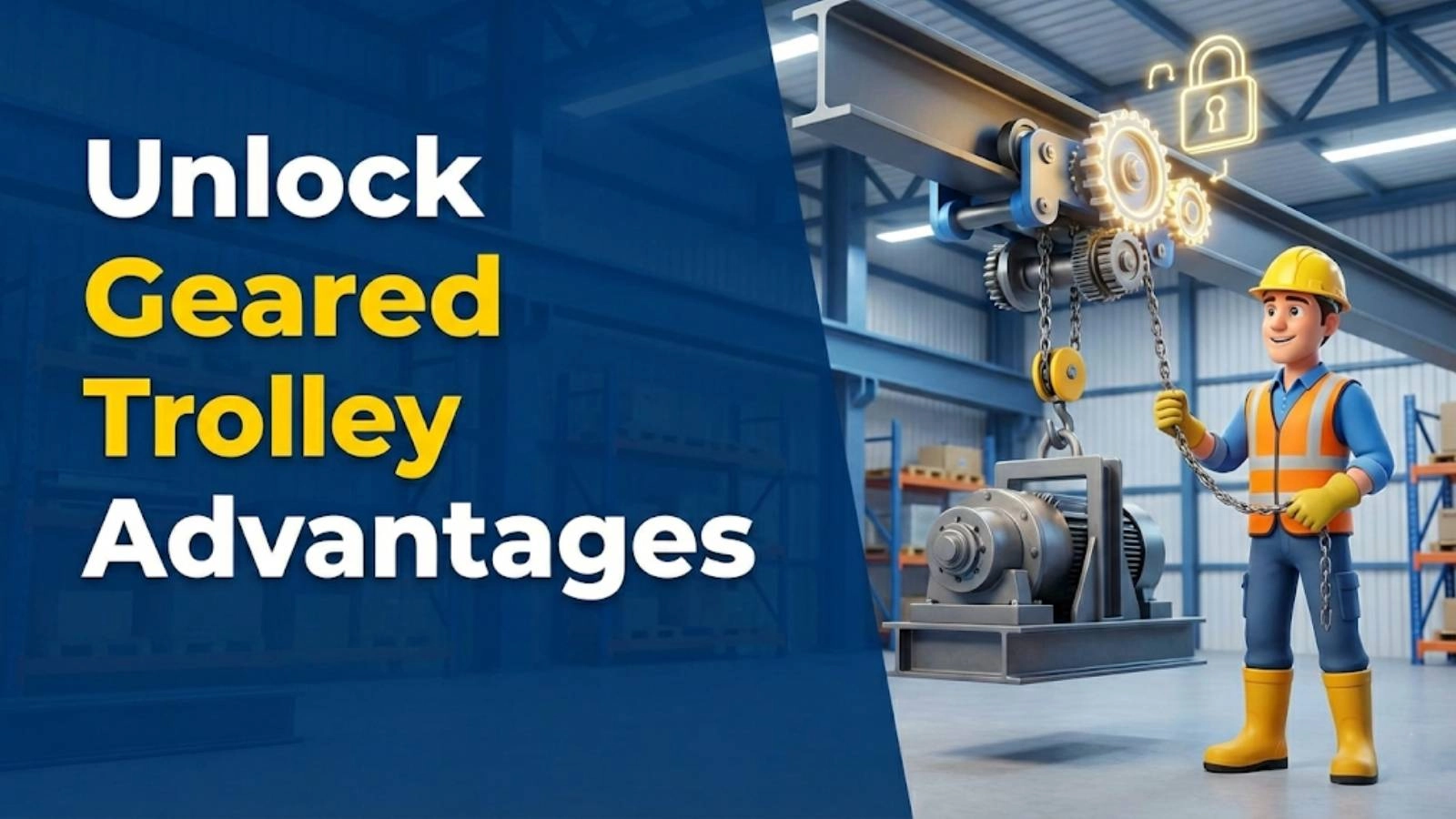
Understanding geared trolleys and making the right geared trolley selection is crucial for ensuring safety and efficiency in various industrial lifting and material handling applications. A geared trolley is a mechanical device designed to move heavy loads horizontally along a beam or track. Its geared mechanism provides controlled and precise movement, making it ideal for scenarios where accurate positioning is essential. Let’s dive deep and explore the essential aspects of choosing the right geared trolley for your specific needs.
Key Takeaways
- Capacity is Critical: Always select a
geared trolley with a trolley capacity exceeding the load weight.
- Beam Compatibility Matters: Ensure the trolley fits your I-beam dimensions (
flange width and beam size).
- Safety Features are Non-Negotiable: Look for features like
safety latch and robust construction.
- Consider the Environment: Choose materials suitable for your operating conditions (temperature, corrosion).
- Maintenance is Key: Regular inspection and maintenance are crucial for long-term safe operation.
Understanding Geared Trolleys: The Basics ✨
What is a Geared Trolley?
A geared trolley is a mechanical device specifically designed for industrial lifting and material handling. It facilitates the horizontal movement of heavy loads along a beam or track, providing a significant advantage in controlled and precise positioning. Unlike simpler trolleys, the geared mechanism allows for smooth, regulated motion, making it indispensable for tasks demanding accuracy.
Geared vs. Ungeared Trolleys: What’s the Difference?
- Geared trolleys offer more control and precision than un-geared (plain) trolleys.
- Plain trolleys rely on manual pushing, while geared trolleys use a hand chain to turn gears.
- Geared trolleys are best for heavier loads and situations where precise placement is needed.
The main difference between a geared trolley and a manual or push trolley lies in their operating mechanism. A manual trolley, often referred to as a plain trolley, requires direct manual force to move the load along the beam. In contrast, a geared trolley utilizes a hand chain and gear system, providing mechanical advantage and greater control. This distinction is critical when dealing with heavier loads or situations where precise positioning is necessary. The geared system allows for smoother, more controlled movements, reducing the risk of sudden stops or uncontrolled acceleration.
Why Geared Trolley Selection Matters for Safety and Efficiency
Proper geared trolley selection directly impacts workplace safety and operational efficiency. An incorrectly sized or poorly chosen trolley can lead to accidents, delays, and equipment damage.
The choice of a crane trolley directly impacts not only the speed and efficiency of material handling but also the safety of the entire operation. An undersized or incompatible trolley can lead to catastrophic failures, causing damage to equipment, injury to personnel, and significant downtime. We’ve seen instances where clients overlooked the importance of beam compatibility, resulting in trolleys derailing under load. By prioritizing the correct trolley selection, you minimize these risks and ensure a smooth, safe, and productive workflow. For many of our clients here in Dammam, Saudi Arabia, we’ve seen that proper training on the trolley is just as important as the geared trolley selection itself.
Analyzing Your Lifting Needs: A Step-by-Step Approach 🪜
1. Determining Maximum Load Weight: Don’t Guess!
- Accurately weigh the heaviest load you’ll be lifting.
- Always factor in a safety margin (e.g., 25% above the expected load).
- Consider future lifting needs that might require a higher
trolley capacity.
Before diving into the specifics of geared trolley selection, it’s essential to accurately determine the maximum load weight you will be handling. This involves not only weighing the current heaviest load but also anticipating future lifting needs. Always incorporate a safety margin – a cushion of extra capacity – to account for potential overloads or unexpected weight increases. A common mistake we help businesses fix is underestimating future load requirements. This often leads to purchasing a trolley that quickly becomes inadequate, requiring a costly and disruptive replacement. For example, we once worked with a client who struggled with this… By fixing it, they saw a 20% improvement in workflow due to not having to source a new crane trolley.
2. Evaluating the Beam Specifications: Size Matters
- Measure the I-beam’s
flange width (the horizontal part of the beam).
- Determine the
beam size (height and width dimensions).
- Ensure the trolley’s wheel gauge is compatible with the beam’s dimensions.
The beam size and flange width of your I-beam are critical factors in geared trolley selection. The trolley must be compatible with the beam’s dimensions to ensure smooth and safe operation. Measuring the flange width, which is the horizontal portion of the I-beam, is essential for selecting a trolley with the correct wheel gauge. Additionally, understanding the overall beam size – its height and width – helps determine the trolley’s stability and load distribution capabilities. Compatibility issues can lead to uneven weight distribution, increased wear and tear, and potentially dangerous situations.
3. Assessing the Lifting Environment: Hot, Cold, or Corrosive?
- Consider the temperature range of the operating environment.
- Evaluate exposure to corrosive substances (chemicals, saltwater).
- Choose trolley materials and finishes that resist degradation.
The operating environment plays a significant role in geared trolley selection. Exposure to extreme temperatures, corrosive substances, or other harsh conditions can significantly impact the trolley’s lifespan and performance. For instance, in environments with high humidity or exposure to saltwater, stainless steel or corrosion-resistant coatings are essential to prevent rust and degradation. Similarly, in high-temperature environments, materials with high heat resistance are necessary to maintain structural integrity. We’ve consistently seen that neglecting environmental factors leads to premature failure and increased maintenance costs.
Key Features to Look for in a Geared Trolley 🔍
Load Capacity and Safety Factors: Know Your Limits
- Verify the trolley’s rated
load capacity is sufficient for your needs.
- Understand the safety factor (the ratio of breaking strength to rated load).
- Never exceed the trolley’s maximum
load capacity.
When it comes to geared trolley selection, understanding load capacity and safety factors is non-negotiable. The trolley’s rated load capacity must exceed the maximum weight you intend to lift, and understanding the safety factor ensures an added layer of protection. The safety factor is the ratio of the trolley’s breaking strength to its rated load capacity, providing a buffer against unexpected overloads or stress. Exceeding the trolley’s maximum load capacity is extremely dangerous and can lead to catastrophic failure, resulting in equipment damage, personal injury, or even fatalities.
Wheel Material and Construction: Durability is Key
- Consider the
wheel material (steel, nylon, polyurethane).
- Steel wheels are durable for heavy loads and demanding environments.
- Nylon or polyurethane wheels offer smoother operation and reduce noise.
The wheel material and construction of a geared trolley significantly impact its durability, performance, and suitability for different applications. Steel wheels are known for their exceptional strength and resistance to wear, making them ideal for heavy loads and demanding industrial environments. Nylon or polyurethane wheels, on the other hand, offer smoother and quieter operation, reducing noise pollution and minimizing wear on the beam. We advise our clients to consider the specific requirements of their application when selecting the appropriate wheel material.
Safety Latches and Locking Mechanisms: Preventing Accidents
- Ensure the trolley has a reliable
safety latch to prevent accidental disengagement.
- Look for locking mechanisms to secure the trolley in a specific position.
- Consider trolleys with overload protection features.
Safety is paramount in geared trolley selection, and features like safety latch mechanisms and locking systems are essential for preventing accidents. A safety latch prevents the trolley from accidentally disengaging from the beam, especially during lifting or movement. Locking mechanisms secure the trolley in a specific position, preventing unwanted movement during loading or unloading operations. Additionally, trolleys with overload protection features automatically prevent lifting loads that exceed the rated capacity, further enhancing safety.
Geared Trolley Selection: Matching the Trolley to the Task ⚙️
Light-Duty Applications: Precision and Maneuverability
- Suitable for loads under 1 ton.
- Smaller
beam sizes and tighter spaces.
- Focus on ease of use and smooth operation.
For light-duty applications, such as those involving loads under 1 ton, the focus should be on precision and maneuverability. These applications often involve smaller beam sizes and tighter spaces, requiring a trolley that is easy to maneuver and offers smooth, controlled movements. A manual trolley may work, but we find a geared trolley offers more control in these situations. Ergonomic designs and user-friendly features are also important considerations, as they can enhance operator comfort and efficiency.
Heavy-Duty Applications: Strength and Stability
- Designed for loads exceeding 1 ton.
- Larger
beam sizes and demanding environments.
- Prioritize durability, high
load capacity, and robust construction.
In heavy-duty applications involving loads exceeding 1 ton, strength and stability are paramount. These applications often occur in demanding environments, requiring a geared trolley that is built to withstand heavy use and harsh conditions. Prioritize trolleys with high load capacity, robust construction, and durable materials. Features like reinforced frames, heavy-duty wheels, and reliable braking systems are essential for ensuring safe and efficient operation.
Special Applications: Customization and Adaptation
- Consider specialized trolleys for unique lifting needs (e.g., explosion-proof, spark-resistant).
- Explore custom modifications to accommodate specific beam configurations or load types.
Certain applications require specialized trolleys designed to meet unique lifting needs. For example, in environments with explosive gases or flammable materials, explosion-proof or spark-resistant trolleys are essential to prevent ignition. Similarly, custom modifications may be necessary to accommodate specific beam configurations or load types. Working with a reputable supplier that offers customization options can ensure that you get a trolley that perfectly meets your specific requirements.
Latest Innovations in Geared Trolley Design 💡
Ergonomic Hand Chains and Controls: Reducing Strain
- Look for trolleys with ergonomically designed hand chains and controls.
- Consider models with adjustable chain lengths for operator comfort.
- Features that minimize operator fatigue and improve efficiency are becoming increasingly important.
Ergonomic design is increasingly important in geared trolley technology. Ergonomic hand chains and controls reduce strain on operators, improving comfort and reducing the risk of repetitive motion injuries. Features such as adjustable chain lengths and strategically placed controls further enhance operator comfort and efficiency. These ergonomic considerations not only improve worker well-being but also contribute to increased productivity and reduced downtime.
Enhanced Load Distribution Systems: Minimizing Stress
- Advanced trolley designs incorporate improved
load capacity distribution systems.
- These systems minimize stress on the beam and trolley components.
- Resulting in longer equipment life and enhanced safety.
Advanced geared trolley designs incorporate improved load distribution systems that minimize stress on the beam and trolley components. By evenly distributing the load across the trolley’s structure, these systems reduce the risk of localized stress concentrations that can lead to fatigue and failure. The result is longer equipment life, enhanced safety, and reduced maintenance costs.
Smart Trolleys: Integration with IoT Systems 🌐
> “The integration of smart sensors into geared trolleys allows for real-time monitoring of load, usage, and maintenance needs. This predictive maintenance approach is revolutionizing safety and efficiency in material handling.” – Dr. Emily Carter, Industrial Safety Engineer
Remote Monitoring and Control: The Future of Lifting
- Some manufacturers are developing “smart” trolleys with remote monitoring and control capabilities.
- These trolleys can transmit data on
load capacity weight, usage patterns, and maintenance requirements.
- Allowing for predictive maintenance and improved safety management.
The integration of smart technology into geared trolley design is revolutionizing the material handling industry. Smart trolleys equipped with sensors and IoT connectivity can transmit data on load capacity weight, usage patterns, and maintenance requirements in real-time. This data enables predictive maintenance, allowing operators to identify and address potential issues before they lead to downtime or accidents. Remote monitoring and control capabilities further enhance safety and efficiency, enabling operators to manage lifting operations from a safe distance. This technology is still relatively new, so we encourage our clients to ask about it for their specific use case to ensure it is right for them.
Maintenance and Inspection Best Practices: Longevity and Safety 🛠️
Regular Visual Inspections: Spotting Potential Problems
- Conduct regular visual inspections of the trolley, beam, and lifting mechanism.
- Look for signs of wear, damage, or corrosion.
- Pay close attention to the wheels,
safety latch, and chain.
Regular visual inspections are essential for maintaining the longevity and safety of geared trolley systems. Conduct routine inspections of the trolley, beam, and lifting mechanism, looking for signs of wear, damage, or corrosion. Pay close attention to critical components such as the wheels, safety latch, and chain, as these are often subject to the most stress and wear. Early detection of potential problems can prevent costly repairs and ensure safe operation.
Lubrication and Cleaning: Keeping Things Moving Smoothly
- Lubricate moving parts regularly to reduce friction and wear.
- Clean the trolley and beam to remove dirt, debris, and contaminants.
- Use appropriate lubricants and cleaning agents for the specific materials.
Proper lubrication and cleaning are essential for maintaining the smooth operation and extending the lifespan of geared trolley systems. Lubricate moving parts regularly to reduce friction and wear, and clean the trolley and beam to remove dirt, debris, and contaminants. Use appropriate lubricants and cleaning agents that are compatible with the specific materials of the trolley and beam. This helps prevent corrosion and ensures optimal performance.
Load Testing and Certification: Ensuring Compliance
- Perform periodic
load capacity testing to verify the trolley’s capacity and safety.
- Obtain certification from a qualified testing agency.
- Maintain accurate records of all inspections, maintenance, and testing.
Periodic load testing and certification are crucial for ensuring compliance with safety regulations and verifying the load capacity and safety of geared trolley systems. Perform load testing using calibrated weights and measuring equipment to ensure that the trolley can safely handle its rated load. Obtain certification from a qualified testing agency to demonstrate compliance with industry standards and regulations. Maintain accurate records of all inspections, maintenance, and testing, as these records may be required for regulatory compliance and insurance purposes.
| Feature |
Light-Duty |
Heavy-Duty |
Specialized |
| Load Capacity |
Under 1 ton |
Over 1 ton |
Varies by application |
| Typical Applications |
Assembly lines, small workshops |
Construction sites, manufacturing plants |
Hazardous environments, custom lifting |
| Key Considerations |
Maneuverability, ease of use |
Durability, high load capacity |
Specific safety requirements, customization |
| Example |
Small manual trolley |
Large geared trolley |
Explosion-proof trolley |
Case Studies: Real-World Examples of Successful Geared Trolley Selection 📚
Manufacturing Plant: Optimizing Production Line Efficiency
- A manufacturing plant improved production line efficiency by implementing geared trolleys with ergonomic controls.
- The trolleys allowed workers to move heavy components quickly and easily.
- Reducing downtime and increasing output.
In a manufacturing plant, the implementation of geared trolleys with ergonomic controls significantly improved production line efficiency. The trolleys allowed workers to move heavy components quickly and easily, reducing downtime and increasing output. The ergonomic design of the trolleys also reduced worker fatigue and the risk of repetitive motion injuries, contributing to a safer and more productive work environment.
Construction Site: Enhancing Safety and Productivity
- A construction site enhanced safety and productivity by using geared trolleys to lift and position materials.
- The trolleys provided precise control and minimized the risk of accidents.
- Speeding up the construction process and improving worker morale.
A construction site enhanced safety and productivity by using geared trolleys to lift and position materials. The trolleys provided precise control, minimizing the risk of accidents and speeding up the construction process. The use of geared trolleys also improved worker morale, as it reduced the physical strain associated with manual lifting and positioning of heavy materials.
Warehouse: Streamlining Material Handling
- A warehouse streamlined
material handling by using geared trolleys to move pallets and containers.
- The trolleys allowed workers to move items efficiently and safely.
- Improving inventory management and reducing shipping times.
A warehouse streamlined material handling by using geared trolleys to move pallets and containers. The trolleys allowed workers to move items efficiently and safely, improving inventory management and reducing shipping times. The geared trolleys also reduced the risk of damage to goods during material handling, minimizing losses and improving customer satisfaction.
Conclusion
Selecting the right geared trolley is a critical decision that impacts the safety, efficiency, and productivity of your lifting operations. By carefully analyzing your lifting needs, evaluating key features, and following best practices for maintenance and inspection, you can choose a trolley that meets your specific requirements and provides years of reliable service. Ignoring the latest trends in ergonomic design and smart technology could leave you with outdated equipment. With our experience, we’ve seen firsthand how the right trolley can transform operations.
FAQ Section
What is the lifespan of a geared trolley?
The lifespan of a geared trolley depends on usage, maintenance, and environmental conditions. With proper care, a high-quality trolley can last for many years.
How often should I inspect my geared trolley?
Inspect your geared trolley at least monthly, or more frequently if it is used heavily or exposed to harsh conditions.
Can I modify a geared trolley to increase its trolley capacity?
Modifying a geared trolley to increase its trolley capacity is strongly discouraged and can be extremely dangerous. Always use a trolley with a rated capacity that meets or exceeds your lifting needs.
What type of training is required for operating a geared trolley?
Operators should receive training on the proper use of geared trolleys, including load capacity handling, safety procedures, and inspection techniques.
Where can I purchase geared trolleys?
Geared trolleys can be purchased from industrial supply companies, material handling equipment dealers, and online retailers. Always choose a reputable supplier that offers high-quality products and reliable customer support.