Choosing the Right Trolley
Trolleys are essential pieces of lifting equipment, facilitating the horizontal movement of loads along beams or rails. These unassuming devices play a crucial role in numerous industries, streamlining material handling and enhancing workplace efficiency. Among the various types available, geared and plain trolleys stand out as two of the most common options. This article aims to provide a comprehensive comparison of geared vs. plain trolleys, emphasizing their key advantages and helping you determine which type best suits your specific needs. We’ll focus on the benefits of each, offering practical advice for beginners navigating the world of lifting equipment.
What is a Plain Trolley?
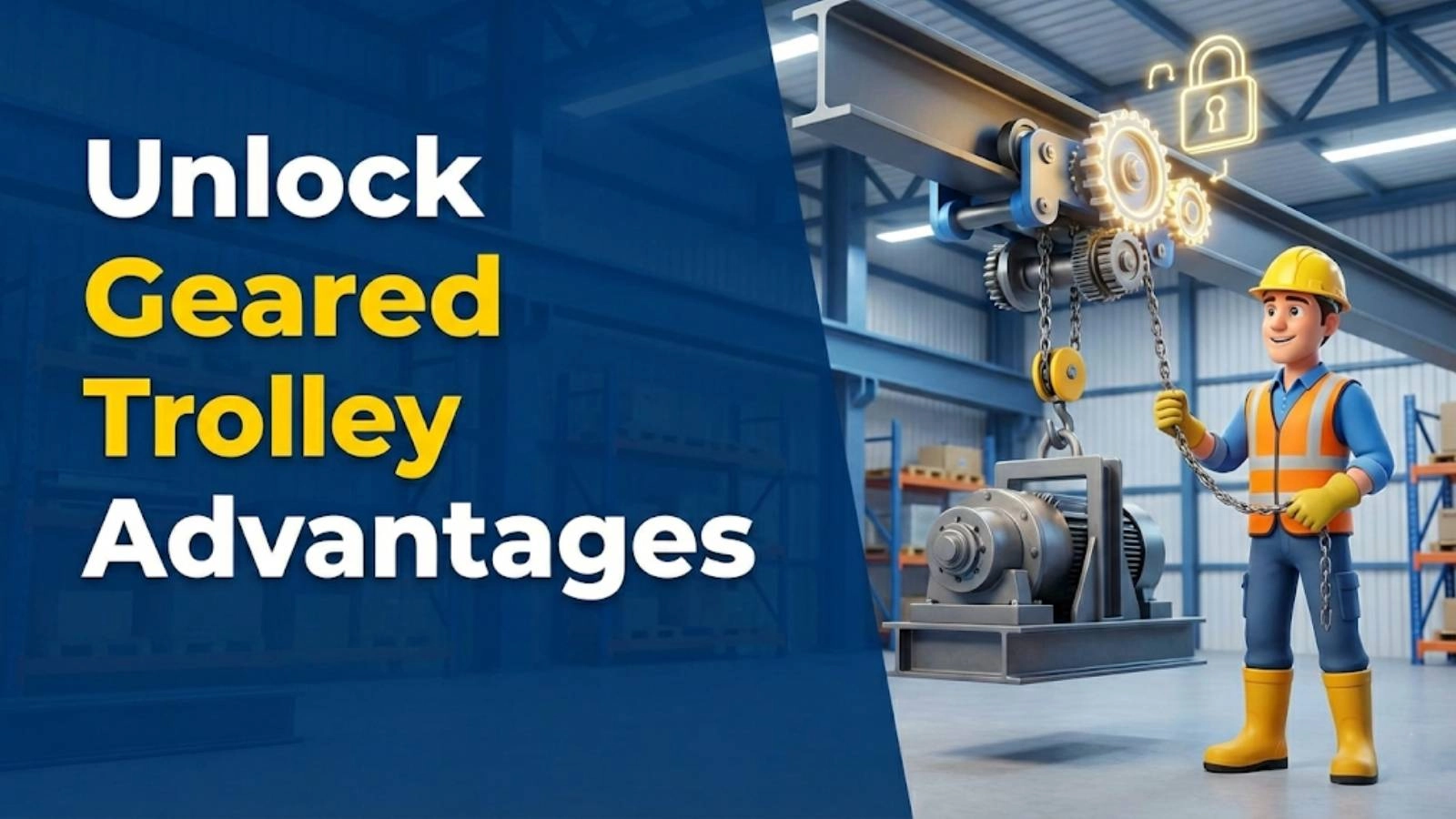
A plain trolley, also known as a push trolley, is a simple and cost-effective device used to move loads horizontally. It operates by manually pushing or pulling the load along an I-beam or similar track. The trolley itself consists of wheels or rollers that ride along the beam, with a hanging point for attaching a hoist or other lifting device.
The primary advantage of a plain trolley lies in its simplicity. With fewer moving parts, it’s generally less expensive to purchase and maintain than a geared trolley. It’s also lightweight and easy to install, making it a practical choice for certain applications.
Plain trolleys are ideally suited for light-duty applications where loads are relatively light and movement is infrequent. They are often used in small workshops, garages, and other settings where manual operation is sufficient. We’ve seen many clients successfully use plain trolleys for occasional lifting tasks in their maintenance departments.
What is a Geared Trolley?
A geared trolley, also known as a hand-geared trolley, offers a more sophisticated approach to horizontal load movement. Unlike a plain trolley, a geared trolley utilizes a hand chain and a series of gears to move the trolley along the beam. Pulling the hand chain rotates the gears, which in turn drive the wheels and propel the trolley.
The key benefit of a geared trolley is the mechanical advantage it provides. The gearing mechanism reduces the amount of force required to move heavy loads, making it significantly easier to handle substantial weights. This is particularly important when dealing with loads that exceed the safe manual handling limits.
Geared trolleys are ideal for heavier loads, applications requiring precise positioning, and situations where frequent movement is necessary. “The geared mechanism allows for smoother and more controlled movements,” says Ahmed Khan, Lead Mechanical Engineer. They are commonly found in manufacturing plants, construction sites, and other industrial settings. For many of our clients here in Dammam, we’ve seen that geared trolleys are essential for their heavy-duty material handling operations.
Benefit #1: Enhanced Load Control and Precision
The gearing mechanism in a geared trolley provides a significant advantage in terms of load control and precision. Because the operator is using a chain and gears, movement is much more controlled and deliberate. This is particularly beneficial when maneuvering delicate or sensitive equipment.
In contrast, a plain trolley relies entirely on manual force, which can lead to jerky, less precise movements. This lack of control can increase the risk of accidentally bumping into objects or causing the load to swing unexpectedly. The controlled movement offered by geared trolleys minimizes these risks.
Imagine a scenario where you’re moving a large, expensive piece of machinery into a tight space. With a plain trolley, it would be difficult to make small, precise adjustments. However, the geared trolley allows for fine-tuned control, ensuring that the machinery is positioned exactly where it needs to be. We once worked with a client transporting sensitive electronics and they found the control of the geared trolley was essential for preventing damage.
Better control translates directly to reduced risk of damage to materials. By minimizing the potential for sudden movements or collisions, a geared trolley helps protect valuable assets from harm.
Benefit #2: Easier Handling of Heavier Loads
One of the most significant advantages of a geared trolley is its ability to handle heavier loads with greater ease. The mechanical advantage provided by the gears reduces the physical exertion required to move substantial weights. This means that operators can move heavier loads more efficiently and with less strain.
Moving a 500kg load with a plain trolley requires significant physical effort. The operator must exert considerable force to overcome the inertia of the load and keep it moving smoothly. This can be physically demanding and lead to fatigue, especially when performing repetitive tasks.
A geared trolley, on the other hand, multiplies the force applied by the operator, making it much easier to move the same 500kg load. The hand chain allows the operator to use their body weight and leverage to their advantage, reducing the strain on their muscles and joints. This reduces worker fatigue and potential injuries, contributing to a safer and more productive work environment.
“The ergonomic benefits of geared trolleys are undeniable. They significantly reduce the risk of musculoskeletal disorders.” – Fatima Al-Zahrani, Certified Ergonomist
Benefit #3: Increased Safety
Safety is a paramount concern in any lifting operation, and geared trolleys offer several advantages in this regard. The increased control and precision they provide contribute to a safer working environment by reducing the risk of accidents.
A key safety benefit of geared trolleys is the reduced risk of runaway loads. With a plain trolley, if the operator loses control or the load becomes unbalanced, there is a risk that the trolley will accelerate uncontrollably along the beam. This can be extremely dangerous, especially if there are workers or sensitive equipment nearby.
The gearing mechanism in a geared trolley provides a natural braking effect, preventing the trolley from accelerating too quickly. Additionally, many geared trolleys are equipped with built-in load brakes, which further enhance safety by preventing the load from moving unintentionally. We emphasize that safety leads to fewer accidents and downtime, ultimately saving time and money.
Controlled movement is crucial when lifting near workers or sensitive equipment. The precise control offered by geared trolleys allows operators to maneuver loads safely in tight spaces, minimizing the risk of collisions or other accidents.
Benefit #4: Improved Positioning Accuracy
In many industrial applications, precise placement of loads is essential. Geared trolleys excel in this area, enabling operators to position loads with a high degree of accuracy. This is particularly important when aligning machinery components, assembling complex structures, or performing other tasks that require meticulous placement.
Accurately positioning a load with a plain trolley can be challenging. The lack of precise control makes it difficult to make fine adjustments, and the operator may have to repeatedly push and pull the trolley to get the load into the desired position. This can be time-consuming and frustrating.
A geared trolley, on the other hand, allows for incremental movements, making it much easier to achieve the desired level of accuracy. The operator can use the hand chain to make small, precise adjustments, ensuring that the load is positioned exactly where it needs to be. Accuracy translates to improved productivity and fewer errors, ultimately saving time and money.
Benefit #5: Greater Efficiency for Frequent Use
For tasks involving frequent movement of loads, geared trolleys offer a significant advantage in terms of efficiency. While a plain trolley might suffice for occasional lifts, the repetitive pushing and pulling can quickly lead to fatigue, especially when dealing with heavier loads.
The geared trolley, with its mechanical advantage, reduces the physical strain on the operator, allowing them to perform tasks more efficiently and for longer periods. This is particularly important in high-volume production environments where operators are constantly moving materials.
The time savings achieved with a geared trolley can be substantial. By reducing the effort required to move loads, operators can complete tasks more quickly and efficiently. This increased efficiency translates to lower labor costs and improved overall productivity. Moreover, the reduced worker fatigue leads to fewer errors and accidents, further contributing to cost savings. Over the long term, the cost savings from improved efficiency and reduced worker fatigue can easily outweigh the initial investment in a geared trolley.
Plain Trolley: When is it the Right Choice?
Despite the numerous advantages of geared trolleys, plain trolleys still have their place in the material handling world. Their simplicity, lower cost, and lightweight design make them a viable option for specific applications.
The primary benefits of plain trolleys are their simplicity and lower cost. With fewer moving parts, they are less prone to breakdowns and require less maintenance. They are also generally less expensive to purchase than geared trolleys, making them an attractive option for budget-conscious buyers. Furthermore, plain trolleys are lightweight and easy to install, which can be an advantage in certain situations.
Plain trolleys are best suited for light-duty applications where loads are relatively light and movement is infrequent. For example, a small workshop with occasional lifting needs might find a plain trolley to be a sufficient and cost-effective solution. Similarly, a homeowner who needs to occasionally lift heavy items in their garage might opt for a plain trolley.
In situations where budget constraints are a major concern, a plain trolley can provide a basic lifting solution without breaking the bank. However, it’s important to carefully consider the long-term costs associated with increased manual labor and potential safety risks before making a decision.
Geared Trolley: When is it the Right Choice?
Geared trolleys are the preferred choice for applications that demand heavy lifting, precise control, frequent use, and enhanced safety. Their ability to handle substantial loads with ease, combined with their precise positioning capabilities, makes them indispensable in many industrial settings.
The advantages of geared trolleys are particularly evident on construction sites, where heavy materials and equipment must be moved frequently and accurately. Similarly, in manufacturing plants, geared trolleys are essential for moving heavy machinery components and raw materials. Maintenance operations also benefit from the use of geared trolleys, as they allow technicians to safely and efficiently move heavy equipment for repairs.
If you’re moving heavy machinery components in a factory, a geared trolley is almost certainly the right choice. The mechanical advantage it provides will make the task much easier and safer.
In situations where safety is a paramount concern, a geared trolley is the clear choice. The increased control and reduced risk of runaway loads provide peace of mind and minimize the potential for accidents.
Geared vs. Plain: Key Differences Table
Below is a summary of the key differences between geared and plain trolleys.
| Feature |
Plain Trolley |
Geared Trolley |
| Load Capacity |
Lower |
Higher |
| Movement |
Manual Push/Pull |
Hand Chain with Gears |
| Control |
Less Precise |
More Precise |
| Effort Required |
Higher |
Lower |
| Cost |
Lower |
Higher |
| Ideal Use |
Light Loads, Infrequent Use |
Heavy Loads, Frequent Use, Precise Positioning |
| Safety |
Lower Control, Higher Risk of Runaway Loads |
Higher Control, Reduced Risk of Runaway Loads |
Final Verdict: Which Trolley is Right for You?
Choosing between a geared and plain trolley depends largely on the specific requirements of your application. Both types of trolleys offer distinct advantages and disadvantages, and the best choice will depend on factors such as load capacity, frequency of use, precision requirements, and budget constraints.
For light-duty applications where loads are relatively light and movement is infrequent, a plain trolley is often a sufficient and cost-effective solution. Its simplicity and lower cost make it an attractive option for small workshops, garages, and other settings where manual operation is adequate. However, it’s important to be mindful of the physical exertion required to move loads with a plain trolley, especially when performing repetitive tasks.
For heavy-duty applications where loads are substantial, precise control is essential, and frequent movement is necessary, a geared trolley is the better choice. The mechanical advantage it provides reduces the physical strain on the operator, while its precise positioning capabilities ensure accurate placement of loads. Moreover, the enhanced safety features of a geared trolley minimize the risk of accidents and create a safer working environment. Ultimately, the decision hinges on balancing cost considerations with the need for safety, efficiency, and precision. We at Safe and Secure Trading Company believe in providing the best possible solution.
FAQ Section
Q: What is the main difference between a geared trolley and a plain trolley?
A: The main difference lies in the way they move loads. A plain trolley is manually pushed or pulled, while a geared trolley uses a hand chain and gears to provide mechanical advantage.
Q: Which type of trolley is safer?
A: Geared trolleys are generally considered safer due to their enhanced control and reduced risk of runaway loads.
Q: When should I choose a plain trolley?
A: Choose a plain trolley for light-duty applications with infrequent use and budget constraints.
Q: When should I choose a geared trolley?
A: Choose a geared trolley for heavy-duty applications, precise positioning, and frequent use.
Q: What is the load capacity of a plain trolley?
A: The load capacity of a plain trolley varies depending on the model, but it is generally lower than that of a geared trolley. Always check the manufacturer’s specifications before use.
Q: What is the load capacity of a geared trolley?
A: The load capacity of a geared trolley also varies depending on the model, but it is typically higher than that of a plain trolley. Again, refer to the manufacturer’s specifications.
Q: Are geared trolleys more expensive than plain trolleys?
A: Yes, geared trolleys are generally more expensive than plain trolleys due to their more complex construction and additional features.
Q: Do I need special training to operate a geared or plain trolley?
A: While no formal certification is always required, proper training on the safe operation of lifting equipment is highly recommended. This training should cover topics such as load handling, inspection procedures, and emergency procedures. We always advise our clients on best safety practices for their equipment.
Q: What are some common applications for geared trolleys?
A: Common applications for geared trolleys include manufacturing plants, construction sites, maintenance operations, and warehouses.
Q: What are some common applications for plain trolleys?
A: Common applications for plain trolleys include small workshops, garages, and light-duty assembly lines.
Q: How do I maintain a geared or plain trolley?
A: Regular maintenance is essential to ensure the safe and reliable operation of both geared and plain trolleys. This includes lubricating moving parts, inspecting for wear and tear, and replacing worn components as needed. Always follow the manufacturer’s recommendations for maintenance procedures.
Q: What are the benefits of using a chain hoist trolley?
A: Chain hoist trolleys, both geared and plain, provide mobility for chain hoists, allowing them to move loads horizontally along a beam or track. This increases the versatility of the hoist and makes it easier to position loads accurately.
Q: What safety precautions should I take when using a trolley?
A: Always inspect the trolley and beam before use to ensure they are in good condition. Never exceed the rated load capacity of the trolley. Ensure that the load is properly balanced and secured before lifting. Keep the area clear of obstacles and personnel. Use proper lifting techniques and follow all safety regulations.
Q: Can I use a geared trolley on any type of beam?
A: Geared trolleys are designed to be used on specific types of beams, typically I-beams or H-beams. Ensure that the trolley is compatible with the beam before use.
Q: What is the difference between a manual trolley and a powered trolley?
A: A manual trolley is operated by hand, either by pushing/pulling (plain trolley) or by using a hand chain (geared trolley). A powered trolley, on the other hand, uses an electric motor to move the trolley along the beam.
Q: Are there any regulations regarding the use of trolleys in the workplace?
A: Yes, many countries have regulations regarding the use of lifting equipment in the workplace. These regulations typically cover topics such as training, inspection, and maintenance. Consult your local authorities for more information. Always prioritize safety when operating lifting equipment. Using the correct lifting equipment is vital for any material handling operation.
Q: What are the advantages of using a push trolley?
A: The advantages of using a push trolley are its simplicity, low cost, and ease of installation.
Q: What are the geared trolley advantages?
A: Geared trolley advantages include the ability to handle heavier loads, provide precise control, and improve safety due to controlled movement.
Q: How does trolley safety affect overall operations?
A: Trolley safety directly affects overall operations by reducing the risk of accidents, injuries, and downtime, leading to increased productivity and cost savings.