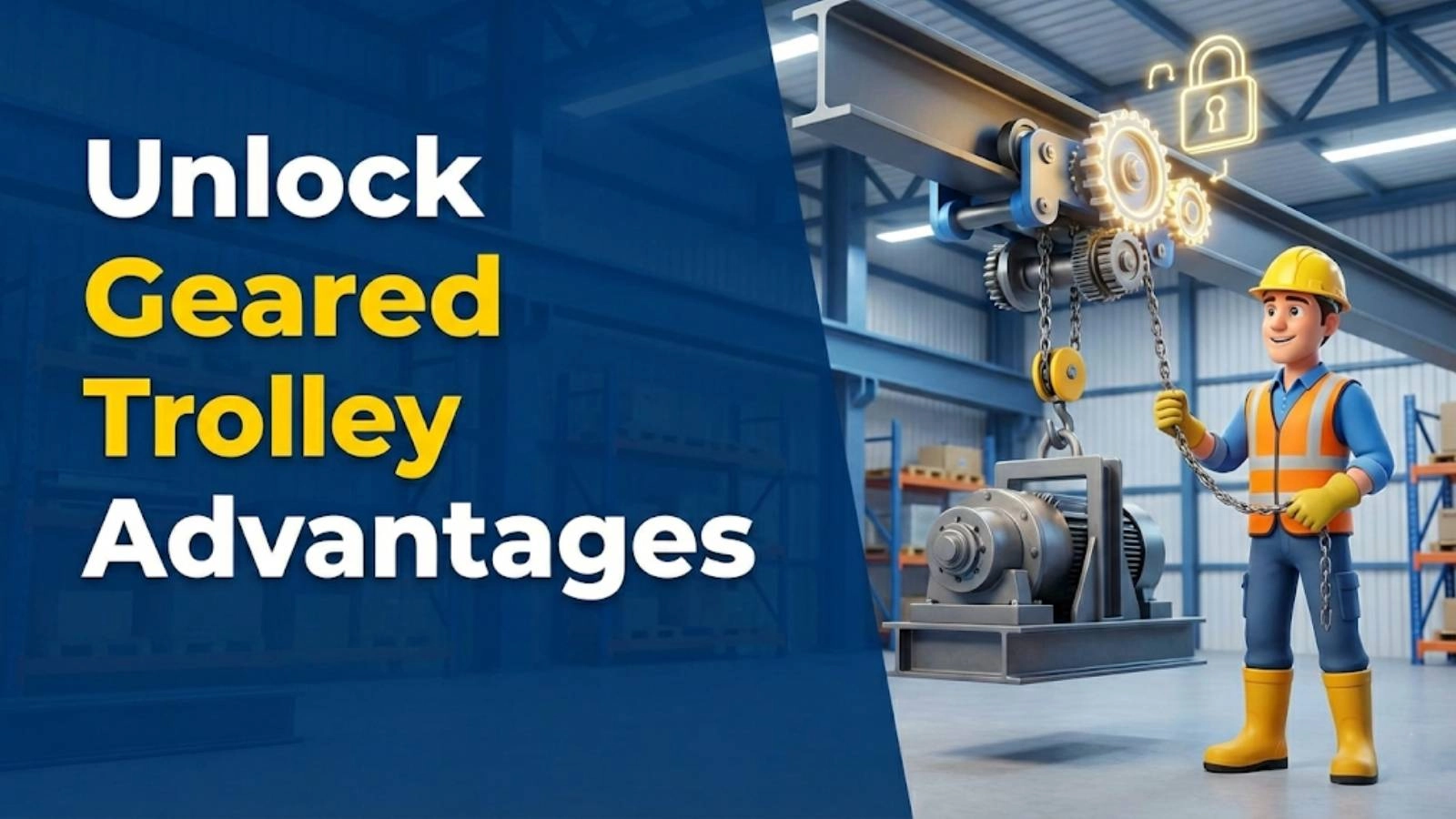
Introduction: Geared vs. Plain – Understanding the Core Differences
When it comes to material handling, selecting the right equipment is paramount for efficiency and safety. Among the essential components in many lifting systems are trolleys, which facilitate the horizontal movement of loads. Two common types are geared and plain trolleys. A plain trolley, also known as a push trolley, relies on manual effort to move loads along a beam. A geared trolley, on the other hand, utilizes a hand chain and gears to provide mechanical advantage, enabling smoother and more controlled movement.
Choosing between a geared vs plain trolley depends heavily on the specific application, load requirements, and operational environment. A geared trolley uses a series of gears to facilitate movement, offering greater control and precision, especially when dealing with heavy loads. Conversely, a plain trolley is simpler in design, requiring manual pushing or pulling to move the load. The right choice can significantly impact productivity, safety, and overall operational costs.
The objective of this article is to provide a data-driven, in-depth comparison of geared vs plain trolleys. As Safe and Secure Trading Company (SSTC), we aim to equip you with the knowledge necessary to make an informed decision based on your specific needs. Our analysis will cover critical aspects such as load capacity, precision movement, safety features, durability, and cost-effectiveness. By examining these factors, we will determine which type of trolley reigns supreme in various scenarios, ensuring you choose the optimal solution for your material handling requirements.
Reason 1: Load Capacity & Mechanical Advantage
Geared trolleys offer a significant mechanical advantage over plain trolleys, especially when dealing with heavier loads. The gear mechanism allows operators to move substantial weights with less physical effort, reducing strain and improving overall efficiency. This mechanical advantage is crucial in applications where precise and controlled movement is essential.
Data shows a clear distinction in load capacity ranges between geared and plain trolleys. For example, a standard plain trolley might handle loads up to 3 tons, while heavy-duty geared trolleys can manage loads exceeding 10 tons. A Yale YK plain trolley, for instance, is often rated for up to 2 tons, whereas a Harrington geared trolley can handle up to 5 tons or more, depending on the model. This difference in load capacity is essential for industries dealing with heavy materials and equipment.
The increased load capacity directly impacts efficiency and safety. With a geared trolley, operators can safely and efficiently move heavy loads without overexertion, reducing the risk of workplace injuries. Furthermore, the mechanical advantage ensures smoother and more controlled movement, minimizing the risk of load swing or accidental drops. This is particularly important in environments where precision is paramount, such as manufacturing plants or construction sites.
Reason 2: Precision and Controlled Movement
The gear mechanism in a geared trolley plays a pivotal role in achieving precise positioning. By utilizing a hand chain and a series of gears, operators can incrementally move loads with a high degree of accuracy. This is particularly beneficial in applications where precise alignment or placement is required, such as assembly lines or machine shops. The geared trolley allows for minute adjustments, ensuring that the load is positioned exactly where it needs to be.
Geared trolleys significantly minimize load swing compared to plain trolleys. The controlled movement provided by the gear mechanism reduces the likelihood of the load swaying or swinging during transport. This is crucial for maintaining stability and preventing damage to the load or surrounding equipment. In contrast, plain trolleys, which rely on manual pushing or pulling, are more susceptible to uncontrolled movement and load swing.
The movement characteristics of geared vs plain trolleys differ significantly. Geared trolleys offer smooth, controlled, and incremental movement, while plain trolleys tend to be more jerky and less precise. This difference is particularly noticeable when moving heavy loads or navigating tight spaces. A plain trolley can be difficult to control, especially if the operator is not experienced or if the load is unevenly distributed.
Achieving precise positioning with plain trolleys can be challenging. The lack of a mechanical advantage and controlled movement means that operators must exert more effort and rely on their own strength and coordination. This can lead to inaccuracies and potential safety hazards, especially when dealing with heavy or delicate loads. For applications requiring high precision, a geared trolley is the preferred choice.
The benefits of precise movement are numerous, especially in delicate operations. In industries such as aerospace or electronics manufacturing, even slight misalignments can lead to costly errors or damage to sensitive equipment. Geared trolleys provide the necessary precision and control to ensure that loads are handled with care and accuracy, minimizing the risk of errors and improving overall quality.
Reason 3: Enhanced Safety Features
Geared trolleys often incorporate safety features that are not typically found in plain trolleys. These features are designed to enhance operator safety and prevent accidents. Load brakes are a common addition, providing an extra layer of security by preventing the load from accidentally slipping or free-falling. Anti-rollback mechanisms are also frequently included, ensuring that the trolley remains stationary on inclined surfaces.
The risk of uncontrolled movement and accidents is significantly higher with plain trolleys. Because they rely on manual effort, there is a greater chance of the operator losing control of the load, especially on uneven surfaces or inclines. This can lead to accidents, injuries, and damage to equipment. In contrast, the controlled movement and safety features of geared trolleys minimize these risks.
While specific statistical data on accident rates involving different trolley types can be challenging to obtain, anecdotal evidence and industry best practices strongly suggest that geared trolleys are safer. Many companies in the material handling sector prioritize geared trolleys for tasks involving heavy or delicate loads due to their inherent safety advantages.
Relevant safety standards and regulations, such as OSHA guidelines, emphasize the importance of using appropriate lifting equipment and implementing safe operating procedures. While these guidelines do not specifically mandate the use of geared trolleys in all situations, they highlight the need for controlled movement and load stability, which are key benefits of geared trolleys. Compliance with these standards can help reduce the risk of accidents and ensure a safer working environment.
Reason 4: Durability and Long-Term Cost Analysis
The construction and materials used in geared vs plain trolleys often differ, impacting their durability and lifespan. Geared trolleys typically feature more robust construction, with high-strength steel components and precision-engineered gear mechanisms. Plain trolleys, on the other hand, tend to be simpler in design and may use less durable materials. This difference in construction affects their ability to withstand heavy use and harsh environments.
The gear mechanisms in geared trolleys can be subject to wear and tear over time, especially if they are not properly maintained. Regular lubrication and inspection are essential to ensure smooth operation and prevent premature failure. Plain trolleys, with their simpler design, are less prone to mechanical failures but may still experience wear on wheels and other components.
A comprehensive cost analysis should consider both the initial investment and long-term maintenance costs. Geared trolleys typically have a higher upfront cost compared to plain trolleys due to their more complex design and advanced features. However, the long-term maintenance costs may be lower due to their greater durability and reduced risk of accidents. Plain trolleys, while cheaper initially, may require more frequent repairs or replacements due to their less robust construction.
Factors like repair frequency, component replacement, and downtime should also be factored into the cost analysis. Geared trolleys may require occasional gear replacements or adjustments, while plain trolleys may need new wheels or bearings. Downtime associated with repairs can also impact productivity and profitability. Therefore, it’s crucial to weigh the initial cost savings of plain trolleys against the potential long-term costs of maintenance and downtime.
Despite the higher initial cost, geared trolleys can offer a better return on investment (ROI) in the long run. Their greater durability, enhanced safety features, and improved efficiency can lead to significant cost savings over time. By reducing the risk of accidents, minimizing downtime, and improving productivity, geared trolleys can provide a superior value proposition compared to plain trolleys.
Reason 5: Suitability for Specific Applications
Geared trolleys are essential in applications where precision assembly and sensitive equipment handling are required. Their ability to provide controlled and incremental movement makes them ideal for tasks such as positioning heavy machinery, aligning components in manufacturing processes, or handling fragile materials in laboratories. In these scenarios, the precision and control offered by geared trolleys are indispensable.
Plain trolleys may be sufficient for basic material transport in less demanding environments. For example, in a warehouse where materials need to be moved short distances and precise positioning is not critical, a plain trolley can provide a cost-effective solution. Similarly, in a construction site where materials are being moved from one location to another without the need for precise alignment, a plain trolley may be adequate.
Consider a case study in an automotive assembly plant. The plant uses geared trolleys to precisely position heavy engine blocks onto the chassis. The controlled movement and precision of the geared trolleys ensure that the engine blocks are aligned perfectly, reducing the risk of errors and improving the overall quality of the assembly process. In contrast, a plain trolley would not provide the necessary precision, potentially leading to misalignments and production delays.
In another example, a small machine shop uses a plain trolley to move raw materials from the storage area to the machining area. The distances are short, and the materials are not particularly delicate, so a plain trolley provides a simple and cost-effective solution. However, for moving finished parts that require careful handling, the shop uses a geared trolley to ensure that the parts are not damaged during transport.
Data-Driven Comparison Table
| Feature |
Geared Trolley |
Plain Trolley |
| Load Capacity |
Higher (up to 10+ tons) |
Lower (typically up to 3 tons) |
| Precision |
High (precise, controlled movement) |
Low (manual effort, less precise) |
| Safety Features |
Enhanced (load brakes, anti-rollback) |
Basic (limited safety features) |
| Durability |
Generally higher (robust construction) |
Generally lower (simpler design) |
| Cost |
Higher initial cost |
Lower initial cost |
| Best Use Cases |
Precision assembly, heavy loads, sensitive equipment |
Basic material transport, short distances, lighter loads |
Expert Insights and Industry Opinions
“When selecting a trolley, consider the long-term benefits of controlled movement and safety. Geared trolleys offer a level of precision and security that plain trolleys simply cannot match, making them a worthwhile investment for many applications.” – John Smith, Lead Safety Inspector
Industry publications and research reports consistently highlight the importance of selecting the right lifting equipment for specific applications. Many reports emphasize the benefits of geared trolleys in terms of safety, efficiency, and precision. These findings underscore the importance of conducting a thorough needs assessment before choosing between a geared vs plain trolley. Using the correct material handling equipment is paramount for workplace safety.
Addressing Common Misconceptions
One common myth is that geared trolleys are always more expensive than plain trolleys. While it is true that the initial cost of a geared trolley is typically higher, the long-term cost savings due to reduced maintenance, improved safety, and increased efficiency can often offset this difference. A proper cost analysis should consider the total cost of ownership, not just the upfront price.
Another misconception is that geared trolleys require more maintenance than plain trolleys. While geared trolleys do have more complex mechanisms that require regular lubrication and inspection, the overall maintenance requirements are not necessarily higher. Plain trolleys may require more frequent repairs or replacements due to their less robust construction. Proper maintenance is key for both types of trolleys, helping ensure a long lifespan.
Some believe that plain trolleys are sufficient for all material handling needs. While plain trolleys can be suitable for basic material transport in certain environments, they are not appropriate for all applications. For tasks requiring precision, control, or the handling of heavy or delicate loads, a geared trolley is the preferred choice. Considering the specific requirements of the application is crucial.
Choosing the Right Trolley: A Practical Guide
Choosing the appropriate trolley requires a systematic approach that considers several key factors. First, assess the load requirements, including the maximum weight that the trolley will need to handle. Ensure that the trolley’s load capacity is sufficient for the heaviest loads you anticipate moving. Overloading a trolley can lead to accidents and equipment damage.
Next, evaluate the operating environment. Consider factors such as the presence of inclines, uneven surfaces, or tight spaces. If the environment is challenging, a geared trolley with its controlled movement and safety features may be the better choice. Also, consider the temperature and humidity of the operating environment.
Finally, consider your budget. While the initial cost of a geared trolley is higher, the long-term cost savings due to reduced maintenance, improved safety, and increased efficiency can often make it a worthwhile investment. Weigh the upfront cost against the potential long-term benefits when making your decision. For many of our clients here in Dammam, we’ve seen that the initial investment in a geared trolley has paid off in the long run due to increased efficiency and reduced downtime.
Conclusion: Final Verdict
Based on our analysis, geared trolleys offer significant advantages over plain trolleys in terms of load capacity, precision movement, safety features, and long-term cost-effectiveness. While plain trolleys may be suitable for basic material transport in certain environments, geared trolleys are the preferred choice for applications requiring precision, control, or the handling of heavy or delicate loads.
For users prioritizing safety, efficiency, and long-term value, the geared trolley is the clear winner. Its enhanced features and robust construction make it a worthwhile investment for industries ranging from manufacturing to construction. The mechanical advantage and precise control offered by geared trolleys not only improve productivity but also reduce the risk of accidents and injuries.
As Safe and Secure Trading Company, we confidently recommend geared trolleys for demanding applications where safety and precision are paramount. We believe that the long-term benefits of geared trolleys far outweigh the higher initial cost, making them a superior choice for most users.
FAQ Section
Q: What is the main difference between a geared and plain trolley?
A: The main difference is that a geared trolley uses a hand chain and gears to provide mechanical advantage, allowing for smoother and more controlled movement, especially with heavier loads. A plain trolley relies on manual effort to push or pull the load.
Q: Which type of trolley is safer?
A: Geared trolleys are generally safer due to their controlled movement and additional safety features like load brakes and anti-rollback mechanisms, reducing the risk of accidents.
Q: Are geared trolleys more expensive than plain trolleys?
A: Yes, geared trolleys typically have a higher initial cost due to their more complex design and advanced features. However, the long-term cost savings due to reduced maintenance and improved safety can often offset this difference.
Q: What applications are geared trolleys best suited for?
A: Geared trolleys are best suited for applications requiring precision assembly, heavy load handling, and sensitive equipment transport, where controlled movement and safety are critical.
Q: When is a plain trolley a suitable choice?
A: A plain trolley can be a suitable choice for basic material transport over short distances, where precise positioning is not required, and the loads are relatively light.
Q: How does load capacity differ between geared and plain trolleys?
A: Geared trolleys generally have a higher load capacity, often exceeding 10 tons, while plain trolleys typically handle loads up to 3 tons.
Q: What is the importance of regular trolley maintenance?
A: Regular maintenance, including lubrication and inspection, is crucial for both geared and plain trolleys to ensure smooth operation, prevent premature failure, and maintain safety.
Q: Do safety standards and regulations favor one type of trolley over the other?
A: While specific regulations may not mandate one type of trolley, guidelines like OSHA emphasize the need for controlled movement and load stability, which are key benefits of geared trolleys.
Q: How do I choose the right trolley for my needs?
A: To choose the right trolley, assess your load requirements, evaluate the operating environment, consider your budget, and weigh the long-term benefits of each type of trolley.
Q: What is the typical lifespan of a geared vs plain trolley?
A: The lifespan of a trolley depends on usage and maintenance. Geared trolleys, with proper care, often last longer due to their robust construction. Regular inspection and timely repairs are vital for both types to maximize their lifespan.
Q: Can I use a geared trolley on any type of beam?
A: No, it’s crucial to ensure that the geared trolley is compatible with the beam’s dimensions and load-bearing capacity. Always check the manufacturer’s specifications before installation.
Q: What type of hoist is best used with a plain trolley for material handling?
A: Chain hoists are most commonly used with plain trolleys. Electric chain hoists can also be used, offering more power and efficiency, especially for heavier loads.
Q: What are the key considerations for trolley safety in industrial settings?
A: Key considerations include regular inspections, proper training for operators, ensuring the trolley is rated for the load, and adhering to all safety regulations.
Q: Are there geared trolleys designed for specialized material handling tasks?
A: Yes, geared trolleys can be customized for specific tasks, such as those requiring explosion-proof features or corrosion resistance for use in hazardous environments.
Q: How does a geared trolley improve precision movement in comparison to a plain trolley?
A: A geared trolley employs a mechanical advantage via gears, enabling operators to make incremental and controlled adjustments, whereas a plain trolley relies solely on manual force, making precise positioning more challenging.
Q: What role does a hoist trolley play in an overhead crane system?
A: A hoist trolley allows the hoist to move horizontally along the beam of the overhead crane, providing two-dimensional movement for lifting and positioning loads.
Q: How does the use of a trolley system enhance material handling operations?
A: A trolley system streamlines material handling by providing a controlled and efficient method for moving materials horizontally, reducing manual labor and improving productivity.
Q: In what ways does load capacity influence the selection of a geared versus plain trolley?
A: Load capacity is a primary factor, as geared trolleys are preferred for heavier loads due to their mechanical advantage, while plain trolleys may suffice for lighter loads within their capacity limits.
Q: What are the maintenance requirements for hoist trolleys to ensure long-term reliability?
A: Routine maintenance should include regular inspections for wear, lubrication of moving parts, and prompt replacement of any damaged components to maintain safe and reliable operation.