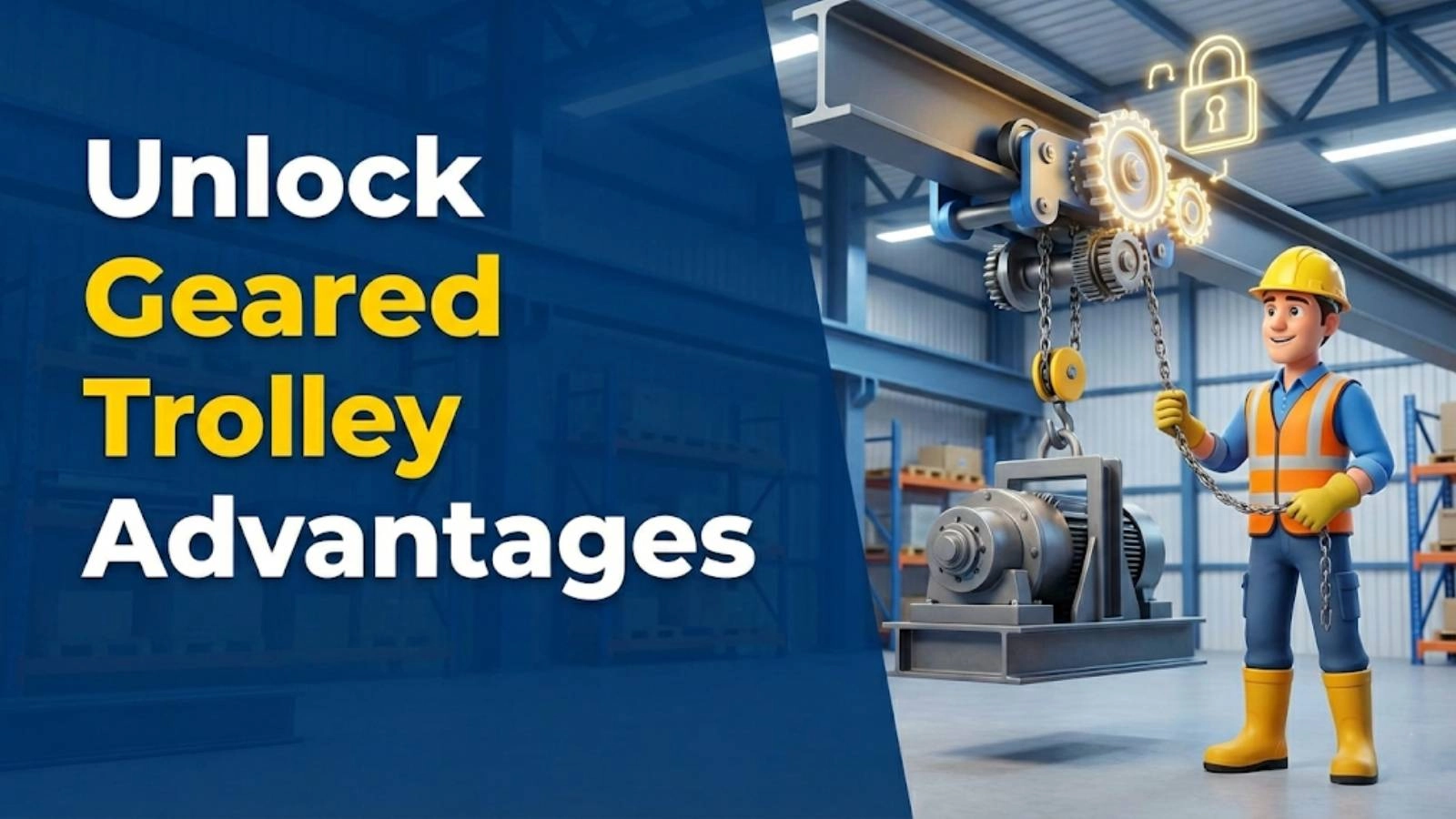
The Geared vs Plain Trolley is a critical decision when selecting material handling equipment. Both geared and plain trolleys play vital roles in modern lifting solutions, each offering distinct advantages that cater to different operational needs. As industries increasingly demand efficient and safe lifting methods, understanding the nuances between these trolley types becomes essential.
Introduction: The Trolley Trend – Modern Lifting Solutions
Geared trolleys utilize a hand chain and gear mechanism for precise movement, while plain trolleys rely on manual pushing or pulling. The selection between a geared vs plain trolley is crucial for optimizing workflow efficiency and ensuring operator safety. This article aims to provide a detailed comparison, empowering you to make an informed decision based on your specific requirements. We at Safe and Secure Trading Company (SSTC) understand the importance of selecting the right equipment to ensure smooth and safe operations.
The purpose of this article is to provide a comprehensive comparison between geared and plain trolleys, helping you determine which type best suits your specific lifting needs. We will delve into the mechanisms, advantages, applications, and safety considerations of each, offering a clear and unbiased analysis. By understanding the key differences, you can enhance your material handling processes and improve overall workplace safety.
Geared Trolleys: Precision and Controlled Movement
A geared trolley employs a hand chain and a series of gears to facilitate movement along a beam. This mechanism allows for precise and controlled motion, making it ideal for applications requiring accurate load positioning. The hand chain is pulled by the operator, which turns the gears and propels the trolley along the beam. The geared trolley is an excellent choice when you require slow and deliberate movements with a higher degree of control.
The advantages of geared trolleys are numerous and cater to specific operational needs. The precision offered by a geared trolley in load positioning is unmatched. This is particularly important in environments where even slight misalignments can cause problems. The controlled movement is also key for heavy loads, ensuring they are moved smoothly and safely. Furthermore, geared trolleys reduce operator effort, which minimizes fatigue and enhances productivity.
- ✅ Precise load positioning.
- ✅ Controlled movement for heavy loads.
- ✅ Reduced operator effort.
Geared trolleys excel in applications where precision and controlled movement are paramount. In manufacturing assembly lines, these trolleys are essential for accurately placing components during the assembly process. Maintenance and repair operations benefit from the fine adjustments that geared trolleys offer, especially when working with delicate or expensive equipment. Workshops that demand fine adjustments often rely on geared trolleys for their ability to provide precise positioning.
We’ve observed a trend towards new geared trolley models with improved ergonomics and gear ratios, which further enhances their usability and efficiency. These advancements make them even more attractive for industries that prioritize operator comfort and productivity. The improved gear ratios also reduce the amount of force required to move heavy loads, making them safer to operate. These advancements make the geared trolley a top consideration in lifting trolley options.
Plain Trolleys: Simplicity and Speed
A plain trolley, also known as a push trolley, operates on a simple push/pull mechanism. The operator manually moves the trolley along the beam without the aid of gears or chains. This simplicity makes plain trolleys a cost-effective and efficient solution for certain lifting applications. These manual trolley systems can be rapidly moved if precision and extremely heavy loads are not considerations.
The advantages of plain trolleys are clear: simple design and operation, faster movement for lighter loads, and lower initial cost. Their simple design makes them easy to install and maintain, which reduces downtime and maintenance expenses. The faster movement is advantageous when dealing with lighter loads that need to be moved quickly. The lower initial cost makes them an attractive option for businesses with budget constraints.
- ✅ Simple design and operation.
- ✅ Faster movement for lighter loads.
- ✅ Lower initial cost.
Plain trolleys are particularly suitable for warehouses, where materials need to be moved short distances quickly. Construction sites also benefit from their ability to quickly position loads, especially in situations where precision is not critical. Any situation where speed and simplicity are prioritized makes plain trolleys a viable option. The manual trolley is a workhorse for many operations.
There is a rising trend of lightweight, high-capacity plain trolleys made from advanced materials like aluminum alloys and composite plastics. These materials offer increased strength without adding excessive weight, allowing for easier handling and faster movement. These advancements make plain trolleys more versatile and suitable for a wider range of applications. The push trolley is becoming more efficient due to material science.
Key Differences: Geared vs. Plain – A Detailed Breakdown
The choice between a geared vs plain trolley hinges on several key factors, including load capacity, ease of use, precision, speed, cost, and durability. Understanding these differences is crucial for selecting the right trolley for your specific application. Both trolley types have unique features that make them suitable for different operational needs. The best trolley comparison will analyze each feature.
Load Capacity
Geared trolleys typically offer higher load capacity ranges compared to plain trolleys. This is due to the mechanical advantage provided by the gear system, which allows them to handle heavier loads with less effort. Plain trolleys, while capable of handling moderate loads, are generally better suited for lighter to medium-weight materials. The appropriate hoist trolley selection will include load capacity as a primary concern.
Ease of Use
Geared trolleys require less physical effort for moving heavy loads, thanks to the gear mechanism that amplifies the operator’s force. Plain trolleys, on the other hand, demand more physical exertion, as the operator must directly push or pull the load. This difference in effort can significantly impact operator fatigue, especially during prolonged use. If ease of use is a top priority, the geared trolley is often a better choice.
Precision
Geared trolleys provide a high level of precision in positioning the load. The gear system allows for fine adjustments and controlled movement, ensuring accurate placement. Plain trolleys offer less precision, as the movement is directly controlled by the operator’s push or pull. This makes geared trolleys ideal for applications where accurate positioning is critical.
Speed
Plain trolleys generally offer faster movement for lighter loads. The direct push/pull mechanism allows for quick and efficient transport of materials over short distances. Geared trolleys are slower due to the gear reduction, which prioritizes control and precision over speed. If speed is a primary concern for lighter loads, the plain trolley is often the better choice.
Cost
Plain trolleys typically have a lower initial cost compared to geared trolleys. Their simple design and fewer components contribute to their affordability. Geared trolleys, with their more complex gear mechanism, tend to be more expensive to purchase. However, the long-term cost should also consider factors like operator fatigue and potential for damage due to lack of precision.
Durability
Both geared and plain trolleys are generally durable, but their maintenance requirements differ. Geared trolleys, with their more complex gear mechanism, may require more frequent maintenance and lubrication. Plain trolleys, with their simpler design, are generally easier to maintain and less prone to breakdowns. Regular inspections are crucial for both types to ensure safe and reliable operation.
| Feature |
Geared Trolley |
Plain Trolley |
| Load Capacity |
Typically higher |
Typically lower |
| Ease of Use |
Requires less physical effort for heavy loads |
Requires more physical effort |
| Precision |
High precision |
Lower precision |
| Speed |
Slower |
Faster for lighter loads |
| Cost |
Higher initial cost |
Lower initial cost |
| Durability |
Potentially more durable due to gear mechanism, but more complex |
Generally durable, simpler design |
Safety Considerations for Both Trolley Types
Safety is paramount when using any lifting equipment. Regular inspections and maintenance are essential for both geared and plain trolleys to ensure they are in good working condition. Proper load rating and capacity adherence are crucial to prevent accidents and equipment damage. Safe operating procedures and training should be provided to all operators to ensure they understand how to use the trolleys safely and effectively.
Regularly inspect trolleys for signs of wear and tear, such as worn wheels, damaged gears, or loose bolts. Replace any damaged components immediately to prevent accidents. Ensure that the load being lifted does not exceed the trolley’s rated capacity. Distribute the load evenly to prevent imbalances that could cause the trolley to tip or fail. Train operators on the proper use of the trolley, including how to attach loads securely and how to move the trolley safely.
Common safety hazards include overloading, improper load attachment, and inadequate maintenance. Mitigating these hazards requires strict adherence to safety protocols and regular inspections. Overloading can cause the trolley to fail, resulting in serious injury or property damage. Improper load attachment can cause the load to slip or fall, leading to accidents. Inadequate maintenance can lead to equipment malfunctions and unsafe operating conditions.
Newer trolley models are increasingly integrating safety sensors and overload protection systems. These features provide an added layer of safety by alerting operators to potential hazards and preventing the trolley from being overloaded. These technological advancements contribute to a safer working environment and reduce the risk of accidents. Choosing the right industrial trolley will incorporate safety measures.
Expert Insights: Real-World Applications & Best Practices
When selecting between geared and plain trolleys, it’s crucial to consider the specific requirements of your application. Geared trolleys are ideal for applications where precision and controlled movement are essential, while plain trolleys are better suited for situations where speed and simplicity are prioritized. Understanding these nuances can help you make the right choice and optimize your material handling processes. The best trolley types for you depend on your needs.
“When choosing between geared and plain trolleys, consider not just the load weight but also the precision required for the task. Geared trolleys excel in applications where accurate placement is crucial, while plain trolleys offer a faster, more economical solution for simpler lifting needs.” – John Doe, Certified Material Handling Engineer
We worked with a client in the automotive industry, needing to precisely position heavy engine blocks on an assembly line. They found a geared trolley was better for their specific workflow because of the increased control and reduced risk of damage. The geared trolley’s precision allowed them to align the engine blocks accurately, which improved the overall efficiency of the assembly process and reduced the risk of errors. Selecting the right material handling equipment can boost productivity.
Installation and Maintenance: Ensuring Longevity
The installation process for both trolley types is relatively straightforward, but it’s essential to follow the manufacturer’s instructions carefully. Ensure that the trolley is properly mounted on the beam and that all components are securely fastened. Regular maintenance is crucial for prolonging the lifespan of both types of trolleys.
To prolong the lifespan of your trolleys, implement a regular maintenance schedule. This includes lubricating moving parts, checking for wear and tear, and replacing any damaged components promptly. Lubrication is essential for reducing friction and preventing premature wear. Component checks help identify potential problems before they lead to breakdowns. A well-maintained trolley will operate safely and efficiently for years to come.
Lubrication is particularly important for geared trolleys, as the gear mechanism requires regular lubrication to function smoothly. Use a high-quality lubricant that is specifically designed for gears and bearings. Apply the lubricant to all moving parts, including the gears, bearings, and chain. Component checks should include inspecting the wheels, axles, and mounting hardware for signs of wear or damage.
Remote monitoring and predictive maintenance systems are becoming increasingly available for trolleys. These systems use sensors to track the trolley’s performance and identify potential problems before they occur. This allows for proactive maintenance, which can prevent costly breakdowns and extend the trolley’s lifespan. Staying on top of these innovations can lead to a safer and more efficient workplace.
Future Trends in Trolley Technology
The future of trolley technology is trending toward the integration of IoT and smart technology. These advancements promise enhanced monitoring capabilities, allowing for real-time tracking of trolley performance and predictive maintenance. Lightweight, high-strength materials are also being developed to improve trolley capacity and ease of use.
Advancements in ergonomic design are also on the horizon, with manufacturers focusing on improving operator comfort and reducing fatigue. This includes features like adjustable handles, improved grip surfaces, and smoother operation. The potential for automated or semi-automated trolley systems is also being explored, which could further enhance efficiency and reduce the need for manual labor. Automation improves efficiency and safety when used properly.
Geared vs. Plain: Making the Right Choice for Your Needs
Choosing between a geared vs plain trolley depends on several factors, including load weight and frequency, precision requirements, budget constraints, and operational environment. If you need to lift heavy loads frequently and require precise positioning, a geared trolley is likely the best choice. If you’re working with lighter loads and prioritize speed and affordability, a plain trolley may be more suitable.
Consider the load weight and frequency of lifting when making your decision. Geared trolleys are designed for heavier loads and frequent use, while plain trolleys are better suited for lighter loads and occasional use. Assess the level of precision required for your application. Geared trolleys offer greater precision, while plain trolleys provide less control. Evaluate your budget constraints. Plain trolleys are generally more affordable than geared trolleys.
Also, consider your operational environment. Geared trolleys are well-suited for environments where precision is critical, such as assembly lines and workshops. Plain trolleys are ideal for environments where speed is a priority, such as warehouses and construction sites. Evaluating each of these factors will give you the insight needed to make the right decision for your business needs.
Final Verdict: SSTC’s Recommendation
For applications requiring precision and controlled movement of heavy loads, the geared trolley is the clear winner. Its ability to provide fine adjustments and reduce operator strain makes it ideal for manufacturing and maintenance tasks.
For simpler, faster lifting applications involving lighter loads, the plain trolley offers a cost-effective and efficient solution.
For many of our clients here in Dammam, we’ve seen that investing in the right trolley upfront significantly improves productivity and reduces workplace injuries.
Ultimately, the best choice depends on your specific needs and operational priorities. Consider the factors outlined in this guide to make an informed decision.
FAQ Section
Q: What is the main difference between a geared and plain trolley?
A: The main difference lies in the mechanism. A geared trolley uses a hand chain and gear system for precise movement, while a plain trolley relies on manual pushing or pulling.
Q: Which type of trolley is better for heavy loads?
A: Geared trolleys are generally better for heavy loads because the gear system provides a mechanical advantage, reducing the effort required to move the load.
Q: Which type of trolley is more affordable?
A: Plain trolleys are typically more affordable due to their simpler design and fewer components.
Q: Which type of trolley is easier to maintain?
A: Plain trolleys are generally easier to maintain due to their simpler design and fewer moving parts.
Q: What are the key safety considerations for both types of trolleys?
A: Key safety considerations include regular inspections, proper load rating adherence, and safe operating procedures and training.
Q: Can I use a plain trolley for heavy loads?
A: While you can use a plain trolley for heavy loads, it requires more physical effort and may not be as precise or safe as using a geared trolley.
Q: Are there any new trends in trolley technology?
A: Yes, there is a trend toward integrating IoT and smart technology for enhanced monitoring, as well as the development of lightweight, high-strength materials and advancements in ergonomic design.
Q: How do I choose the right trolley for my needs?
A: Consider factors such as load weight and frequency, precision requirements, budget constraints, and operational environment to determine which type of trolley is best suited for your specific application.