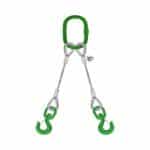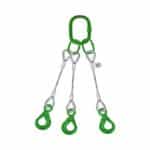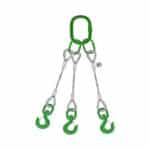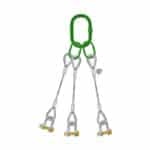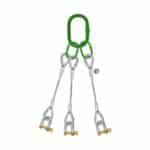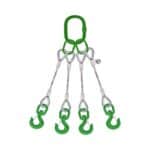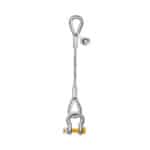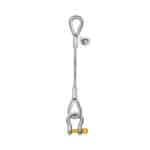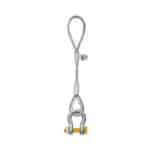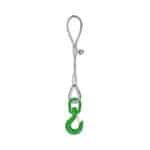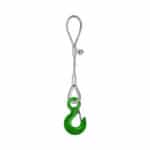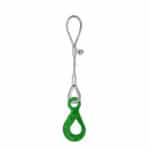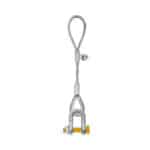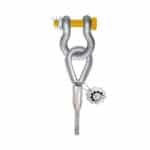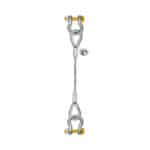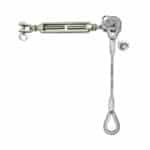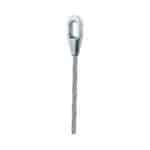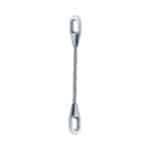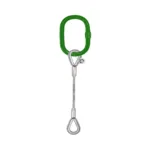
3×7 (1-6) Steel Wire Rope: Steel wire ropes are the backbone of industrial lifting, pulling, and structural support across many sectors. Among the many available configurations, the 3×7 (1-6) construction is known for its simplicity, strength, and resistance to rotation — ideal for both general-purpose and specialized applications. At SSTC, we aim to provide not just the best in steel wire rope products across Saudi Arabia but also the technical knowledge to use them responsibly and effectively.
In this article, we go deep into the structure, functionality, and real-world applications of the 3×7 (1-6) steel wire rope, empowering you to make informed, safe choices for your business.
What Does “3×7 (1-6)” Mean?
To understand 3×7 (1-6), let’s decode the nomenclature:
3×7: The rope is composed of 3 strands, and each strand contains 7 wires.
(1-6): Each of those 7-wire strands has 1 central wire surrounded by 6 outer wires — this is known as a standard 1+6 configuration.
This type of construction is simple, strong, and predictable, making it ideal for lower-flex, high-stability tasks.
Key Structural Features
Basic Anatomy:
Strands: 3 total
Wires per Strand: 7 (1 central + 6 outer)
Total Wires: 21
Core Type: Typically WSC (wire strand core)
Lay Type: Right or Left Lay, Regular or Lang’s lay
Core Strengths:
Excellent linear strength
High crushing resistance
Minimal elongation
Rotational stability
Simplified maintenance
These properties make the 3×7 wire rope perfect for tasks requiring minimal rotation and solid tension integrity.
Note: Always confirm specifications for load-critical applications with your supplier.
Applications of 3×7 (1-6) Steel Wire Rope
Thanks to its high linear strength and low flexibility, the 3×7 construction is best suited for:
1. Guy Wires and Tensioning Systems
Used to stabilize towers, antennas, and poles — especially in Saudi Arabia’s windy desert environments.
2. Garage Doors and Overhead Doors
3×7 ropes are often used in torsion spring and counterweight mechanisms.
3. Control Cables
Aircraft, industrial machinery, and automotive sectors use this construction in throttle and brake systems.
4. Marine Rigging
Due to its corrosion-resistant options (galvanized or stainless), it’s ideal for sailboat stays, anchor lines, and winch systems.
5. Safety Cable Systems
Anti-fall systems and tension safety lines in industrial platforms or scaffolding often rely on 3×7 ropes.
Comparing 3×7 with Other Wire Rope Constructions
Construction
Flexibility
Strength
Rotation Resistant
Use Case
1×7
Low
High
Yes
Static structures
3×7 (1-6)
Moderate
Moderate
Yes
Control cables, guy wires
7×7
Good
Moderate
Moderate
Pulley systems, general use
6×19
High
High
No
Cranes, elevators
Bottom Line:
If your application requires stable, moderate-strength cabling with little flex and no spin, 3×7 is the perfect middle ground.
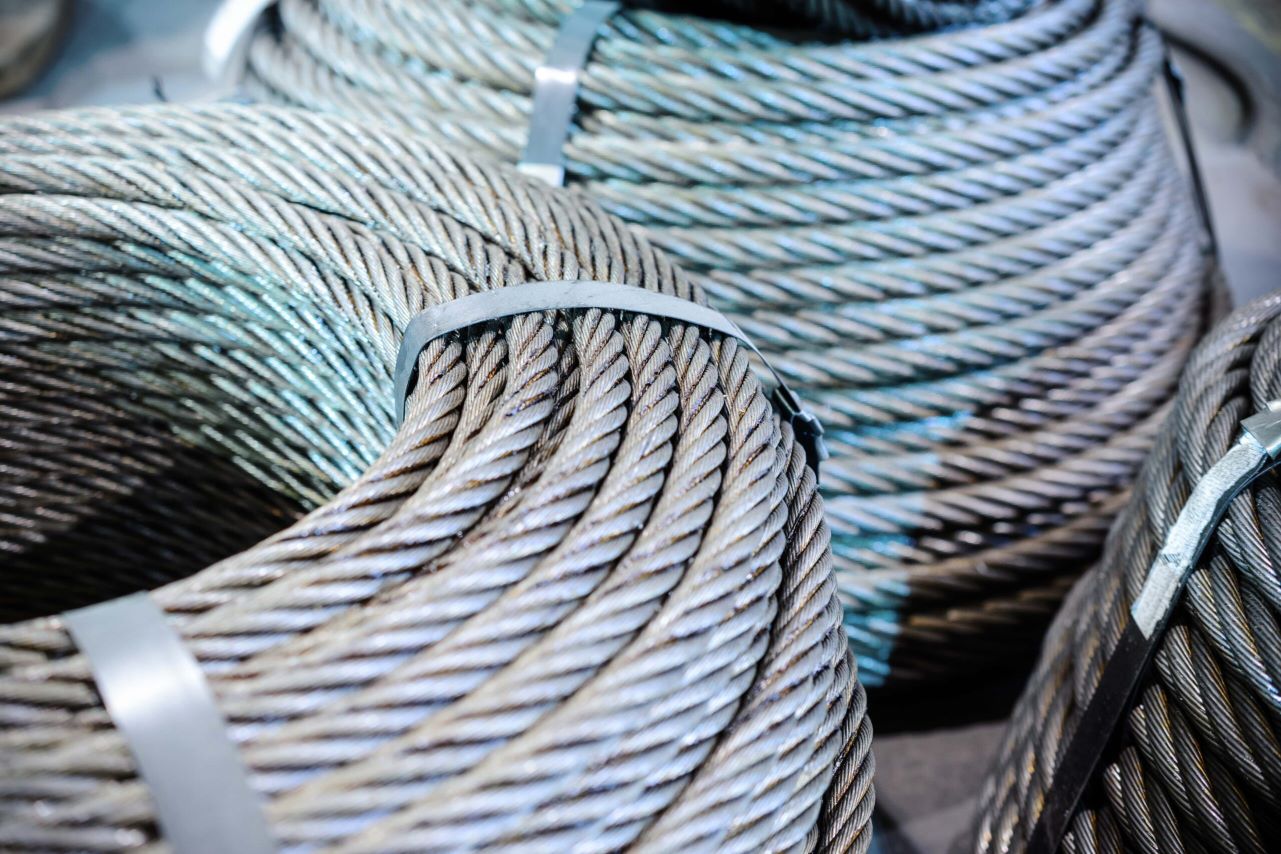
Inside the Design: Understanding 3×7 (1-6) Steel Wire Rope Construction
Installation Best Practices
Proper installation ensures safety and rope longevity. Here’s how to do it right:
DO:
Unreel properly: Always unreel the wire rope in a straight line from the drum.
Check tension: Install with appropriate pretension for the application.
Use compatible hardware: Terminals, thimbles, and eyelets must match the rope size and construction.
Terminate correctly: Use swaged fittings or looped ends with thimbles for secure terminations.
DON’T:
Don’t allow sharp bends — the minimum bend radius should be at least 15 times the rope diameter.
Don’t use damaged or kinked rope.
Don’t mismatch strands — always use the same construction and material for replacements.
Care Guidelines
Regular maintenance ensures continued performance, especially in hot, sandy, or corrosive environments like those across Saudi Arabia.
Inspection Routine:
Weekly or monthly (depending on use intensity)
Check for:
Broken wires
Surface corrosion
Flattened or kinked segments
Loose fittings
Lubrication:
Use penetrating wire rope lubricants that seep into the core
Avoid petroleum-based greases for PVC-coated or stainless variants
Replacement Signs:
Six or more broken wires in one lay
Severe rusting
Core extrusion or unraveling
Greater than 10% loss of rope diameter
Why Choose SSTC in Saudi Arabia?
At Safe and Secure Trading Company (SSTC), we specialize in premium rigging and lifting solutions across KSA. Our steel wire ropes — including 3×7 constructions — are sourced from trusted international and local manufacturers and comply with ISO and SASO standards.

We Offer:
Custom lengths and pre-assembled terminations
Corrosion-resistant galvanized or stainless steel options
Full accessory kits (thimbles, shackles, turnbuckles)
Technical support for installation and inspection
Fast shipping across Riyadh, Jeddah, Dammam, and industrial cities

Final Thoughts

3×7 (1-6) steel wire rope is a trusted workhorse in industrial, commercial, and marine environments. Its balance of strength, rotation resistance, and ease of use makes it a go-to option for everything from guy lines to control cables.


By understanding its design and applying best practices in installation and maintenance, you ensure safe, long-lasting performance.
This mode enables people with epilepsy to use the website safely by eliminating the risk of seizures that result from flashing or blinking animations and risky color combinations.
Visually Impaired Mode
Improves website's visuals
This mode adjusts the website for the convenience of users with visual impairments such as Degrading Eyesight, Tunnel Vision, Cataract, Glaucoma, and others.
Cognitive Disability Mode
Helps to focus on specific content
This mode provides different assistive options to help users with cognitive impairments such as Dyslexia, Autism, CVA, and others, to focus on the essential elements of the website more easily.
ADHD Friendly Mode
Reduces distractions and improve focus
This mode helps users with ADHD and Neurodevelopmental disorders to read, browse, and focus on the main website elements more easily while significantly reducing distractions.
Blindness Mode
Allows using the site with your screen-reader
This mode configures the website to be compatible with screen-readers such as JAWS, NVDA, VoiceOver, and TalkBack. A screen-reader is software for blind users that is installed on a computer and smartphone, and websites must be compatible with it.
Online Dictionary
Readable Experience
Content Scaling
Default
Text Magnifier
Readable Font
Dyslexia Friendly
Highlight Titles
Highlight Links
Font Sizing
Default
Line Height
Default
Letter Spacing
Default
Left Aligned
Center Aligned
Right Aligned
Visually Pleasing Experience
Dark Contrast
Light Contrast
Monochrome
High Contrast
High Saturation
Low Saturation
Adjust Text Colors
Adjust Title Colors
Adjust Background Colors
Easy Orientation
Mute Sounds
Hide Images
Hide Emoji
Reading Guide
Stop Animations
Reading Mask
Highlight Hover
Highlight Focus
Big Dark Cursor
Big Light Cursor
Cognitive Reading
Virtual Keyboard
Navigation Keys
Voice Navigation
Accessibility Statement
safeandsecureksa.com
16 February 2026
Compliance status
We firmly believe that the internet should be available and accessible to anyone, and are committed to providing a website that is accessible to the widest possible audience,
regardless of circumstance and ability.
To fulfill this, we aim to adhere as strictly as possible to the World Wide Web Consortium’s (W3C) Web Content Accessibility Guidelines 2.1 (WCAG 2.1) at the AA level.
These guidelines explain how to make web content accessible to people with a wide array of disabilities. Complying with those guidelines helps us ensure that the website is accessible
to all people: blind people, people with motor impairments, visual impairment, cognitive disabilities, and more.
This website utilizes various technologies that are meant to make it as accessible as possible at all times. We utilize an accessibility interface that allows persons with specific
disabilities to adjust the website’s UI (user interface) and design it to their personal needs.
Additionally, the website utilizes an AI-based application that runs in the background and optimizes its accessibility level constantly. This application remediates the website’s HTML,
adapts Its functionality and behavior for screen-readers used by the blind users, and for keyboard functions used by individuals with motor impairments.
If you’ve found a malfunction or have ideas for improvement, we’ll be happy to hear from you. You can reach out to the website’s operators by using the following email
Screen-reader and keyboard navigation
Our website implements the ARIA attributes (Accessible Rich Internet Applications) technique, alongside various different behavioral changes, to ensure blind users visiting with
screen-readers are able to read, comprehend, and enjoy the website’s functions. As soon as a user with a screen-reader enters your site, they immediately receive
a prompt to enter the Screen-Reader Profile so they can browse and operate your site effectively. Here’s how our website covers some of the most important screen-reader requirements,
alongside console screenshots of code examples:
Screen-reader optimization: we run a background process that learns the website’s components from top to bottom, to ensure ongoing compliance even when updating the website.
In this process, we provide screen-readers with meaningful data using the ARIA set of attributes. For example, we provide accurate form labels;
descriptions for actionable icons (social media icons, search icons, cart icons, etc.); validation guidance for form inputs; element roles such as buttons, menus, modal dialogues (popups),
and others. Additionally, the background process scans all the website’s images and provides an accurate and meaningful image-object-recognition-based description as an ALT (alternate text) tag
for images that are not described. It will also extract texts that are embedded within the image, using an OCR (optical character recognition) technology.
To turn on screen-reader adjustments at any time, users need only to press the Alt+1 keyboard combination. Screen-reader users also get automatic announcements to turn the Screen-reader mode on
as soon as they enter the website.
These adjustments are compatible with all popular screen readers, including JAWS and NVDA.
Keyboard navigation optimization: The background process also adjusts the website’s HTML, and adds various behaviors using JavaScript code to make the website operable by the keyboard. This includes the ability to navigate the website using the Tab and Shift+Tab keys, operate dropdowns with the arrow keys, close them with Esc, trigger buttons and links using the Enter key, navigate between radio and checkbox elements using the arrow keys, and fill them in with the Spacebar or Enter key.Additionally, keyboard users will find quick-navigation and content-skip menus, available at any time by clicking Alt+1, or as the first elements of the site while navigating with the keyboard. The background process also handles triggered popups by moving the keyboard focus towards them as soon as they appear, and not allow the focus drift outside it.
Users can also use shortcuts such as “M” (menus), “H” (headings), “F” (forms), “B” (buttons), and “G” (graphics) to jump to specific elements.
Disability profiles supported in our website
Epilepsy Safe Mode: this profile enables people with epilepsy to use the website safely by eliminating the risk of seizures that result from flashing or blinking animations and risky color combinations.
Visually Impaired Mode: this mode adjusts the website for the convenience of users with visual impairments such as Degrading Eyesight, Tunnel Vision, Cataract, Glaucoma, and others.
Cognitive Disability Mode: this mode provides different assistive options to help users with cognitive impairments such as Dyslexia, Autism, CVA, and others, to focus on the essential elements of the website more easily.
ADHD Friendly Mode: this mode helps users with ADHD and Neurodevelopmental disorders to read, browse, and focus on the main website elements more easily while significantly reducing distractions.
Blindness Mode: this mode configures the website to be compatible with screen-readers such as JAWS, NVDA, VoiceOver, and TalkBack. A screen-reader is software for blind users that is installed on a computer and smartphone, and websites must be compatible with it.
Keyboard Navigation Profile (Motor-Impaired): this profile enables motor-impaired persons to operate the website using the keyboard Tab, Shift+Tab, and the Enter keys. Users can also use shortcuts such as “M” (menus), “H” (headings), “F” (forms), “B” (buttons), and “G” (graphics) to jump to specific elements.
Additional UI, design, and readability adjustments
Font adjustments – users, can increase and decrease its size, change its family (type), adjust the spacing, alignment, line height, and more.
Color adjustments – users can select various color contrast profiles such as light, dark, inverted, and monochrome. Additionally, users can swap color schemes of titles, texts, and backgrounds, with over seven different coloring options.
Animations – person with epilepsy can stop all running animations with the click of a button. Animations controlled by the interface include videos, GIFs, and CSS flashing transitions.
Content highlighting – users can choose to emphasize important elements such as links and titles. They can also choose to highlight focused or hovered elements only.
Audio muting – users with hearing devices may experience headaches or other issues due to automatic audio playing. This option lets users mute the entire website instantly.
Cognitive disorders – we utilize a search engine that is linked to Wikipedia and Wiktionary, allowing people with cognitive disorders to decipher meanings of phrases, initials, slang, and others.
Additional functions – we provide users the option to change cursor color and size, use a printing mode, enable a virtual keyboard, and many other functions.
Browser and assistive technology compatibility
We aim to support the widest array of browsers and assistive technologies as possible, so our users can choose the best fitting tools for them, with as few limitations as possible. Therefore, we have worked very hard to be able to support all major systems that comprise over 95% of the user market share including Google Chrome, Mozilla Firefox, Apple Safari, Opera and Microsoft Edge, JAWS and NVDA (screen readers).
Notes, comments, and feedback
Despite our very best efforts to allow anybody to adjust the website to their needs. There may still be pages or sections that are not fully accessible, are in the process of becoming accessible, or are lacking an adequate technological solution to make them accessible. Still, we are continually improving our accessibility, adding, updating and improving its options and features, and developing and adopting new technologies. All this is meant to reach the optimal level of accessibility, following technological advancements. For any assistance, please reach out to