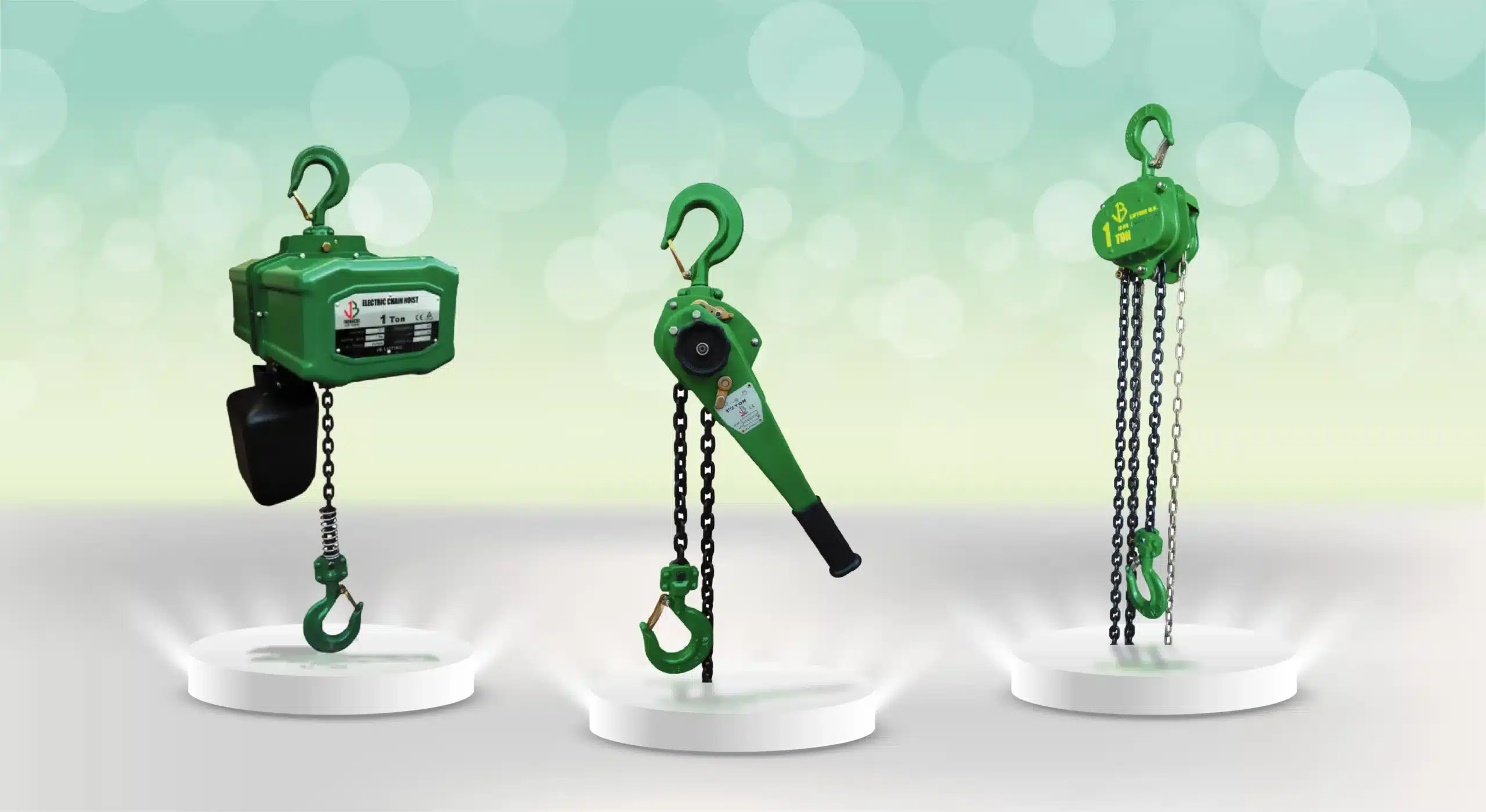
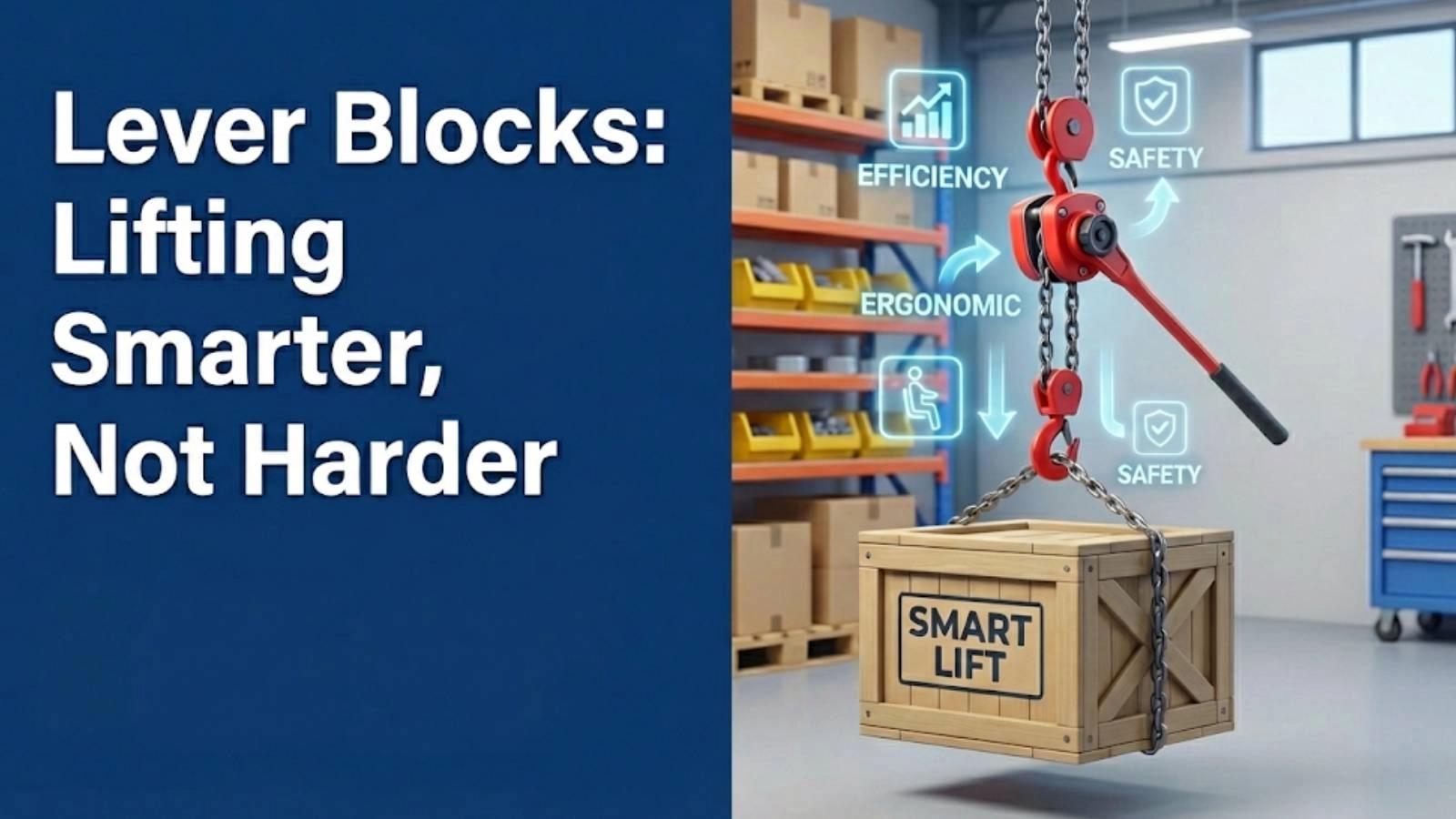
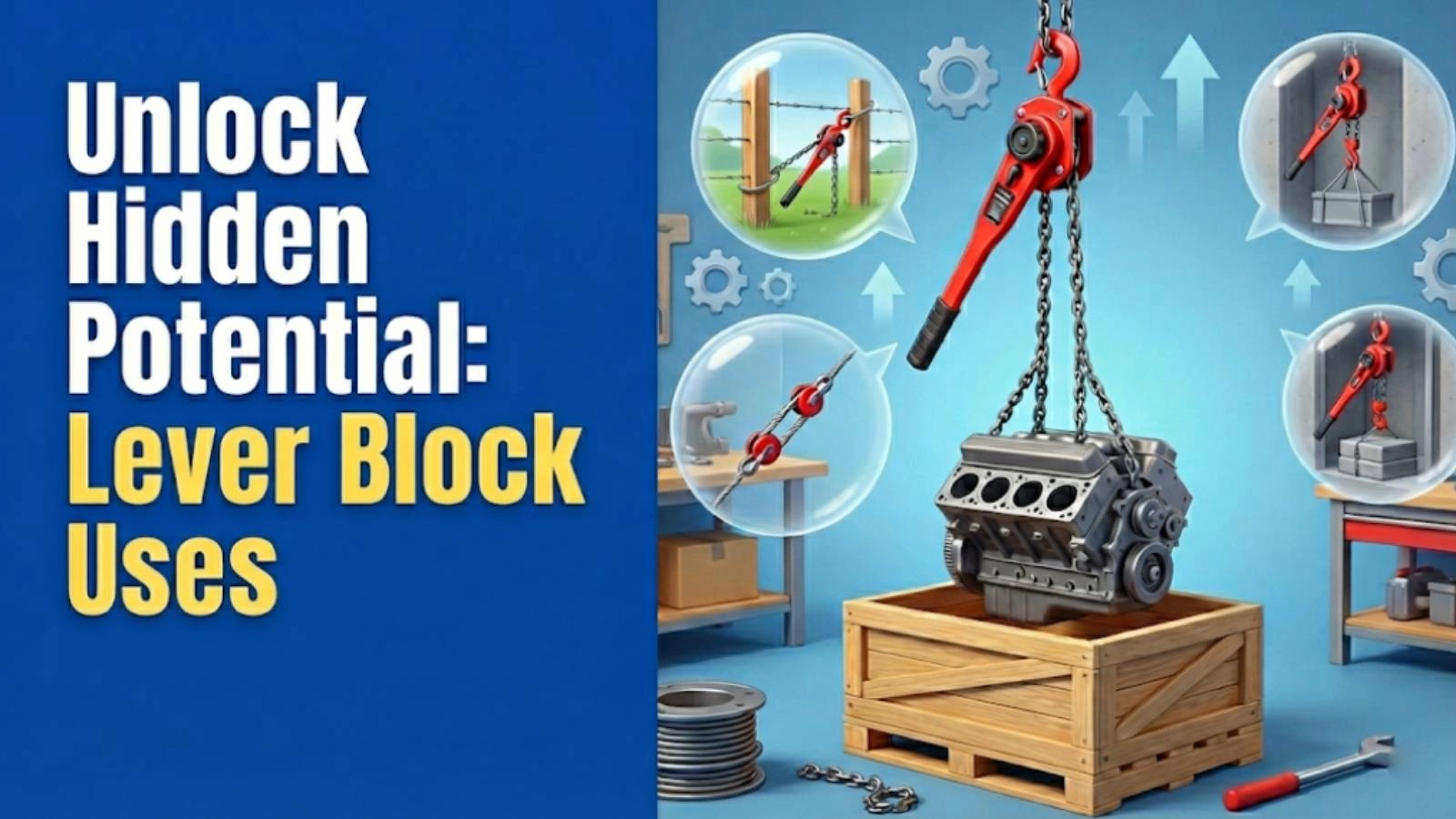
Lever blocks are often seen as simple tools for basic lifting tasks. But what if I told you they’re capable of so much more? I remember a time when a vital piece of equipment broke down on a remote site, and we were facing a major delay. Traditional methods were failing, and the clock was ticking. That’s when someone suggested using a lever block in an unconventional way to realign the machinery. It worked like a charm! It was an “aha” moment, realizing the true potential of these unassuming devices.
This article will explore the surprising lever block applications that go far beyond the usual. Whether you’re a seasoned professional or a weekend DIYer, you’ll discover how these tools can provide solutions you never thought possible. We’ll uncover how these can be used in tree felling, vehicle recovery, and much more.
1. ✅ Precision Tree Felling: The Arborist’s Secret Weapon
Uncontrolled tree felling can be incredibly dangerous. A falling tree can cause significant damage to property, injure personnel, or even result in fatalities. Imagine a scenario where a large tree is leaning precariously close to a building. The slightest miscalculation could lead to disaster. Using a lever block can provide the controlled directional felling necessary to minimize these risks.
A lever block allows you to apply a precise pulling force, guiding the tree’s descent exactly where you want it. This is especially critical in urban environments or areas with limited space. At Safe and Secure Trading Company (SSTC), we’ve worked with numerous arborists who rely on lever blocks as an essential tool for safe and efficient tree removal.
Setting up the Lever Block System for Tree Felling
Setting up a lever block system for tree felling requires careful planning and execution. First, you need to identify a suitable anchor point on the opposite side of the intended fall direction. Then, securely attach the lever block to the tree and the anchor point using appropriate rigging equipment, such as chain blocks or sturdy straps. Finally, ensure the line is clear of any obstructions and that everyone involved understands the plan.
Maintaining Tension and Control
Maintaining tension and control is crucial throughout the felling process. As the tree is being cut, gradually increase the tension on the lever block to guide the tree’s fall. Avoid sudden jerks or releases of tension, as this can cause the tree to behave unpredictably. Constant communication between the arborist and the person operating the lever block is essential.
Safety Considerations When Felling Trees
Safety must always be the top priority when felling trees. Wear appropriate personal protective equipment (PPE), including a hard hat, safety glasses, and sturdy boots. Establish a clear exclusion zone around the work area to prevent unauthorized entry. Before starting, inspect all equipment for signs of wear or damage, and never exceed the lever block’s working load limit.
2. ✅ Vehicle Recovery: A Lifesaver for Off-Road Adventures
Picture this: You’re miles from civilization, enjoying an off-road adventure. Suddenly, your vehicle becomes hopelessly stuck in deep mud or soft sand. You’re stranded, with no immediate help in sight. This is where a lever block can be a true lifesaver. A lever block, combined with chain blocks, offers the pulling power needed to free a vehicle from seemingly impossible situations.
The mechanical advantage provided by a lever block allows you to exert a tremendous pulling force with minimal effort. Even if you’re alone, you can use a lever block to winch your vehicle out of trouble. We’ve heard countless stories from our clients who swear by lever blocks for vehicle recovery, especially here in the challenging terrains surrounding Riyadh.
“A lever block is essential gear for any serious off-roader. It’s saved me from being stranded more times than I can count.” – John Smith, Off-Road Enthusiast
Choosing the Right Lever Block for Vehicle Recovery
Choosing the right lever block for vehicle recovery depends on the size and weight of your vehicle, as well as the types of terrain you’re likely to encounter. Opt for a lever block with a sufficient working load limit and a durable construction that can withstand the rigors of off-road use. Consider models with longer chains or ropes for increased versatility.
Anchoring Techniques for Secure Pulling
Secure anchoring is essential for effective vehicle recovery. Look for sturdy anchor points, such as trees, rocks, or other vehicles. Use appropriate straps or chains to connect the lever block to the anchor point, ensuring a secure and stable connection. Avoid anchoring to objects that could potentially break or move during the pulling process.
Step-by-Step Guide to Vehicle Extraction
1. Assess the situation and determine the best direction to pull the vehicle.
2. Locate a suitable anchor point and securely attach the lever block.
3. Connect the lever block to the vehicle’s recovery points using appropriate straps or chains.
4. Slowly and steadily apply tension to the lever block, monitoring the vehicle’s movement.
5. If necessary, reposition the anchor point or adjust the rigging to optimize the pulling force.
6. Once the vehicle is free, carefully disconnect the lever block and store it properly.
3. ✅ Tensioning Fences: Creating a Fortress of Security
Properly tensioned fences are crucial for a variety of reasons, whether you’re containing livestock, securing a property, or maintaining privacy. A sagging or loose fence is not only unsightly but also ineffective at fulfilling its intended purpose. Using a lever block provides a controlled and efficient way to tension fence wires or netting, ensuring a tight and secure barrier. For many of our clients here in Dammam, we’ve seen that using lever blocks is easier and provides more reliable tension compared to come along winch products.
The pulling force offered by a lever block allows you to achieve the precise level of tension required for different types of fences. This eliminates the guesswork and ensures consistent results. We’ve found that lever blocks are particularly useful for tensioning long stretches of fence, where manual methods can be challenging and time-consuming.
Setting Up a Fence Tensioning System
Setting up a fence tensioning system with a lever block is straightforward. First, securely attach one end of the fence wire or netting to a fixed post. Then, attach the lever block to the other end of the wire and to another secure post. Use the lever block to gradually increase the tension on the wire until the desired level is achieved.
Achieving the Correct Tension Levels
Achieving the correct tension levels is essential for a properly functioning fence. Too little tension can result in a loose and ineffective barrier, while too much tension can damage the fence materials. Refer to the manufacturer’s recommendations for the appropriate tension levels for your specific type of fence.
Avoiding Damage to Fence Materials
To avoid damage to fence materials, use caution when tensioning the fence wire or netting. Avoid over-tensioning, which can cause the wire to snap or the posts to buckle. Use padding or protective sleeves to prevent the lever block from chafing or damaging the fence materials. Regularly inspect the fence for signs of wear or damage, and make any necessary repairs promptly.
4. ✅ Emergency Rigging: Quick Solutions in Unexpected Situations
In emergency situations, quick thinking and resourceful solutions are paramount. A lever block can be a crucial tool for emergency repairs, providing the lifting and pulling power needed to overcome unexpected challenges. Whether you’re dealing with a broken-down machine, a collapsed structure, or any other unforeseen crisis, a lever block can help you get the job done safely and effectively.
The versatility of a lever block makes it an invaluable asset in emergency rigging scenarios. It can be used to lift heavy objects, pull structures into alignment, or secure unstable loads. A study by the National Safety Council found that improper rigging accounts for 10% of all crane-related accidents. This highlights the importance of using appropriate rigging equipment and following safe practices, especially in emergency situations.
Assessing the Situation and Planning Your Lift
Before attempting any emergency rigging, it’s crucial to assess the situation and develop a plan. Identify the specific problem that needs to be addressed, and determine the best approach for using the lever block to solve it. Consider the weight and stability of the load, the available anchor points, and any potential hazards in the work area.
Selecting Appropriate Anchor Points
Selecting appropriate anchor points is critical for safe and effective emergency rigging. Choose anchor points that are strong, stable, and capable of supporting the weight of the load. Avoid anchoring to objects that could potentially break or move during the lifting process. Use appropriate straps or chains to create a secure connection between the lever block and the anchor points.
Communication and Teamwork during Emergency Rigging
Communication and teamwork are essential during emergency rigging. Ensure that everyone involved understands the plan and their specific roles. Use clear and concise hand signals or verbal commands to coordinate the lifting process. Maintain constant communication throughout the operation to identify and address any potential problems.
5. ✅ Securing Loads: Preventing Disasters in Transit
Unsecured loads can be incredibly dangerous, posing a serious threat to both people and property. A sudden shift in cargo can cause accidents, damage goods, and even lead to fatalities. Using lever blocks provides a reliable way to secure heavy items during transport, preventing movement and ensuring a safe journey. These are often used with other material handling equipment.
The lever block applications for securing loads are numerous. They can be used to tension straps or chains that hold items in place on a flatbed truck, in a shipping container, or on any other type of transport vehicle. For many of our clients in the transportation industry, we always encourage proper load securement.
Choosing the Right Straps and Chains for Load Security
Choosing the right straps and chains is crucial for effective load security. Select straps and chains that are rated for the weight and size of the load being transported. Ensure that the straps and chains are in good condition, free from any signs of wear or damage. Use appropriate hardware, such as shackles and hooks, to create secure connections.
Calculating the Required Tension for Different Loads
Calculating the required tension is essential for preventing load shifting during transport. The amount of tension needed depends on the weight of the load, the friction between the load and the transport surface, and the anticipated forces during transit (e.g., acceleration, deceleration, turning). Consult industry guidelines and regulations to determine the appropriate tension levels for different types of loads.
Inspection and Maintenance of Load Securing Equipment
Regular inspection and maintenance of load securing equipment are essential for ensuring its continued effectiveness. Inspect straps, chains, and hardware for signs of wear, damage, or corrosion. Replace any damaged or worn components immediately. Lubricate moving parts to prevent seizing or binding. Store load securing equipment in a dry and protected environment when not in use.
6. ✅ Salvage Operations: Delicate Recovery with Controlled Force
Salvage operations often involve recovering valuable items from difficult or hazardous locations. This type of work requires a high degree of precision and control to minimize the risk of further damage. Lever blocks offer the delicate touch needed for salvage work, providing the controlled force necessary to lift, pull, or move items without causing additional harm.
The pulling force and controlled movement offered by lever blocks make them ideal for a variety of salvage applications. They can be used to recover sunken objects from underwater, extract debris from collapsed buildings, or remove delicate artifacts from sensitive environments. Our team at SSTC has seen these used in a number of different applications.
Rigging for Underwater Salvage
Rigging for underwater salvage requires specialized techniques and equipment. Use waterproof straps and chains that are resistant to corrosion. Employ divers to attach the lever block to the submerged object, ensuring a secure and stable connection. Coordinate the lifting process carefully, using clear communication between the divers and the surface crew.
Working in Confined Spaces
Working in confined spaces presents unique challenges for salvage operations. Use compact lever blocks that can be easily maneuvered in tight quarters. Ensure adequate ventilation and lighting to provide a safe and comfortable working environment. Employ spotters to monitor the lifting process and provide guidance to the rigging crew.
Minimizing Damage During Recovery
Minimizing damage is paramount during salvage operations. Use padding or protective sleeves to prevent the lever block from scratching or damaging the salvaged items. Apply tension gradually and smoothly, avoiding sudden jerks or releases of force. Employ multiple lever blocks to distribute the load and reduce stress on individual components.
7. ✅ Aligning Machinery: Achieving Precision in Manufacturing
Precise alignment is essential in many industrial settings, particularly in manufacturing. Misaligned machinery can lead to increased wear and tear, reduced efficiency, and even catastrophic failures. Lever blocks can be used to fine-tune the position of heavy machinery, ensuring accurate alignment and optimal performance.
The mechanical advantage provided by a lever block allows for incremental adjustments, making it easy to achieve the precise alignment required. In our experience, a come along winch is not sufficient for this, as the movement is less precise. This is especially important when working with sensitive equipment or tight tolerances. For several of our clients in Jubail, we have seen the increased efficiency that precise alignment delivers.
Using Lasers and Levels for Accurate Alignment
Using lasers and levels is crucial for achieving accurate machinery alignment. Lasers provide a precise reference point for measuring the position of different machine components. Levels ensure that the machinery is properly oriented in the vertical plane. Combine these tools with a lever block to make fine adjustments and achieve optimal alignment.
Applying Incremental Adjustments
Applying incremental adjustments is key to achieving precise machinery alignment. Use the lever block to make small, gradual adjustments to the position of the machinery, carefully monitoring the alignment with lasers and levels. Avoid making large or sudden adjustments, as this can throw the machinery out of alignment.
Locking Down Machinery After Alignment
Once the machinery is properly aligned, it’s essential to lock it down to prevent it from shifting out of position. Use bolts, shims, or other appropriate hardware to secure the machinery to its foundation. Regularly inspect the alignment to ensure that it remains within acceptable tolerances.
8. ✅ Theater Rigging: Creating the Illusion of Flight
Behind the scenes of a theatrical production lies a complex rigging system that allows for the creation of dramatic effects, including the illusion of flight. Lever blocks play a vital role in this system, providing the lifting and lowering power needed to move scenery, props, and even performers.
The lever block applications in theater rigging are numerous and varied. They can be used to raise and lower backdrops, fly performers across the stage, or create other special effects. We have been privileged to see the artistry and ingenuity of stage crews firsthand.
Choosing the Right Lever Block for Stage Rigging
Choosing the right lever block for stage rigging requires careful consideration of the load capacity, safety factors, and operational requirements. Select lever blocks that are specifically designed for theater use, with features such as quiet operation and smooth, controlled movement. Ensure that the lever blocks are regularly inspected and maintained to ensure their safe and reliable performance.
Understanding Load Limits and Safety Factors
Understanding load limits and safety factors is critical for safe stage rigging. The load limit is the maximum weight that a lever block is designed to lift or support. The safety factor is a multiplier that is applied to the load limit to account for unexpected stresses or variations in load distribution. Always operate lever blocks within their specified load limits and safety factors.
Communicating with the Stage Crew During Performances
Communication is essential for safe and effective stage rigging during performances. Use a clear and concise communication system, such as headsets or hand signals, to coordinate the movements of the rigging crew. Ensure that everyone involved understands their specific roles and responsibilities. Conduct regular safety briefings to review procedures and address any potential hazards.
9. ✅ Boat and Pontoon Leveling: Stabilizing Your Waterfront
Lever blocks can ensure that boats and pontoons are level for safe usage. Ensuring your boat is level is crucial to keeping it balanced and stable on the water.
A good starting point is to ensure you have the proper straps to secure your boat. This will keep it from unwanted movement. It is also important to know the weight limits for the body of water your boat is on, as this can affect the tension of your boat, and how you should use your lever blocks. Always store your lever blocks in a cool, dry area when not in use.
Ensuring proper use of straps to secure your boat.
Make sure straps are properly connected to your boat, and the anchor point on the trailer. This will minimize movement and keep the boat aligned as you level it.
Understanding load limits for specific bodies of water.
Each body of water is different, and the salinity and currents can affect your pontoon. You may have to re-adjust lever block tension based on how the water and weather is affecting it.
Proper storage of your lever blocks after use.
Be sure to store your lever blocks in a safe place, away from water and other harmful elements. This will expand their lifespan.
| Application |
Benefits |
Considerations |
| Precision Tree Felling |
Controlled directional felling, minimizes risk |
Secure anchor points, proper PPE |
| Vehicle Recovery |
Provides pulling power to free stuck vehicles |
Appropriate lever block size, secure anchoring |
| Tensioning Fences |
Efficiently tensions fence wires for security |
Correct tension levels, avoiding damage |
| Emergency Rigging |
Quick solutions in unexpected situations |
Situation assessment, communication |
| Securing Loads |
Prevents disasters in transit |
Appropriate straps, calculating tension |
| Salvage Operations |
Delicate recovery with controlled force |
Specialized rigging, minimizing damage |
| Aligning Machinery |
Achieving precision in manufacturing |
Lasers and levels, incremental adjustments |
| Theater Rigging |
Creating the illusion of flight |
Load limits, safety factors, communication |
| Boat Leveling |
Boat remains level for stability |
Strap use, water level knowledge, storage |
Top 3 Unexpected Applications (Summary):
1. Precision Tree Felling
2. Vehicle Recovery
3. Salvage Operations
Conclusion: Expanding Your Toolkit with Lever Block Applications
As we’ve explored, lever block applications extend far beyond simple lifting tasks. From precision tree felling to delicate salvage operations, these versatile tools offer a unique combination of power, control, and mechanical advantage. The lifting equipment solutions that lever blocks provide are vital in today’s world.
We encourage you to consider how you can leverage the power of lever blocks to solve problems and improve efficiency in your own projects. Whether you’re a professional contractor or a weekend DIYer, a lever block can be an invaluable addition to your toolkit. The safety, control, and mechanical advantage they offer make them a smart investment for anyone who needs to lift, pull, or secure heavy objects. We at Safe and Secure Trading Company are here to help you find the right lever block for your needs.
FAQ Section
Q: What is a lever block?
A: A lever block is a hand-operated device used for lifting, pulling, and tensioning heavy objects. It uses a lever and a ratchet mechanism to provide mechanical advantage, allowing you to exert a large force with minimal effort.
Q: What are the main advantages of using a lever block?
A: The main advantages of using a lever block include its portability, ease of use, and ability to provide a high degree of control. It can be used in a variety of applications, including lifting, pulling, tensioning, and securing loads.
Q: What is the working load limit (WLL) of a lever block?
A: The working load limit (WLL) is the maximum weight that a lever block is designed to lift or support safely. It’s crucial to never exceed the WLL of a lever block, as this can lead to equipment failure and serious injury.
Q: How do I choose the right size lever block for my needs?
A: When choosing a lever block, consider the weight of the load you’ll be lifting or pulling, the distance you need to lift or pull it, and the available anchor points. Select a lever block with a WLL that is sufficient for the load and a chain or rope length that is appropriate for the distance.
Q: What type of maintenance is required for lever blocks?
A: Regular maintenance is essential for ensuring the safe and reliable operation of lever blocks. Inspect the lever block regularly for signs of wear, damage, or corrosion. Lubricate moving parts to prevent seizing or binding. Replace any damaged or worn components immediately.
Q: Can lever blocks be used for horizontal pulling?
A: Yes, lever blocks can be used for horizontal pulling, such as when recovering a stuck vehicle or tensioning a fence. Ensure that the anchor points are strong and stable, and use appropriate straps or chains to create a secure connection.
Q: Are lever blocks safe to use?
A: When used properly and maintained regularly, lever blocks are a safe and effective tool for lifting, pulling, and tensioning heavy objects. Always follow the manufacturer’s instructions and safety guidelines, and never exceed the WLL of the lever block.
Q: Where can I purchase high-quality lever blocks?
A: Safe and Secure Trading Company (SSTC) offers a wide range of high-quality lever blocks to meet your specific needs. We are committed to providing our customers with reliable and durable equipment that meets the highest safety standards. The rigging equipment we provide is some of the best on the market.
Q: What is the difference between a lever block and a chain hoist?
A: While both lever blocks and chain hoists are used for lifting, they operate differently and are suited for different applications. A lever block uses a hand-operated lever to ratchet the chain, making it ideal for applications where precise positioning and portability are important. A chain hoist, on the other hand, typically uses a hand-operated chain to lift the load, offering higher lifting capacities and greater lifting heights, but it may be less portable. Some chain hoists are powered, too. Lever blocks are more related to manual lifting.
Q: Can a lever block be used for unconventional lifting tasks?
A: Absolutely! One of the key takeaways from this article is the versatility of lever blocks for unconventional lifting tasks. Their ability to provide controlled pulling force and mechanical advantage makes them suitable for a wide range of applications beyond simple vertical lifting. Always assess the specific requirements of the task and ensure that the lever block is appropriately sized and rigged for the job.
Q: How does Safe and Secure Trading Company ensure the quality of its lever blocks?
A: At Safe and Secure Trading Company, we are committed to providing our customers with only the highest quality lever blocks. We source our products from reputable manufacturers who adhere to strict quality control standards. Our lever blocks are made from durable materials and are rigorously tested to ensure their safe and reliable performance.