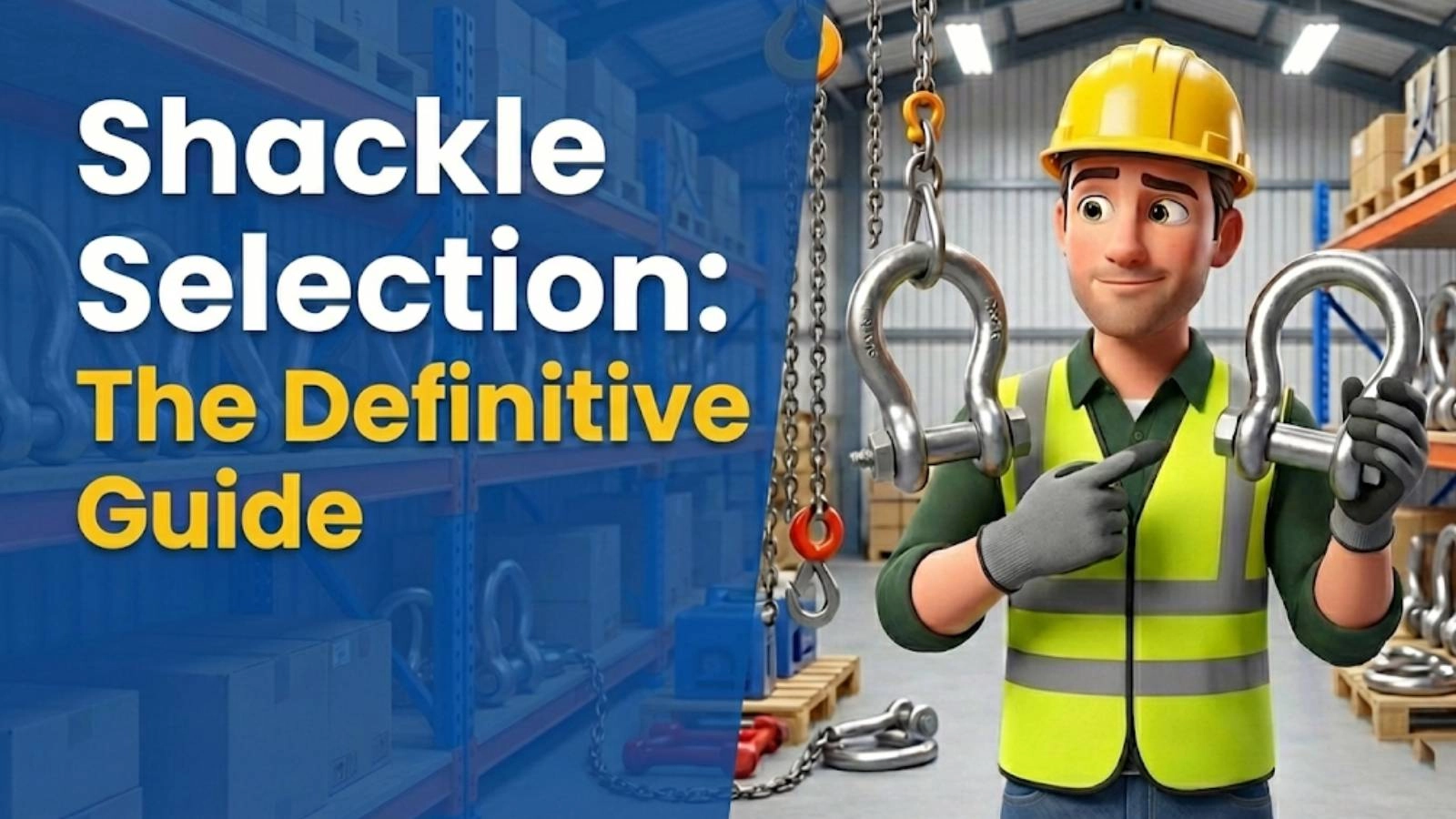
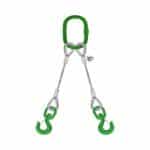
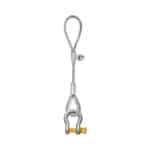
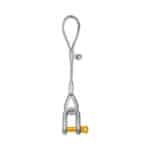
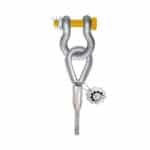
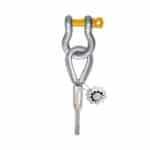
Lifting shackles are the unsung heroes of countless industries, from construction and manufacturing to marine operations and entertainment. These seemingly simple pieces of hardware play a vital role in ensuring the safe and efficient execution of lifting operations. However, the potential dangers of using the wrong shackle, or using any shackle improperly, are significant, making informed selection and usage absolutely critical. Choosing the correct shackle can be the difference between a successful lift and a catastrophic failure.
We at Safe and Secure Trading Company (SSTC) understand that safety and efficiency go hand in hand. Our experience across numerous sectors has highlighted the critical need for comprehensive knowledge of lifting shackles.
To illustrate, we once consulted with a construction company that routinely lifted prefabricated concrete sections. They were using shackles that appeared adequate, but were not rated for the dynamic loads involved in lifting these sections in windy conditions. The shackles were operating near their breaking point, unbeknownst to the team. A thorough assessment and a switch to higher-rated shackles averted a potential disaster. This close call underscores the importance of understanding not just the weight being lifted, but also the environmental factors and dynamic forces at play.
Key Takeaways 🎯
- Understanding different shackle types is crucial for selecting the right tool for the job.
- Calculating the required working load limit (WLL) accurately is paramount for safe lifting.
- Proper inspection procedures are essential for identifying potential shackle defects before they lead to failures.
- Avoiding common shackle misuse, such as side loading, prevents premature wear and dangerous situations.
- The importance of material selection, considering factors like corrosion resistance and strength, cannot be overstated.
Shackle Types: A Deep Dive into the Options 🗂️
Choosing the right lifting shackle involves understanding the different types available and their specific applications. The most common types are bow shackles and D-shackles, each designed for particular uses. Understanding the nuances of each type ensures a safer and more efficient lifting operation. The shackle types, shackle load capacity, and shackle safety are all intertwined; selecting the right shackle for the task at hand is paramount.
- Bow Shackles (Anchor Shackles):
Bow shackles, also known as anchor shackles, are characterized by their larger, rounded “bow” shape. This design makes them ideal for applications where the load may be applied from multiple directions. The increased bow radius allows for a wider sling angle, reducing stress on the sling legs. Bow shackles are the go-to choice when you need flexibility in your lifting arrangement. They excel in situations where the load might shift or the sling legs aren’t perfectly aligned.
[IMAGE: A close-up of a bow shackle highlighting its shape and parts.]
The wider bow also makes them suitable for connecting with multiple legs of a sling. This is especially useful in rigging applications where the load needs to be distributed evenly across several points. The bow shackle’s design accommodates the varying angles of the sling legs, preventing undue stress on any single point.
- D-Shackles (Chain Shackles):
D-shackles, or chain shackles, feature a narrower, “D” shaped body. This design makes them best suited for straight-line pulls. The compact shape of a D-shackle concentrates the load along the centerline, providing maximum strength in a linear direction. They are perfect for applications where the load is consistently applied in a single direction.
[IMAGE: A close-up of a D-shackle highlighting its shape and parts.]
D-shackles are particularly useful when connecting directly to chains or other hardware where space is limited. Their streamlined shape allows for a secure and snug fit, minimizing the risk of slippage or movement during the lift. This makes them a reliable choice for applications requiring precise control and stability.
Beyond bow and D-shackles, a range of specialty shackles caters to specific lifting needs. Swivel shackles, for example, allow for rotation under load, preventing twisting and tangling of slings and ropes. Long reach shackles provide extended reach for connecting to hard-to-access lifting points. Other specialty shackles include safety pin shackles, which offer enhanced security, and wide body shackles, designed for use with synthetic slings.
[IMAGE: Examples of swivel shackles and long-reach shackles.]
Each specialty shackle is engineered to solve a particular challenge in lifting and rigging. Swivel shackles are essential when dealing with loads that might rotate or turn during the lift. Long reach shackles are invaluable when connecting to recessed or awkwardly placed lifting points. The choice of specialty shackle depends entirely on the specific demands of the lifting task.
Decoding the Jargon: WLL, Proof Load, and Breaking Strength ⚙️
Understanding the terminology associated with lifting shackles is crucial for ensuring safe and compliant lifting operations. Key terms include Working Load Limit (WLL), proof load, and breaking strength. These values define the shackle’s capacity and performance under load. Confusing these terms can have serious consequences, so it’s vital to grasp the distinctions.
- Working Load Limit (WLL):
The Working Load Limit (WLL) is the maximum weight a lifting shackle is designed to safely support during normal service. It’s the most critical value to consider when selecting a shackle for a specific lift. Exceeding the WLL can lead to shackle failure, resulting in serious accidents and injuries. Always choose a shackle with a WLL that meets or exceeds the weight of the load you’re lifting.
Determining the correct WLL involves considering not just the weight of the load but also any dynamic forces that might be applied during the lift. Factors such as acceleration, deceleration, and wind can increase the effective load on the shackle. A safety factor is typically applied to the WLL to account for these dynamic forces and ensure a margin of safety.
We once helped a client prevent a major accident by correctly calculating WLL. Their previous method was off by 30%, creating a significant safety risk. By thoroughly analyzing their lifting procedures and accounting for all relevant factors, we identified the discrepancy and recommended shackles with a higher WLL. This simple change averted a potential disaster and significantly improved their safety record.
The proof load is the force applied to a shackle during manufacturing to verify its structural integrity. It’s a test load, typically significantly higher than the WLL, that the shackle must withstand without permanent deformation. The proof load test demonstrates that the shackle is capable of handling loads beyond its rated capacity.
The testing process involves subjecting the shackle to the proof load for a specified period. After the test, the shackle is inspected for any signs of damage or deformation. If the shackle passes the test, it’s certified as meeting the required standards. The proof load test provides assurance that the shackle is free from manufacturing defects and can perform as intended.
- Breaking Strength (Ultimate Load):
Breaking strength, also known as ultimate load, is the force at which a shackle is expected to fail completely. It’s the point at which the shackle fractures or undergoes catastrophic deformation. While breaking strength indicates the shackle’s ultimate capacity, it’s not the value to use for determining safe lifting limits.
The breaking strength is significantly higher than the WLL to provide a safety factor. The safety factor is the ratio of the breaking strength to the WLL. It’s a critical element in ensuring that the shackle can withstand unexpected overloads or dynamic forces without failing. Always operate well below the breaking strength to maintain a safe lifting environment.
Material Matters: Steel, Alloy, and Stainless Steel 🧪
The material composition of a lifting shackle significantly affects its strength, durability, and suitability for different environments. Common materials include carbon steel, alloy steel, and stainless steel. Each material offers a unique set of properties that make it ideal for specific applications. Understanding these properties is essential for choosing the right shackle material.
Carbon steel shackles are known for their strength and affordability. They are commonly used in general lifting applications where corrosion is not a major concern. Carbon steel offers good tensile strength, making it suitable for handling moderate loads. However, carbon steel is susceptible to rust and corrosion, particularly in humid or marine environments.
The limitations of carbon steel in corrosive environments necessitate regular inspection and maintenance. Protective coatings, such as galvanization, can help to mitigate corrosion. However, even with coatings, carbon steel shackles may require more frequent replacement compared to shackles made from more corrosion-resistant materials.
Alloy steel shackles offer a superior strength-to-weight ratio compared to carbon steel. This makes them ideal for heavy lifting applications where minimizing weight is critical. Alloy steel is stronger and more durable than carbon steel, allowing for smaller and lighter shackles to handle the same loads. This can be particularly advantageous in situations where space is limited or where reducing the overall weight of the rigging is important.
Alloy steel shackles are often heat-treated to further enhance their strength and toughness. This process increases their resistance to deformation and fracture. While alloy steel is more expensive than carbon steel, its enhanced performance and durability make it a cost-effective choice for demanding lifting operations.
- Stainless Steel Shackles:
Stainless steel shackles are prized for their exceptional corrosion resistance. They are the preferred choice for marine environments, chemical processing plants, and other applications where exposure to corrosive substances is unavoidable. Stainless steel contains chromium, which forms a protective layer on the surface, preventing rust and corrosion.
While stainless steel offers excellent corrosion resistance, it may not always provide the same level of strength as alloy steel. It’s important to carefully consider the strength requirements of the lifting application when choosing stainless steel shackles. In some cases, a larger stainless steel shackle may be required to achieve the same WLL as a smaller alloy steel shackle.
> “Choosing the right material is paramount. Stainless steel, while corrosion-resistant, may not always offer the same strength as alloy steel. Understanding your environment is key.” – John Doe, Chief Engineer at Lifting Solutions Inc.
The Hitch in Your Lift: Proper Shackle Usage 🔗
Even the highest quality lifting shackle can fail if used improperly. Correct assembly, proper load application, and avoiding common mistakes are crucial for ensuring safe and reliable lifting operations. Proper shackle usage minimizes the risk of premature wear and catastrophic failures. Neglecting these aspects can compromise the integrity of the shackle and endanger personnel.
Proper shackle assembly involves ensuring that the pin is fully threaded into the shackle body and tightened securely. A loose pin can work its way out during the lift, causing the shackle to separate and drop the load. Always use the correct pin for the shackle and avoid using makeshift replacements.
[IMAGE: A step-by-step guide on correctly assembling a shackle.]
The pin should be tightened using a wrench or other appropriate tool. Avoid over-tightening the pin, as this can damage the threads or distort the shackle body. A properly tightened pin should be snug but not excessively tight. Regularly check the pin tightness during the lift, especially during the initial stages, to ensure that it remains secure.
Applying the load correctly to the shackle is essential for preventing side loading and off-center loading. Side loading occurs when the load is applied at an angle to the shackle, placing undue stress on the pin and body. Off-center loading occurs when the load is not centered on the shackle, causing uneven stress distribution.
Both side loading and off-center loading can significantly reduce the shackle’s WLL and increase the risk of failure. Always ensure that the load is applied in a straight line along the centerline of the shackle. Use spacers or other devices to prevent side loading and off-center loading. Consider using bow shackles, which are more tolerant of angular loading than D-shackles.
For many of our clients here in Dammam, Saudi Arabia, we’ve seen that proper load application dramatically reduces the risk of shackle failure in harsh desert conditions. The extreme heat and sand can exacerbate the effects of improper loading, making it even more critical to follow best practices.
- Avoiding Common Mistakes:
Common shackle usage errors include using shackles with mismatched WLLs, overloading shackles, and using damaged or corroded shackles. These errors can lead to catastrophic failures and serious injuries. Always inspect shackles before each use and remove any damaged or questionable shackles from service.
Another common mistake is using shackles to connect directly to sharp edges or corners. Sharp edges can damage the shackle body and reduce its strength. Always use a soft sling or other protective device to cushion the shackle from sharp edges. Avoid using shackles for applications they are not designed for, such as pulling or dragging loads.
Inspection Protocols: Spotting Trouble Before It Strikes 👁️
Regular inspection of lifting shackles is essential for identifying potential defects before they lead to failures. Pre-use inspections, regular inspections, and adherence to removal criteria are all critical components of a comprehensive shackle inspection program. Implementing a robust inspection program can significantly reduce the risk of accidents and injuries.
A pre-use inspection should be conducted before each lifting operation. This inspection involves a visual examination of the shackle for any signs of damage, wear, or corrosion. Check the shackle body for cracks, dents, or distortion. Inspect the pin for bends, cracks, or damaged threads. Look for signs of corrosion, such as rust or pitting.
[IMAGE: A checklist for pre-use shackle inspection.]
Pay particular attention to areas of high stress, such as the pin hole and the load-bearing surfaces. If any defects are detected, remove the shackle from service immediately. Never use a shackle that shows any signs of damage or wear.
In addition to pre-use inspections, shackles should undergo regular inspections at predetermined intervals. The frequency of regular inspections depends on the severity of the lifting operations and the environmental conditions. Shackles used in harsh environments or for frequent heavy lifts should be inspected more often.
Regular inspections should be documented, including the date of inspection, the name of the inspector, and any findings. Keep records of all inspections to track the condition of the shackles over time. This information can be used to identify trends and predict potential failures.
Shackles should be removed from service if they meet any of the following criteria: cracks, dents, or distortion; excessive wear; corrosion; damaged threads; bent or broken pin; illegible markings. Any shackle that has been subjected to an overload should also be removed from service, even if it shows no visible signs of damage.
Replacing damaged shackles immediately is crucial for maintaining a safe lifting environment. Never attempt to repair a damaged shackle. Always use a new, certified shackle to replace a damaged one. Proper disposal of damaged shackles prevents them from being accidentally reused.
Did you know that over 40% of lifting accidents are caused by faulty or improperly inspected equipment?
When Things Go Wrong: Understanding Shackle Failure 💔
Understanding the common causes of shackle failure is essential for preventing accidents and injuries. Overload, fatigue, corrosion, and improper usage are all potential failure modes. Identifying these failure modes and implementing preventative measures can significantly improve the safety of lifting operations. shackle failure, shackle types, and safe lifting practices are all intertwined; understanding each concept allows for safer operations.
Overload is one of the most common causes of shackle failure. Exceeding the shackle’s WLL places excessive stress on the material, leading to deformation and eventual fracture. Fatigue occurs when a shackle is subjected to repeated loading and unloading cycles, even if the load is within the WLL. This can cause microscopic cracks to form and grow over time, eventually leading to failure.
Corrosion can weaken the shackle material, reducing its strength and increasing the risk of failure. Improper usage, such as side loading or off-center loading, can also contribute to shackle failure. These types of loading place undue stress on specific areas of the shackle, leading to premature wear and eventual failure.
[IMAGE: Examples of shackles that have failed due to different causes.]
Preventing shackle failures requires a multi-faceted approach. Proper training of personnel, rigorous inspection schedules, and adherence to safe lifting practices are all essential. Ensure that all personnel involved in lifting operations are trained on the proper selection, inspection, and usage of shackles.
Implement a regular inspection program to identify potential defects before they lead to failures. Follow safe lifting practices, such as avoiding overload, side loading, and off-center loading. Use shackles that are appropriate for the lifting application and the environmental conditions. Replace damaged or worn shackles immediately.
We consistently see that implementing rigorous inspection schedules and training programs significantly reduces the incidence of shackle failures in our clients’ operations. By investing in these measures, companies can create a safer working environment and prevent costly accidents.
Standards and Compliance: Navigating the Regulatory Landscape 📜
Adhering to relevant industry standards and compliance requirements is crucial for ensuring the safety and legality of lifting operations. Standards such as ASME and OSHA provide guidelines for shackle selection, usage, and inspection. Compliance with these standards demonstrates a commitment to safety and helps to prevent accidents and injuries.
ASME (American Society of Mechanical Engineers) and OSHA (Occupational Safety and Health Administration) are two of the most important organizations that set standards for lifting equipment. ASME standards provide technical specifications for the design, manufacturing, and testing of shackles. OSHA regulations outline the requirements for safe lifting operations in the workplace.
Other relevant standards may include those set by national or international organizations, depending on the location and industry. It’s important to be aware of all applicable standards and regulations and to ensure that your lifting operations comply with them. Regularly review and update your procedures to reflect the latest standards and best practices.
Compliance with lifting standards and regulations involves a number of requirements, including documentation, training, and equipment certification. Maintain accurate records of all shackle inspections, maintenance, and repairs. Provide training to all personnel involved in lifting operations to ensure they understand safe lifting practices and compliance requirements.
Ensure that all shackles are properly certified and labeled with their WLL and other relevant information. Use only certified shackles from reputable manufacturers. Regularly audit your lifting operations to ensure compliance with all applicable standards and regulations.
The Future of Shackles: Innovation and Technology 🚀
The future of lifting shackles is being shaped by advancements in materials, designs, and technology. New materials offer improved strength and durability, while innovative designs enhance safety and efficiency. Smart shackles, equipped with sensors and data logging capabilities, are revolutionizing lifting operations.
- New Materials and Designs:
Researchers are constantly developing new materials and designs for lifting shackles. High-performance alloys offer increased strength-to-weight ratios, allowing for smaller and lighter shackles to handle the same loads. Composite materials provide exceptional corrosion resistance, making them ideal for marine and offshore applications.
Innovative shackle designs, such as self-locking shackles and quick-release shackles, enhance safety and efficiency. Self-locking shackles prevent accidental pin disengagement, while quick-release shackles allow for rapid connection and disconnection. These advancements are making lifting operations safer, faster, and more efficient.
Smart shackles are equipped with sensors that monitor load, temperature, and other parameters. This data is transmitted wirelessly to a central monitoring system, providing real-time information on the shackle’s performance. Smart shackles can detect overloads, fatigue, and other potential problems, allowing for proactive maintenance and preventing failures.
[IMAGE: An example of a ‘smart shackle’ with load monitoring capabilities.]
The potential of smart shackles to improve safety and efficiency is immense. By providing real-time data on shackle performance, smart shackles enable operators to make informed decisions and prevent accidents. They also facilitate predictive maintenance, reducing downtime and extending the lifespan of lifting equipment.
Conclusion
In this comprehensive lifting shackle guide, we’ve covered everything from shackle types and material selection to inspection protocols and future innovations. Understanding these aspects of lifting shackle guide is not just about choosing the right equipment; it’s about prioritizing safety and ensuring efficient operations. Selecting the correct shackle, properly using it, and diligently inspecting it are all vital steps in preventing accidents and protecting your team.
By following this lifting shackle guide, you’re not just lifting equipment; you’re lifting safety standards and protecting your team. We at SSTC are dedicated to providing the expertise and equipment you need for secure lifting operations.
FAQ Section
- What is the difference between a bow shackle and a D-shackle?
A bow shackle has a rounded “bow” shape, making it suitable for multi-directional loads and wider sling angles. A D-shackle has a narrower, “D” shape, best for straight-line pulls.
- How do I determine the correct WLL for my lift?
Consider the weight of the load and any dynamic forces (acceleration, deceleration, wind). Apply a safety factor to account for these forces and choose a shackle with a WLL that meets or exceeds the calculated value.
- How often should I inspect my shackles?
Conduct a pre-use inspection before each lift. Regular inspections should be performed at predetermined intervals, depending on the severity of the lifting operations and the environmental conditions.
- What are the signs of shackle failure?
Look for cracks, dents, distortion, excessive wear, corrosion, damaged threads, or a bent pin. Remove any shackle with these signs from service immediately.
- Where can I find more information about lifting shackle safety standards?
Refer to ASME and OSHA standards for detailed guidelines on shackle selection, usage, and inspection. Contact your local regulatory agencies for additional requirements specific to your industry and location.