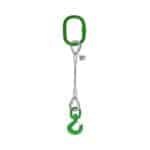
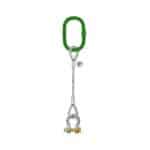
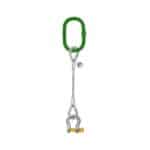
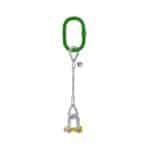
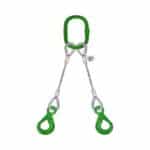
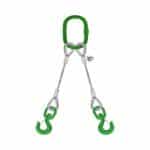
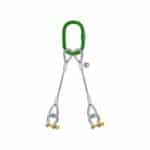
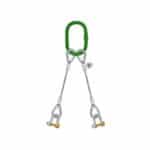
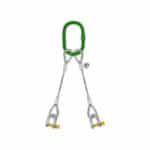
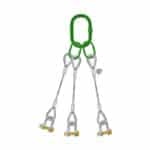
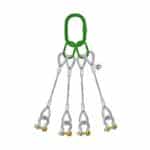
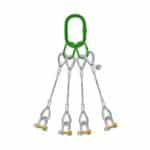
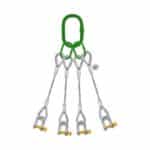
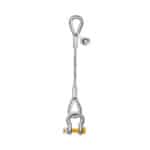
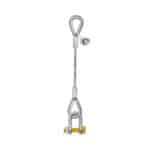
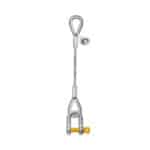
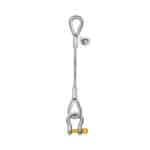
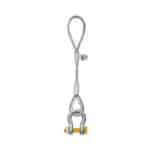
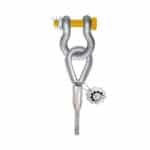
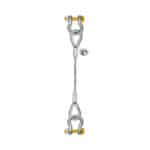
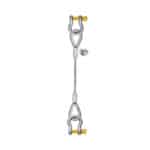
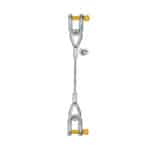
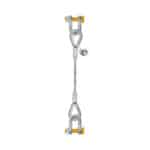
Shackles are a critical component in lifting operations, and the choice of lifting shackle materials significantly impacts safety, efficiency, and overall performance. With advancements in material science and evolving industry standards, selecting the right shackle material requires a thorough understanding of available options and their respective strengths and weaknesses. This article provides an in-depth comparison of common lifting shackle materials, including alloy steel, carbon steel, and stainless steel, as well as emerging alternatives.
Introduction: The Evolving World of Lifting Shackle Materials
The world of lifting is constantly evolving, demanding stronger, safer, and more reliable equipment. Shackles, being a vital link in the chain, are at the forefront of this evolution. The materials used in their construction are undergoing continuous refinement to meet the ever-increasing demands of various industries.
Why Material Choice Matters: A Trend-Focused Perspective
Selecting the correct lifting shackle materials is paramount, not just for operational efficiency but also for the safety of personnel and the integrity of the load. Using the wrong material can lead to catastrophic failures, resulting in injuries, damage, and costly downtime. The trend is shifting towards specialized materials tailored for specific applications. New safety standards are constantly being implemented, dictating higher quality material usage.
A Quick Shackle Overview: D vs. Bow
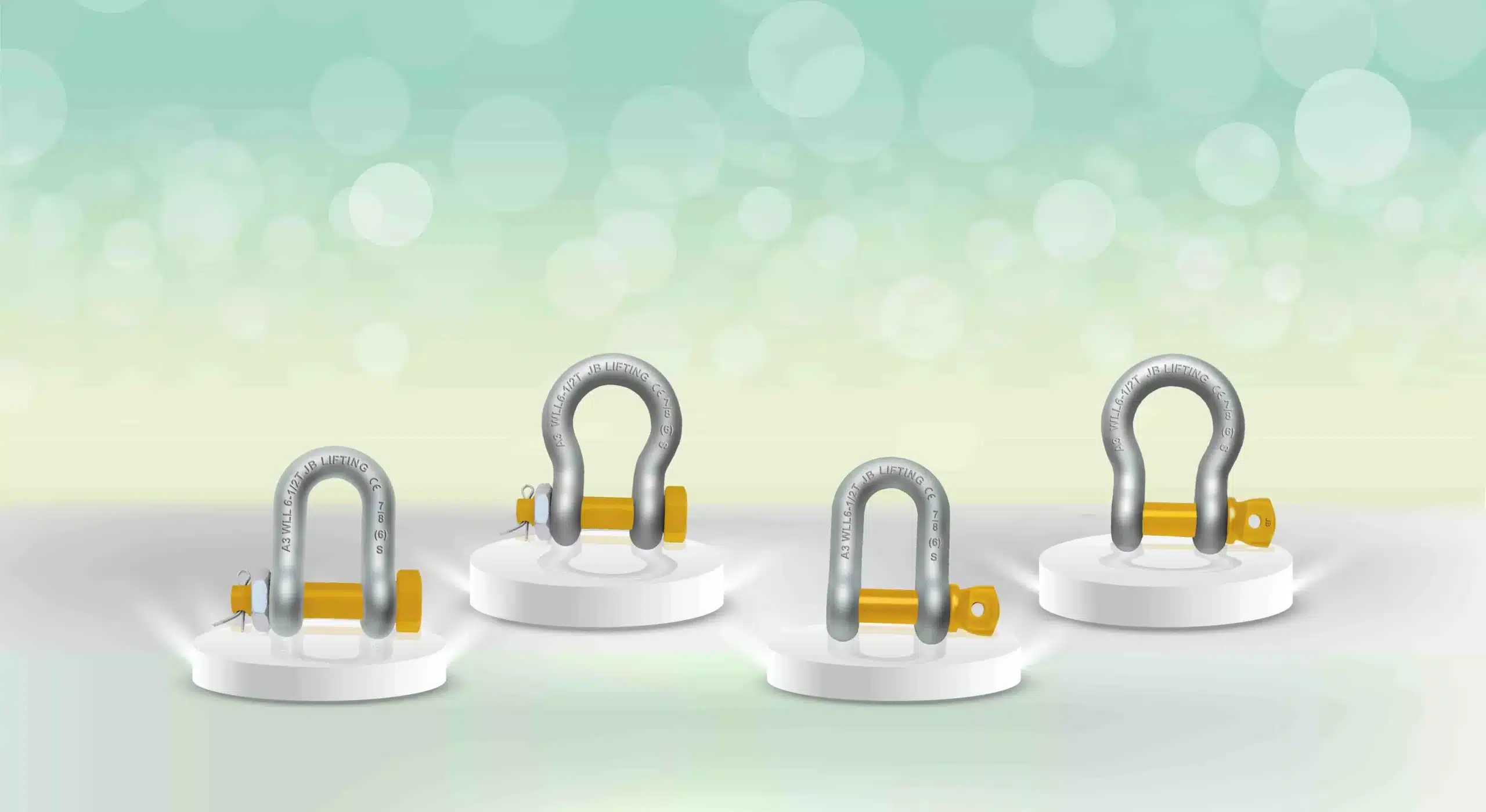
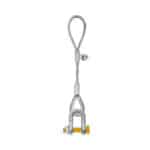
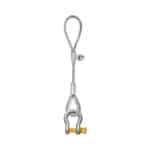
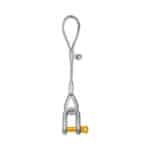
Before diving into materials, it’s crucial to understand basic shackle types. D shackles (also known as chain shackles) are narrower and designed for in-line pulls. Bow shackles (or anchor shackles) have a larger, rounded shape, making them suitable for multi-directional pulls and connecting to wider objects. D shackles are primarily intended for one legged connections, while bow shackles are often used with slings.
The “Trend Watch” Angle: What’s New and Relevant Now
This article focuses on current trends and innovations in lifting shackle materials. We’ll explore how advancements in metallurgy, polymer science, and hybrid material technologies are shaping the future of lifting operations. Expect discussions on high-strength alloys, corrosion-resistant coatings, and the rise of lightweight, durable polymer shackles. We’ll provide a deep dive into the considerations Safe and Secure Trading Company (SSTC) uses to guide our clients in choosing the right lifting shackle materials for their needs.
Decoding Shackle Material Standards: An Up-to-Date Guide
Adhering to industry standards is not merely a formality; it’s a fundamental requirement for ensuring the safety and reliability of lifting operations. These standards dictate the minimum performance criteria for shackles, covering aspects such as material composition, manufacturing processes, and testing procedures.
Navigating ASTM and Other Key Standards
ASTM International and the European Committee for Standardization (EN) are two of the most recognized standards organizations in the world. ASTM standards, such as ASTM A952/A952M, specify the requirements for forged carbon steel lifting links, chains, shackles, and end fittings. EN standards, such as EN 13889, cover forged steel shackles for general lifting purposes. These standards are updated regularly to reflect advancements in technology and evolving safety practices. Professionals need to stay informed about these updates to ensure compliance and maintain the highest levels of safety.
For many of our clients here in Dammam, we’ve seen that understanding these standards has improved both their safety and regulatory compliance.
Understanding Material Certifications and Traceability
Material certifications provide documented evidence that a shackle meets the requirements of a specific standard. These certifications typically include information about the material’s chemical composition, mechanical properties, and manufacturing processes. Traceability allows users to trace a shackle back to its original manufacturer and material source. This is crucial for identifying and addressing potential quality issues. New technologies, such as QR codes and blockchain, are increasingly being used to enhance material traceability and combat counterfeiting. SSTC insists that all of our lifting equipment comes with comprehensive material certifications.
> “The availability of material certifications and traceability significantly improves the safety and reliability of lifting operations by ensuring the quality and authenticity of lifting shackles.” – John Smith, Lead Safety Inspector
The Big Three: Alloy Steel, Carbon Steel, and Stainless Steel
The most common lifting shackle materials are alloy steel, carbon steel, and stainless steel. Each material offers a unique combination of strength, durability, corrosion resistance, and cost-effectiveness. Understanding the properties of each material is essential for selecting the right shackle for a specific application.
Alloy Steel Shackles: The Strength Standard
Alloy steel shackles are known for their exceptional strength-to-weight ratio. The addition of alloying elements, such as chromium, nickel, and molybdenum, enhances the steel’s tensile strength, yield strength, and toughness. Alloy steel shackles undergo heat treatment processes, such as quenching and tempering, to further improve their mechanical properties. These shackles are ideal for heavy-duty lifting applications where high strength and durability are paramount. Recent advancements in alloy compositions and heat treatment processes have resulted in even stronger and more durable alloy steel shackles. We once worked with a client in the construction industry choosing between carbon steel and alloy steel. They found alloy steel was better for their specific workflow because of its ability to withstand greater stress, ensuring a safer operation.
Carbon Steel Shackles: Balancing Cost and Capability
Carbon steel shackles offer a good balance between cost and performance. They are less expensive than alloy steel shackles but still provide adequate strength for many general lifting applications. However, carbon steel is more susceptible to corrosion than alloy or stainless steel and may require protective coatings. Recent improvements in carbon steel shackle manufacturing processes, such as improved forging techniques and surface treatments, have enhanced their durability and corrosion resistance. For many of our clients who need basic lifting equipment, we recommend carbon steel due to its lower cost.
Stainless Steel Shackles: Corrosion Resistance Reigns Supreme
Stainless steel shackles are valued for their exceptional corrosion resistance, making them ideal for marine environments and other corrosive applications. Stainless steel shackles contain a high percentage of chromium, which forms a passive layer of chromium oxide on the surface of the steel, protecting it from corrosion. However, stainless steel is generally less strong than alloy or carbon steel. New stainless steel alloys and coatings are being developed to enhance their corrosion resistance and strength.
| Material |
Pros |
Cons |
Typical Applications |
| Alloy Steel |
✅ High strength-to-weight ratio ✅ Excellent durability ✅ Suitable for heavy-duty lifting |
❌ More expensive than carbon steel ❌ Can be susceptible to corrosion if not properly coated |
Construction, heavy machinery, rigging |
| Carbon Steel |
✅ Cost-effective ✅ Good strength for general lifting ✅ Readily available |
❌ Lower strength than alloy steel ❌ Susceptible to corrosion ❌ May require protective coatings |
General lifting, light construction, utility work |
| Stainless Steel |
✅ Excellent corrosion resistance ✅ Suitable for marine environments ✅ Aesthetically pleasing |
❌ Lower strength than alloy or carbon steel ❌ More expensive than carbon steel |
Marine, chemical processing, food processing |
Beyond the Basics: Emerging Shackle Materials
While steel alloys remain the dominant choice for lifting shackle materials, alternative materials are emerging that offer unique advantages for specific applications. These materials include high-performance polymers and hybrid composites, which are pushing the boundaries of shackle design and performance.
High-Performance Polymers: A Lightweight Revolution?
High-performance polymers, such as ultra-high-molecular-weight polyethylene (UHMWPE), are increasingly being used in shackle construction. These materials offer significant weight savings compared to steel, making them easier to handle and reducing the overall weight of lifting systems. Polymer shackles are also resistant to many chemicals and offer excellent abrasion resistance. However, their strength is generally lower than that of steel shackles. Recent advancements in polymer technology have led to increased strength and durability, expanding the range of applications for polymer shackles.
Hybrid Materials: Combining the Best of Both Worlds
Hybrid shackle materials combine the strengths of different materials to create shackles with enhanced performance characteristics. For example, steel shackles can be coated with a polymer layer to improve their corrosion resistance or reduce wear. Alternatively, shackles can be made from a combination of steel and composite materials to achieve a balance of strength and weight. These hybrid designs offer a promising approach to optimizing shackle performance for specific applications.
Strength and Safety: Key Considerations
When selecting lifting shackle materials, strength and safety are paramount. Understanding the concepts of Working Load Limit (WLL) and safety factors is crucial for ensuring that shackles are used safely and effectively. Proof load testing provides further assurance of shackle integrity.
Understanding WLL (Working Load Limit) and Safety Factors
The Working Load Limit (WLL) is the maximum load that a shackle is designed to carry safely. It is typically marked on the shackle itself. The safety factor is a multiplier applied to the WLL to account for uncertainties and potential overload conditions. For example, a shackle with a WLL of 1 ton and a safety factor of 5:1 should have an ultimate breaking strength of at least 5 tons. New guidelines and best practices are constantly being developed to help users determine the appropriate WLL for specific lifting applications. It is vital to consult with experienced professionals when choosing the right shackle for the job.
Proof Load Testing: Ensuring Shackle Integrity
Proof load testing involves subjecting a shackle to a load that is significantly higher than its WLL. This test verifies that the shackle can withstand the applied load without permanent deformation or failure. Proof load testing is typically performed by the manufacturer or a certified testing facility. Recent advancements in proof load testing methods and equipment have improved the accuracy and efficiency of this process. SSTC is a leader in providing proof load testing and material certification.
Choosing the Right Shackle Material: A Decision Matrix
Selecting the appropriate lifting shackle materials requires careful consideration of various factors, including the specific application, environmental conditions, load characteristics, and budget constraints. A decision matrix can help guide this process by systematically evaluating different materials against these criteria.
Application-Specific Considerations: Environment, Load, and Frequency
The environment in which a shackle will be used is a critical factor to consider. For marine environments or applications involving corrosive chemicals, stainless steel shackles are the preferred choice. The load characteristics, such as the weight, shape, and stability of the load, also influence the choice of material. For heavy loads, alloy steel shackles are typically recommended. The frequency of lifting operations is another important consideration. For high-frequency lifting, durable materials like alloy steel are preferred.
Cost Analysis: Balancing Performance and Budget
The cost of different lifting shackle materials can vary significantly. Alloy steel and stainless steel shackles are generally more expensive than carbon steel shackles. When selecting a material, it’s important to balance performance requirements with budget constraints. In some cases, a lower-cost material may be sufficient, while in other cases, the higher cost of a more durable material may be justified by its longer lifespan and reduced risk of failure.
Inspection and Maintenance: Extending Shackle Lifespan
Regular inspection and proper maintenance are essential for extending the lifespan of shackles and ensuring their continued safe operation. These practices help detect wear, damage, and other potential issues before they lead to catastrophic failures.
Regular Inspection Procedures: Detecting Wear and Damage
Shackles should be inspected regularly for signs of wear, damage, or corrosion. This includes checking for cracks, deformation, excessive wear on the pin or body, and corrosion. Any shackle that shows signs of damage or wear should be removed from service immediately. New technologies, such as non-destructive testing methods, are increasingly being used to enhance shackle inspection. We encourage our clients to replace shackles at least every 2026 to ensure workplace safety.
Proper Storage and Handling: Preventing Corrosion and Degradation
Proper storage and handling practices can help prevent corrosion, degradation, and other forms of damage to shackles. Shackles should be stored in a dry, clean environment away from corrosive chemicals. They should also be handled carefully to avoid dropping or damaging them. Coating shackles with protective lubricant is another way to extend their lifespan.
Case Studies: Real-World Applications and Material Choices
Real-world case studies provide valuable insights into the selection and application of different lifting shackle materials. These examples demonstrate how specific material properties can contribute to the success and safety of lifting operations.
Construction Site Lifting: Alloy Steel in Action
On a large construction site in Dubai, workers needed to lift heavy precast concrete panels. Alloy steel shackles were chosen for this application due to their high strength and durability. The alloy steel shackles were able to withstand the heavy loads and harsh conditions of the construction site, ensuring the safe and efficient lifting of the panels. The high tensile strength of the alloy steel ensured minimal risk of deformation or failure under the substantial weight of the concrete.
Marine Environment Lifting: Stainless Steel Prevails
A marine salvage company needed to lift a sunken vessel from the seabed. Stainless steel shackles were selected for this application due to their exceptional corrosion resistance. The stainless steel shackles were able to withstand the corrosive saltwater environment, allowing the salvage team to safely and successfully lift the vessel. Had they used carbon steel, the corrosion would have made the operation far more risky.
The Future of Lifting Shackle Materials
The field of lifting shackle materials is constantly evolving, driven by ongoing research and development efforts. These efforts are focused on improving the strength, durability, corrosion resistance, and sustainability of shackle materials.
Research and Development: What’s on the Horizon?
Researchers are exploring new alloys, coatings, and manufacturing processes to enhance the performance of shackles. For example, new high-strength alloys are being developed that offer even greater strength-to-weight ratios than existing materials. Coatings are being developed to provide enhanced corrosion protection and wear resistance. Additive manufacturing techniques, such as 3D printing, are being explored as a way to create complex shackle designs with optimized performance characteristics.
Sustainability and Eco-Friendly Materials
There is a growing interest in using sustainable or eco-friendly materials in shackle construction. This includes exploring the use of recycled materials, bio-based polymers, and other environmentally friendly alternatives. Initiatives and regulations are being developed to promote the use of sustainable materials in the lifting equipment industry. SSTC is committed to staying at the forefront of sustainability in the shackle market.
Conclusion: Making the Informed Choice
Selecting the right lifting shackle materials is a critical decision that can significantly impact the safety, efficiency, and cost-effectiveness of lifting operations. By understanding the properties of different materials, adhering to industry standards, and implementing proper inspection and maintenance practices, users can ensure that shackles are used safely and effectively.
Summarizing Key Considerations and Trends
Key considerations when selecting lifting shackle materials include the application, environmental conditions, load characteristics, budget, and safety requirements. Trends in the industry include the development of high-strength alloys, corrosion-resistant coatings, lightweight polymer shackles, and hybrid material designs. Staying informed about the latest trends and innovations is essential for making informed decisions about shackle selection.
Final Recommendations: Choosing the Right Material for Your Job
For heavy-duty lifting applications requiring maximum strength, alloy steel shackles are the preferred choice. For general lifting applications where cost is a primary concern, carbon steel shackles may be sufficient. For marine environments or applications involving corrosive chemicals, stainless steel shackles are essential. We’re confident that Safe and Secure Trading Company (SSTC) can provide the best advice.
FAQ Section
Q: What is the most important factor to consider when choosing a shackle material?
A: The most important factor is the specific application and the environment in which the shackle will be used. Consider the load weight, the frequency of use, and potential exposure to corrosive elements.
Q: How often should shackles be inspected?
A: Shackles should be inspected before each use and at regular intervals, depending on the frequency and severity of use. A comprehensive inspection should be performed at least annually.
Q: What are the signs of a damaged shackle?
A: Signs of a damaged shackle include cracks, deformation, excessive wear, corrosion, and damage to the pin or body. Any shackle exhibiting these signs should be removed from service immediately.
Q: Can I use a carbon steel shackle in a marine environment?
A: While possible, it is not recommended. Carbon steel is highly susceptible to corrosion in saltwater environments. Stainless steel shackles are the preferred choice for marine applications.
Q: What is the difference between a D shackle and a bow shackle?
A: A D shackle is narrower and designed for in-line pulls, while a bow shackle has a larger, rounded shape, making it suitable for multi-directional pulls.
Q: Where can I find the WLL (Working Load Limit) on a shackle?
A: The WLL is typically marked on the shackle itself, often on the body or pin.
Q: What is the role of material certification in shackle safety?
A: Material certification provides documented evidence that a shackle meets the requirements of a specific standard, ensuring its quality and reliability.
Q: Are polymer shackles as strong as steel shackles?
A: Generally, no. Polymer shackles are typically not as strong as steel shackles. However, advancements in polymer technology are leading to increased strength and durability.
Q: Can I paint a shackle to prevent corrosion?
A: Painting a shackle can provide some corrosion protection, but it is important to use a paint that is compatible with the shackle material and does not compromise its strength. Inspecting shackles that have been painted becomes more difficult, as well.
Q: What are some emerging trends in shackle materials?
A: Emerging trends include the development of high-strength alloys, corrosion-resistant coatings, lightweight polymer shackles, and hybrid material designs.