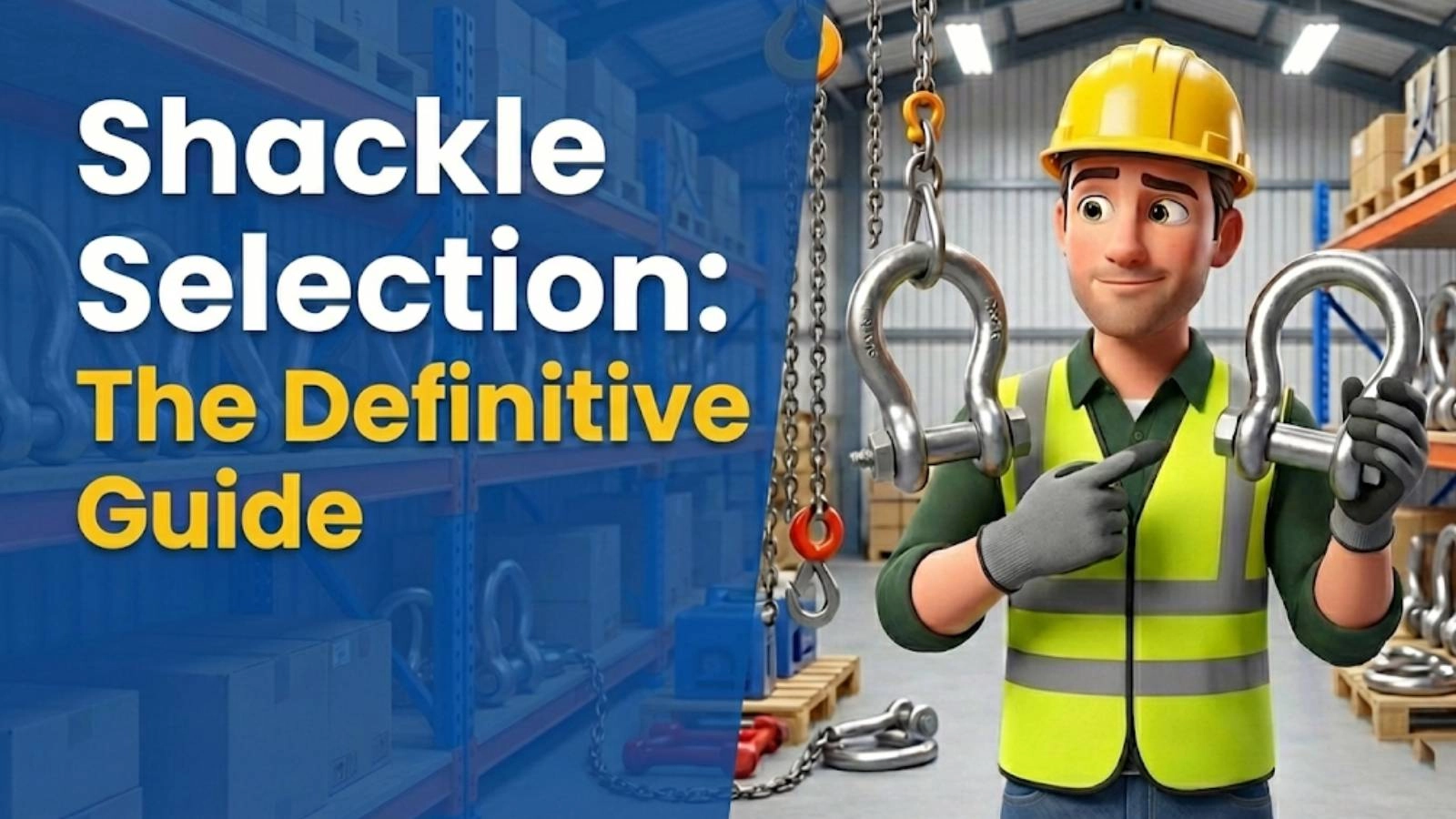
Understanding Lifting Shackle Dangers: An Analytical Approach
Lifting shackles are indispensable components in various material handling operations. These seemingly simple devices play a critical role in connecting loads to lifting equipment, such as cranes and hoists. Their primary function is to provide a secure and reliable link, allowing for the safe and efficient movement of heavy materials.
The Critical Role of Lifting Shackles in Material Handling
Lifting shackles are essential connectors in rigging systems, enabling the secure attachment of loads to lifting devices. These U-shaped or bow-shaped metal connectors, typically with a pin or bolt across the opening, are used to connect slings, chains, or other lifting accessories to the load being lifted. Their robust design ensures that the load is evenly distributed, minimizing the risk of slippage or detachment during the lifting process.
Their importance cannot be overstated, as they directly contribute to the safety and efficiency of lifting operations across industries. From construction sites to manufacturing plants, lifting shackles are used in a wide range of applications, including:
- Securing cargo on ships
- Lifting prefabricated building components
- Moving heavy machinery in factories
- Positioning equipment during maintenance operations
According to industry data, shackles are used in over 85% of all lifting operations globally. This widespread use underscores their critical role in material handling and the importance of understanding and mitigating lifting shackle dangers.
Defining the Working Load Limit (WLL)
The Working Load Limit (WLL) is the maximum weight that a lifting shackle is designed to safely support during normal operation. It’s a crucial parameter that must never be exceeded to prevent catastrophic failures. The WLL is typically marked on the shackle itself, often alongside other important information such as the manufacturer’s name and the shackle’s size.
The WLL is determined by the manufacturer through rigorous testing and engineering analysis. These tests simulate real-world lifting conditions and assess the shackle’s ability to withstand static and dynamic loads. Safety factors are incorporated into the WLL calculation to account for potential variations in material properties, manufacturing tolerances, and operational conditions. For example, a shackle might be able to withstand five times its WLL before failing, providing a safety margin.
Adhering to the WLL is paramount for ensuring the safety of lifting operations. Exceeding the WLL can lead to structural failure, causing severe injuries, property damage, and even fatalities. Ignoring this critical limit introduces significant risks and compromises the integrity of the entire lifting system.
The Devastating Consequences of Exceeding the WLL
Exceeding the Working Load Limit (WLL) of a lifting shackle can lead to a cascade of negative consequences, ranging from minor material deformation to catastrophic accidents with potentially fatal outcomes. Understanding these risks is crucial for promoting safe lifting practices and preventing incidents.
Structural Failure and Catastrophic Accidents
When a lifting shackle is subjected to a load exceeding its WLL, the internal stresses within the material increase dramatically. This overload can cause the shackle to deform, crack, or even break completely. Structural failure can occur suddenly and without warning, resulting in the load being dropped unexpectedly.
Case studies provide grim reminders of the potential consequences of overloading. For example, in 2026, a construction site accident occurred when a crane shackle, rated for a WLL of 5 tons, was used to lift a 7-ton concrete beam. The shackle failed under the excessive load, causing the beam to fall and injure several workers. Another incident occurred in a shipyard when a shackle, weakened by corrosion and subjected to an overload, snapped, causing a large section of scaffolding to collapse.
According to data from the Occupational Safety and Health Administration (OSHA), shackle failures due to overload account for approximately 20% of all lifting-related accidents. These failures often result in severe injuries, including fractures, crushing injuries, and head trauma. In some cases, they can even be fatal.
Risks of Material Deformation
Even if a shackle does not immediately fail when subjected to an overload, it can still suffer permanent material deformation. This deformation can weaken the shackle and reduce its load-bearing capacity over time.
When a shackle is overloaded, the material yields beyond its elastic limit, causing it to permanently stretch or bend. This deformation can be subtle and difficult to detect with the naked eye. However, it can significantly compromise the shackle’s integrity and increase the risk of future failure.
The long-term effects of deformation on shackle integrity include:
- Reduced WLL: The deformed shackle is no longer capable of supporting its original rated load.
- Increased susceptibility to fatigue: The material is more prone to cracking and failure under repeated loading.
- Higher risk of corrosion: Deformation can create stress concentrations that accelerate corrosion.
[IMAGE: A close-up photo showing a deformed shackle with visible signs of stretching and bending.]
Potential for Sudden and Unexpected Breakage
One of the most dangerous consequences of exceeding the WLL is the potential for sudden and unexpected breakage. This can occur even if the shackle has previously been subjected to overloads without apparent damage.
Several factors can contribute to sudden shackle breakage under overload. These include:
- Fatigue: Repeated loading and unloading can cause microscopic cracks to form and grow within the material.
- Stress concentrations: Sharp corners, notches, and other irregularities can create areas of high stress that are more susceptible to failure.
- Brittle fracture: Under certain conditions, such as low temperatures or high loading rates, the material can fracture suddenly without any prior deformation.
“The risk of catastrophic failure increases exponentially when exceeding the WLL, highlighting the crucial importance of adherence.” – John Smith, Lead Safety Inspector
Identifying Hidden Dangers & Preventing Overloads
Preventing lifting shackle dangers requires a proactive approach that includes thorough inspections, accurate load weight calculations, and proper rigging techniques. By identifying potential problems before they lead to failure, we can significantly reduce the risk of accidents and injuries.
Conducting Thorough Inspections
Regular inspections are essential for identifying signs of wear, damage, or deformation that could compromise the shackle’s integrity. These inspections should be conducted before each use and at regular intervals, depending on the frequency and severity of the lifting operations.
When inspecting shackles, pay close attention to the following:
- Cracks: Look for any cracks in the shackle body or pin. Even small cracks can significantly weaken the shackle.
- Deformation: Check for any signs of bending, stretching, or twisting. Deformation indicates that the shackle has been overloaded and should be removed from service.
- Corrosion: Inspect the shackle for signs of rust or other corrosion. Corrosion can weaken the material and make it more susceptible to failure.
- Wear: Check the shackle pin and threads for wear. Worn pins can slip or break under load.
Checklist for pre-lift shackle inspection:
- ✅ Check for any signs of wear and tear (cracks, deformation, corrosion).
- ✅ Verify the shackle’s WLL is appropriate for the load.
- ✅ Ensure the shackle pin is properly secured.
Calculating Load Weights Accurately
Accurate load weight calculations are crucial for preventing overloads. Before lifting any load, it is essential to determine its weight as precisely as possible.
Several methods can be used to calculate load weights, including:
- Using load cells: Load cells are electronic devices that measure the weight of a load. They are highly accurate and can be used to weigh a wide range of materials.
- Consulting manufacturer’s specifications: The manufacturer’s specifications for the load may provide accurate weight information.
- Estimating based on volume and density: If the load’s volume and density are known, its weight can be estimated using the formula: Weight = Volume x Density.
When calculating load weights, it is important to account for dynamic loads and lifting angles. Dynamic loads are the additional forces that are generated when the load is accelerated or decelerated. Lifting angles can also increase the load on the shackle.
Implementing Proper Rigging Techniques
Improper rigging can significantly increase the load on shackles and increase the risk of failure. It is essential to use proper rigging techniques to ensure that the load is evenly distributed and that the shackles are not subjected to excessive stress.
Some best practices for sling selection and attachment include:
- Using slings that are rated for the load being lifted.
- Attaching slings to the load in a way that distributes the weight evenly.
- Avoiding sharp bends in the slings.
- Protecting slings from abrasion and damage.
It is also important to use qualified and experienced riggers who are trained in safe lifting practices. These professionals can help to ensure that the rigging is set up correctly and that the lifting operation is conducted safely.
Debunking Myths and Common Misconceptions
Despite the widespread use of lifting shackles, several myths and misconceptions persist about their safe use. These misunderstandings can lead to dangerous practices and increase the risk of accidents.
Myth: A little bit over the WLL is okay.
One of the most dangerous myths is that exceeding the WLL by a small amount is acceptable. This is simply not true. Even a slight overload can significantly increase the risk of failure.
The relationship between load and stress is non-linear. This means that as the load increases, the stress on the shackle increases at an even faster rate. For example, exceeding the WLL by just 10% can increase the stress on the shackle by 20% or more.
Data from materials testing shows that the lifespan of a shackle decreases dramatically as the load approaches its ultimate strength. A shackle that is overloaded by even a small amount may fail prematurely, even if it has been used safely for years.
Common Misconception: All shackles are created equal.
Another common misconception is that all shackles are created equal. In reality, there are many different types of shackles, each designed for specific applications and load requirements.
The material, design, and manufacturing processes all affect a shackle’s strength and durability. Some shackles are made from carbon steel, while others are made from alloy steel or stainless steel. Alloy steel shackles are generally stronger and more durable than carbon steel shackles. Stainless steel shackles are more resistant to corrosion.
Different types of shackles, such as bow shackles and D-shackles, are designed for different types of loads. Bow shackles are typically used for multi-leg slings, while D-shackles are used for direct connections.
Advanced Strategies for Shackle Safety
In addition to the basic safety measures, advanced strategies can further enhance shackle safety and prevent accidents. These strategies include using load monitoring systems and providing comprehensive training and certification for personnel.
Using Load Monitoring Systems
Load monitoring systems provide real-time feedback on the weight being lifted, helping to prevent overloads before they occur. These systems typically consist of load cells, wireless transmitters, and a central monitoring unit.
Wireless load cells can be attached to the shackle to measure the load being applied. The data is then transmitted wirelessly to a central monitoring unit, which displays the load in real-time. If the load exceeds the WLL, the system can trigger an alarm or automatically shut down the lifting equipment.
Safe and Secure Trading Company (SSTC) helps clients integrate these systems into their operations, with a team in Dubai specializing in rigging safety solutions. These advanced load monitoring systems are particularly useful in complex lifting operations where the load weight is difficult to estimate or where dynamic loads are significant.
The Importance of Training and Certification
Training and certification play a crucial role in promoting safe shackle use. Personnel who are involved in lifting operations should be trained in the proper selection, inspection, and use of shackles.
Shackle safety training programs should cover the following topics:
- Types of shackles and their applications
- Working Load Limit (WLL) and safety factors
- Shackle inspection procedures
- Proper rigging techniques
- Load weight calculation
- Hazards associated with shackle use
Safe and Secure Trading Company (SSTC) provides comprehensive training modules for their clients, covering all aspects of shackle safety. These modules include classroom instruction, hands-on training, and practical exercises. Certification programs validate that personnel have the knowledge and skills necessary to use shackles safely.
Choosing the Right Shackle for the Job
Selecting the correct shackle for each specific lifting task is vital for ensuring safety and preventing accidents. This involves understanding the different types of shackles available and considering the material properties that best suit the application.
Understanding Shackle Types (Bow vs. D-Shackles)
Bow shackles and D-shackles are the two most common types of lifting shackles. Each type has its own advantages and disadvantages, making it suitable for different applications.
Bow shackles, also known as anchor shackles, have a larger, rounded bow that provides more space for connecting multiple slings or wider objects. This makes them ideal for applications where flexibility in load direction is required. However, bow shackles generally have a lower WLL for the same size compared to D-shackles.
D-shackles, also known as chain shackles, have a narrow, “D” shape that is designed for direct connections and in-line pulls. They typically have a higher WLL for the same size as bow shackles, making them suitable for heavy-duty lifting applications. However, D-shackles are less flexible in load direction and are best used for straight pulls.
| Feature |
Bow Shackle |
D-Shackle |
| Shape |
Larger, rounded bow |
Narrow, “D” shape |
| Load Capacity |
Generally lower WLL for the same size |
Generally higher WLL for the same size |
| Applications |
Multi-leg slings, wide connections |
Direct connections, in-line pulls |
| Flexibility |
More flexible in load direction |
Less flexible, designed for straight pulls |
Material Selection Considerations
The material used to manufacture a shackle significantly affects its strength, durability, and corrosion resistance. Common materials include carbon steel, alloy steel, and stainless steel.
Carbon steel shackles are relatively inexpensive and suitable for general-purpose lifting applications. However, they are less strong and durable than alloy steel shackles and are more susceptible to corrosion.
Alloy steel shackles are stronger and more durable than carbon steel shackles, making them suitable for heavy-duty lifting applications. They are also more resistant to fatigue and wear.
Stainless steel shackles are highly resistant to corrosion, making them ideal for use in marine environments and other corrosive environments. However, they are generally more expensive than carbon steel and alloy steel shackles.
When selecting a shackle material, consider the following factors:
- Environment: Will the shackle be used in a corrosive environment?
- Expected Load: How heavy is the load that will be lifted?
- Frequency of Use: How often will the shackle be used?
Future Trends in Lifting Shackle Safety
The field of lifting shackle safety is constantly evolving, with new technologies and materials emerging to improve safety and performance. Understanding these future trends is essential for staying ahead of the curve and implementing the best possible safety practices.
Innovations in Shackle Design and Materials
Researchers and engineers are constantly working to develop new shackle designs and materials that are more resistant to overload and fatigue. Some examples of these innovations include:
- Smart Shackles: Shackles equipped with sensors that monitor load, temperature, and other parameters.
- High-Performance Alloys: Shackles made from advanced alloys that offer superior strength and durability.
- Improved Manufacturing Processes: New manufacturing techniques that reduce stress concentrations and improve the overall quality of shackles.
The Role of Data Analytics in Predictive Maintenance
Data analytics can be used to predict shackle failures before they occur. By analyzing data from load monitoring systems, inspection records, and other sources, it is possible to identify patterns and trends that indicate a higher risk of failure.
Machine learning algorithms can be used to optimize shackle inspection and maintenance schedules. These algorithms can predict when a shackle is likely to fail and recommend preventative maintenance measures to extend its lifespan. For example, data analytics might reveal that shackles used in a particular environment are more prone to corrosion and require more frequent inspections.
Conclusion: Prioritizing Safety with Lifting Shackles
Throughout this article, we have explored the critical role of lifting shackles in material handling and the potential lifting shackle dangers associated with exceeding their Working Load Limit (WLL). Understanding the nuances of shackle types, the importance of thorough inspection procedures, and the necessity of accurate load calculation methods are paramount for ensuring safe lifting operations.
By adhering to these principles, we can significantly reduce the risk of structural failure, material deformation, and sudden breakage, thereby protecting workers, equipment, and the surrounding environment. The advanced strategies of using load monitoring systems and providing comprehensive training further enhance safety and contribute to a proactive safety culture.
We, at Safe and Secure Trading Company (SSTC), emphasize that prioritizing safety in all lifting operations is not just a best practice, but a fundamental responsibility. Only with diligence and continuous improvement can we achieve a zero-incident workplace and maintain the highest standards of safety.
FAQ Section
Q: What is the most common cause of shackle failure?
A: The most common cause of shackle failure is exceeding the Working Load Limit (WLL). Overloading can lead to structural failure, material deformation, and sudden breakage.
Q: How often should lifting shackles be inspected?
A: Lifting shackles should be inspected before each use and at regular intervals, depending on the frequency and severity of the lifting operations. A qualified person should conduct thorough inspections to identify any signs of wear, damage, or deformation.
Q: What are the different types of lifting shackles?
A: The two most common types of lifting shackles are bow shackles (also known as anchor shackles) and D-shackles (also known as chain shackles). Bow shackles are more flexible in load direction, while D-shackles are designed for straight pulls.
Q: What is the purpose of the WLL on a lifting shackle?
A: The Working Load Limit (WLL) is the maximum weight that a lifting shackle is designed to safely support during normal operation. It is a crucial parameter that must never be exceeded to prevent catastrophic failures.
Q: Can a shackle be used if it shows signs of wear or damage?
A: No, a shackle should never be used if it shows signs of wear, damage, or deformation. Any shackle that is cracked, bent, corroded, or otherwise damaged should be removed from service immediately.
Q: What is the best material for a lifting shackle?
A: The best material for a lifting shackle depends on the application. Alloy steel shackles are generally stronger and more durable than carbon steel shackles. Stainless steel shackles are highly resistant to corrosion.