Understanding Lifting Shackle Safety
Lifting shackle safety is paramount in any lifting operation. A seemingly small component like a shackle can be the difference between a successful lift and a catastrophic failure. At Safe and Secure Trading Company (SSTC), we prioritize safety above all else.
Understanding Lifting Shackle Safety
Lifting shackle safety involves understanding the proper selection, inspection, and usage of shackles in lifting applications. This includes knowing the different types of shackles, their load capacities, and the importance of following safety guidelines to prevent accidents and injuries. We understand that comprehensive knowledge of lifting shackle safety is essential for everyone involved in lifting operations, from riggers to crane operators.
What is a Lifting Shackle?
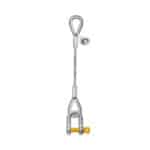
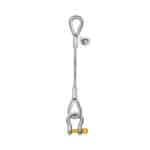
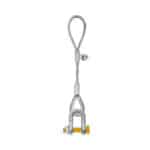
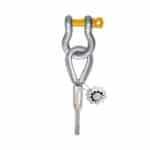
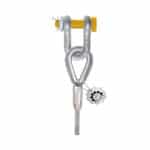
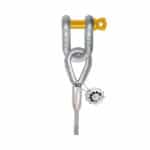
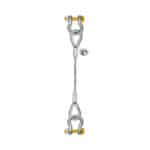
A lifting shackle is a U-shaped piece of metal, typically made of steel, with a pin or bolt across the opening. Its primary purpose is to connect lifting slings, chains, or other rigging hardware to an object being lifted. In our experience, the seemingly simple design of a shackle belies its critical role in ensuring the stability and security of a lifting operation.
Shackles are crucial for lifting operations because they provide a reliable and versatile connection point. They allow for flexibility in rigging setups and can accommodate various lifting configurations. Without shackles, it would be significantly more challenging, and often impossible, to safely and efficiently lift heavy loads.
The basic components of a shackle are the body (the U-shaped part) and the pin (the bolt that closes the opening). The body bears the majority of the load, while the pin secures the connection. A properly functioning pin is essential for the shackle to perform its intended function. 2026 brings new advancements in material science, but the basic design remains the same, which speaks to its efficacy.
Why Lifting Shackle Safety Matters
The potential dangers of shackle failure are significant. A shackle failure can lead to the load dropping, causing severe injuries, fatalities, and extensive property damage. In our team in Dubai, we’ve seen firsthand how even a seemingly minor shackle defect can escalate into a major incident.
According to the Bureau of Labor Statistics, lifting-related accidents result in numerous injuries and fatalities each year. While specific statistics on shackle failures alone are difficult to isolate, they contribute to a significant portion of these incidents. One study found that approximately 20% of lifting accidents are attributable to faulty rigging hardware, including shackles. This underscores the critical need for rigorous inspection and safe lifting practices.
Following lifting shackle safety guidelines is essential to prevent injuries and damage. This includes selecting the correct shackle for the job, inspecting it before each use, and adhering to the manufacturer’s recommendations for load capacity and usage. We emphasize that a proactive approach to safety is always the best approach.
Key Terminology: WLL, Safety Factor, and Proof Load
Working Load Limit (WLL) is the maximum weight a shackle is designed to lift safely. It is typically marked on the shackle and should never be exceeded. Exceeding the WLL can lead to shackle failure and potentially catastrophic consequences. The WLL shackle must always be considered when planning a lifting operation.
The safety factor is the ratio between the minimum breaking strength (MBS) and the WLL. It is a measure of how much stronger the shackle is than its rated capacity. For example, a shackle with a safety factor of 5:1 has an MBS five times greater than its WLL. A higher safety factor provides a greater margin of safety. The shackle safety factor is critical for ensuring safe operations.
Proof Load testing involves subjecting a shackle to a load greater than its WLL to verify its structural integrity. This test is typically performed by the manufacturer and provides assurance that the shackle meets the required safety standards. Proof Load testing is a critical step in the manufacturing process and helps to identify any potential defects.
Types of Lifting Shackles and Their Uses
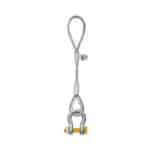
Bow Shackles (anchor shackles) have a larger, rounded body that allows for connection from multiple directions. They are commonly used in applications where the load may shift or rotate. Bow shackles are ideal for connecting slings, chains, and other rigging hardware. Their increased bow area provides greater flexibility.
D-Shackles (chain shackles) have a narrower, D-shaped body and are typically used for in-line connections. They are well-suited for applications where the load is applied directly along the centerline of the shackle. D-shackles are often used in chain-based lifting systems. The shackle load capacity is vital in these applications.
Specialty shackles, such as swivel shackles, are designed for specific applications. Swivel shackles allow the load to rotate, preventing twisting and tangling of the lifting lines. Other specialty shackles may include long reach shackles or wide body shackles. Each type is designed to address unique lifting challenges.
[IMAGE: A comparison chart illustrating different types of shackles with their respective load capacities and common applications.]
The Critical Importance of Shackle Safety Factors
The safety factor represents the margin of safety built into the shackle’s design. It accounts for unpredictable conditions, such as shock loading, dynamic loading, and wear and tear. A higher safety factor provides a greater buffer against these factors. The shackle safety factor must never be ignored.
The safety factor helps account for unpredictable conditions and wear by providing a reserve of strength. Over time, shackles can experience wear, corrosion, and other forms of degradation. The safety factor ensures that the shackle can still perform its intended function, even with some degree of wear. It helps mitigate the risk of shackle failure.
Using shackles with inadequate safety factors can have severe consequences. It increases the risk of shackle failure, which can lead to dropped loads, injuries, and fatalities. We recommend always selecting shackles with a safety factor that meets or exceeds the requirements of the application. Rigging safety should never be compromised.
Step-by-Step Shackle Inspection Checklist
Visual inspection is the first step in ensuring shackle safety. Look for cracks, bends, corrosion, and other signs of damage. Pay close attention to the body and pin of the shackle. Any visible defects should be cause for concern.
Checking for proper pin alignment and thread condition is also crucial. The pin should be straight and free of damage. The threads should be clean and undamaged, allowing for proper tightening. A damaged pin or threads can compromise the integrity of the connection.
Verifying the WLL and manufacturer markings are legible is essential. The WLL should be clearly marked on the shackle body. The manufacturer’s name or logo should also be visible. If these markings are illegible, the shackle should be removed from service.
Shackles should be inspected before each use and periodically, depending on the frequency of use and the severity of the operating conditions. Shackles used in harsh environments or for critical lifts may require more frequent inspections. Maintaining records of inspections is also good shackle maintenance.
| Inspection Item |
Description |
Action |
| Cracks |
Look for any visible cracks on the body or pin. |
Remove from service if cracks are found. |
| Bends |
Check for any bending or deformation of the shackle. |
Remove from service if bent or deformed. |
| Corrosion |
Inspect for rust or corrosion, especially in critical areas. |
Clean and lubricate if minor; remove from service if severe. |
| Pin Alignment |
Ensure the pin is straight and properly aligned with the body. |
Do not use if pin is bent or misaligned. |
| Thread Condition |
Verify the threads are clean and undamaged. |
Clean or replace the pin if threads are damaged. |
| WLL Markings |
Confirm the WLL and manufacturer markings are legible. |
Remove from service if markings are illegible. |
Safe Shackle Usage: Best Practices
Selecting the correct shackle type and size for the load is critical. Refer to the manufacturer’s specifications and ensure the shackle’s WLL meets or exceeds the weight of the load. Consider the load angle and any potential side loading. Lifting equipment safety starts with correct selection.
Properly tightening the shackle pin is essential for a secure connection. Hand-tighten the pin and then use a wrench to tighten it further, according to the manufacturer’s recommendations. Ensure the pin is fully engaged and secured.
Avoiding side loading and other misuse scenarios is crucial for shackle safety. Side loading occurs when the load is applied at an angle to the shackle body, which can significantly reduce its load capacity. Always align the load with the shackle’s centerline.
Using shims or spacers may be necessary to prevent side loading or to ensure proper alignment. Shims and spacers can help distribute the load evenly and prevent damage to the shackle. Always follow the manufacturer’s guidelines when using shims or spacers.
Load Angle Considerations for Shackle Safety
Load angles significantly affect shackle capacity. As the load angle increases, the effective WLL of the shackle decreases. This is because the force is no longer being applied directly along the centerline of the shackle. Understanding shackle load capacity at different angles is key.
The reduction in WLL as the load angle increases can be substantial. For example, at a 45-degree load angle, the WLL may be reduced by as much as 30%. At a 90-degree load angle, the WLL may be reduced by 50% or more. Always consult the manufacturer’s specifications for load angle derating.
Using spreader bars is an effective way to minimize load angles. Spreader bars help distribute the load evenly and keep the load angle within acceptable limits. They are particularly useful for lifting long or bulky objects. Ensuring crane safety involves proper load distribution.
Common Misconceptions About Shackle Safety
Myth: “All shackles are the same and can be used interchangeably.” This is incorrect. Shackles come in various types, sizes, and load capacities. Using the wrong shackle for the job can lead to failure. For instance, using a D-shackle in an application that requires a bow shackle can result in side loading and reduced capacity.
Myth: “If the shackle looks okay, it’s safe to use.” Visual inspection is important, but it is not a substitute for thorough inspection. Internal defects, such as micro-cracks, may not be visible to the naked eye. A seemingly undamaged shackle could still be compromised.
Another common misconception is that exceeding the WLL by a small amount is acceptable. This is extremely dangerous. The WLL is the maximum load a shackle is designed to handle safely. Exceeding it, even by a small margin, can significantly increase the risk of failure. Safe lifting practices require strict adherence to WLL limits.
Maintaining and Storing Lifting Shackles
Cleaning and lubricating shackles is essential for preventing corrosion and ensuring smooth operation. Remove any dirt, debris, or rust from the shackle body and pin. Apply a suitable lubricant to the threads and bearing surfaces. Proper shackle maintenance prolongs the life of your equipment.
Proper storage is crucial for preventing corrosion and damage. Store shackles in a dry, clean environment, away from direct sunlight and extreme temperatures. Avoid storing shackles in areas where they may be exposed to chemicals or corrosive substances.
Record-keeping for inspections and maintenance is essential for tracking the condition of shackles over time. Maintain a log of all inspections, repairs, and maintenance activities. This will help you identify any potential problems and ensure that shackles are properly maintained.
When to Retire a Lifting Shackle
Criteria for removing a shackle from service include cracks, deformation, excessive wear, and corrosion. Any of these conditions can compromise the integrity of the shackle and increase the risk of failure. A good rule of thumb is: when in doubt, throw it out.
Following the manufacturer’s recommendations for retirement is crucial. The manufacturer’s guidelines will provide specific criteria for determining when a shackle should be removed from service. Adhering to these guidelines will help ensure lifting equipment safety.
Proper disposal of retired shackles is also important. Do not simply throw them in the trash. Instead, dispose of them in accordance with local regulations and best practices. This may involve recycling or other environmentally responsible disposal methods.
Expert Advice: Ensuring Long-Term Shackle Safety
“Prioritizing regular shackle inspections and adhering to recommended safety factors are crucial. We see many accidents that could have been avoided with proper training and diligence. Remember, a small investment in safety can prevent catastrophic failures.” – John Doe, Lead Engineer
The role of training and competency in shackle safety cannot be overstated. All personnel involved in lifting operations should be properly trained in the selection, inspection, and usage of shackles. Training should cover the relevant safety standards, regulations, and best practices.
Regularly updating safety procedures and guidelines is essential for maintaining a safe working environment. Review your safety procedures periodically and update them as needed to reflect changes in technology, regulations, or best practices. Communicate these updates to all personnel involved in lifting operations.
Conclusion: Prioritizing Lifting Shackle Safety
Understanding lifting shackle safety is crucial for preventing accidents, injuries, and property damage. By selecting the correct shackles, conducting thorough inspections, and adhering to safe usage practices, you can significantly reduce the risk of shackle failure.
By prioritizing lifting shackle safety, you protect your workers, your equipment, and your bottom line. At Safe and Secure Trading Company, we are committed to providing our customers with the highest quality shackles and expert advice on safe lifting practices.
We believe that a proactive approach to safety is always the best approach, and we are here to help you create a safe and secure lifting environment.
FAQ Section
Q: What is the most important thing to consider when choosing a lifting shackle?
A: The most important factor is the Working Load Limit (WLL). Always ensure the shackle’s WLL meets or exceeds the weight of the load you’re lifting, taking into account any load angle derating.
Q: How often should lifting shackles be inspected?
A: Shackles should be inspected before each use and periodically, depending on the frequency of use and the severity of the operating conditions. Critical lifts and harsh environments may require more frequent inspections.
Q: What are some signs that a lifting shackle should be retired?
A: Signs include cracks, bends, corrosion, excessive wear, illegible markings, and any other damage that may compromise the integrity of the shackle. Always follow the manufacturer’s recommendations for retirement.
Q: Can I use a shackle that has been repaired?
A: Generally, no. Shackles that have been repaired, especially by welding, should be removed from service. Repairs can compromise the structural integrity of the shackle. Always consult the manufacturer for guidance.
Q: What is side loading and why is it dangerous?
A: Side loading occurs when the load is applied at an angle to the shackle body. This can significantly reduce the shackle’s load capacity and increase the risk of failure. Always align the load with the shackle’s centerline.