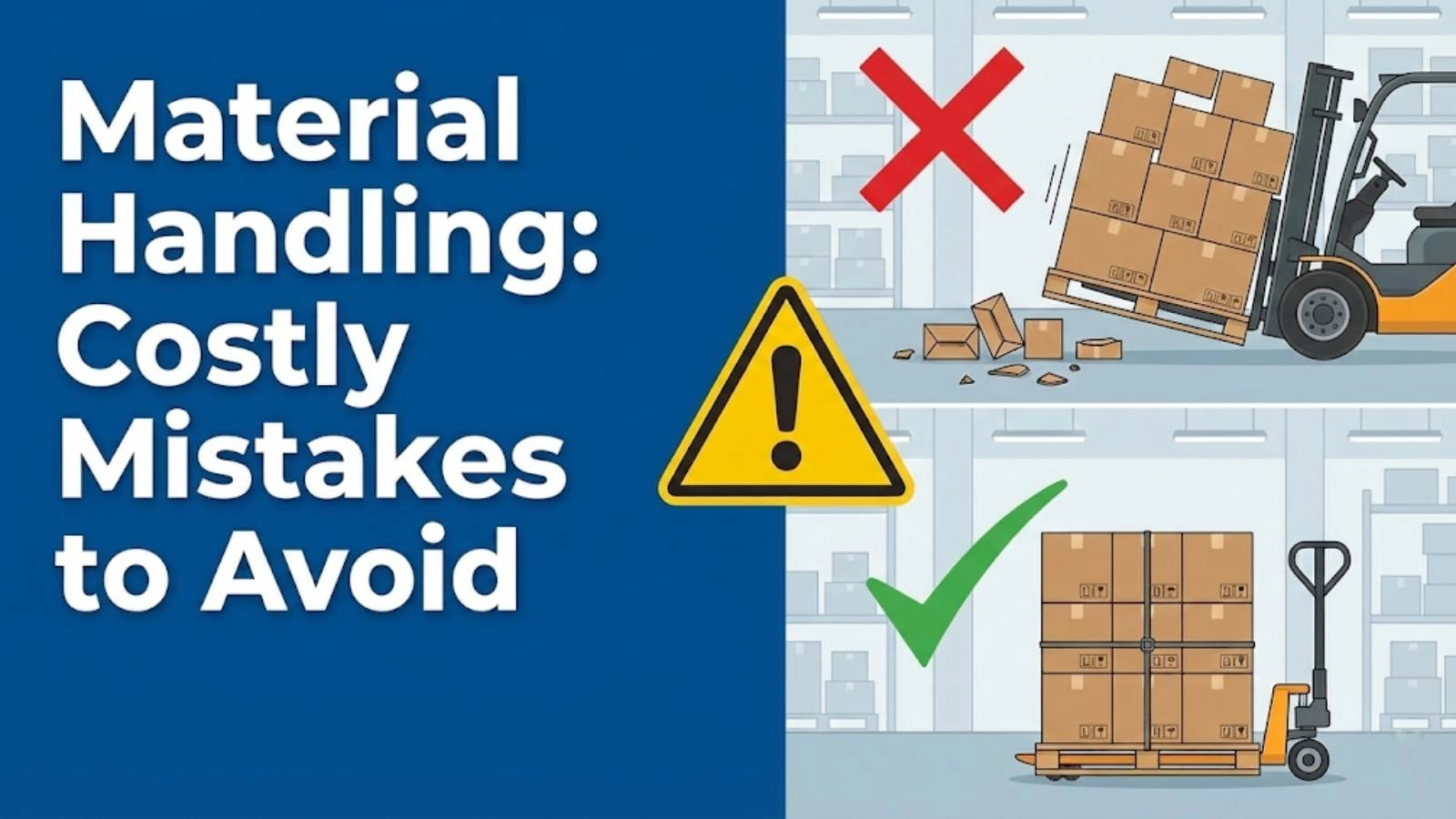
Material handling is a critical aspect of any business that deals with physical goods. Efficient material handling directly impacts supply chain efficiency, reduces costs, and enhances workplace safety. However, many organizations make common material handling mistakes that undermine their operations. As consultants for Safe and Secure Trading Company, we’ve seen firsthand how these missteps can lead to significant losses and inefficiencies.
1. Overlooking Ergonomics: A Modern Hazard
✅ One of the most prevalent material handling mistakes we see is overlooking ergonomics. Many businesses prioritize short-term gains over the long-term health and well-being of their employees. This shortsighted approach can lead to a host of problems, including increased injury rates, higher absenteeism, and decreased productivity.
Prioritizing Short-Term Gains Over Long-Term Health
Neglecting ergonomics often results in musculoskeletal disorders (MSDs), such as back injuries, carpal tunnel syndrome, and tendinitis. These conditions can be debilitating and costly, both for the employee and the employer. We’ve observed that companies in Dammam that ignore ergonomic principles often face higher worker’s compensation claims and increased healthcare costs. Addressing ergonomics isn’t just a matter of compliance; it’s about creating a sustainable and healthy work environment.
Implementing Ergonomic Assessments
Regular ergonomic assessments are essential for identifying potential hazards and implementing effective solutions. These assessments should evaluate workstations, tasks, and equipment to determine whether they pose a risk to employees. At Safe and Secure Trading Company, we recommend that our clients conduct these assessments at least annually, or more frequently if there are changes in the work environment or processes. For many of our clients here in Jubail, we’ve seen that regular assessments allow for proactive adjustments, preventing injuries before they occur.
Investing in Ergonomic Equipment
Investing in ergonomic equipment is a tangible way to demonstrate a commitment to employee well-being. Adjustable workstations, lift assists, and ergonomic tools can significantly reduce the risk of MSDs. For example, adjustable workstations allow employees to customize their work environment to their individual needs, promoting better posture and reducing strain. Lift assists, such as vacuum lifters and hoists, can help employees handle heavy loads safely and efficiently, minimizing the risk of back injuries. We have case studies demonstrating that investment in ergonomic equipment can decrease worker’s compensation claims by up to 40%.
2. Ignoring the Power of Data Analytics: A Missed Opportunity
💡 Another common material handling mistake is failing to leverage the power of data analytics. Many organizations rely on traditional, reactive approaches to material handling, rather than embracing data-driven strategies. This approach limits their ability to identify inefficiencies, optimize processes, and improve overall performance.
Traditional vs. Data-Driven Material Handling
Traditional material handling often involves guesswork and reactive problem-solving. In contrast, data-driven material handling uses data analytics to gain insights into operational performance and make informed decisions. By tracking key metrics and analyzing trends, businesses can identify bottlenecks, optimize workflows, and improve resource utilization. For example, rather than reacting to a sudden increase in shipping errors, data analytics can reveal the root causes of these errors and enable proactive solutions.
Key Metrics to Track
Tracking key metrics is essential for effective data-driven material handling. Some of the most crucial data points to monitor include throughput, dwell time, error rates, and equipment utilization. Throughput measures the amount of material that is processed within a given time period. Dwell time refers to the amount of time that materials spend in storage or transit. Error rates indicate the frequency of mistakes, such as mispicks or damaged goods. Equipment utilization measures how effectively equipment is being used. By monitoring these metrics, businesses can gain valuable insights into their material handling operations and identify areas for improvement.
Using Data to Optimize Layout and Processes
Data analytics can inform decisions about warehouse layout, workflow, and equipment utilization. For example, heatmaps can reveal areas of high traffic and congestion, allowing businesses to optimize their warehouse layout to minimize travel distances and reduce bottlenecks. Workflow analysis can identify inefficiencies in processes and enable the development of more streamlined workflows. Equipment utilization data can help businesses make better decisions about equipment procurement and maintenance. We always recommend to our clients to fully integrate data analysis at all points of the workflow.
3. Neglecting Preventative Maintenance: A Recipe for Disaster
➡️ Neglecting preventative maintenance is a critical material handling mistake that can lead to costly breakdowns, unplanned downtime, and safety hazards. Many organizations focus on reactive maintenance, addressing problems only when they arise. This approach is often more expensive and disruptive than preventative maintenance.
The Cost of Reactive Maintenance
Reactive maintenance can be incredibly costly. Emergency repairs often require expedited shipping of parts, overtime labor, and significant downtime. Additionally, equipment failures can lead to production delays, missed deadlines, and dissatisfied customers. For our clients in Riyadh, we emphasize the importance of understanding the total cost of ownership, which includes both the initial purchase price and the ongoing maintenance costs. Preventative maintenance is key to minimizing these long-term costs.
Establishing a Preventative Maintenance Schedule
An effective preventative maintenance program should include regular inspections, lubrication, adjustments, and component replacements. The frequency of these tasks should be based on the manufacturer’s recommendations and the operating conditions of the equipment. For example, equipment that is used in harsh environments or under heavy loads may require more frequent maintenance. A well-defined schedule ensures that all critical equipment is properly maintained, reducing the risk of breakdowns and extending its lifespan.
Leveraging Technology for Maintenance Management
CMMS (Computerized Maintenance Management Systems) can streamline maintenance processes and improve efficiency. These systems can track maintenance schedules, generate work orders, manage inventory of spare parts, and provide detailed reports on maintenance activities. CMMS solutions can also send automated reminders for scheduled maintenance tasks, ensuring that nothing is overlooked. We find that businesses that leverage CMMS can significantly reduce downtime and improve equipment reliability.
4. Sticking to Outdated Technology: Falling Behind the Curve
✨ In today’s rapidly evolving business environment, sticking to outdated technology is a major material handling mistake. Many organizations are hesitant to invest in new technologies, preferring to stick with familiar systems. However, this reluctance can put them at a significant disadvantage compared to competitors who are embracing innovation.
The Limitations of Legacy Systems
Legacy systems often lack the features and capabilities needed to meet the demands of modern material handling. These systems may be inefficient, difficult to integrate with other systems, and unable to provide real-time data. Relying on outdated technology can lead to increased costs, reduced productivity, and a greater risk of errors. The key is to conduct a thorough assessment of current technology infrastructure and understand its limitations, thus paving the way for strategic tech upgrades.
Embracing Automation and Robotics
Automation and robotics can significantly improve material handling efficiency and reduce costs. Automated Guided Vehicles (AGVs) can transport materials throughout a facility without human intervention. Robotic picking systems can automate the process of picking and packing orders. Automation can also improve workplace safety by reducing the need for employees to perform repetitive or hazardous tasks. We often see companies that embrace automation achieve significant improvements in throughput, accuracy, and safety.
Investing in IoT and Smart Sensors
IoT sensors can provide real-time data on equipment performance, environmental conditions, and material location. This data can be used to optimize processes, predict equipment failures, and improve decision-making. For example, sensors can monitor the temperature and humidity in a warehouse to ensure that goods are stored properly. Sensors can also track the location of pallets and containers, providing real-time visibility into inventory levels. Investing in IoT and smart sensors can enable businesses to operate more efficiently and make better use of their resources.
5. Inadequate Training and Safety Protocols: A Critical Weakness
✅ A critical material handling mistake that no organization can afford to make is inadequate training and safety protocols. Insufficient training can lead to accidents, injuries, and damage to equipment and materials. A strong safety culture is essential for creating a safe and productive work environment.
The Importance of Comprehensive Training
Comprehensive training is essential for ensuring that employees have the knowledge and skills needed to perform their jobs safely and effectively. Training should cover equipment operation, safety procedures, emergency response, and hazard identification. It should also be tailored to the specific tasks and equipment that employees will be using. Regular refresher training is important for reinforcing key concepts and ensuring that employees stay up-to-date on best practices.
Regular Safety Audits and Inspections
Regular safety audits and inspections are crucial for identifying and mitigating hazards. These audits should assess compliance with safety regulations, identify potential risks, and evaluate the effectiveness of safety procedures. Inspections should be conducted on a regular basis, and any identified hazards should be promptly addressed. Safety audits should involve employees from all levels of the organization to ensure that a wide range of perspectives are considered.
Promoting a Culture of Safety
Promoting a culture of safety involves creating a workplace environment where safety is valued and prioritized. This can be achieved by involving employees in safety decision-making, providing regular safety training, and recognizing employees who demonstrate a commitment to safety. Employees should be encouraged to report near misses and potential hazards without fear of reprisal. Senior management must lead by example, demonstrating their commitment to safety in their words and actions.
“Safety is not just a priority; it’s a value. Priorities change, but values are enduring.” – John Miller, Lead Safety Inspector
6. Poor Warehouse Layout and Design: Bottleneck City
💡 Poor warehouse layout and design is a material handling mistake that can significantly impact efficiency and productivity. A poorly designed warehouse can lead to bottlenecks, delays, and wasted space. Optimizing warehouse layout is essential for maximizing throughput and minimizing costs.
Impact of Layout on Efficiency
A poorly designed warehouse layout can create numerous problems. Inefficient workflows can lead to increased travel distances, longer processing times, and higher labor costs. Inadequate storage space can result in overcrowding and difficulty locating materials. Bottlenecks can occur when materials are not able to flow smoothly through the warehouse. All these issues can negatively impact overall efficiency and productivity.
Optimizing Flow and Storage
Efficient warehouse layout involves minimizing travel distances and maximizing storage density. Materials should flow smoothly through the warehouse, with minimal backtracking or cross-traffic. Storage areas should be organized to maximize space utilization and make it easy to locate materials. Common strategies include using vertical storage solutions, implementing a clear aisle layout, and optimizing the placement of frequently used items. We often advise clients to implement a “first in, first out” (FIFO) system to minimize waste and ensure that materials are used in a timely manner.
Utilizing Simulation and Modeling
Simulation and modeling tools can help optimize warehouse layout and identify potential problems before they occur. These tools can create virtual models of the warehouse and simulate the flow of materials under different scenarios. By analyzing the results of these simulations, businesses can identify bottlenecks, optimize storage configurations, and evaluate the impact of different layout options. Simulation can also be used to test the effectiveness of new equipment or processes before they are implemented in the real world.
7. Ignoring Inventory Management Best Practices: Losing Track of Assets
➡️ Ignoring inventory management best practices is a material handling mistake that can lead to inaccuracies, inefficiencies, and lost profits. Accurate inventory tracking is essential for maintaining optimal stock levels, minimizing waste, and meeting customer demand. Effective inventory management also plays a critical role in supply chain efficiency.
The Pitfalls of Manual Inventory Tracking
Manual inventory tracking methods are prone to errors and inefficiencies. Relying on spreadsheets or paper-based systems can lead to inaccurate inventory counts, lost or misplaced items, and difficulty reconciling discrepancies. Manual systems are also time-consuming and labor-intensive, requiring significant effort to maintain. The inaccuracies inherent in manual systems can lead to stockouts, overstocking, and ultimately, lost sales and profits.
Implementing Barcoding and RFID Technologies
Barcoding and RFID technologies can significantly improve inventory accuracy and visibility. Barcodes allow for quick and accurate scanning of items, reducing the risk of errors. RFID tags can be read wirelessly, even when items are not in direct line of sight. These technologies enable real-time tracking of inventory levels, providing valuable insights into stock movements and usage patterns. We find that businesses that implement barcoding or RFID can achieve significant improvements in inventory accuracy and efficiency.
Utilizing Inventory Management Software
Inventory management software can streamline processes and provide real-time insights into inventory levels, stock movements, and demand forecasts. These systems can automate many of the tasks associated with inventory management, such as receiving, putaway, picking, and shipping. They can also generate reports on key metrics, such as inventory turnover, stockouts, and carrying costs. By utilizing inventory management software, businesses can optimize their inventory levels, reduce waste, and improve customer satisfaction.
Top 3 Material Handling Improvements
1. Ergonomic Assessments: Proactively identify and mitigate workplace hazards to reduce injuries.
2. Data Analytics Integration: Use real-time data to optimize warehouse layout and streamline processes.
3. Preventative Maintenance Scheduling: Avoid costly breakdowns and extend equipment lifespan with regular maintenance.
Material handling efficiency is not just about moving items; it’s about ensuring a safe, productive, and cost-effective operation. By addressing these common material handling mistakes, businesses can unlock significant improvements in their supply chain efficiency, reduce workplace safety incidents, and achieve greater overall success. We at Safe and Secure Trading Company are committed to helping our clients optimize their material handling processes and achieve their business goals.
Conclusion
In conclusion, avoiding common material handling mistakes is critical for optimizing warehouse operations, enhancing workplace safety, and boosting supply chain efficiency. From overlooking ergonomics and ignoring data analytics to neglecting preventative maintenance and sticking to outdated technology, these missteps can significantly hinder productivity and profitability. By prioritizing ergonomic solutions, leveraging data-driven strategies, investing in preventative maintenance, embracing automation, providing comprehensive training, optimizing warehouse layout, and implementing robust inventory management practices, businesses can transform their material handling processes. We are dedicated to helping businesses thrive with safer, more efficient operations.
FAQ Section
Q: How often should we conduct ergonomic assessments in our warehouse?
A: We recommend conducting ergonomic assessments at least annually, or more frequently if there are significant changes in your work environment or processes. Regular assessments help identify potential hazards and prevent injuries before they occur.
Q: What key metrics should we track to optimize our material handling processes?
A: Key metrics to track include throughput, dwell time, error rates, and equipment utilization. Monitoring these data points provides valuable insights into operational performance and helps identify areas for improvement.
Q: Why is preventative maintenance so important for material handling equipment?
A: Preventative maintenance reduces the risk of costly breakdowns, unplanned downtime, and safety hazards. Regular inspections, lubrication, and component replacements can extend the lifespan of your equipment and ensure it operates safely and efficiently.
Q: How can automation improve our material handling operations?
A: Automation can significantly improve material handling efficiency, reduce costs, and enhance workplace safety. Automated Guided Vehicles (AGVs), robotic picking systems, and other automation technologies can streamline processes and minimize the need for employees to perform repetitive or hazardous tasks.
Q: What are the benefits of using inventory management software?
A: Inventory management software streamlines processes, provides real-time insights into inventory levels, and automates tasks such as receiving, putaway, picking, and shipping. This helps businesses optimize their inventory levels, reduce waste, and improve customer satisfaction.
Q: How can we promote a culture of safety in our material handling operations?
A: Promoting a culture of safety involves involving employees in safety decision-making, providing regular safety training, and recognizing employees who demonstrate a commitment to safety. Employees should be encouraged to report near misses and potential hazards without fear of reprisal, and senior management must lead by example.
Q: What is the impact of poor warehouse layout on material handling efficiency?
A: A poorly designed warehouse layout can lead to bottlenecks, delays, and wasted space, negatively impacting overall efficiency and productivity. Optimizing warehouse layout by minimizing travel distances and maximizing storage density is crucial for efficient material handling.
Q: How can RFID technology enhance our inventory management processes?
A: RFID technology enables real-time tracking of inventory levels, providing valuable insights into stock movements and usage patterns. RFID tags can be read wirelessly, even when items are not in direct line of sight, improving inventory accuracy and efficiency.
Q: What type of training is essential for material handling employees?
A: Comprehensive training is essential for ensuring that employees have the knowledge and skills needed to perform their jobs safely and effectively. Training should cover equipment operation, safety procedures, emergency response, and hazard identification, tailored to specific tasks and equipment.
Q: What role do regular safety audits play in material handling?
A: Regular safety audits and inspections are crucial for identifying and mitigating hazards, assessing compliance with safety regulations, and evaluating the effectiveness of safety procedures. These audits should involve employees from all levels of the organization to ensure a wide range of perspectives are considered.