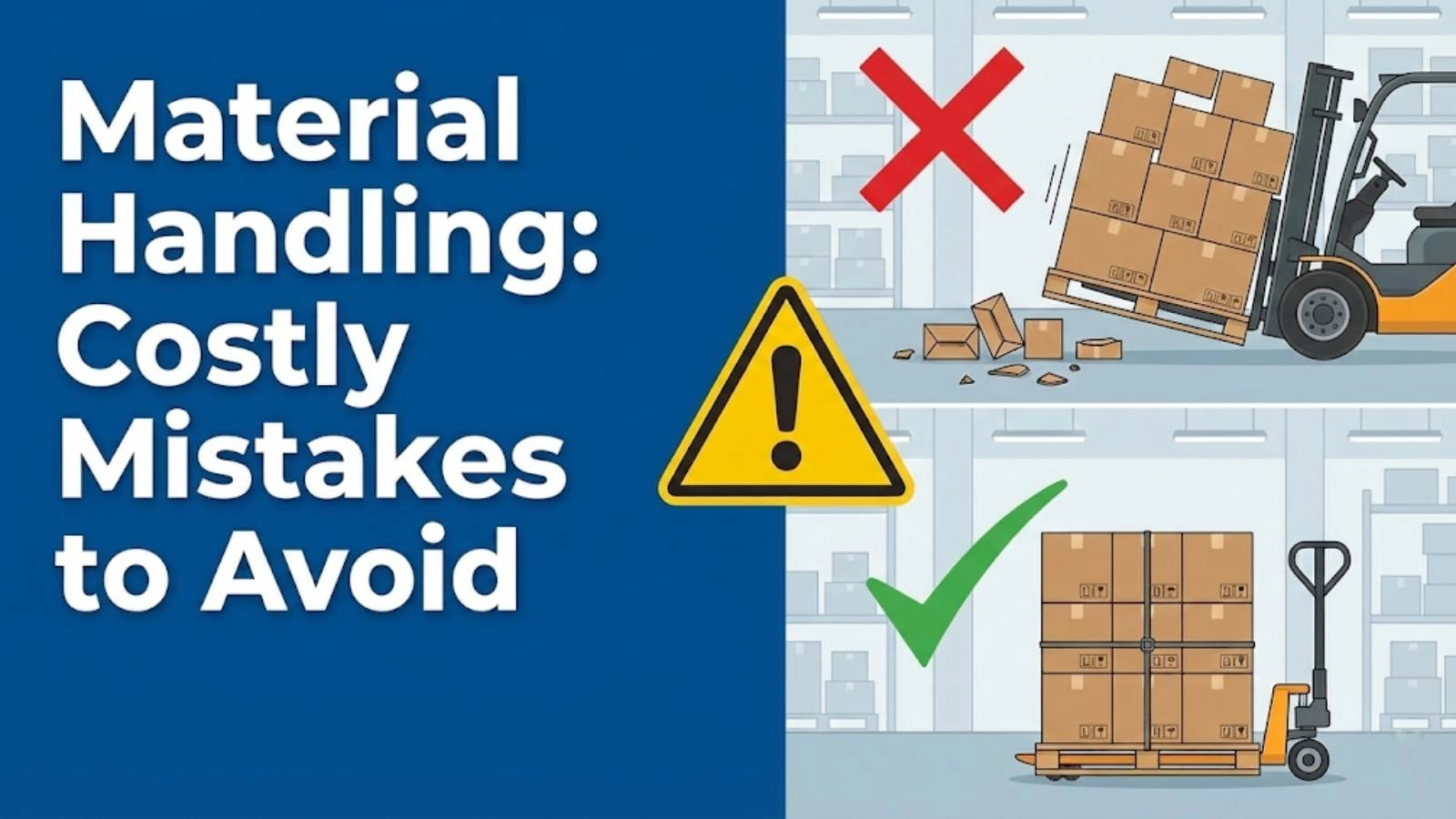
Material handling is the backbone of countless industries, yet it’s often riddled with inefficiencies that silently drain profits. From manufacturing to warehousing, the way materials are handled significantly impacts productivity, safety, and the bottom line. Many companies unknowingly commit material handling mistakes that accumulate into substantial losses. At Safe and Secure Trading Company (SSTC), we’ve seen firsthand how addressing these issues can lead to significant improvements in material handling efficiency and overall operational performance. Here’s our expert take on the top material handling mistakes companies make, and how to avoid them.
1. Ignoring Ergonomics: The Hidden Cost
✅ Ignoring ergonomics in material handling is a costly material handling mistake. It’s easy to overlook the long-term impact of seemingly minor physical stressors on workers. Ergonomics is about designing the workplace to fit the worker, rather than forcing the worker to fit the workplace. When ignored, the consequences are reduced productivity, increased worker’s compensation claims, and a demoralized workforce.
1.1. Understanding the Impact of Poor Ergonomics
Repetitive motions, awkward postures, and excessive force are the main culprits behind musculoskeletal disorders (MSDs). These disorders, affecting muscles, nerves, tendons, ligaments, and joints, are alarmingly prevalent in material handling environments. Poor ergonomics directly contributes to MSDs, leading to decreased productivity as workers struggle with discomfort and pain. The financial burden of MSDs includes medical expenses, lost workdays, and increased insurance premiums.
Consider these statistics: MSDs account for nearly 33% of all worker injury and illness cases, costing businesses billions of dollars annually. In sectors involving heavy material handling, such as warehousing and construction, the prevalence of MSDs can be even higher. This is why addressing ergonomic concerns is not just a matter of employee well-being but a crucial factor in operational efficiency.
1.2. Data-Driven Ergonomic Assessments
To effectively combat ergonomic risks, regular and data-driven assessments are essential. These assessments help identify and mitigate risk factors before they result in injuries. Instead of relying on subjective observations, use objective measurement tools to gather concrete data.
Motion capture technology can track workers’ movements to identify high-risk motions and postures. Force measurement tools can quantify the amount of force exerted during lifting, pushing, and pulling tasks. These objective tools provide a clear picture of the ergonomic challenges within your material handling processes. Analyzing this data helps pinpoint specific areas where adjustments are needed to reduce strain and prevent injuries.
1.3. Investing in Ergonomic Equipment
Investing in ergonomic equipment is one of the smartest ways to improve material handling efficiency and avoid the trap of material handling mistakes. While the initial investment might seem daunting, the return on investment (ROI) is substantial. Ergonomic equipment directly reduces the risk of injuries and enhances productivity, delivering long-term cost savings.
Adjustable workstations allow workers to customize the height and angle of their work surfaces, minimizing strain. Lift assists, such as vacuum lifters and hoists, reduce the physical demands of heavy lifting tasks. Implementing these solutions not only protects workers but also increases their efficiency. For example, one of our clients in Jeddah implemented adjustable workstations and saw a 20% decrease in reported MSDs within six months.
2. Inefficient Warehouse Layout: Space is Money
✨ An inefficient warehouse layout is akin to throwing money away. Space is a valuable asset, and when it’s not utilized effectively, costs skyrocket. Poor layout leads to longer travel distances, bottlenecks, and wasted time. It’s a classic material handling mistake that undermines overall operational efficiency.
2.1. Analyzing Warehouse Flow
Optimizing warehouse layout involves analyzing material flow to minimize travel distances, reduce bottlenecks, and streamline operations. Start by mapping the current flow of materials from receiving to shipping. Identify areas where materials frequently get stuck or where workers spend excessive time traveling.
Use diagrams and flowcharts to visualize the current layout and identify potential improvements. Consider factors like product velocity, storage requirements, and order fulfillment processes. Reorganizing the warehouse based on these factors can significantly improve material flow and reduce logistics cost reduction. For instance, placing frequently picked items closer to the shipping area can drastically reduce picking times.
2.2. Data-Driven Slotting Strategies
Strategic slotting, or assigning products to specific locations within the warehouse, is another crucial aspect of efficient warehouse layout. Use data to drive your slotting decisions based on factors like product velocity, size, and weight. ABC analysis is a common technique used to categorize products based on their sales volume.
“A” items, which are the most frequently sold, should be placed in easily accessible locations to minimize picking times. “B” items, with moderate sales volume, can be placed in less accessible locations. “C” items, with low sales volume, can be stored in the least accessible areas. Optimizing slotting based on ABC analysis can lead to significant material handling efficiency gains. We have seen clients here in Riyadh benefit from slotting strategies by reducing their average picking time by 15%.
2.3. Utilizing Vertical Space
Don’t just think horizontally; vertical space can unlock a wealth of storage potential. Mezzanines and vertical lift modules (VLMs) are excellent solutions for maximizing space utilization. Mezzanines add an extra level of storage above existing floor space, effectively doubling the storage capacity without expanding the building’s footprint.
VLMs are automated storage and retrieval systems that deliver items directly to the operator, eliminating the need for walking and searching. These systems are particularly effective for storing small parts and tools. Companies that have successfully implemented vertical storage solutions have seen significant improvements in space utilization and picking efficiency. One case study showed a company increasing its storage capacity by 50% by implementing a mezzanine system.
3. Lack of Proper Training: Accidents Waiting to Happen
💡 One of the most dangerous material handling mistakes is inadequate training. It’s a recipe for accidents, damaged goods, and decreased productivity. Untrained workers are more likely to make errors, operate equipment unsafely, and contribute to a higher accident rate. Investing in comprehensive training programs is crucial for creating a safe and efficient work environment.
3.1. The Cost of Untrained Workers
The cost of untrained workers goes far beyond the immediate risk of accidents. Inadequate training leads to a cascade of negative consequences, including damaged goods, equipment misuse, and decreased overall productivity. The financial implications can be substantial, impacting profitability and long-term sustainability.
Statistics highlight the severity of the problem: companies with inadequate training programs experience accident rates that are significantly higher than those with comprehensive training. These accidents result in medical expenses, lost workdays, and potential legal liabilities. Moreover, untrained workers are less efficient, leading to slower processing times and increased error rates.
3.2. Comprehensive Training Programs
A comprehensive training program should cover all aspects of material handling, from equipment operation to safety procedures and hazard recognition. The training should be tailored to the specific tasks and equipment used in your facility. It should also include hands-on training, allowing workers to practice using equipment under supervision.
Key elements of a comprehensive training program include proper lifting techniques, safe operation of forklifts and other equipment, and hazard communication. Workers should be trained to identify and report potential hazards, such as damaged equipment or unsafe working conditions. The training should also cover emergency procedures, such as what to do in the event of an accident or fire.
3.3. Continuous Improvement and Refresher Training
Training isn’t a one-time event; it should be an ongoing process of continuous improvement and refresher training. Technology changes, equipment gets upgraded, and best practices evolve. Continuous training ensures that workers stay up-to-date on the latest procedures and safety guidelines.
Refresher training helps reinforce key concepts and address any gaps in knowledge. Simulations and virtual reality can be used to create realistic training scenarios without putting workers at risk. Regular assessments and feedback sessions help identify areas where additional training is needed. This proactive approach ensures that workers maintain a high level of competence and safety awareness.
4. Poor Inventory Management: Holding Costs Eat Profits
➡️ Another critical material handling mistake is poor inventory management. Excess inventory ties up capital, increases storage costs, and elevates the risk of obsolescence. Effective inventory management is about striking the right balance between having enough inventory to meet demand and minimizing holding costs. Failing to manage inventory effectively can significantly erode profits.
4.1. The Impact of Excess Inventory
Excess inventory has a far-reaching impact on profitability. It not only ties up valuable capital that could be used for other investments, but also increases storage costs, such as rent, utilities, and insurance. Moreover, excess inventory increases the risk of obsolescence, especially for products with short lifecycles.
The carrying costs of inventory can be substantial, often ranging from 20% to 30% of the inventory’s value per year. These costs include storage, insurance, obsolescence, and the opportunity cost of capital. Reducing excess inventory can free up significant capital and reduce operating expenses. We worked with a client in Jubail where we implemented an improved inventory strategy that saved them 25% in holding costs.
4.2. Implementing Inventory Control Systems
Inventory control systems are essential for tracking inventory levels, optimizing order quantities, and reducing lead times. These systems provide real-time visibility into inventory levels, allowing businesses to make informed decisions about purchasing and production. Modern inventory control systems can automate many of the tasks associated with inventory management, such as order placement and stock replenishment.
By using an inventory control system, businesses can minimize stockouts, reduce excess inventory, and improve overall efficiency. These systems often integrate with other business systems, such as accounting and order management, providing a comprehensive view of the supply chain. Implementing an inventory control system is a crucial step in avoiding material handling mistakes related to inventory management.
4.3. Just-in-Time (JIT) Inventory Management
Just-in-Time (JIT) inventory management is a strategy that aims to minimize inventory levels by receiving materials only when they are needed for production. This approach reduces holding costs, minimizes waste, and improves responsiveness to customer demand. Implementing JIT requires close coordination with suppliers and efficient material handling processes.
JIT is not without its challenges. It requires a high degree of reliability in the supply chain and the ability to respond quickly to changes in demand. However, when implemented effectively, JIT can significantly reduce inventory costs and improve overall supply chain management. Consider adopting JIT principles to significantly reduce storage costs and eliminate waste.
5. Neglecting Preventative Maintenance: Short-Term Savings, Long-Term Pain
🛠️ Neglecting preventative maintenance is a short-sighted material handling mistake that can lead to long-term pain. While it might seem like a way to save money in the short term, the consequences of equipment downtime, production delays, and increased repair costs far outweigh any initial savings. A proactive approach to maintenance is crucial for ensuring the reliability and longevity of material handling equipment.
5.1. The Cost of Equipment Downtime
Equipment downtime can be incredibly costly, disrupting production schedules, delaying shipments, and damaging customer relationships. The financial impact includes lost revenue, increased labor costs, and expedited shipping fees. Moreover, frequent breakdowns can erode employee morale and decrease overall productivity.
Preventative maintenance can significantly reduce the likelihood of equipment downtime by identifying and addressing potential problems before they lead to failure. Regular inspections, lubrication, and parts replacement can keep equipment running smoothly and prevent costly breakdowns. Investing in preventative maintenance is a smart way to protect your investment in material handling equipment.
5.2. Developing a Preventative Maintenance Schedule
A preventative maintenance schedule should be tailored to the specific equipment and operating conditions in your facility. It should include regular inspections, lubrication, and parts replacement based on manufacturer recommendations and historical data. The schedule should also be documented and tracked to ensure that maintenance tasks are completed on time.
Regular inspections can help identify wear and tear, leaks, and other potential problems. Lubrication keeps moving parts running smoothly and prevents premature wear. Parts replacement should be based on a combination of manufacturer recommendations and condition monitoring. By following a preventative maintenance schedule, businesses can significantly reduce the risk of equipment downtime.
5.3. Utilizing Predictive Maintenance Technologies
Predictive maintenance technologies take preventative maintenance to the next level by using sensors and data analytics to predict equipment failures before they occur. Vibration analysis, thermal imaging, and oil analysis are some of the technologies used to monitor equipment condition and identify potential problems. These technologies can detect subtle changes in equipment performance that might not be apparent during visual inspections.
For example, vibration analysis can detect imbalances, misalignments, and bearing failures in rotating equipment. Thermal imaging can identify hot spots that indicate overheating or electrical problems. By using predictive maintenance technologies, businesses can schedule maintenance only when it is needed, minimizing downtime and reducing maintenance costs.
6. Overlooking Automation Opportunities: Sticking to Outdated Methods
🤖 Overlooking automation opportunities is a material handling mistake that can leave businesses stuck with outdated and inefficient methods. While automation may seem like a significant investment, it can deliver substantial ROI in terms of increased productivity, reduced labor costs, and improved accuracy. A strategic approach to automation can transform material handling processes and enhance overall competitiveness.
6.1. Assessing Automation Potential
The first step in exploring automation opportunities is to assess current material handling processes to identify areas where automation can have the greatest impact. Focus on tasks that are repetitive, labor-intensive, or prone to errors. Data-driven identification of bottlenecks and inefficiencies is crucial for determining where automation can deliver the most significant benefits.
Analyze the flow of materials, identify areas where workers spend excessive time, and assess the accuracy of manual processes. Look for opportunities to automate tasks such as picking, packing, sorting, and transportation. By identifying the right automation opportunities, businesses can significantly improve their material handling efficiency.
6.2. ROI of Automation Technologies
The ROI of automation technologies can be substantial, but it’s important to carefully evaluate the costs and benefits before making an investment. Automated guided vehicles (AGVs), robotic arms, and conveyor systems are some of the automation technologies commonly used in material handling. AGVs can automate the transportation of materials within a facility, reducing labor costs and improving efficiency.
Robotic arms can perform repetitive tasks such as picking, packing, and palletizing with greater speed and accuracy than human workers. Conveyor systems can automate the movement of materials between different areas of a facility, reducing bottlenecks and improving throughput. Case studies and calculations can help demonstrate the potential ROI of these technologies.
6.3. Phased Automation Implementation
A phased approach to automation implementation is often the best way to minimize disruption and maximize ROI. Start by automating the most critical and easily automated tasks, and then gradually expand automation to other areas of the facility. This approach allows businesses to learn from their experiences and make adjustments as needed.
A phased implementation also helps manage costs and minimize the impact on workers. By gradually introducing automation, businesses can train workers on the new technologies and minimize the risk of job displacement. A well-planned and executed phased automation implementation can transform material handling processes without disrupting the entire operation.
7. Ignoring Data and Analytics: Flying Blind
📊 Ignoring data and analytics is like flying blind in the material handling world. Without data, it’s impossible to identify areas for improvement, track performance, and make informed decisions. Data-driven material handling is essential for optimizing efficiency, reducing costs, and improving overall operational performance.
7.1. The Power of Data in Material Handling
Data provides valuable insights into material handling processes, allowing businesses to identify bottlenecks, track performance, and measure the impact of improvements. Metrics like throughput, cycle time, and error rates can be used to monitor the efficiency of material handling operations. Data can also be used to identify areas where workers are struggling or where equipment is underperforming.
By collecting and analyzing data, businesses can make informed decisions about process improvements, equipment upgrades, and worker training. Data-driven material handling helps businesses move from reactive problem-solving to proactive optimization. A systematic approach to data collection and analysis is crucial for achieving continuous improvement.
7.2. Implementing Data Collection Systems
Implementing data collection systems involves using sensors, RFID tags, and other technologies to capture data about material handling processes. Sensors can track the movement of materials, monitor equipment performance, and measure environmental conditions. RFID tags can be used to track inventory levels and track the location of materials within a facility.
These technologies provide real-time visibility into material handling operations, allowing businesses to identify problems and make adjustments quickly. Data collection systems should be integrated with other business systems to provide a comprehensive view of the supply chain. Implementing these systems enables businesses to make data-driven decisions and optimize their material handling processes.
7.3. Using Data Analytics to Drive Improvement
Data analytics techniques, such as statistical process control and root cause analysis, can be used to identify and address material handling mistakes. Statistical process control can be used to monitor process performance and identify variations that indicate a problem. Root cause analysis can be used to determine the underlying causes of problems and develop solutions.
By applying these techniques to material handling data, businesses can identify and eliminate inefficiencies, reduce errors, and improve overall performance. Data analytics should be an ongoing process, with regular reviews of data to identify new opportunities for improvement. A data-driven approach to material handling is essential for achieving continuous improvement and maximizing efficiency.
8. Poor Communication and Coordination: Silos Kill Efficiency
🗣️ Poor communication and coordination between different departments can cripple material handling efficiency. Siloed operations lead to inefficiencies, errors, and delays. Effective communication and collaboration are essential for ensuring that materials flow smoothly through the supply chain.
8.1. The Impact of Siloed Operations
When departments operate in silos, information is often fragmented, leading to misunderstandings and delays. Lack of communication between departments can result in misaligned priorities, conflicting goals, and duplicated efforts. This not only affects material handling efficiency, but the entire operational workflow.
For example, if the purchasing department doesn’t communicate effectively with the production department, they may order the wrong materials or order too much or too little. This can result in stockouts, excess inventory, and production delays. Breaking down silos and fostering better communication is essential for improving supply chain management.
8.2. Implementing Communication Systems
Implementing communication systems like radio frequency identification (RFID) and real-time location systems (RTLS) can improve communication and coordination between departments. RFID tags can be used to track the location of materials, equipment, and workers in real-time. RTLS can provide even more precise location data, allowing businesses to optimize material handling processes and improve safety.
These systems can automate many of the tasks associated with communication and coordination, such as tracking inventory levels and locating materials. They also provide real-time visibility into material handling operations, allowing businesses to respond quickly to changes and prevent problems. By implementing these systems, businesses can significantly improve communication and coordination between departments.
8.3. Fostering a Culture of Collaboration
Fostering a culture of collaboration involves creating an environment where employees from different departments feel comfortable sharing information and working together to solve problems. This requires strong leadership, clear communication channels, and a shared commitment to improving material handling efficiency. Encourage employees to cross-train in different departments to gain a better understanding of the entire material handling process.
Implement regular meetings and communication forums where employees from different departments can share information and discuss challenges. Recognize and reward employees who demonstrate a commitment to collaboration. By fostering a culture of collaboration, businesses can break down silos and improve overall material handling efficiency.
9. Suboptimal Packaging and Unitization: Overspending on Transport
📦 Suboptimal packaging and unitization can lead to overspending on transport and increased risk of damage. Efficient packaging and unitization are about minimizing the size and weight of shipments while ensuring that products are adequately protected during transport. Optimizing packaging and unitization can significantly reduce logistics cost reduction and improve overall supply chain management.
9.1. Analyzing Packaging Efficiency
Analyze current packaging methods to identify opportunities for optimization. Evaluate the size and weight of packaging materials, and look for ways to reduce them without compromising product protection. Consider using lighter materials, such as corrugated cardboard, and reducing the amount of void fill.
Optimize the shape and dimensions of packaging to maximize space utilization during transport. Standardize packaging sizes to streamline material handling processes. By analyzing and optimizing packaging efficiency, businesses can significantly reduce transport costs and improve overall supply chain management.
9.2. Standardizing Unit Loads
Standardizing unit loads (pallets, containers) can improve handling efficiency and reduce damage. Using standard-sized pallets and containers allows businesses to automate material handling processes and maximize space utilization in warehouses and trucks. Standard unit loads also make it easier to track and manage inventory.
Standardizing unit loads can reduce the amount of time it takes to load and unload trucks, reducing transport costs and improving efficiency. It also reduces the risk of damage during transport, protecting products and minimizing losses. By standardizing unit loads, businesses can significantly improve material handling efficiency and reduce transport costs.
9.3. Implementing Sustainable Packaging Solutions
Sustainable packaging solutions can reduce environmental impact and improve cost-effectiveness. Consider using recycled materials, reducing packaging waste, and optimizing packaging design to minimize environmental impact. Sustainable packaging not only benefits the environment but can also improve brand image and reduce costs.
Using lighter packaging materials can reduce transport costs and minimize fuel consumption. Reducing packaging waste can lower disposal costs and reduce the environmental impact of material handling operations. By implementing sustainable packaging solutions, businesses can reduce their environmental footprint and improve their bottom line.
10. Neglecting Workplace Safety Audits: Risking Fines and Injuries
⚠️ Neglecting workplace safety audits is a serious material handling mistake. Regular safety audits can identify potential hazards and prevent accidents. A safe working environment not only protects workers but also improves productivity and reduces costs. Regular safety audits demonstrate a commitment to safety and compliance.
10.1. The Importance of Regular Audits
Regular safety audits are essential for identifying potential hazards and preventing accidents in the material handling environment. Safety audits involve a systematic review of workplace conditions, equipment, and procedures to identify areas where improvements are needed. They can help businesses comply with safety regulations and reduce the risk of fines and injuries.
Audits can also uncover hidden inefficiencies and identify opportunities to improve workplace safety. By conducting regular safety audits, businesses can create a safer and more productive work environment. A proactive approach to safety is crucial for protecting workers and minimizing costs.
10.2. Key Elements of a Safety Audit
Key elements of a safety audit include equipment inspections, hazard assessments, and employee interviews. Equipment inspections involve a thorough examination of material handling equipment to identify any defects or maintenance issues. Hazard assessments involve identifying potential hazards in the workplace, such as slip, trip, and fall hazards.
Employee interviews can provide valuable insights into workplace safety concerns and potential hazards. The safety audit should also review safety procedures, such as lockout/tagout procedures and emergency response plans. By covering these key elements, a safety audit can provide a comprehensive assessment of workplace safety.
10.3. Developing a Corrective Action Plan
A corrective action plan should be developed to address any hazards identified during the safety audit. The plan should outline specific actions that will be taken to eliminate or mitigate the hazards, assign responsibility for completing the actions, and establish a timeline for completion. The corrective action plan should also include a system for tracking progress and ensuring that actions are completed on time.
Regular follow-up is essential to ensure that corrective actions are effective and that new hazards are not introduced. By developing and implementing a corrective action plan, businesses can address material handling mistakes and create a safer and more productive workplace safety.
Conclusion
Avoiding these common material handling mistakes is crucial for optimizing efficiency, reducing costs, and improving workplace safety. By focusing on ergonomics, warehouse layout, training, inventory management, preventative maintenance, automation, data analytics, communication, packaging, and safety audits, businesses can transform their material handling operations. We, at Safe and Secure Trading Company, are dedicated to helping our clients achieve these improvements.
FAQ Section
Q: What is the most common material handling mistake companies make?
A: Ignoring ergonomics is a widespread and costly material handling mistake. The long-term impact on worker health and productivity is often underestimated.
Q: How can I improve material handling efficiency in my warehouse?
A: Analyze your warehouse layout, optimize slotting strategies, utilize vertical space, and implement automation technologies to improve material handling efficiency.
Q: Why is training important in material handling?
A: Proper training reduces accidents, minimizes damaged goods, and improves overall productivity. Untrained workers are more likely to make errors and operate equipment unsafely.
Q: What is JIT inventory management and how can it help?
A: Just-in-Time (JIT) inventory management minimizes inventory levels by receiving materials only when they are needed for production, reducing holding costs and waste.
Q: How can data analytics improve material handling processes?
A: Data analytics provides insights into material handling processes, allowing businesses to identify bottlenecks, track performance, and make data-driven decisions for continuous improvement.