Understanding how to improve your material handling ROI is critical for any company looking to boost efficiency, reduce costs, and enhance overall profitability. At Safe and Secure Trading Company (SSTC), we’ve seen firsthand how strategic investments in material handling can lead to significant returns.
Understanding Material Handling ROI: A Beginner’s Guide
In today’s competitive market, optimizing your operations is more important than ever. One key area that significantly impacts your bottom line is material handling. By understanding and improving your material handling ROI, you can unlock substantial cost savings and efficiency gains.
What is Material Handling ROI?
Return on Investment (ROI) is a performance measure used to evaluate the efficiency of an investment or to compare the efficiency of a number of different investments. In the context of material handling, material handling ROI refers to the financial return you receive from investments in equipment, systems, or processes that improve the way materials are moved, stored, controlled, and protected throughout your facility.
- Defining ROI: ROI is essentially a percentage that indicates how much profit you’ve earned for every dollar invested. A higher ROI signifies a more profitable investment. It’s a simple yet powerful metric that helps businesses make informed decisions about where to allocate their resources.
- Why it Matters: Efficient material handling is directly linked to profitability. Streamlined processes reduce labor costs, minimize downtime, and prevent damage to goods. These factors contribute to higher throughput, faster order fulfillment, and increased customer satisfaction, all of which positively impact your bottom line. When our team in Dubai tackles this issue, they often find that a slight adjustment in material handling leads to significant improvements in other areas.
- Basic Formula: The simplest way to calculate ROI is:
ROI = (Net Profit / Cost of Investment) x 100
For example, if you invest $100,000 in a new conveyor system and it generates $30,000 in net profit annually, your ROI would be 30%. This basic ROI calculation gives you a clear picture of whether your investment is paying off.
Consider this example in an HTML table:
“html
| Investment |
Cost |
Annual Net Profit |
ROI |
| Conveyor System |
$100,000 |
$30,000 |
30% |
“
Identifying Areas for Improvement in Your Material Handling
Before you can improve your material handling ROI, you need to pinpoint the areas that are holding you back. This involves a thorough assessment of your current processes and identifying bottlenecks, inefficiencies, and potential hazards.
- Assessing Current Processes: Start by mapping out the flow of materials through your facility. Identify areas where materials are frequently delayed, where there’s excessive handling, or where there’s a high risk of damage. Are there specific points where backups consistently occur? These are prime targets for improvement.
- Data Collection: Collect data on key metrics like the time it takes to move materials from one point to another, the cost of each movement, and the frequency of errors or accidents. This data will provide a baseline against which to measure the impact of any upgrades. Tracking these metrics also helps in making a solid ROI calculation and can contribute to better supply chain ROI.
- Employee Feedback: Your employees who work directly with the material handling processes are your best source of insights. They can identify inefficiencies, safety hazards, and potential solutions that might not be obvious from a purely analytical perspective. We find their insights invaluable.
> “The key to identifying areas for improvement is to involve your employees in the process. They are the ones who know the ins and outs of your operations and can offer valuable insights.” – John Smith, Lead Safety Inspector
Calculating Your Baseline: Establishing a Benchmark
Once you’ve identified areas for improvement, you need to establish a baseline against which to measure the impact of any upgrades. This involves calculating your current costs, efficiency, and error rates. A clear understanding of your starting point is crucial for accurately assessing your material handling ROI.
- Current Costs: Calculate all the costs associated with your current material handling processes, including labor, energy, maintenance, and downtime. Labor costs should include wages, benefits, and training. Energy costs should include the electricity used to power equipment like forklifts and conveyors. Maintenance costs should include the cost of repairs and preventative maintenance. Downtime costs should include the cost of lost production due to equipment failures or other disruptions.
- Current Efficiency: Measure your current efficiency in terms of units moved per hour, order fulfillment rates, and other relevant metrics. How many units can your team process in an hour? What percentage of orders are fulfilled on time and accurately? These metrics will give you a clear picture of your current performance and help you identify areas where you can improve material handling efficiency.
- Error Rates: Track the frequency of damage, misplacement, and other inaccuracies in your material handling processes. High error rates can lead to increased costs, delays, and customer dissatisfaction. By tracking these rates, you can identify the root causes of errors and implement solutions to reduce them.
Choosing the Right Material Handling Upgrades
Selecting the right material handling upgrades is crucial for maximizing your ROI. The best solutions will depend on your specific needs, budget, and the nature of your operations. Consider factors like the type of materials you handle, the size of your facility, and the volume of throughput you need to achieve.
- Forklifts: Forklifts are a staple of many material handling operations. Choosing the right type of forklift for your needs can significantly improve efficiency and safety. Consider factors like lift capacity, lift height, and the type of fuel (electric, propane, or diesel). Electric forklifts are generally more environmentally friendly and have lower operating costs, while propane and diesel forklifts are better suited for outdoor use and heavy-duty applications. Investing in the right forklift ROI is essential.
- Conveyor Systems: Conveyor systems can automate the movement of materials, increasing speed and reducing labor costs. There are many different types of conveyor systems available, including belt conveyors, roller conveyors, and overhead conveyors. The best type for your needs will depend on the type of materials you handle and the layout of your facility. Strategic investment in these systems often reflects positively in the supply chain ROI.
- Automated Storage and Retrieval Systems (AS/RS): AS/RS systems can optimize space and reduce labor by automatically storing and retrieving materials. These systems are particularly well-suited for high-volume operations with limited space. While the initial investment can be significant, the long-term cost savings and efficiency gains can be substantial.
- Ergonomic Solutions: Prioritizing employee safety and productivity is essential for maximizing your material handling ROI. Ergonomic solutions like adjustable workstations, lift assists, and anti-fatigue mats can reduce the risk of injuries and improve employee morale. Happy, healthy employees are more productive and less likely to take time off due to injuries.
Implementing Upgrades: A Step-by-Step Approach
Implementing material handling upgrades requires careful planning, training, and execution. A well-planned implementation will minimize disruptions to your operations and ensure that your employees are prepared to use the new equipment effectively.
- Planning: Define your goals, create a detailed timeline, and allocate resources appropriately. What specific improvements do you want to achieve? How long will it take to implement the upgrades? What resources (labor, budget, equipment) will you need? A well-defined plan will help you stay on track and avoid costly mistakes.
- Training: Ensure that your employees are properly trained on the new equipment and processes. This includes both initial training and ongoing refresher courses. Employees who are well-trained are more likely to use the equipment safely and efficiently, maximizing its potential. It’s not just about the tools but knowing how to use them.
- Pilot Programs: Before rolling out upgrades across your entire facility, consider testing them in a limited area first. This will allow you to identify any potential problems and make adjustments before they impact your entire operation. A pilot program can also help you gather data on the impact of the upgrades and refine your implementation plan.
Measuring the Impact: Tracking Key Performance Indicators (KPIs)
Measuring the impact of your material handling upgrades is essential for determining whether they are delivering the expected results. Track key performance indicators (KPIs) like throughput, labor costs, accuracy, and downtime.
- Increased Throughput: Monitor the speed at which materials are moving through your facility. Are you processing more orders per hour than before? Is your order fulfillment rate improving? Increased throughput is a direct indicator of improved efficiency and a key driver of material handling ROI.
- Reduced Labor Costs: Measure the impact of automation on your labor costs. Are you able to reduce the number of employees required to perform certain tasks? Are you able to reassign employees to more value-added activities? Reduced labor costs are a significant source of cost savings and a major contributor to warehouse ROI.
- Improved Accuracy: Track error rates and damage to materials. Are you seeing fewer misplacements, damaged goods, or customer complaints? Improved accuracy reduces costs associated with returns, replacements, and customer dissatisfaction.
- Decreased Downtime: Minimize disruptions due to equipment failure. Is your equipment running more reliably than before? Are you able to resolve issues more quickly? Decreased downtime translates to increased productivity and reduced costs.
Optimizing for Maximum ROI: Continuous Improvement
Improving material handling ROI is an ongoing process. Regularly audit your processes, analyze your data, and provide ongoing training to your employees.
- Regular Audits: Conduct regular audits of your material handling processes to identify areas for further refinement. Are there any bottlenecks that you missed in your initial assessment? Are there any new technologies or best practices that you could implement?
- Data Analysis: Use the data you collect to drive ongoing improvements. Are there any trends or patterns that you can identify? Are there any specific areas where you are consistently falling short of your goals? Data-driven decision-making is essential for maximizing your material handling ROI.
- Employee Training: Keep your employees’ skills up-to-date with ongoing training. New technologies and best practices are constantly emerging, and it’s important to ensure that your employees are equipped to use them effectively. This is especially critical for more technical material handling upgrades.
Case Studies: Real-World Examples of Material Handling ROI
Here are a few examples of how companies have successfully improved their material handling ROI through strategic upgrades:
- Company A: Implemented a new conveyor system that boosted productivity by 30%. This allowed them to fulfill orders more quickly and efficiently, leading to increased customer satisfaction and higher sales.
- Company B: Invested in ergonomic upgrades that reduced employee injuries and improved morale. This resulted in lower workers’ compensation costs and increased productivity.
- Company C: Implemented automation strategies that achieved significant cost savings. This allowed them to reduce labor costs, improve accuracy, and increase throughput.
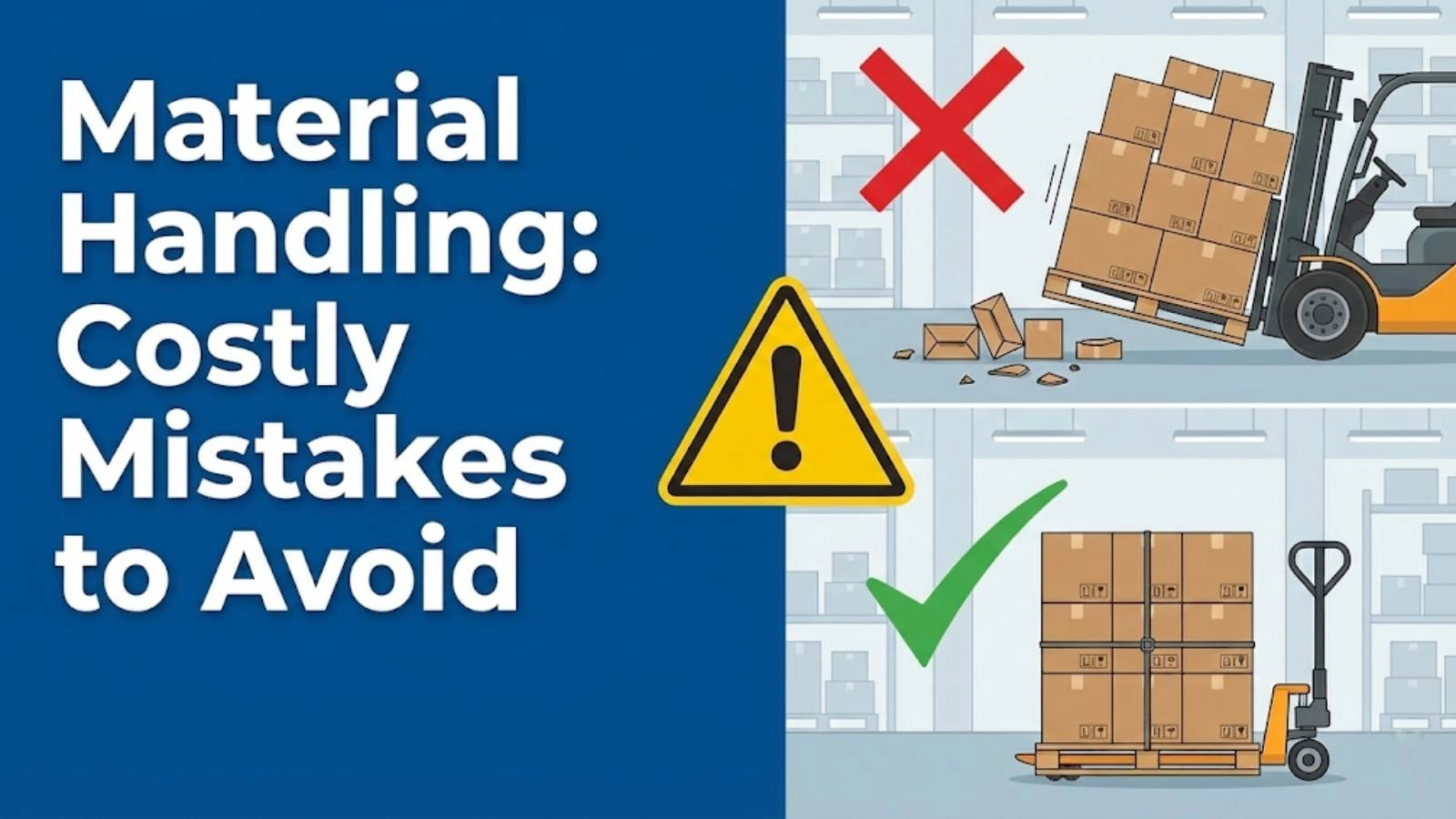
Common Mistakes to Avoid
Avoid these common mistakes when implementing material handling upgrades:
- Overspending: Investing in solutions that are too complex or unnecessary. It’s important to carefully assess your needs and choose solutions that are appropriate for your specific situation.
- Lack of Training: Failing to properly train employees on new equipment. Employees who are not properly trained are more likely to make mistakes, damage equipment, and get injured.
- Ignoring Data: Not tracking KPIs or analyzing results. Without data, it’s impossible to determine whether your upgrades are delivering the expected results.
Debunking Myths About Material Handling Upgrades
Let’s address some common misconceptions about material handling upgrades:
- Myth: Upgrades are too expensive for small businesses.
Reality: Phased upgrades and cost-effective solutions are available. Small businesses can start with smaller, more affordable upgrades and gradually expand their investments as they grow. There are numerous options to increase material handling efficiency without breaking the bank.
- Myth: Automation will eliminate jobs.
Reality: Automation often creates new, higher-skilled jobs. While some manual tasks may be eliminated, automation also creates opportunities for employees to develop new skills in areas like equipment maintenance, programming, and data analysis. It’s about evolving roles, not eliminating them.
Expert Tips for Maximizing Material Handling ROI
Here are some expert tips from Safe and Secure Trading Company for maximizing your material handling ROI:
- Prioritize safety: Safe operations lead to fewer accidents and less downtime. Invest in safety equipment, provide regular safety training, and foster a culture of safety throughout your organization.
- Invest in quality equipment: Durable equipment requires less maintenance and lasts longer. While it may be tempting to save money by purchasing cheaper equipment, in the long run, it will likely cost you more in repairs, downtime, and replacements.
- Focus on employee engagement: Engaged employees are more productive and efficient. Create a positive work environment, provide opportunities for growth and development, and recognize and reward employees for their contributions. A happy team is a productive team, and the positive effect is often reflected in the material handling cost savings.
Conclusion: Start Maximizing Your Material Handling ROI Today!
Understanding and improving your material handling ROI is essential for achieving greater efficiency, reduced costs, and improved safety in your operations. By assessing your current processes, implementing strategic upgrades, and continuously monitoring your results, you can unlock significant financial benefits and gain a competitive edge. Remember that the right material handling upgrades can drastically improve your warehouse ROI and overall supply chain ROI. We are confident that by following the principles outlined in this guide, you’ll achieve a substantial return on your investment and ensure long-term success.
FAQ Section
Q: What is the first step in improving material handling ROI?
A: The first step is to assess your current material handling processes to identify bottlenecks and inefficiencies. This involves collecting data, gathering employee feedback, and analyzing your current costs and performance metrics.
Q: How often should I evaluate my material handling ROI?
A: You should evaluate your material handling ROI on a regular basis, at least quarterly or annually. This will allow you to track your progress, identify any emerging issues, and make adjustments to your strategies as needed.
Q: What are some cost-effective material handling upgrades?
A: Some cost-effective material handling upgrades include ergonomic solutions, improved lighting, and optimized storage layouts. These upgrades can often be implemented with minimal investment and can deliver significant improvements in efficiency and safety.
Q: How can I convince management to invest in material handling upgrades?
A: To convince management, present a clear and compelling case for the upgrades, highlighting the potential material handling cost savings, increased efficiency, and improved safety. Use data to support your claims and demonstrate the potential return on investment. Include examples of how other companies have successfully implemented similar upgrades.
Q: What role does employee training play in material handling ROI?
A: Employee training is crucial for maximizing your material handling ROI. Properly trained employees are more likely to use equipment safely and efficiently, reducing the risk of accidents and damage. Training also helps employees understand the new processes and technologies, leading to increased productivity and improved accuracy.
Q: How can automation improve my material handling ROI?
A: Automation can improve your material handling ROI by reducing labor costs, increasing throughput, and improving accuracy. Automated systems can perform tasks more quickly and consistently than humans, freeing up employees to focus on more value-added activities. Automation can also reduce the risk of errors and damage, leading to further cost savings.
Q: What KPIs should I track to measure the success of my material handling upgrades?
A: Key performance indicators (KPIs) to track include throughput, labor costs, accuracy, downtime, energy consumption, and safety incidents. Monitoring these KPIs will provide a comprehensive view of the impact of your upgrades and help you identify areas for further improvement.
Q: How do I choose the right material handling equipment for my needs?
A: To choose the right material handling equipment ROI, consider factors such as the type of materials you handle, the size of your facility, the volume of throughput you need to achieve, and your budget. Consult with a material handling expert to assess your needs and recommend the best solutions for your specific situation.
Q: Can ergonomic upgrades really improve material handling ROI?
A: Yes, ergonomic upgrades can significantly improve material handling ROI by reducing the risk of injuries, improving employee morale, and increasing productivity. Ergonomic solutions such as adjustable workstations, lift assists, and anti-fatigue mats can create a more comfortable and safer work environment, leading to a happier and more efficient workforce.
Q: How does material handling efficiency affect overall supply chain ROI?
A: Material handling efficiency is a critical component of overall supply chain ROI. Efficient material handling processes ensure that goods are moved quickly and accurately through the supply chain, reducing delays, minimizing costs, and improving customer satisfaction. A well-optimized material handling system can significantly enhance the performance of your entire supply chain.