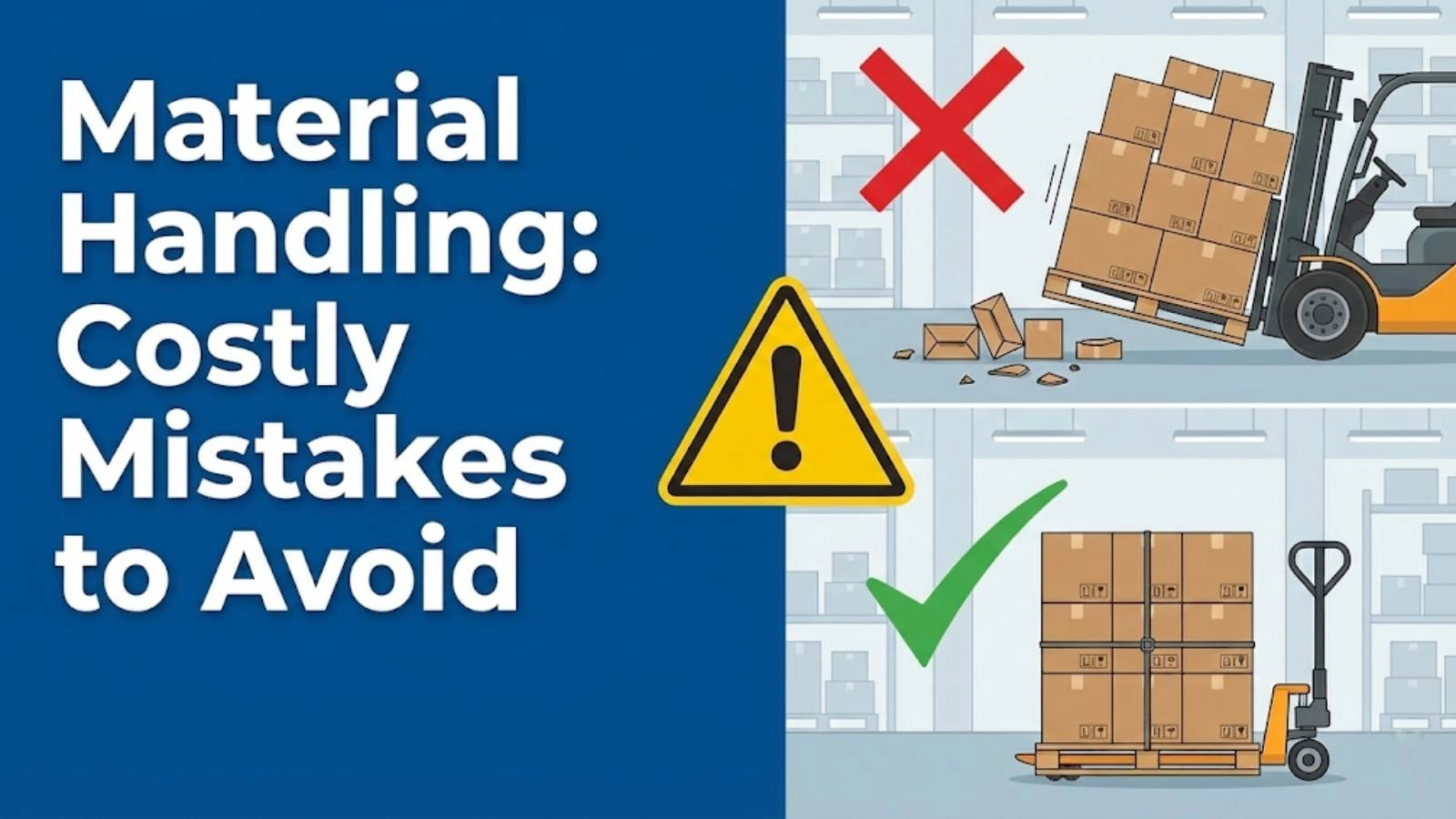
Material handling is a critical aspect of many industries, from warehousing and manufacturing to construction and logistics. Ensuring material handling safety is not only a legal requirement but also essential for protecting employees, preventing accidents, and maintaining operational efficiency. Effective material handling safety practices reduce the risk of injuries, minimize equipment damage, and enhance overall productivity. This guide provides a comprehensive overview of key strategies and best practices to improve material handling safety in your workplace.
1. Conduct Regular Risk Assessments
✅ Regular risk assessments are the cornerstone of any effective material handling safety program. By systematically identifying potential hazards, evaluating the severity of associated risks, and implementing appropriate control measures, businesses can proactively minimize the likelihood of accidents and injuries. This process not only safeguards employees but also contributes to a safer and more efficient work environment.
1.1 Identify Potential Hazards
Thoroughly inspecting the workplace is paramount to pinpoint potential material handling hazards. This includes identifying risks associated with manual handling, equipment operation, storage practices, and traffic flow. For example, uneven surfaces, inadequate lighting, obstructed pathways, and improperly stacked materials can all pose significant hazards. We encourage our clients to conduct regular walk-throughs, involving employees from various departments, to ensure a comprehensive hazard identification process.
1.2 Evaluate the Severity of Risks
Assessing the probability and potential impact of each identified hazard is critical for prioritizing safety efforts. This evaluation should consider factors such as the frequency of exposure, the number of employees at risk, and the potential consequences of an incident. For example, a frequently used loading dock with heavy forklift traffic presents a higher risk than a rarely accessed storage area. Here in Dammam, we’ve seen that clients who use a risk matrix to rank hazards are better able to allocate resources effectively.
1.3 Implement Control Measures
Developing and enforcing strategies to eliminate or minimize the risks is the ultimate goal of a risk assessment. Control measures can include engineering controls (e.g., installing guardrails, using mechanical aids), administrative controls (e.g., developing safe work procedures, providing safety training), and personal protective equipment (PPE). The hierarchy of controls should be followed, prioritizing elimination or substitution of hazards whenever possible. For many of our clients here in Dammam, we’ve seen that a combination of these controls is most effective in creating a safe material handling environment.
2. Provide Comprehensive Safety Training
✅ Comprehensive safety training is essential for equipping employees with the knowledge and skills necessary to perform material handling tasks safely. By providing training on safe lifting techniques, equipment operation, and emergency procedures, companies can empower their workforce to identify hazards, mitigate risks, and prevent accidents. Investing in thorough and ongoing safety training is a proactive step towards creating a culture of safety within the organization.
2.1 Train Employees on Safe Lifting Techniques
Educating employees on proper lifting techniques is critical to prevent back injuries, which are a common cause of workplace absenteeism. Training should cover topics such as proper posture, keeping the load close to the body, bending at the knees, and avoiding twisting while lifting. We always emphasize the importance of team lifting for heavy or awkward loads, and we teach employees how to assess load weight and determine whether assistance is needed.
2.2 Offer Equipment-Specific Training
Ensuring operators are fully trained and certified for all material handling equipment is a legal requirement and a critical safety measure. Training should cover equipment-specific operating procedures, safety features, and maintenance requirements. For example, forklift operators should receive comprehensive training on safe driving practices, load handling, and pre-shift inspections. We’ve found that simulation-based training can be particularly effective for developing operator skills in a safe and controlled environment.
2.3 Regularly Refresh Training Programs
Updating training programs to reflect new safety standards and best practices is essential for maintaining a safe work environment. Refresher training should be conducted periodically to reinforce key concepts and address any emerging safety concerns. We recommend incorporating lessons learned from past incidents and near misses into training programs to prevent recurrence.
3. Enforce the Use of Personal Protective Equipment (PPE)
✅ Personal Protective Equipment (PPE) is a crucial component of material handling safety, providing a barrier between employees and potential hazards. By mandating appropriate PPE for each task, ensuring proper fit and maintenance, and monitoring compliance, companies can significantly reduce the risk of injuries. PPE is not a substitute for other safety measures, but it plays a vital role in protecting employees when other controls are not feasible or fully effective.
3.1 Mandate Appropriate PPE for Each Task
Specifying the correct PPE (gloves, safety shoes, eye protection, etc.) for each material handling task is essential for ensuring adequate protection. For example, workers handling sharp objects should wear cut-resistant gloves, while those working in areas with potential falling objects should wear hard hats. We work with our clients to conduct a PPE hazard assessment to identify the specific PPE requirements for each job.
3.2 Ensure PPE is Properly Fitted and Maintained
Regularly inspecting and maintaining PPE is crucial to ensure its effectiveness. Ill-fitting or damaged PPE can compromise protection and increase the risk of injury. We recommend that employees be trained on how to inspect their PPE for defects and how to properly clean and store it. Employers should also establish a system for replacing worn or damaged PPE promptly.
3.3 Monitor PPE Compliance
Enforcing the consistent use of PPE through regular monitoring and feedback is essential for creating a culture of safety. Supervisors should conduct regular checks to ensure that employees are wearing the correct PPE and using it properly. Positive reinforcement and constructive feedback can encourage compliance and promote a safety-conscious work environment.
4. Optimize Workplace Ergonomics
✅ Optimizing workplace ergonomics is crucial for preventing musculoskeletal disorders (MSDs) and other injuries related to repetitive motions, awkward postures, and excessive force. By designing workstations for proper posture, using mechanical aids to reduce strain, and encouraging regular breaks and stretching, companies can create a more comfortable and safer work environment. Ergonomic improvements not only protect employees but also enhance productivity and job satisfaction.
4.1 Design Workstations for Proper Posture
Adjusting workstations to minimize reaching, bending, and twisting is essential for promoting good posture and reducing strain on the body. This can involve adjusting the height of work surfaces, positioning tools and materials within easy reach, and providing adjustable chairs and footrests. We work with our clients to conduct ergonomic assessments of workstations to identify potential risk factors and recommend appropriate adjustments.
4.2 Use Mechanical Aids to Reduce Strain
Incorporating tools like dollies, hand trucks, and conveyors to reduce manual lifting is an effective way to minimize physical strain. These mechanical aids can significantly reduce the force required to move heavy or awkward loads, decreasing the risk of back injuries and other MSDs. We advise our clients to select mechanical aids that are appropriate for the specific tasks and materials being handled.
4.3 Encourage Regular Breaks and Stretching
Promoting regular breaks and stretching exercises helps to prevent muscle fatigue and reduce the risk of MSDs. Short, frequent breaks allow employees to rest and recover, while stretching exercises improve flexibility and circulation. We recommend that employers provide designated break areas and encourage employees to participate in stretching programs.
5. Implement Proper Lifting Techniques
✅ Implementing proper lifting techniques is fundamental to preventing back injuries and other musculoskeletal disorders in material handling. By teaching employees to keep the load close to the body, bend at the knees, avoid twisting, and assess the load before lifting, companies can significantly reduce the risk of lifting-related injuries. These techniques are simple yet powerful tools for promoting workplace safety.
5.1 Keep the Load Close to the Body
Maintaining a close center of gravity minimizes strain on the back. Keeping the load close to the body reduces the leverage and force required to lift and carry it. We train employees to hug the load and keep it as close as possible to their center of gravity throughout the lifting process.
5.2 Bend at the Knees, Not the Waist
Using leg muscles to lift reduces stress on the lower back. Bending at the knees keeps the back straight and allows the stronger leg muscles to do the work. We emphasize the importance of squatting down to lift objects, keeping the back straight, and using the leg muscles to power the lift.
5.3 Avoid Twisting While Lifting
Pivoting feet to change direction prevents spinal injuries. Twisting while lifting can put excessive strain on the spine, increasing the risk of injury. We train employees to avoid twisting by pivoting their feet in the direction they want to move, keeping their shoulders and hips aligned.
6. Maintain Equipment Regularly
✅ Regular equipment maintenance is essential for ensuring the safe and reliable operation of material handling equipment. By following a scheduled maintenance program, conducting daily inspections, and keeping detailed maintenance records, companies can prevent equipment failures, reduce the risk of accidents, and extend the lifespan of their equipment. Proper maintenance is a key component of a comprehensive material handling safety program.
6.1 Follow a Scheduled Maintenance Program
Adhering to a strict maintenance schedule for all material handling equipment is crucial for preventing breakdowns and ensuring optimal performance. This schedule should include regular inspections, lubrication, adjustments, and replacement of worn parts. We work with our clients to develop customized maintenance programs based on equipment manufacturer recommendations and industry best practices.
6.2 Conduct Daily Inspections
Performing daily inspections helps identify and address any equipment issues promptly. These inspections should include checking fluid levels, tire pressure, brakes, lights, and other critical components. We recommend that operators be trained to conduct thorough pre-shift inspections and report any defects or malfunctions immediately.
6.3 Keep Maintenance Records
Maintaining detailed records of all maintenance activities provides valuable information for future reference. These records can help track maintenance trends, identify recurring problems, and optimize maintenance schedules. We advise our clients to use computerized maintenance management systems (CMMS) to streamline record-keeping and improve maintenance efficiency.
7. Ensure Proper Storage and Stacking
✅ Proper storage and stacking practices are crucial for preventing collapses, falls, and other accidents related to material handling. By storing materials in designated areas, stacking them safely and securely, and limiting stack heights, companies can create a more organized and safer work environment. Effective storage and stacking not only protect employees but also improve space utilization and efficiency.
7.1 Store Materials in Designated Areas
Designating specific storage areas maintains order and prevents clutter. Clearly marked storage areas make it easier to locate materials and prevent them from being misplaced or obstructing walkways. We recommend that employers use color-coding and labeling systems to further enhance organization and efficiency.
7.2 Stack Materials Safely and Securely
Stacking materials in a stable manner prevents collapses and falls. Proper stacking techniques should be used to ensure that materials are evenly distributed and supported. We train employees to interlock materials when possible, use dunnage to provide a stable base, and avoid stacking materials too high.
7.3 Limit Stack Heights
Establishing maximum stack heights prevents overloading and instability. Stack heights should be determined based on the weight, size, and stability of the materials being stacked. We advise our clients to consult with a structural engineer or safety professional to determine appropriate stack heights for their specific materials and storage conditions.
8. Control Traffic Flow in the Workplace
✅ Controlling traffic flow is essential for preventing collisions and other accidents involving pedestrians and material handling equipment. By establishing designated walkways and traffic lanes, using signage and markings, and implementing speed limits, companies can create a safer and more organized workplace. Effective traffic control not only protects employees but also improves efficiency and reduces the risk of property damage.
8.1 Establish Designated Walkways and Traffic Lanes
Creating clear pathways for pedestrians and equipment minimizes collisions. Designated walkways should be clearly marked and separated from traffic lanes using barriers or paint striping. We recommend that employers conduct a traffic flow analysis to identify potential conflict points and optimize the layout of walkways and traffic lanes.
8.2 Use Signage and Markings
Employing clear signage and markings indicates traffic flow and potential hazards. Signage should be used to direct traffic, warn of hazards, and indicate speed limits. We advise our clients to use internationally recognized safety symbols and ensure that signage is visible and easy to understand.
8.3 Implement Speed Limits for Equipment
Enforcing speed limits for forklifts and other equipment reduces the risk of accidents. Speed limits should be appropriate for the specific environment and traffic conditions. We recommend that employers use speed governors to limit the maximum speed of equipment and train operators on the importance of adhering to speed limits.
9. Promote Clear Communication
✅ Promoting clear communication is vital for coordinating material handling tasks and preventing misunderstandings that can lead to accidents. By establishing communication protocols, using hand signals and verbal cues, and encouraging reporting of hazards and incidents, companies can create a more collaborative and safer work environment. Effective communication empowers employees to work together safely and efficiently.
9.1 Establish Communication Protocols
Developing clear communication protocols for material handling tasks ensures that everyone is on the same page. These protocols should specify how workers will communicate during lifting, moving, and stacking operations. We recommend that employers conduct regular safety meetings to review communication protocols and address any concerns.
9.2 Use Hand Signals and Verbal Cues
Training employees on standard hand signals and verbal cues facilitates coordinated movements. Hand signals can be used to communicate directions, distances, and warnings. We advise our clients to use a standardized set of hand signals that are easily understood by all employees.
9.3 Encourage Reporting of Hazards and Incidents
Creating a culture where employees feel comfortable reporting potential hazards and near misses is essential for preventing future accidents. Employees should be encouraged to report any unsafe conditions or practices without fear of reprisal. We recommend that employers establish a formal reporting system and promptly investigate all reported hazards and incidents.
10. Conduct Regular Safety Audits
✅ Conducting regular safety audits is a proactive way to identify areas for improvement in material handling safety and ensure compliance with regulations. By scheduling audits, involving employees in the process, and implementing corrective actions, companies can continuously improve their safety performance. Regular safety audits demonstrate a commitment to safety and help to create a safer and more efficient work environment.
10.1 Schedule Regular Safety Audits
Performing regular safety audits identifies areas for improvement. Safety audits should be conducted by a qualified individual or team and should cover all aspects of material handling operations. We recommend that employers conduct audits at least annually, or more frequently if significant changes have occurred in the workplace.
10.2 Involve Employees in the Audit Process
Engaging employees in the audit process gathers diverse perspectives. Employees can provide valuable insights into potential hazards and areas for improvement. We advise our clients to include employees from various departments and levels of the organization in the audit process.
10.3 Implement Corrective Actions
Taking prompt corrective actions addresses any identified safety deficiencies. Corrective actions should be prioritized based on the severity of the risk and should be implemented as quickly as possible. We recommend that employers track corrective actions to ensure that they are completed effectively.
“Material handling safety is not just about compliance; it’s about creating a culture where every employee is empowered to identify hazards and take action to prevent injuries.” – John Smith, Lead Safety Inspector
Top 3 Material Handling Safety Tips:
1. Prioritize Training: Invest in comprehensive and ongoing safety training for all employees involved in material handling.
2. Conduct Risk Assessments: Regularly assess and mitigate potential hazards to prevent accidents.
3. Enforce PPE Usage: Ensure consistent use of appropriate personal protective equipment.
By following these guidelines, companies can create a safer and more efficient material handling environment, reducing the risk of injuries and improving overall productivity. Remember that material handling safety is an ongoing process that requires continuous effort and commitment.
Material Handling Safety: Expert Quote
| Area |
Key Considerations |
Best Practices |
| Risk Assessment |
Hazard identification, risk evaluation, control measures |
Regular inspections, employee involvement, hierarchy of controls |
| Training |
Safe lifting techniques, equipment operation, emergency procedures |
Comprehensive training programs, equipment-specific training, refresher training |
| PPE |
Appropriate PPE for each task, proper fit and maintenance, compliance monitoring |
PPE hazard assessment, regular inspections, positive reinforcement |
| Ergonomics |
Workstation design, mechanical aids, breaks and stretching |
Ergonomic assessments, adjustable workstations, designated break areas |
| Lifting Techniques |
Load close to the body, bend at the knees, avoid twisting |
Proper posture, team lifting, assessing load weight |
| Equipment Maintenance |
Scheduled maintenance, daily inspections, maintenance records |
Customized maintenance programs, pre-shift inspections, CMMS |
| Storage and Stacking |
Designated areas, safe and secure stacking, limit stack heights |
Color-coding and labeling systems, interlocking materials, dunnage |
| Traffic Control |
Designated walkways, signage and markings, speed limits |
Traffic flow analysis, safety symbols, speed governors |
| Communication |
Communication protocols, hand signals and verbal cues, hazard reporting |
Safety meetings, standardized hand signals, formal reporting system |
| Safety Audits |
Regular audits, employee involvement, corrective actions |
Qualified auditors, diverse perspectives, tracking corrective actions |
Conclusion
By implementing the strategies outlined in this guide, companies can significantly improve their material handling safety practices, reducing the risk of injuries and creating a safer and more productive work environment. We are committed to helping our clients create safe and healthy workplaces.
FAQ Section
Q: What is material handling?
A: Material handling encompasses the movement, storage, control, and protection of materials and products throughout the manufacturing, warehousing, distribution, consumption, and disposal processes. It involves a wide range of activities, including lifting, carrying, pushing, pulling, and transporting materials using various equipment and techniques. Effective material handling is crucial for optimizing efficiency, reducing costs, and ensuring workplace safety.
Q: Why is material handling safety important?
A: Material handling safety is paramount because it directly impacts the well-being of employees and the overall productivity of the workplace. Accidents and injuries related to material handling can lead to significant costs, including medical expenses, lost work time, and potential legal liabilities. By implementing robust material handling safety practices, companies can prevent accidents, protect their workforce, and maintain operational efficiency.
Q: What are the common hazards associated with material handling?
A: Common hazards associated with material handling include:
- Manual Handling: Lifting heavy or awkward loads, repetitive motions, and poor posture can lead to musculoskeletal disorders (MSDs).
- Equipment Operation: Improper operation of forklifts, conveyors, and other equipment can result in collisions, falls, and crush injuries.
- Storage Practices: Improper stacking and storage of materials can cause collapses and falls, leading to injuries and property damage.
- Traffic Flow: Collisions between pedestrians and equipment, especially in congested areas, pose a significant risk.
- Hazardous Materials: Exposure to hazardous materials during handling can cause chemical burns, respiratory problems, and other health issues.
Q: What is the role of risk assessment in material handling safety?
A: Risk assessment is a critical component of material handling safety. It involves systematically identifying potential hazards, evaluating the severity of associated risks, and implementing appropriate control measures. Regular risk assessments help companies proactively minimize the likelihood of accidents and injuries. The risk assessment process should be conducted regularly and involve employees from various departments to ensure a comprehensive evaluation.
Q: How can safety training improve material handling safety?
A: Safety training equips employees with the knowledge and skills necessary to perform material handling tasks safely. Training should cover topics such as proper lifting techniques, equipment operation, hazard identification, and emergency procedures. Comprehensive and ongoing safety training empowers employees to recognize and mitigate risks, preventing accidents and injuries. Refresher training should be conducted periodically to reinforce key concepts and address any emerging safety concerns.
Q: What is the importance of personal protective equipment (PPE) in material handling?
A: Personal Protective Equipment (PPE) provides a barrier between employees and potential hazards in material handling. Appropriate PPE, such as gloves, safety shoes, eye protection, and hard hats, can significantly reduce the risk of injuries from cuts, impacts, chemical exposures, and other hazards. It is essential to mandate the use of appropriate PPE for each task, ensure proper fit and maintenance, and monitor compliance to maximize its effectiveness.
Q: How can workplace ergonomics be optimized to improve material handling safety?
A: Optimizing workplace ergonomics is crucial for preventing musculoskeletal disorders (MSDs) and other injuries related to repetitive motions, awkward postures, and excessive force in material handling. This can involve designing workstations for proper posture, using mechanical aids to reduce strain, and encouraging regular breaks and stretching. Ergonomic improvements not only protect employees but also enhance productivity and job satisfaction.
Q: What are some best practices for proper lifting techniques in material handling?
A: Best practices for proper lifting techniques in material handling include:
- Keeping the load close to the body to minimize strain on the back.
- Bending at the knees, not the waist, to use leg muscles for lifting.
- Avoiding twisting while lifting to prevent spinal injuries.
- Assessing the load before lifting to determine if assistance is needed.
- Using team lifting for heavy or awkward loads.
Q: How does regular equipment maintenance contribute to material handling safety?
A: Regular equipment maintenance is essential for ensuring the safe and reliable operation of material handling equipment. By following a scheduled maintenance program, conducting daily inspections, and keeping detailed maintenance records, companies can prevent equipment failures, reduce the risk of accidents, and extend the lifespan of their equipment. Proper maintenance includes checking fluid levels, tire pressure, brakes, lights, and other critical components.
Q: What are the key considerations for proper storage and stacking of materials in a warehouse?
A: Key considerations for proper storage and stacking of materials in a warehouse include:
- Storing materials in designated areas to maintain order and prevent clutter.
- Stacking materials safely and securely to prevent collapses and falls.
- Limiting stack heights to prevent overloading and instability.
- Using appropriate stacking techniques, such as interlocking materials and using dunnage.
- Ensuring that storage areas are well-lit and free from obstructions.
Q: How can traffic flow be controlled to enhance material handling safety?
A: Traffic flow can be controlled to enhance material handling safety by:
- Establishing designated walkways and traffic lanes to minimize collisions between pedestrians and equipment.
- Using signage and markings to indicate traffic flow and potential hazards.
- Implementing speed limits for forklifts and other equipment to reduce the risk of accidents.
- Ensuring that walkways and traffic lanes are well-maintained and free from obstructions.
- Providing adequate lighting in traffic areas.
Q: What is the role of communication in promoting material handling safety?
A: Clear communication is vital for coordinating material handling tasks and preventing misunderstandings that can lead to accidents. Effective communication includes:
- Establishing communication protocols for lifting, moving, and stacking operations.
- Using hand signals and verbal cues to facilitate coordinated movements.
- Encouraging reporting of hazards and incidents to prevent future accidents.
- Conducting regular safety meetings to review communication protocols and address any concerns.
Q: How can regular safety audits improve material handling safety?
A: Regular safety audits provide a proactive way to identify areas for improvement in material handling safety and ensure compliance with regulations. Safety audits involve:
- Scheduling audits conducted by qualified individuals or teams.
- Involving employees in the audit process to gather diverse perspectives.
- Implementing corrective actions to address any identified safety deficiencies.
- Tracking corrective actions to ensure they are completed effectively.
Q: How does manual handling contribute to workplace injuries, and what precautions can be taken?
A: Manual handling is a significant contributor to workplace injuries, particularly musculoskeletal disorders (MSDs) affecting the back, shoulders, and limbs. These injuries often result from lifting heavy objects, repetitive tasks, awkward postures, and insufficient training. To mitigate these risks, several precautions can be taken:
- Risk Assessment: Conducting thorough risk assessments to identify manual handling hazards and evaluate the potential for injury.
- Training: Providing comprehensive training on safe lifting techniques, proper posture, and the use of manual handling aids.
- Ergonomic Adjustments: Modifying workstations to minimize reaching, bending, and twisting, thereby reducing physical strain.
- Mechanical Aids: Utilizing equipment such as forklifts, hand trucks, and conveyors to reduce or eliminate the need for manual handling.
- Load Reduction: Breaking down large loads into smaller, more manageable sizes or using team lifting for heavier items.
Q: What are the key elements of a comprehensive workplace safety program for material handling?
A: The key elements of a comprehensive workplace safety program for material handling include:
- Management Commitment: Strong leadership support and a clear commitment to safety from top management.
- Risk Assessment: Regular and thorough risk assessments to identify and address potential hazards.
- Training: Comprehensive and ongoing training for all employees involved in material handling.
- Personal Protective Equipment (PPE): Provision and enforcement of appropriate PPE for each task.
- Ergonomics: Implementation of ergonomic principles to reduce physical strain and prevent MSDs.
- Equipment Maintenance: Regular inspection and maintenance of material handling equipment.
- Communication: Clear and effective communication channels for reporting hazards and incidents.
- Incident Investigation: Thorough investigation of all accidents and near misses to identify root causes and prevent recurrence.
- Safety Audits: Regular safety audits to evaluate the effectiveness of the program and identify areas for improvement.
- Continuous Improvement: A commitment to continuously improving safety performance through ongoing monitoring and evaluation.
Q: How can technology be leveraged to improve material handling safety?
A: Technology can play a significant role in improving material handling safety through:
- Automated Systems: Implementing automated systems such as robotic palletizers and automated guided vehicles (AGVs) to reduce or eliminate manual tasks.
- Wearable Technology: Using wearable sensors to monitor employee posture, movement, and fatigue, providing real-time feedback to prevent injuries.
- Virtual Reality (VR) Training: Utilizing VR simulations to provide realistic and immersive training experiences for material handling tasks.
- Data Analytics: Analyzing data from sensors and monitoring systems to identify trends and patterns that can help prevent accidents.
- Inventory Management Systems: Implementing advanced inventory management systems to optimize storage and retrieval processes, reducing the need for manual handling.
Q: What are some common mistakes to avoid in material handling safety?
A: Common mistakes to avoid in material handling safety include:
- Lack of Training: Failing to provide adequate training to employees on safe material handling practices.
- Ignoring Risk Assessments: Neglecting to conduct regular risk assessments to identify and address potential hazards.
- Inadequate PPE: Not providing or enforcing the use of appropriate PPE for each task.
- Poor Ergonomics: Failing to address ergonomic risk factors in the workplace.
- Neglecting Equipment Maintenance: Failing to maintain material handling equipment properly, leading to malfunctions and accidents.
- Poor Communication: Inadequate communication between employees, leading to misunderstandings and unsafe practices.
- Ignoring Employee Feedback: Failing to listen to and address employee concerns about workplace safety.
Q: What regulatory standards govern material handling safety?
A: Several regulatory standards govern material handling safety, including:
- OSHA (Occupational Safety and Health Administration) Standards: OSHA provides comprehensive standards for workplace safety, including specific requirements for material handling equipment and practices.
- ANSI (American National Standards Institute) Standards: ANSI develops voluntary consensus standards for a wide range of industries, including material handling.
- ISO (International Organization for Standardization) Standards: ISO standards provide a framework for quality management and workplace safety, including requirements for material handling processes.
- Local and Regional Regulations: Depending on the location, there may be additional local and regional regulations governing material handling safety.
Q: How can a company measure the effectiveness of its material handling safety program?
A: A company can measure the effectiveness of its material handling safety program by:
- Tracking Incident Rates: Monitoring the number and severity of material handling related accidents and injuries.
- Conducting Regular Safety Audits: Performing regular audits to assess compliance with safety standards and identify areas for improvement.
- Monitoring Employee Feedback: Gathering feedback from employees through surveys and interviews to assess their perceptions of workplace safety.
- Analyzing Near Miss Data: Tracking and analyzing near miss incidents to identify potential hazards before they result in accidents.
- Benchmarking Against Industry Standards: Comparing the company’s safety performance against industry benchmarks to identify areas where improvement is needed.
Q: What role does hazard identification play in preventing accidents in material handling?
A: Hazard identification is a critical component of preventing accidents in material handling. By systematically identifying potential hazards, such as unsafe equipment, hazardous materials, and unsafe work practices, companies can take proactive steps to mitigate the risks before accidents occur. Hazard identification should be an ongoing process, involving regular inspections, employee feedback, and analysis of incident data.
Q: What are the benefits of using ergonomic assessment tools in the workplace?
A: Ergonomic assessment tools offer several benefits in the workplace, including:
- Identifying Risk Factors: Helping to identify specific ergonomic risk factors that can contribute to musculoskeletal disorders (MSDs).
- Prioritizing Interventions: Assisting in prioritizing ergonomic interventions based on the severity of the risk factors.
- Measuring Progress: Providing a way to measure the effectiveness of ergonomic interventions over time.
- Raising Awareness: Increasing employee awareness of ergonomic principles and promoting a culture of safety.
- Improving Productivity: Contributing to improved productivity by reducing employee discomfort and fatigue.
Q: What are some effective strategies for promoting a culture of safety in material handling?
A: Effective strategies for promoting a culture of safety in material handling include:
- Leadership Commitment: Demonstrating a strong commitment to safety from top management.
- Employee Involvement: Engaging employees in the development and implementation of safety programs.
- Training and Education: Providing comprehensive training on safe material handling practices.
- Recognition and Rewards: Recognizing and rewarding employees for their contributions to safety.
- Open Communication: Encouraging open communication about safety concerns and providing channels for reporting hazards and incidents.
- Continuous Improvement: Continuously monitoring and evaluating safety performance and implementing improvements as needed.
- Accountability: Holding all employees accountable for following safety procedures and contributing to a safe workplace.
By addressing these frequently asked questions and implementing the recommendations provided, companies can create a safer and more efficient material handling environment for their employees.