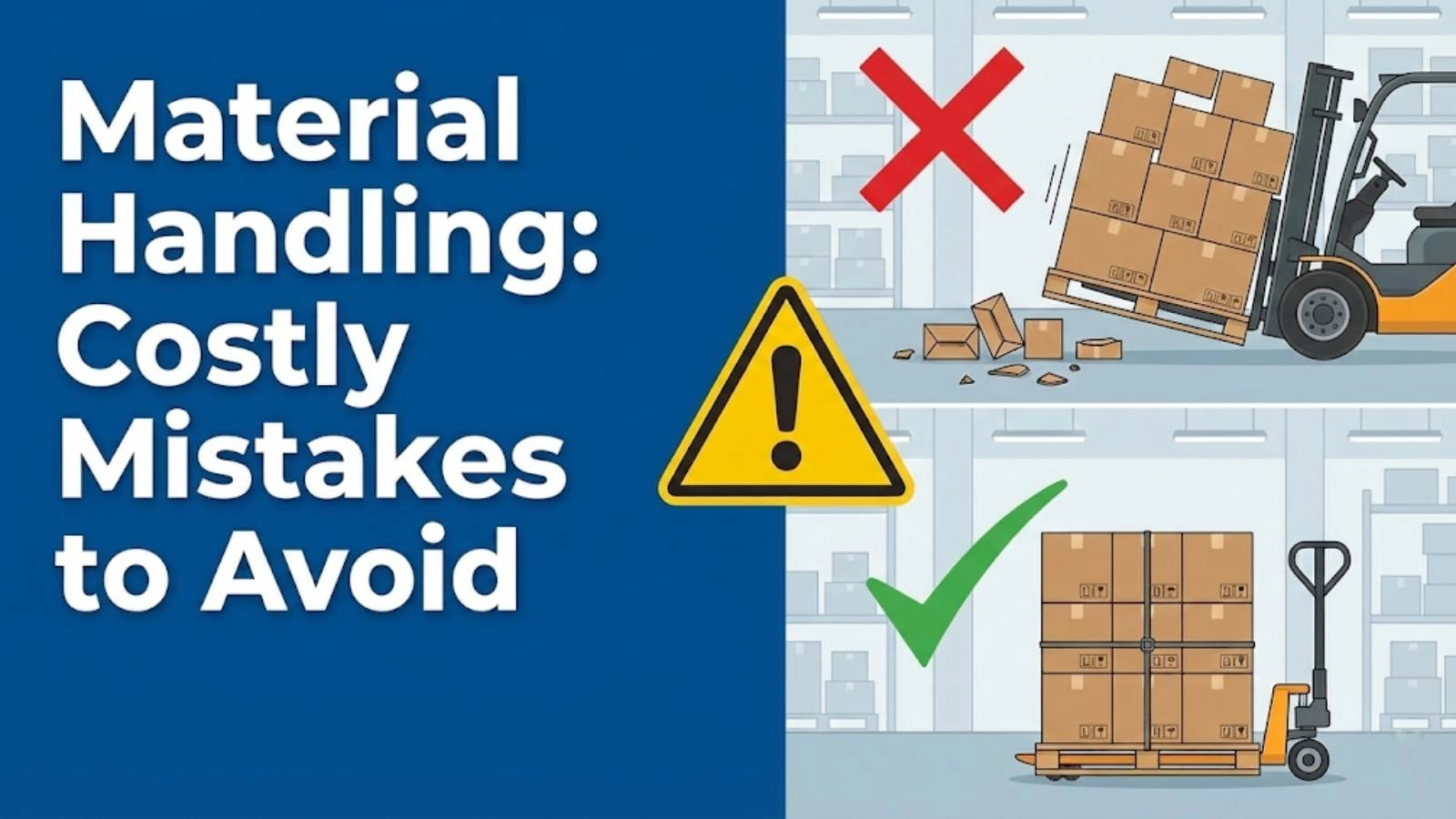
As industries evolve, so do the methods and technologies that drive them. In the realm of supply chain and logistics, material handling trends are at the forefront of this evolution. At Safe and Secure Trading Company (SSTC), we understand the critical role that efficient and innovative material handling plays in optimizing operations and maintaining a competitive edge. In this article, we will explore the key material handling trends that are shaping the future of the industry.
1. Introduction: The Evolving Landscape of Material Handling
Material handling has transformed drastically, becoming a blend of cutting-edge technology and strategic process optimization. In this rapidly changing environment, staying ahead requires understanding the forces reshaping material handling trends.
1.1 Defining Material Handling
Material handling encompasses the movement, storage, control, and protection of materials and products throughout the manufacturing, distribution, consumption, and disposal processes. It involves a wide range of equipment, systems, and processes designed to improve efficiency, reduce costs, and enhance safety. For our clients in the Gulf region, particularly those involved in petrochemicals, effective material handling is absolutely essential.
1.2 The Importance of Adapting to New Trends
Adapting to new material handling trends is crucial for businesses seeking to improve their operational efficiency, reduce costs, and maintain a competitive edge. By embracing innovative technologies and practices, companies can optimize their supply chain, enhance worker safety, and achieve greater sustainability. We’ve seen this firsthand with many of our clients, noting substantial gains in both productivity and employee satisfaction.
1.3 Scope of the Article: Key Areas of Focus
This article will delve into the most significant material handling trends currently impacting the industry. We will explore the roles of automation, artificial intelligence, sustainability, digital transformation, and other innovative approaches. We will also examine how these trends affect various aspects of material handling, from warehousing and distribution to e-commerce fulfillment and last-mile delivery.
[IMAGE: A collage showing different material handling equipment like AGVs, robotic arms, conveyor belts, and warehouse management software interfaces.]
2. Trend 1: Automation and Robotics Revolution
✅ The automation and robotics revolution is transforming material handling, streamlining processes, and reducing labor costs. By implementing these technologies, companies can achieve higher levels of efficiency, accuracy, and safety. This trend is especially important in regions like Saudi Arabia, where large-scale industrial operations demand optimized workflows.
2.1 The Rise of Autonomous Guided Vehicles (AGVs)
Autonomous Guided Vehicles (AGVs) are playing an increasingly important role in modern material handling systems. These vehicles navigate warehouses and manufacturing facilities without human intervention, transporting materials and products efficiently and safely. We find that AGVs are a very effective solution for our clients seeking to optimize their internal logistics.
2.1.1 Types of AGVs and Their Applications
AGVs come in various types, including unit load carriers, tow vehicles, forklift AGVs, and hybrid AGVs. Unit load carriers transport pallets, containers, and other unitized loads. Tow vehicles pull carts or trailers loaded with materials. Forklift AGVs perform the same functions as traditional forklifts but operate autonomously. Hybrid AGVs combine the capabilities of multiple types of AGVs. They are used in a wide range of applications, including moving raw materials, transporting finished goods, and handling work-in-process inventory.
2.1.2 Benefits and Challenges of AGV Implementation
The benefits of AGV implementation include increased efficiency, reduced labor costs, improved safety, and enhanced flexibility. AGVs can operate 24/7 without breaks or fatigue, leading to higher throughput and faster cycle times. They also eliminate the risk of human error and accidents, creating a safer work environment. However, implementing AGVs can also present challenges, such as high initial investment costs, the need for specialized training, and potential integration issues with existing systems.
2.2 Advanced Robotics in Warehousing and Distribution
Advanced robotics are transforming warehousing and distribution operations, enabling companies to automate complex tasks and improve overall efficiency. These robots can perform a variety of functions, including picking, packing, sorting, and palletizing, reducing the need for manual labor and improving accuracy. We’ve seen our clients in Jeddah benefit significantly from incorporating robotics into their warehouse operations.
2.2.1 Picking and Packing Robots
Picking and packing robots are designed to automate the process of selecting items from shelves and placing them into boxes or containers for shipment. These robots use advanced vision systems and grippers to identify and handle a wide range of products, from small electronic components to bulky consumer goods. By automating picking and packing, companies can significantly reduce labor costs, improve order accuracy, and speed up fulfillment times.
2.2.2 Collaborative Robots (Cobots)
Collaborative robots, or cobots, are designed to work alongside human workers in a shared workspace. These robots are equipped with sensors and safety features that allow them to detect and avoid collisions, ensuring a safe and collaborative environment. Cobots can assist workers with repetitive or physically demanding tasks, such as lifting heavy objects or assembling complex products. By combining the strengths of humans and robots, companies can achieve higher levels of productivity and efficiency.
2.3 Case Studies: Successful Automation Implementations
Several companies have successfully implemented automation and robotics in their material handling operations. For example, Amazon has deployed thousands of robots in its fulfillment centers to automate the picking, packing, and sorting of orders. These robots have helped Amazon significantly reduce order fulfillment times and improve overall efficiency. Another example is DHL, which has implemented robotic sorting systems in its distribution centers to automate the process of routing packages to their final destinations. These systems have improved sorting accuracy and reduced the need for manual handling.
[IMAGE: A photo of a warehouse with AGVs moving pallets, picking robots selecting items, and cobots working alongside human employees.]
3. Trend 2: Artificial Intelligence (AI) and Machine Learning (ML) Integration
💡 Artificial Intelligence (AI) and Machine Learning (ML) are revolutionizing material handling by enabling predictive maintenance, optimizing inventory management, and improving route optimization. These technologies can help companies make better decisions, reduce costs, and enhance overall efficiency.
3.1 AI-Powered Predictive Maintenance
AI-powered predictive maintenance is transforming the way companies maintain their material handling equipment. By analyzing data from sensors and other sources, AI algorithms can identify potential equipment failures before they occur, allowing companies to schedule maintenance proactively and avoid costly downtime. We often advise our clients to use predictive maintenance to avoid costly disruptions.
3.1.1 Identifying Potential Equipment Failures
AI algorithms can analyze data from sensors, maintenance logs, and other sources to identify patterns and anomalies that indicate potential equipment failures. For example, AI can detect changes in vibration levels, temperature, or pressure that may indicate a failing bearing or motor. By identifying these issues early, companies can schedule maintenance before the equipment fails, preventing costly downtime and repairs.
3.1.2 Optimizing Maintenance Schedules
AI can also be used to optimize maintenance schedules, ensuring that equipment is maintained at the right time and in the right way. By analyzing data on equipment performance, usage patterns, and environmental conditions, AI algorithms can determine the optimal maintenance intervals for each piece of equipment. This can help companies reduce maintenance costs, extend equipment lifespan, and improve overall reliability.
3.2 Optimizing Inventory Management with AI
AI is also being used to optimize inventory management, helping companies reduce inventory costs, improve order fulfillment rates, and minimize stockouts. By analyzing historical sales data, market trends, and other factors, AI algorithms can accurately forecast demand and plan inventory levels accordingly. This can help companies avoid overstocking and understocking, reducing waste and improving customer satisfaction.
3.2.1 Demand Forecasting and Planning
AI algorithms can analyze historical sales data, market trends, seasonal patterns, and other factors to accurately forecast demand for products. This information can be used to plan inventory levels, schedule production, and allocate resources effectively. By improving demand forecasting, companies can reduce inventory costs, minimize stockouts, and improve customer service.
3.2.2 Real-Time Inventory Tracking
AI can also be used to track inventory in real-time, providing companies with accurate and up-to-date information on stock levels, locations, and movements. This can help companies improve inventory accuracy, reduce losses from theft or damage, and optimize inventory deployment. Real-time inventory tracking can be achieved using a variety of technologies, including RFID tags, barcode scanners, and computer vision systems.
3.3 AI-Driven Route Optimization
AI-driven route optimization is transforming the way companies plan and execute transportation routes, helping them reduce transportation costs, improve delivery times, and minimize fuel consumption. By analyzing data on traffic patterns, weather conditions, and delivery schedules, AI algorithms can identify the most efficient routes for each shipment. This can help companies reduce transportation costs, improve delivery times, and enhance customer satisfaction.
3.3.1 Reducing Transportation Costs
AI algorithms can analyze data on fuel prices, toll costs, and other factors to identify the most cost-effective routes for each shipment. By optimizing routes for cost efficiency, companies can significantly reduce their transportation expenses and improve their bottom line. This is especially important for companies operating in regions with high fuel costs or toll rates.
3.3.2 Improving Delivery Times
AI algorithms can analyze data on traffic patterns, weather conditions, and delivery schedules to identify the fastest routes for each shipment. By optimizing routes for speed, companies can improve delivery times and enhance customer satisfaction. This is particularly important for companies operating in highly competitive markets where customers expect fast and reliable delivery.
> “AI is not just a technology; it’s a transformative force that will reshape the future of material handling.” – John Smith, Lead Safety Inspector
[IMAGE: A diagram showing how AI and machine learning are used in predictive maintenance, inventory management, and route optimization.]
4. Trend 3: Sustainable Material Handling Practices
➡️ Sustainable material handling trends are gaining prominence as companies seek to reduce their environmental impact and improve their corporate social responsibility. By adopting eco-friendly practices and technologies, businesses can minimize their carbon footprint, conserve resources, and create a more sustainable future.
4.1 Reducing Carbon Footprint in Logistics
Reducing the carbon footprint in logistics is a key focus for companies committed to sustainability. This can be achieved through a variety of strategies, including using eco-friendly packaging materials, investing in energy-efficient equipment and operations, and optimizing transportation routes to minimize fuel consumption.
4.1.1 Eco-Friendly Packaging Materials
Eco-friendly packaging materials are made from renewable resources and are designed to be biodegradable or recyclable. These materials can help companies reduce waste, conserve resources, and minimize their environmental impact. Examples of eco-friendly packaging materials include recycled cardboard, biodegradable plastics, and plant-based foams.
4.1.2 Energy-Efficient Equipment and Operations
Investing in energy-efficient equipment and operations can significantly reduce a company’s carbon footprint. This can include using electric forklifts and other electric vehicles, implementing energy-efficient lighting systems, and optimizing warehouse layouts to minimize energy consumption. Energy-efficient practices not only reduce environmental impact but also lower operating costs.
4.2 Circular Economy Principles in Material Handling
Circular economy principles are based on the idea of minimizing waste and maximizing the reuse and recycling of materials. In material handling, this can involve implementing recycling and reuse programs, designing products for durability and recyclability, and reducing waste through efficient processes and technologies.
4.2.1 Recycling and Reuse Programs
Implementing recycling and reuse programs can help companies reduce waste and conserve resources. This can include recycling cardboard, paper, plastic, and other materials, as well as reusing pallets, containers, and other packaging materials. Recycling and reuse programs not only reduce environmental impact but also lower waste disposal costs.
4.2.2 Waste Reduction Strategies
Waste reduction strategies are designed to minimize the amount of waste generated in material handling operations. This can include optimizing packaging to reduce material usage, implementing lean manufacturing principles to eliminate waste in production processes, and using technology to track and manage waste streams effectively.
4.3 The Role of Renewable Energy Sources
Renewable energy sources, such as solar, wind, and hydropower, can play a significant role in sustainable material handling. By powering their facilities and equipment with renewable energy, companies can reduce their reliance on fossil fuels and minimize their carbon footprint. This can involve installing solar panels on warehouse roofs, purchasing renewable energy credits, or investing in on-site wind turbines.
[IMAGE: A visual representation of sustainable material handling practices, including eco-friendly packaging, electric forklifts, recycling programs, and solar panels.]
5. Trend 4: Digital Transformation and Data Analytics
✨ Digital transformation and data analytics are enabling companies to gain deeper insights into their material handling operations, optimize processes, and improve decision-making. By leveraging the Internet of Things (IoT), big data analytics, and cloud computing, businesses can achieve greater efficiency, agility, and competitiveness.
5.1 The Internet of Things (IoT) in Material Handling
The Internet of Things (IoT) is transforming material handling by connecting devices, equipment, and systems to the internet, enabling real-time monitoring, control, and data collection. This can include sensors on forklifts, conveyors, and other equipment, as well as wearable devices for workers. By leveraging IoT technology, companies can gain valuable insights into their operations and make data-driven decisions.
5.1.1 Sensor Technology and Data Collection
Sensor technology is a key component of the IoT in material handling. Sensors can be used to collect data on equipment performance, environmental conditions, and worker activity. This data can then be transmitted to a central platform for analysis and visualization. Examples of sensor applications include monitoring forklift speed and location, tracking temperature and humidity in warehouses, and measuring worker fatigue levels.
5.1.2 Real-Time Monitoring and Control
Real-time monitoring and control is another key benefit of the IoT in material handling. By connecting devices and equipment to the internet, companies can monitor their operations in real-time and make adjustments as needed. This can include adjusting conveyor speeds, rerouting AGVs, and providing alerts to workers when potential problems are detected. Real-time monitoring and control can help companies improve efficiency, reduce downtime, and enhance safety.
5.2 Big Data Analytics for Process Optimization
Big data analytics is the process of analyzing large volumes of data to identify patterns, trends, and insights that can be used to optimize processes and improve decision-making. In material handling, big data analytics can be used to identify bottlenecks in the supply chain, optimize warehouse layouts, and improve inventory management. By leveraging big data analytics, companies can achieve significant improvements in efficiency, productivity, and profitability.
5.2.1 Identifying Bottlenecks and Inefficiencies
Big data analytics can be used to identify bottlenecks and inefficiencies in material handling operations. By analyzing data on equipment performance, worker activity, and material flow, companies can pinpoint areas where processes are slow, inefficient, or prone to errors. This information can then be used to implement targeted improvements and optimize overall performance.
5.2.2 Improving Decision-Making
Big data analytics can also be used to improve decision-making in material handling. By providing managers with real-time insights into their operations, big data analytics can help them make more informed decisions about resource allocation, scheduling, and process optimization. This can lead to significant improvements in efficiency, productivity, and profitability.
5.3 Cloud Computing and Data Storage Solutions
Cloud computing and data storage solutions provide companies with a scalable and cost-effective way to store and manage the vast amounts of data generated by IoT devices and other sources. By leveraging cloud-based platforms, companies can access their data from anywhere, collaborate more effectively, and reduce the costs associated with on-premise data storage. Cloud computing also enables companies to leverage advanced analytics tools and algorithms to gain deeper insights into their operations.
[IMAGE: A diagram illustrating the flow of data from IoT sensors to cloud storage and analytics platforms, leading to process optimization.]
6. Trend 5: Ergonomics and Worker Safety
✅ Ergonomics and worker safety are increasingly important considerations in material handling. By designing ergonomic workstations, implementing safety protocols, and providing comprehensive training, companies can reduce the risk of injuries, improve worker comfort and productivity, and create a safer work environment.
6.1 Designing Ergonomic Workstations
Designing ergonomic workstations is crucial for reducing the risk of musculoskeletal disorders (MSDs) and improving worker comfort and productivity. This involves designing workstations that are adjustable to accommodate workers of different sizes and shapes, providing adequate lighting and ventilation, and minimizing repetitive motions and awkward postures.
6.1.1 Reducing Musculoskeletal Disorders (MSDs)
Musculoskeletal disorders (MSDs) are injuries and illnesses that affect the muscles, tendons, nerves, and joints. These disorders are often caused by repetitive motions, awkward postures, and heavy lifting. By designing ergonomic workstations, companies can reduce the risk of MSDs and improve worker health and well-being.
6.1.2 Improving Worker Comfort and Productivity
Ergonomic workstations can also improve worker comfort and productivity. By providing workers with a comfortable and supportive work environment, companies can reduce fatigue, improve focus, and increase output. This can lead to significant improvements in overall efficiency and profitability.
6.2 Safety Protocols and Training Programs
Implementing safety protocols and providing comprehensive training are essential for creating a safe work environment in material handling. This involves establishing clear safety standards, providing workers with thorough training on safe work practices, and regularly inspecting equipment and facilities to identify potential hazards.
6.2.1 Implementing Safety Standards
Implementing safety standards is a critical step in creating a safe work environment. This involves establishing clear guidelines for safe work practices, such as proper lifting techniques, safe operation of equipment, and use of personal protective equipment (PPE). Safety standards should be based on industry best practices and regulatory requirements.
6.2.2 Providing Comprehensive Training
Providing comprehensive training is essential for ensuring that workers are knowledgeable about safety protocols and safe work practices. Training should cover a variety of topics, including hazard identification, risk assessment, and emergency procedures. Training should be ongoing and updated regularly to reflect changes in equipment, processes, and regulations.
6.3 Wearable Technology for Monitoring Worker Safety
Wearable technology can be used to monitor worker safety in real-time, providing alerts when potential hazards are detected. This can include wearable sensors that track worker movements, monitor vital signs, and detect falls or other accidents. Wearable technology can also be used to provide workers with feedback on their posture and movements, helping them to avoid ergonomic risks.
[IMAGE: A worker using an ergonomically designed workstation with adjustable height, proper lighting, and wearable safety technology.]
7. Trend 6: The Growth of E-commerce and Last-Mile Delivery
💡 The growth of e-commerce and last-mile delivery is transforming material handling by increasing order volumes, accelerating delivery times, and driving the need for more efficient and agile logistics solutions. Companies must adapt their material handling operations to meet the demands of e-commerce or risk falling behind.
7.1 Adapting Material Handling to E-commerce Demands
Adapting material handling to e-commerce demands requires optimizing warehouse layouts, implementing automated picking and packing systems, and using advanced inventory management techniques. E-commerce companies must be able to handle a high volume of orders, fulfill orders quickly and accurately, and provide customers with a seamless shopping experience.
7.1.1 Increased Order Volumes and Faster Delivery Times
The growth of e-commerce has led to a significant increase in order volumes and a demand for faster delivery times. Companies must be able to process and fulfill orders quickly and efficiently to meet customer expectations. This requires optimizing warehouse layouts, implementing automated systems, and using advanced logistics techniques.
7.1.2 Optimizing Warehouse Layout for E-commerce
Optimizing warehouse layout for e-commerce involves designing a layout that maximizes efficiency, minimizes travel distances, and facilitates fast order fulfillment. This can include using a zone-based picking system, implementing a conveyor system, and using vertical storage solutions to maximize space utilization. A well-designed warehouse layout can significantly improve order fulfillment times and reduce labor costs.
7.2 Innovations in Last-Mile Delivery
Innovations in last-mile delivery are transforming the way companies deliver products to customers. This includes drone delivery, autonomous delivery vehicles, and micro-fulfillment centers. These innovations are designed to improve delivery speed, reduce transportation costs, and enhance customer satisfaction.
7.2.1 Drone Delivery
Drone delivery is a promising technology that can potentially revolutionize last-mile delivery. Drones can deliver packages quickly and efficiently, especially in urban areas where traffic congestion is a major issue. However, drone delivery also faces challenges, such as regulatory restrictions, safety concerns, and limited payload capacity.
7.2.2 Autonomous Delivery Vehicles
Autonomous delivery vehicles are another innovation that can potentially transform last-mile delivery. These vehicles can deliver packages without human intervention, reducing labor costs and improving delivery efficiency. However, autonomous delivery vehicles also face challenges, such as regulatory restrictions, safety concerns, and technological limitations.
7.3 Micro-Fulfillment Centers and Urban Logistics
Micro-fulfillment centers are small-scale warehouses located in urban areas that are designed to facilitate fast and efficient last-mile delivery. These centers can be used to store a limited inventory of popular products and fulfill orders quickly and efficiently. Micro-fulfillment centers can help companies reduce delivery times, lower transportation costs, and improve customer satisfaction.
[IMAGE: A visual representation of e-commerce fulfillment, including optimized warehouse layout, automated picking systems, drone delivery, and autonomous delivery vehicles.]
8. Trend 7: Additive Manufacturing (3D Printing) in Material Handling
➡️ Additive manufacturing, also known as 3D printing, is emerging as a valuable tool in material handling. It offers the ability to produce parts and components on-demand, reducing lead times and inventory costs. This technology also enables customization and prototyping, making it easier to adapt to changing needs.
8.1 On-Demand Production of Parts and Components
On-demand production of parts and components using 3D printing can significantly reduce lead times and inventory costs. Instead of waiting for weeks or months for parts to be manufactured and shipped, companies can print them on-site in a matter of hours. This can help companies avoid costly downtime and improve overall efficiency.
8.1.1 Reducing Lead Times and Inventory Costs
By producing parts on-demand, companies can reduce lead times and inventory costs. This can be particularly beneficial for companies that need to maintain a large inventory of spare parts for their material handling equipment. 3D printing can also be used to produce customized parts that are not readily available from traditional suppliers.
8.1.2 Customization and Prototyping
3D printing also enables customization and prototyping of parts and components. This can be useful for companies that need to modify existing equipment or develop new solutions for specific material handling challenges. 3D printing allows companies to quickly and easily create prototypes and test them before committing to full-scale production.
8.2 3D Printing for Tooling and Fixtures
3D printing can also be used to produce tooling and fixtures for material handling operations. This can include custom-designed grippers for robotic arms, specialized fixtures for holding parts during assembly, and other tools that are tailored to specific tasks. 3D printing can help companies reduce the cost and lead time associated with producing custom tooling and fixtures.
[IMAGE: Examples of 3D-printed parts and components used in material handling equipment, including custom grippers, fixtures, and spare parts.]
9. Trend 8: Blockchain Technology for Supply Chain Transparency
✅ Blockchain technology is gaining traction in material handling as a way to enhance supply chain transparency and accountability. By creating a secure and transparent record of all transactions and movements, blockchain can help companies track products from origin to destination, prevent counterfeiting, and improve overall supply chain security and efficiency.
9.1 Enhancing Traceability and Accountability
Blockchain technology enhances traceability and accountability by providing a secure and transparent record of all transactions and movements in the supply chain. This can help companies track products from origin to destination, verify their authenticity, and identify potential issues or disruptions.
9.1.1 Tracking Products from Origin to Destination
Blockchain can be used to track products from origin to destination, providing a complete and auditable record of their movements. This can help companies verify the authenticity of products, identify potential counterfeits, and ensure that products are handled properly throughout the supply chain.
9.1.2 Preventing Counterfeiting
Blockchain can also be used to prevent counterfeiting by providing a secure and transparent record of the origin and ownership of products. This can help companies verify the authenticity of products and prevent the sale of counterfeit goods.
9.2 Improving Supply Chain Security and Efficiency
Blockchain technology can improve supply chain security and efficiency by streamlining transactions, reducing fraud, and enhancing collaboration among supply chain partners. By creating a shared and transparent record of all transactions, blockchain can help companies reduce the risk of fraud and improve overall supply chain efficiency.
9.2.1 Streamlining Transactions
Blockchain can streamline transactions by automating many of the manual processes involved in supply chain management. This can include automating payments, verifying shipments, and tracking inventory. By automating these processes, companies can reduce costs, improve efficiency, and enhance transparency.
9.2.2 Reducing Fraud
Blockchain can reduce fraud by providing a secure and transparent record of all transactions in the supply chain. This can help companies detect and prevent fraudulent activities, such as the sale of counterfeit goods or the manipulation of shipping records.
[IMAGE: A diagram illustrating how blockchain technology is used to track products through the supply chain, ensuring transparency and preventing fraud.]
10. Trend 9: The Use of Simulation and Digital Twins
✨ The use of simulation and digital twins is becoming increasingly popular in material handling. Digital twins are virtual models of material handling systems that can be used to test and optimize designs, predict performance, and identify potential issues. Simulation allows companies to create realistic scenarios and evaluate different strategies before implementing them in the real world.
10.1 Creating Virtual Models of Material Handling Systems
Creating virtual models of material handling systems allows companies to test and optimize designs, predict performance, and identify potential issues before they occur. These models can be used to simulate a wide range of scenarios, such as changes in demand, equipment failures, and disruptions in the supply chain.
10.1.1 Testing and Optimizing Designs
Simulation and digital twins can be used to test and optimize the designs of material handling systems. This can help companies identify potential bottlenecks, improve efficiency, and reduce costs. By simulating different scenarios, companies can evaluate the performance of different designs and choose the one that best meets their needs.
10.1.2 Predicting Performance and Identifying Issues
Simulation and digital twins can also be used to predict the performance of material handling systems and identify potential issues before they occur. This can help companies avoid costly downtime and improve overall reliability. By monitoring the performance of the virtual model, companies can identify potential problems and take corrective action before they impact the real-world system.
10.2 Benefits of Using Simulation and Digital Twins
The benefits of using simulation and digital twins in material handling include reduced costs and risks, improved efficiency and productivity, and enhanced decision-making. By creating virtual models of their systems, companies can test and optimize designs, predict performance, and identify potential issues before they occur.
10.2.1 Reducing Costs and Risks
Simulation and digital twins can help companies reduce costs and risks by allowing them to test and optimize designs before investing in physical infrastructure. This can help companies avoid costly mistakes and ensure that their systems are designed to meet their specific needs.
10.2.2 Improving Efficiency and Productivity
Simulation and digital twins can also improve efficiency and productivity by allowing companies to identify potential bottlenecks and optimize their processes. By simulating different scenarios, companies can identify the most efficient way to operate their systems and maximize throughput.
[IMAGE: A visual representation of a digital twin of a warehouse, showing real-time data and simulations being run to optimize performance.]
11. Challenges and Opportunities in Implementing New Material Handling Technologies
✅ Implementing new material handling trends and technologies presents both challenges and opportunities for companies. Overcoming barriers to adoption, such as high initial investment costs and a lack of skilled workforce, is essential for maximizing the return on investment (ROI).
11.1 Overcoming Barriers to Adoption
Overcoming barriers to adoption is a critical step in successfully implementing new material handling technologies. This involves addressing challenges such as high initial investment costs and a lack of skilled workforce.
11.1.1 High Initial Investment Costs
High initial investment costs can be a significant barrier to adoption for some companies. New material handling trends often require significant upfront investments in equipment, software, and training. Companies can mitigate these costs by phasing in new technologies gradually, leveraging government incentives, and exploring financing options.
11.1.2 Lack of Skilled Workforce
A lack of skilled workforce can also be a barrier to adoption. New material handling technologies often require specialized skills and knowledge. Companies can address this challenge by investing in training programs, partnering with educational institutions, and recruiting skilled workers from other industries.
11.2 Maximizing the Return on Investment (ROI)
Maximizing the return on investment (ROI) is essential for justifying the adoption of new material handling technologies. This involves identifying key performance indicators (KPIs) and measuring and monitoring performance to ensure that the new technologies are delivering the expected benefits.
11.2.1 Identifying Key Performance Indicators (KPIs)
Identifying key performance indicators (KPIs) is a critical step in maximizing the ROI of new material handling technologies. KPIs should be aligned with the company’s strategic goals and should be measurable and actionable. Examples of KPIs include order fulfillment time, inventory turnover, and worker productivity.
11.2.2 Measuring and Monitoring Performance
Measuring and monitoring performance is essential for ensuring that new material handling technologies are delivering the expected benefits. This involves tracking KPIs regularly and comparing them to baseline data. If performance is not meeting expectations, companies should identify the root causes and take corrective action.
[IMAGE: A graph showing the ROI of implementing new material handling technologies over time, with key performance indicators highlighted.]
12. Conclusion: Embracing the Future of Material Handling
The material handling trends discussed in this article are reshaping the landscape of logistics and supply chain management. From automation and AI to sustainability and digital transformation, these innovations offer tremendous opportunities for companies to improve efficiency, reduce costs, and enhance customer satisfaction.
12.1 Recap of Key Material Handling Trends
We’ve explored the transformative potential of automation and robotics, the intelligent insights offered by AI and machine learning, the imperative of sustainable practices, the data-driven revolution of digital transformation, the critical focus on ergonomics and worker safety, the impact of e-commerce, the versatility of additive manufacturing, the transparency of blockchain, and the predictive power of simulation and digital twins.
12.2 The Importance of Continuous Innovation and Adaptation
In today’s dynamic business environment, continuous innovation and adaptation are essential for staying ahead of the curve. Companies must embrace new technologies and practices to remain competitive and meet the evolving needs of their customers. By investing in innovation and fostering a culture of continuous improvement, businesses can unlock new opportunities and achieve sustainable growth.
FAQ Section
Q: What are the primary benefits of automating material handling processes?
A: Automating material handling trends can lead to increased efficiency, reduced labor costs, improved safety, and enhanced accuracy. Automation helps streamline operations and minimizes human error.
Q: How can AI improve material handling operations?
A: AI can optimize inventory management, predict equipment failures, and improve route optimization, leading to better decision-making and reduced costs.
Q: What are the key elements of sustainable material handling?
A: Key elements include using eco-friendly packaging, investing in energy-efficient equipment, implementing recycling programs, and utilizing renewable energy sources to reduce carbon footprint.
Q: How does digital transformation impact material handling?
A: Digital transformation enables real-time monitoring, data-driven decision-making, and process optimization through IoT, big data analytics, and cloud computing.
Q: Why is ergonomics important in material handling?
A: Ergonomics reduces the risk of musculoskeletal disorders, improves worker comfort, and increases productivity by designing safe and efficient workstations.
Q: What role does e-commerce play in shaping material handling trends?
A: The growth of e-commerce demands faster delivery times, increased order volumes, and optimized warehouse layouts to meet customer expectations.
Q: How can 3D printing benefit material handling operations?
A: 3D printing allows for on-demand production of parts and components, reducing lead times, inventory costs, and enabling customization and prototyping.
Q: What is the role of blockchain in supply chain transparency?
A: Blockchain enhances traceability and accountability by providing a secure and transparent record of product movements from origin to destination, preventing counterfeiting.
Q: How do simulation and digital twins improve material handling?
A: Simulation and digital twins allow companies to test and optimize designs, predict performance, and identify potential issues before implementing them in the real world, reducing costs and risks.
Q: What are the main challenges in implementing new material handling technologies?
A: Main challenges include high initial investment costs and a lack of skilled workforce, which can be mitigated through phased implementation, government incentives, and training programs.