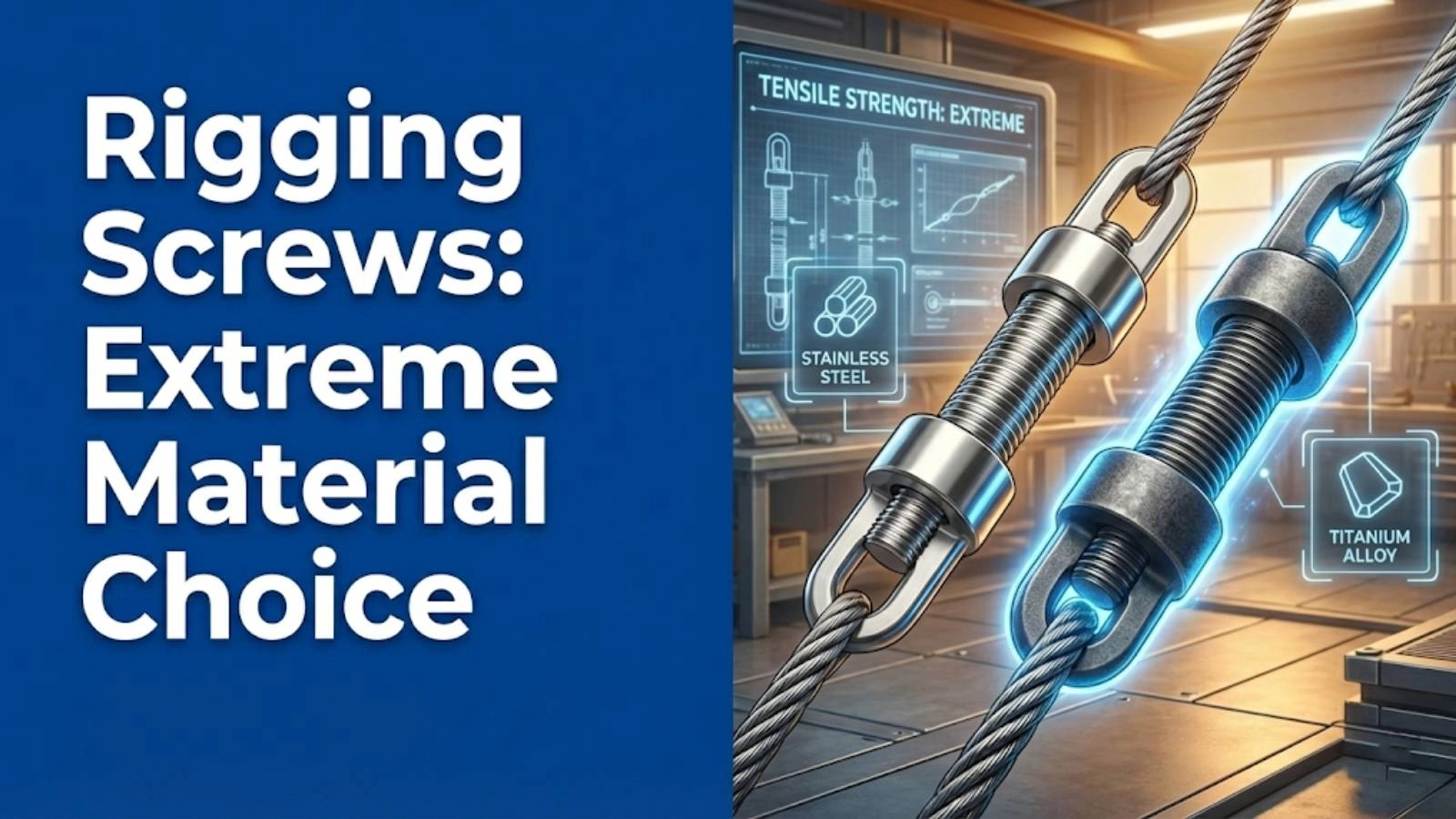
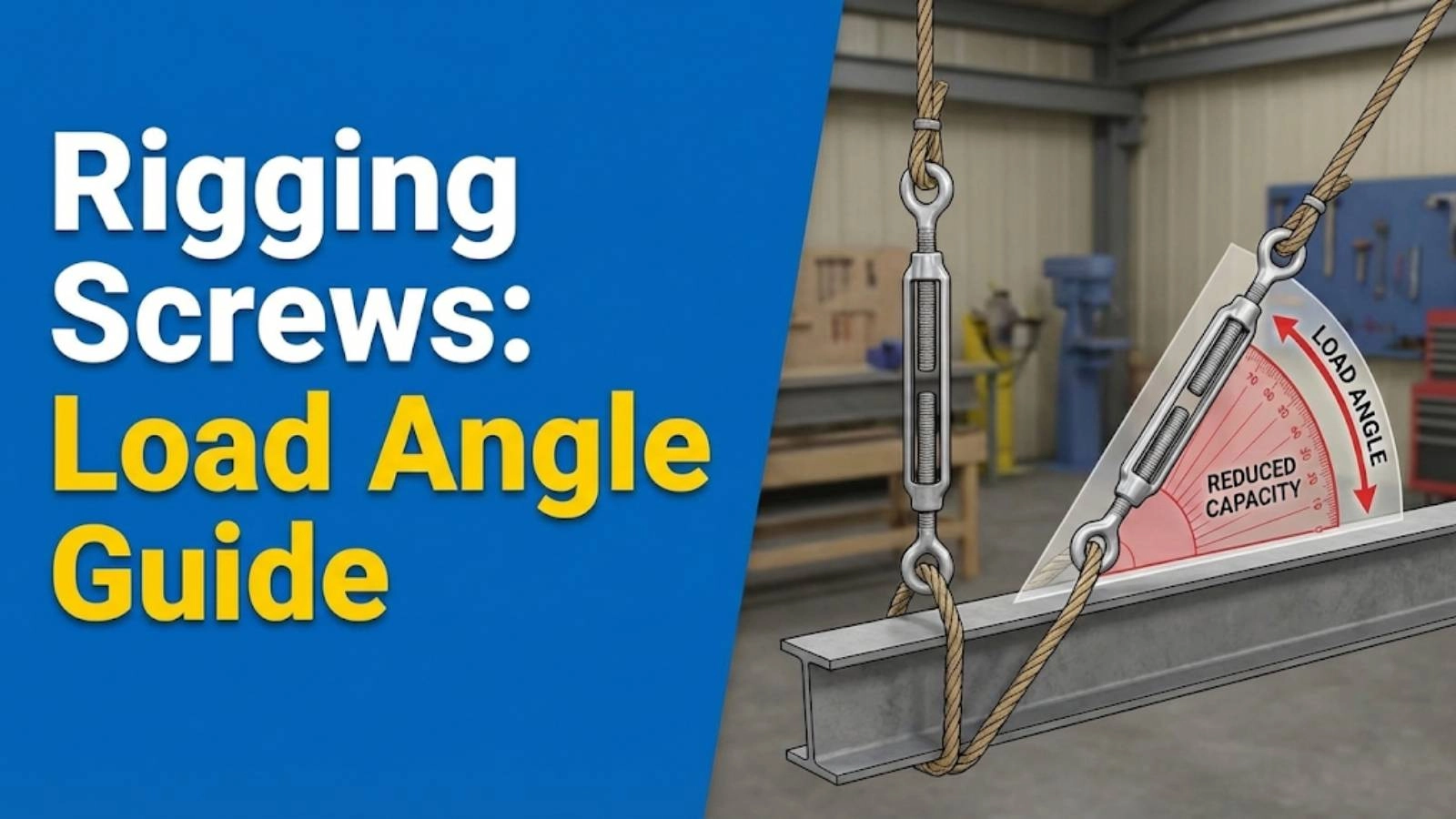
Choosing the Right Rigging Screw Material
Rigging screws are essential components in a variety of applications, from securing sails on boats to supporting heavy loads in construction. Selecting the appropriate rigging screw material is critical for ensuring safety, longevity, and optimal performance. This comprehensive guide, brought to you by Safe and Secure Trading Company (SSTC), will walk you through the key considerations for choosing the right rigging screw material for your specific needs.
Understanding Rigging Screw Material Properties
Defining Rigging Screws and Their Applications
Rigging screws, also known as turnbuckles or bottle screws, are adjustable fasteners used to tension ropes, cables, and rods. They consist of a metal frame or body with threaded ends, into which two threaded terminals (such as eye bolts, jaw ends, or hooks) are screwed. By rotating the body, the distance between the terminals can be adjusted, allowing for precise tensioning.
Rigging screws find applications across numerous industries:
- Marine Rigging: Securing sails, masts, and rigging on boats and ships.
- Industrial Rigging: Tensioning cables and supporting structures in factories and warehouses.
- Construction Rigging: Bracing scaffolding, tensioning formwork, and lifting heavy materials.
- Architectural Rigging: Supporting green walls, shade structures, and decorative elements.
- Agricultural Rigging: Tensioning fences, supporting trellises, and securing equipment.
The versatility of rigging screws makes them indispensable in any situation where adjustable tension is required.
Key Mechanical Properties to Consider
When selecting a rigging screw material, several mechanical properties must be carefully considered to ensure the screw can withstand the intended loads and environmental conditions. These properties include:
- Tensile Strength: The maximum stress a material can withstand before breaking. Higher tensile strength is crucial for applications involving heavy loads or high stress.
- Yield Strength: The amount of stress a material can withstand before permanent deformation occurs. Exceeding the yield strength can compromise the integrity of the rigging screw material.
- Corrosion Resistance: The ability of a material to resist degradation due to exposure to corrosive environments. Crucial for marine, chemical, or outdoor applications.
- Ductility: The ability of a material to deform under tensile stress. Ductile materials are less likely to fail catastrophically.
- Hardness: The resistance of a material to localized plastic deformation. Harder materials are more resistant to wear and abrasion.
- Fatigue Strength: The ability of a material to withstand repeated cycles of stress without failure. Important for applications involving dynamic loads.
Understanding these properties helps ensure that the chosen rigging screw material is appropriate for the specific application and operating conditions.
Importance of Material Selection in Rigging Safety
The choice of rigging screw material has a direct impact on the safety and reliability of any rigging system. Using an inappropriate material can lead to catastrophic failures, resulting in property damage, injury, or even loss of life. Factors such as load capacity, environmental conditions, and the potential for corrosion must be carefully evaluated.
For instance, using a carbon steel rigging screw in a marine environment without proper protection will lead to rapid corrosion and eventual failure. Similarly, using a low-strength material for a heavy lifting application can result in the rigging screw breaking under load.
Proper material selection also affects the lifespan of the rigging system. Choosing a durable and corrosion-resistant material can significantly extend the service life of the rigging screws, reducing the need for frequent replacements and minimizing downtime.
At Safe and Secure Trading Company, we prioritize safety above all else. Our team in Dubai often encounters situations where incorrect rigging screw material selection has led to dangerous conditions. We always emphasize the importance of understanding the specific requirements of each application and choosing a material that meets or exceeds those requirements.
Common Rigging Screw Materials: A Detailed Comparison
Carbon Steel: Strengths, Limitations, and Uses
Carbon steel is a common rigging screw material known for its high strength and relatively low cost. It is an alloy of iron and carbon, with varying carbon content affecting its properties.
Strengths:
- High Tensile Strength: Carbon steel can withstand significant loads, making it suitable for many rigging applications.
- Cost-Effective: Compared to other materials like stainless steel or alloy steel, carbon steel is more affordable.
- Easy to Machine: Carbon steel is relatively easy to machine and fabricate, allowing for a wide range of designs and sizes.
Limitations:
- Poor Corrosion Resistance: Carbon steel is susceptible to rust and corrosion, especially in humid or marine environments.
- Brittle at Low Temperatures: Carbon steel can become brittle at low temperatures, increasing the risk of fracture.
- Requires Protective Coatings: To enhance corrosion resistance, carbon steel rigging screws typically require protective coatings such as galvanizing or powder coating.
Uses:
Carbon steel rigging screws are commonly used in:
- Construction Rigging: Supporting scaffolding and formwork in dry environments.
- Industrial Rigging: Tensioning cables and supporting structures in indoor settings.
- Agricultural Rigging: Securing fences and supporting trellises away from excessive moisture.
When using carbon steel rigging screws, it’s crucial to implement proper corrosion protection measures and conduct regular inspections to ensure their integrity.
Stainless Steel: Corrosion Resistance and Applications
Stainless steel is a premium rigging screw material renowned for its exceptional corrosion resistance and durability. It is an alloy of iron, chromium, and other elements, with chromium providing a protective layer that prevents rust and corrosion.
Strengths:
- Excellent Corrosion Resistance: Stainless steel can withstand exposure to moisture, salt water, chemicals, and other corrosive substances.
- High Strength: Stainless steel offers good tensile and yield strength, making it suitable for demanding applications.
- Aesthetic Appeal: Stainless steel has a bright, clean appearance that is visually appealing.
- Low Maintenance: Stainless steel requires minimal maintenance, as it is highly resistant to staining and discoloration.
Limitations:
- Higher Cost: Stainless steel is more expensive than carbon steel or galvanized steel.
- Susceptible to Galling: Stainless steel can be prone to galling (adhesive wear) if not properly lubricated.
- Lower Strength than Alloy Steel: While strong, stainless steel generally has lower tensile and yield strength compared to alloy steel.
Applications:
Stainless steel rigging screws are widely used in:
- Marine Rigging: Securing sails, masts, and rigging on boats and ships.
- Chemical Processing: Supporting equipment and structures in corrosive environments.
- Food Processing: Handling and processing food products, where hygiene is paramount.
- Architectural Rigging: Supporting green walls and decorative elements exposed to the elements.
The superior corrosion resistance of stainless steel makes it an ideal choice for applications where exposure to moisture or chemicals is a concern.
Alloy Steel: High Strength and Specialized Uses
Alloy steel is a high-performance rigging screw material engineered for exceptional strength, toughness, and wear resistance. It is a steel alloyed with various elements, such as nickel, chromium, molybdenum, and vanadium, to enhance its mechanical properties.
Strengths:
- Very High Tensile Strength: Alloy steel can withstand extremely high loads, making it suitable for heavy lifting and demanding applications.
- Excellent Toughness: Alloy steel is resistant to impact and fracture, even at low temperatures.
- Good Wear Resistance: Alloy steel is highly resistant to abrasion and wear, extending its service life in harsh conditions.
- Heat Treatable: Alloy steel can be heat treated to further enhance its strength and hardness.
Limitations:
- High Cost: Alloy steel is typically more expensive than carbon steel or stainless steel.
- Requires Specialized Fabrication: Alloy steel can be more difficult to machine and weld than other materials.
- Corrosion Susceptibility: Some alloy steels may be susceptible to corrosion, requiring protective coatings or surface treatments.
Uses:
Alloy steel rigging screws are commonly used in:
- Heavy Lifting: Lifting and moving heavy equipment and materials in industrial settings.
- Construction Rigging: Supporting critical structures and ensuring safety in demanding construction projects.
- Mining: Supporting underground structures and handling heavy loads in mining operations.
- Aerospace: Manufacturing aircraft components and supporting critical systems in aerospace applications.
The exceptional strength and toughness of alloy steel make it an ideal choice for applications where safety and reliability are paramount.
Galvanized Steel: Cost-Effective Corrosion Protection
Galvanized steel is a rigging screw material that offers a cost-effective solution for corrosion protection. It involves coating carbon steel with a layer of zinc, which acts as a barrier against moisture and corrosive substances.
Strengths:
- Good Corrosion Resistance: Galvanizing provides a sacrificial layer of protection, preventing rust and corrosion of the underlying steel.
- Cost-Effective: Galvanized steel is more affordable than stainless steel or alloy steel.
- Durable: The zinc coating is relatively durable and can withstand moderate wear and abrasion.
- Readily Available: Galvanized steel is widely available in various shapes and sizes.
Limitations:
- Limited Corrosion Protection: Galvanizing provides good corrosion protection, but it is not as effective as stainless steel in highly corrosive environments.
- Coating Can Be Damaged: The zinc coating can be scratched or damaged, exposing the underlying steel to corrosion.
- Not Suitable for High Temperatures: Galvanizing is not suitable for applications involving high temperatures, as the zinc coating can degrade.
Uses:
Galvanized steel rigging screws are commonly used in:
- Construction Rigging: Supporting scaffolding and formwork in moderately corrosive environments.
- Agricultural Rigging: Securing fences and supporting trellises in outdoor settings.
- General Industrial Applications: Tensioning cables and supporting structures in mildly corrosive environments.
Galvanized steel provides a good balance of corrosion resistance and cost-effectiveness, making it a popular choice for many rigging applications.
Stainless Steel Rigging Screws: Grades and Selection Criteria
Austenitic Stainless Steel (304, 316): Properties and Uses
Austenitic stainless steel is the most common type of stainless steel used in rigging screws. Grades 304 and 316 are particularly popular due to their excellent corrosion resistance, good strength, and ease of fabrication.
Grade 304 Stainless Steel:
- Properties: Contains 18% chromium and 8% nickel. Offers excellent corrosion resistance in a wide range of environments.
- Uses: Marine rigging, food processing equipment, architectural applications.
Grade 316 Stainless Steel:
- Properties: Contains 16% chromium, 10% nickel, and 2% molybdenum. Offers superior corrosion resistance compared to 304, especially in chloride-rich environments.
- Uses: Marine rigging in saltwater environments, chemical processing equipment, pharmaceutical applications.
Austenitic stainless steels are non-magnetic and cannot be hardened by heat treatment. They are typically used in applications where corrosion resistance is the primary concern.
Martensitic Stainless Steel: High Strength Applications
Martensitic stainless steel offers higher strength and hardness compared to austenitic stainless steel, but with reduced corrosion resistance. It can be hardened by heat treatment, making it suitable for applications requiring high strength and wear resistance.
Properties: Contains 12-17% chromium and a higher carbon content than austenitic stainless steels. Can be hardened by heat treatment to achieve high strength and hardness.
Uses: Cutting tools, knives, fasteners, and components requiring high strength and wear resistance.
Martensitic stainless steel rigging screws are less common than austenitic grades due to their lower corrosion resistance. They are typically used in specialized applications where high strength is more important than corrosion resistance.
Duplex Stainless Steel: Superior Strength and Corrosion Resistance
Duplex stainless steel combines the properties of both austenitic and ferritic stainless steels, offering a unique combination of high strength, excellent corrosion resistance, and good weldability.
Properties: Contains a mixture of austenitic and ferritic microstructures. Offers higher strength than austenitic stainless steel and better corrosion resistance than ferritic stainless steel.
Uses: Marine rigging, chemical processing equipment, oil and gas industry, and applications requiring high strength and corrosion resistance.
Duplex stainless steel is becoming increasingly popular for rigging screws due to its superior performance in demanding environments. While more expensive than austenitic stainless steel, its enhanced properties can justify the higher cost in critical applications.
Selecting the Right Stainless Steel Grade for Your Needs
Choosing the right stainless steel grade for your rigging screws depends on several factors, including:
- Environment: Consider the level of exposure to moisture, salt water, chemicals, and other corrosive substances. Grade 316 is recommended for harsh marine environments, while 304 may suffice for less corrosive conditions.
- Strength Requirements: Determine the load-bearing capacity required for the application. Duplex stainless steel offers the highest strength, while austenitic grades provide adequate strength for most applications.
- Cost: Balance the desired properties with the budget constraints. Duplex stainless steel is the most expensive, followed by 316 and then 304.
- Application: Consider the specific requirements of the application, such as the need for weldability, formability, or resistance to specific chemicals.
Consulting with a material specialist or rigging expert can help you select the optimal stainless steel grade for your specific needs. We at Safe and Secure Trading Company can help guide you through the selection process.
Carbon Steel Rigging Screws: Treatments and Coatings
Plain Carbon Steel: Basic Properties and Applications
Plain carbon steel is the most basic form of carbon steel, containing only iron and carbon. It offers good strength and affordability but is highly susceptible to rust and corrosion.
Properties: Contains primarily iron and carbon. Offers good tensile strength but poor corrosion resistance.
Applications: Structural components, fasteners, and applications where corrosion is not a major concern or where protective coatings are applied.
Plain carbon steel rigging screws are rarely used without protective coatings due to their vulnerability to corrosion.
Galvanizing: Process, Benefits, and Limitations
Galvanizing is a common process for protecting carbon steel from corrosion. It involves coating the steel with a layer of zinc, which acts as a barrier against moisture and corrosive substances.
Process: The steel is immersed in a bath of molten zinc, which bonds to the surface and forms a protective coating.
Benefits:
- Good Corrosion Resistance: Galvanizing provides a sacrificial layer of protection, preventing rust and corrosion of the underlying steel.
- Cost-Effective: Galvanizing is more affordable than stainless steel or alloy steel.
- Durable: The zinc coating is relatively durable and can withstand moderate wear and abrasion.
Limitations:
- Limited Corrosion Protection: Galvanizing provides good corrosion protection, but it is not as effective as stainless steel in highly corrosive environments.
- Coating Can Be Damaged: The zinc coating can be scratched or damaged, exposing the underlying steel to corrosion.
- Not Suitable for High Temperatures: Galvanizing is not suitable for applications involving high temperatures, as the zinc coating can degrade.
Galvanized rigging screws are widely used in construction, agriculture, and general industrial applications.
Powder Coating: Enhanced Corrosion and Wear Resistance
Powder coating is a process that involves applying a dry powder to the steel surface, followed by baking to fuse the powder into a durable, protective coating.
Process: A dry powder is applied to the steel surface using an electrostatic spray gun. The coated steel is then baked in an oven, which melts and fuses the powder into a uniform coating.
Benefits:
- Excellent Corrosion Resistance: Powder coating provides a thick, durable barrier against moisture, chemicals, and UV radiation.
- Good Wear Resistance: Powder coating is resistant to scratches, abrasion, and impact.
- Aesthetic Appeal: Powder coating is available in a wide range of colors and finishes.
- Environmentally Friendly: Powder coating is a solvent-free process, making it more environmentally friendly than traditional liquid coatings.
Limitations:
- Higher Cost: Powder coating is typically more expensive than galvanizing.
- Requires Specialized Equipment: Powder coating requires specialized equipment and expertise.
- Can Chip or Crack: While durable, powder coating can chip or crack if subjected to severe impact.
Powder-coated rigging screws are often used in architectural applications, automotive components, and outdoor equipment.
Other Coatings: Zinc Plating, Black Oxide
In addition to galvanizing and powder coating, several other coatings can be applied to carbon steel rigging screws to enhance their corrosion resistance or aesthetic appeal:
- Zinc Plating: A thin layer of zinc is applied to the steel surface using an electroplating process. Provides good corrosion resistance for indoor applications.
- Black Oxide: A chemical conversion coating that provides mild corrosion resistance and a black, matte finish. Often used for decorative purposes.
- Phosphate Coating: A chemical conversion coating that provides a good base for paint or powder coating. Enhances corrosion resistance and improves adhesion.
The choice of coating depends on the specific requirements of the application and the desired level of protection. We often recommend a thorough assessment before choosing a coating.
Alloy Steel Rigging Screws: Specialized Applications
High-Strength Low-Alloy (HSLA) Steel: Properties and Uses
High-Strength Low-Alloy (HSLA) steel is a type of alloy steel that offers enhanced strength and toughness compared to plain carbon steel, while maintaining good weldability and formability.
Properties: Contains small amounts of alloying elements such as manganese, silicon, copper, and nickel. Offers higher yield strength and tensile strength than plain carbon steel.
Uses: Structural components, bridges, pipelines, and applications requiring high strength and good weldability.
HSLA steel rigging screws are often used in construction and industrial applications where high strength is required.
Quenched and Tempered Alloy Steel: Enhanced Strength and Toughness
Quenched and tempered alloy steel is heat-treated to achieve maximum strength and toughness. The quenching process involves rapidly cooling the steel, while tempering involves reheating it to a lower temperature to improve its ductility and reduce brittleness.
Properties: Heat-treated to achieve high tensile strength, yield strength, and toughness. Offers excellent resistance to impact and fatigue.
Uses: Gears, axles, crankshafts, and applications requiring high strength, toughness, and wear resistance.
Quenched and tempered alloy steel rigging screws are used in heavy lifting equipment, mining machinery, and other demanding applications.
Specialized Alloy Steels: Nickel Alloys, Chrome Alloys
Specialized alloy steels, such as nickel alloys and chrome alloys, offer unique combinations of properties that make them suitable for specific applications.
- Nickel Alloys: Offer excellent corrosion resistance, high-temperature strength, and toughness. Used in aerospace, chemical processing, and marine applications.
- Chrome Alloys: Offer high hardness, wear resistance, and corrosion resistance. Used in cutting tools, bearings, and wear-resistant components.
These specialized alloys are used in rigging screws for extreme environments or demanding applications.
Applications in Extreme Environments
Alloy steel rigging screws are often used in extreme environments where other materials may not be suitable. These environments include:
- High-Temperature Environments: Alloy steels with high chromium and nickel content can withstand high temperatures without losing strength or corrosion resistance.
- Low-Temperature Environments: Some alloy steels maintain their toughness and ductility at very low temperatures, making them suitable for arctic or cryogenic applications.
- Highly Corrosive Environments: Specialized alloy steels can resist corrosion from acids, alkalis, and other corrosive substances.
- High-Stress Environments: Alloy steels with high tensile strength and yield strength can withstand extreme loads and stresses.
Selecting the appropriate alloy steel for these environments requires careful consideration of the specific operating conditions and material properties. We often advise clients to seek expert consultations for unique challenges.
Corrosion Resistance: A Critical Factor in Material Selection
Understanding Corrosion Mechanisms
Corrosion is the degradation of a material due to chemical reactions with its environment. Several different corrosion mechanisms can affect rigging screws, including:
- Uniform Corrosion: The entire surface of the material corrodes at a relatively uniform rate.
- Pitting Corrosion: Localized corrosion that results in the formation of small pits or holes on the surface.
- Galvanic Corrosion: Occurs when two dissimilar metals are in contact in the presence of an electrolyte, such as salt water.
- Crevice Corrosion: Occurs in confined spaces or crevices where stagnant conditions promote corrosion.
- Stress Corrosion Cracking: Occurs when a material is subjected to tensile stress in a corrosive environment.
Understanding these corrosion mechanisms is crucial for selecting a rigging screw material that can withstand the specific environmental conditions.
Galvanic Corrosion: Prevention Strategies
Galvanic corrosion is a particularly insidious form of corrosion that can occur when two dissimilar metals are in contact in a corrosive environment. The more active metal (anode) corrodes at an accelerated rate, while the less active metal (cathode) is protected.
Prevention Strategies:
- Use Similar Metals: Avoid using dissimilar metals in contact with each other.
- Insulate Dissimilar Metals: Electrically insulate dissimilar metals to prevent the flow of electrons.
- Apply Protective Coatings: Apply protective coatings to both metals to prevent contact with the electrolyte.
- Use Sacrificial Anodes: Use a more active metal as a sacrificial anode, which will corrode preferentially, protecting the other metal.
Implementing these strategies can minimize the risk of galvanic corrosion and extend the service life of rigging screws.
Environmental Factors Affecting Corrosion
Several environmental factors can affect the rate and type of corrosion that occurs on rigging screw material:
- Moisture: Moisture is essential for most corrosion reactions.
- Temperature: Higher temperatures generally accelerate corrosion rates.
- Salinity: Salt water is highly corrosive due to the presence of chloride ions.
- Chemical Exposure: Exposure to acids, alkalis, and other chemicals can accelerate corrosion.
- UV Radiation: UV radiation can degrade protective coatings and accelerate corrosion.
Understanding these environmental factors is crucial for selecting the appropriate rigging screw material and implementing effective corrosion prevention measures.
Best Practices for Corrosion Prevention
To maximize the service life of rigging screws and prevent corrosion-related failures, it’s essential to implement best practices for corrosion prevention:
- Select Corrosion-Resistant Materials: Choose materials that are inherently resistant to corrosion in the specific environment.
- Apply Protective Coatings: Apply appropriate protective coatings, such as galvanizing, powder coating, or zinc plating.
- Use Corrosion Inhibitors: Use corrosion inhibitors to reduce the rate of corrosion.
- Regularly Inspect and Maintain Rigging Screws: Conduct regular inspections to identify signs of corrosion and implement maintenance measures, such as cleaning and lubrication.
- Replace Corroded Rigging Screws: Replace rigging screws that show signs of significant corrosion to prevent failures.
By following these best practices, you can significantly reduce the risk of corrosion and ensure the safety and reliability of your rigging systems.
Load Capacity and Safety Factors in Rigging Screw Material Selection
Defining Working Load Limit (WLL) and Breaking Strength
Understanding the load capacity of rigging screw material is paramount for safety. Two key terms are essential:
- Working Load Limit (WLL): The maximum load that a rigging screw is designed to carry safely. It is typically determined by dividing the breaking strength by a safety factor.
- Breaking Strength: The load at which a rigging screw is expected to fail. Also known as ultimate tensile strength (UTS).
Never exceed the WLL of a rigging screw, as this can lead to failure and potential injury or damage.
Understanding Safety Factors and Their Importance
A safety factor is a ratio that expresses the relationship between the breaking strength of a rigging screw and its WLL. It is a crucial element in ensuring safety and preventing failures.
Safety Factor = Breaking Strength / Working Load Limit
Typical safety factors range from 4:1 to 10:1, depending on the application and the potential consequences of failure. Higher safety factors are used for critical applications where failure could result in significant injury or damage.
Using appropriate safety factors ensures that the rigging screw can withstand unexpected loads, dynamic forces, and material degradation over time.
Calculating Load Capacity Based on Material Properties
The load capacity of a rigging screw depends on several factors, including:
- Material Properties: Tensile strength, yield strength, and ductility of the material.
- Dimensions: Diameter and thread pitch of the screw.
- Design: Shape and geometry of the screw body and terminals.
The load capacity can be calculated using engineering formulas that take these factors into account. However, it’s always best to consult with a qualified engineer or rigging expert to ensure accurate calculations and proper safety factors.
Ensuring Compliance with Safety Standards
Compliance with safety standards is essential for ensuring the safe use of rigging screw material. Several industry standards and regulations govern the design, manufacture, and use of rigging screws, including:
- ASME (American Society of Mechanical Engineers): Sets standards for the design and construction of lifting and rigging equipment.
- OSHA (Occupational Safety and Health Administration): Regulates workplace safety and health standards, including those related to rigging and lifting.
- EN (European Norm): Sets standards for the design and manufacture of rigging equipment in Europe.
Ensure that your rigging screws meet or exceed all applicable safety standards and regulations. We ensure all our products meet these standards.
Best Practices for Rigging Screw Maintenance and Inspection
Regular Inspection Procedures
Regular inspection is crucial for identifying signs of wear, damage, or corrosion that could compromise the integrity of rigging screw material. Inspection procedures should include:
- Visual Inspection: Check for cracks, bends, dents, corrosion, and other visible damage.
- Thread Inspection: Inspect the threads for damage, wear, or deformation.
- Functional Inspection: Check the screw for smooth operation and proper tensioning.
- Lubrication Inspection: Ensure that the screw is properly lubricated.
Inspections should be conducted before each use and at regular intervals, depending on the severity of the application and environmental conditions.
Identifying Signs of Wear and Damage
Several signs can indicate that a rigging screw is worn, damaged, or corroded:
- Cracks: Cracks can weaken the screw and lead to catastrophic failure.
- Bends: Bends can indicate that the screw has been overloaded.
- Dents: Dents can weaken the screw and reduce its load-bearing capacity.
- Corrosion: Corrosion can weaken the screw and lead to failure.
- Thread Damage: Damaged threads can prevent proper tensioning and reduce the screw’s load-bearing capacity.
- Excessive Wear: Excessive wear can indicate that the screw is nearing the end of its service life.
If any of these signs are present, the rigging screw should be removed from service and replaced.
Proper Lubrication and Cleaning Techniques
Proper lubrication and cleaning are essential for maintaining the smooth operation and extending the service life of rigging screw material.
- Lubrication: Apply a suitable lubricant to the threads to reduce friction and prevent galling. Use a lubricant that is compatible with the rigging screw material and the environment.
- Cleaning: Regularly clean the screw to remove dirt, debris, and corrosion. Use a mild detergent and water, followed by a thorough rinsing and drying.
Avoid using harsh chemicals or abrasive cleaners, as these can damage the screw or protective coatings.
Replacement Guidelines and Schedules
Rigging screws should be replaced according to the manufacturer’s recommendations or based on the results of regular inspections. As a general guideline:
- Replace rigging screws that show signs of significant wear, damage, or corrosion.
- Replace rigging screws that have been overloaded or subjected to extreme conditions.
- Replace rigging screws that have reached the end of their service life, even if they appear to be in good condition.
Following these replacement guidelines can help prevent failures and ensure the safety and reliability of your rigging systems.
Case Studies: Material Selection in Real-World Applications
Marine Rigging: Stainless Steel vs. Other Materials
In marine rigging applications, stainless steel is the preferred rigging screw material due to its exceptional corrosion resistance in saltwater environments. While other materials, such as galvanized steel or carbon steel with protective coatings, can be used, they are generally less durable and require more frequent maintenance.
Stainless steel rigging screws are used to secure sails, masts, and rigging on boats and ships, ensuring reliable performance and long service life.
Construction Rigging: High-Strength Alloy Steel
Construction rigging applications often involve heavy lifting and demanding conditions. High-strength alloy steel rigging screws are typically used to support critical structures and ensure safety in these applications.
Alloy steel rigging screws offer the high tensile strength, yield strength, and toughness required to withstand heavy loads, dynamic forces, and harsh environments.
Industrial Lifting: Choosing the Right Material for Heavy Loads
Industrial lifting applications require careful consideration of the load capacity, environmental conditions, and safety factors. The choice of rigging screw material depends on the specific requirements of the application.
For heavy loads and demanding conditions, high-strength alloy steel rigging screws are often used. For corrosive environments, stainless steel rigging screws may be preferred.
Avoiding Material-Related Failures: Lessons Learned
Material-related failures can have serious consequences, including property damage, injury, or even loss of life. Learning from past failures is essential for preventing future incidents.
Common causes of material-related failures include:
- Incorrect Material Selection: Choosing a material that is not suitable for the specific application or environment.
- Overloading: Exceeding the WLL of the rigging screw.
- Corrosion: Failure to protect the rigging screw material from corrosion.
- Lack of Maintenance: Failure to regularly inspect and maintain rigging screws.
By learning from these lessons and implementing best practices for material selection, maintenance, and inspection, you can significantly reduce the risk of material-related failures.
Conclusion
Choosing the right rigging screw material is a multifaceted decision, but understanding the properties of each material and their suitability for specific applications is key to ensuring safety and longevity. From the corrosion resistance of stainless steel to the high strength of alloy steel, each material offers unique advantages. By considering factors like environmental conditions, load requirements, and safety standards, you can confidently select the appropriate material for your rigging needs.
At Safe and Secure Trading Company, we are committed to providing high-quality rigging solutions and expert guidance to our clients. We hope this comprehensive guide has equipped you with the knowledge to make informed decisions and ensure the safety and reliability of your rigging systems. We are here to help you navigate these choices.
FAQ Section
Q: What is the most important factor to consider when choosing a rigging screw material?
A: The most important factor is the environment in which the rigging screw will be used. Consider the level of exposure to moisture, salt water, chemicals, and other corrosive substances.
Q: What is the difference between 304 and 316 stainless steel?
A: 316 stainless steel contains molybdenum, which provides superior corrosion resistance compared to 304 stainless steel, especially in chloride-rich environments like saltwater.
Q: Can I use carbon steel rigging screws in a marine environment?
A: Carbon steel rigging screws can be used in a marine environment if they are properly protected with a corrosion-resistant coating, such as galvanizing or powder coating. However, stainless steel is generally the preferred choice for marine applications due to its superior corrosion resistance.
Q: What is the WLL of a rigging screw?
A: The WLL (Working Load Limit) is the maximum load that a rigging screw is designed to carry safely. It is typically marked on the rigging screw and should never be exceeded.
Q: How often should I inspect my rigging screws?
A: Rigging screws should be inspected before each use and at regular intervals, depending on the severity of the application and environmental conditions.
Q: What should I do if I find a crack in a rigging screw?
A: If you find a crack in a rigging screw, it should be removed from service immediately and replaced.
Q: Can I weld rigging screws?
A: Welding rigging screws can compromise their strength and integrity. It is generally not recommended unless performed by a qualified welder with expertise in welding the specific rigging screw material.
Q: What is the best lubricant to use on rigging screws?
A: Use a lubricant that is compatible with the rigging screw material and the environment. Marine-grade lubricants are often recommended for marine applications.
Q: How do I prevent galvanic corrosion?
A: Galvanic corrosion can be prevented by using similar metals, insulating dissimilar metals, applying protective coatings, or using sacrificial anodes.
Q: Where can I find high-quality rigging screws?
A: High-quality rigging screws can be found at reputable suppliers like Safe and Secure Trading Company, which offer a wide range of materials and sizes to meet your specific needs. SSTC also offers expert advice and support to help you choose the right rigging screws for your application. In 2026, we’ve expanded our testing and quality control to stay ahead of industry standards.