Choosing the Right Rigging Screw
Introduction to Rigging Screw Selection
What is a Rigging Screw?
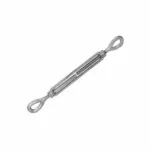
A rigging screw, also known as a turnbuckle, is a critical piece of rigging hardware used to adjust the tension in ropes, cables, and tie rods. It typically consists of two threaded ends that screw into a central body or frame. By rotating the frame, you can either increase or decrease the distance between the ends, effectively tightening or loosening the connection. Rigging screws are indispensable in various applications where precise tensioning is required, such as securing cargo, adjusting the tension of wire ropes in bridges, or fine-tuning theatrical rigging systems. They offer a reliable and adjustable method for ensuring stability and safety in a wide range of structural and mechanical setups.
Why Correct Selection is Crucial for Safety and Efficiency
Proper rigging screw selection is paramount for both safety and efficiency. A rigging screw that is not appropriately sized or made from the wrong material can fail under load, leading to catastrophic consequences, including equipment damage, personal injury, or even fatalities. We at Safe and Secure Trading Company (SSTC) always stress the importance of matching the rigging screw’s load capacity to the anticipated load, considering environmental factors like corrosion, and ensuring compatibility with other lifting equipment components.
For example, we once encountered a situation where a construction crew used an undersized rigging screw to lift a heavy steel beam. The screw failed, causing the beam to drop and nearly injure several workers. This incident underscored the critical need for meticulous rigging screw selection based on accurate load calculations and a thorough understanding of the application’s demands. Efficient operation also relies on choosing the right type of rigging screw for the job. Using an inappropriate type can lead to increased setup time, difficulty in adjustment, and reduced overall performance.
Beginner’s Perspective: Understanding Basic Terminology
Before diving into rigging screw selection, it’s essential to grasp some fundamental terminology. Here’s a quick glossary to get you started:
- Working Load Limit (WLL): The maximum load that a rigging screw is designed to safely support. Always adhere to the WLL specified by the manufacturer.
- Safety Factor: A multiplier applied to the WLL to account for uncertainties and potential overloads. It represents the ratio of the minimum breaking strength to the WLL.
- Thread Type: Refers to the type of threads used on the rigging screw, such as UNC (Unified National Coarse) or UNF (Unified National Fine). The thread type affects the screw’s strength and adjustability.
- End Fittings: The connecting hardware at the ends of the rigging screw, such as jaws, eyes, or hooks. These fittings determine how the screw will connect to other components.
- Corrosion Resistance: The ability of the rigging screw’s material to withstand degradation from environmental factors like saltwater, chemicals, or humidity.
- Turnbuckle: Often used interchangeably with “rigging screw,” it refers to the entire assembly used to adjust tension.
- Shackle Selection: The process of choosing the right shackle to connect the rigging screw to the load or anchor point.
- Eye Bolt Selection: The process of choosing the right eye bolt for secure connections to the rigging screw, considering load direction and angle.
Understanding these terms will provide a solid foundation for navigating the rigging screw selection process and ensuring safe and effective rigging operations.
Key Factors Influencing Rigging Screw Selection
Load Capacity (Working Load Limit – WLL): Matching the Screw to the Load
The load capacity, or Working Load Limit (WLL), is arguably the most crucial factor in rigging screw selection. It represents the maximum weight the rigging screw can safely handle without risking failure. The WLL should always be clearly marked on the rigging screw itself, and it’s imperative to never exceed this limit.
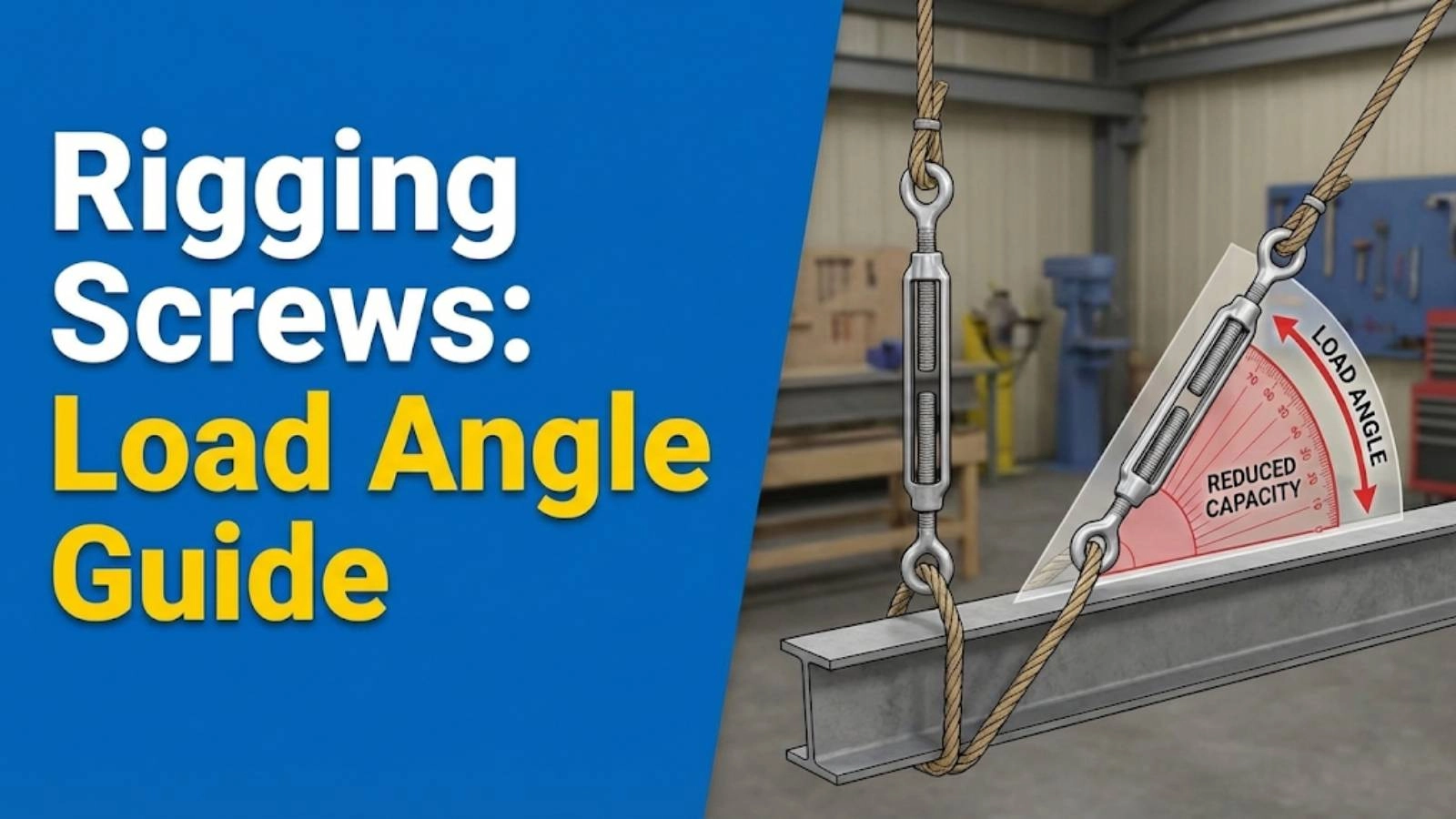
To determine the appropriate WLL, you must first accurately calculate the weight of the load you intend to lift or secure. Then, consider any dynamic forces that may increase the load beyond its static weight, such as sudden movements, impacts, or wind loads. Always select a rigging screw with a WLL that exceeds the maximum anticipated load, incorporating an appropriate safety factor.
When our team in Dubai tackles these high-stakes rigging tasks, they often double-check their calculations and consult with experienced engineers to ensure the WLL is adequate. This meticulous approach minimizes the risk of overloading and ensures the safety of the entire operation.
Material: Choosing the Right Material for the Environment (Stainless Steel, Alloy Steel, etc.)
The material of the rigging screw is another critical consideration, as it directly impacts its strength, durability, and resistance to corrosion. Common materials include:
- Carbon Steel: A cost-effective option for general-purpose applications where corrosion is not a major concern.
- Alloy Steel: Offers higher strength and toughness than carbon steel, making it suitable for heavy-duty applications.
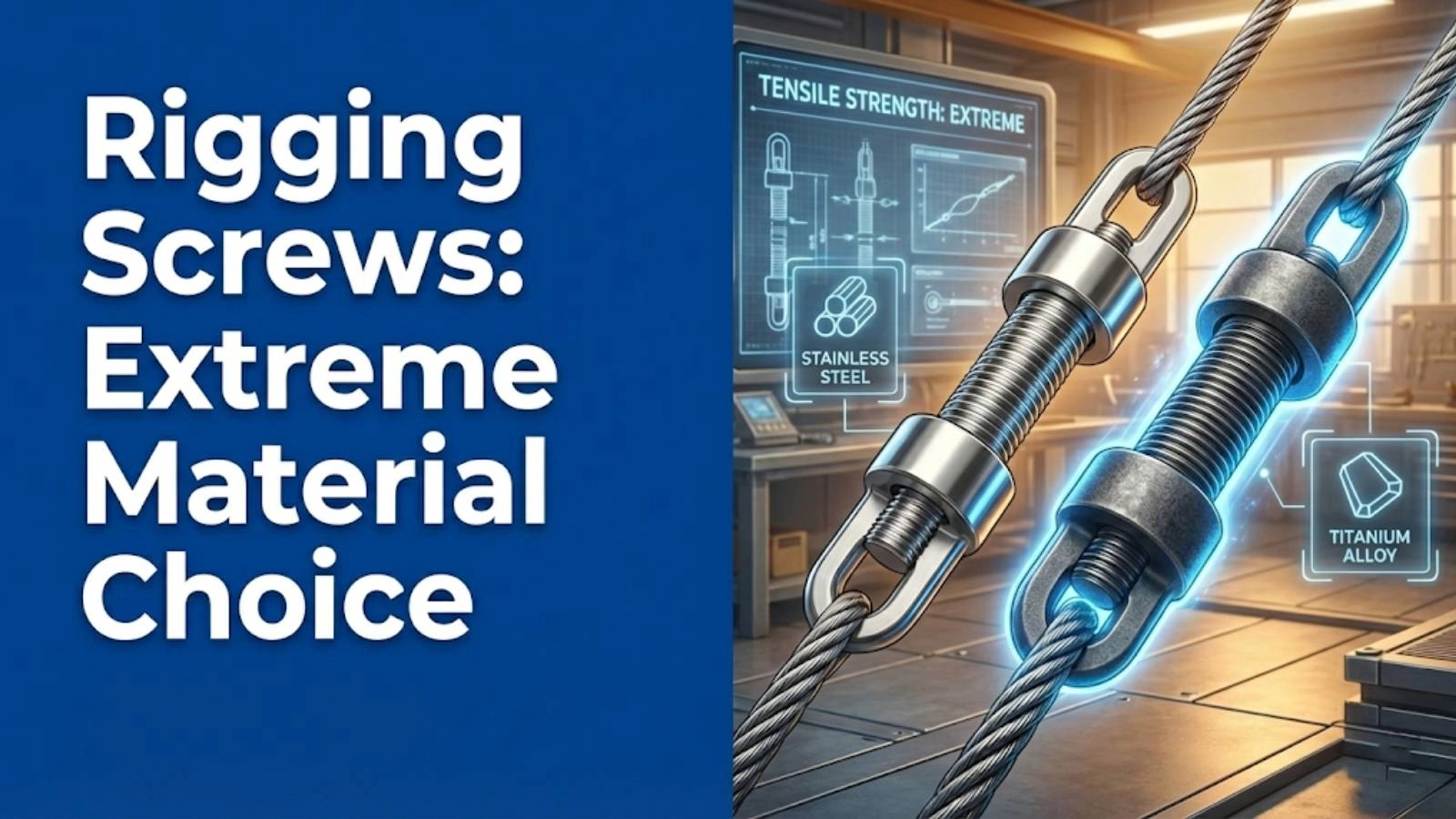
- Stainless Steel: Provides excellent corrosion resistance, making it ideal for marine environments, chemical processing plants, and other harsh conditions.
- Galvanized Steel: Carbon steel coated with a layer of zinc to provide some corrosion protection.
The choice of material should be based on the specific environmental conditions in which the rigging screw will be used. For example, in a saltwater environment, stainless steel is the preferred choice to prevent rust and degradation. In high-temperature applications, alloy steel may be necessary to maintain strength. We once had a client who used carbon steel rigging screws in a coastal environment, resulting in rapid corrosion and eventual failure. This costly mistake highlighted the importance of selecting the right material for the environment.
Size and Dimensions: Ensuring Proper Fit and Compatibility
The size and dimensions of the rigging screw are also important to consider to ensure proper fit and compatibility with other rigging components. This includes the overall length of the screw, the diameter of the threaded ends, and the size of the end fittings.
Ensure that the rigging screw is long enough to provide the necessary adjustment range for your application. If the screw is too short, you may not be able to achieve the desired tension. If it’s too long, it may be unwieldy and difficult to work with. The diameter of the threaded ends should be compatible with the threads of the connecting hardware. Mismatched threads can lead to stripping and failure. The size of the end fittings (jaws, eyes, or hooks) should also be appropriate for the size of the shackles, slings, or other components to which they will be connected.
When selecting the size and dimensions of the rigging screw, it’s always best to consult with an experienced rigging professional to ensure proper fit and compatibility.
Step-by-Step Guide to Rigging Screw Selection
Step 1: Determine the Exact Weight of Your Load
⚙️ The first step in rigging screw selection is to accurately determine the weight of the load you will be lifting or securing. This is crucial for ensuring that the rigging screw has an adequate WLL.
There are several ways to determine the weight of your load:
- Check the Manufacturer’s Specifications: If the load is a manufactured item, its weight should be clearly stated in the manufacturer’s specifications.
- Use a Weighing Scale: If possible, use a calibrated weighing scale to directly measure the weight of the load.
- Calculate the Weight Based on Volume and Density: If you know the volume and density of the material, you can calculate its weight using the formula: Weight = Volume x Density.
It’s important to be as accurate as possible when determining the weight of your load. An inaccurate weight estimate can lead to the selection of an undersized rigging screw, which can have catastrophic consequences. We at SSTC always recommend erring on the side of caution and adding a safety margin to your weight estimate.
Step 2: Calculate the Required WLL, including Safety Factor
✅ Once you have determined the weight of your load, you need to calculate the required WLL of the rigging screw, taking into account an appropriate safety factor.
The safety factor is a multiplier applied to the load weight to account for uncertainties, dynamic forces, and potential overloads. The appropriate safety factor will vary depending on the application and industry standards. In general, a safety factor of 5:1 is commonly used for overhead lifting applications, while a lower safety factor may be acceptable for static load applications.
To calculate the required WLL, multiply the weight of the load by the safety factor:
Required WLL = Load Weight x Safety Factor
For example, if the weight of your load is 1000 lbs and you are using a safety factor of 5:1, the required WLL would be 5000 lbs. It’s crucial to select a rigging screw with a WLL that meets or exceeds this calculated value.
Step 3: Identify Environmental Conditions (Corrosion, Temperature)
💡 The environmental conditions in which the rigging screw will be used can significantly impact its performance and longevity. It’s important to identify any potential environmental hazards, such as:
- Corrosion: Exposure to saltwater, chemicals, or humidity can cause corrosion, which weakens the rigging screw and can lead to failure.
- Temperature: Extreme temperatures, both high and low, can affect the strength and ductility of the rigging screw material.
- UV Radiation: Prolonged exposure to sunlight can degrade certain materials, such as synthetic fibers used in slings.
- Abrasion: Contact with rough surfaces can cause abrasion, which wears down the rigging screw material.
Based on the identified environmental conditions, you can select the appropriate material for the rigging screw. For example, if the rigging screw will be used in a marine environment, stainless steel is the preferred choice due to its excellent corrosion resistance.
Step 4: Select the Appropriate Material Grade
Based on the identified environmental conditions and load requirements, select the appropriate material grade for the rigging screw. Common material grades include:
- Carbon Steel: Suitable for general-purpose applications where corrosion is not a major concern.
- Alloy Steel: Offers higher strength and toughness than carbon steel, making it suitable for heavy-duty applications.
- Stainless Steel: Provides excellent corrosion resistance, making it ideal for marine environments and chemical processing plants.
- Galvanized Steel: Carbon steel coated with a layer of zinc to provide some corrosion protection.
Each material grade has its own unique properties and limitations. It’s important to carefully consider the specific requirements of your application when selecting the material grade. For example, if you need a high-strength rigging screw that will be used in a corrosive environment, you may want to consider using a high-strength stainless steel alloy.
Step 5: Choose the Correct End Fittings (Jaw, Eye, Hook)
The end fittings of the rigging screw determine how it will connect to other rigging components. Common end fittings include:
- Jaw End: A U-shaped fitting with a pin that allows for easy connection and disconnection. Jaw ends are often used when frequent adjustments are required.
- Eye End: A closed loop fitting that provides a secure connection point. Eye ends are typically used when a more permanent connection is desired.
- Hook End: A hook-shaped fitting that allows for quick and easy attachment to a load. Hook ends are often used in applications where speed and convenience are important.
- Stub End: A solid fitting designed for welding directly to other components, offering a very strong and permanent connection.
The choice of end fittings will depend on the specific requirements of your application. Consider the ease of connection, the security of the connection, and the frequency of adjustments when making your selection.
Step 6: Verify Compatibility with Other Rigging Components (Shackles, Slings)
✅ Before finalizing your rigging screw selection, it’s important to verify that it is compatible with other rigging components, such as shackles, slings, and wire ropes. This includes ensuring that the size and WLL of the rigging screw are appropriate for the other components. The shackle selection should align with the rigging screw’s dimensions and WLL, providing a secure connection. The eye bolt selection should match the load direction and angle, ensuring stability and preventing stress on the connection point.
For example, if you are using a shackle to connect the rigging screw to a load, make sure that the shackle has a WLL that is equal to or greater than the WLL of the rigging screw. Also, ensure that the shackle pin is properly sized for the rigging screw’s eye or jaw.
Mismatching rigging components can create weak points in the rigging system and increase the risk of failure. Always double-check the compatibility of all components before use.
Understanding Different Types of Rigging Screws
Jaw End Turnbuckles: When to Use Them
Jaw end turnbuckles feature a U-shaped jaw at one or both ends, secured with a pin. This design allows for quick and easy connections and disconnections, making them ideal for applications where frequent adjustments or changes are necessary. For instance, in temporary installations or when aligning structures that may require periodic realignment, jaw end turnbuckles offer a convenient solution.
They’re commonly used in construction,舞台, and temporary bracing scenarios. However, the open design means they may not be suitable for environments where security is paramount or where there’s a risk of accidental disconnection. It is important to ensure that the pin is correctly sized and securely fastened to prevent any slippage or failure. We have seen instances where improperly secured pins have led to instability in rigging systems, highlighting the need for diligent checks.
Eye End Turnbuckles: Applications and Limitations
Eye end turnbuckles have a closed loop (eye) at one or both ends. This provides a more secure and permanent connection compared to jaw ends. They are often used in applications where the rigging is intended to be long-lasting and where frequent adjustments are not required.
Eye end turnbuckles are commonly found in structural applications, such as securing bridge cables, supporting antennas, and in marine rigging where a strong, reliable connection is essential. While they offer enhanced security, adjustments can be more time-consuming compared to jaw ends, as they typically require disconnecting the entire assembly. Also consider eye bolt selection carefully to ensure compatibility.
Hook End Turnbuckles: Advantages and Disadvantages
Hook end turnbuckles feature a hook at one or both ends. These are designed for quick attachment and release, making them convenient for certain applications, but they are generally not recommended for heavy-duty or critical rigging due to the risk of accidental disengagement.
They can be useful in applications where speed is essential, such as in temporary signage or banners, but should not be used for overhead lifting or supporting heavy loads. The primary disadvantage is the potential for the hook to open or disengage under load, which can lead to serious accidents. Always exercise caution and consider alternative end fittings for critical applications.
Swivel End Turnbuckles: Reducing Torque and Twisting
Swivel end turnbuckles incorporate a swivel mechanism at one or both ends, allowing the end fitting to rotate freely. This is particularly useful in applications where torque or twisting forces are present, as the swivel helps to prevent the transmission of these forces to the rigging screw itself.
They are commonly used in applications such as sailboat rigging, where the sails and lines can generate significant twisting forces. By allowing the end fittings to swivel, these turnbuckles reduce stress on the rigging components, extending their lifespan and improving safety. However, swivel end turnbuckles may have a lower WLL compared to fixed-end turnbuckles, so it’s essential to select the appropriate size and material for the intended load.
Importance of Safety Factors in Rigging Screw Selection
What is a Safety Factor?
A safety factor is a crucial element in rigging screw selection. It is a multiplier applied to the calculated load to ensure that the rigging screw can withstand forces beyond the expected maximum load. This factor accounts for uncertainties in load calculations, dynamic loading, material imperfections, and unforeseen environmental conditions.
For example, a safety factor of 5:1 means that the rigging screw’s minimum breaking strength is five times greater than its Working Load Limit (WLL). This provides a significant margin of safety to prevent failure, even under unexpected stress. Neglecting the safety factor can lead to catastrophic consequences.
Industry Standards and Recommendations for Safety Factors
Industry standards and recommendations for safety factors vary depending on the application and the type of load being lifted or secured. For overhead lifting applications, a safety factor of 5:1 is generally recommended. However, for critical applications or those involving human safety, a higher safety factor may be required.
Organizations such as OSHA (Occupational Safety and Health Administration) and ASME (American Society of Mechanical Engineers) provide guidelines and standards for rigging safety, including recommendations for safety factors. It’s essential to consult these standards and follow the recommendations of qualified rigging professionals to ensure that the appropriate safety factor is used.
Overloading Risks and Consequences
Overloading a rigging screw beyond its WLL can have severe consequences. Overloading can cause the screw to yield, deform, or even break, leading to equipment damage, personal injury, or even fatalities.
Even if the rigging screw doesn’t immediately fail, overloading can weaken the material and reduce its lifespan. This can make the screw more susceptible to failure in the future, even under normal operating conditions. Always adhere to the WLL specified by the manufacturer and never exceed the rated capacity of the rigging screw.
> “Always double-check your load calculations and select a rigging screw with a WLL that exceeds the maximum anticipated load. It’s better to be over-cautious than to risk a catastrophic failure.” – John Smith, Lead Safety Inspector
Inspection and Maintenance of Rigging Screws
Pre-Use Inspection Checklist
Before each use, a thorough inspection of the rigging screw is essential to identify any signs of wear, damage, or corrosion. A pre-use inspection checklist should include the following:
- Check for Cracks: Carefully inspect the body, end fittings, and threads for any cracks or fractures.
- Check for Deformation: Look for any signs of bending, twisting, or other deformation of the rigging screw.
- Check for Corrosion: Examine the screw for signs of rust, pitting, or other corrosion, especially in marine environments.
- Check the Threads: Ensure that the threads are clean, undamaged, and properly engaged.
- Verify the WLL: Confirm that the WLL is clearly marked on the rigging screw and that it is appropriate for the intended load.
- Check End Fittings: Ensure that the end fittings (jaws, eyes, or hooks) are securely attached and in good condition.
If any issues are identified during the pre-use inspection, the rigging screw should be removed from service immediately and either repaired or replaced.
Identifying Signs of Wear and Damage (Cracks, Deformation)
Recognizing the signs of wear and damage is crucial for maintaining the safety and reliability of rigging screws. Cracks, deformations, and corrosion are the most common indicators of potential failure.
Cracks can appear on the body, end fittings, or threads of the rigging screw. Even small cracks can weaken the screw and increase the risk of failure. Deformation, such as bending or twisting, indicates that the screw has been subjected to excessive force. Corrosion, especially in marine environments, can weaken the material and lead to premature failure. Regularly inspecting the rigging screw for these signs of wear and damage is essential for preventing accidents.
Proper Lubrication and Storage Techniques
Proper lubrication and storage techniques can significantly extend the lifespan of rigging screws. Lubrication reduces friction between the threads, making it easier to adjust the screw and preventing wear and corrosion.
Use a high-quality lubricant specifically designed for rigging hardware. Apply the lubricant to the threads and end fittings on a regular basis, especially in harsh environments. When storing rigging screws, keep them in a dry, clean environment away from direct sunlight and extreme temperatures. This will help to prevent corrosion and degradation of the material.
Replacement Schedule and Procedures
Even with proper inspection and maintenance, rigging screws have a limited lifespan and should be replaced periodically. The replacement schedule will depend on the frequency of use, the severity of the operating conditions, and the material of the rigging screw.
As a general guideline, rigging screws used in heavy-duty applications should be replaced every 1-2 years, while those used in lighter applications may last longer. However, any rigging screw that shows signs of wear, damage, or corrosion should be replaced immediately, regardless of its age. When replacing a rigging screw, always use a replacement that meets or exceeds the original specifications for WLL, material, and end fittings. Ensure that the replacement is properly installed and inspected before use.
Common Mistakes to Avoid During Rigging Screw Selection
Ignoring Load Capacity
One of the most common mistakes in rigging screw selection is ignoring the load capacity or underestimating the weight of the load. This can lead to the selection of an undersized rigging screw, which can fail under load and cause serious accidents.
Always accurately determine the weight of the load and select a rigging screw with a WLL that exceeds the maximum anticipated load, including an appropriate safety factor. Remember to account for dynamic forces that may increase the load beyond its static weight.
Selecting the Wrong Material for the Environment
Choosing the wrong material for the environment is another common mistake. Using carbon steel rigging screws in a marine environment, for example, can lead to rapid corrosion and premature failure.
Always consider the specific environmental conditions in which the rigging screw will be used and select a material that is resistant to corrosion, temperature extremes, and other environmental hazards. Stainless steel is the preferred choice for marine environments, while alloy steel may be necessary for high-temperature applications.
Mismatching End Fittings
Mismatching end fittings can create weak points in the rigging system and increase the risk of failure. Using a shackle that is too small for the rigging screw’s eye, for example, can concentrate stress on the shackle and cause it to break.
Always verify that the end fittings of the rigging screw are compatible with other rigging components and that the size and WLL of the fittings are appropriate for the intended load.
Neglecting Regular Inspections
Neglecting regular inspections is a critical mistake that can lead to undetected wear, damage, or corrosion. This can increase the risk of failure and compromise the safety of the rigging operation.
Implement a regular inspection schedule and train personnel to identify signs of wear, damage, or corrosion. Remove any rigging screws that show signs of damage from service immediately and either repair or replace them.
Real-World Examples of Rigging Screw Applications
Construction Industry: Lifting and Positioning Heavy Materials
In the construction industry, rigging screws are indispensable for lifting and positioning heavy materials such as steel beams, concrete panels, and prefabricated components. They provide a precise and adjustable means of aligning and securing these materials during construction. For instance, when erecting a steel frame, rigging screws are used to fine-tune the alignment of the beams before they are permanently welded together.
The ability to adjust the tension in the rigging allows construction workers to ensure that the structure is level and plumb, which is critical for the stability and integrity of the building. The turnbuckle selection process for construction requires careful consideration of the load capacity and environmental factors.
Maritime Industry: Securing Cargo and Adjusting Rigging
In the maritime industry, rigging screws play a vital role in securing cargo on ships and adjusting the tension of rigging lines on sailboats and other vessels. They are used to lash down containers, vehicles, and other heavy items to prevent them from shifting during transit. On sailboats, rigging screws are used to adjust the tension of the stays and shrouds, which support the mast and ensure that the sails are properly trimmed.
The corrosion resistance of the rigging screws is particularly important in the marine environment, where they are constantly exposed to saltwater and harsh weather conditions. Stainless steel rigging screws are commonly used in maritime applications due to their superior corrosion resistance.
Theatrical Rigging: Suspending Stage Equipment
In theatrical rigging, rigging screws are used to suspend stage equipment such as lights, speakers, and scenery. They provide a safe and adjustable means of positioning these items above the stage. Rigging screws allow stage technicians to fine-tune the height and angle of the equipment, ensuring that it is properly aligned and balanced.
The safety of the rigging system is paramount in theatrical applications, as a failure can have catastrophic consequences. Regular inspections and maintenance of the rigging screws are essential to ensure that they are in good working condition.
Architectural Applications: Supporting Structures
Rigging screws are also used in architectural applications to support structures such as bridges, canopies, and tensile structures. They provide a means of adjusting the tension in cables and rods, which is essential for maintaining the stability and integrity of these structures.
For example, rigging screws may be used to adjust the tension in the cables of a suspension bridge or to support the fabric of a tensile structure. The material selection for architectural applications is critical, as the rigging screws may be exposed to a wide range of environmental conditions.
Troubleshooting Rigging Screw Issues
Screw Binding or Difficult to Adjust
One common issue with rigging screws is binding or difficulty in adjustment. This can be caused by several factors, including:
- Corrosion: Rust or corrosion on the threads can increase friction and make it difficult to turn the screw.
- Dirt and Debris: Dirt, sand, or other debris can accumulate in the threads and prevent smooth movement.
- Overloading: Overloading the rigging screw can deform the threads and make it difficult to adjust.
To resolve this issue, first try cleaning the threads with a wire brush and applying a high-quality lubricant. If the screw is still difficult to adjust, it may be necessary to disassemble it and clean the threads more thoroughly. If the threads are damaged, the rigging screw should be replaced.
Corrosion Problems
Corrosion is a common problem with rigging screws, especially in marine environments. Corrosion can weaken the material and lead to premature failure.
To prevent corrosion, select rigging screws made from corrosion-resistant materials such as stainless steel. Regularly clean and lubricate the screws to remove salt, dirt, and other contaminants. Apply a protective coating to the screws to shield them from the elements. If corrosion is detected, remove the rigging screw from service immediately and either repair or replace it.
Identifying and Addressing Thread Damage
Thread damage can significantly weaken a rigging screw and increase the risk of failure. Common types of thread damage include:
- Stripped Threads: Stripped threads occur when the threads are worn down or damaged, making it difficult to tighten the screw.
- Cross-Threaded Threads: Cross-threaded threads occur when the screw is inserted at an angle, damaging the threads.
- Deformed Threads: Deformed threads can be caused by overloading or impact damage.
To identify thread damage, carefully inspect the threads for signs of wear, damage, or deformation. If thread damage is detected, the rigging screw should be replaced.
Getting Professional Help
If you are unsure about any aspect of rigging screw selection, inspection, or maintenance, it’s always best to seek professional help. Qualified rigging professionals can provide expert guidance and ensure that your rigging operations are safe and efficient.
They can help you select the appropriate rigging screws for your application, inspect your existing rigging hardware, and provide training on proper rigging techniques. Don’t hesitate to contact a rigging professional if you have any questions or concerns.
Conclusion: Recap of Rigging Screw Selection
Key Takeaways for Safe and Effective Rigging
Rigging screw selection is a critical process that requires careful consideration of several factors, including load capacity, material, size, environmental conditions, and end fittings. By following the steps outlined in this guide, you can ensure that you select the appropriate rigging screws for your application and that your rigging operations are safe and efficient.
Remember to always accurately determine the weight of your load, select a rigging screw with a WLL that exceeds the maximum anticipated load, and consider the specific environmental conditions in which the screw will be used. Implement a regular inspection schedule and train personnel to identify signs of wear, damage, or corrosion. By adhering to these best practices, you can minimize the risk of accidents and ensure the long-term reliability of your rigging systems. We at Safe and Secure Trading Company are committed to providing you with the knowledge and resources you need to make informed decisions about your rigging hardware.
FAQ Section
Q: What is the difference between a rigging screw and a turnbuckle?
A: The terms “rigging screw” and “turnbuckle” are often used interchangeably. Both refer to a device used to adjust tension in ropes, cables, or tie rods.
Q: How do I determine the correct size of rigging screw for my application?
A: Determine the weight of your load and select a rigging screw with a Working Load Limit (WLL) that exceeds the maximum anticipated load, including an appropriate safety factor.
Q: What is the purpose of a safety factor?
A: A safety factor is a multiplier applied to the calculated load to account for uncertainties, dynamic forces, material imperfections, and unforeseen environmental conditions.
Q: What materials are commonly used for rigging screws?
A: Common materials include carbon steel, alloy steel, stainless steel, and galvanized steel. The choice of material depends on the specific environmental conditions in which the rigging screw will be used.
Q: How often should I inspect my rigging screws?
A: Rigging screws should be inspected before each use and periodically, depending on the frequency of use and the severity of the operating conditions.
Q: What are some signs of wear or damage to look for during inspection?
A: Look for cracks, deformation, corrosion, and damaged threads. Any rigging screw that shows signs of wear or damage should be removed from service immediately and either repaired or replaced.
Q: Can I use a rigging screw for overhead lifting?
A: Yes, rigging screws can be used for overhead lifting, but it’s crucial to select a screw with an appropriate WLL and safety factor. Always follow industry standards and guidelines for overhead lifting applications.
Q: How do I lubricate a rigging screw?
A: Use a high-quality lubricant specifically designed for rigging hardware. Apply the lubricant to the threads and end fittings on a regular basis, especially in harsh environments.
Q: What should I do if my rigging screw is difficult to adjust?
A: Try cleaning the threads with a wire brush and applying a high-quality lubricant. If the screw is still difficult to adjust, it may be necessary to disassemble it and clean the threads more thoroughly. If the threads are damaged, the rigging screw should be replaced.
Q: Where can I find more information about rigging screw selection and safety?
A: You can find more information from industry organizations such as OSHA and ASME, as well as from qualified rigging professionals. We at Safe and Secure Trading Company are also available to provide guidance and support.