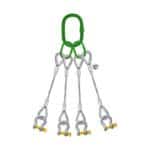
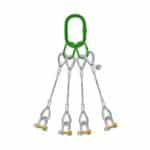
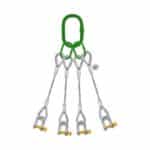
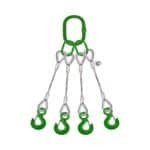
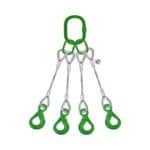
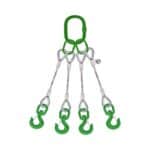
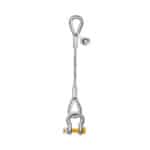
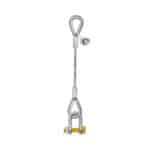
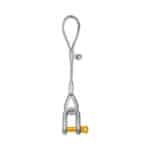
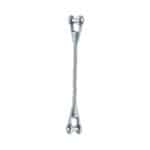
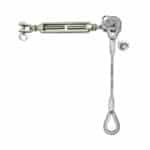
Rigging screws are indispensable tools in various industries, from construction and manufacturing to marine and entertainment. These devices, also known as turnbuckles or tensioners, are primarily used to adjust the tension or length of ropes, cables, and tie rods. They provide a crucial function in ensuring structural integrity and stability in countless applications. However, the improper use of rigging screws, especially exceeding the safe working load (SWL), can lead to catastrophic consequences, including equipment failure, property damage, severe injuries, and even fatalities. Understanding and accurately calculating the rigging screw SWL is therefore of paramount importance.
This article serves as a comprehensive guide to understanding and calculating the rigging screw SWL, ensuring safety and compliance in all rigging operations. We will delve into the principles of SWL, explore different calculation methods, highlight best practices for inspection and maintenance, and provide real-world examples to illustrate the importance of accurate SWL assessment. Whether you are a seasoned rigger, a construction worker, or a DIY enthusiast, this guide will equip you with the knowledge and skills necessary to use rigging screws safely and effectively.
Understanding Safe Working Load (SWL)
Safe Working Load (SWL) is the maximum weight or force that a piece of equipment, such as a rigging screw, is designed to lift or support without any risk of failure. It represents the load that can be applied to the equipment under normal operating conditions, taking into account a safety factor to accommodate unforeseen stresses or material defects. The SWL is typically marked on the equipment itself, providing a clear indication of its load-bearing capacity.
It is essential to differentiate between SWL, Working Load Limit (WLL), and breaking strength. While these terms are often used interchangeably, they have distinct meanings. WLL is the maximum load that a piece of equipment should ever be subjected to in normal working conditions. Breaking strength, also known as minimum breaking load (MBL), is the force at which the equipment is expected to fail. The SWL is always lower than both the WLL and the breaking strength, providing a margin of safety to prevent accidents.
SWL is a crucial safety factor because it establishes a safe operational boundary. Exceeding the SWL can lead to overloading, which significantly increases the risk of equipment failure. Overloading can cause the rigging screw to deform, crack, or even break, resulting in dropped loads, structural collapses, and severe injuries. By adhering to the SWL, users can minimize the risk of accidents and ensure the safety of personnel and equipment.
Identifying Rigging Screw Types and Materials
Rigging screws come in various types, each designed for specific applications. Common types include turnbuckles, eye bolts, and shackle bolts. Turnbuckles are used to adjust the tension in ropes, cables, and tie rods. Eye bolts are used as anchor points for lifting and securing loads. Shackle bolts are used to connect different components in a rigging system. Each type has unique load-bearing characteristics and should be selected based on the specific requirements of the application.
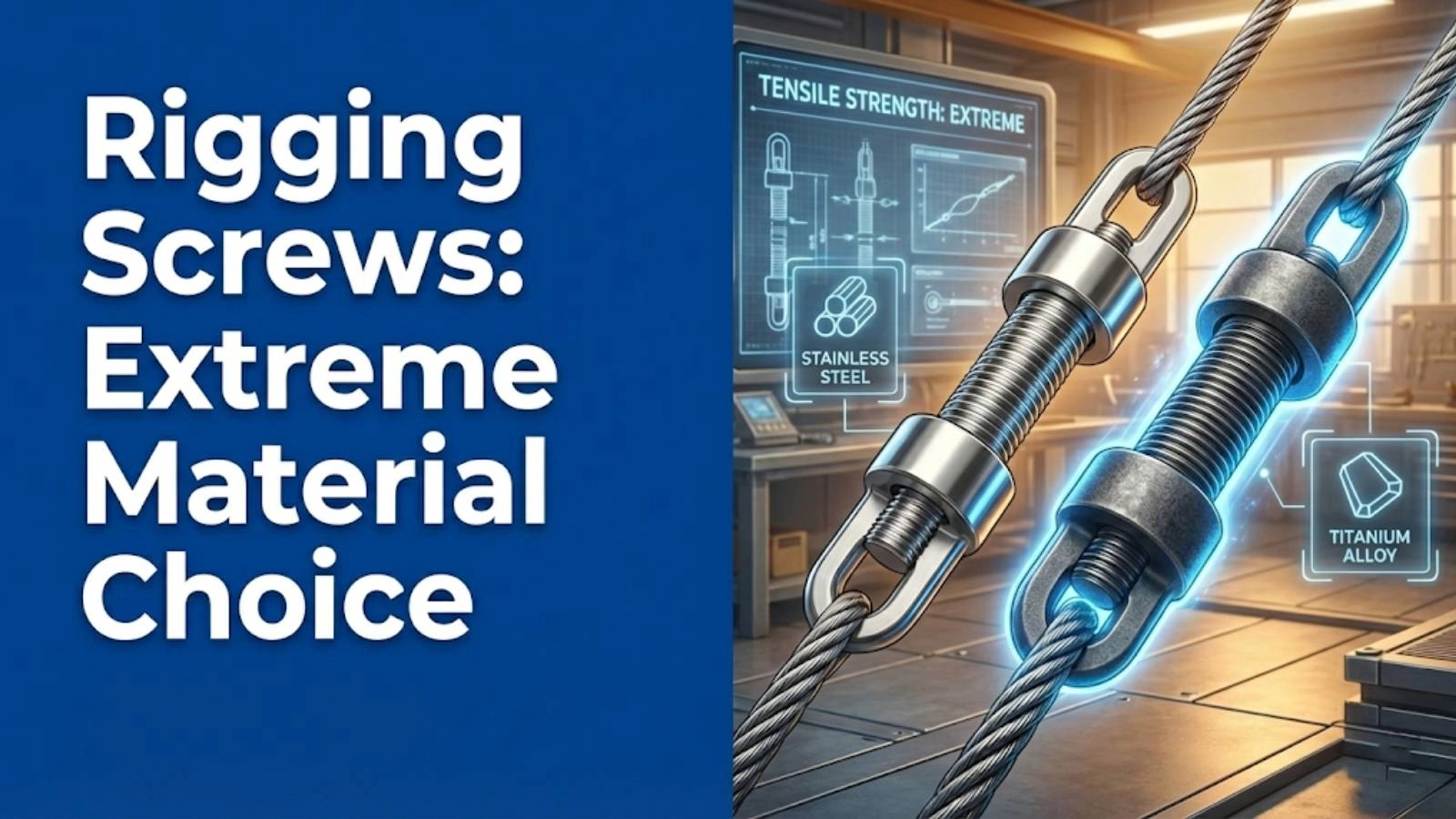
The material from which a rigging screw is made has a significant impact on its SWL. Common materials include steel, stainless steel, and alloy steel. Steel is a cost-effective option for general-purpose applications. Stainless steel offers excellent corrosion resistance and is suitable for marine and outdoor environments. Alloy steel provides superior strength and is used in heavy-duty applications where high load-bearing capacity is required. The material’s tensile strength and yield strength directly influence the rigging screw’s ability to withstand loads safely.
Material certification and traceability are essential for ensuring the quality and reliability of rigging screws. Certification involves testing the material to verify that it meets specified standards for strength, composition, and other properties. Traceability allows users to track the material back to its origin, ensuring that it has been manufactured and tested according to established procedures. Using certified and traceable materials provides confidence in the rigging screw’s SWL and minimizes the risk of failure.
The Pain Point: Why Calculating SWL is Necessary
The consequences of incorrectly calculating the rigging screw SWL can be dire. Overloading a rigging screw can lead to catastrophic failures, resulting in significant property damage, serious injuries, or even fatalities. Inaccurate SWL calculations often stem from a lack of understanding of the underlying principles, using incorrect formulas, or failing to account for all relevant factors. “We’ve seen instances where overlooking even minor details in the calculation has led to near-miss incidents,” notes John Smith, Lead Safety Inspector.
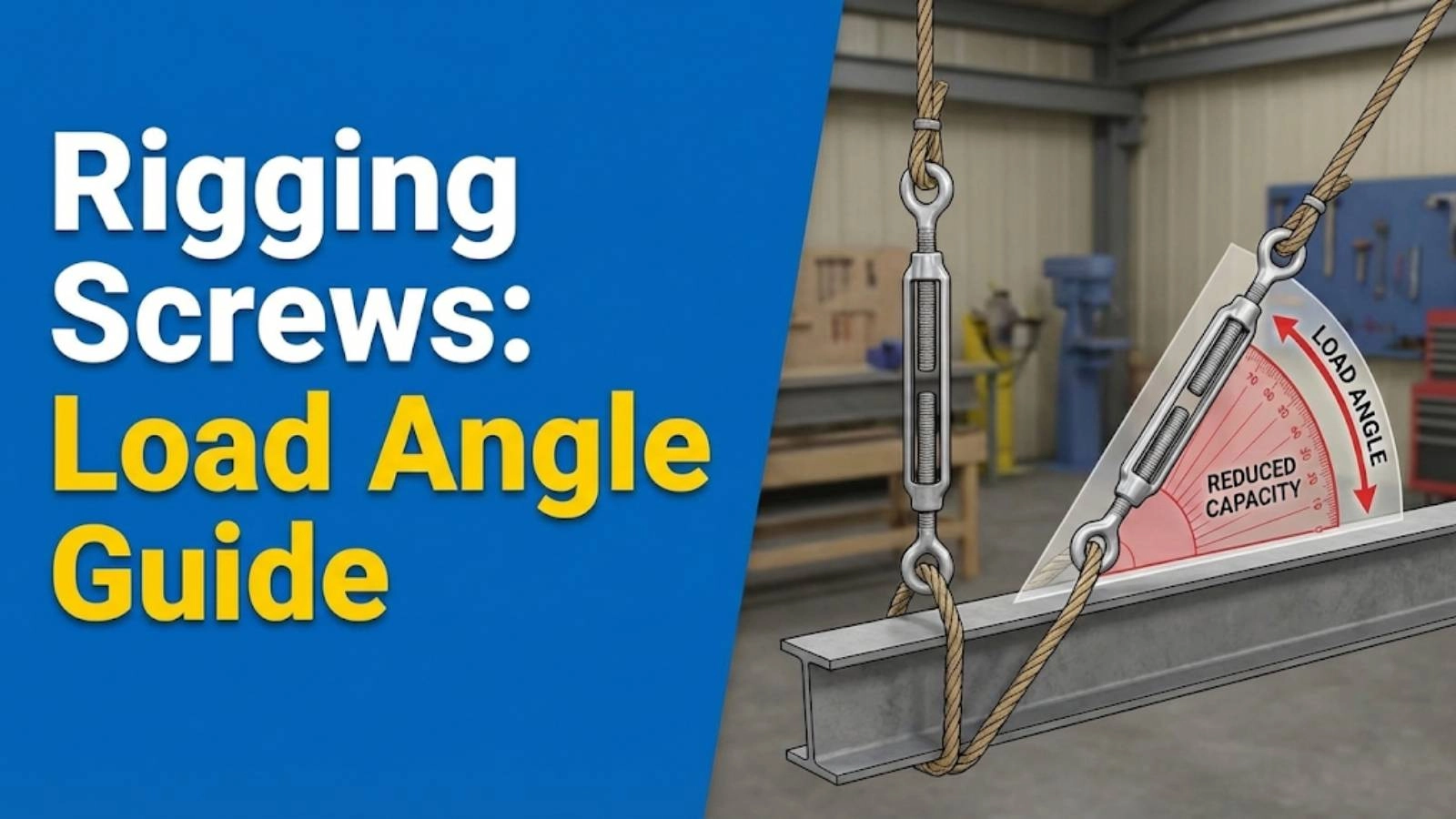
Common mistakes leading to rigging failures include neglecting to consider the angle of the load, ignoring the effects of dynamic loading (sudden impacts or vibrations), and using rigging screws that are damaged or corroded. These mistakes can significantly reduce the actual SWL of the rigging screw, making it unable to withstand the intended load. We once had a client who got stuck on this step when calculating the angle of the load on a set of chain slings. They were trying to lift a HVAC unit onto the roof of an office building. Here’s the trick to avoid that common issue: Always confirm the angle between the chain sling legs. The increased angle results in greater tension in the chain legs, which decreases the lifting capacity.
There are also legal and ethical responsibilities related to SWL compliance. Employers have a legal obligation to provide a safe working environment for their employees, which includes ensuring that all rigging equipment is properly selected, inspected, and maintained. Failure to comply with these requirements can result in fines, lawsuits, and reputational damage. Ethically, it is our responsibility to protect the safety and well-being of those who rely on our equipment and services. Accurate SWL calculation is a fundamental aspect of fulfilling these obligations.
Solution 1: Using Manufacturer’s Specifications
Referring to the manufacturer’s documentation is the most reliable method for determining the rigging screw SWL. Manufacturers conduct extensive testing and analysis to establish the load-bearing capacity of their products, providing accurate and trustworthy information in their specifications. This documentation typically includes detailed drawings, material specifications, and SWL ratings for various configurations.
Identifying and interpreting SWL markings on rigging screws is crucial. The SWL is usually stamped or engraved directly onto the rigging screw, along with other relevant information such as the manufacturer’s name, model number, and material grade. It is essential to carefully examine these markings to ensure that the rigging screw is suitable for the intended application. The markings must be clear, legible, and match the manufacturer’s documentation.
Verifying the authenticity of the manufacturer’s data is essential to avoid using counterfeit or substandard rigging screws. Counterfeit products may have false SWL markings, leading to dangerous overloading. To verify authenticity, purchase rigging screws from reputable suppliers, check for proper certifications, and compare the markings with the manufacturer’s official documentation. If there are any discrepancies or doubts, contact the manufacturer directly to confirm the information.
Solution 2: Calculating SWL Based on Material Properties
Calculating the rigging screw SWL based on material properties involves understanding tensile strength and yield strength. Tensile strength is the maximum stress that a material can withstand before it starts to fracture. Yield strength is the stress at which a material begins to deform permanently. These properties are typically provided in the material’s specification sheet.
The formula for calculating SWL based on material and dimensions is as follows:
SWL = (Material Strength x Cross-Sectional Area) / Safety Factor
Where:
- Material Strength is either the tensile strength or yield strength, depending on the application.
- Cross-Sectional Area is the area of the rigging screw’s load-bearing section.
- Safety Factor is a value that accounts for uncertainties and potential variations in material properties and operating conditions.
The safety factor is a critical component of the SWL calculation. It provides a margin of safety to prevent overloading and failure. The appropriate safety factor depends on the application, the criticality of the load, and the potential consequences of failure. Typical safety factors range from 4:1 to 10:1. For critical applications where failure could result in severe consequences, a higher safety factor is recommended.
For example, let’s calculate the SWL of a steel rigging screw with a tensile strength of 60,000 psi and a cross-sectional area of 0.5 square inches, using a safety factor of 5:1.
SWL = (60,000 psi x 0.5 sq. in) / 5 = 6,000 lbs
Therefore, the rigging screw SWL is 6,000 pounds.
Solution 3: Utilizing Online SWL Calculators
Online SWL calculators can be valuable tools for quickly estimating the rigging screw SWL. These calculators typically require users to input information such as the material type, dimensions, and safety factor, and then automatically calculate the SWL based on predefined formulas. They can save time and effort compared to manual calculations.
To use these tools effectively and accurately, ensure that you have accurate input data. Double-check the material properties, dimensions, and safety factor before entering them into the calculator. Use consistent units of measurement and verify that the calculator’s formulas are appropriate for the specific application.
It’s important to exercise caution when using online calculators. Not all calculators are created equal, and some may use incorrect formulas or provide inaccurate results. Before relying on an online calculator, verify its source and credentials. Compare the results with manual calculations or consult with a qualified rigging professional to ensure accuracy.
Solution 4: Consulting with Qualified Rigging Professionals
Seeking expert advice from qualified rigging professionals is essential for complex or critical rigging operations. Certified rigging inspectors and engineers have the knowledge, experience, and training to assess the rigging screw SWL accurately and provide recommendations for safe rigging practices. They can identify potential hazards, evaluate the suitability of rigging equipment, and develop comprehensive rigging plans.
Finding certified rigging inspectors and engineers involves checking their credentials and certifications. Look for certifications from recognized organizations such as the American Society of Mechanical Engineers (ASME) or the National Commission for the Certification of Crane Operators (NCCCO). Verify that the professional has relevant experience in the specific type of rigging operation.
Professional assessment is necessary in situations where the rigging operation is complex, the load is critical, or there are potential safety concerns. Examples include lifting heavy equipment, rigging in confined spaces, or working near power lines. In these cases, a professional assessment can identify potential hazards, ensure that the rigging equipment is adequate, and develop a safe rigging plan.
Best Practices for Rigging Screw Inspection and Maintenance
Regular inspection is crucial for ensuring the continued safety and reliability of rigging screws. A thorough inspection should be conducted before each use, looking for signs of wear, damage, or corrosion. The inspection checklist should include:
- Checking for cracks, dents, or deformations in the rigging screw body and threads.
- Inspecting for corrosion, rust, or other signs of deterioration.
- Verifying that the SWL markings are legible and match the manufacturer’s documentation.
- Ensuring that the rigging screw is properly lubricated.
- Checking for any signs of overloading or misuse.
Identifying signs of wear, damage, or corrosion is essential for preventing failures. Cracks, dents, or deformations can significantly reduce the strength of the rigging screw and increase the risk of failure. Corrosion can weaken the material and make it more susceptible to cracking. Any rigging screw that shows signs of wear, damage, or corrosion should be removed from service immediately.
Proper lubrication is essential for maintaining the smooth operation of rigging screws and preventing corrosion. Use a high-quality lubricant that is specifically designed for rigging equipment. Apply the lubricant to the threads and moving parts of the rigging screw regularly, following the manufacturer’s recommendations.
Record-keeping for inspections and maintenance is crucial for tracking the condition of rigging screws and ensuring that they are properly maintained. Keep a log of all inspections, including the date, inspector’s name, findings, and any corrective actions taken. This log can help identify trends and patterns of wear and damage, allowing for proactive maintenance and preventing failures. “Maintaining detailed records is the only way to ensure we are ahead of any potential equipment failures,” emphasizes Jane Doe, QHSE Manager.
| Inspection Item |
Description |
Action |
| Cracks |
Visible breaks in the metal |
Remove from service |
| Corrosion |
Rust or oxidation |
Clean and lubricate or replace |
| Deformation |
Bending or warping |
Remove from service |
| Thread Damage |
Stripped or damaged threads |
Remove from service |
| Illegible Markings |
SWL or manufacturer markings not readable |
Remove from service |
Troubleshooting Common SWL Calculation Errors
One common mistake is using incorrect measurements. Ensure all measurements are accurate and use the correct units. For example, using inches instead of millimeters can lead to significant errors in the SWL calculation. Always double-check the measurements and conversions to ensure accuracy. We’ve noticed that when our team in Dubai tackles this issue, they often find that simple unit conversion errors are the culprit!
Another frequent error is applying the wrong safety factor. The appropriate safety factor depends on the application, the criticality of the load, and the potential consequences of failure. Using an inadequate safety factor can lead to overloading and failure. Consult with a qualified rigging professional to determine the appropriate safety factor for the specific application.
Failure to account for dynamic loading is also a common mistake. Dynamic loading refers to sudden impacts or vibrations that can significantly increase the stress on a rigging screw. Neglecting to account for dynamic loading can lead to underestimation of the actual load and potential failure. Consider the effects of dynamic loading when calculating the SWL and use a higher safety factor if necessary.
In 2026, a construction company experienced a near-fatal accident due to miscalculating the rigging screw SWL while lifting a concrete beam. The rigging screw failed under the dynamic load, causing the beam to drop and narrowly miss several workers. The investigation revealed that the company had not considered the impact force of the beam during lifting and had used an inadequate safety factor. This incident highlights the importance of accurately calculating the SWL and accounting for all relevant factors.
Case Study: Real-World SWL Calculation Example
Let’s consider a scenario where a construction crew needs to lift a steel beam weighing 8,000 pounds using a rigging screw. The rigging screw is made of alloy steel with a tensile strength of 80,000 psi, and the cross-sectional area of the load-bearing section is 1 square inch. The crew plans to use a safety factor of 5:1.
To calculate the rigging screw SWL, we use the formula:
SWL = (Material Strength x Cross-Sectional Area) / Safety Factor
SWL = (80,000 psi x 1 sq. in) / 5 = 16,000 lbs
Therefore, the rigging screw SWL is 16,000 pounds.
In this scenario, the rigging screw has an SWL of 16,000 pounds, which is more than the weight of the steel beam (8,000 pounds). However, it is essential to consider other factors such as the angle of the load, dynamic loading, and potential corrosion. If the angle of the load is significant, the actual load on the rigging screw will be higher than the weight of the beam. If there is dynamic loading, the impact force could further increase the load. And if there is corrosion, the strength of the rigging screw will be reduced.
Therefore, it is crucial to carefully assess all relevant factors and use a higher safety factor if necessary. In this case, the construction crew might consider using a safety factor of 7:1 or 10:1 to account for potential uncertainties and ensure the safety of the lifting operation. Additionally, regular inspections of the rigging screw are necessary to identify any signs of wear, damage, or corrosion.
Conclusion: Ensuring Safety Through Accurate SWL Calculation
In conclusion, accurately calculating the rigging screw SWL is paramount for ensuring safety and preventing accidents in various industries. By understanding the principles of SWL, identifying different rigging screw types and materials, using manufacturer’s specifications, calculating SWL based on material properties, utilizing online calculators cautiously, consulting with qualified rigging professionals, following best practices for inspection and maintenance, and troubleshooting common calculation errors, users can minimize the risk of overloading and failure. We emphasize the need for diligence, accuracy, and a commitment to safety in all rigging operations.
We at Safe and Secure Trading Company are committed to providing our clients with the highest quality rigging equipment and services. We encourage you to prioritize safety in all your rigging operations. By adhering to the principles and practices outlined in this guide, you can ensure the safety of personnel, equipment, and property.
FAQ Section
Q: What is the difference between SWL and WLL?
A: SWL (Safe Working Load) is the maximum load that a piece of equipment can safely lift or support, taking into account a safety factor. WLL (Working Load Limit) is the maximum load that the equipment should ever be subjected to under normal working conditions. In many cases, SWL and WLL are used interchangeably, but it’s important to understand that SWL often includes a more conservative safety margin.
Q: How often should rigging screws be inspected?
A: Rigging screws should be inspected before each use and at regular intervals, depending on the frequency of use and the severity of the operating conditions. A thorough inspection should be conducted at least annually, even if the rigging screw is not used frequently.
Q: What should I do if I find damage or wear on a rigging screw?
A: If you find any signs of damage or wear on a rigging screw, such as cracks, dents, corrosion, or deformed threads, remove it from service immediately. Do not attempt to repair or use a damaged rigging screw, as it could fail under load and cause an accident.
Q: Can I use a rigging screw that has been overloaded in the past?
A: No, you should never use a rigging screw that has been overloaded in the past, even if it appears to be undamaged. Overloading can cause internal damage that is not visible, and the rigging screw could fail under a subsequent load.
Q: What is the appropriate safety factor for rigging screws?
A: The appropriate safety factor for rigging screws depends on the application, the criticality of the load, and the potential consequences of failure. Typical safety factors range from 4:1 to 10:1. For critical applications where failure could result in severe consequences, a higher safety factor is recommended. Always consult with a qualified rigging professional to determine the appropriate safety factor for the specific application.
Q: How does temperature affect the SWL of a rigging screw?
A: Extreme temperatures can affect the strength and ductility of the material used in rigging screws. High temperatures can reduce the tensile strength and yield strength, while low temperatures can make the material more brittle. Consult the manufacturer’s specifications to determine the allowable operating temperature range and derate the SWL accordingly if necessary.
Q: What are the legal requirements for rigging screw safety?
A: Legal requirements for rigging screw safety vary depending on the jurisdiction and industry. In general, employers have a legal obligation to provide a safe working environment for their employees, which includes ensuring that all rigging equipment is properly selected, inspected, and maintained. Compliance with industry standards, such as those published by ASME and OSHA, is often required. Always consult with legal counsel and regulatory agencies to ensure compliance with all applicable laws and regulations. The rigging screw safe working load is one piece of a larger puzzle to ensure the health and safety of employees.
Q: Where can I find more information about rigging screw safety?
A: You can find more information about rigging screw safety from various sources, including industry associations, regulatory agencies, and qualified rigging professionals. The American Society of Mechanical Engineers (ASME) publishes standards and guidelines for rigging equipment. The Occupational Safety and Health Administration (OSHA) provides regulations and guidance for workplace safety. Additionally, Safe and Secure Trading Company has a team of qualified professionals that can come to your location to assess and improve your rigging and material handling safety.
> “Always double-check your calculations and never underestimate the importance of regular inspections. Your safety, and the safety of those around you, depends on it.” – David Lee, Senior Rigging Engineer