Choosing the right rigging hardware is crucial for ensuring the safety and success of any project, whether it involves marine rigging, industrial rigging, or construction rigging. Navigating the world of rigging screws turnbuckles can be challenging, and selecting the wrong component can lead to equipment failure, injuries, and costly project delays. At Safe and Secure Trading Company (SSTC), we understand these challenges and are committed to providing our clients with the knowledge and resources they need to make informed decisions.
Our solution is a clear, detailed comparison of rigging screws and turnbuckles to help you choose wisely. We’ll explore their definitions, functions, applications, and key differences, and provide insights into safety considerations and best practices. By the end of this article, you’ll have a comprehensive understanding of which tensioning devices are best suited for your specific needs.
What are Rigging Screws?
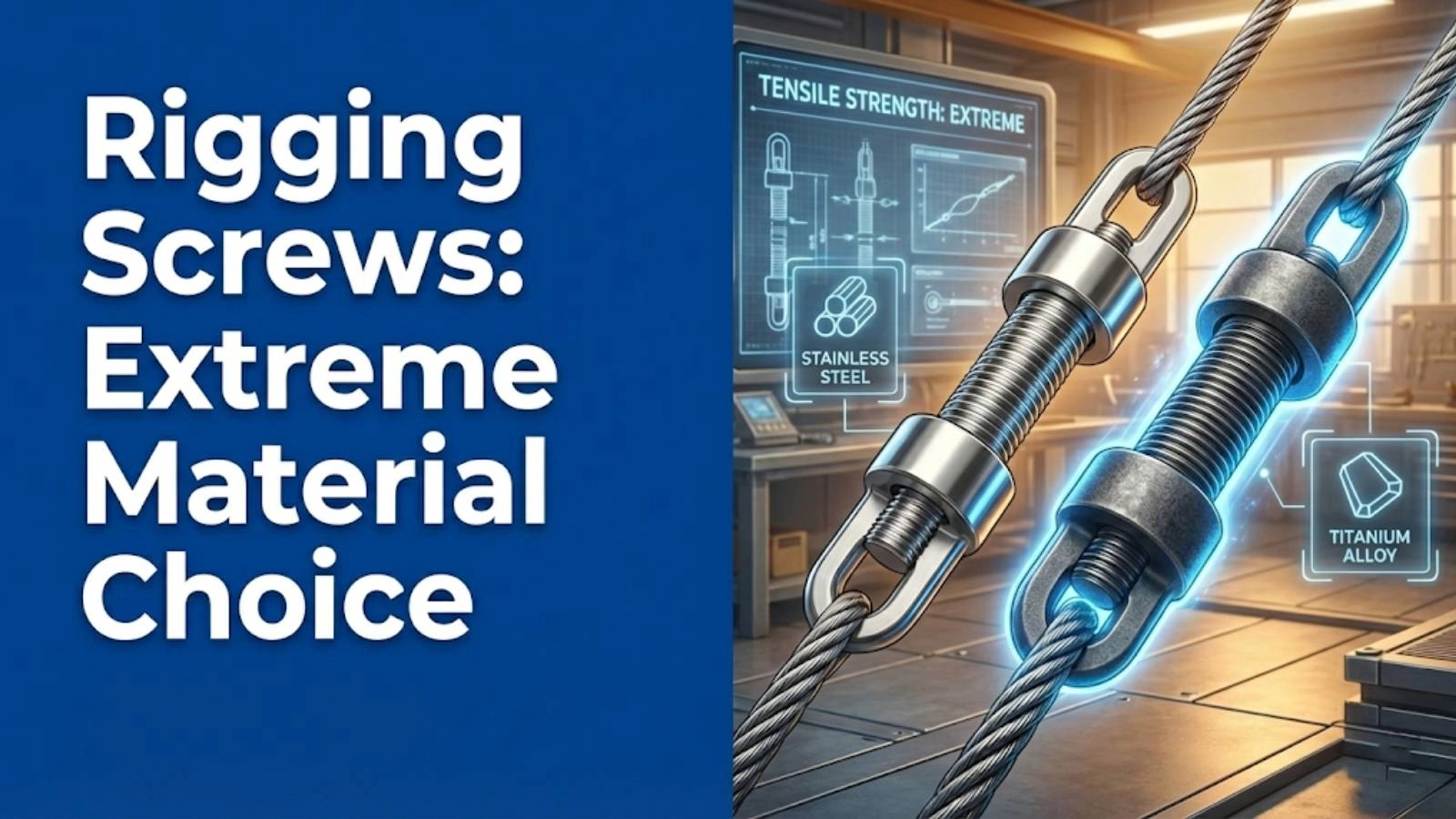
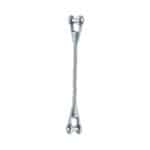
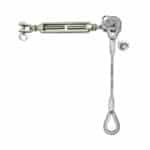
A rigging screw is a type of tensioning device primarily used in rigging systems. It consists of a threaded rod, often made of stainless steel or galvanized steel, with an eye, jaw, or other fitting on each end. These fittings allow the screw to be connected to other components in the rigging setup, such as wire rope or threaded fasteners.
The primary function of a rigging screw is to adjust the tension in rigging systems. This is achieved by rotating the body of the screw, which effectively lengthens or shortens the distance between the end fittings. While simple in design, rigging screws are powerful tensioning devices, offering significant load capacity. For many of our clients here in Dammam, we’ve seen that rigging screws are a reliable choice for static applications.
Rigging screws are typically used in applications where precise and frequent tension adjustments are not required. They are commonly found in construction rigging, where they might be used to secure temporary structures, or in industrial rigging for tasks like aligning machinery. Their robust design and ease of use make them a staple in many different industries.
What are Turnbuckles?
A turnbuckle is another type of tensioning device, but with a slightly different design and function compared to rigging screws. A turnbuckle features a metal frame, often referred to as the body or center piece, with threaded ends. These ends are typically fitted with opposing threads (left and right), allowing for simultaneous tightening or loosening when the body is rotated.
Turnbuckles are primarily designed for adjusting tension in various applications, and they excel in situations where frequent or precise adjustments are needed. Their design allows for easy and quick tensioning, making them a preferred choice for dynamic systems.
Ideal applications for turnbuckles include fences, shade sails, and marine rigging. In marine rigging, for instance, turnbuckles are essential for adjusting the tension of sails, ensuring optimal performance. They’re also frequently used in architectural projects, such as shade sails, where precise tensioning is critical for both aesthetics and structural integrity. We once worked with a client choosing between rigging screws turnbuckles for a shade sail project; they found turnbuckles were better for their specific workflow because the ability to quickly adjust tension during installation and seasonal changes was invaluable.
Key Differences: Rigging Screws vs. Turnbuckles
When it comes to choosing between rigging screws turnbuckles, understanding their key differences is essential. These differences span from ease of adjustment and appearance to load capacity and suitability for various applications.
Ease of Adjustment:
- Rigging screws: Generally require more effort to adjust. Adjusting the tension in a rigging screw involves rotating the entire body of the screw, which can be cumbersome, especially under heavy load. The process is also slower compared to turnbuckles.
- Turnbuckles: Offer easier and quicker tension adjustments due to their design. The central frame and opposing threads allow for simultaneous tightening or loosening, making the adjustment process more efficient. This is particularly advantageous when making frequent adjustments.
Appearance:
- Rigging screws: Often have a sleek, streamlined appearance. Their simple design makes them less visually obtrusive, which can be important in architectural or aesthetic applications.
- Turnbuckles: More robust and visually distinct due to their central frame. This can be a consideration in projects where aesthetics are a concern, although the functionality often outweighs the appearance.
Load Capacity:
- Rigging screws: Load ratings vary depending on the design and material. It’s crucial to check the specific load capacity of the chosen rigging screw to ensure it meets the demands of the application.
- Turnbuckles: Load ratings vary but are generally well-defined and labeled. Like rigging screws, turnbuckles come in different sizes and materials, each with a specific working load limit (WLL) that must be adhered to for safety.
Here’s a quick comparison table illustrating the key differences:
| Feature |
Rigging Screws |
Turnbuckles |
| Ease of Adjustment |
More difficult |
Easier and quicker |
| Appearance |
Sleek, streamlined |
Robust, visually distinct |
| Load Capacity |
Varies by design and material |
Varies, generally well-defined |
| Applications |
Static applications, construction rigging |
Dynamic applications, marine rigging, shade sails |
The Problem of Choosing the Wrong Hardware
Selecting the wrong rigging hardware can have significant consequences, ranging from inconvenience and wasted time to serious safety risks. It’s essential to understand the potential pitfalls of misapplication to make informed decisions.
Scenario 1: Using a Rigging Screw When Frequent Adjustments Are Needed
- The pain: Inconvenience, wasted time, and potential for uneven tension. When frequent adjustments are necessary, using a rigging screw can be incredibly frustrating. The process of adjusting tension is slow and requires more effort, leading to wasted time and potential for uneven tension distribution.
- The solution: Opt for a turnbuckle for easier adjustment. Turnbuckles are designed for quick and easy tension adjustments, making them the ideal choice for applications requiring frequent modifications. This not only saves time but also ensures more precise and consistent tension.
Scenario 2: Overlooking the Working Load Limit (WLL)
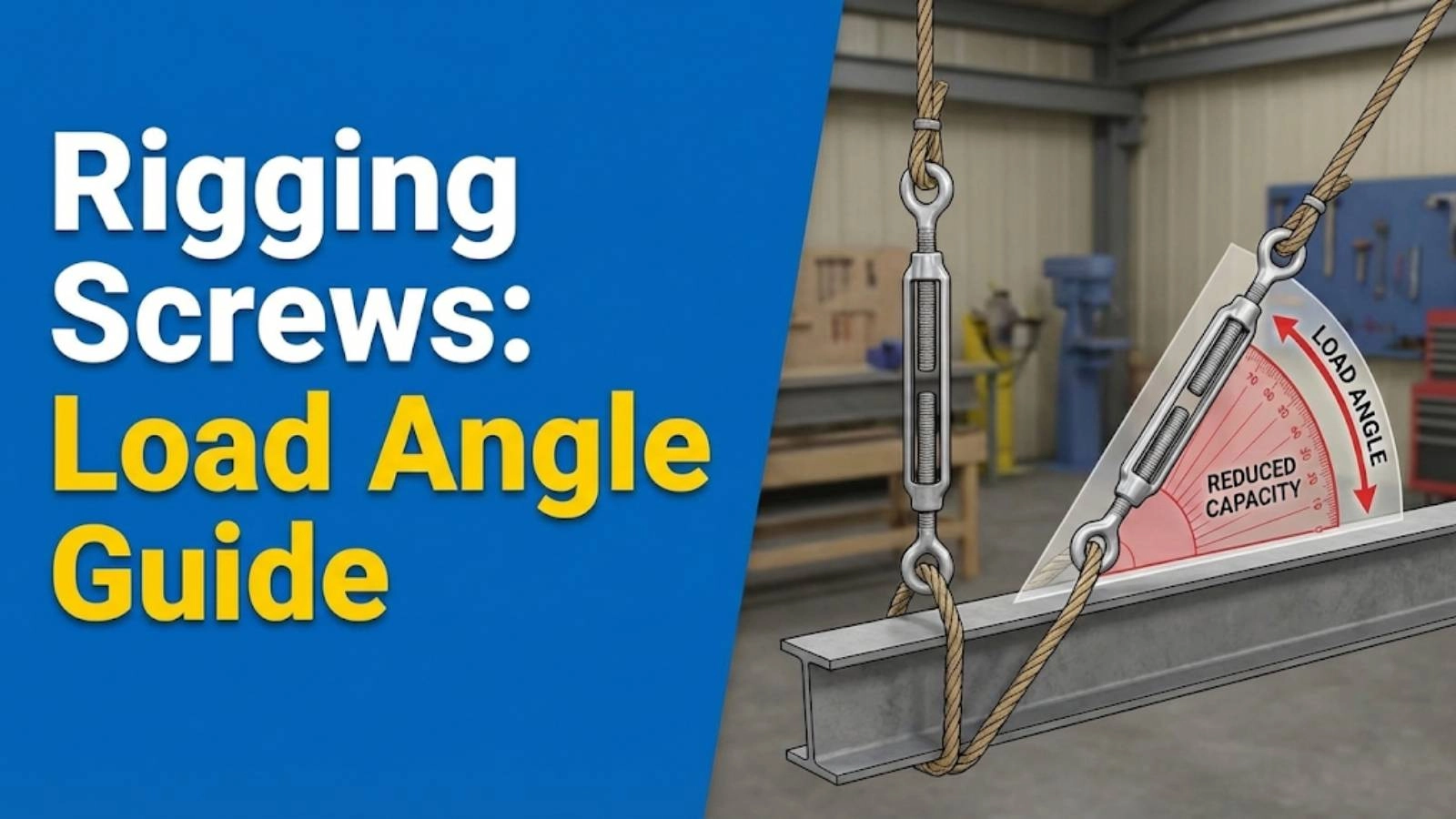
- The pain: Risk of failure, injury, and damage to equipment. One of the most critical mistakes is overlooking the working load limit (WLL) of the rigging hardware. Exceeding the WLL can lead to catastrophic failure, resulting in injury, damage to equipment, and project delays.
- The solution: Always check the WLL and ensure it exceeds the expected load, regardless of whether it is a screw or turnbuckle. It’s imperative to verify that the WLL of the chosen hardware is sufficient for the intended load, with a safety margin to account for dynamic loads and unexpected stresses. Rigging screws turnbuckles both need to be used within their limits.
Safety Considerations for Both
Safety should always be the top priority when working with rigging hardware. Whether you’re using rigging screws or turnbuckles, several key considerations can help prevent accidents and ensure the integrity of your rigging systems.
Material Selection:
- Stainless steel: Ideal for marine and corrosive environments. Stainless steel offers excellent corrosion resistance, making it the preferred choice for applications exposed to saltwater, chemicals, or other corrosive elements. This ensures longevity and reliability in harsh conditions.
- Galvanized steel: Suitable for general use but less resistant to corrosion. Galvanized steel provides a protective zinc coating that helps prevent rust and corrosion. While it’s suitable for general use, it’s not as durable as stainless steel in highly corrosive environments.
- The solution: Choose the right material based on the application environment. The material should match the environment to ensure longevity.
Proper Installation:
- Ensuring proper thread engagement: Proper thread engagement is critical for ensuring the load capacity and stability of the connection. Insufficient thread engagement can lead to premature failure and potential accidents.
- Avoiding cross-threading or over-tightening: Cross-threading or over-tightening can damage the threads and compromise the integrity of the hardware. It’s essential to use appropriate tools and techniques to avoid these issues.
- The solution: Follow manufacturer’s instructions and use appropriate tools. Always follow guidelines when using tensioning devices.
Regular Inspection:
- Checking for signs of wear, corrosion, or damage: Regular inspection is essential for identifying any signs of wear, corrosion, or damage that could compromise the integrity of the hardware. This includes checking for cracks, deformation, and excessive rust.
- Replacing damaged hardware immediately: Any damaged hardware should be replaced immediately to prevent potential accidents. Continuing to use compromised hardware can lead to catastrophic failure.
- The solution: Implement a regular inspection schedule. For industrial rigging, the inspection schedule should be daily.
Advantages and Disadvantages
Both rigging screws and turnbuckles have their own set of advantages and disadvantages. Understanding these pros and cons can help you make a more informed decision based on your specific needs.
Rigging Screws:
✅ Simpler design: Rigging screws have a straightforward design, making them easy to use and maintain.
✅ Potentially lower cost: Their simple construction can translate to a lower initial cost compared to turnbuckles.
❌ More difficult to adjust: Adjusting tension requires more effort and time compared to turnbuckles.
❌ Less precise tension control: The adjustment process is less precise, making it challenging to achieve exact tension levels.
Turnbuckles:
✅ Easier and more precise tension adjustment: The central frame and opposing threads allow for quick and accurate tension adjustments.
✅ Wider range of applications: Suitable for both static and dynamic applications, offering greater versatility.
❌ More complex design: The more intricate design can make them slightly more challenging to install and maintain.
❌ Potentially higher cost: The more complex construction can result in a higher initial cost.
Case Study: Real-World Applications
Examining real-world applications of rigging screws turnbuckles can provide valuable insights into their respective strengths and suitability for different projects.
- Marine rigging: Turnbuckles are preferred for adjusting sail tension. In marine environments, turnbuckles are essential for fine-tuning sail tension, ensuring optimal performance and handling. Their ease of adjustment is particularly valuable in dynamic sailing conditions.
- Construction: Rigging screws used for securing temporary structures. In construction, rigging screws are often used to secure temporary structures, such as scaffolding or formwork. Their robust design and load capacity make them a reliable choice for these applications.
- Architectural applications: Turnbuckles commonly found with shade sails. Shade sails rely on precise tensioning to maintain their shape and stability. Turnbuckles are commonly used in these applications, providing the necessary adjustability to achieve the desired aesthetic and structural integrity.
Expert Advice and Best Practices
Proper selection and use of rigging hardware are critical for ensuring safety and preventing accidents. Here’s some expert advice to guide you:
“When selecting rigging hardware, always prioritize safety and load capacity over cost. A failure in a critical rigging component can have catastrophic consequences.” – John Smith, Lead Engineer
When it comes to rigging hardware, remember these important points:
- Always verify the working load limit (WLL) and ensure it exceeds the expected load.
- Inspect hardware regularly for signs of wear, corrosion, or damage.
- Use appropriate tools and techniques for installation and adjustment.
- Choose the right material based on the application environment.
- Prioritize safety and never compromise on quality.
Conclusion: Making the Right Choice for Your Project
In conclusion, choosing between rigging screws turnbuckles depends largely on the specific requirements of your project. Both components serve as essential tensioning devices, but their distinct features make them suitable for different applications.
- Recap of key differences and considerations: Rigging screws are simpler in design and potentially lower in cost, making them suitable for static applications where frequent adjustments are not needed. Turnbuckles, on the other hand, offer easier and more precise tension adjustments, making them ideal for dynamic applications such as marine rigging and architectural shade sails.
- Final recommendation: Choose rigging screws for static applications with minimal adjustment needs. Choose turnbuckles for applications requiring frequent or precise tension adjustments.
We, at Safe and Secure Trading Company, understand the importance of selecting the right rigging hardware for your project. Our team of experts is here to assist you in making informed decisions and ensuring the safety and success of your operations. Trust our expertise and commitment to quality to provide you with the best rigging solutions available.
FAQ Section
Q: What is the main difference between rigging screws and turnbuckles?
A: The main difference lies in their ease of adjustment. Turnbuckles are designed for easier and quicker tension adjustments due to their central frame and opposing threads, while rigging screws generally require more effort and time to adjust.
Q: Which is better for marine applications, rigging screws or turnbuckles?
A: Turnbuckles are generally preferred for marine applications, especially for adjusting sail tension. Their ease of adjustment is crucial in dynamic sailing conditions.
Q: What is the importance of the Working Load Limit (WLL)?
A: The WLL is the maximum load that a rigging component is designed to safely handle. Exceeding the WLL can lead to catastrophic failure, resulting in injury, damage to equipment, and project delays. Always ensure that the WLL of the chosen hardware is sufficient for the intended load, with a safety margin.
Q: How often should I inspect rigging hardware?
A: Rigging hardware should be inspected regularly for signs of wear, corrosion, or damage. The frequency of inspections depends on the application and environment. For critical applications, daily inspections may be necessary.
Q: What materials are commonly used for rigging screws and turnbuckles?
A: Stainless steel and galvanized steel are commonly used. Stainless steel is ideal for marine and corrosive environments, while galvanized steel is suitable for general use but less resistant to corrosion.
Q: Can I use rigging screws and turnbuckles interchangeably?
A: While both components serve as tensioning devices, they are not always interchangeable. Consider the specific requirements of your project, including the need for frequent adjustments, load capacity, and environmental conditions, to determine the most suitable hardware.
Q: Where can I purchase high-quality rigging screws and turnbuckles?
A: High-quality rigging screws turnbuckles can be purchased from reputable suppliers like Safe and Secure Trading Company (SSTC). Ensure that the hardware meets industry standards and is certified for its intended use. Our rigging hardware meets all quality and safety guidelines.
Q: What are threaded fasteners used for in rigging?
A: Threaded fasteners are used to connect rigging hardware components together. These fasteners ensure a secure and reliable connection, which is crucial for maintaining the integrity of the rigging system. Using the correct fastener size and material is essential for safety and performance.