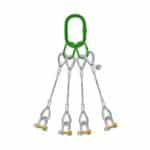
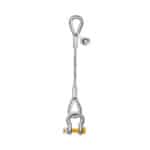
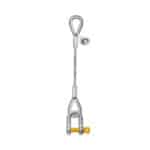
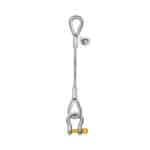
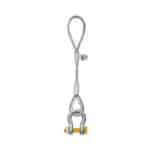
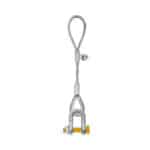
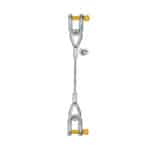
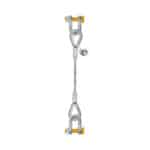
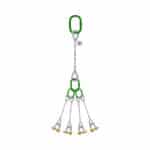
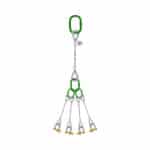
Shackle safety is paramount in any lifting or rigging operation. The humble shackle, often overlooked, is a critical link in ensuring the safety and success of these operations. When used improperly, shackles can pose significant dangers, leading to equipment damage, personal injury, or even fatalities. Following established safety guidelines and understanding the potential pitfalls is crucial for maintaining a safe working environment. This article will focus on common mistakes made when using shackles and will provide actionable shackle safety tips to help you avoid them.
1. ❌ Mismatching Shackle and Load: Overlooking WLL and Size
One of the most fundamental errors in rigging operations is using a shackle that isn’t properly matched to the load. This mistake often stems from a lack of understanding of the shackle’s capabilities or from a desire to save time by using whatever shackle is readily available. This seemingly small shortcut can lead to disastrous consequences.
1.1. Mistake: Using Incorrect Shackle Size for the Load
Using a shackle that is too small for the intended load is a serious mistake that can lead to catastrophic failure. When a shackle is overloaded, it exceeds its shackle load capacity, leading to deformation, cracking, or even complete breakage. This not only puts the load at risk but also endangers the lives of anyone in the vicinity.
1.2. Solution: Determining the Appropriate Shackle Size
To determine the appropriate shackle size, you must first calculate the total weight of the load. Once you know the weight, consult the shackle’s documentation to find its Working Load Limit (WLL). The WLL should always be greater than the weight of the load. For many of our clients here in Dammam, we’ve seen that carefully considering the load weight and the shackle’s WLL is essential.
1.3. Solution: Load Angle Considerations
The angle at which the load is applied to the shackle significantly affects the stress on the shackle. As the angle increases, the stress on the shackle also increases. It’s crucial to calculate the adjusted WLL based on the angle of the load. A simple formula to estimate this is: Adjusted WLL = WLL / (2 * sin(angle/2)). Ignoring load angles can lead to a significant reduction in the shackle load capacity, increasing the risk of failure.
1.4. Tip: Using Oversized Shackles
Using oversized shackles might seem like a safer option, but it can introduce its own set of problems. While an oversized shackle will certainly be strong enough to handle the load, it can create instability in the lifting system. The extra weight of the shackle can also make it more difficult to handle, and it may not fit properly with other components in the rigging setup. It is best to always use a shackle that is appropriately sized for the load and the application.
2. ❌ Ignoring Shackle Inspection: Neglecting Wear and Damage
Regular shackle inspection is crucial for ensuring continued rigging safety. Overlooking wear and damage on shackles can lead to unexpected failures, jeopardizing the safety of personnel and equipment. A proactive inspection program can identify potential issues before they escalate into serious problems.
2.1. Mistake: Failing to Regularly Inspect Shackles
Failing to conduct regular inspections of shackles is a critical oversight. Wear, cracks, deformation, and corrosion can compromise the integrity of the shackle, reducing its shackle load capacity and increasing the risk of failure. Using damaged shackles can have severe consequences, leading to accidents, injuries, and costly downtime.
2.2. Solution: Implementing a Shackle Inspection Program
Implementing a comprehensive shackle inspection program involves several key steps. First, establish a schedule for regular inspections, ideally before each use and periodically throughout the operation. Develop a checklist of items to inspect, including the shackle body, pin, and threads. Document each inspection, noting any damage or defects found. Our experience at SSTC has shown us that consistent documentation can significantly improve rigging safety.
2.3. Solution: Identifying Different Types of Damage
It’s crucial to know what types of damage to look for during shackle inspection. Cracks can appear on the shackle body or pin, often near areas of high stress. Deformation can manifest as bending or distortion of the shackle. Corrosion can weaken the shackle material, making it more susceptible to failure. Pin damage can include bent or damaged threads, making it difficult to properly secure the shackle. We’ve found that a magnifying glass can be helpful for detecting small cracks.
2.4. Tip: Removal from Service Criteria
Clearly define the criteria for removing a shackle from service based on the severity of the damage. Any shackle with cracks, significant deformation, or severe corrosion should be immediately removed from service. Shackles with damaged pins or threads should also be taken out of use until they can be properly repaired or replaced. The removal criteria should be part of your overall rigging safety plan.
3. ❌ Improper Shackle Assembly: Incorrect Pin Installation and Tightening
Proper shackle assembly is crucial for ensuring the integrity and shackle safety of any lifting operation. Incorrect pin installation and tightening can compromise the shackle’s strength, leading to potential failures and safety hazards. Attention to detail during this process is essential.
3.1. Mistake: Incorrectly Installing the Shackle Pin
One common mistake is failing to properly install the shackle pin. This includes not fully threading the pin, using the wrong pin, or failing to secure the pin with a cotter pin or other locking mechanism. If the pin is not properly installed, it can dislodge during lifting, causing the load to drop unexpectedly. This is one of the most dangerous shackle safety violations.
3.2. Solution: Proper Pin Installation Procedure
To ensure proper pin installation, follow these steps: First, clean the threads of both the shackle body and the pin. Next, thread the pin into the shackle body, ensuring that it is fully seated. Tighten the pin to the manufacturer’s specified torque, if available. Finally, install a cotter pin or other locking mechanism to prevent the pin from backing out during use.
3.3. Solution: Using the Correct Type of Pin
There are different types of shackle pins, each designed for specific applications. Screw pin shackles are commonly used for temporary or light-duty applications. Bolt-type shackles, with a nut and cotter pin, are preferred for more permanent or heavy-duty applications. It’s essential to use the correct type of pin for the intended application to ensure shackle safety and prevent failures.
3.4. Tip: Visual Verification
After installing the shackle pin, always visually verify that it is properly seated and secured. Check that the pin is fully threaded and that the cotter pin or other locking mechanism is correctly installed. Give the pin a gentle tug to ensure that it is securely in place. A thorough visual inspection can help prevent accidents caused by improper shackle assembly.
4. ❌ Side Loading Shackles: Applying Forces Incorrectly
Side loading, or applying forces at an angle to the shackle, significantly reduces its shackle load capacity and can lead to premature failure. Understanding the dangers of side loading and implementing strategies to avoid it are crucial for maintaining rigging safety.
4.1. Mistake: Side Loading a Shackle
Side loading a shackle occurs when the load is applied at an angle that puts bending stress on the shackle body. This significantly reduces the WLL of the shackle, often by as much as 50% or more. Side loading can cause the shackle to deform, crack, or break, leading to load failure and potential injuries. Many operators don’t realize how drastically side loading affects shackle load capacity.
4.2. Solution: Using Swivel Hoist Rings
Swivel hoist rings are designed to allow for angled loading without putting bending stress on the shackle. They feature a rotating eye that can pivot to align with the direction of the load, preventing side loading. Using swivel hoist rings is an effective way to maintain the shackle’s WLL and ensure shackle safety in situations where angled loading is unavoidable.
4.3. Solution: Employing Spreaders and Equalizers
Spreader bars and equalizers are used in multi-leg lifts to distribute the load evenly and prevent side loading of shackles. They create a stable lifting platform and ensure that the load is applied vertically to each shackle. Using spreaders and equalizers is essential for rigging safety in complex lifting operations.
4.4. Tip: Design Considerations
When designing a lifting system, consider the potential for side loading and take steps to minimize it. This may involve using longer slings, repositioning lifting points, or incorporating swivel hoist rings or spreader bars. Careful design and setup can significantly reduce the risk of side loading and improve overall shackle safety.
5. ❌ Mixing and Matching: Combining Components from Different Manufacturers
Combining shackle components from different manufacturers can introduce compatibility issues and compromise shackle safety. It’s crucial to understand the potential risks and adhere to best practices for component selection.
5.1. Mistake: Using Pins and Bodies from Different Manufacturers
Using shackle bodies and pins from different manufacturers is a risky practice that should be avoided. Even if the components appear to be the same size and shape, there may be subtle differences in material, dimensions, or manufacturing tolerances that can affect their compatibility. These incompatibilities can weaken the shackle and increase the risk of failure.
5.2. Solution: Using Matched Shackle Sets
The best way to ensure compatibility and shackle safety is to always use matched shackle sets, meaning the body and pin from the same manufacturer. Matched sets are designed to work together, ensuring proper fit and load distribution. This eliminates the risk of incompatibility and provides the highest level of shackle safety.
5.3. Solution: Verification of Compatibility
If you are forced to use components from different manufacturers, take steps to verify their compatibility. Check the material specifications, dimensions, and WLL of each component. Ensure that the pin fits snugly in the shackle body and that there is no excessive play. If there is any doubt about compatibility, do not use the components.
5.4. Tip: Documentation and Traceability
Maintain documentation of all shackle components and their origin for traceability purposes. This will help you track the history of each shackle and ensure that it is used with compatible components. Documentation is an essential part of a comprehensive rigging safety program.
6. ❌ Environment and Material Compatibility: Ignoring Corrosion and Material Degradation
Environmental factors can significantly impact the integrity of shackles. Ignoring corrosion and material degradation can lead to unexpected failures and compromise shackle safety. Selecting appropriate materials and implementing corrosion protection measures are essential for maintaining a safe working environment.
6.1. Mistake: Neglecting Environmental Factors
Neglecting environmental conditions, such as saltwater exposure or chemical exposure, is a common mistake. Saltwater can cause rapid corrosion of steel shackles, while chemicals can degrade the shackle material. Failing to consider these factors can significantly reduce the shackle’s lifespan and increase the risk of failure.
6.2. Solution: Selecting Appropriate Materials
Select shackle materials based on the operating environment. Stainless steel shackles are highly resistant to corrosion and are ideal for use in saltwater or marine environments. Alloy steel shackles are stronger than carbon steel shackles and are better suited for heavy-duty applications. Choosing the right material is crucial for ensuring shackle safety and longevity.
6.3. Solution: Implementing Corrosion Protection Measures
Implement corrosion protection measures to extend the life of shackles. Galvanizing or painting the shackles can provide a barrier against corrosion. Regularly inspecting and cleaning the shackles can also help prevent corrosion from forming. These measures can significantly improve shackle safety and reduce the need for frequent replacements.
6.4. Tip: Regular Cleaning and Lubrication
Regular cleaning and lubrication can help prevent corrosion and ensure smooth operation. Clean the shackles with a wire brush to remove dirt, debris, and surface rust. Lubricate the threads with a corrosion-resistant lubricant to prevent seizing. This simple maintenance can significantly extend the life of your shackles and improve shackle safety.
7. ❌ Over-Tightening Shackles: Damaging Threads and Reducing Strength
Over-tightening the shackle pin can damage the threads and reduce the shackle’s overall strength. Proper tightening techniques are essential for maintaining shackle safety and preventing premature failure.
7.1. Mistake: Over-Tightening the Shackle Pin
Over-tightening the shackle pin is a common mistake that can have serious consequences. Over-tightening can strip the threads, deform the pin, and reduce the shackle’s shackle load capacity. It can also make it difficult to remove the pin later, requiring excessive force and potentially damaging the shackle.
7.2. Solution: Using Torque Specifications
Use torque specifications to ensure proper tightening. The manufacturer’s torque specifications provide the optimal amount of force to apply to the pin. Using a torque wrench allows you to accurately measure the torque and avoid over-tightening.
7.3. Solution: Avoiding Excessive Force
Avoid using excessive force when tightening the shackle pin. If you don’t have a torque wrench, tighten the pin snugly but do not overdo it. If you feel resistance, stop tightening. Overtightening can do more harm than good.
7.4. Tip: Thread Lubrication
Lubricate the threads before tightening to ensure even tightening and prevent seizing. A small amount of lubricant can help the pin thread smoothly and prevent the threads from binding. This will also make it easier to remove the pin later.
8. ❌ Neglecting Training: Lack of Knowledge on Safe Shackle Use
Proper training is essential for ensuring shackle safety. Failing to train personnel on safe shackle use, inspection, and maintenance can lead to accidents and injuries. Comprehensive training programs are a crucial investment in workplace safety.
8.1. Mistake: Failing to Train Personnel
Failing to provide adequate training to personnel is a critical oversight. Without proper training, workers may not understand the risks associated with shackle use or how to properly inspect, assemble, and use shackles. This can lead to mistakes and accidents.
8.2. Solution: Comprehensive Training Programs
Implement comprehensive training programs that cover all aspects of shackle safety. The training should include proper shackle selection, inspection procedures, correct shackle assembly techniques, and safe usage practices. Hands-on training and demonstrations are essential for reinforcing the concepts.
8.3. Solution: Regular Refresher Courses
Conduct regular refresher courses to reinforce safe shackle practices. Refresher courses help keep safety procedures fresh in the minds of workers and provide an opportunity to address any new developments or changes in safety regulations. Regular training is an ongoing process that should be integrated into your overall rigging safety program.
8.4. Tip: Certification and Competency Assessment
Implement a certification program and conduct competency assessments to ensure that personnel are qualified to use shackles safely. Certification demonstrates that workers have met a certain standard of knowledge and skill. Competency assessments provide an objective measure of their ability to perform tasks safely.
> “Safety isn’t expensive, it’s priceless. Investing in proper training and equipment is always worth it.” – John Smith, Lead Safety Inspector
9. ❌ Not Documenting Inspections: No Record of Shackle Condition
Maintaining records of shackle inspection and maintenance is essential for tracking shackle condition and ensuring accountability. Not documenting inspections can lead to oversights and increase the risk of using damaged or unsafe shackles.
9.1. Mistake: Not Keeping Records
Not keeping records of shackle inspections is a common mistake that can have serious consequences. Without records, it’s difficult to track the history of each shackle, identify potential problems, and ensure that inspections are being conducted regularly. This can lead to the use of damaged or unsafe shackles and increase the risk of accidents.
9.2. Solution: Implementing a Record-Keeping System
Implement a system for tracking shackle inspections, repairs, and replacements. The system should include a unique identifier for each shackle, the date of each inspection, the findings of the inspection, any repairs or replacements made, and the name of the inspector. This information can be recorded on paper or in a digital database.
9.3. Solution: Digital Tools
Recommend using digital tools and software to manage shackle inspection records efficiently. Digital tools can automate the inspection process, track shackle condition, and generate reports. They can also provide reminders for upcoming inspections and help ensure that inspections are conducted on schedule.
Here’s an example of a shackle inspection record you might use:
| Shackle ID |
Inspection Date |
Inspector |
Condition |
Action Taken |
Next Inspection Date |
| SHK-001 |
2026-01-15 |
Alice Johnson |
Good |
None |
2026-02-15 |
| SHK-002 |
2026-01-15 |
Alice Johnson |
Minor Corrosion |
Cleaned and Lubricated |
2026-02-15 |
| SHK-003 |
2026-01-15 |
Alice Johnson |
Cracked Pin |
Removed from Service |
N/A |
9.4. Tip: Easy Access
Ensure that shackle inspection records are easily accessible to relevant personnel for reference and auditing purposes. Records should be stored in a central location where they can be easily retrieved when needed. This will help ensure that everyone has access to the information they need to make informed decisions about shackle safety.
Conclusion
In conclusion, shackle safety is a critical aspect of any lifting or rigging operation. By avoiding the common mistakes discussed in this article, you can significantly reduce the risk of accidents and ensure the safety of your personnel and equipment. Remember to always match the shackle to the load, inspect shackles regularly, assemble shackles properly, avoid side loading, use compatible components, consider environmental factors, avoid over-tightening, train personnel adequately, and document inspections diligently. We at Safe and Secure Trading Company are committed to providing our clients with the highest quality rigging equipment and safety training to ensure a safe working environment.
FAQ Section
Q: What is the most important factor to consider when selecting a shackle?
A: The most important factor is the Working Load Limit (WLL) of the shackle. Ensure that the WLL is greater than the weight of the load you are lifting, taking into account any load angle considerations.
Q: How often should shackles be inspected?
A: Shackles should be inspected before each use and periodically throughout the operation. Regular inspections can help identify potential problems before they escalate into serious issues.
Q: What are the signs of a damaged shackle?
A: Signs of a damaged shackle include cracks, deformation, corrosion, and damaged pins or threads. Any shackle with these signs should be removed from service immediately.
Q: Can I use a shackle pin from a different manufacturer?
A: It is not recommended to use a shackle pin from a different manufacturer. Always use matched shackle sets (body and pin from the same manufacturer) to ensure compatibility and safety.
Q: What is side loading and why is it dangerous?
A: Side loading occurs when the load is applied at an angle to the shackle, putting bending stress on the shackle body. This significantly reduces the shackle’s WLL and can lead to premature failure.
Q: How can I prevent side loading of shackles?
A: You can prevent side loading by using swivel hoist rings, spreader bars, and equalizers. These devices help distribute the load evenly and ensure that it is applied vertically to each shackle.
Q: What type of training is required for personnel who use shackles?
A: Personnel who use shackles should receive comprehensive training on proper shackle selection, inspection, assembly, and use. They should also receive regular refresher courses to reinforce safe practices.
Q: Why is it important to document shackle inspections?
A: Documenting shackle inspections allows you to track the history of each shackle, identify potential problems, and ensure that inspections are being conducted regularly. This information is essential for maintaining a safe working environment.
Q: What should I do with a damaged shackle?
A: Any damaged shackle should be immediately removed from service and replaced with a new one. Damaged shackles should not be repaired or reused.
Q: Where can I find more information on shackle safety and safe rigging practices?
A: You can find more information on shackle safety and safe rigging practices from industry organizations, safety manuals, and training programs. Always follow the manufacturer’s recommendations and consult with a qualified safety professional when necessary. We, at SSTC, are here to help you with any safety concerns.