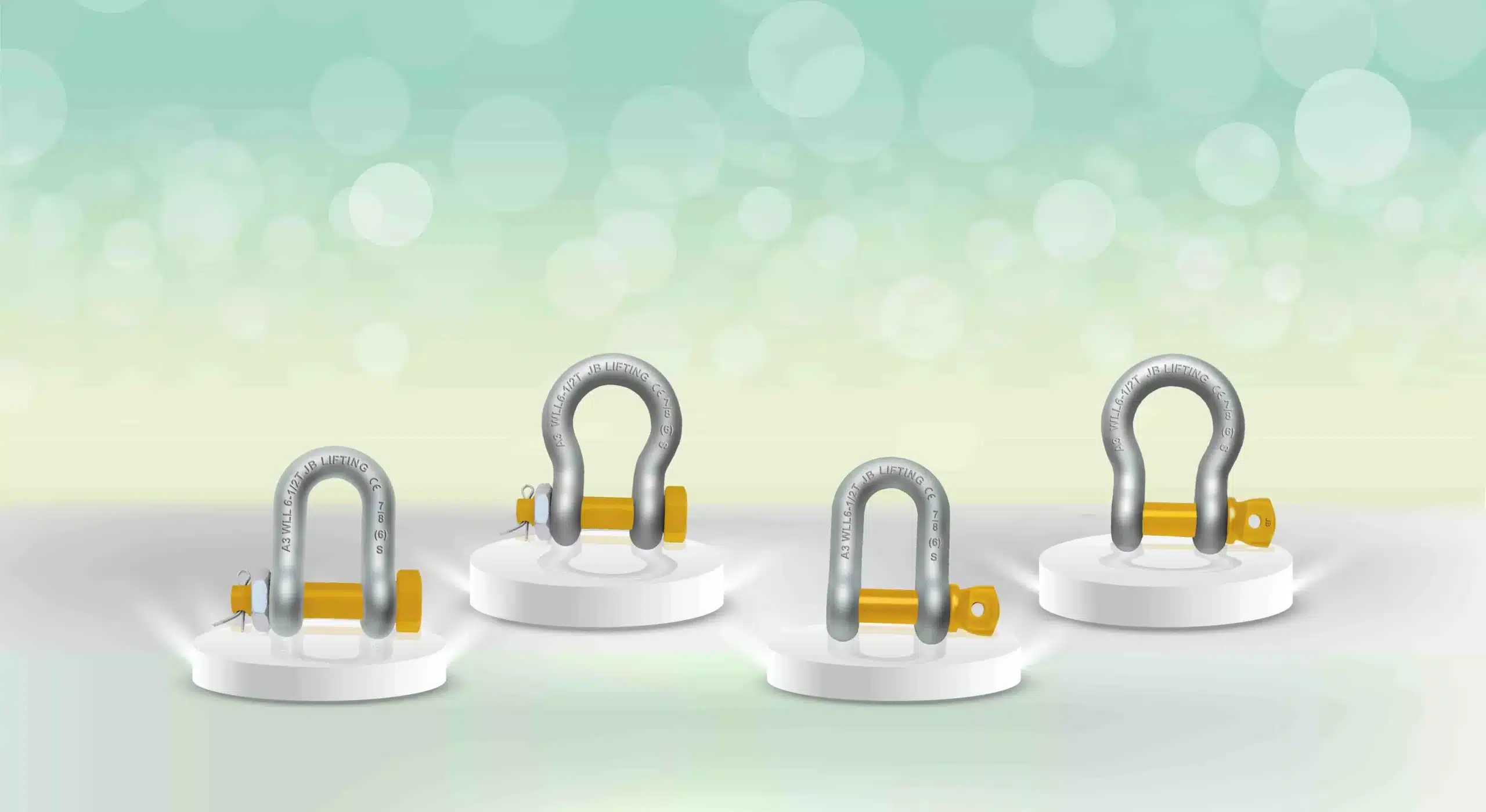
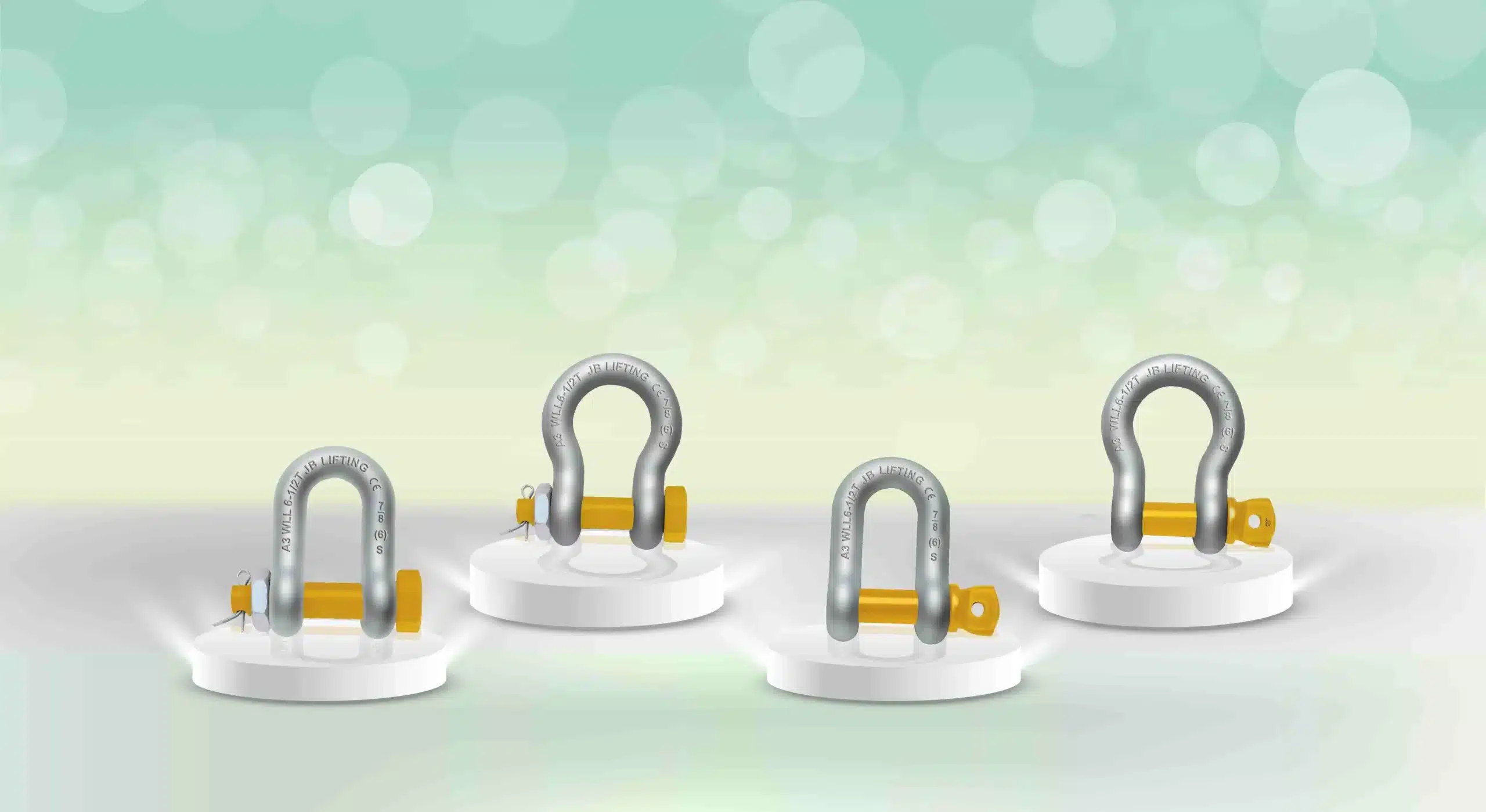
Lifting shackles eye bolts are essential components in various material handling, rigging equipment, and overhead lifting operations. They provide crucial connection points for lifting loads safely and efficiently. However, choosing the wrong hardware or using it incorrectly can lead to serious accidents and injuries. That’s why understanding the differences between lifting shackles and eye bolts is paramount.
In this article, brought to you by Safe and Secure Trading Company (SSTC), we will delve into the common mistakes people make when selecting and using lifting shackles eye bolts. We’ll provide practical guidance on how to avoid these errors, ensuring the safety and success of your lifting operations. Many of our clients here in Jubail have found our detailed guidance invaluable in improving their lifting safety practices.
We will explore crucial factors like Working Load Limit (WLL), angle loading, material selection, and proper installation techniques. By understanding these concepts, you can make informed decisions and minimize the risk of accidents. Finally, we will present a comprehensive comparison table to help you quickly identify the right hardware for your specific application.
Mistake #1: Confusing Load Capacity (WLL)
Understanding the Working Load Limit (WLL) is fundamental to lifting safety. The WLL represents the maximum weight a lifting shackle eye bolt is designed to safely support when the load is applied in a straight line. Exceeding this limit can lead to catastrophic failure, endangering personnel and equipment.
- Explain what WLL represents: The WLL is clearly marked on each piece of lifting hardware. It is a critical specification that indicates the maximum safe load for a straight, vertical pull under ideal conditions.
- Emphasize the importance of exceeding, never meeting, the calculated load: It’s crucial to select lifting hardware with a WLL that exceeds the anticipated load. We at SSTC always recommend a safety factor. A safety factor accounts for dynamic loading, shock loads, and other unpredictable variables that can increase stress on the equipment.
A common mistake is assuming that lifting shackles eye bolts of the same size have the same WLL. This is a dangerous assumption, as the WLL can vary significantly based on the material, design, and manufacturer. For example, a similarly sized shackle made of alloy steel will have a higher WLL than one made of carbon steel.
To avoid this mistake, always check the manufacturer’s specifications for the specific lifting hardware you are using. Do not rely on the size or appearance of the shackle eye bolt to determine its WLL. Refer to the stamped markings on the hardware itself, or consult the manufacturer’s documentation for accurate information. We’ve seen firsthand how overlooking this seemingly simple step can lead to dangerous situations.
Mistake #2: Ignoring Angle Loading
Angle loading occurs when the force applied to a lifting shackle eye bolt is not in a straight line. This creates additional stress on the hardware and significantly reduces its effective WLL. Ignoring angle loading is a common and potentially hazardous mistake.
- Explanation of angle loading and its effect on load capacity: When a load is applied at an angle, the force is distributed unevenly across the lifting hardware. This creates a tensile force along the axis of the shackle eye bolt and a compressive force perpendicular to it. The compressive force reduces the hardware’s ability to withstand the tensile force, effectively reducing its WLL.
- Common mistake: Using eye bolts at angles without derating their WLL: Many users fail to account for the reduction in WLL caused by angle loading. This can lead to overloading the hardware and increasing the risk of failure.
To avoid this mistake:
- Use shoulder-pattern eye bolts for angled lifts: Shoulder-pattern eye bolts are designed to withstand angled loads. The shoulder provides additional support and helps to distribute the force more evenly.
- Understand and apply the correct derating factors based on the angle: Manufacturers provide derating charts that specify the reduction in WLL for different angles. Consult these charts and apply the appropriate derating factor to ensure the hardware is not overloaded.
- Consider using swivel hoist rings for angled loads: Swivel hoist rings are designed to rotate, allowing the load to be applied in a straight line regardless of the angle. This eliminates the need for derating and ensures the hardware is used within its safe working limits. We once worked with a client choosing between standard eye bolts and swivel hoist rings. They found swivel hoist rings were better for their specific workflow because they frequently handled loads at varying angles.
Mistake #3: Selecting the Wrong Type for the Environment
The environment in which lifting shackles eye bolts are used can significantly impact their performance and longevity. Selecting the wrong material for the environment can lead to corrosion, weakening, and premature failure.
- Material considerations: Carbon steel vs. alloy steel vs. stainless steel: Carbon steel is a common and cost-effective material for lifting hardware. However, it is susceptible to corrosion, especially in marine or chemical environments. Alloy steel offers higher strength and toughness compared to carbon steel, making it suitable for more demanding applications. Stainless steel provides excellent corrosion resistance, making it ideal for harsh environments where exposure to moisture, chemicals, or salt is a concern.
- Common mistake: Using carbon steel shackles in corrosive environments: Using carbon steel shackles in marine or chemical environments can lead to rapid corrosion, weakening the hardware and increasing the risk of failure.
To avoid this mistake:
- Select stainless steel hardware for marine or chemical environments: Stainless steel is highly resistant to corrosion, making it the ideal choice for these environments.
- Consider the effects of temperature on different materials: Extreme temperatures can affect the strength and ductility of lifting hardware. Consult the manufacturer’s specifications to ensure the chosen material is suitable for the operating temperature range. For many of our clients here in Dammam, we’ve seen that understanding the temperature limitations of their rigging equipment has prevented accidents.
Mistake #4: Improper Installation of Eye Bolts
Proper installation is crucial for ensuring the safe and reliable performance of eye bolts. Improperly installed eye bolts can be significantly weakened, increasing the risk of failure.
- Proper threading and tightening of eye bolts: Eye bolts must be fully engaged with the mating threads to ensure a secure connection. Under-tightening can allow the eye bolt to loosen over time, while over-tightening can damage the threads and weaken the hardware.
- Common mistake: Over-tightening or under-tightening eye bolts: Many users rely on guesswork when tightening eye bolts, leading to either under-tightening or over-tightening.
To avoid this mistake:
- Use a torque wrench to tighten eye bolts to the manufacturer’s specifications: A torque wrench provides precise control over the tightening force, ensuring the eye bolt is properly installed without being over-stressed.
- Ensure the threads are fully engaged: Before tightening the eye bolt, visually inspect the threads to ensure they are fully engaged with the mating threads.
- Inspect threads for damage before installation: Damaged threads can weaken the connection and increase the risk of failure. Always inspect the threads for damage before installing the eye bolt.
Mistake #5: Using Screw Eye Bolts for Overhead Lifting
Screw eye bolts are designed for light-duty applications, such as hanging pictures or supporting small fixtures. They are not designed for critical overhead lifting applications, where failure can have catastrophic consequences.
- Differentiating between screw eye bolts and shoulder pattern eye bolts: Screw eye bolts have a simple, unshouldered design and are typically made from lower-strength materials. Shoulder pattern eye bolts, on the other hand, have a shoulder that provides additional support and are made from higher-strength materials.
- Common mistake: Using screw eye bolts for critical overhead lifting applications: This is a dangerous mistake that can lead to serious accidents.
To avoid this mistake:
- Only use shoulder pattern eye bolts or swivel hoist rings for overhead lifting: Shoulder pattern eye bolts and swivel hoist rings are specifically designed for overhead lifting and are capable of withstanding the high loads and stresses associated with these applications.
- Understand the limitations of screw eye bolts: Screw eye bolts are only suitable for light-duty applications where the load is primarily static and the risk of failure is minimal.
Mistake #6: Neglecting Regular Inspections
Regular inspections are essential for identifying damage or wear on lifting shackles eye bolts before they lead to failure. Neglecting inspections can allow damaged hardware to remain in service, increasing the risk of accidents.
- Importance of inspecting lifting hardware for damage: Inspections should focus on identifying signs of wear, cracks, corrosion, deformation, or other damage that could compromise the hardware’s strength and integrity.
- Common mistake: Failing to inspect shackles and eye bolts before each use: Many users fail to inspect their lifting hardware regularly, allowing damaged hardware to remain in service.
To avoid this mistake:
- Establish a regular inspection schedule: Implement a formal inspection program that specifies the frequency of inspections and the criteria for removing damaged hardware from service.
- Look for signs of wear, cracks, corrosion, or deformation: During inspections, carefully examine the lifting shackles eye bolts for any signs of damage or wear.
- Remove damaged hardware from service immediately: Any lifting hardware that is found to be damaged or worn must be removed from service immediately to prevent accidents.
Mistake #7: Mismatching Shackle Pins and Bodies
Shackle pins are designed to work specifically with their corresponding shackle bodies. Using a mismatched pin can compromise the shackle’s strength and stability.
- Ensuring compatibility between shackle pins and bodies: Shackle pins and bodies are manufactured to precise tolerances to ensure a secure and reliable connection. Using a mismatched pin can result in improper fit and reduced load capacity.
- Common mistake: Using a pin from a different shackle or a generic bolt as a replacement: Substituting a shackle pin with a generic bolt or a pin from a different shackle is a dangerous practice that can lead to failure.
To avoid this mistake:
- Always use the correct pin for the shackle body: Ensure the pin is specifically designed for the shackle body you are using.
- Never use a bolt as a substitute for a shackle pin: Bolts are not designed to withstand the same loads and stresses as shackle pins and should never be used as a substitute.
Mistake #8: Ignoring the Type of Load
The type of load being lifted (static vs. dynamic) can significantly impact the stresses on lifting shackles eye bolts. Ignoring the type of load can lead to underestimating the required WLL and increasing the risk of failure.
- Considering the type of load being lifted (static vs. dynamic): Static loads are those that are applied slowly and gradually, while dynamic loads are those that are applied suddenly or with impact. Dynamic loads can create significantly higher stresses on lifting hardware than static loads.
- Common mistake: Using shackles and eye bolts rated only for static loads for dynamic lifting applications: Using hardware rated only for static loads in dynamic lifting applications can lead to overloading and failure.
To avoid this mistake:
- Calculate the dynamic load factor: The dynamic load factor is a multiplier that accounts for the increased stresses caused by dynamic loads. This factor must be calculated and applied to the static load to determine the required WLL.
- Select hardware with a WLL that accounts for dynamic loads: Ensure the selected hardware has a WLL that is sufficient to withstand the dynamic loads anticipated in the lifting application.
> “Choosing the correct rigging hardware for the job is paramount. Never underestimate the forces at play during a lift.” – John Smith, Lead Safety Inspector
Case Studies: Learning from Real-World Examples
Case Study 1: A construction company was using undersized screw pin shackles to lift precast concrete panels. The shackles were repeatedly subjected to dynamic loading, exceeding their WLL. Eventually, one of the shackles failed, causing a panel to drop and nearly injure a worker. The investigation revealed that the company had not properly calculated the dynamic load factor and had failed to inspect the shackles regularly. The lesson learned was the critical importance of proper load calculation and regular inspection of lifting hardware.
Case Study 2: A marine salvage operation was using carbon steel eye bolts to lift a submerged object from seawater. Over time, the eye bolts corroded due to the saltwater exposure. During a lift, one of the corroded eye bolts failed, causing the object to drop back into the water. The investigation revealed that the company had not selected the appropriate material for the corrosive marine environment. The lesson learned was the importance of considering the environmental factors when selecting lifting hardware.
Lifting Shackles vs. Eye Bolts: A Quick Reference Table
Here’s a quick comparison table highlighting the key differences:
| Feature |
Lifting Shackles |
Eye Bolts |
| WLL |
High, suitable for heavy loads |
Varies; shoulder type for heavy, screw type for light loads |
| Angle Loading |
Generally better suited, but still requires consideration |
Shoulder type can handle angles; screw type should only be used for straight pulls |
| Application |
Versatile; used in a wide range of lifting and rigging applications |
Primarily for attaching loads to a fixed point or for light overhead lifting (shoulder type) |
| Cost |
Generally lower cost |
Can be higher depending on type and material |
| Installation |
Simple; connects quickly using a pin |
Requires threading into a tapped hole; proper torque is critical |
| Material |
Carbon steel, alloy steel, stainless steel |
Carbon steel, alloy steel, stainless steel |
| Inspection |
Inspect for deformation, wear, and cracks |
Inspect for thread damage, bending, and corrosion |
| Dynamic Loads |
Suitable for dynamic loads when WLL is properly calculated |
Shoulder type can handle dynamic loads; screw type not recommended |
Conclusion: Choosing the Right Hardware for Safety and Efficiency
Selecting the correct lifting shackles eye bolts is crucial for ensuring the safety and efficiency of material handling, rigging hardware, and overhead lifting operations. By understanding the common mistakes and following the guidelines outlined in this article, you can significantly reduce the risk of accidents and injuries.
Remember, always prioritize safety by selecting hardware with an appropriate WLL, accounting for angle loading and dynamic loads, choosing the right material for the environment, and performing regular inspections. Proper training and adherence to safety regulations are also essential for ensuring safe lifting operations. We at SSTC believe that investing in safety is an investment in your workforce and your business.
We hope that this guide has helped you better understand the differences between lifting shackles and eye bolts, and how to select the right hardware for your specific needs. By applying the principles discussed in this guide, you can ensure the safety and success of your lifting operations for 2026 and beyond.
FAQ Section
Q: What is the most important factor to consider when choosing between lifting shackles and eye bolts?
A: The most important factor is the Working Load Limit (WLL) and ensuring it exceeds the anticipated load, taking into account any angle loading or dynamic loads.
Q: Can I use a screw eye bolt for overhead lifting?
A: No, screw eye bolts should never be used for critical overhead lifting applications. Use shoulder pattern eye bolts or swivel hoist rings instead.
Q: How often should I inspect lifting shackles and eye bolts?
A: Lifting shackles and eye bolts should be inspected before each use and on a regular basis, as part of a formal inspection program.
Q: What should I look for during an inspection of lifting shackles eye bolts?
A: Look for signs of wear, cracks, corrosion, deformation, or other damage that could compromise the hardware’s strength and integrity.
Q: What type of material is best for lifting hardware used in marine environments?
A: Stainless steel is the best choice for marine environments due to its excellent corrosion resistance.
Q: What is angle loading and how does it affect the WLL of lifting hardware?
A: Angle loading occurs when the force applied to the lifting hardware is not in a straight line. This creates additional stress and reduces the effective WLL. Always derate the WLL based on the angle of the load.
Q: What is the difference between a static load and a dynamic load?
A: Static loads are applied slowly and gradually, while dynamic loads are applied suddenly or with impact. Dynamic loads create significantly higher stresses on lifting hardware.
Q: Where can I find the WLL of a lifting shackle eye bolt?
A: The WLL is typically stamped on the hardware itself or can be found in the manufacturer’s documentation.
Q: What should I do if I find damage on a lifting shackle eye bolt?
A: Remove the damaged hardware from service immediately and replace it with a new, undamaged one.
Q: Are all shackles and eye bolts the same size the same WLL?
A: No. Always refer to the manufacturer’s specifications as shackles and eye bolts of similar sizes can have different WLL ratings.