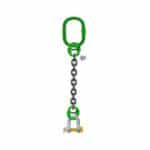
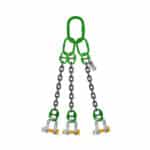
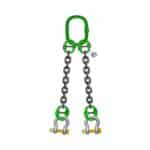
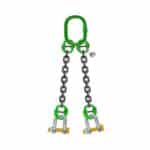
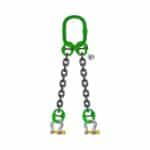
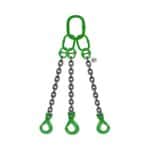
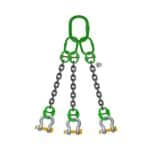
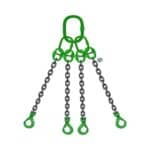
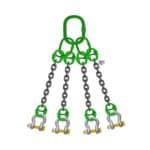
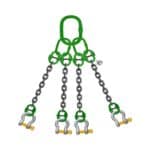
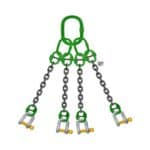
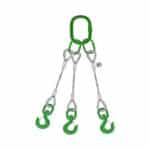
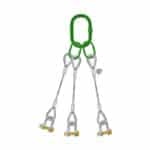
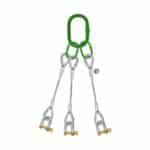
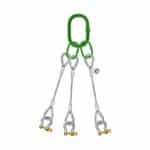
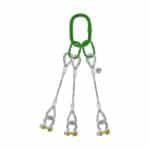
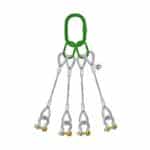
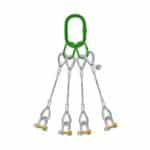
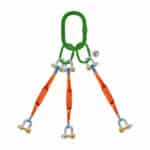
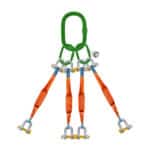
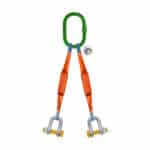
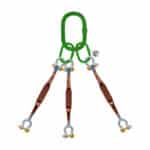
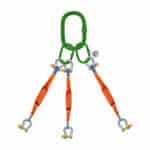
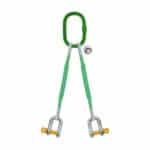
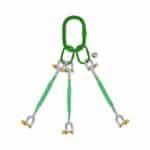
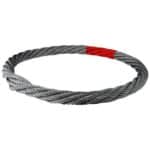
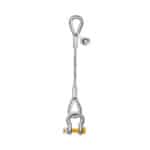
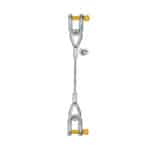
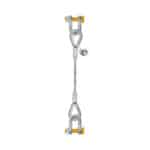
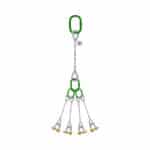
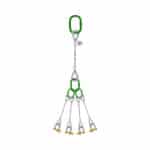
Mastering Sling Load Angles is a crucial aspect of ensuring safety and efficiency in various lifting operations. The angle at which a sling is used significantly impacts the tension it experiences, affecting its load-bearing capacity and the stability of the load. Understanding these principles is essential for anyone involved in rigging, crane operations, and other material handling activities. This comprehensive guide will delve into the fundamentals of sling load angles, common errors in their calculation and application, and best practices for safe and effective lifting.
Key Takeaways
- Calculating sling load angle is crucial for safe and efficient lifting.
- Common mistakes include neglecting the angle’s impact on sling tension and underestimating the increased load.
- Understanding and applying trigonometric functions is essential for accurate calculations.
- Ignoring manufacturer guidelines for sling capacity can lead to dangerous situations.
- Regular inspections and proper sling maintenance are vital for preventing failures.
Understanding Sling Load Angle Fundamentals 📐
What is Sling Load Angle and Why Does It Matter?
The sling load angle is the angle formed between the sling leg and the vertical plane. It’s a critical factor in determining the sling tension, or the force exerted on each sling leg during a lift. As the angle increases, the tension on each sling leg also increases, potentially exceeding the sling’s rated capacity. This can lead to sling failure and dropped loads, posing a significant safety risk. The sling load angle also affects load stability. A smaller angle typically results in greater stability, while larger angles can make the load more prone to swaying or tipping. This makes understanding sling load angle vital for maintaining overall lifting safety.
Common Misconception: Ignoring the Angle’s Effect
A common mistake we see is failing to recognize that as the sling load angle decreases from vertical, the tension on each sling increases. This is because the vertical component of the force supported by the sling remains the same, but as the angle deviates from vertical, the overall force in the sling must increase to maintain that vertical component. Failing to account for this increased sling tension can lead to sling failure and dropped loads.
For example, if you have two slings lifting a 1000 kg load vertically, each sling bears 500 kg. However, if the angle between the slings is 120 degrees, the tension on each sling more than doubles. Underestimating this increased tension is a critical mistake.
In our experience, underestimating sling tension is a prevalent issue. We once worked with a client who struggled with this very problem. Their team consistently used slings at wide angles, significantly increasing the load beyond the sling’s capacity. This resulted in a near-miss incident. By implementing a comprehensive training program and emphasizing the importance of accurate angle calculations, we helped them improve their safety record and prevent future incidents. Always calculate the increased tension based on the sling angle. This is a cornerstone of safe overhead lifting.
Critical Mistakes in Sling Load Angle Calculation 🧮
Error #1: Neglecting Trigonometry
A significant mistake is avoiding trigonometric functions (sine, cosine, tangent) in lifting calculations. These functions are crucial for accurately determining the vertical and horizontal components of force. When calculating sling tension, you need to understand how the angle affects the distribution of force. Sine and cosine are essential for breaking down the force into its vertical and horizontal components, which helps determine the actual tension on each sling. Without using these functions, your calculations will be inaccurate, potentially leading to dangerous situations.
To avoid this error, refresh your knowledge of trigonometric functions and their application in force calculations. Use appropriate formulas and ensure you understand the relationship between angles and force components. Remember, accuracy in these calculations is paramount for safe lifting operations.
Error #2: Overlooking the Horizontal Angle Factor
One common mistake is not considering the horizontal angle factor (HAF) when calculating sling tension. The HAF accounts for the increased tension due to the horizontal component of the sling force. Failing to include it can result in a significant underestimation of the actual tension on the slings. This factor becomes increasingly important as the horizontal angle increases.
The horizontal angle is the angle formed between the sling leg and the horizontal plane. As this angle increases, the horizontal component of the force also increases, requiring the sling to bear more tension to support the load. To accurately calculate sling tension, you must include the HAF in your calculations. This involves using trigonometric functions to determine the horizontal component of the force and adjusting the tension accordingly. Corrective action: Always include the HAF in the calculation to get an accurate estimate of sling tension.
Error #3: Ignoring Sling Geometry
Another common error is assuming symmetrical loading when the sling geometry is asymmetrical. This occurs when the load is not evenly distributed across all slings, or when the slings are not of equal length or positioned symmetrically. In such cases, one sling may bear a significantly larger portion of the load, potentially exceeding its capacity while underutilizing another.
This uneven weight distribution can overload one sling while underutilizing another, leading to potential sling failure and dropped loads. The consequences of this can be severe. To prevent this, ensure that the load is distributed evenly across all slings. If the loading is asymmetrical, calculate the load on each sling individually. This may require using advanced calculation methods or consulting with a rigging engineer. Always consider the geometry of the sling system and its impact on load distribution.
How to Correctly Calculate Sling Load Angle & Tension ➗
Step-by-Step Guide to Calculating Sling Tension
Calculating sling tension involves several steps to ensure accuracy and safety. First, measure the sling angle, which is the angle between the sling leg and the vertical plane. This can be done using a protractor or angle finder. Next, determine the load weight. This is the total weight being lifted, including any rigging equipment. Use the formula: Sling Tension = (Load Weight / Number of Slings) x Angle Factor.
The angle factor is determined using trigonometric functions based on the sling load angle. For example, if you have two slings at a 60-degree angle, the angle factor is approximately 1.155. For example, lifting a 2000 kg load with two slings at a 60-degree angle: Sling Tension = (2000 kg / 2) x 1.155 = 1155 kg per sling. Similarly, lifting a 2000 kg load with two slings at a 30-degree angle: Sling Tension = (2000 kg / 2) x 1.035 = 1035 kg per sling. This demonstrates the importance of accurate angle measurement and calculation.
Tools and Resources for Accurate Calculation
Several tools and resources can aid in accurate lifting calculations. Online sling load calculators are available to quickly calculate sling tension based on load weight, number of slings, and sling load angle. These calculators often include built-in trigonometric functions and angle factors. It is also recommended to use reference materials and industry standards for sling load calculations. OSHA and ASME provide guidelines and standards for safe lifting practices. Verify calculations with experienced riggers to ensure accuracy and identify any potential errors. A second set of eyes can catch mistakes and provide valuable insights.
Using Trigonometry for Precise Calculations
Trigonometry is essential for precise lifting calculations. Sine, cosine, and tangent functions are used to calculate the vertical and horizontal force components. For example, if you know the sling angle and the load weight, you can use cosine to determine the vertical component of the force supported by each sling. This helps you understand how much of the load each sling is actually bearing.
Practical examples of using these functions include: Calculating the vertical force component: Vertical Force = Load Weight x cos(angle). Calculating the horizontal force component: Horizontal Force = Load Weight x sin(angle). Understanding these functions and their application is crucial for accurate sling tension calculations and safe lifting operations.
Common Errors in Applying Sling Load Angle Principles ⚠️
Pitfall #1: Forgetting to Account for Sling Weight
A frequently overlooked aspect is the weight of the slings themselves in the total load calculation. This can be particularly significant with heavy slings, such as those made of chain or wire rope. Their weight can substantially impact the overall load, leading to an underestimation of the required sling capacity.
To prevent this oversight, always add the sling weight to the load weight when calculating total sling tension. This ensures that you’re accounting for the entire load being lifted. For example, if you’re lifting a 1000 kg load with two slings that each weigh 50 kg, the total load is 1100 kg. Failing to account for the sling weight can lead to sling overloading and potential failure.
Pitfall #2: Misinterpreting Manufacturer Specifications
One of the most critical errors in applying sling load angle principles is not thoroughly understanding the sling manufacturer’s load capacity chart. These charts provide essential information about the sling’s rated capacity at various angles and configurations. Ignoring or misinterpreting this information can have severe consequences.
Exceeding the rated capacity can lead to catastrophic failure. It is best practice to carefully read and adhere to the manufacturer’s specifications. This includes any de-rating factors for specific sling configurations. For instance, some slings may have a reduced capacity when used in a choker hitch or at certain angles. Always consult the manufacturer’s specifications and understand any limitations before using a sling. We’ve seen situations where companies don’t adjust for temperature, which impacts the sling’s rating significantly.
Pitfall #3: Ignoring Dynamic Loading
Another crucial aspect to consider is dynamic loading, which refers to the additional forces generated by sudden movements or impacts during lifting. Calculating tension only for static loads and not accounting for these dynamic forces can lead to significant underestimation of sling tension. Dynamic loads can substantially increase sling tension, even if the static load is within limits. This is because sudden movements or impacts create additional forces that the slings must bear.
To mitigate this risk, reduce the speed of lifts and ensure smooth operation to minimize dynamic loading. Gradual acceleration and deceleration can help prevent sudden jolts that increase sling tension. It’s also essential to use appropriate shock factors in your calculations to account for dynamic loading. This involves multiplying the static load by a shock factor to estimate the maximum tension the slings will experience during the lift.
Safe Sling Selection Based on Load Angle 🛡️
Choosing the Right Sling Type for the Angle
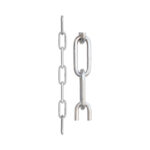
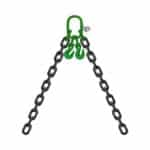
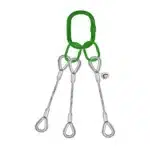
Different types of slings (wire rope, chain, synthetic) have varying suitability for different angles. Wire rope slings are strong and durable but can be less flexible and more prone to kinking at sharp angles. Chain slings are highly durable and resistant to abrasion but can be heavier and less suitable for delicate loads. Synthetic slings are lightweight and flexible but may be more susceptible to damage from heat or chemicals.
Understanding the limitations of each type and selecting the appropriate sling for the application is crucial. Consider the load weight, sling angle, and environmental conditions when choosing a sling. Always consult the manufacturer’s specifications and guidelines for safe usage.
Understanding Sling Capacity Charts and De-Rating Factors
A detailed explanation of how to read and interpret sling capacity charts is vital for safe lifting. These charts provide information on the sling’s rated capacity at various angles and configurations. They also include de-rating factors for specific conditions, such as temperature extremes or exposure to chemicals.
Discussing de-rating factors for specific sling configurations and environmental conditions is essential. For example, a sling’s capacity may be reduced when used in a choker hitch or at certain angles. Similarly, exposure to high temperatures or corrosive chemicals can degrade the sling’s material and reduce its strength. Always consult the manufacturer’s specifications and apply any necessary de-rating factors to ensure the sling’s capacity is adequate for the load and conditions.
The Importance of Regular Sling Inspections
Regular sling inspections are crucial for identifying any signs of damage or wear that may compromise sling integrity. A comprehensive sling inspection program should include: Visual inspections for cuts, abrasions, and deformation. Measurement of wear and elongation. Inspection of end fittings for cracks and damage. Documentation of inspection results and maintenance records.
The frequency of inspections should be based on usage and environmental conditions. Slings used frequently or in harsh environments may require more frequent inspections. Following a regular inspection schedule and addressing any identified issues promptly can help prevent sling failures and ensure safe lifting operations.
Real-World Sling Load Angle Case Studies 🏢
Case Study 1: A Near Miss Due to Incorrect Angle Calculation
A real-world incident occurred where an incorrect sling load angle calculation led to a near-miss situation. A construction company was lifting a large steel beam using two slings. The sling load angle was not properly calculated, resulting in an underestimation of the sling tension. During the lift, one of the slings began to stretch excessively, causing the beam to tilt precariously. Fortunately, the crane operator noticed the issue and lowered the beam before the sling failed completely.
The root causes included inadequate training on sling load calculations and a lack of proper supervision. The company implemented mandatory training on sling load calculations and regular inspections of all rigging equipment. This incident highlights the importance of accurate sling load angle calculations and the potential consequences of neglecting this critical aspect of lifting safety.
Case Study 2: Successful Lifting Operation with Proper Angle Management
In contrast to the previous case, a successful lifting operation involved careful planning and accurate sling load angle calculations. A manufacturing company was tasked with lifting a heavy piece of machinery onto a raised platform. The operation involved using multiple slings and cranes to ensure stability and safety. The sling load angles were carefully calculated to ensure that the sling tension did not exceed the rated capacity. The load was lifted smoothly and safely onto the platform.
Key factors that contributed to the success of the operation included: Thorough planning and risk assessment. Accurate sling load angle calculations. Use of appropriate rigging equipment. Competent and experienced personnel. Effective communication and coordination among the team. We once consulted on a project where precise angle calculations were essential due to limited headroom. By using advanced modeling, we helped the client execute the lift safely and efficiently.
Expert Quote
“The most common mistake we see is neglecting the horizontal angle. It dramatically increases sling tension. Always account for it!” – John Davies, Senior Rigging Engineer
Best Practices for Avoiding Sling Load Angle Mistakes ✅
Training and Competency Assessment
Comprehensive training is essential for all personnel involved in lifting operations. This training should cover: Fundamentals of sling load angles and sling tension. Calculation methods and formulas. Use of rigging equipment. Inspection procedures. Safe lifting practices.
Methods for assessing and verifying the competency of riggers and crane operators include: Written exams. Practical demonstrations. Observation of lifting operations. Regular refresher courses. Ensuring that all personnel are adequately trained and competent is crucial for preventing sling load angle mistakes and ensuring safe lifting operations.
Implementing a Robust Rigging Management System
An effective rigging management system should include: Sling identification and tagging. Inspection records and maintenance schedules. Procedures for removing damaged or worn slings from service. Regular audits and inspections of rigging equipment. Training programs for personnel involved in rigging operations.
Digital tools can be used for tracking and managing rigging equipment. These tools can help automate inspection schedules, track maintenance records, and provide alerts when slings are due for inspection or replacement. A well-managed rigging system can help prevent sling load angle mistakes and ensure that all rigging equipment is in good working condition.
Regular Review and Improvement of Procedures
Lifting procedures should be regularly reviewed and updated based on lessons learned and industry best practices. This includes: Analyzing incidents and near misses. Identifying root causes and implementing corrective actions. Incorporating new technologies and techniques. Soliciting feedback from personnel involved in lifting operations.
Encouraging a culture of continuous improvement and open communication among all stakeholders is crucial for promoting safety and preventing sling load angle mistakes. This can be achieved through regular safety meetings, training sessions, and open communication channels.
Advanced Sling Load Angle Considerations 🚀
Multi-Leg Sling Systems
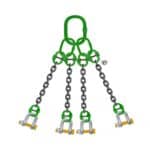
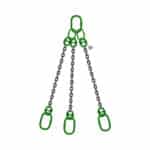
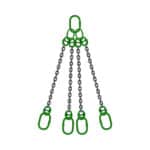
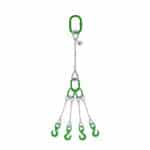
Calculating sling tension in multi-leg sling systems can be complex. The load must be distributed evenly across all legs. Variations in sling length and angle must be accounted for. Formulas for calculating sling tension in multi-leg systems are available in industry standards and reference materials. Consulting with a rigging engineer is recommended for complex lifts.
Dynamic Loading and Shock Factors
The impact of dynamic loading and shock factors on sling tension must be considered. Dynamic loads can significantly increase sling tension, even if the static load is within limits. Shock factors are used to estimate dynamic loads and incorporate them into lifting calculations. The appropriate shock factor depends on the nature of the load and the lifting conditions.
Environmental Factors (Temperature, Corrosion)
Environmental factors such as temperature and corrosion can influence sling capacity. High temperatures can reduce the strength of synthetic slings. Corrosion can weaken metal slings. Select slings that are suitable for the specific environmental conditions. Follow manufacturer’s recommendations for de-rating slings in extreme environments. For many of our clients here in Dammam, Saudi Arabia, we’ve seen that extreme heat requires special consideration for sling selection and de-rating.
Conclusion
Understanding and accurately calculating sling load angles is paramount for ensuring the safety and efficiency of lifting operations. By avoiding the common mistakes outlined in this guide and adhering to best practices, you can significantly reduce the risk of accidents and equipment failures. SSTC is committed to providing you with the knowledge and resources you need to lift safely and securely. Take the next step in enhancing your lifting safety protocols.
FAQ Section
Q: What is the maximum recommended sling load angle?
A: Generally, the maximum recommended sling angle is 60 degrees. Beyond this, the tension on the slings increases dramatically, reducing the overall lifting capacity.
Q: How often should slings be inspected?
A: Slings should be inspected before each use and periodically, depending on the frequency and severity of use, as well as environmental conditions. Regular inspections are crucial for identifying any damage or wear.
Q: What happens if I exceed the rated capacity of a sling?
A: Exceeding the rated capacity of a sling can lead to catastrophic failure, resulting in dropped loads, equipment damage, and potential injuries or fatalities. Always ensure that the load is within the sling’s capacity.
Q: Where can I find reliable information on sling load angle calculations?
A: Reputable sources include OSHA guidelines, ASME standards, and manufacturers’ specifications. Consulting with experienced rigging engineers is also recommended.
Q: Can I use different types of slings in the same lifting operation?
A: It is generally not recommended to use different types of slings in the same lifting operation, as they may have different load capacities and stretch characteristics. Using the same type of slings ensures uniform load distribution and minimizes the risk of uneven tension.