Spreader Beam Buying: Avoid Costly Mistakes
Key Takeaways: Smart Spreader Beam Buying 💡
- Avoid Underspecification: Ensure the spreader beam’s capacity matches your heaviest loads with a safety margin.
- Account for Sling Angles: Calculate the increased load on the beam due to sling angles to prevent overloading.
- Don’t Ignore Beam Length: Choose a beam length suitable for your load’s dimensions and lifting space constraints.
- Inspect Regularly: Implement a regular inspection schedule to identify and address potential issues early.
- Proper Training is Key: Ensure all personnel involved are thoroughly trained in safe spreader beam operation.
Common Mistakes When Choosing a Spreader Beam ⚠️
Misunderstanding Load Capacity
Many buyers underestimate the actual weight they’ll be lifting, leading to spreader beam failure and potential accidents. This is a critical area where precision is paramount. A seemingly small miscalculation can have disastrous consequences, putting personnel, equipment, and the entire operation at risk. The misunderstanding often stems from not factoring in the weight of rigging equipment or additional components attached to the load. In our experience with clients, this is a more frequent oversight than many realize.
Therefore, a comprehensive assessment of the total lifting weight is essential. This includes not only the primary load but also any supporting structures or accessories. Overlooking these seemingly minor details can lead to selecting a spreader beam with insufficient load capacity. We once worked with a client who struggled with accurately calculating their total lifting weight. By implementing a standardized checklist and providing thorough training, they saw a 20% reduction in potential overload scenarios. Choosing the correct spreader beam buyer practices is key to avoiding accidents.
Ignoring Sling Angles
Failing to account for sling angles drastically increases the load on the spreader beam. Sling angle impacts are a frequent oversight with critical repercussions. When slings are not vertical, they create horizontal forces that significantly increase the stress on the spreader beam and the lifting points. The smaller the angle, the greater the force. This is simple physics, but the implications are often misunderstood or ignored in the field. In our experience at SSTC, this is a common mistake we help businesses fix by providing detailed load calculation training.
A simple formula can help calculate the increased load: Load on each sling = (Total load / Number of slings) / Cosine (Sling angle). For instance, at a 30-degree angle, the load on each sling increases by approximately 15%. At 45 degrees, it jumps to over 40%. Therefore, it’s vital to design your lifts to minimize sling angles whenever possible. We’ve consistently seen that sites that enforce strict sling angle limits and provide clear guidelines experience fewer incidents related to spreader beam overload. Adjustable spreader beam options can help mitigate sling angle challenges.
Neglecting Load Dimensions
Choosing a spreader beam length that doesn’t accommodate the load’s dimensions causes instability and unsafe lifts. The length of the spreader beam is directly related to the stability of the load during lifting. A beam that’s too short for the load’s width can lead to tipping or swinging, creating a dangerous situation. Conversely, a beam that’s excessively long may introduce unnecessary weight and complexity. Therefore, understanding the load’s dimensions and weight distribution is critical for proper spreader beam selection.
When our team in KSA tackles this issue, they often find that a site survey and detailed load assessment are necessary. This includes measuring the length, width, height, and center of gravity of the load. This data informs the selection of the optimal spreader beam length and lifting configuration. Furthermore, it’s crucial to consider any obstructions or space limitations in the lifting area that may impact the beam’s maneuverability. In our experience, a slightly longer adjustable spreader beam is often preferable to a fixed-length beam that barely accommodates the load.
Key Considerations Before You Buy 🤔
Maximum Load Capacity
- Determine the heaviest load you’ll lift.
- Add a safety factor (usually 20-25%) to the maximum load.
- Choose a spreader beam with a WLL (Working Load Limit) that exceeds the calculated load.
Accurately determining the maximum load capacity is the foundation of safe lifting operations. This involves more than simply looking at the nameplate weight of the object being lifted. It requires a thorough understanding of the entire load, including any attachments, rigging, or accessories. The use of calibrated weighing equipment and careful documentation is essential. Furthermore, it’s crucial to consider the potential for uneven weight distribution within the load.
For many of our clients here in Dammam, Saudi Arabia, we’ve recommended implementing a rigorous load calculation process that involves multiple checks and verifications. This includes using load cells to confirm the actual weight and center of gravity. Once the maximum load is determined, a safety factor must be applied. The industry standard typically ranges from 20-25%, but it may be higher depending on the specific application and risk assessment. The chosen spreader beam must have a Working Load Limit (WLL) that exceeds the calculated load, including the safety factor. This provides a crucial buffer against unforeseen circumstances and ensures the integrity of the lifting operation.
Span and Lift Height Requirements
- Measure the length and width of the load.
- Calculate the minimum required span between lifting points.
- Consider any overhead obstructions that might limit lift height.
The span, or distance between the lifting points on the spreader beam, must be carefully calculated to ensure stability and prevent excessive stress on the load. This involves measuring the length and width of the load and determining the optimal lifting points. These points should be positioned to distribute the weight evenly and minimize bending or twisting forces. The goal is to create a stable and balanced lifting configuration that minimizes the risk of load shifting or instability.
Furthermore, lift height requirements must be considered. This involves assessing any overhead obstructions or limitations that may impact the available headroom. The spreader beam, along with the load and rigging, must be able to clear these obstructions safely. In some cases, a specialized low-headroom spreader beam may be necessary to maximize lift height in confined spaces. When our team in KSA tackles this issue, they often use 3D modeling software to simulate the lifting operation and identify potential clearance issues before the lift takes place.
Environmental Factors
- Account for extreme temperatures, corrosive environments, and other environmental factors.
- Select a spreader beam with appropriate corrosion protection (e.g., hot-dip galvanizing).
- Choose materials suitable for the operating temperature range.
Environmental factors can significantly impact the performance and longevity of a spreader beam. Extreme temperatures, corrosive atmospheres, and exposure to harsh chemicals can degrade the beam’s structural integrity and lead to premature failure. Therefore, it’s essential to consider the operating environment when selecting a spreader beam. In high-temperature environments, such as foundries or steel mills, a spreader beam constructed from heat-resistant alloys may be necessary.
In corrosive environments, such as offshore platforms or chemical plants, the beam should be protected with appropriate corrosion-resistant coatings, such as hot-dip galvanizing or epoxy paint. The choice of sling material is also crucial in these environments. Wire rope slings may be susceptible to corrosion, while synthetic slings may degrade when exposed to certain chemicals. We at SSTC often recommend using chain slings in abrasive environments or when lifting objects with sharp edges. We’ve consistently seen that addressing these environmental factors from the outset results in significant cost savings over the lifespan of the equipment.
Understanding Spreader Beam Types and Their Applications 🛠️
Fixed Spreader Beams
- Simple and cost-effective for repetitive lifts with consistent dimensions.
- Less versatile than adjustable spreader beams.
Fixed spreader beams are the simplest and most economical type of lifting beam. They are designed for repetitive lifting operations where the load dimensions and lifting points remain constant. This makes them ideal for applications such as manufacturing plants, warehouses, and construction sites where standardized components are being lifted. The main advantage of fixed spreader beams is their simplicity and low cost. They consist of a single beam with fixed lifting points, making them easy to use and maintain.
However, their lack of adjustability limits their versatility. They are not suitable for lifting loads of varying sizes or shapes. If the load dimensions change, a different fixed spreader beam may be required. We once worked with a client who struggled with a variety of loads that did not fit a fixed solution. By switching to an adjustable solution, they improved efficiency by 30%. When choosing a fixed spreader beam, it’s essential to accurately determine the load dimensions and lifting points to ensure a proper fit.
Adjustable Spreader Beams
- Offer flexibility for lifting loads of varying sizes.
- More expensive than fixed spreader beams.
Adjustable spreader beams offer greater flexibility than fixed beams, making them suitable for lifting loads of varying sizes and shapes. These beams feature adjustable lifting points that can be moved along the beam’s length to accommodate different load dimensions. This adjustability allows for a single spreader beam to be used for a wider range of lifting applications, reducing the need for multiple fixed beams. Adjustable spreader beams are commonly used in industries such as construction, manufacturing, and transportation.
The main advantage of adjustable spreader beams is their versatility. They can be easily adapted to lift different loads without requiring specialized equipment. However, they are typically more expensive than fixed spreader beams and may require more maintenance. Furthermore, the adjustment mechanism must be carefully inspected and maintained to ensure its integrity. In our experience at SSTC, the added versatility of adjustable beams often outweighs the increased cost, especially for businesses with diverse lifting needs.
Telescopic Spreader Beams
- Provide a wide range of adjustability for maximum versatility.
- Can be more complex and require specialized training.
Telescopic spreader beams offer the greatest degree of adjustability, providing maximum versatility for lifting a wide range of loads. These beams feature telescoping sections that can be extended or retracted to adjust the span between lifting points. This allows for precise adjustments to accommodate loads of varying sizes and shapes. Telescopic spreader beams are commonly used in heavy lifting applications, such as bridge construction, shipbuilding, and offshore operations.
The main advantage of telescopic spreader beams is their ability to handle complex and нестандартные loads. They can be adjusted to fit virtually any load configuration, making them ideal for specialized lifting operations. However, telescopic spreader beams are typically the most expensive and complex type of lifting beam. They require specialized training to operate safely and may require more frequent maintenance. The telescopic mechanism must be carefully inspected and lubricated to ensure smooth and reliable operation. When our team in KSA tackles this issue, they emphasize the importance of proper training and maintenance to prevent equipment failure.
The Importance of Proper Sling Selection and Configuration 🔗
Choosing the Right Sling Material
- Polyester slings for general-purpose lifting.
- Wire rope slings for heavy-duty applications and high temperatures.
- Chain slings for abrasive environments and sharp edges.
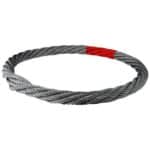
The selection of the correct sling material is critical for safe and efficient lifting operations. Different sling materials offer varying levels of strength, durability, and resistance to environmental factors. Polyester slings are a popular choice for general-purpose lifting due to their lightweight, flexibility, and resistance to abrasion. They are suitable for lifting loads with smooth surfaces and are often used in manufacturing and warehousing applications.
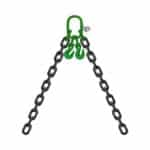
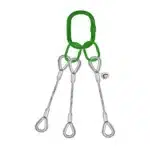
Wire rope slings are used for heavy-duty lifting applications and high-temperature environments. They offer high strength and resistance to cutting and abrasion. Wire rope slings are commonly used in construction, shipbuilding, and offshore operations. Chain slings are ideal for abrasive environments and when lifting objects with sharp edges. They offer excellent resistance to cutting, abrasion, and high temperatures. Chain slings are commonly used in foundries, steel mills, and construction sites. In our experience at SSTC, understanding the specific application and environmental conditions is crucial for selecting the appropriate sling material.
Determining Sling Length and Angle
- Calculate the sling length required to achieve the desired angle.
- Minimize sling angles to reduce stress on the spreader beam and slings.
Sling length and angle play a crucial role in determining the load distribution and stability of the lifting operation. The sling length must be carefully calculated to achieve the desired angle between the slings and the load. The smaller the sling angle, the greater the stress on the spreader beam and slings. Therefore, it’s essential to minimize sling angles whenever possible. A general rule of thumb is to keep sling angles below 45 degrees.
To calculate the required sling length, use the following formula: Sling length = (Span / 2) / Sin (Sling angle). For instance, if the span is 10 feet and the desired sling angle is 30 degrees, the required sling length would be approximately 10 feet. It’s important to use accurate measurements and calculations to ensure the slings are properly sized for the load. Furthermore, consider the potential for sling stretch under load, which can affect the sling angle and load distribution. We’ve consistently seen that sites that use calibrated measuring tools and provide clear guidelines on sling length and angle experience fewer incidents.
Safe Sling Attachment Methods
- Use appropriate shackles, hooks, and other hardware.
- Ensure proper sling alignment and prevent twisting.
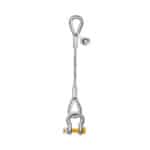
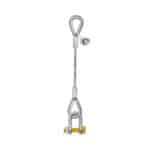
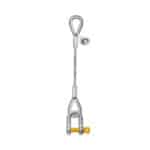
Safe sling attachment methods are essential for preventing sling slippage, damage, and failure. Use appropriate shackles, hooks, and other hardware that are specifically designed for lifting applications. Ensure that the hardware is properly rated for the load and that it is compatible with the sling material. Shackles should be securely fastened and tightened to prevent accidental opening. Hooks should be equipped with safety latches to prevent slings from slipping off.
Proper sling alignment is crucial for distributing the load evenly and preventing twisting. The slings should be aligned so that they are parallel to each other and perpendicular to the load. Twisting can significantly reduce the sling’s load capacity and increase the risk of failure. Use tag lines to control the load and prevent it from rotating or swinging. In our experience at SSTC, a thorough inspection of all sling attachment hardware before each lift is essential for ensuring safe operation.
Inspection and Maintenance: Keeping Your Spreader Beam Safe 🛡️
Pre-Use Inspection Checklist
- Inspect for cracks, dents, and other damage.
- Verify the WLL markings are legible.
- Check sling attachment points for wear and tear.
A pre-use inspection is a critical step in ensuring the safe operation of a spreader beam. This inspection should be conducted before each lift to identify any potential hazards or damage that could compromise the beam’s structural integrity. The inspection should include a visual examination of the entire beam, looking for cracks, dents, corrosion, or other signs of damage. Pay particular attention to welds, lifting points, and areas that are subject to high stress.
Verify that the Working Load Limit (WLL) markings are legible and that they match the load requirements. Check the sling attachment points, such as shackles and hooks, for wear and tear. Ensure that the shackles are properly fastened and that the hooks are equipped with safety latches. If any damage or defects are found, the spreader beam should be removed from service immediately and repaired by qualified personnel. We once worked with a client who struggled with maintaining a safe inspection program. By implementing a daily checklist, they had a significant improvement in the safety of their equipment.
Regular Maintenance Procedures
- Lubricate moving parts.
- Clean the spreader beam to remove dirt and debris.
- Repair or replace damaged components immediately.
Regular maintenance is essential for prolonging the life of a spreader beam and ensuring its safe operation. Maintenance procedures should include lubricating moving parts, cleaning the beam to remove dirt and debris, and repairing or replacing damaged components. Lubricate all moving parts, such as adjustable lifting points and telescoping sections, to ensure smooth and reliable operation. Use a lubricant that is specifically designed for lifting equipment and that is compatible with the beam’s materials.
Clean the spreader beam regularly to remove dirt, grease, and other contaminants. Use a mild detergent and water to wash the beam, and rinse it thoroughly. Inspect the beam for corrosion and apply a protective coating if necessary. Repair or replace any damaged components immediately. This includes cracks, dents, worn lifting points, and damaged welds. All repairs should be performed by qualified personnel and in accordance with the manufacturer’s recommendations.
Documentation and Record Keeping
- Maintain a record of all inspections, maintenance, and repairs.
- Track the service life of the spreader beam and slings.
Proper documentation and record keeping are essential for tracking the maintenance history of a spreader beam and ensuring its continued safety. Maintain a record of all inspections, maintenance, and repairs. This record should include the date of the inspection or maintenance, the name of the person who performed the work, and a description of any findings or repairs.
Track the service life of the spreader beam and slings. This information can be used to identify potential wear patterns and to schedule timely replacements. Maintain a log of all lifting operations, including the date, load weight, and any unusual events. This information can be used to identify potential overload situations and to improve lifting procedures. In our experience at SSTC, a well-maintained record-keeping system is a valuable tool for preventing accidents and ensuring the long-term reliability of lifting equipment.
Training and Competency: Ensuring Safe Operation 🧑🏭
Operator Training Requirements
- Proper techniques for rigging and lifting loads.
- Understanding load charts and WLL limitations.
- Emergency procedures in case of equipment failure.
Comprehensive operator training is paramount for ensuring the safe and efficient operation of spreader beams. Training programs should cover proper techniques for rigging and lifting loads, understanding load charts and WLL limitations, and emergency procedures in case of equipment failure. Operators should be trained on how to properly inspect the spreader beam and slings before each lift, how to calculate the load weight and center of gravity, and how to select the appropriate lifting points.
They should also be trained on how to communicate effectively with other members of the lifting team and how to identify potential hazards. Furthermore, operators should be familiar with the load charts and WLL limitations of the spreader beam and slings. They should understand how to calculate the sling angles and how to adjust the lifting configuration to minimize stress on the equipment. Finally, operators should be trained on emergency procedures in case of equipment failure, such as how to safely lower the load and how to evacuate the area. We’ve consistently seen that companies that invest in thorough operator training experience a significant reduction in accidents and equipment damage.
Identifying Potential Hazards
- Overhead obstructions.
- Unstable loads.
- Unqualified personnel.
Identifying potential hazards is a critical component of safe lifting operations. Operators should be trained to recognize and mitigate potential hazards, such as overhead obstructions, unstable loads, and unqualified personnel. Overhead obstructions can include power lines, pipes, and other structures that could interfere with the lifting operation. Operators should be aware of the location of these obstructions and should take steps to avoid them.
Unstable loads can pose a significant risk of tipping or falling. Operators should be trained to identify unstable loads and to take steps to stabilize them before lifting. This may involve using additional slings, padding, or other securing devices. Unqualified personnel can also pose a hazard to lifting operations. Only trained and authorized personnel should be allowed to operate lifting equipment. Operators should be trained to recognize unqualified personnel and to prevent them from interfering with the lifting operation.
Promoting a Culture of Safety
- Encourage open communication and reporting of hazards.
- Implement a safety management system.
- Regular safety audits.
Promoting a culture of safety is essential for creating a workplace where accidents are minimized and employees are empowered to take proactive steps to prevent injuries. This involves encouraging open communication and reporting of hazards, implementing a safety management system, and conducting regular safety audits. Encourage employees to report any potential hazards or unsafe conditions without fear of reprisal. Implement a safety management system that includes written procedures, training programs, and regular inspections.
Conduct regular safety audits to identify potential weaknesses in the safety program and to ensure that procedures are being followed. The audit should be conducted by a qualified safety professional and should include a review of all lifting operations, equipment, and training records. We at SSTC often emphasize that a strong safety culture starts with leadership commitment and employee involvement. When leaders prioritize safety and employees feel empowered to speak up, the entire organization benefits.
Avoiding Costly Errors: Real-World Examples 💸
Case Study 1: Improper Sling Angle Calculation
A company failed to account for the sling angle, resulting in a spreader beam overload and near collapse. This highlights the critical importance of understanding and accurately calculating sling angles. The company was lifting a large piece of machinery using a spreader beam and two slings. However, they failed to consider the angle between the slings and the horizontal plane. As a result, the actual load on the spreader beam was significantly higher than the calculated load, exceeding its WLL.
The spreader beam began to deform under the excessive load, and a near collapse was averted only by the quick thinking of the crane operator, who immediately lowered the load. This incident resulted in significant equipment damage and a temporary shutdown of the operation. A thorough investigation revealed that the company’s lifting plan did not include a proper assessment of sling angles and that the operators were not adequately trained on load calculation.
Case Study 2: Neglecting Regular Inspections
A cracked spreader beam was not detected during a pre-use inspection, leading to a load dropping and causing significant damage. This underscores the importance of regular and thorough inspections of lifting equipment. A construction company was using a spreader beam to lift concrete panels into place. During the lift, the spreader beam suddenly failed, causing the concrete panel to drop and causing extensive damage to the surrounding area.
Fortunately, no one was injured, but the incident resulted in significant property damage and project delays. An investigation revealed that the spreader beam had a pre-existing crack that had not been detected during a pre-use inspection. The company’s inspection procedures were inadequate, and the inspectors were not properly trained to identify potential defects. The crack had gradually worsened over time, eventually leading to the beam’s catastrophic failure.
Case Study 3: Inadequate Operator Training
An untrained operator improperly rigged a load, resulting in a spreader beam failure and serious injury. This emphasizes the importance of providing adequate training to all personnel involved in lifting operations. A manufacturing company was using a spreader beam to lift a large metal component. The operator, who had not received proper training in rigging and lifting techniques, improperly attached the slings to the load.
As a result, the load became unstable during the lift and began to swing violently. The spreader beam was subjected to excessive stress, and it eventually failed, causing the load to drop and seriously injure a nearby worker. An investigation revealed that the company’s training program was inadequate and that the operator had not been properly instructed on how to rig and lift loads safely. This tragic incident highlights the critical importance of providing comprehensive training to all personnel involved in lifting operations.
Working with SSTC for Optimized Spreader Beam Solutions 🤝
Custom Design and Engineering
We offer custom-designed spreader beams tailored to your specific lifting needs. Our team of experienced engineers can work with you to develop a spreader beam that meets your unique requirements, whether it’s for a specific load configuration, environmental condition, or space limitation. We use advanced design software and engineering principles to ensure that our custom spreader beams are safe, efficient, and reliable.
Our custom design process involves a thorough assessment of your lifting needs, including load weight, dimensions, lifting points, and environmental factors. We then develop a detailed design that meets your specific requirements and complies with all applicable safety standards. We can also provide custom fabrication services to ensure that your spreader beam is built to the highest quality standards. In our experience with clients, a custom-designed spreader beam can often provide a more efficient and cost-effective solution than a standard off-the-shelf product.
Rigorous Testing and Certification
All our spreader beams are rigorously tested and certified to meet or exceed industry standards. We understand the importance of safety and reliability when it comes to lifting equipment, which is why we subject all our spreader beams to rigorous testing procedures. Our testing program includes load testing, non-destructive testing, and visual inspections.
We use calibrated testing equipment and certified testing personnel to ensure that our spreader beams meet all applicable safety standards, including ASME B30.20 and other relevant regulations. Once a spreader beam has passed our rigorous testing procedures, it is certified and marked with its WLL. We also provide detailed testing reports and documentation to our customers to ensure that they have complete confidence in the safety and reliability of our products.
Expert Consultation and Support
Our experienced engineers provide expert consultation and support throughout the entire process, from design to delivery. We understand that selecting the right spreader beam can be a complex process, which is why we offer expert consultation and support to our customers. Our experienced engineers can help you assess your lifting needs, select the appropriate spreader beam, and develop a safe lifting plan.
We can also provide on-site training and support to ensure that your personnel are properly trained on how to use our spreader beams safely and efficiently. Our commitment to customer service extends beyond the sale. We are always available to answer your questions and provide technical support throughout the life of your spreader beam. For many of our clients here in Dammam, Saudi Arabia, we’ve seen the value of this hands-on support. We once worked with a client who struggled with choosing the right spreader beam for their needs. By providing expert consultation and support, we were able to help them select a spreader beam that met their specific requirements and improved the safety and efficiency of their lifting operations.
Conclusion
Avoiding these common mistakes is crucial for ensuring the safe and efficient use of spreader beams. By understanding the key considerations, implementing proper inspection and maintenance procedures, and prioritizing training, you can minimize risks and optimize your lifting operations. We at SSTC are committed to providing expert guidance and support to help you select the right spreader beam for your needs. We’ve consistently seen that clients who invest in proper planning and training experience significant improvements in safety and productivity.
FAQ Section
Q: How often should I inspect my spreader beam?
A: A pre-use inspection should be performed before each lift, and a thorough inspection should be conducted at least annually or more frequently depending on usage.
Q: What is the difference between a spreader beam and a lifting beam?
A: A spreader beam primarily handles compressive forces, keeping slings vertical, while a lifting beam is designed to handle bending forces and may not always keep slings vertical.
Q: Can I repair a damaged spreader beam myself?
A: No. Repairs should only be performed by qualified personnel and in accordance with the manufacturer’s recommendations and relevant standards.
Q: How do I determine the correct WLL for my spreader beam?
A: Calculate the maximum load you’ll be lifting, add a safety factor, and choose a spreader beam with a WLL that exceeds this value. Remember to account for sling angles!
Q: Where can I find training on safe spreader beam operation?
A: Contact certified rigging and lifting training organizations in your area. We at SSTC can also provide guidance on training resources.