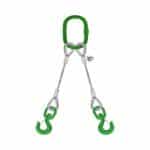
Navigating the world of heavy lifting can be complex, especially when using specialized equipment like spreader beams. These below-the-hook devices are essential for safely lifting wide or unbalanced loads, but they also introduce potential hazards if not used correctly. At Safe and Secure Trading Company (SSTC), we’ve seen firsthand the consequences of overlooking critical safety measures. This article highlights ten common spreader beam mistakes that can lead to accidents, injuries, and costly damages. By understanding these pitfalls and implementing the recommended solutions, you can enhance the safety and efficiency of your lifting operations.
1. Neglecting Pre-Lift Inspection
✅ A thorough pre-lift inspection is the foundation of any safe lifting operation. Overlooking this critical step can expose hidden damages or defects in the lifting equipment, potentially leading to catastrophic failures. We’ve observed that a significant number of incidents are directly attributable to inadequate pre-lift checks.
1.1. Mistake: Skipping Visual Checks
- Explanation: Failing to visually inspect the spreader beam for obvious damage before each lift.
- Solution: Implement a checklist for visual inspections, focusing on welds, bends, and cracks. A quick visual check can identify issues like cracks in welds or deformities that could compromise the beam’s integrity. For many of our clients here in Dammam, we’ve seen this simple practice drastically reduce incidents.
1.2. Mistake: Ignoring Load Ratings
- Explanation: Overlooking the specified load rating of the spreader beam.
- Solution: Always verify the load rating against the load weight and ensure ample safety margin. Exceeding the load rating is a recipe for disaster. Always double-check the beam’s capacity and factor in a safety margin to accommodate dynamic loads.
1.3. Mistake: Forgetting Hardware Checks
- Explanation: Not checking the condition and compatibility of shackles, slings, and other rigging hardware.
- Solution: Inspect all hardware for wear, deformation, and proper size for the intended load. The integrity of the entire lifting system depends on each component. Ensure that shackles, slings, and other hardware are in good condition and properly rated for the load.
2. Incorrect Sling Angle Calculations
✅ The angle at which slings are connected to the spreader beam and the load significantly affects the tension and capacity of the entire lifting system. Incorrect sling angle calculations can lead to overloading, instability, and potential equipment failure. We emphasize to our clients the importance of precise calculations to maintain a safe lifting environment.
2.1. Mistake: Underestimating Sling Tension
- Explanation: Not accurately calculating the tension on slings due to sling angles.
- Solution: Use a sling angle calculator to determine the actual tension, accounting for angles less than optimal. Sling tension increases dramatically as the angle decreases. A seemingly small error in calculation can have significant consequences.
2.2. Mistake: Using Unequal Sling Lengths
- Explanation: Employing slings of varying lengths, which can cause uneven load distribution.
- Solution: Always use slings of equal length and ensure proper adjustment. Unequal sling lengths create uneven loading, placing undue stress on one side of the spreader beam and potentially leading to failure.
2.3. Mistake: Ignoring the Effect of Sling Angle on Capacity
- Explanation: Not understanding that lower sling angles significantly reduce the lifting capacity of the rigging system.
- Solution: Maintain sling angles greater than 45 degrees whenever possible and recalculate capacities accordingly. Remember, as the sling angle decreases, the effective lifting capacity of the slings decreases.
3. Improper Load Distribution
✅ Ensuring proper load distribution across the spreader beam is crucial for maintaining stability and preventing structural failure. Uneven loading can create excessive stress on specific points, exceeding the beam’s capacity and jeopardizing the lift. We have often advised clients on the importance of analyzing load distribution before any lifting operation.
3.1. Mistake: Concentrated Load Issues
- Explanation: Failing to consider whether the load is evenly distributed across the spreader beam.
- Solution: Analyze the load distribution and use appropriate rigging to ensure even weight sharing. A concentrated load can overwhelm a specific section of the beam. Use multiple lifting points or adjust the rigging to distribute the weight evenly.
3.2. Mistake: Off-Center Loading
- Explanation: Loading the spreader beam off-center, causing instability.
- Solution: Rig the load so that the center of gravity is directly below the lifting point. Off-center loading creates a tipping hazard. Ensure the load is balanced and the center of gravity is directly beneath the lifting point.
3.3. Mistake: Not Using a Load Chart
- Explanation: Not using a load chart that shows the allowable load based on the spreader beam’s configuration and sling angles.
- Solution: Consult and adhere to the load chart provided by the manufacturer. The load chart is your guide to safe operation. Always refer to it and understand the limitations of the beam in different configurations.
4. Using Damaged or Uncertified Equipment
✅ The use of damaged or uncertified lifting equipment is a major safety hazard. Such equipment may have compromised structural integrity, making it prone to failure under load. We prioritize the use of certified and well-maintained equipment to ensure the safety of our operations and those of our clients.
4.1. Mistake: Ignoring Certification Requirements
- Explanation: Using spreader beams or rigging hardware that hasn’t been properly certified and inspected.
- Solution: Ensure that all equipment has current certification and inspection records. Certification provides assurance that the equipment meets industry standards. Always verify that the certification is up-to-date.
4.2. Mistake: Continuing Use After Damage
- Explanation: Continuing to use a spreader beam after it has sustained damage.
- Solution: Immediately remove damaged equipment from service and have it inspected and repaired by a qualified professional. Damaged equipment is a ticking time bomb. Remove it from service immediately and seek professional evaluation.
4.3. Mistake: Lack of Regular Inspections
- Explanation: Not performing regular inspections according to industry standards or manufacturer recommendations.
- Solution: Implement a routine inspection program with documented records and qualified personnel. Regular inspections can catch problems before they become major failures. Document all inspections and ensure that qualified personnel perform them.
5. Inadequate Rigging Training
✅ Properly trained and qualified riggers are essential for safe and efficient lifting operations. Inadequate rigging training can lead to errors in judgment, incorrect procedures, and ultimately, accidents. We emphasize continuous training and certification for all our rigging personnel.
5.1. Mistake: Unqualified Riggers
- Explanation: Allowing untrained personnel to perform rigging operations.
- Solution: Ensure all riggers are properly trained and certified. Untrained personnel lack the knowledge and skills to safely perform rigging operations. Ensure everyone involved is properly certified.
5.2. Mistake: Lack of Safety Meetings
- Explanation: Failing to hold regular safety meetings to discuss rigging procedures and potential hazards.
- Solution: Conduct routine safety briefings before each lift to review the plan and address any concerns. Safety meetings reinforce best practices and address potential hazards. Conduct briefings before each lift to ensure everyone is on the same page.
5.3. Mistake: Ignoring Manufacturer Guidelines
- Explanation: Not following the manufacturer’s guidelines for spreader beam use.
- Solution: Always refer to the manufacturer’s manuals and instructions for proper operation and maintenance. Manufacturers’ guidelines provide critical information about safe operation and maintenance. Always consult them before using the equipment.
“Proper training and adherence to safety protocols are paramount in rigging operations. Never compromise on these aspects.” – John Smith, Lead Safety Inspector
6. Environmental Factors Ignored
✅ Environmental factors such as wind, temperature, and corrosive conditions can significantly impact the safety of lifting operations. Ignoring these factors can lead to instability, reduced equipment capacity, and accelerated degradation of materials. We always assess environmental conditions before commencing any lift.
6.1. Mistake: Wind Conditions
- Explanation: Failing to account for wind conditions, which can affect load stability.
- Solution: Monitor wind speeds and postpone lifts if conditions are unsafe. Wind can create instability and sway the load. Monitor wind speeds and halt operations when they exceed safe limits.
6.2. Mistake: Temperature Extremes
- Explanation: Not considering the impact of extreme temperatures on the strength and integrity of the spreader beam and rigging.
- Solution: Consult manufacturer specifications for temperature limitations and adjust procedures accordingly. Extreme temperatures can affect the material properties of the beam and rigging. Consult manufacturer specifications for temperature limitations.
6.3. Mistake: Corrosive Environments
- Explanation: Ignoring the effect of corrosive environments (e.g., marine environments) on the spreader beam and rigging hardware.
- Solution: Use corrosion-resistant materials and increase inspection frequency in corrosive environments. Saltwater and other corrosive agents can accelerate the degradation of equipment. Use corrosion-resistant materials and increase inspection frequency.
7. Communication Breakdowns
✅ Effective communication is vital for coordinating complex lifting operations. Communication breakdowns between the crane operator, rigger, and signal person can lead to misunderstandings, errors, and potentially dangerous situations. We insist on clear and consistent communication protocols on all our job sites.
7.1. Mistake: Poor Communication Protocols
- Explanation: Inadequate communication between the crane operator, rigger, and signal person.
- Solution: Establish clear communication protocols and use hand signals or radios for effective communication. Clear communication is essential for coordinated lifting. Use standardized hand signals or radios for effective communication.
7.2. Mistake: Lack of a Designated Signal Person
- Explanation: Not having a designated signal person to guide the crane operator.
- Solution: Assign a qualified signal person for all lifts, especially those with limited visibility. A signal person provides critical guidance to the crane operator. Assign a qualified signal person, especially when visibility is limited.
7.3. Mistake: Ignoring Verbal Warnings
- Explanation: Disregarding verbal warnings or concerns raised by team members during the lifting process.
- Solution: Encourage open communication and immediately address any safety concerns raised by the lifting team. Encourage team members to speak up if they see something unsafe. Address all concerns immediately.
8. Neglecting Load Testing
✅ Load testing is a critical step in verifying the integrity and safety of spreader beams, especially after repairs or modifications. Neglecting this process can expose hidden weaknesses and increase the risk of failure under load. We adhere to strict load testing protocols to ensure the reliability of our equipment.
8.1. Mistake: Skipping Proof Load Testing
- Explanation: Failing to perform proof load testing after repairs or modifications.
- Solution: Conduct proof load testing to verify the integrity of the spreader beam after any repairs or alterations. Proof load testing verifies the integrity of the beam after repairs. Conduct testing to ensure it can handle the intended loads.
8.2. Mistake: Ignoring Periodic Testing
- Explanation: Not performing periodic load testing to ensure continued safe operation.
- Solution: Implement a schedule for periodic load testing based on usage and environmental conditions. Periodic testing ensures the beam’s continued safety. Establish a schedule based on usage and environmental factors.
8.3. Mistake: Inadequate Record Keeping
- Explanation: Maintaining poor or incomplete records of load testing and inspections.
- Solution: Keep detailed records of all inspections, repairs, and load tests. Accurate records provide a history of the beam’s condition. Maintain detailed records of all inspections, repairs, and load tests.
9. Using the Wrong Type of Spreader Beam
✅ Selecting the appropriate type of spreader beam for the specific lifting task is essential for safety and efficiency. Using an unsuitable beam can compromise stability, reduce lifting capacity, and increase the risk of accidents. We carefully assess the requirements of each lift to choose the right equipment.
9.1. Mistake: Mismatched Beam to Task
- Explanation: Selecting a spreader beam that is not appropriate for the specific lifting task.
- Solution: Choose a spreader beam with the correct capacity, adjustability, and features for the job. Ensure the beam is suitable for the specific load and lifting requirements. Consider factors like capacity, adjustability, and features.
9.2. Mistake: Ignoring Adjustability Needs
- Explanation: Using a fixed-length spreader beam when an adjustable one is needed.
- Solution: Use an adjustable spreader beam when the lifting points vary or are not fixed. Adjustable beams provide flexibility for varying lifting point distances. Use them when lifting points are not fixed.
9.3. Mistake: Neglecting Headroom Limitations
- Explanation: Failing to consider headroom limitations when selecting a spreader beam.
- Solution: Choose a low-headroom spreader beam when vertical space is limited. Headroom limitations can restrict the type of beam you can use. Opt for low-headroom beams when vertical space is limited.
10. Ignoring Site Conditions
✅ Site conditions such as uneven ground, overhead obstructions, and proximity to power lines can significantly impact the safety of lifting operations. Ignoring these factors can lead to instability, collisions, and electrical hazards. We conduct thorough site assessments before commencing any lift.
10.1. Mistake: Uneven Ground
- Explanation: Not accounting for uneven ground conditions that can destabilize the crane or load.
- Solution: Ensure the crane is positioned on a level surface and use outriggers for added stability. Uneven ground can destabilize the crane. Ensure the crane is level and use outriggers for added stability.
10.2. Mistake: Overhead Obstructions
- Explanation: Overlooking overhead obstructions that can interfere with the lift.
- Solution: Identify and clear any overhead obstructions before beginning the lift. Overhead obstructions can cause collisions. Identify and clear any obstructions before starting the lift.
10.3. Mistake: Proximity to Power Lines
- Explanation: Performing lifting operations too close to power lines, creating a significant electrical hazard.
- Solution: Maintain a safe distance from power lines and follow all applicable safety regulations. Power lines pose a serious electrical hazard. Maintain a safe distance and follow all safety regulations.
Top 3 Spreader Beam Mistakes to Avoid:
1. Neglecting Pre-Lift Inspection
2. Incorrect Sling Angle Calculations
3. Using Damaged or Uncertified Equipment
Conclusion:
Avoiding spreader beam mistakes is paramount for ensuring the safety and efficiency of heavy lifting operations. By implementing thorough pre-lift inspections, accurately calculating sling angles, using certified equipment, and addressing environmental factors, you can significantly reduce the risk of accidents and injuries. Remember, a proactive approach to safety is always the best strategy. At Safe and Secure Trading Company, we are committed to providing our clients with the knowledge and resources they need to operate safely and effectively. We provide solutions from training to the supply of reliable lifting equipment. Trust us to help you elevate your safety standards.
FAQ Section:
Q: How often should spreader beams be inspected?
A: Spreader beams should be inspected before each use, as well as periodically according to industry standards and manufacturer recommendations. The frequency of periodic inspections depends on usage, environmental conditions, and the severity of the lifting operations.
Q: What are the key things to look for during a pre-lift inspection of a spreader beam?
A: During a pre-lift inspection, check for any signs of damage such as cracks, bends, or corrosion. Inspect welds, connections, and hardware for wear or deformation. Verify that the load rating is clearly marked and appropriate for the intended lift. Also, ensure that all certifications are current.
Q: What is the correct way to calculate sling angles when using a spreader beam?
A: Use a sling angle calculator or trigonometric functions to determine the actual tension on the slings. Ensure that you account for the vertical and horizontal components of the force. Always maintain sling angles greater than 45 degrees whenever possible to maximize lifting capacity.
Q: What should I do if I find damage on a spreader beam?
A: If you find any damage on a spreader beam, immediately remove it from service. Do not attempt to use it until it has been inspected and repaired by a qualified professional. Document the damage and the steps taken to address it.
Q: How important is rigging training for personnel involved in lifting operations?
A: Rigging training is critical for all personnel involved in lifting operations. Properly trained riggers are equipped with the knowledge and skills to perform lifts safely and efficiently. Untrained personnel can make mistakes that lead to serious accidents.
Q: What are some common environmental factors that can affect spreader beam safety?
A: Common environmental factors include wind, temperature extremes, and corrosive environments. Wind can create instability, temperature extremes can affect material strength, and corrosive environments can accelerate equipment degradation. Monitor and address these factors to maintain safety.
Q: How can communication breakdowns be prevented during lifting operations?
A: Communication breakdowns can be prevented by establishing clear communication protocols, using standardized hand signals or radios, and ensuring that all personnel are aware of their roles and responsibilities. Encourage open communication and address any safety concerns raised by the lifting team.
Q: What is proof load testing and why is it important?
A: Proof load testing is a process of applying a load greater than the rated capacity to a spreader beam to verify its structural integrity. It is important after repairs or modifications to ensure that the beam can safely handle the intended loads.
Q: What are some different types of spreader beams, and when should each be used?
A: There are fixed-length spreader beams, adjustable spreader beams, and low-headroom spreader beams. Fixed-length beams are suitable for lifts with fixed lifting points. Adjustable beams are used when lifting points vary. Low-headroom beams are used when vertical space is limited.
Q: How can I ensure that site conditions are safe for lifting operations?
A: Conduct a thorough site assessment before beginning any lift. Check for uneven ground, overhead obstructions, and proximity to power lines. Take steps to address any hazards, such as leveling the ground, clearing obstructions, and maintaining a safe distance from power lines.