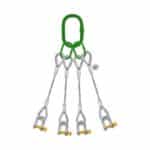
What is a Spreader Beam?
A spreader beam is a crucial piece of rigging equipment used to lift loads safely and efficiently. It’s designed to spread the lifting force over a wider area, providing stability and preventing damage to the load. In essence, a spreader beam acts as a bridge between the crane lifting mechanism and the object being lifted, distributing the weight evenly.
Defining a Spreader Beam
A spreader beam is a below-the-hook device used in material handling to provide a stable and balanced lift, particularly for long, wide, or awkwardly shaped loads. Unlike a lifting beam, which primarily uses bending to support the load, a spreader beam relies on tensile forces in its slings or chains connected to the load. This fundamental difference affects how the load is distributed and the types of lifts for which each device is best suited.
To differentiate, lifting beams support the load by resisting bending forces. Lifting beams are usually applied when there is limited headroom. In our experience, a lot of new clients come to us not knowing the differences between a lifting beam and a spreader beam.
The core function of a spreader beam is to maintain a constant distance between the lifting points, preventing inward crushing forces on the load. This is especially important when lifting fragile items or objects that could be easily damaged by concentrated pressure.
The basic components of a typical spreader beam include:
- The main beam body (usually made of steel)
- End connections (for attaching slings or chains)
- Top rigging (connecting the beam to the crane or hoist)
- Bottom rigging (connecting the beam to the load)
How Spreader Beams Enhance Lifting Safety
Spreader beams are invaluable in enhancing lifting safety for several reasons. They mitigate stress on both the load and the lifting equipment, maintain load stability, and proactively prevent damage to the load itself.
By distributing the lifting force across multiple points, a spreader beam reduces the concentration of stress on any single point of the load. This is particularly important when lifting heavy or fragile items. Without a spreader beam, the load might experience excessive stress, leading to deformation, cracking, or even complete failure. When our team in Dubai tackles this issue, they often find that clients were unaware of the internal stresses their lifting methods were creating.
A spreader beam also enhances load stability during lifts. By maintaining a fixed distance between the lifting points, the beam prevents the load from swaying or tilting during the lifting process. This is especially crucial when lifting loads in windy conditions or when maneuvering through tight spaces. The enhanced stability translates to safer and more controlled lifts, reducing the risk of accidents or damage.
Furthermore, spreader beams are instrumental in preventing damage to the load. By distributing the lifting force evenly, the beam prevents localized pressure points that could crush, dent, or scratch the load. This is particularly important when lifting delicate or valuable items. We’ve seen firsthand how using the right spreader beam can save companies significant costs by preventing damage to their products.
Common Mistakes When Selecting a Spreader Beam
Choosing the correct spreader beam is critical for a safe and successful lifting operation. However, many common mistakes can lead to accidents, equipment damage, and even injuries. Let’s examine some of the most frequent errors.
Mistake #1: Ignoring the Load Weight and Dimensions
One of the most common and dangerous mistakes is failing to accurately assess the load’s weight and dimensions. This oversight can lead to selecting a spreader beam with insufficient capacity, resulting in catastrophic failure.
Accurate load assessment is crucial because the spreader beam must be strong enough to support the entire weight of the load, plus any additional dynamic forces generated during the lift. Underestimating the load weight can overload the beam, causing it to bend, buckle, or even break. In our experience, clients sometimes rely on outdated or inaccurate weight estimates, which can have serious consequences.
Calculating the load’s center of gravity is equally important. An off-center load can create uneven stress on the spreader beam and slings, leading to instability and potential failure. The center of gravity will affect the sling angles and required capacity of the rigging gear.
The consequences of underestimating the load can be severe. Overloaded spreader beams can fail suddenly, dropping the load and potentially causing serious injuries or fatalities. Equipment damage and project delays are also common outcomes.
Mistake #2: Neglecting the Lift Geometry
The geometry of the lift, particularly the sling angles, plays a critical role in determining the required capacity of the spreader beam. Neglecting these factors can lead to dangerous overloads and instability.
Understanding the impact of sling angles on spreader beam capacity is essential. As the sling angle decreases (becomes shallower), the tension in the slings increases. This increased tension puts greater stress on the spreader beam and the rigging hardware. A seemingly small change in sling angle can have a significant impact on the overall load.
Common sling angle calculation errors include:
- Using estimated angles instead of precise measurements
- Failing to account for the weight of the rigging itself
- Ignoring the vertical component of the sling tension
To properly measure and account for sling angles, use a reliable angle finder or protractor. Always measure the angle between the sling and the horizontal plane. Use these precise measurements in your calculations to determine the actual tension in the slings. Remember, steeper sling angles are generally safer, as they reduce the tension in the slings and the stress on the spreader beam.
Mistake #3: Choosing the Wrong Type of Spreader Beam
Spreader beams come in various designs, each suited for specific applications. Choosing the wrong type of beam can compromise safety and efficiency.
Fixed spreader beams have a set length and are suitable for repetitive lifts with consistent load dimensions. Adjustable spreader beams, on the other hand, allow for varying the distance between the lifting points, making them more versatile for different load sizes. Adjustable spreader beams offer flexibility, but they also require careful adjustment and inspection to ensure they are properly configured for each lift.
H-beams, pipe beams, and custom designs are available for specialized lifting applications. H-beams are often used for heavy-duty lifts, while pipe beams are suitable for lighter loads. Custom-designed spreader beams can be fabricated to meet specific requirements, such as lifting extremely large or awkwardly shaped objects. When our team in Dubai tackles these types of lifts, we find that custom-engineered solutions are often necessary.
Failing to consider headroom limitations is another common mistake. Low headroom environments require specialized spreader beams that minimize the vertical distance between the crane hook and the load. Using an inappropriate spreader beam in a low headroom situation can result in the load hitting obstructions or exceeding the crane’s lifting capacity.
Mistake #4: Overlooking the Lifting Environment
The surrounding environment can significantly impact the safety and stability of a lifting operation. Overlooking these factors can lead to accidents and equipment damage.
Environmental factors such as wind and temperature can affect lift stability. Wind can create lateral forces on the load, causing it to sway or swing. High temperatures can reduce the load capacity of steel spreader beams, while extreme cold can make the metal more brittle and prone to fracture. It’s important to consult temperature-adjusted load charts to ensure safety.
Corrosion is a significant risk in marine environments. Saltwater and humidity can corrode steel spreader beams, weakening them and increasing the risk of failure. Using corrosion-resistant materials, such as stainless steel or specialized coatings, is essential in these conditions. Regular inspection and maintenance are also crucial to detect and address any signs of corrosion.
Confined spaces can also pose challenges for spreader beam selection. Limited space may restrict the size and type of spreader beam that can be used. Careful planning and coordination are necessary to ensure that the spreader beam can be safely maneuvered and operated within the confined space.
Best Practices for Safe Spreader Beam Use
Safe spreader beam use hinges on rigorous inspection and maintenance routines, coupled with correct rigging techniques and the involvement of qualified, well-trained personnel. Neglecting any of these aspects can significantly elevate the risk of accidents and injuries.
Proper Inspection and Maintenance
Regular inspection and maintenance are crucial for ensuring the continued safe operation of spreader beams. A comprehensive inspection program should include:
- Visual inspection for cracks, dents, or corrosion
- Inspection of welds for any signs of failure
- Verification of the straightness of the beam
- Inspection of end connections and rigging hardware for wear or damage
- Review of load tests and certifications
Identifying signs of damage or wear early on is critical. Cracks, dents, or corrosion can weaken the spreader beam and increase the risk of failure. Worn or damaged end connections and rigging hardware can also compromise the safety of the lift. Any damaged or worn components should be immediately replaced or repaired by a qualified technician.
Proper storage and handling are also important. Spreader beams should be stored in a dry, protected environment to prevent corrosion and damage. They should be handled carefully to avoid dropping or impacting them, which could cause hidden damage.
Correct Rigging Techniques
Using correct rigging techniques is essential for a safe and successful lift. This includes:
- Selecting the appropriate slings and hardware for the load weight and configuration
- Ensuring that all slings and hardware are properly rated and certified
- Using the correct sling attachment methods to prevent slippage or damage
- Avoiding sling twisting or kinking, which can reduce their load capacity
- Verifying that the load is properly balanced before lifting
Selecting the appropriate slings and hardware is crucial. The slings must be strong enough to support the weight of the load and be compatible with the spreader beam and the load’s lifting points. The hardware, such as shackles and hooks, must also be properly rated and certified.
Proper sling attachment methods are essential to prevent slippage or damage. The slings should be attached to the spreader beam and the load in a way that distributes the load evenly and prevents the slings from rubbing against sharp edges or corners.
Qualified Personnel and Training
The necessity of certified riggers and crane operators cannot be overstated. These professionals have the knowledge, skills, and experience to safely plan and execute lifting operations. Certified riggers are trained to inspect rigging equipment, select the appropriate slings and hardware, and properly attach the load to the spreader beam. Certified crane operators are trained to operate the crane safely and smoothly, avoiding sudden movements that could destabilize the load.
Comprehensive training programs are essential for all personnel involved in lifting operations. These programs should cover:
- Spreader beam inspection and maintenance
- Rigging techniques
- Load weight estimation and center of gravity calculation
- Sling angle calculations
- Crane operation safety
- Emergency procedures
Ensuring that everyone on the lift team understands their roles and responsibilities is also crucial. Clear communication and coordination are essential for a safe and successful lift. Before each lift, the team should conduct a pre-lift meeting to discuss the lift plan, identify potential hazards, and ensure that everyone knows their assigned tasks.
Spreader Beam Applications: Avoiding Common Pitfalls
Spreader beams find wide application across various industries. However, to harness their benefits fully, it’s essential to be aware of common pitfalls within these specific contexts.
Construction Industry
In the construction industry, spreader beams are commonly used for lifting precast concrete sections and steel erection components. When lifting precast concrete sections, a common mistake is failing to properly secure the load to the spreader beam. This can lead to the concrete section slipping or falling during the lift, posing a serious safety hazard. Ensure proper attachment methods, such as using embedded lifting inserts or specialized lifting clamps, are used.
For steel erection, ensuring proper beam alignment is crucial. Misaligned beams can create uneven stress on the spreader beam and slings, leading to instability and potential failure. Use tag lines to guide the beam into place and verify alignment before releasing the load.
Manufacturing and Industrial Settings
Moving heavy machinery and handling large parts are common tasks in manufacturing and industrial settings. When moving heavy machinery, accurately calculating the center of gravity for uneven loads is essential. An incorrectly calculated center of gravity can cause the load to tilt or swing during the lift, potentially damaging the machinery or injuring personnel. Use specialized equipment, such as load cells or inclinometers, to determine the precise center of gravity.
When handling large parts, preventing damage during lifting is paramount. Use padding or protective materials to prevent scratches or dents. Also, ensure that the slings are properly positioned to distribute the load evenly and avoid stress concentrations.
Marine and Offshore Operations
Marine and offshore operations present unique challenges for spreader beam use. Loading and unloading ships requires accounting for wave action and vessel movement. Wave action can create dynamic forces on the load, increasing the stress on the spreader beam and slings. Use specialized lifting equipment, such as motion-compensated cranes, to minimize the impact of wave action.
For subsea lifting, choosing corrosion-resistant materials is essential. Saltwater can rapidly corrode steel spreader beams, weakening them and increasing the risk of failure. Use stainless steel or other corrosion-resistant alloys for all components that will be exposed to seawater.
Real-World Examples of Spreader Beam Mishaps (and How to Avoid Them)
Analyzing real-world incidents involving spreader beams provides invaluable insights into the potential consequences of errors and oversights. These case studies underscore the importance of adhering to best practices and continuously improving safety protocols.
Case Study 1: Spreader Beam Failure Due to Overloading
In 2026, a construction site experienced a catastrophic spreader beam failure while lifting a large precast concrete panel. The investigation revealed that the crew had significantly underestimated the weight of the panel, exceeding the spreader beam’s maximum load capacity.
The contributing factors included:
- Inaccurate weight estimation based on outdated blueprints
- Lack of pre-lift inspection to verify the actual weight
- Failure to account for additional weight from reinforcing steel and moisture
The lessons learned from this incident were:
- Always verify the actual weight of the load using calibrated weighing equipment.
- Conduct thorough pre-lift inspections to identify any discrepancies between the planned and actual conditions.
- Ensure that all personnel involved in the lift are properly trained in load weight estimation and spreader beam capacity calculations.
The preventative measures implemented included:
- Mandatory use of load cells for all lifts involving precast concrete panels
- Implementation of a detailed pre-lift checklist
- Regular refresher training for all rigging personnel
Case Study 2: Incorrect Sling Angle Calculation Leading to Instability
In 2026, a manufacturing plant experienced a near-miss incident when lifting a large piece of machinery. The load became unstable during the lift due to an incorrect sling angle calculation.
The analysis of the calculation error revealed that the crew had used an estimated sling angle instead of accurately measuring it. This resulted in an underestimation of the tension in the slings and an overloading of the spreader beam.
The consequences of the error were:
- The load began to sway uncontrollably during the lift.
- The spreader beam experienced excessive stress, potentially leading to failure.
- Personnel were forced to evacuate the area to avoid injury.
The recommendations for improving calculation accuracy included:
- Use a reliable angle finder or protractor to accurately measure sling angles.
- Use a sling tension calculator to determine the actual tension in the slings based on the measured angle and the load weight.
- Double-check all calculations before commencing the lift.
Case Study 3: Ignoring Environmental Factors Resulting in a Near Miss
In 2026, an offshore oil platform experienced a near miss during a lifting operation due to ignoring environmental factors. High winds caused the load to sway violently, nearly striking a nearby structure.
The environmental conditions included:
- Sustained winds of 30 mph
- Gusts up to 40 mph
- Wave heights of 6 feet
The strategies for mitigating environmental risks included:
- Postponing the lift until the weather conditions improved
- Using a crane with a motion-compensated system to minimize the impact of wave action
- Using tag lines to control the load’s movement
- Increasing the communication and coordination between the crane operator and the rigging crew
“Safety is paramount in all lifting operations. Ignoring environmental factors can have catastrophic consequences.” – John Smith, Lead Safety Inspector
Debunking Common Spreader Beam Myths
Many misconceptions surround spreader beams and their use. Addressing these myths is crucial for promoting safe and informed lifting practices.
Myth: All Spreader Beams Are Created Equal
This myth is dangerous because it implies that any spreader beam can be used for any lifting application. In reality, different spreader beams have different load capacities, designs, and applications.
Different spreader beams have different load capacities and applications due to variations in their materials, construction, and design. A lightweight spreader beam designed for lifting small objects cannot safely lift a heavy piece of machinery. Using the wrong spreader beam can lead to overloading, equipment failure, and serious injuries.
Choosing the right beam for the job involves carefully considering the load weight, dimensions, lifting geometry, and environmental conditions. Always consult the manufacturer’s specifications and seek guidance from a qualified rigging professional to ensure that the selected spreader beam is appropriate for the specific lifting application.
Myth: Spreader Beams Eliminate the Need for Qualified Riggers
This myth is false and dangerous. While spreader beams enhance lifting safety, they do not eliminate the need for trained professionals.
Emphasizing the critical role of trained professionals in ensuring safe lifting operations is essential. Qualified riggers have the knowledge, skills, and experience to properly inspect rigging equipment, select the appropriate slings and hardware, and safely attach the load to the spreader beam. They also understand how to calculate load weight, determine the center of gravity, and account for sling angles.
Experience and knowledge are crucial for identifying potential hazards and mitigating risks. Riggers can identify signs of damage or wear on rigging equipment, recognize unsafe lifting practices, and take corrective action to prevent accidents.
The Future of Spreader Beam Technology
Spreader beam technology continues to evolve, driven by the need for increased safety, efficiency, and versatility. Innovations in design, materials, and technology are shaping the future of this critical lifting equipment.
Innovations in Spreader Beam Design and Materials
Exploring new materials and manufacturing techniques is leading to lighter, stronger, and more durable spreader beams. High-strength alloys, composite materials, and advanced welding techniques are being used to create spreader beams that can handle heavier loads while minimizing their own weight. These advances reduce the overall weight of the lifting system, making it easier to transport and maneuver.
Advances in adjustable spreader beam technology are also expanding their versatility. New designs allow for quick and easy adjustment of the lifting points, making them suitable for a wider range of load sizes and shapes. These adjustable spreader beams can be easily reconfigured on-site, reducing the need for multiple specialized beams.
The Role of Technology in Improving Spreader Beam Safety
Using sensors and monitoring systems to track load weight and stress is becoming increasingly common. These systems provide real-time data on the load being lifted, allowing operators to monitor the stress on the spreader beam and slings. If the load exceeds the safe working limit, the system can trigger an alarm or even automatically stop the lift.
Implementing virtual reality training simulations is also improving spreader beam safety. These simulations allow riggers and crane operators to practice lifting operations in a safe and controlled environment. They can experience different scenarios, such as lifting uneven loads or operating in windy conditions, without the risk of accidents or injuries.
Conclusion: Prioritizing Safety with Spreader Beams
Understanding and properly utilizing a spreader beam is essential for safe and efficient heavy lifting operations. Throughout this comprehensive guide, we’ve explored the definition, benefits, common mistakes, best practices, and future trends associated with spreader beams.
Recapping the key mistakes to avoid highlights the importance of proper planning, selection, and execution. Ignoring load weight and dimensions, neglecting lift geometry, choosing the wrong type of spreader beam, and overlooking the lifting environment can lead to dangerous situations.
The benefits of safe spreader beam usage are numerous, including:
- Reducing the risk of accidents and injuries
- Improving efficiency and productivity
- Protecting equipment and assets
We at Safe and Secure Trading Company are dedicated to providing you with the knowledge and resources you need to ensure safe and successful lifting operations. We believe that safety should always be the top priority, and with the right equipment and training, you can minimize the risk of accidents and injuries.
“
“
FAQ Section
Q: What is the main difference between a spreader beam and a lifting beam?
A: A spreader beam primarily uses tension in slings to distribute the load, maintaining a constant distance between lifting points, while a lifting beam supports the load by resisting bending forces, typically used when headroom is limited.
Q: How do I calculate the correct sling angle for my spreader beam lift?
A: Use a reliable angle finder to measure the angle between the sling and the horizontal plane. This measurement is crucial for determining the tension in the slings and ensuring the spreader beam isn’t overloaded. There are also several sling angle calculators available online.
Q: What are some common signs of damage to look for during a spreader beam inspection?
A: Look for cracks, dents, corrosion, or any signs of weld failure. Also, inspect the end connections and rigging hardware for wear or damage. Any compromised components should be immediately repaired or replaced.
Q: How important is training for personnel using spreader beams?
A: Training is critically important. Personnel should be trained in spreader beam inspection, rigging techniques, load weight estimation, sling angle calculations, and crane operation safety to ensure safe and efficient lifting operations.
Q: Can I use any type of sling with a spreader beam?
A: No, you must select slings that are appropriately rated for the load weight and compatible with both the spreader beam and the load’s lifting points. Ensure all slings and hardware are certified and inspected before each use.
Q: What role does the environment play in spreader beam safety?
A: Environmental factors like wind, temperature, and the presence of corrosive elements (such as saltwater) can significantly impact lift stability and equipment integrity. These factors must be considered during the planning and execution of the lift.
Q: How often should spreader beams be inspected?
A: Spreader beams should be inspected regularly, ideally before each use, but at least on a monthly basis. A more thorough inspection should be performed annually by a qualified technician.
Q: What kind of maintenance is required for spreader beams?
A: Maintenance includes regular cleaning to remove dirt and debris, lubrication of moving parts, and touch-up painting to prevent corrosion. Any damaged or worn components should be repaired or replaced promptly.
Q: What should I do if I suspect a spreader beam is overloaded?
A: Immediately stop the lift and lower the load to a safe position. Re-evaluate the load weight and lifting configuration to ensure that the spreader beam is not being overloaded. Consult with a qualified rigger or engineer if necessary.
Q: Are there any new technologies improving spreader beam safety?
A: Yes, sensor and monitoring systems can track load weight and stress in real-time. These systems provide valuable data to operators, helping them to avoid overloading and maintain safe lifting operations. Virtual reality training simulations are also being used to train riggers and crane operators.