- Rigging Accessories
- Shackles
- Lifting Clamps
- Material Handling Equipment
- Matterport Cameras
- Others
- Ropes
- Block / Hoist / Trolley
- Rigging Screws
- Cargo Accessories
- Snatch Block / Pulley
- Chains
- Stainless Steel Accessories
- Spreader Beam And Bar
- Desiccant
- Safety Shoes
- Load Monitoring
- Fall Protection
- Wire Rope Fittings
- Hooks
- Lifting Slings
Free shipping over 2000 SAR
- Home
- ShopHot
- Block / Hoist / Trolley
- Chains
- Fall Protection
- Hooks
- Lifting Clamps
- Shackles
- Cargo Accessories
- Lifting SlingsHot
- Wire Rope Fittings
- Ropes
- Snatch Block / Pulley
- Spreader Beam & Bar
- Material Handling Equipment
- Rigging Screws
- Lifting And Rigging Accessories
- Stainless Steel Accessories
- Desiccant
- Safety Shoes
- About
- About Us
- Sell Your Brand
- Become Our Sale Agent
- Exclusive Distributor Of Bull Rope Products In KSA
- Exclusive Distributor Of JB Lifting Products In KSA
- Exclusive Distributor of Modulift products in KSA
- Exclusive Distributor Of Safety Jogger Products In KSA
- All Exclusive Distributorship
- Procedure and Policies
- Services
- Calculators
- Brands
- Blog
- Contact
- Rigging Accessories
- Shackles
- Lifting Clamps
- Material Handling Equipment
- Matterport Cameras
- Others
- Ropes
- Block / Hoist / Trolley
- Rigging Screws
- Cargo Accessories
- Snatch Block / Pulley
- Chains
- Stainless Steel Accessories
- Spreader Beam And Bar
- Desiccant
- Safety Shoes
- Load Monitoring
- Fall Protection
- Wire Rope Fittings
- Hooks
- Lifting Slings
No products in the cart.
Return To ShopFree shipping over 2000 SAR
Precautions & FAQ's
Chain slings are commonly used in material handling and lifting applications, and it’s important to take precautions to ensure the safety of personnel and the success of lifting operations. Here are some precautions to consider when using chain slings:
Inspection: Regularly inspect the chain sling for signs of wear, damage, or deformities. Do not use a sling that appears to be in poor condition. Inspections should be conducted before each use and periodically as required by safety regulations.
Proper Sizing: Ensure that the chain sling’s capacity (Working Load Limit, or WLL) and length are suitable for the intended application. Check the manufacturer’s specifications and guidelines for correct usage.
Load Limits: Never exceed the chain sling’s Working Load Limit (WLL). This information is usually marked on the sling or provided by the manufacturer.
Quality Assurance: Use only high-quality chain slings that meet relevant industry standards and certifications,please explore our Chain Sling.
Sling Material: Choose the appropriate chain sling material based on the specific environment and application (e.g., alloy steel for heavy-duty applications).
Lifting Angles: Be aware of the angle at which the load is being lifted. When using a chain sling at an angle other than 0 degrees, the WLL is reduced. Consult load angle charts or a qualified engineer to determine the correct WLL for the angle.
Load Balance: Ensure that the load is evenly distributed on the sling legs. Imbalanced loads can lead to stress concentrations and potential failure.
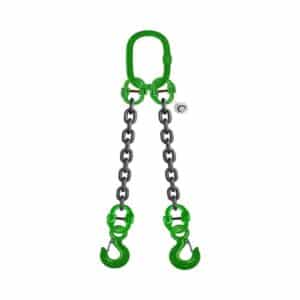
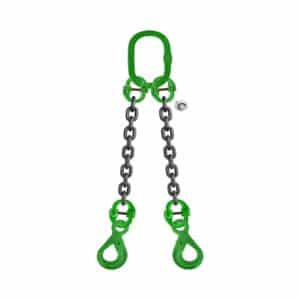
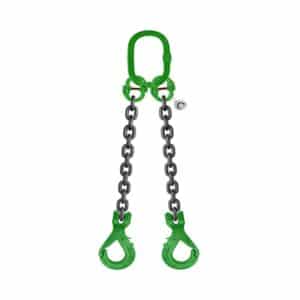
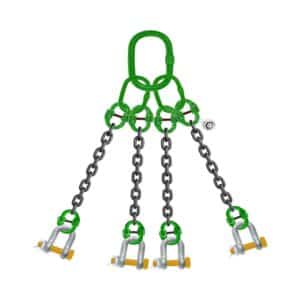
Sling Configuration: Use the correct sling configuration for the type of load being lifted. Different configurations, such as single-leg, double-leg, or multi-leg slings, have different load-carrying capacities.
Avoid Twisting and Kinking: Prevent the chain sling from twisting or kinking during the lifting operation, as this can weaken the chain links.
Edge Protection: Use suitable edge protection, such as wear pads or sleeves, when lifting loads with sharp edges to prevent damage to the sling.
Training: Only qualified and trained personnel should operate cranes and handle lifting equipment, including chain slings. Ensure that all personnel involved in the lifting operation are well-trained in safety procedures.
Clear the Area: Ensure that the area beneath the load is clear of personnel and obstacles before lifting. Establish a designated work zone.
Communication: Maintain clear and effective communication between the crane operator, riggers, and signalpersons to coordinate safe lifting operations.
Emergency Procedures: Establish emergency procedures and know how to respond in case of accidents, malfunctions, or equipment failure.
Records and Documentation: Keep records of inspections, maintenance, and usage of chain slings and document any concerns or issues for future reference.
Prioritizing safety when using chain slings is essential to prevent accidents and injuries during lifting operations. Always follow safety regulations and industry standards, and consult with safety experts or engineers as needed to ensure proper usage.
A chain sling is a lifting tool composed of metal chains linked together. It is used for hoisting and transporting heavy loads in various industrial applications.
Chain slings are commonly made from alloy steel, providing strength and durability. Some may have protective coatings like galvanization for corrosion resistance.
Factors such as load weight, shape, size, and the environment determine the appropriate chain sling. Consult load charts provided by manufacturers and consider the sling’s working load limit (WLL).
The WLL is the maximum load a chain sling is designed to safely lift. It is crucial to adhere to this limit to ensure safety during lifting operations.
Regular inspections are essential. Look for signs of wear, deformation, cracks, or any other damage. If any issues are found, the sling should be taken out of service and replaced.
Repairs should only be performed by qualified professionals, and they must follow the manufacturer’s guidelines. In some cases, it may be more prudent to replace a damaged sling.
Users should follow proper lifting procedures, adhere to weight limits, and ensure the load is evenly distributed. Training in sling usage and maintenance is crucial for safety.
Chain slings are designed for use in a range of temperatures, but extreme conditions may require special considerations. Consult the manufacturer’s guidelines for specific temperature limits.
Yes, various safety regulations and standards, such as those from OSHA (Occupational Safety and Health Administration), set guidelines for the use of chain slings. Compliance is essential for workplace safety.
Always consult the manufacturer’s instructions and guidelines for specific information about the chain sling you are using. If in doubt, seek professional advice.
Related Product
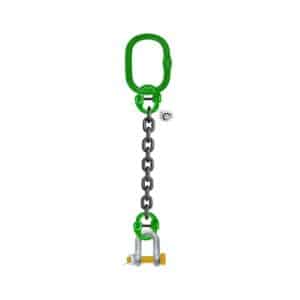
15 in stock (can be backordered)
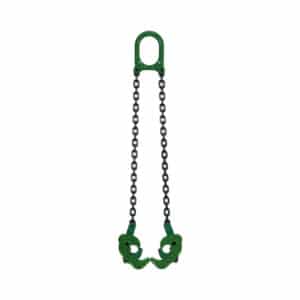
Got Questions? Ask Away!
If you have queries not covered in our FAQs, use this form to reach out.
- Polyester Web Slings
- Wire Rope Slings
- Chain Sings
- Steel Wire Rope
- Wire Rope Fittings
- Block / Hoist / Trolley
- Shackles
- Fall Protection
- Chains
- Hooks
- Material Handling Equipment
- Cargo Accessories
- Lifting Clamps
- Rigging Screws
- Stainless Steel Accessories
- Safety Shoes
- Polypropylene Rope
- High Strength Polypropylene Rope
- Polyester Rope
- Polyamide Nylon Rope