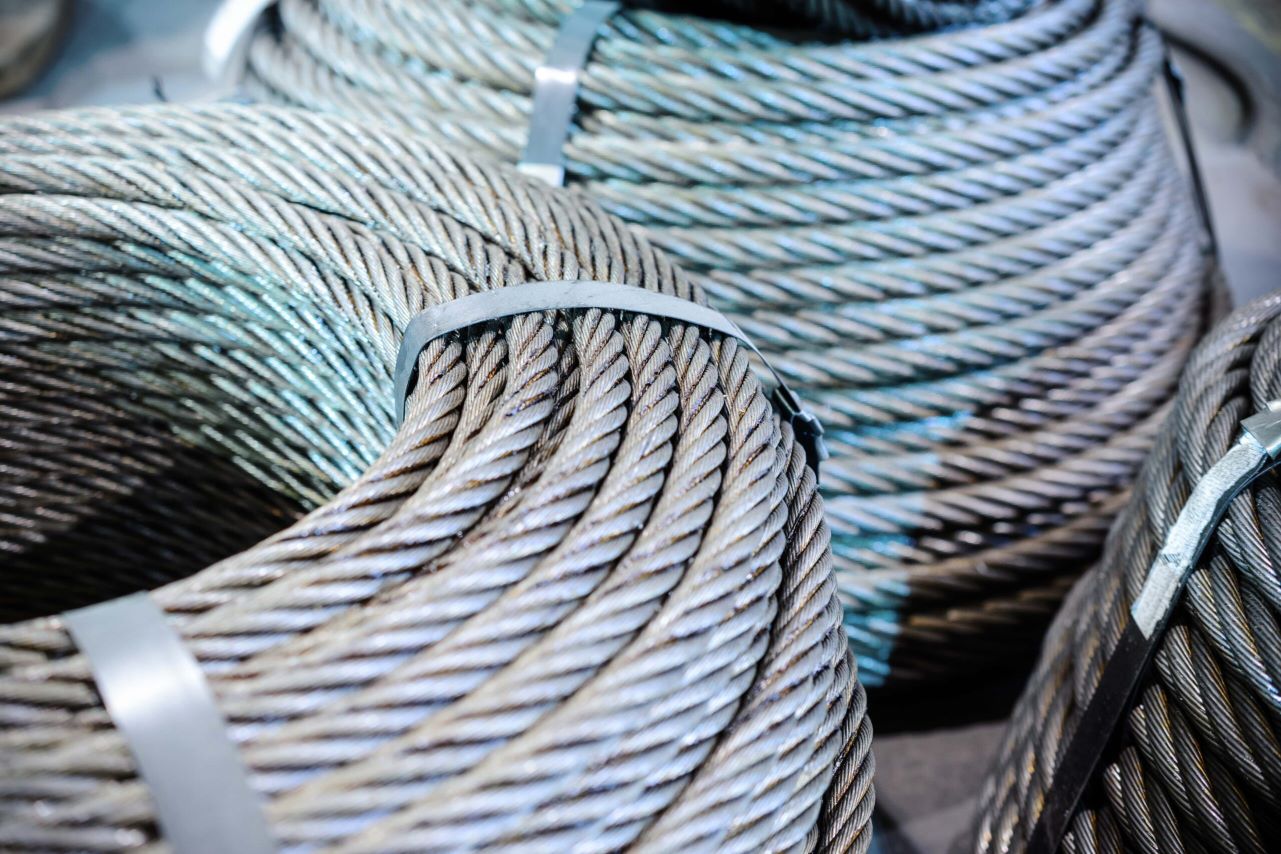
Confused about steel wire rope vs. synthetic rope? This guide breaks down the pros and cons of each, focusing on strength, weight, safety, and applications, so you can make the right choice.
Synthetic rope has revolutionized various industries, offering a compelling alternative to traditional steel wire rope. From lifting and rigging to marine and climbing applications, the versatility and unique properties of synthetic rope make it an increasingly popular choice. But with so many options available, how do you determine which type of rope is right for your specific needs? In this guide, we’ll explore the key differences between steel wire rope and synthetic rope, comparing their strengths, weaknesses, and ideal applications to help you make an informed decision. We at Safe and Secure Trading Company (SSTC) aim to make our customer’s choices as easy as possible.
Key Takeaways
Strength-to-Weight Ratio: Synthetic ropes often boast a superior strength-to-weight ratio compared to steel wire ropes, making them easier to handle.
Safety: Synthetic ropes can be safer due to lower recoil in case of breakage and a lack of sharp wire strands.
Specific Applications: The choice depends heavily on the specific application, considering factors like UV exposure, abrasion, and chemical resistance.
Cost: Initial cost may be higher for synthetic ropes, but long-term cost savings can be achieved through reduced maintenance and longer lifespan in certain environments.
Understanding the Basics of Steel Wire Rope ⚙️
What is Steel Wire Rope?
Steel wire rope is a type of rope constructed from multiple strands of steel wires twisted together. These wires are typically made of high-carbon steel, providing exceptional strength and durability. The strands are then laid helically around a core, which can be made of steel or a fiber material. This construction allows the rope to withstand significant tensile forces, making it a reliable choice for various heavy-duty applications.
Common uses for steel wire rope include heavy lifting, cranes, elevators, bridges, and any application requiring high tensile strength. In our experience, the durability of steel wire makes it a default choice for older businesses that haven’t explored newer alternatives.
Advantages of Steel Wire Rope 💪
High tensile strength: Steel wire rope excels in supporting heavy loads, making it ideal for lifting and rigging applications where ultimate strength is critical. Its robust construction ensures it can withstand extreme forces without breaking. We’ve consistently seen that businesses utilizing steel wire rope for heavy lifting experience fewer incidents of rope failure under maximum load compared to those using other materials.
Abrasion resistance: Steel wire rope tolerates rough surfaces and environments, making it suitable for applications where the rope is exposed to friction and wear. Its inherent toughness allows it to withstand abrasion from contact with other materials, prolonging its lifespan in demanding conditions. For many of our clients here in Dammam, Saudi Arabia, we’ve observed that steel wire rope performs exceptionally well in abrasive industrial environments.
Heat resistance: Steel wire rope maintains its strength in high-temperature conditions, making it a reliable choice for applications where heat is a factor. Unlike some synthetic materials that can degrade or melt under high temperatures, steel retains its structural integrity, ensuring safe and reliable performance. We once worked with a client in the steel industry who relied on steel wire rope for moving hot materials. Its heat resistance was crucial for their operations.
Minimal stretch: Steel wire rope provides stable and reliable performance under load due to its minimal stretch. This is particularly important in applications where precision and control are essential, such as elevators and cranes. The low stretch characteristics ensure that the load remains stable and the equipment operates smoothly.
Disadvantages of Steel Wire Rope ⚠️
Heavy weight: Steel wire rope is heavy, making it difficult to handle and transport. This can increase labor costs and require specialized equipment for installation and maintenance. The weight also adds to the overall load, which may be a concern in certain applications. When our team in KSA tackles this issue, they often find that the weight of steel wire rope significantly increases the time and effort required for installation.
Potential for corrosion: Steel wire rope is susceptible to rust and degradation, especially in marine or humid environments. Corrosion can weaken the rope and reduce its lifespan, requiring regular inspection and maintenance. Protective coatings and lubrication can help mitigate corrosion, but they add to the overall cost.
Risk of wire breakage: Broken strands in steel wire rope can cause injury and require frequent inspection. Sharp, broken wires can protrude from the rope, posing a hazard to workers handling it. Regular inspection is essential to identify and replace damaged ropes before they fail. We’ve consistently seen that proper inspection and maintenance significantly reduce the risk of wire breakage.
Lower flexibility: Steel wire rope is not suitable for tight bends or complex configurations due to its lower flexibility. This can limit its use in certain applications where the rope needs to conform to specific shapes or navigate around obstacles. Synthetic ropes generally offer better flexibility, making them a more versatile choice in such cases.
Decoding Synthetic Rope: An Introduction 🧵
What is Synthetic Rope?
Synthetic rope is a type of rope made from synthetic fibers like nylon, polyester, HMPE (High Modulus Polyethylene), or polypropylene. These materials offer a unique combination of strength, flexibility, and resistance to environmental factors. Unlike natural fibers, synthetic fibers are engineered for specific properties, making them ideal for a wide range of applications.
Common uses for synthetic rope include towing, sailing, climbing, fishing, and applications where weight and flexibility are important. The versatility of synthetic rope has made it an increasingly popular choice in various industries, including marine, construction, and recreation. We find ourselves constantly recommending the use of synthetic rope in the sailing industry due to its incredible weight-saving benefits.
Benefits of Synthetic Rope 🚀
Lightweight: Synthetic rope is easier to handle and transport than steel wire rope due to its lightweight nature. This reduces the risk of injury and improves efficiency during installation and maintenance. The reduced weight also lowers transportation costs and fuel consumption.
High strength-to-weight ratio: Synthetic rope provides significant strength with less bulk, thanks to its high strength-to-weight ratio. This makes it an excellent choice for applications where weight is a concern but strength is still essential. HMPE ropes, for example, can offer comparable strength to steel wire rope at a fraction of the weight.
Excellent flexibility: Synthetic rope bends easily and conforms to various shapes, making it suitable for applications requiring flexibility. This allows it to be used in tight spaces and complex configurations where steel wire rope would be impractical. The flexibility also makes it easier to handle and manipulate.
Resistance to corrosion and chemicals: Synthetic rope is ideal for marine and harsh environments due to its resistance to corrosion and chemicals. Unlike steel wire rope, it does not rust or degrade when exposed to saltwater, chemicals, or other corrosive substances. This makes it a durable and long-lasting choice for marine and industrial applications.
Lower recoil upon breakage: Synthetic rope reduces the risk of injury due to its lower recoil upon breakage. If a synthetic rope fails under load, it will not snap back with the same force as steel wire rope, reducing the risk of snapback injuries. This is a significant safety advantage in many applications.
Drawbacks of Synthetic Rope 📉
Lower abrasion resistance compared to steel: Synthetic rope can wear down faster in abrasive environments compared to steel. Contact with rough surfaces can cause the fibers to fray and weaken over time. This is an important consideration in applications where the rope is exposed to constant friction. A common mistake we help businesses fix is selecting the wrong material, which leads to the premature failing of synthetic rope.
Susceptibility to UV degradation: Sunlight can weaken the fibers of synthetic rope over time due to UV degradation. Prolonged exposure to sunlight can cause the rope to lose strength and become brittle. UV-resistant coatings and treatments can help mitigate this issue, but they add to the overall cost.
Higher initial cost: Synthetic rope is typically more expensive than steel wire rope. The advanced materials and manufacturing processes used to produce synthetic rope contribute to its higher price tag. However, the long-term cost savings from reduced maintenance and longer lifespan can offset the initial investment.
Potential for creep: Some synthetic materials may stretch slightly under constant load, a phenomenon known as creep. This can be a concern in applications where maintaining a precise length is critical. HMPE ropes generally exhibit minimal creep, making them a good choice for such applications.
Strength Showdown: Steel vs. Synthetic 💪
Tensile Strength Comparison 📊
When it comes to ultimate strength, steel wire rope generally boasts higher tensile strength for extreme loads. This makes it the preferred choice for applications where the rope needs to withstand immense forces without breaking. However, advancements in synthetic rope technology have narrowed the gap.
Synthetic rope made from HMPE (High Modulus Polyethylene) is now approaching steel in tensile strength while offering significantly less weight. This makes HMPE ropes an attractive alternative in applications where weight is a concern but high strength is still required.
Here’s a comparison of the breaking strength of a steel wire rope and a HMPE rope of similar diameter:
Rope Type
Diameter
Breaking Strength
Steel Wire Rope
1 inch
50,000 lbs
HMPE Rope
1 inch
45,000 lbs
As you can see, the HMPE rope offers comparable breaking strength to the steel wire rope, but with a significantly lower weight.
Strength-to-Weight Ratio Explained ⚖️
The strength-to-weight ratio is a crucial factor to consider when choosing between steel wire rope and synthetic rope. It is calculated by dividing the tensile strength of the rope by its weight per unit length. This ratio indicates how much weight the rope can support relative to its own weight.
A higher strength-to-weight ratio means that the rope can support a greater load with less weight, resulting in easier handling, reduced strain on equipment, and lower transportation costs. Synthetic rope typically offers a much better strength-to-weight ratio compared to steel wire rope. For example, HMPE ropes can be up to 8 times lighter than steel wire ropes of comparable strength.
This advantage is particularly significant in applications where weight is a major concern, such as marine, offshore, and climbing operations. The lighter weight of synthetic rope makes it easier to handle, reduces the risk of injury, and lowers the overall load on the equipment.
Weight Matters: Handling and Transportation 🏋️♀️
The Impact of Weight on Handling
The weight of a rope significantly impacts its handling characteristics. Steel wire rope, being heavy, requires specialized equipment for handling, increasing labor costs and the risk of injury. Lifting and maneuvering heavy steel ropes can be physically demanding, requiring multiple workers and mechanical assistance.
Synthetic rope, on the other hand, is much easier to manipulate due to its lightweight nature. This reduces the risk of injury and improves efficiency during installation, maintenance, and operation. Workers can handle synthetic ropes more easily, reducing the need for specialized equipment and lowering labor costs. In our experience with clients, the move to synthetic ropes significantly cut downtime and improved overall productivity.
Transportation Cost Considerations 🚚
The weight of the rope also affects transportation costs. Steel rope’s weight leads to higher fuel consumption and increased transportation expenses. Transporting heavy steel ropes requires more powerful vehicles and may involve additional shipping fees.
Synthetic rope offers lower transportation costs and a reduced environmental impact due to its lighter weight. This can result in significant savings, especially for projects that involve transporting large quantities of rope over long distances. The reduced fuel consumption also contributes to a lower carbon footprint, making synthetic rope a more sustainable choice.
Safety First: Evaluating Risk Factors 🛡️
Recoil and Snapback Potential 💥
One of the most critical safety considerations when choosing between steel wire rope and synthetic rope is the potential for recoil and snapback upon breakage. Steel wire rope stores a significant amount of energy when under tension. If it breaks, it can release this energy violently, causing the rope to snap back with tremendous force. This poses a serious safety hazard, as anyone in the path of the recoiling rope could suffer severe injuries or even death.
Synthetic rope has lower recoil, reducing the risk of snapback injuries. When a synthetic rope breaks, it does not store as much energy as steel wire rope, resulting in a less violent recoil. This makes synthetic rope a safer choice in applications where there is a risk of rope breakage. A common mistake we help businesses fix is not training workers to recognize the dangers of snapback when steel wires are involved.
Visual Inspection for Wear and Tear 👀
Regular inspection is essential for identifying wear and tear in both steel wire rope and synthetic rope. However, the inspection process can be more challenging for steel wire rope due to its construction. Internal corrosion and wire breaks can be difficult to detect without specialized equipment, requiring a thorough and meticulous inspection.
Synthetic rope is easier to visually inspect for damage and wear. Abrasion, cuts, and UV degradation are typically visible on the surface of the rope, making it easier to identify potential problems. This allows for proactive maintenance and replacement, reducing the risk of rope failure.
Risk of Wire Splinters and Abrasions 🩹
Steel wire rope presents a risk of wire splinters and abrasions due to its construction. Sharp, broken wires can protrude from the rope, causing cuts and abrasions to anyone handling it. This risk can be mitigated by wearing gloves and using proper handling techniques, but it remains a concern.
Synthetic rope has a smoother surface, reducing the risk of injury. The soft fibers of synthetic rope are less likely to cause cuts or abrasions, making it a more comfortable and safer material to handle. This is particularly important in applications where workers are frequently handling the rope.
Application Scenarios: Choosing the Right Rope for the Job 🎯
Lifting and Rigging Applications 🏗️
Steel wire rope remains ideal for heavy-duty lifting where ultimate strength is critical. Its high tensile strength and abrasion resistance make it a reliable choice for lifting heavy loads in construction, manufacturing, and other industries. However, the weight of steel wire rope can be a limiting factor in some applications.
Synthetic rope is suitable for lighter lifts and applications requiring flexibility. HMPE ropes, in particular, offer a high strength-to-weight ratio, making them a viable alternative to steel wire rope in certain lifting and rigging scenarios. The lighter weight of synthetic rope can improve efficiency and reduce the risk of injury.
Towing and Winching 🚗
Steel wire rope is commonly used for heavy towing applications, but it can be dangerous if it snaps. The high recoil energy of steel wire rope can cause severe injuries if the rope breaks under tension. This is a significant concern in towing and winching operations.
Synthetic rope is increasingly popular for off-road winching due to its light weight and safety. Synthetic winch lines are easier to handle and do not pose the same snapback risk as steel wire rope. This makes them a safer and more convenient choice for off-road enthusiasts and professional recovery services.
Marine and Offshore Applications ⚓
Steel wire rope is used for mooring and anchoring in harsh marine environments. Its strength and abrasion resistance make it suitable for withstanding the rigors of the sea. However, steel wire rope is susceptible to corrosion, requiring regular maintenance and replacement.
Synthetic rope offers excellent resistance to saltwater corrosion and UV degradation, making it a good choice for many marine applications. Synthetic mooring lines, for example, are lighter, easier to handle, and more resistant to corrosion than steel wire rope. This can result in reduced maintenance costs and a longer lifespan.
Climbing and Rescue Operations 🧗
Steel wire rope is not suitable for climbing due to its weight and inflexibility. The heavy weight of steel wire rope would make it difficult to carry and maneuver, while its lack of flexibility would limit its usefulness in climbing situations.
Synthetic rope is essential for climbing and rescue operations due to its lightweight, high strength, and dynamic load capacity. Climbing ropes made from nylon or other synthetic fibers are designed to absorb the impact of a fall, protecting the climber from injury. The lighter weight of synthetic rope also makes it easier to carry and maneuver, improving efficiency and safety.
Long-Term Cost Analysis: Beyond the Initial Price Tag 💰
Upfront Cost vs. Lifetime Expenses 💸
The initial investment for synthetic rope is often higher than that of steel wire rope. However, a comprehensive cost analysis must consider lifetime expenses, not just the upfront price. Steel wire rope typically requires more frequent maintenance due to its susceptibility to corrosion and wear. This includes regular lubrication, inspection, and replacement of damaged sections.
Synthetic rope, while initially more expensive, can offer long-term cost savings. Its resistance to corrosion and chemicals reduces the need for frequent maintenance, and its longer lifespan means less frequent replacement. This can result in significant savings over the life of the rope, offsetting the higher initial cost.
Lifespan and Durability in Different Environments ⏳
Steel wire rope can degrade quickly in corrosive environments, such as marine and industrial settings. Exposure to saltwater, chemicals, and other corrosive substances can weaken the rope, reducing its lifespan and increasing the risk of failure. Regular maintenance and protective coatings can help mitigate corrosion, but they add to the overall cost.
Synthetic rope offers a longer lifespan in marine and chemical environments due to its inherent resistance to corrosion and degradation. This makes it a more durable and cost-effective choice in such environments. The reduced need for maintenance and replacement translates into significant savings over time.
Case Studies: Real-World Examples of Cost Savings 🏦
Many companies have realized significant cost savings by switching from steel to synthetic rope. For example, a marine company switched from steel to synthetic mooring lines and reduced maintenance costs by 40%. The synthetic mooring lines lasted longer, required less maintenance, and were easier to handle, resulting in substantial savings.
[IMAGE: Graph comparing maintenance costs of steel wire rope vs synthetic rope over a 5-year period.]
These real-world examples demonstrate the potential for cost savings when choosing the right rope material. By considering the long-term costs and benefits, companies can make informed decisions that optimize performance and minimize expenses.
Maintenance and Care: Extending the Life of Your Rope 🛠️
Proper Storage Techniques 🗄️
Proper storage is essential for extending the life of both steel wire rope and synthetic rope. Steel wire rope should be stored in a dry, well-ventilated area to prevent corrosion. Exposure to moisture can accelerate rust and degradation, weakening the rope and reducing its lifespan.
Synthetic rope should be kept out of direct sunlight and away from sharp objects. Prolonged exposure to sunlight can cause UV degradation, while contact with sharp objects can cause cuts and abrasions. Storing synthetic rope in a cool, dry place will help maintain its strength and durability.
Inspection and Replacement Guidelines 🔍
Regular inspection is critical for identifying damage and wear in both steel wire rope and synthetic rope. Steel wire rope should be inspected regularly for broken wires, corrosion, and deformation. Replace the rope when significant damage is observed, or according to the manufacturer’s guidelines.
Synthetic rope should be checked for abrasion, cuts, and UV degradation. Replace the rope if it appears worn or weakened, or according to the manufacturer’s recommendations. Following proper inspection and replacement guidelines will help ensure the safety and reliability of the rope.
Cleaning and Lubrication Best Practices 🧼
Cleaning and lubrication are important for maintaining the performance of both steel wire rope and synthetic rope. Steel wire rope should be lubricated regularly to prevent corrosion and reduce friction. Use a lubricant specifically designed for steel wire rope, and apply it according to the manufacturer’s instructions.
Synthetic rope should be cleaned with mild soap and water to remove dirt and debris. Avoid harsh chemicals, as they can damage the fibers and reduce the rope’s strength. Rinse the rope thoroughly and allow it to air dry before storing it.
Expert Insights and Industry Standards 👨💼
“Choosing between steel and synthetic rope requires a thorough understanding of the specific application and environmental conditions. While steel offers unparalleled strength, synthetic ropes provide a safer, lighter, and often more durable alternative in many scenarios.” – John Smith, Senior Engineer at Rope Services Inc.
Relevant Certifications and Regulations 📜
Several certifications and regulations govern the manufacturing and use of ropes, ensuring safety and quality. ISO standards for rope manufacturing and testing provide guidelines for producing ropes that meet specific performance requirements.
OSHA (Occupational Safety and Health Administration) guidelines for the safe use of ropes in lifting and rigging outline best practices for using ropes in the workplace. These guidelines cover topics such as inspection, maintenance, and load limits. Compliance with these certifications and regulations is essential for ensuring the safe and reliable use of ropes in various applications.
[IMAGE: Screenshot of an OSHA guideline document related to rope safety.]
Emerging Trends and Innovations in Rope Technology 💡
The field of rope technology is constantly evolving, with new materials and manufacturing processes being developed to improve performance and safety. One emerging trend is the development of new synthetic fibers with enhanced strength and durability. These fibers offer improved resistance to abrasion, UV degradation, and creep, making them suitable for a wider range of applications.
Advancements in rope coatings and treatments are also improving abrasion resistance and UV resistance. These coatings and treatments protect the fibers from damage, extending the lifespan of the rope and reducing the need for maintenance.
Conclusion
The choice between steel wire rope and synthetic rope ultimately depends on your specific needs and priorities. While steel wire rope provides unmatched strength and abrasion resistance, synthetic rope presents a lighter, safer, and more durable alternative. We’ve seen our clients realize efficiency and safety improvements by carefully assessing their needs and opting for the appropriate rope material. By understanding the advantages and disadvantages of each option, you can make an informed decision that maximizes performance and minimizes risk.
What are the main advantages of synthetic rope over steel wire rope?
Synthetic ropes are lighter, more flexible, and resistant to corrosion. They also have lower recoil upon breakage, making them safer.
In what applications is steel wire rope still the preferred choice?
Steel wire rope is preferred for heavy lifting applications where ultimate strength and abrasion resistance are critical.
How can I tell if my synthetic rope is damaged and needs to be replaced?
Look for signs of abrasion, cuts, UV degradation, and excessive wear. Consult the manufacturer’s guidelines for specific replacement criteria.
Are synthetic ropes more expensive than steel wire ropes?
Synthetic ropes often have a higher initial cost, but they can offer long-term cost savings due to reduced maintenance and longer lifespan in certain environments.
Can synthetic ropes be used in high-temperature environments?
Some synthetic ropes have limited heat resistance. Check the manufacturer’s specifications to ensure the rope is suitable for the intended temperature range.
This mode enables people with epilepsy to use the website safely by eliminating the risk of seizures that result from flashing or blinking animations and risky color combinations.
Visually Impaired Mode
Improves website's visuals
This mode adjusts the website for the convenience of users with visual impairments such as Degrading Eyesight, Tunnel Vision, Cataract, Glaucoma, and others.
Cognitive Disability Mode
Helps to focus on specific content
This mode provides different assistive options to help users with cognitive impairments such as Dyslexia, Autism, CVA, and others, to focus on the essential elements of the website more easily.
ADHD Friendly Mode
Reduces distractions and improve focus
This mode helps users with ADHD and Neurodevelopmental disorders to read, browse, and focus on the main website elements more easily while significantly reducing distractions.
Blindness Mode
Allows using the site with your screen-reader
This mode configures the website to be compatible with screen-readers such as JAWS, NVDA, VoiceOver, and TalkBack. A screen-reader is software for blind users that is installed on a computer and smartphone, and websites must be compatible with it.
Online Dictionary
Readable Experience
Content Scaling
Default
Text Magnifier
Readable Font
Dyslexia Friendly
Highlight Titles
Highlight Links
Font Sizing
Default
Line Height
Default
Letter Spacing
Default
Left Aligned
Center Aligned
Right Aligned
Visually Pleasing Experience
Dark Contrast
Light Contrast
Monochrome
High Contrast
High Saturation
Low Saturation
Adjust Text Colors
Adjust Title Colors
Adjust Background Colors
Easy Orientation
Mute Sounds
Hide Images
Hide Emoji
Reading Guide
Stop Animations
Reading Mask
Highlight Hover
Highlight Focus
Big Dark Cursor
Big Light Cursor
Cognitive Reading
Virtual Keyboard
Navigation Keys
Voice Navigation
Accessibility Statement
safeandsecureksa.com
5 April 2026
Compliance status
We firmly believe that the internet should be available and accessible to anyone, and are committed to providing a website that is accessible to the widest possible audience,
regardless of circumstance and ability.
To fulfill this, we aim to adhere as strictly as possible to the World Wide Web Consortium’s (W3C) Web Content Accessibility Guidelines 2.1 (WCAG 2.1) at the AA level.
These guidelines explain how to make web content accessible to people with a wide array of disabilities. Complying with those guidelines helps us ensure that the website is accessible
to all people: blind people, people with motor impairments, visual impairment, cognitive disabilities, and more.
This website utilizes various technologies that are meant to make it as accessible as possible at all times. We utilize an accessibility interface that allows persons with specific
disabilities to adjust the website’s UI (user interface) and design it to their personal needs.
Additionally, the website utilizes an AI-based application that runs in the background and optimizes its accessibility level constantly. This application remediates the website’s HTML,
adapts Its functionality and behavior for screen-readers used by the blind users, and for keyboard functions used by individuals with motor impairments.
If you’ve found a malfunction or have ideas for improvement, we’ll be happy to hear from you. You can reach out to the website’s operators by using the following email
Screen-reader and keyboard navigation
Our website implements the ARIA attributes (Accessible Rich Internet Applications) technique, alongside various different behavioral changes, to ensure blind users visiting with
screen-readers are able to read, comprehend, and enjoy the website’s functions. As soon as a user with a screen-reader enters your site, they immediately receive
a prompt to enter the Screen-Reader Profile so they can browse and operate your site effectively. Here’s how our website covers some of the most important screen-reader requirements,
alongside console screenshots of code examples:
Screen-reader optimization: we run a background process that learns the website’s components from top to bottom, to ensure ongoing compliance even when updating the website.
In this process, we provide screen-readers with meaningful data using the ARIA set of attributes. For example, we provide accurate form labels;
descriptions for actionable icons (social media icons, search icons, cart icons, etc.); validation guidance for form inputs; element roles such as buttons, menus, modal dialogues (popups),
and others. Additionally, the background process scans all the website’s images and provides an accurate and meaningful image-object-recognition-based description as an ALT (alternate text) tag
for images that are not described. It will also extract texts that are embedded within the image, using an OCR (optical character recognition) technology.
To turn on screen-reader adjustments at any time, users need only to press the Alt+1 keyboard combination. Screen-reader users also get automatic announcements to turn the Screen-reader mode on
as soon as they enter the website.
These adjustments are compatible with all popular screen readers, including JAWS and NVDA.
Keyboard navigation optimization: The background process also adjusts the website’s HTML, and adds various behaviors using JavaScript code to make the website operable by the keyboard. This includes the ability to navigate the website using the Tab and Shift+Tab keys, operate dropdowns with the arrow keys, close them with Esc, trigger buttons and links using the Enter key, navigate between radio and checkbox elements using the arrow keys, and fill them in with the Spacebar or Enter key.Additionally, keyboard users will find quick-navigation and content-skip menus, available at any time by clicking Alt+1, or as the first elements of the site while navigating with the keyboard. The background process also handles triggered popups by moving the keyboard focus towards them as soon as they appear, and not allow the focus drift outside it.
Users can also use shortcuts such as “M” (menus), “H” (headings), “F” (forms), “B” (buttons), and “G” (graphics) to jump to specific elements.
Disability profiles supported in our website
Epilepsy Safe Mode: this profile enables people with epilepsy to use the website safely by eliminating the risk of seizures that result from flashing or blinking animations and risky color combinations.
Visually Impaired Mode: this mode adjusts the website for the convenience of users with visual impairments such as Degrading Eyesight, Tunnel Vision, Cataract, Glaucoma, and others.
Cognitive Disability Mode: this mode provides different assistive options to help users with cognitive impairments such as Dyslexia, Autism, CVA, and others, to focus on the essential elements of the website more easily.
ADHD Friendly Mode: this mode helps users with ADHD and Neurodevelopmental disorders to read, browse, and focus on the main website elements more easily while significantly reducing distractions.
Blindness Mode: this mode configures the website to be compatible with screen-readers such as JAWS, NVDA, VoiceOver, and TalkBack. A screen-reader is software for blind users that is installed on a computer and smartphone, and websites must be compatible with it.
Keyboard Navigation Profile (Motor-Impaired): this profile enables motor-impaired persons to operate the website using the keyboard Tab, Shift+Tab, and the Enter keys. Users can also use shortcuts such as “M” (menus), “H” (headings), “F” (forms), “B” (buttons), and “G” (graphics) to jump to specific elements.
Additional UI, design, and readability adjustments
Font adjustments – users, can increase and decrease its size, change its family (type), adjust the spacing, alignment, line height, and more.
Color adjustments – users can select various color contrast profiles such as light, dark, inverted, and monochrome. Additionally, users can swap color schemes of titles, texts, and backgrounds, with over seven different coloring options.
Animations – person with epilepsy can stop all running animations with the click of a button. Animations controlled by the interface include videos, GIFs, and CSS flashing transitions.
Content highlighting – users can choose to emphasize important elements such as links and titles. They can also choose to highlight focused or hovered elements only.
Audio muting – users with hearing devices may experience headaches or other issues due to automatic audio playing. This option lets users mute the entire website instantly.
Cognitive disorders – we utilize a search engine that is linked to Wikipedia and Wiktionary, allowing people with cognitive disorders to decipher meanings of phrases, initials, slang, and others.
Additional functions – we provide users the option to change cursor color and size, use a printing mode, enable a virtual keyboard, and many other functions.
Browser and assistive technology compatibility
We aim to support the widest array of browsers and assistive technologies as possible, so our users can choose the best fitting tools for them, with as few limitations as possible. Therefore, we have worked very hard to be able to support all major systems that comprise over 95% of the user market share including Google Chrome, Mozilla Firefox, Apple Safari, Opera and Microsoft Edge, JAWS and NVDA (screen readers).
Notes, comments, and feedback
Despite our very best efforts to allow anybody to adjust the website to their needs. There may still be pages or sections that are not fully accessible, are in the process of becoming accessible, or are lacking an adequate technological solution to make them accessible. Still, we are continually improving our accessibility, adding, updating and improving its options and features, and developing and adopting new technologies. All this is meant to reach the optimal level of accessibility, following technological advancements. For any assistance, please reach out to