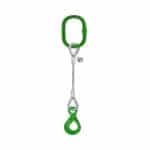
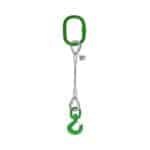
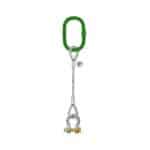
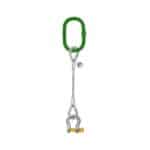
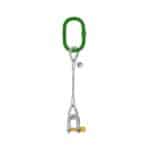
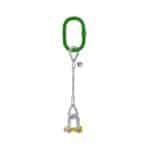
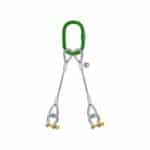
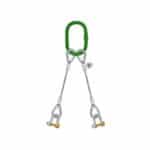
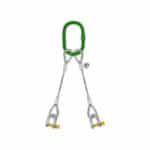
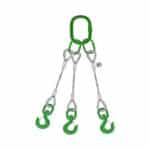
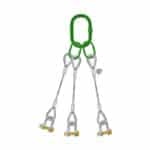
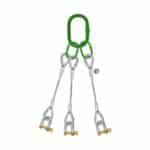
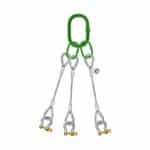
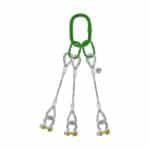
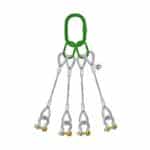
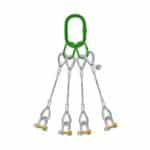
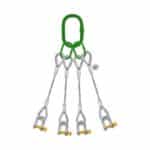
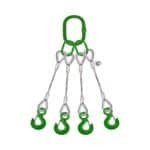
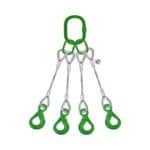
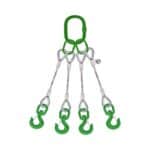
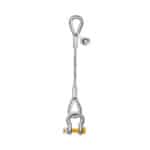
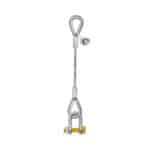
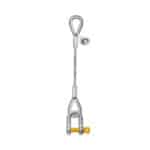
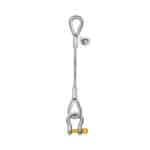
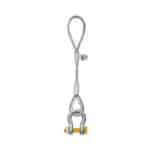
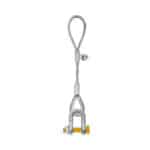
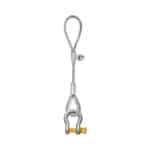
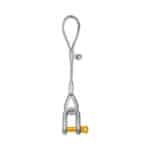
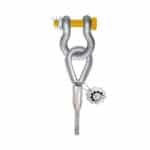
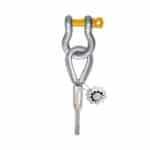
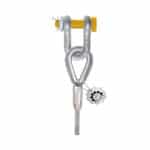
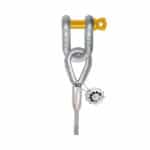
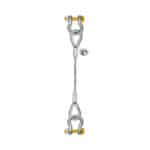
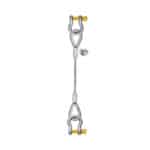
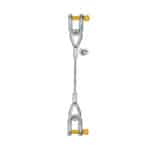
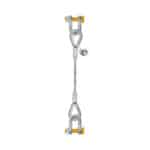
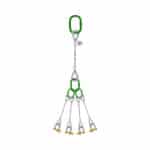
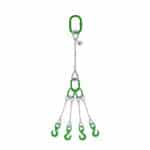
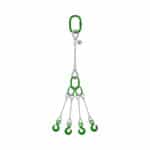
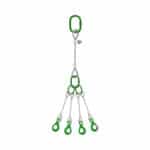
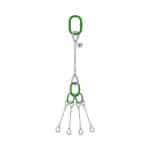
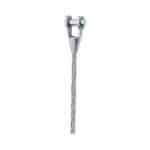
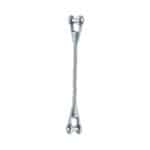
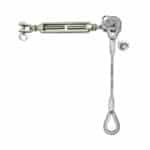
The Mechanics Behind 1-Leg Wire Rope Slings with Open Spelter and Open End: In heavy industrial environments such as construction, oil and gas, maritime, and manufacturing, safe and effective lifting is not an option—it’s a necessity. The reliability of lifting gear can make or break an operation, and in regions like Saudi Arabia, where large-scale infrastructure and energy projects are booming, choosing the right equipment is critical.
At SSTC (Safe and Secure Trading Company), we specialize in providing high-quality, certified lifting equipment tailored to Saudi Arabia’s demanding industrial sectors. One of the standout tools in our lifting arsenal is the 1-leg wire rope sling with open spelter socket and open end. This specific configuration offers unique benefits and flexibility, making it a preferred solution for specialized lifting applications.
In this blog, we’ll dive deep into the mechanics, features, use cases, and safety aspects of this lifting solution, empowering engineers, procurement teams, and rigging specialists to make informed decisions.
Table of contents
What is a 1-Leg Wire Rope Sling with Open Spelter and Open End?
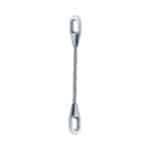
A 1-leg wire rope sling is a single cable sling designed for vertical lifting or as part of a custom rigging assembly. When combined with an open spelter socket at one end and an open or raw end on the other, it offers a flexible and modular lifting solution.
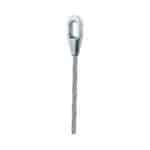
Open Spelter Socket: A termination device that allows the wire rope to be secured using molten zinc or epoxy. It includes an open clevis or jaw, making it easy to connect to shackles or lifting lugs.
Open End: The opposite end of the wire rope remains free for future termination, insertion into winches, or field installation with other types of fittings.
Mechanism: The open spelter socket terminates the wire rope by pouring molten zinc or resin into the socket basket, locking the rope’s individual strands in place.
Open Design: The clevis (or jaw) allows pin-and-cotter connection to lifting lugs, hooks, or shackles.
Use Case: Ideal for precise connections where easy attachment/detachment is needed, such as marine rigging or tower lifting.
2. Open End (Free Wire Rope)
Purpose: Provides flexibility for future adjustments or termination using grips, clamps, sleeves, or installation into powered winches or hoists.
Advantages: Eliminates the need for predefined end fittings. Beneficial for long-term projects with variable lifting configurations.
Together, these two elements create a sling that is both secure and adaptable, perfect for situations where lifting requirements may change during project execution.
The Mechanics Behind 1-Leg Wire Rope Slings with Open Spelter and Open End
Key Benefits
1. Modular & Customizable
Having an open end allows rigging teams to add a fitting of their choice—be it a thimble eye, swaged hook, or another socket. This flexibility makes it suitable for evolving project needs.
2. Superior Strength & Durability
The open spelter socket termination offers up to 100% efficiency of the wire rope’s rated strength, ensuring maximum load handling without compromise.
3. Field Adaptability
Especially useful in offshore or remote environments (like the deserts of Eastern Province or the rigs off the Red Sea), where equipment may need to be customized on the fly without access to full fabrication facilities.
4. Corrosion Resistance
SSTC uses galvanized or stainless steel wire ropes and sockets, making these slings suitable for harsh environmental conditions found across Saudi Arabia—from marine settings to desert oilfields.
5. Cost Efficiency
The ability to re-use the open end or customize it for different lifts reduces the need to buy new slings for each configuration.
MTC: Material Test Certificate will be provided with all gears.
3rd Party MTC: will be provided on customer demand.
Payment: Production starts after full payment
ISO 9001: certified production process with strict quality control measures.
Common Industrial Applications in Saudi Arabia
These slings are frequently used across diverse sectors in the Kingdom:
Oil & Gas
Used for lifting and securing blowout preventers (BOPs), drill pipes, risers, and other heavy equipment.
Common in ARAMCO and offshore rig operations.
Marine and Port Operations
Ideal for anchor handling, buoy positioning, vessel maintenance in ports like Jubail, Yanbu, and Dammam.
Construction and Infrastructure
Used in lifting steel columns, pre-cast concrete, and heavy formwork during high-rise building projects in Riyadh or NEOM.
Utilities and Energy
Employed in transformer installation, power line stringing, and turbine lifting in solar and wind power projects.
SSTC’s Manufacturing Capabilities
At SSTC, we provide more than off-the-shelf solutions. Our in-house rigging workshop allows us to fabricate and test custom 1-leg wire rope slings with open spelter sockets and open ends to your exact project requirements.
Our Value-Added Services Include:
Custom rope lengths and diameters
Load testing up to 200 tons
Resin or zinc spelter termination options
Protective rope sleeves and anti-abrasion coatings
RFID tagging for digital asset tracking
On-site technical support and inspection
We serve clients in Riyadh, Jeddah, Dammam, Jubail, Yanbu, and Al-Khobar with rapid delivery and engineering expertise.
Safety & Responsibility
Safe Use Guidelines
Before every lift:
Inspect the rope for kinks, corrosion, or broken wires
Ensure the socket pin is secure and cotter pin is intact
Verify load ratings on ID tags
Avoid side loading or shock loading
Responsible Handling
Store slings away from moisture and chemicals
Do not exceed WLL (Working Load Limit)
Replace rope if there is 10% or more visible strand damage
Train personnel on safe rigging practices and periodic inspection
Compliance
All SSTC slings comply with:
SASO (Saudi Standards, Metrology and Quality Organization)
ARAMCO lifting specifications
EN 13411, ISO 2408, and ASME B30.9
We believe in lifting responsibly, prioritizing worker safety and environmental durability.
Real Project Example: NEOM Construction Lift
SSTC recently supplied open spelter slings with open ends for a high-rise construction lift in the NEOM development zone. The ability to quickly change the termination on-site saved the client downtime and allowed them to meet critical project deadlines—demonstrating the real-world value of this flexible solution.
Vendor-approved by ARAMCO, SABIC, Ma’aden, and SEC
Personalized customer service and technical support
Our solutions are built for performance and priced for value, backed by a team that understands the unique challenges of Saudi industry.
The Mechanics Behind 1-Leg Wire Rope Slings with Open Spelter and Open End

Conclusion
The 1-leg wire rope sling with open spelter and open end is a compact, high-strength, and adaptable lifting solution trusted by rigging professionals across Saudi Arabia. Whether you’re managing a dynamic construction project or a critical offshore operation, SSTC is here to ensure your lifts are safe, reliable, and efficient.
SSTC – Engineering Trust, Lifting with Confidence.
Client-Centric Steel Fabrication: In today’s fast-paced industrial landscape, off-the-shelf solutions no longer meet the increasingly specific demands...
This mode enables people with epilepsy to use the website safely by eliminating the risk of seizures that result from flashing or blinking animations and risky color combinations.
Visually Impaired Mode
Improves website's visuals
This mode adjusts the website for the convenience of users with visual impairments such as Degrading Eyesight, Tunnel Vision, Cataract, Glaucoma, and others.
Cognitive Disability Mode
Helps to focus on specific content
This mode provides different assistive options to help users with cognitive impairments such as Dyslexia, Autism, CVA, and others, to focus on the essential elements of the website more easily.
ADHD Friendly Mode
Reduces distractions and improve focus
This mode helps users with ADHD and Neurodevelopmental disorders to read, browse, and focus on the main website elements more easily while significantly reducing distractions.
Blindness Mode
Allows using the site with your screen-reader
This mode configures the website to be compatible with screen-readers such as JAWS, NVDA, VoiceOver, and TalkBack. A screen-reader is software for blind users that is installed on a computer and smartphone, and websites must be compatible with it.
Online Dictionary
Readable Experience
Content Scaling
Default
Text Magnifier
Readable Font
Dyslexia Friendly
Highlight Titles
Highlight Links
Font Sizing
Default
Line Height
Default
Letter Spacing
Default
Left Aligned
Center Aligned
Right Aligned
Visually Pleasing Experience
Dark Contrast
Light Contrast
Monochrome
High Contrast
High Saturation
Low Saturation
Adjust Text Colors
Adjust Title Colors
Adjust Background Colors
Easy Orientation
Mute Sounds
Hide Images
Hide Emoji
Reading Guide
Stop Animations
Reading Mask
Highlight Hover
Highlight Focus
Big Dark Cursor
Big Light Cursor
Cognitive Reading
Virtual Keyboard
Navigation Keys
Voice Navigation
Accessibility Statement
safeandsecureksa.com
16 February 2026
Compliance status
We firmly believe that the internet should be available and accessible to anyone, and are committed to providing a website that is accessible to the widest possible audience,
regardless of circumstance and ability.
To fulfill this, we aim to adhere as strictly as possible to the World Wide Web Consortium’s (W3C) Web Content Accessibility Guidelines 2.1 (WCAG 2.1) at the AA level.
These guidelines explain how to make web content accessible to people with a wide array of disabilities. Complying with those guidelines helps us ensure that the website is accessible
to all people: blind people, people with motor impairments, visual impairment, cognitive disabilities, and more.
This website utilizes various technologies that are meant to make it as accessible as possible at all times. We utilize an accessibility interface that allows persons with specific
disabilities to adjust the website’s UI (user interface) and design it to their personal needs.
Additionally, the website utilizes an AI-based application that runs in the background and optimizes its accessibility level constantly. This application remediates the website’s HTML,
adapts Its functionality and behavior for screen-readers used by the blind users, and for keyboard functions used by individuals with motor impairments.
If you’ve found a malfunction or have ideas for improvement, we’ll be happy to hear from you. You can reach out to the website’s operators by using the following email
Screen-reader and keyboard navigation
Our website implements the ARIA attributes (Accessible Rich Internet Applications) technique, alongside various different behavioral changes, to ensure blind users visiting with
screen-readers are able to read, comprehend, and enjoy the website’s functions. As soon as a user with a screen-reader enters your site, they immediately receive
a prompt to enter the Screen-Reader Profile so they can browse and operate your site effectively. Here’s how our website covers some of the most important screen-reader requirements,
alongside console screenshots of code examples:
Screen-reader optimization: we run a background process that learns the website’s components from top to bottom, to ensure ongoing compliance even when updating the website.
In this process, we provide screen-readers with meaningful data using the ARIA set of attributes. For example, we provide accurate form labels;
descriptions for actionable icons (social media icons, search icons, cart icons, etc.); validation guidance for form inputs; element roles such as buttons, menus, modal dialogues (popups),
and others. Additionally, the background process scans all the website’s images and provides an accurate and meaningful image-object-recognition-based description as an ALT (alternate text) tag
for images that are not described. It will also extract texts that are embedded within the image, using an OCR (optical character recognition) technology.
To turn on screen-reader adjustments at any time, users need only to press the Alt+1 keyboard combination. Screen-reader users also get automatic announcements to turn the Screen-reader mode on
as soon as they enter the website.
These adjustments are compatible with all popular screen readers, including JAWS and NVDA.
Keyboard navigation optimization: The background process also adjusts the website’s HTML, and adds various behaviors using JavaScript code to make the website operable by the keyboard. This includes the ability to navigate the website using the Tab and Shift+Tab keys, operate dropdowns with the arrow keys, close them with Esc, trigger buttons and links using the Enter key, navigate between radio and checkbox elements using the arrow keys, and fill them in with the Spacebar or Enter key.Additionally, keyboard users will find quick-navigation and content-skip menus, available at any time by clicking Alt+1, or as the first elements of the site while navigating with the keyboard. The background process also handles triggered popups by moving the keyboard focus towards them as soon as they appear, and not allow the focus drift outside it.
Users can also use shortcuts such as “M” (menus), “H” (headings), “F” (forms), “B” (buttons), and “G” (graphics) to jump to specific elements.
Disability profiles supported in our website
Epilepsy Safe Mode: this profile enables people with epilepsy to use the website safely by eliminating the risk of seizures that result from flashing or blinking animations and risky color combinations.
Visually Impaired Mode: this mode adjusts the website for the convenience of users with visual impairments such as Degrading Eyesight, Tunnel Vision, Cataract, Glaucoma, and others.
Cognitive Disability Mode: this mode provides different assistive options to help users with cognitive impairments such as Dyslexia, Autism, CVA, and others, to focus on the essential elements of the website more easily.
ADHD Friendly Mode: this mode helps users with ADHD and Neurodevelopmental disorders to read, browse, and focus on the main website elements more easily while significantly reducing distractions.
Blindness Mode: this mode configures the website to be compatible with screen-readers such as JAWS, NVDA, VoiceOver, and TalkBack. A screen-reader is software for blind users that is installed on a computer and smartphone, and websites must be compatible with it.
Keyboard Navigation Profile (Motor-Impaired): this profile enables motor-impaired persons to operate the website using the keyboard Tab, Shift+Tab, and the Enter keys. Users can also use shortcuts such as “M” (menus), “H” (headings), “F” (forms), “B” (buttons), and “G” (graphics) to jump to specific elements.
Additional UI, design, and readability adjustments
Font adjustments – users, can increase and decrease its size, change its family (type), adjust the spacing, alignment, line height, and more.
Color adjustments – users can select various color contrast profiles such as light, dark, inverted, and monochrome. Additionally, users can swap color schemes of titles, texts, and backgrounds, with over seven different coloring options.
Animations – person with epilepsy can stop all running animations with the click of a button. Animations controlled by the interface include videos, GIFs, and CSS flashing transitions.
Content highlighting – users can choose to emphasize important elements such as links and titles. They can also choose to highlight focused or hovered elements only.
Audio muting – users with hearing devices may experience headaches or other issues due to automatic audio playing. This option lets users mute the entire website instantly.
Cognitive disorders – we utilize a search engine that is linked to Wikipedia and Wiktionary, allowing people with cognitive disorders to decipher meanings of phrases, initials, slang, and others.

Additional functions – we provide users the option to change cursor color and size, use a printing mode, enable a virtual keyboard, and many other functions.


Browser and assistive technology compatibility
We aim to support the widest array of browsers and assistive technologies as possible, so our users can choose the best fitting tools for them, with as few limitations as possible. Therefore, we have worked very hard to be able to support all major systems that comprise over 95% of the user market share including Google Chrome, Mozilla Firefox, Apple Safari, Opera and Microsoft Edge, JAWS and NVDA (screen readers).
Notes, comments, and feedback
Despite our very best efforts to allow anybody to adjust the website to their needs. There may still be pages or sections that are not fully accessible, are in the process of becoming accessible, or are lacking an adequate technological solution to make them accessible. Still, we are continually improving our accessibility, adding, updating and improving its options and features, and developing and adopting new technologies. All this is meant to reach the optimal level of accessibility, following technological advancements. For any assistance, please reach out to