Lifting Chain Slings: A Guide to Saudi Arabia’s Industry
Top 5 Benefits of Using a 1 Leg Chain Sling With a Clevis Grab Hook
Top 5 Benefits of Using a 1 Leg Chain Sling With a Clevis Grab Hook: In the…
- By Khurram Virk
No products in the cart.
Return To ShopFree shipping over 2000 SAR
No products in the cart.
Return To ShopFree shipping over 2000 SAR
Home » Top 5 Benefits of Using a 1 Leg Chain Sling With a Clevis Grab Hook
Top 5 Benefits of Using a 1 Leg Chain Sling With a Clevis Grab Hook: In the…
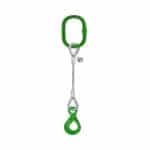
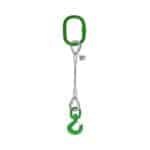
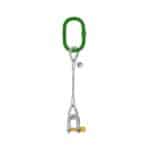
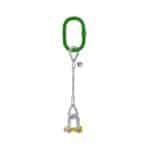
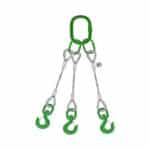
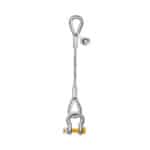
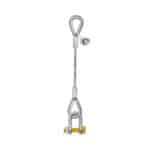
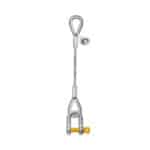
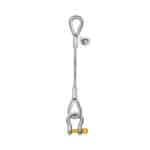
Top 5 Benefits of Using a 1 Leg Chain Sling With a Clevis Grab Hook: In the industrial and construction sectors of the Kingdom of Saudi Arabia (KSA), safety and efficiency are not just goals—they are requirements. Whether you operate in oil and gas, shipping, manufacturing, or construction, using the right lifting equipment is essential. At Safe and Secure Trading Company (SSTC), we understand the critical role that lifting gear plays in day-to-day operations. One of our most popular and trusted products is the 1-Leg Chain Sling with a Clevis Grab Hook.
But what exactly makes this tool a top choice for professionals across KSA? Let’s explore the top 5 benefits of using a 1-leg chain sling with a clevis grab hook supplied by SSTC.
The 1-leg chain sling is engineered for heavy-duty lifting tasks, and when paired with a clevis grab hook, it becomes even more reliable. Manufactured from high-grade alloy steel, SSTC’s chain slings are designed to withstand extreme conditions, whether it’s the scorching heat of Riyadh or the salty air of Dammam’s port.
Read Also: Top 5 Advantages of Using Seamless Endless Grommet Round Sling Belts
This makes it an ideal investment for companies looking to reduce equipment replacement costs while enhancing safety.
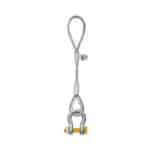
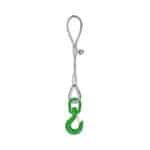
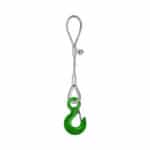
The clevis grab hook adds a layer of flexibility to the sling. It allows for easy adjustment of chain length and can secure the load without slipping, making it suitable for a wide range of material handling and lifting applications.
Whether you’re lifting steel beams or securing cargo, this tool is designed to adapt to your needs.
At SSTC, safety is at the core of everything we supply. All our 1-leg chain slings with clevis grab hooks comply with international safety standards, including EN 818-4 and OSHA guidelines. Each sling is tested, tagged, and certified before it reaches our customers.
By choosing SSTC’s chain slings, companies can meet local regulatory requirements in KSA and ensure the safety of their workforce.
Unlike wire ropes or synthetic slings, chain slings are easier to inspect, maintain, and repair. The clevis grab hook can be easily removed or replaced without welding, reducing downtime in the event of equipment failure.
This feature significantly reduces maintenance costs and operational disruptions, helping companies in KSA maintain continuous productivity.
While the initial cost of a 1-leg chain sling with a clevis grab hook may be higher than synthetic options, its longevity and reliability offer greater value in the long run. SSTC also provides competitive pricing and bulk order discounts for businesses in KSA.
In a market that prioritizes operational efficiency and safety, investing in a high-quality chain sling from SSTC is a smart financial decision.
As one of KSA’s leading suppliers of lifting and rigging equipment, Safe and Secure Trading Company (SSTC) offers:
When safety, performance, and compliance matter, SSTC is your trusted partner.
The 1-leg chain sling with a clevis grab hook is a must-have tool for any industry that values strength, flexibility, and safety. At SSTC, we not only provide top-tier products but also the assurance of local expertise and dependable service throughout the Kingdom of Saudi Arabia.
Don’t forget to share it
Related Articles
Lifting Chain Slings: A Guide to Saudi Arabia’s Industry
Lifting Chain Slings Manufacturer & Supplier In Saudi Arabia
Explore the Power of Chain Slings in Industrial Lifting In Saudi Arabia
The Ultimate Guide to 2-Leg Bridle Chain Slings with Bolt-Type Shackles in KSA
Reliable Lifting Solutions: Why Choose a 2-Leg Bridle Chain Sling with Screw Pin Shackles?
Chain Sling: 6 Critical Warning Signs
Block / Hoist / Trolley
Chains
Fall Protection
Hooks
Lifting Clamps
Shackles
Cargo Accessories
Lifting Slings
Wire Rope Fittings
Wire Ropes
Snatch Block / Pulley
Spreader Beam And Bar
Material Handling Equipment
Rigging Screws
Stainless Steel Accessories
Desiccant
Safety Shoes
Safe and Secure Trading Company
We firmly believe that the internet should be available and accessible to anyone, and are committed to providing a website that is accessible to the widest possible audience, regardless of circumstance and ability.
To fulfill this, we aim to adhere as strictly as possible to the World Wide Web Consortium’s (W3C) Web Content Accessibility Guidelines 2.1 (WCAG 2.1) at the AA level. These guidelines explain how to make web content accessible to people with a wide array of disabilities. Complying with those guidelines helps us ensure that the website is accessible to all people: blind people, people with motor impairments, visual impairment, cognitive disabilities, and more.
This website utilizes various technologies that are meant to make it as accessible as possible at all times. We utilize an accessibility interface that allows persons with specific disabilities to adjust the website’s UI (user interface) and design it to their personal needs.
Additionally, the website utilizes an AI-based application that runs in the background and optimizes its accessibility level constantly. This application remediates the website’s HTML, adapts Its functionality and behavior for screen-readers used by the blind users, and for keyboard functions used by individuals with motor impairments.
If you’ve found a malfunction or have ideas for improvement, we’ll be happy to hear from you. You can reach out to the website’s operators by using the following email
Our website implements the ARIA attributes (Accessible Rich Internet Applications) technique, alongside various different behavioral changes, to ensure blind users visiting with screen-readers are able to read, comprehend, and enjoy the website’s functions. As soon as a user with a screen-reader enters your site, they immediately receive a prompt to enter the Screen-Reader Profile so they can browse and operate your site effectively. Here’s how our website covers some of the most important screen-reader requirements, alongside console screenshots of code examples:
Screen-reader optimization: we run a background process that learns the website’s components from top to bottom, to ensure ongoing compliance even when updating the website. In this process, we provide screen-readers with meaningful data using the ARIA set of attributes. For example, we provide accurate form labels; descriptions for actionable icons (social media icons, search icons, cart icons, etc.); validation guidance for form inputs; element roles such as buttons, menus, modal dialogues (popups), and others. Additionally, the background process scans all the website’s images and provides an accurate and meaningful image-object-recognition-based description as an ALT (alternate text) tag for images that are not described. It will also extract texts that are embedded within the image, using an OCR (optical character recognition) technology. To turn on screen-reader adjustments at any time, users need only to press the Alt+1 keyboard combination. Screen-reader users also get automatic announcements to turn the Screen-reader mode on as soon as they enter the website.
These adjustments are compatible with all popular screen readers, including JAWS and NVDA.
Keyboard navigation optimization: The background process also adjusts the website’s HTML, and adds various behaviors using JavaScript code to make the website operable by the keyboard. This includes the ability to navigate the website using the Tab and Shift+Tab keys, operate dropdowns with the arrow keys, close them with Esc, trigger buttons and links using the Enter key, navigate between radio and checkbox elements using the arrow keys, and fill them in with the Spacebar or Enter key.Additionally, keyboard users will find quick-navigation and content-skip menus, available at any time by clicking Alt+1, or as the first elements of the site while navigating with the keyboard. The background process also handles triggered popups by moving the keyboard focus towards them as soon as they appear, and not allow the focus drift outside it.
Users can also use shortcuts such as “M” (menus), “H” (headings), “F” (forms), “B” (buttons), and “G” (graphics) to jump to specific elements.
We aim to support the widest array of browsers and assistive technologies as possible, so our users can choose the best fitting tools for them, with as few limitations as possible. Therefore, we have worked very hard to be able to support all major systems that comprise over 95% of the user market share including Google Chrome, Mozilla Firefox, Apple Safari, Opera and Microsoft Edge, JAWS and NVDA (screen readers).
Despite our very best efforts to allow anybody to adjust the website to their needs. There may still be pages or sections that are not fully accessible, are in the process of becoming accessible, or are lacking an adequate technological solution to make them accessible. Still, we are continually improving our accessibility, adding, updating and improving its options and features, and developing and adopting new technologies. All this is meant to reach the optimal level of accessibility, following technological advancements. For any assistance, please reach out to