Understanding Overhead Lifting Solutions
Overhead lifting equipment is essential for many industries, offering efficient and safe ways to move heavy loads. The selection of the right equipment significantly impacts productivity, safety, and operational costs. Among the most common types of lifting devices are geared trolley hoists and chain hoists, each designed with unique features suited for specific applications. This article provides a detailed comparison of these two types of hoists, helping you make an informed decision based on your particular needs. We’ll explore their functionalities, advantages, disadvantages, and real-world applications to give you a complete overview.
What is a Geared Trolley Hoist?
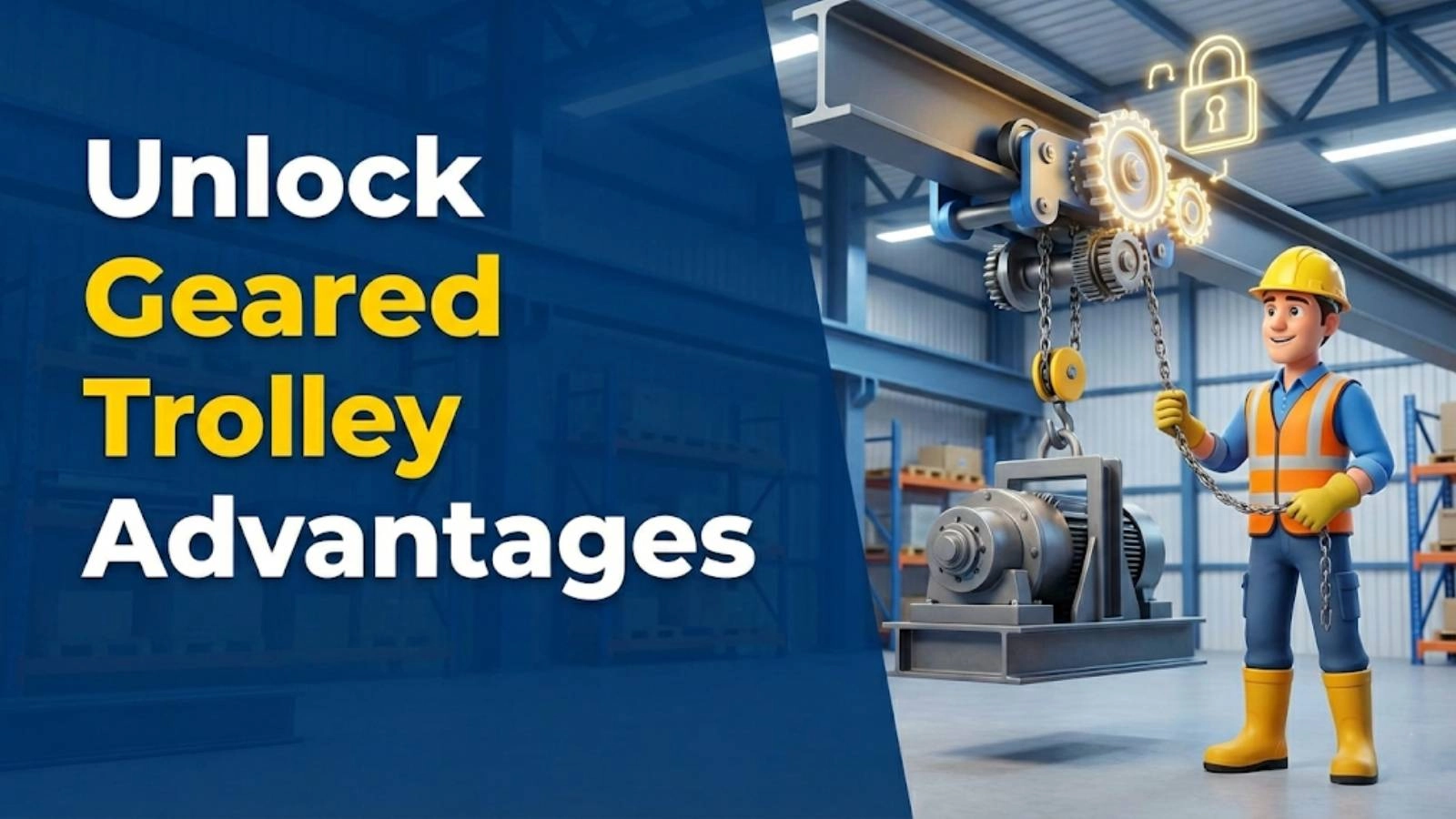
A geared trolley hoist is a lifting device that combines a hoist mechanism with a trolley that can move horizontally along a beam or track. The “geared” aspect refers to the use of gears to provide mechanical advantage, allowing for precise and controlled movement of the load. The working principle involves using a hand chain or lever to rotate gears, which then drive the trolley along the beam and simultaneously lift or lower the load via a separate lifting mechanism, typically a chain or wire rope. This precise control makes geared trolley hoists ideal for applications where accurate positioning is crucial.
There are several types of geared trolley hoists. Manual geared trolley hoists rely entirely on human power to move both the trolley and the load. Electric geared trolley hoists use an electric motor to power the trolley movement, reducing manual effort. Air-powered geared trolley hoists utilize compressed air to drive the trolley, suitable for environments where electricity is not ideal or available. Each type offers different levels of automation and is chosen based on the specific demands of the lifting task. For many of our clients here in Dammam, we’ve seen that a manual geared trolley hoist offers precision that other options often lack.
Advantages of Geared Trolley Hoists
- ✅ Precise load control and positioning: The geared mechanism allows for fine adjustments and accurate placement of heavy items. This is crucial in assembly lines and maintenance operations where precision is paramount.
- ✅ Suitable for low-headroom applications: Geared trolley hoists are often designed to minimize the vertical space required, making them suitable for environments with limited headroom.
- ✅ Cost-effective for lower frequency lifting: For operations that do not require frequent lifting, geared trolley hoists can be a more economical choice compared to electric or pneumatic options.
- ✅ Simple maintenance: With fewer complex components, geared trolley hoists generally require less maintenance and are easier to repair.
Disadvantages of Geared Trolley Hoists
- ❌ Slower lifting speeds compared to chain hoists: The geared mechanism prioritizes precision over speed, resulting in slower lifting and travel times.
- ❌ Requires manual effort for movement (for manual trolleys): Manual geared trolleys necessitate physical exertion to move the load, which can be tiring for operators over extended periods.
- ❌ Limited lifting height in some designs: The design of some geared trolley hoists may restrict the maximum lifting height achievable.
What is a Chain Hoist?
A chain hoist is a mechanical device used to lift and lower heavy loads using a chain as the lifting medium. The working principle involves pulling a hand chain (for manual hoists) or activating an electric motor (for electric hoists) to drive a series of gears that wind the load chain around a wheel, lifting the load. The chain mechanism provides a direct and efficient way to raise and lower items, making chain hoists versatile for a wide range of applications. We find chain hoists are extremely effective in environments that necessitate swift and repetitive operations.
Chain hoists come in several types, each suited to different operational needs. Manual chain hoists, also known as hand chain hoists or chain blocks, rely on manual effort to pull the chain and lift the load. Electric chain hoists use an electric motor to automate the lifting process, increasing efficiency and reducing operator fatigue. Pneumatic chain hoists utilize compressed air to power the lifting mechanism, ideal for environments where electrical power is not available or safe to use. The choice of chain hoist depends on factors such as lifting frequency, load weight, and environmental conditions.
Advantages of Chain Hoists
- ✅ Faster lifting speeds compared to geared trolley hoists: Chain hoists are designed for speed, making them ideal for repetitive lifting tasks where efficiency is crucial.
- ✅ Higher lifting heights achievable: Chain hoists can typically lift loads to greater heights compared to geared trolley hoists, accommodating taller structures and deeper lifting requirements.
- ✅ Electric models reduce manual effort: Electric chain hoists automate the lifting process, reducing physical strain on operators and improving productivity.
- ✅ Suitable for repetitive lifting tasks: The design of chain hoists makes them well-suited for environments where loads need to be lifted and lowered frequently.
Disadvantages of Chain Hoists
- ❌ Less precise load positioning than geared trolleys: Chain hoists prioritize speed and lifting capacity over precise positioning, which can be a disadvantage in applications requiring fine adjustments.
- ❌ Can be more expensive than geared trolley hoists: Electric and pneumatic chain hoists often have a higher initial cost compared to manual geared trolley hoists, due to their more complex mechanisms.
- ❌ Higher maintenance requirements in some cases: Electric and pneumatic chain hoists may require more frequent maintenance due to the complexity of their components.
- ❌ Not ideal for very low headroom applications: The design of some chain hoists may not be suitable for environments with very limited headroom.
Deep Dive: Key Differences in Functionality
The fundamental differences between a geared trolley hoist and a chain hoist lie in their lifting mechanisms, load positioning capabilities, lifting speeds, and ease of use. Understanding these distinctions is essential for selecting the right hoist for specific applications.
Lifting Mechanism: A geared trolley hoist utilizes a series of gears to provide mechanical advantage, allowing for precise control over the load. This mechanism is ideal for applications where fine adjustments and accurate positioning are crucial. In contrast, a chain hoist uses a chain and a system of pulleys or sprockets to lift the load. The chain mechanism is designed for speed and efficiency, making it suitable for repetitive lifting tasks.
Load Positioning: Geared trolley hoists excel in applications requiring precise load positioning. The geared mechanism allows operators to make fine adjustments and accurately place heavy items in specific locations. Chain hoists, while efficient for lifting, offer less precise control over load positioning. This difference is crucial in manufacturing and assembly processes where accuracy is paramount.
Lifting Speed: The lifting speed is a significant factor in determining the suitability of a hoist for a particular application. Chain hoists are designed for faster lifting speeds, making them ideal for environments where loads need to be lifted and lowered quickly and frequently. Geared trolley hoists, with their emphasis on precision, operate at slower speeds. This difference in speed can significantly impact productivity in repetitive lifting tasks.
Ease of Use: Both geared trolley hoists and chain hoists are designed to be user-friendly, but their ease of use can vary depending on the specific model and application. Manual geared trolley hoists require physical effort to move the load, which can be tiring for operators over extended periods. Electric chain hoists automate the lifting process, reducing physical strain and improving productivity. The choice between the two depends on the operator’s capabilities and the frequency of lifting tasks. We often advise clients to consider the long-term implications for worker well-being.
Load Capacity and Safety Considerations
Safe Working Load (SWL) is the maximum load that a hoist is designed to lift safely. It is crucial to adhere to the SWL to prevent accidents and equipment damage. Exceeding the SWL can lead to hoist failure, resulting in serious injuries and costly repairs. Always ensure that the selected hoist has a SWL that meets or exceeds the weight of the load being lifted.
Common safety features in hoists include overload protection, which prevents the hoist from lifting loads beyond its SWL. Limit switches are another important safety feature, preventing the hoist from over-traveling and causing damage to the equipment or the surrounding structure. Regular inspections and maintenance are essential for ensuring the safe operation of hoists.
Selecting the appropriate load capacity involves considering not only the weight of the load but also any additional factors such as the lifting angle and the environmental conditions. Always consult with a qualified engineer to determine the appropriate load capacity for specific lifting applications. Regular inspections and maintenance are critical for identifying and addressing potential safety hazards, ensuring the continued safe operation of the lifting equipment.
Application Scenarios: Matching the Hoist to the Task
The choice between a geared trolley hoist and a chain hoist largely depends on the specific application and the requirements of the lifting task. Understanding the ideal scenarios for each type of hoist can help you make an informed decision.
Geared Trolley Hoists:
- Manufacturing facilities requiring precise positioning: Geared trolley hoists are ideal for manufacturing environments where components need to be accurately placed during assembly. The geared mechanism allows for fine adjustments, ensuring that parts are aligned correctly.
- Maintenance and repair shops with low lifting frequency: In maintenance and repair shops, geared trolley hoists are suitable for lifting heavy equipment and machinery for servicing. The precise control offered by the geared mechanism is beneficial when working on delicate or complex components.
- Construction sites for moving heavy equipment: On construction sites, geared trolley hoists can be used to move heavy equipment and materials, such as steel beams and concrete blocks. The ability to precisely position these items is crucial for ensuring structural integrity and safety.
Chain Hoists:
- Assembly lines with repetitive lifting tasks: Chain hoists are well-suited for assembly lines where loads need to be lifted and lowered frequently. The faster lifting speeds of chain hoists improve efficiency and reduce cycle times.
- Warehouses for loading and unloading materials: In warehouses, chain hoists are used for loading and unloading materials from trucks and storage racks. The higher lifting heights achievable with chain hoists accommodate taller structures and deeper lifting requirements.
- Theaters and stage rigging for lifting lighting and scenery: In theaters and stage rigging, chain hoists are used to lift and position lighting and scenery. The ability to quickly and easily adjust the height of these items is essential for creating dynamic and engaging performances. We have seen many theaters benefit from the speed and ease of chain hoists.
Cost Analysis: Initial Investment vs. Long-Term Expenses
When selecting a hoist, it’s crucial to consider not only the initial purchase cost but also the long-term expenses associated with maintenance, energy consumption, and potential downtime. A comprehensive cost analysis can help you make a financially sound decision.
The initial purchase costs of geared trolley hoists and chain hoists can vary depending on the type, load capacity, and features. Manual geared trolley hoists are generally less expensive than electric chain hoists, but they require more manual effort. Electric chain hoists offer increased efficiency and reduced operator fatigue, but they come with a higher upfront cost.
Maintenance costs can also vary significantly between the two types of hoists. Geared trolley hoists, with their simpler design, typically require less maintenance and fewer repairs. Electric chain hoists, with their more complex mechanisms, may require more frequent maintenance and specialized repairs. The lifespan of each type of hoist can also impact long-term costs. High-quality hoists that are properly maintained can last for many years, providing a good return on investment.
Energy consumption is a factor to consider when evaluating electric chain hoists. Electric models consume electricity during operation, which can add to the overall cost. Choosing energy-efficient models can help reduce energy consumption and lower operating costs. Potential downtime costs should also be factored into the analysis. Hoist failures can result in production delays and costly repairs. Selecting reliable hoists and implementing a regular maintenance program can help minimize downtime and associated expenses.
Expert Quote:
“When choosing between a geared trolley and a chain hoist, carefully assess the precision, speed, and frequency of your lifting needs. A geared trolley excels in accuracy, while a chain hoist offers speed and power. Consider the long-term operational costs and maintenance requirements for each system.” – John Carter, Senior Mechanical Engineer, Lifting Solutions Inc.
Case Studies: Real-World Applications
Real-world applications of geared trolley hoists and chain hoists illustrate their versatility and effectiveness in various industries. Examining specific case studies can provide valuable insights into how these hoists are used in practice.
Case Study 1: A manufacturing plant using geared trolleys for assembling precision machinery. In this scenario, geared trolley hoists are used to lift and position heavy components with extreme accuracy. The geared mechanism allows for fine adjustments, ensuring that parts are aligned correctly during assembly. The plant benefits from improved precision, reduced errors, and enhanced product quality.
Case Study 2: A warehouse using electric chain hoists for efficient pallet handling. In this application, electric chain hoists are used to load and unload pallets from trucks and storage racks. The faster lifting speeds of electric chain hoists improve efficiency and reduce cycle times. The warehouse benefits from increased throughput, reduced labor costs, and improved overall productivity.
Case Study 3: A construction site employing both types of hoists for various lifting tasks. On this construction site, geared trolley hoists are used for moving heavy equipment and materials, such as steel beams and concrete blocks. Chain hoists are used for lifting and positioning smaller items, such as tools and supplies. The combination of both types of hoists allows the construction site to handle a wide range of lifting tasks efficiently and safely. For many of our clients here in Dammam, we’ve seen them use both options for different tasks, even within the same jobsite.
Maintenance and Inspection Best Practices
Proper maintenance and regular inspections are essential for ensuring the safe and reliable operation of both geared trolley hoists and chain hoists. Adhering to recommended maintenance procedures and conducting frequent inspections can help prevent accidents, reduce downtime, and extend the lifespan of the equipment.
Recommended maintenance procedures for geared trolley hoists include lubricating the gears and trolley wheels, inspecting the chain or wire rope for wear and damage, and checking the brakes for proper function. Regular cleaning and lubrication can help prevent corrosion and ensure smooth operation.
Recommended maintenance procedures for chain hoists include lubricating the chain, inspecting the hooks and latches for damage, and checking the brake mechanism for proper function. The chain should be regularly cleaned and inspected for signs of wear or stretching.
The frequency of inspections should be determined based on the usage and environmental conditions. Hoists used in heavy-duty applications or harsh environments should be inspected more frequently. Key components to check during inspections include the chain or wire rope, hooks, latches, brakes, gears, and trolley wheels.
Lubrication is critical for reducing friction and preventing wear in both geared trolley hoists and chain hoists. Use the recommended lubricants and apply them according to the manufacturer’s instructions. Proper storage is also important for protecting the equipment from damage and corrosion. Store hoists in a clean, dry environment when not in use.
Final Verdict: Choosing the Right Hoist for Your Needs
Selecting the right hoist depends on your specific requirements. Each type of hoist offers unique advantages, making them suitable for different applications.
- Best for Precision: Geared Trolley Hoist
- Best for Speed and Height: Chain Hoist
- Best for Budget: In terms of initial investment, manual geared trolley hoists are typically the most cost-effective option. However, when considering long-term expenses such as maintenance and energy consumption, the best choice depends on the specific models and requirements. Electric chain hoists may have a higher upfront cost, but they can offer lower operating costs due to increased efficiency and reduced manual effort. Ultimately, the best option for your budget will depend on a thorough analysis of your specific needs and priorities.
In summary, geared trolley hoists are ideal for applications requiring precise load positioning, while chain hoists are better suited for tasks that demand speed and high lifting heights. By understanding the key differences between these two types of hoists and their implications, you can make an informed decision that optimizes your lifting operations. We are here to help you choose the best option for your needs.
FAQ Section
Q: What is the main difference between a geared trolley hoist and a chain hoist?
A: A geared trolley hoist is designed for precise load positioning using a geared mechanism, while a chain hoist is designed for faster lifting speeds and higher lifting heights using a chain mechanism.
Q: Which type of hoist is better for low-headroom applications?
A: Geared trolley hoists are generally better suited for low-headroom applications due to their compact design.
Q: Which type of hoist is more cost-effective for occasional lifting tasks?
A: Manual geared trolley hoists are typically more cost-effective for occasional lifting tasks due to their lower initial cost and simpler design.
Q: What safety features should I look for when selecting a hoist?
A: Look for safety features such as overload protection and limit switches, which help prevent accidents and equipment damage.
Q: How often should I inspect and maintain my hoist?
A: The frequency of inspections and maintenance should be determined based on the usage and environmental conditions. Hoists used in heavy-duty applications or harsh environments should be inspected more frequently. Regular lubrication and cleaning are also essential for maintaining optimal performance.
Q: Can I use a chain hoist for precise load positioning?
A: While chain hoists are not specifically designed for precise load positioning, some models offer features that can improve accuracy. However, geared trolley hoists are generally better suited for applications requiring fine adjustments.
Q: What is the Safe Working Load (SWL)?
A: Safe Working Load (SWL) is the maximum load that a hoist is designed to lift safely. It is crucial to adhere to the SWL to prevent accidents and equipment damage. Always ensure that the selected hoist has a SWL that meets or exceeds the weight of the load being lifted.
Q: Are electric chain hoists more efficient than manual chain hoists?
A: Yes, electric chain hoists are generally more efficient than manual chain hoists because they automate the lifting process, reducing physical strain on operators and improving productivity.
Q: What type of hoist is best for assembly lines with repetitive lifting tasks?
A: Chain hoists are well-suited for assembly lines with repetitive lifting tasks due to their faster lifting speeds and higher lifting heights.
Q: Where can I find high-quality geared trolley hoists and chain hoists?
A: Safe and Secure Trading Company (SSTC) offers a wide range of high-quality geared trolley hoists and chain hoists to meet your specific lifting needs. Contact us today for a personalized consultation. We provide the highest quality industrial hoist options for your business needs. We can assist in finding you the correct manual trolley hoist or electric chain hoist for your business.