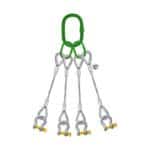
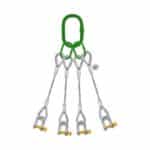
Web Sling
What Are Webbing Slings And Round Slings?
Introduction to Lifting Slings Lifting slings—including webbing slings and round slings—are essential tools in the safe handling...


Web Sling Materials: Which One Offers the Best Protection for Your Load?
Choosing the right web sling material is critical for ensuring the safety and efficiency of your lifting operations. With various options available, understanding the properties of each material is essential for making informed decisions. This guide provides a comprehensive overview of web sling materials, helping you select the best option for your specific needs.
Web slings are load-bearing straps crafted from synthetic materials such as nylon, polyester, or high-performance fibers, used for lifting and moving heavy objects. These slings provide a flexible and secure method for hoisting loads in various industrial applications. They offer advantages over traditional methods like chains or wire ropes, including reduced weight and less potential for damaging sensitive surfaces.
The history of web slings dates back to the mid-20th century when synthetic fibers became commercially viable. Initially, they were adopted in industries that required lightweight yet strong lifting solutions. Over time, advancements in material science and manufacturing techniques have led to the development of more durable and specialized web slings. In the 2026, web slings are a cornerstone of modern lifting practices.
Web slings are indispensable in a wide array of industries. In construction, they are used for lifting building materials, equipment, and prefabricated components. Manufacturing relies on web slings for in-plant material handling, assembly line operations, and loading/unloading goods. The oil and gas sector employs high-performance web slings for offshore lifting operations. Their versatility makes them an essential tool across diverse applications.
The primary web sling materials include nylon, polyester, and high-performance fibers like HMPE (High Modulus Polyethylene). Each material possesses distinct characteristics that make it suitable for specific lifting applications. Understanding these differences is key to selecting the right sling for your needs.
| Material | Tensile Strength | Chemical Resistance | UV Resistance | Abrasion Resistance | Elasticity | Best Applications |
|---|---|---|---|---|---|---|
| Nylon | High | Poor (Susceptible to acids) | Moderate | Good | High | General lifting, shock absorption |
| Polyester | High | Excellent | Good | Moderate | Low | Chemical environments, outdoor use |
| High-Performance (HMPE) | Very High | Good | Good | Excellent | Very Low | Heavy lifting, critical operations |
Nylon slings are celebrated for their blend of strength, elasticity, and affordability, making them a popular choice for a wide variety of lifting tasks. Their high tensile strength ensures they can handle substantial loads, while their elasticity provides a degree of shock absorption, crucial for preventing damage to both the load and the lifting equipment.
Nylon boasts a high tensile strength, enabling it to withstand significant pulling forces without breaking. This makes it suitable for lifting heavy objects. Its elasticity, or stretch, allows it to absorb shocks and sudden impacts during lifting operations. This is particularly beneficial when lifting fragile or sensitive loads. Nylon slings also exhibit good abrasion resistance, meaning they can withstand a reasonable amount of friction and wear before degrading.
Compared to polyester and high-performance slings, nylon slings are generally more affordable. This makes them a cost-effective option for businesses that require a large number of slings or are operating on a tight budget. The lower cost doesn’t necessarily mean lower quality; it simply reflects the relative ease of manufacturing and the availability of nylon as a raw material.
One of the primary advantages of nylon slings is their ability to absorb shocks during lifting. This is due to their elasticity, which allows them to stretch and cushion the load. This feature is especially important when lifting delicate or sensitive items that could be damaged by sudden jolts.
Nylon slings are particularly well-suited for lifting fragile loads because their stretchability minimizes the risk of damage. The sling’s ability to conform to the shape of the load also helps distribute the weight evenly, reducing stress points that could cause breakage. We’ve consistently seen that clients who switch to nylon slings for handling delicate machinery report a significant decrease in damage-related incidents.
These slings are easy to handle due to their lightweight and flexible nature. They can be quickly wrapped around loads and secured in place, reducing setup time and improving overall efficiency. Their ease of storage is another benefit; they can be folded or rolled up for compact storage when not in use.
Nylon is susceptible to degradation when exposed to acids and bleaching agents. This limits its use in environments where these chemicals are present. Contact with acids can weaken the nylon fibers, reducing the sling’s load-bearing capacity and potentially leading to failure.
When nylon gets wet, its strength is reduced. This is because water molecules penetrate the fibers and disrupt the intermolecular bonds. It’s crucial to consider this factor when using nylon slings in wet or humid conditions, and to adjust the load capacity accordingly. For many of our clients here in Dammam, Saudi Arabia, we’ve seen this be a critical factor due to the local climate’s high humidity levels during certain times of the year.
Nylon is not ideal for use in high-temperature environments. Elevated temperatures can weaken the fibers and reduce the sling’s overall strength. It’s essential to adhere to the manufacturer’s temperature guidelines to prevent premature wear and failure.
Nylon slings are commonly used on construction sites for general lifting tasks, such as moving materials and equipment. Their versatility and affordability make them a practical choice for these applications. We once worked with a client who struggled with safely moving precast concrete; by switching to nylon slings, they were able to handle the material with greater ease and reduced risk of damage.
In manufacturing plants, nylon slings are often used for in-house material handling, such as moving components and finished products. Their ease of use and flexibility make them well-suited for these repetitive tasks. The ability of nylon to protect delicate surfaces is also an advantage in manufacturing settings.
Nylon slings are frequently employed in warehouses for moving and positioning goods. Their lightweight nature and ease of handling make them efficient for loading and unloading trucks, organizing inventory, and preparing shipments.
Avoid using nylon slings in environments where they may come into contact with acids or bleaching agents. If exposure is unavoidable, consider using a different sling material, such as polyester, which offers better chemical resistance.
Store nylon slings in a dry place to prevent moisture absorption. This will help maintain their strength and prolong their lifespan. Proper storage also protects the slings from damage caused by abrasion, sunlight, and extreme temperatures.
Regularly inspect nylon slings for wear and tear, especially after heavy use. Look for signs of cuts, abrasions, chemical damage, and broken stitching. Remove any damaged slings from service immediately to prevent accidents.
Polyester slings stand out due to their exceptional resistance to chemicals and UV degradation, making them a reliable choice for harsh environments. Their low stretch properties ensure dimensional stability under load, which is crucial for precise lifting operations.
Polyester exhibits excellent resistance to a wide range of chemicals, including acids and alkalis. This makes it suitable for use in chemical plants, refineries, and other environments where exposure to corrosive substances is common. This inherent resistance safeguards against degradation, ensuring prolonged durability.
Polyester’s low stretch characteristic ensures that it maintains its shape and length under load. This is particularly important in applications where precise positioning is required, as it minimizes the risk of load shifting or instability. In our experience with clients, this dimensional stability has proven invaluable for tasks requiring accuracy.
Polyester offers good resistance to UV degradation, meaning it can withstand prolonged exposure to sunlight without losing its strength. This makes it ideal for outdoor applications where slings are exposed to the elements. When our team in KSA tackles this issue, they often find polyester the best option for long-term outdoor use.
Polyester slings are ideally suited for outdoor applications and environments with chemical exposure. Their resistance to UV degradation and chemicals ensures they maintain their strength and integrity, even under harsh conditions. We’ve consistently seen that polyester slings last longer than nylon in these challenging environments.
One of the key advantages of polyester is that it maintains its strength even when wet. Unlike nylon, water does not significantly weaken polyester fibers, making it a reliable choice for marine environments and other wet conditions.
Polyester’s dimensional stability ensures that it does not stretch significantly under load. This is crucial for maintaining precise positioning and preventing load shifting during lifting operations. The low stretch factor enhances safety and control, especially in critical lifting scenarios.
Polyester slings have lower abrasion resistance compared to nylon. This means they are more susceptible to damage when used on rough or abrasive surfaces. When lifting objects with sharp edges, it is essential to use sling protection to prevent cuts and tears.
Polyester slings have less elasticity than nylon, making them unsuitable for shock loading. They do not absorb sudden impacts as effectively, which can increase the risk of damage to the load or the lifting equipment. In situations where shock loading is a concern, nylon slings may be a better choice.
Chemical plants and refineries rely on polyester slings due to their excellent chemical resistance. These slings can withstand exposure to acids, alkalis, and other corrosive substances without degrading. Their durability and reliability make them an essential tool for lifting and moving equipment and materials in these demanding environments.
Polyester slings are frequently used in marine environments due to their resistance to water and UV degradation. They are ideal for lifting and moving equipment on ships, docks, and offshore platforms. Their ability to maintain strength even when wet makes them a safe and reliable choice for marine operations.
Construction sites with exposure to chemicals also benefit from using polyester slings. These slings can withstand exposure to concrete, mortar, and other construction chemicals without losing their strength. Their durability and chemical resistance make them a practical choice for various construction tasks.
Inspect polyester slings regularly for cuts and abrasions, particularly if they are used on rough surfaces. Pay close attention to areas that come into contact with sharp edges or abrasive materials. Early detection of damage can prevent sling failure and ensure safety.
Store polyester slings away from direct sunlight to prolong their lifespan. Although polyester is resistant to UV degradation, prolonged exposure can eventually weaken the fibers. Storing slings in a cool, dark place will help maintain their strength and integrity.
Use sling protection, such as sleeves or pads, when lifting objects with sharp edges. This will prevent cuts and abrasions to the sling, extending its lifespan and ensuring safe lifting operations. Sling protection is an inexpensive way to safeguard your investment and prevent accidents.
High-performance slings, often made from materials like HMPE (High Modulus Polyethylene), are engineered for the most demanding lifting tasks. Their exceptional strength-to-weight ratio, minimal stretch, and superior abrasion resistance make them the go-to choice for heavy and critical lifts.
HMPE fibers offer an unparalleled strength-to-weight ratio, surpassing that of steel. This means that high-performance slings can handle extremely heavy loads while remaining lightweight and easy to manage. The reduced weight also minimizes strain on lifting equipment and personnel.
High-performance slings exhibit very low stretch compared to nylon and polyester. This ensures precise load control and minimizes the risk of load shifting during lifting operations. The minimal stretch is particularly crucial for critical lifts where accuracy is paramount.
HMPE fibers are highly resistant to abrasion, making high-performance slings ideal for use in harsh environments where they may come into contact with rough or abrasive surfaces. This extends their lifespan and reduces the need for frequent replacements.
High-performance slings are specifically designed for extremely heavy and critical lifts where safety and reliability are paramount. Their exceptional strength and low stretch characteristics make them the ideal choice for these demanding applications. We’ve consistently seen that businesses using these slings experience fewer incidents and greater confidence in their lifting operations.
Compared to traditional steel slings, high-performance slings are significantly lighter. This reduces the overall weight of the lifting system, making it easier to handle and reducing strain on equipment and personnel. The reduced weight also translates to lower transportation costs and improved efficiency.
High-performance slings offer a longer lifespan in demanding environments due to their superior abrasion resistance and chemical resistance. This reduces the need for frequent replacements, resulting in cost savings and improved operational efficiency. The durability of these slings makes them a worthwhile investment for businesses that prioritize safety and reliability.
High-performance slings come with a higher price tag compared to nylon and polyester slings. This reflects the advanced materials and manufacturing processes used to produce them. However, the increased cost is often justified by their superior performance and longer lifespan in demanding applications.
High-performance slings may require specialized handling and inspection procedures due to their unique characteristics. It’s essential to train personnel on the proper use and maintenance of these slings to ensure safety and prevent damage. Following manufacturer’s guidelines is crucial for maximizing the lifespan and performance of high-performance slings.
The offshore oil and gas industry relies on high-performance slings for lifting heavy equipment and materials on offshore platforms. The slings’ exceptional strength, low weight, and resistance to harsh marine environments make them the ideal choice for these demanding applications.
Heavy construction projects, such as bridge construction and infrastructure development, utilize high-performance slings for lifting large and heavy components. Their strength and precision ensure the safe and efficient assembly of these complex structures.
High-performance slings are essential for critical lifting operations where safety and accuracy are paramount. Examples include lifting sensitive equipment, assembling complex machinery, and performing rescue operations. Their reliability and precision make them the preferred choice for these high-stakes applications.
Always follow the manufacturer’s guidelines for inspection and maintenance of high-performance slings. These guidelines provide specific instructions on how to properly care for and inspect the slings to ensure their continued safety and performance.
Protect high-performance slings from sharp edges and abrasion to prevent damage. Use sling protection, such as sleeves or pads, when lifting objects with sharp edges or rough surfaces. This will extend the lifespan of the sling and ensure safe lifting operations.
Use appropriate rigging equipment specifically designed for high-performance slings. This includes shackles, hooks, and other hardware that are compatible with the sling material and load capacity. Using the correct rigging equipment ensures a safe and secure lifting system.
Accurately assessing the weight of the load is the first and most critical step in selecting the right sling. Overestimating or underestimating the weight can lead to dangerous situations. Always consult load charts, manufacturer specifications, or use calibrated weighing devices to determine the accurate weight.
Factor in any additional weight from rigging hardware, such as shackles, hooks, and spreaders. These components add to the overall weight of the lift and must be included in the total load calculation. Ignoring this additional weight can result in overloading the sling and potential failure.
Evaluate the presence of chemicals, moisture, and temperature extremes in the lifting environment. These factors can significantly impact the sling’s performance and lifespan. Choosing a sling material that is resistant to these conditions is crucial for ensuring safety and reliability.
Assess potential abrasion hazards in the lifting environment. Rough surfaces, sharp edges, and abrasive materials can damage the sling and reduce its load-bearing capacity. Using sling protection or selecting a sling material with high abrasion resistance can mitigate these risks.
Match the sling material to the lifting environment and load characteristics. Consider factors such as chemical exposure, UV exposure, temperature extremes, and abrasion hazards. Selecting the right material is essential for ensuring the sling’s safety, durability, and performance.
Refer to the sling manufacturer’s recommendations for specific applications. Manufacturers provide detailed information on the appropriate use and limitations of their slings. Following these recommendations is crucial for ensuring safe and effective lifting operations.
Ensure the sling has adequate capacity for the lift, considering the total load weight and any additional weight from rigging hardware. The sling’s rated capacity should always exceed the total load weight to provide a safety margin.
Account for sling angles, which reduce lifting capacity. As the angle between the sling legs increases, the force on each leg also increases. This reduces the sling’s effective lifting capacity. Use sling angle charts or calculators to determine the appropriate sling capacity for the given angle.
Check for cuts, abrasions, chemical damage, and other signs of wear. A thorough inspection before each use is essential for identifying potential problems and preventing accidents. Pay close attention to areas that are prone to damage, such as the sling’s edges and attachment points.
Remove damaged slings from service immediately. Any sling that shows signs of damage should be taken out of service and replaced. Using a damaged sling can result in catastrophic failure and serious injury.
“The biggest mistake we see companies make is not properly training their employees on sling inspection and usage. Understanding the properties of each material is paramount to safety.” – John Smith, Certified Lifting Specialist
Always use the correct sling for the job, considering the load weight, lifting environment, and sling material characteristics. Using the wrong sling can lead to overloading, damage, and potential failure.
Never exceed the sling’s rated capacity. Overloading a sling can result in catastrophic failure and serious injury. Always adhere to the sling’s rated capacity and use appropriate lifting techniques.
Protect slings from sharp edges by using sling protection, such as sleeves or pads. Sharp edges can cut or abrade the sling, reducing its load-bearing capacity and potentially causing failure.
Avoid shock loading, which can place excessive stress on the sling and lead to damage or failure. Lift loads smoothly and gradually to minimize the risk of shock loading.
Keep personnel clear of the load during lifting operations to prevent injuries in case of sling failure or load shifting. Establish a safe lifting zone and ensure that all personnel are aware of the potential hazards.
Establish a routine inspection schedule based on the frequency and severity of sling use. Regular inspections help identify potential problems early and prevent accidents.
Train personnel to identify signs of wear and damage, such as cuts, abrasions, chemical damage, and broken stitching. Proper training ensures that inspections are thorough and effective.
Document all inspections, including the date, findings, and corrective actions taken. Maintaining a record of inspections provides a valuable reference for tracking sling condition and identifying trends.
Store slings in a clean, dry environment to prevent damage and degradation. Moisture, chemicals, and extreme temperatures can all negatively impact sling performance.
Protect from direct sunlight and extreme temperatures, which can weaken the sling material and reduce its lifespan. Store slings in a shaded area or a temperature-controlled environment.
Avoid storing slings in contact with chemicals, which can cause corrosion and degradation. Store slings in a separate area away from chemicals or use chemical-resistant containers.
Remove damaged slings from service immediately to prevent accidental use. Tag the sling as “Damaged” or “Out of Service” to clearly indicate that it should not be used.
Cut or destroy damaged slings to prevent accidental use. This ensures that the damaged sling cannot be mistakenly used in a lifting operation.
Follow local regulations for proper disposal of damaged slings. Some regulations may require specific disposal methods to prevent environmental contamination.
Check for cuts, tears, and abrasions on the sling surface. These can weaken the sling and reduce its load-bearing capacity. Pay close attention to areas that are prone to damage, such as the sling’s edges and attachment points.
Inspect for chemical damage or discoloration, which can indicate exposure to corrosive substances. Chemical damage can compromise the sling’s integrity and lead to failure.
Examine stitching for broken or frayed threads. The stitching is critical for maintaining the sling’s structural integrity. Broken or frayed threads can weaken the sling and increase the risk of failure.
Look for distorted or damaged hardware, such as shackles, hooks, and rings. Damaged hardware can compromise the lifting system’s safety and stability.
Any cut or tear longer than 10% of the sling width warrants immediate removal from service. These types of damage significantly reduce the sling’s load-bearing capacity and increase the risk of failure.
Visible chemical damage, such as discoloration or corrosion, indicates that the sling has been exposed to corrosive substances and should be removed from service.
Broken or frayed stitching compromises the sling’s structural integrity and requires immediate removal from service.
Damaged or distorted hardware can compromise the lifting system’s safety and requires immediate removal from service.
Maintain a log of all sling inspections, including the date, findings, and corrective actions taken. This provides a valuable reference for tracking sling condition and identifying trends.
Record the date, findings, and corrective actions taken for each inspection. This ensures that inspections are properly documented and that any necessary repairs or replacements are tracked.
Retain inspection records for future reference. Inspection records can be used to identify recurring problems, track sling performance, and inform future purchasing decisions.
Choosing the right web sling material is paramount for ensuring load safety and operational efficiency. By understanding the unique properties of nylon, polyester, and high-performance slings, you can make informed decisions that protect your loads, your team, and your bottom line. We at Safe and Secure Trading Company (SSTC) have seen firsthand how the right sling can drastically improve workplace safety. Choosing the right material is not just about compliance; it’s about investing in a safer, more productive future.
A: Web slings should be inspected before each use and periodically, depending on the frequency and severity of use.
A: The lifespan of a web sling varies depending on the material, usage, and environmental conditions. Regular inspection and proper maintenance can extend the sling’s lifespan.
A: Generally, web slings should not be repaired. Damaged slings should be removed from service and replaced.
A: Yes, organizations like OSHA, WSTDA, and ASTM have specific standards and guidelines for web sling materials, construction, and usage.
What Are Webbing Slings And Round Slings?
Webbing Slings In Saudi Arabia: Features and Types

Top 5 Advantages of Using Seamless Endless Grommet Round Sling Belts