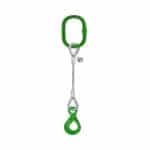
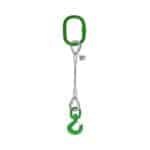
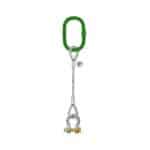
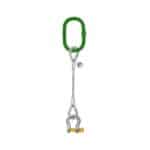
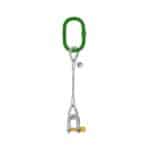
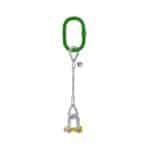
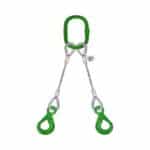
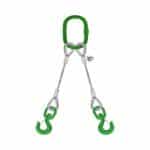
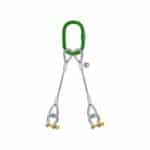
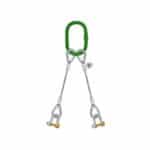
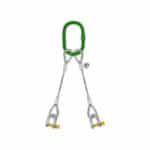
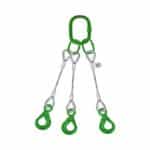
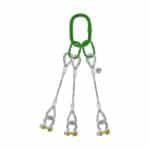
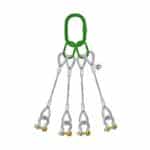
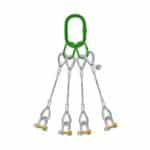
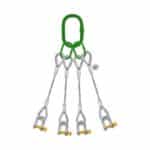
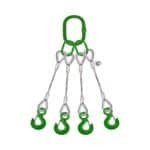
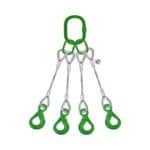
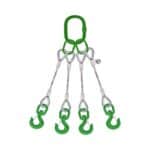
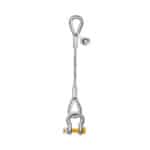
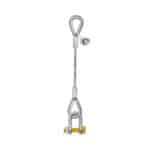
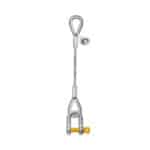
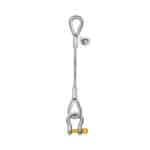
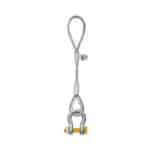
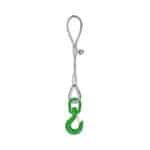
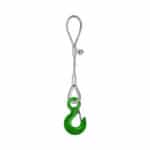
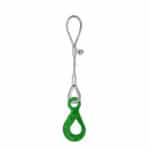
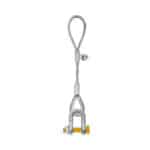
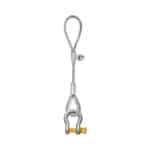
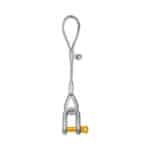
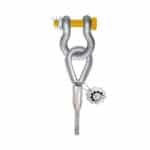
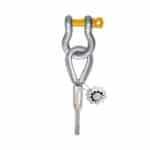
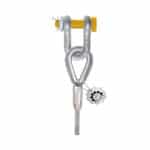
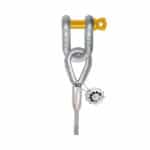
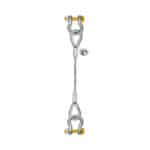
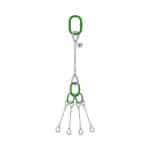
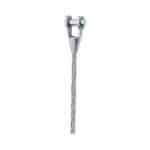
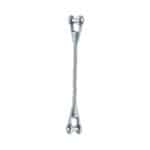
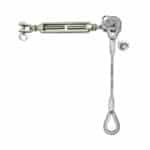
Wire rope clips are essential components in various industries, ensuring safety and load security. Choosing the correct clip is vital for preventing accidents and maintaining operational efficiency. This comprehensive guide will walk you through the selection process, installation best practices, and maintenance tips. At Safe and Secure Trading Company (SSTC), we are committed to providing you with the knowledge and resources needed to make informed decisions about your wire rope clip needs.
Introduction: The Evolving World of Wire Rope Clips
Wire rope clips play a critical role in securing loads and ensuring safety across diverse applications. Their ability to create reliable terminations and connections is paramount, especially in industries where failure can lead to severe consequences. Over the years, SSTC has emphasized the importance of proper selection and installation to guarantee the integrity of these vital components.
The history of wire rope clips dates back to the early days of industrialization, with basic designs evolving into sophisticated engineered solutions. Recent innovations include the use of improved materials such as high-strength alloys and advanced coatings that enhance corrosion resistance and extend service life. These advancements have significantly improved the performance and reliability of cable clamps.
Choosing the right wire rope clip is more important than ever in today’s safety-conscious environment. With increasing regulatory scrutiny and a growing emphasis on workplace safety, selecting the appropriate clip for a specific application is crucial. Factors such as load requirements, environmental conditions, and wire rope construction must be carefully considered to ensure a secure and reliable connection. Our team at SSTC understands these complexities and offers tailored solutions to meet your specific needs.
A notable trend is the increasing demand for corrosion-resistant wire rope clips in marine and coastal applications. The harsh saltwater environment can accelerate corrosion, leading to premature failure and potential hazards. To address this, manufacturers are developing clips made from stainless steel and other corrosion-resistant materials, ensuring long-term performance and safety in these challenging conditions. We’ve seen a significant uptick in requests for these specialized clips from our clients in Dubai, reflecting the growing awareness of their importance.
Understanding the Basics: What are Wire Rope Clips?
Wire rope clips, also known as cable clamps, are mechanical fasteners used to create a loop or terminate the end of a wire rope. They work by clamping the wire rope between a U-bolt and a saddle, or through a swaged connection, providing a secure grip that prevents slippage under load. These clips are essential for creating eyes or loops in wire ropes, allowing them to be connected to other components or structures.
These clips are used in various industries, including construction, marine, rigging, and transportation. In construction, wire rope clips are used to secure scaffolding, suspend loads, and create temporary support structures. In the marine industry, they are vital for rigging sails, securing anchors, and lifting heavy objects. Rigging applications often involve using wire rope fasteners to create secure connections for lifting and hoisting equipment. SSTC provides a wide range of clips tailored to these varied applications, ensuring optimal performance and safety.
Different names and terminology can sometimes cause confusion, but the underlying function remains the same. Common terms include cable clamps, u-bolt clips, saddle clamps, and wire rope termination. Understanding these terms helps in identifying the correct type of clip for a specific application.
| Clip Type |
Description |
Application |
| U-Bolt Clip |
A U-shaped bolt with a saddle, used for general-purpose applications. |
Securing scaffolding, light-duty lifting. |
| Fist Grip® Clip |
A saddle clip that provides superior holding power due to its design. |
Heavy-duty lifting, critical applications. |
| Swaged Clip |
A permanent connection created by compressing a fitting onto the wire rope. |
High-strength connections, aircraft cables. |
Key Types of Wire Rope Clips and Their Applications
There are several types of wire rope clips, each designed for specific applications and load requirements. Understanding the differences between these clips is crucial for selecting the right one for your needs. At SSTC, we offer a comprehensive range of clips to suit various applications.
U-Bolt Clips
U-bolt clips, also known as u-bolt clips or saddle clamps, are the most common type of wire rope clip. They consist of a U-shaped bolt and a saddle that clamps the wire rope. These clips are relatively inexpensive and easy to install, making them a popular choice for many applications.
U-bolt clips are commonly used in light-duty applications such as securing scaffolding, creating temporary guy wires, and attaching signs or banners. They are suitable for applications where the load requirements are not critical and the risk of slippage is minimal. However, it is important to note that U-bolt clips have lower holding power compared to other types of clips.
The primary advantage of U-bolt clips is their cost-effectiveness. They are typically less expensive than other types of clips, making them a budget-friendly option for many projects. Additionally, their simple design makes them easy to install and inspect. However, their lower holding power is a significant drawback, particularly in safety-critical applications. Always adhere to the recommended clip torque when installing U-bolt clips to ensure a secure connection.
For proper U-bolt clip installation, the U-bolt should be placed over the dead end of the wire rope, with the saddle on the live end. This configuration ensures that the clip is properly oriented to maximize its holding power. The nuts on the U-bolt should be tightened evenly to the specified torque, and the clips should be re-torqued after initial loading to compensate for any settling of the wire rope.
Fist Grip® Clips (Saddle Clips)
Fist Grip® clips, often referred to as saddle clamps, offer superior holding power compared to U-bolt clips. These clips feature a unique design that evenly distributes the clamping force across the wire rope, reducing the risk of damage and slippage. SSTC recommends Fist Grip® clips for applications where safety and reliability are paramount.
Fist Grip® clips are preferred in heavy-duty applications such as lifting heavy objects, securing critical rigging, and creating permanent terminations. Their superior holding power makes them ideal for use in construction, marine, and industrial settings where the consequences of failure could be severe. These clips are also commonly used in overhead lifting applications where safety is of utmost importance.
The main advantage of Fist Grip® clips is their enhanced holding power. Their design ensures a more secure grip on the wire rope, reducing the risk of slippage even under heavy loads. Additionally, Fist Grip® clips are less likely to damage the wire rope compared to U-bolt clips, extending the service life of the rope. While they may be more expensive than U-bolt clips, their superior performance and safety make them a worthwhile investment for critical applications.
Proper installation of Fist Grip® clips is essential for maximizing their holding power. The clips should be installed with the saddle on the live end of the wire rope, and the nuts should be tightened evenly to the specified torque. It is also important to ensure that the wire rope is properly seated in the clip before tightening the nuts. After initial loading, the clips should be re-torqued to compensate for any settling of the wire rope.
Swaged Clips
Swaged clips offer a permanent, high-strength connection for wire rope terminations. These clips are installed by compressing a fitting onto the wire rope using a swaging tool, creating a mechanical bond that is stronger than the wire rope itself. Swaged clips are commonly used in applications where a reliable, long-lasting connection is required.
Swaged clips are ideal for applications such as aircraft cables, overhead power lines, and critical rigging components. Their ability to provide a permanent, high-strength connection makes them suitable for use in safety-critical applications where failure could have catastrophic consequences. SSTC provides swaging services and a range of swaged clip solutions for these demanding applications.
The primary benefit of swaged clips is their exceptional strength and reliability. Once properly installed, a swaged clip provides a connection that is virtually unbreakable. Additionally, swaged clips offer a clean, streamlined appearance compared to other types of clips. However, the installation of swaged clips requires specialized tools and expertise, making them less suitable for field repairs or temporary connections.
Installing swaged clips requires the use of a swaging tool, which compresses the fitting onto the wire rope. The tool should be selected based on the size and type of the clip being used, and the manufacturer’s instructions should be followed carefully. After swaging, the connection should be inspected to ensure that the fitting has been properly compressed and that there are no signs of damage or cracking.
Other Specialized Clips
In addition to U-bolt, Fist Grip®, and swaged clips, there are other specialized types of wire rope clips designed for specific applications. These include spring clips, which are used for light-duty applications where frequent adjustments are required, and Crosby clips, which are known for their high quality and reliability. While less common, these clips can be valuable in certain situations.
Spring clips are often used in temporary installations where the wire rope needs to be easily adjusted or removed. They are not suitable for heavy-duty applications, but they can be useful for securing lightweight objects or creating temporary support structures. Crosby clips, on the other hand, are manufactured to exacting standards and are commonly used in critical lifting and rigging applications. SSTC stocks a variety of specialized clips to meet diverse customer needs.
Step-by-Step Guide to Selecting the Right Wire Rope Clip
Selecting the right wire rope clip for your application is crucial for ensuring safety and reliability. This step-by-step guide will walk you through the key considerations and help you make an informed decision. At SSTC, we emphasize the importance of proper selection to prevent accidents and maintain operational efficiency.
Step 1: Determine Wire Rope Size and Type
The first step in selecting the right wire rope clip is to accurately determine the size and type of wire rope you will be using. The clip size must match the wire rope diameter to ensure a secure connection. Using the wrong size clip can result in slippage, damage to the wire rope, or even complete failure.
To accurately measure the wire rope diameter, use a caliper or micrometer. Measure the diameter at several points along the wire rope to account for any variations. It is important to measure the actual diameter of the wire rope, not the nominal size, as the actual diameter may vary slightly. SSTC recommends double-checking measurements to avoid errors.
Understanding the different wire rope constructions is also essential for selecting the right clip. Wire ropes are typically designated by the number of strands and the number of wires per strand, such as 6×19 or 6×37. The construction of the wire rope affects its flexibility, strength, and resistance to abrasion. For example, a 6×19 wire rope is less flexible but more abrasion-resistant than a 6×37 wire rope.
Matching the clip size to the wire rope diameter is crucial for optimal performance. The clip manufacturer’s specifications will provide guidance on the correct clip size for each wire rope diameter. Always refer to these specifications to ensure that you are using the appropriate clip for your application. Using a clip that is too small can damage the wire rope, while using a clip that is too large can result in insufficient clamping force.
Step 2: Consider the Load Requirements
The next step is to consider the load requirements of your application. This involves calculating the working load limit (WLL) and understanding the clip’s breaking strength and safety factor. Choosing clips with appropriate load ratings is essential for safety and reliability.
The working load limit (WLL) is the maximum load that the wire rope clip is designed to support under normal operating conditions. The WLL is typically expressed in pounds or kilograms and is determined by dividing the breaking strength of the clip by a safety factor. The safety factor is a multiplier that accounts for uncertainties in the load, environmental conditions, and the condition of the wire rope.
Understanding the clip’s breaking strength and safety factor is crucial for ensuring that the clip can safely support the intended load. The breaking strength is the load at which the clip is expected to fail. The safety factor is a multiplier that is applied to the breaking strength to determine the WLL. For example, if a clip has a breaking strength of 10,000 pounds and a safety factor of 5, the WLL would be 2,000 pounds.
Choosing clips with appropriate load ratings is essential for safety and reliability. Always select clips that have a WLL that is equal to or greater than the maximum load that the wire rope will be subjected to. It is also important to consider any dynamic loads or shock loads that may occur during operation. These loads can significantly increase the stress on the clips and should be taken into account when selecting the appropriate clip size.
Step 3: Evaluate Environmental Conditions
Evaluating the environmental conditions is crucial for selecting wire rope clips that will perform reliably over time. Exposure to corrosion, chemicals, and extreme temperatures can significantly affect the performance and lifespan of the clips. Selecting clips made from appropriate materials is essential for ensuring long-term durability.
Assessing exposure to corrosion is particularly important in marine and coastal environments. Saltwater can accelerate corrosion, leading to premature failure of the clips. In these environments, it is essential to use clips made from stainless steel or other corrosion-resistant materials. Galvanized steel clips can also provide some protection against corrosion, but they are not as durable as stainless steel.
Exposure to chemicals can also affect the performance of wire rope clips. Certain chemicals can degrade the materials used in the clips, leading to weakening and failure. If the clips will be exposed to chemicals, it is important to select clips made from materials that are resistant to those chemicals. Consult with a materials specialist or the clip manufacturer to determine the appropriate material for your application.
Extreme temperatures can also affect the performance of wire rope clips. High temperatures can reduce the strength of the clips, while low temperatures can make them brittle. If the clips will be exposed to extreme temperatures, it is important to select clips made from materials that are suitable for those temperatures. Some materials, such as certain types of stainless steel, are better suited for extreme temperatures than others.
There’s a noticeable rise in demand for coated clips designed for increased corrosion resistance. These coatings provide an extra layer of protection against the elements, extending the life of the clips and reducing the need for frequent replacements. SSTC offers a variety of coated clips to meet the needs of our customers in harsh environments.
Step 4: Choose the Correct Clip Type for the Application
The final step in selecting the right wire rope clip is to choose the correct clip type for the specific needs of the job. This involves matching the clip type to the application and considering factors such as ease of installation and long-term performance. Different applications have different requirements, and selecting the appropriate clip type is essential for ensuring safety and reliability.
Matching the clip type to the specific needs of the job is crucial for optimal performance. For light-duty applications, U-bolt clips may be sufficient. However, for heavy-duty applications, Fist Grip® clips or swaged clips are recommended. The choice of clip type should be based on the load requirements, environmental conditions, and the desired level of safety and reliability.
Considering factors like ease of installation and long-term performance is also important. U-bolt clips are relatively easy to install, making them a good choice for field repairs or temporary connections. Fist Grip® clips offer superior holding power but may require more time and effort to install. Swaged clips provide a permanent, high-strength connection but require specialized tools and expertise.
For complex or critical applications, it is always a good idea to consult with a rigging specialist. A rigging specialist can assess the specific requirements of your application and recommend the appropriate wire rope clips and installation techniques. They can also provide guidance on inspection and maintenance procedures to ensure the long-term reliability of the clips. We have a team of experts at SSTC ready to assist with these complex scenarios.
“Selecting the right wire rope clip is not just about meeting the minimum requirements; it’s about ensuring the long-term safety and reliability of your entire system.” – Mark Johnson, Lead Safety Inspector
Installation Best Practices: Ensuring a Secure Connection
Proper installation is crucial for ensuring that wire rope clips provide a secure connection. Incorrect installation can significantly reduce the holding power of the clips and increase the risk of slippage or failure. At SSTC, we emphasize the importance of following proper installation procedures to ensure the safety and reliability of your wire rope connections.
The proper spacing and orientation of wire rope clips is essential for maximizing their holding power. The clips should be spaced evenly along the wire rope, with the first clip placed as close as possible to the thimble or loop. The U-bolt should be placed over the dead end of the wire rope, with the saddle on the live end. This configuration ensures that the clip is properly oriented to maximize its holding power.
Torque requirements and recommended tightening procedures should be followed carefully. The nuts on the U-bolt or Fist Grip® clip should be tightened evenly to the specified torque using a calibrated torque wrench. Over-tightening can damage the wire rope, while under-tightening can result in slippage. The torque specifications for the clips will be provided by the manufacturer and should be adhered to strictly.
Re-torquing the cable clamps after initial loading is important to compensate for any settling of the wire rope. After the wire rope has been subjected to its first load, the clips should be re-torqued to the specified torque. This will ensure that the clips remain properly tightened and that the connection remains secure. The re-torquing procedure should be repeated periodically, especially in applications where the wire rope is subjected to heavy or dynamic loads.
| Wire Rope Size (in) |
Recommended Torque (ft-lbs) |
| 1/4 |
15 |
| 3/8 |
45 |
| 1/2 |
65 |
| 5/8 |
95 |
| 3/4 |
130 |
Safety Considerations and Common Mistakes to Avoid
Safety should always be the top priority when working with wire rope clips. Avoiding common mistakes and adhering to safety guidelines can help prevent accidents and ensure the reliable performance of your wire rope connections. SSTC is committed to promoting safe practices and providing you with the information you need to work safely.
Over-tightening or under-tightening wire rope clips is a common mistake that can compromise the integrity of the connection. Over-tightening can damage the wire rope, while under-tightening can result in slippage. Always use a calibrated torque wrench to tighten the nuts to the specified torque. Regularly check the torque to ensure that the clips remain properly tightened.
Using mismatched or damaged wire rope clips is another common mistake that can lead to failure. Always use clips that are designed for the specific size and type of wire rope you are using. Inspect the clips before each use to ensure that they are not damaged or worn. Replace any clips that are damaged or show signs of wear. We’ve seen instances where using old, rusted clips led to catastrophic failures, highlighting the importance of regular inspections.
Neglecting to inspect and maintain wire rope clips regularly can also compromise the integrity of the connection. Inspect the clips regularly for signs of wear, corrosion, or damage. Lubricate the threads of the nuts and bolts to prevent corrosion and ensure that they can be easily tightened. Replace any clips that are damaged or show signs of wear.
- Checklist: Essential Pre-Use Inspection Points
✅ Verify clip size matches wire rope diameter
✅ Inspect for signs of corrosion or damage
✅ Ensure correct clip orientation (U-bolt on dead end)
✅ Confirm proper torque specifications
✅ Re-torque after initial loading
Maintenance and Inspection: Extending the Life of Your Wire Rope Clips
Regular maintenance and inspection are essential for extending the life of your wire rope clips and ensuring their continued safe and reliable performance. Neglecting maintenance can lead to corrosion, wear, and eventual failure. SSTC recommends implementing a comprehensive maintenance and inspection program to protect your investment and ensure the safety of your operations.
Regular inspection procedures should be established for detecting wear and damage. Inspect the wire rope clips regularly for signs of corrosion, cracking, or deformation. Pay particular attention to the threads of the nuts and bolts, as these are often the first areas to show signs of corrosion. Use a magnifying glass to inspect for small cracks or other damage that may not be visible to the naked eye.
Lubrication recommendations should be followed to prevent corrosion and seizing. Lubricate the threads of the nuts and bolts regularly with a suitable lubricant. This will help to prevent corrosion and ensure that the nuts and bolts can be easily tightened and loosened. Use a lubricant that is specifically designed for use with wire rope clips and that is compatible with the materials used in the clips.
Replacement schedules and criteria should be established for determining when wire rope clips need to be replaced. The replacement schedule will depend on the severity of the operating conditions and the frequency of use. As a general rule, clips should be replaced if they show any signs of damage or wear, such as corrosion, cracking, or deformation. Consult with a rigging specialist or the clip manufacturer to determine the appropriate replacement schedule for your application.
There is a growing trend towards implementing digital tracking and inspection systems for wire rope clips. These systems use RFID tags or other tracking technologies to monitor the location, condition, and usage of the clips. This allows for more efficient inspection and maintenance, as well as improved record-keeping. SSTC is at the forefront of this trend, offering digital tracking solutions to help our customers manage their wire rope clip inventory more effectively.
Real-World Case Studies and Examples
Real-world case studies and examples can provide valuable insights into the importance of proper wire rope clip selection and installation. Examining success stories and learning from accidents can help prevent future incidents and ensure the safety of your operations. SSTC is committed to sharing our knowledge and experience to help you make informed decisions about your wire rope clip needs.
Success stories of using the correct wire rope clips for safety and efficiency are numerous. In one case, a construction company in Dubai used Fist Grip® clips instead of U-bolt clips for a critical lifting application. The Fist Grip® clips provided superior holding power and prevented a potential accident, saving the company time and money.
Examples of accidents caused by improper clip selection or installation are unfortunately also common. In one case, a marine company used undersized U-bolt clips to secure a heavy anchor. The clips failed under load, causing the anchor to break free and damage a nearby vessel. This incident could have been prevented by using the correct size and type of wire rope clips.
Lessons learned from these case studies emphasize the importance of following proper selection and installation procedures. Always select clips that are appropriate for the size and type of wire rope you are using. Follow the manufacturer’s recommendations for torque and spacing. Inspect the clips regularly for signs of wear or damage.
Once, a client struggled with selecting the right clips for a new rigging project. They chose based on cost, ignoring load requirements. The result? Premature wear and a near-failure incident. The lesson here is clear: prioritize safety and proper selection over initial cost savings.
The Future of Wire Rope Clip Technology
The future of wire rope clip technology is focused on improving performance, safety, and efficiency. Emerging materials and designs are paving the way for more reliable and durable clips, while technology is playing an increasing role in monitoring and managing clip usage. SSTC is committed to staying at the forefront of these advancements and providing our customers with the latest and greatest in wire rope clip technology.
Emerging materials and designs are focused on improving the strength, corrosion resistance, and durability of wire rope clips. New alloys and coatings are being developed that can withstand extreme temperatures, harsh chemicals, and corrosive environments. Innovative designs are also being introduced that provide more even load distribution and reduce the risk of slippage.
Technology is playing an increasing role in monitoring and managing wire rope clip usage. Digital tracking systems, such as RFID tags, are being used to track the location, condition, and usage of the clips. This allows for more efficient inspection and maintenance, as well as improved record-keeping. Sensors are also being developed that can detect overload conditions and alert users to potential problems.
The future trends in the wire rope clip industry include a greater emphasis on safety, sustainability, and digitalization. Safety will continue to be the top priority, with manufacturers focusing on developing clips that are more reliable and easier to inspect. Sustainability will also become increasingly important, with manufacturers using more eco-friendly materials and manufacturing processes. Digitalization will transform the way wire rope clips are managed, with digital tracking systems and sensors becoming more commonplace.
“The future of wire rope clips lies in smarter materials and more precise monitoring, ensuring unparalleled safety and reliability.” – John Riggers, Lead Engineer, RigSafe Solutions
Resources and Further Reading
To further enhance your understanding of wire rope clips, we recommend exploring the following resources. These resources provide valuable information on industry standards, regulations, and best practices. SSTC is committed to providing you with the knowledge and resources you need to make informed decisions about your wire rope clip needs.
ASME B30.9: Slings
Federal Specification RR-C-271: Clips, Wire Rope
“Handbook of Rigging Engineering” by W.E. Rossnagel
“Rigging Engineering Basics” by Keith Anderson
OSHA-approved rigging courses
* Crane Institute of America rigging training
Conclusion: Mastering Wire Rope Clip Selection for Optimal Safety
Selecting the right wire rope clips is crucial for ensuring the safety and reliability of your lifting and rigging operations. By following the steps outlined in this guide, you can make informed decisions that will protect your workers, your equipment, and your bottom line. Remember to consider the size and type of wire rope, the load requirements, the environmental conditions, and the specific needs of your application.
We’ve covered the key steps for choosing the right clips, including determining wire rope size, evaluating load requirements, assessing environmental factors, and matching the clip type to the application. Proper installation, regular inspection, and adherence to safety guidelines are also essential for ensuring the long-term performance of your wire rope clips.
As wire rope clip technology continues to evolve, it’s crucial to stay updated with the latest advancements in materials, designs, and monitoring systems. By embracing these advancements, you can enhance the safety, sustainability, and efficiency of your operations. SSTC is here to support you on this journey, providing you with the knowledge, resources, and expertise you need to succeed.
We’re confident that by implementing these best practices, you can achieve optimal safety and performance in your lifting and rigging operations.
FAQ Section
Q: What is the difference between a U-bolt clip and a Fist Grip® clip?
A: A U-bolt clip is a basic type of wire rope clip that uses a U-shaped bolt to clamp the wire rope. It is suitable for light-duty applications. A Fist Grip® clip is a more advanced type of clip that provides superior holding power and is recommended for heavy-duty applications.
Q: How do I determine the correct size of wire rope clip to use?
A: The correct size of wire rope clip should match the diameter of the wire rope. Refer to the manufacturer’s specifications to determine the appropriate clip size for your wire rope.
Q: How often should I inspect wire rope clips?
A: Wire rope clips should be inspected regularly, ideally before each use. Inspect the clips for signs of wear, corrosion, or damage. Replace any clips that are damaged or show signs of wear.
Q: What is the proper way to install wire rope clips?
A: The U-bolt should be placed over the dead end of the wire rope, with the saddle on the live end. Tighten the nuts evenly to the specified torque using a calibrated torque wrench. Re-torque the cable clamps after initial loading.
Q: Can I reuse wire rope clips?
A: Wire rope clips can be reused if they are in good condition and have not been damaged or worn. However, it is important to inspect the clips carefully before each use and replace any clips that show signs of wear.
Q: What type of wire rope clip should I use in a marine environment?
A: In a marine environment, it is recommended to use wire rope clips made from stainless steel or other corrosion-resistant materials. These materials will provide better protection against corrosion and ensure long-term performance.