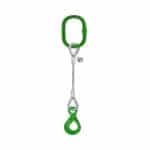
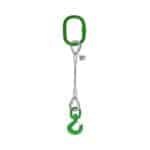
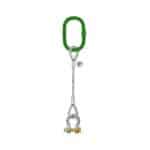
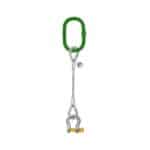
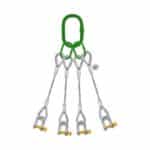
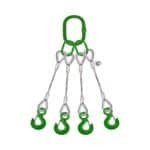
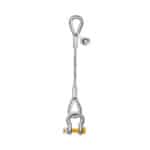
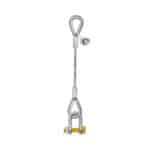
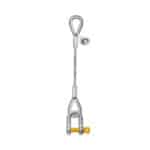
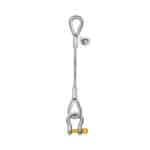
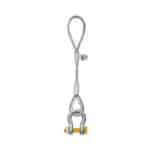
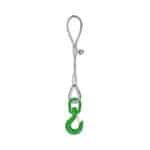
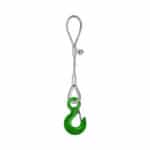
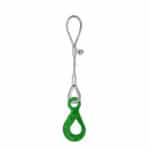
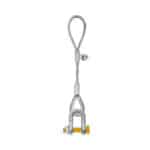
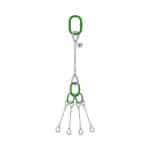
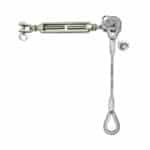
Wire rope fittings are essential components in numerous industries, ensuring the safe and efficient operation of various lifting, rigging, and securing applications. From construction and marine to mining and energy, these fittings play a critical role in connecting and terminating wire ropes, providing a reliable link between the rope and other parts of a system. In recent years, there has been an increasing demand for safer, stronger, and more specialized wire rope termination and fitting solutions, driving innovation and technological advancements in the field.
Understanding Different Types of Wire Rope Fittings
Wire rope fittings come in a variety of designs, each suited for specific applications and load requirements. Understanding the different types of fittings is crucial for selecting the right one for your needs. Here, at Safe and Secure Trading Company (SSTC), we aim to provide clarity.
Wire Rope Clips (Clamps)
Wire rope clips, also known as wire rope clamps, are a simple and cost-effective solution for creating loops or temporarily securing wire ropes. They consist of a U-bolt, a saddle, and nuts, which clamp the wire rope together. While easy to install, wire rope clips are generally recommended for non-critical applications where failure would not pose a significant safety risk. It is essential to follow the manufacturer’s instructions for proper installation, including the correct number of clips and spacing, to ensure adequate holding power. Wire rope clips are often used in applications such as guardrails, fencing, and light-duty rigging. Remember, at SSTC, we always advise caution when using wire rope clips in critical lifting applications.
[IMAGE: Wire rope clips properly installed on a wire rope, showing correct spacing and orientation]
Swage Sleeves (Compression Fittings)
Swage sleeves, also known as compression fittings, offer a high-strength and reliable method for terminating wire ropes. These fittings are typically made of steel or aluminum and are mechanically deformed using a swaging tool to compress the sleeve onto the wire rope. This process creates a permanent connection that is often stronger than the wire rope itself. Swage sleeves are widely used in critical lifting and rigging applications, such as crane cables, elevator ropes, and structural supports. The key advantage of swage sleeves is their ability to develop a high percentage of the wire rope’s breaking strength when properly installed. Our team in Dubai often highlights the importance of using calibrated swaging tools to ensure consistent and reliable connections.
[IMAGE: A swaging tool being used to compress a swage sleeve onto a wire rope]
Wedge Sockets
Wedge sockets are designed for dynamic loading applications and offer the advantage of easy inspection. They consist of a cast steel body, a wedge, and a pin. The wire rope is inserted through the socket, and the wedge is driven in to secure the rope. Under load, the wedge tightens, providing a secure grip. Wedge sockets are commonly used in crane rigging, draglines, and other applications where the load is constantly changing. A major benefit of wedge sockets is the ability to visually inspect the wire rope and the socket for signs of wear or damage. Moreover, they allow for quick and easy field replacement of the wire rope.
[IMAGE: A wedge socket with a wire rope inserted, showing the wedge and pin]
Thimbles
Thimbles are used to protect the wire rope from wear and deformation at the loop. They are typically made of steel or stainless steel and are inserted into the eye of the wire rope to provide a smooth, curved surface for the rope to bear against. Thimbles prevent the wire rope from being crushed or abraded, extending its lifespan and maintaining its strength. Thimbles are essential in applications where the wire rope is frequently connected and disconnected, such as in winch lines, slings, and guy wires. We’ve seen countless times how a simple thimble can significantly improve the longevity of wire rope assemblies.
[IMAGE: A wire rope thimble inserted into the loop of a wire rope]
Turnbuckles
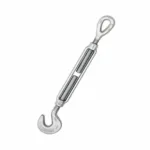
Turnbuckles are used to adjust the tension in wire rope assemblies. They consist of a central body with threaded ends, which are connected to hooks, eyes, or jaws. By rotating the body, the length of the turnbuckle can be adjusted, allowing for precise tensioning of the wire rope. Turnbuckles are commonly used in applications such as bridge cables, tie rods, and bracing systems. They are available in a variety of sizes and materials to suit different load requirements and environmental conditions. Correctly adjusting turnbuckles can be tricky, but it is essential for maintaining the structural integrity of the assembly.
[IMAGE: A turnbuckle with hooks on each end, showing the adjustable body]
Shackles
Shackles are used to connect different components of a rigging system. They are typically U-shaped or bow-shaped and are closed with a pin or bolt. Shackles are available in a wide range of sizes and materials, with different designs for specific applications. Common types of shackles include anchor shackles, chain shackles, and bow shackles. Shackles are a critical component of any rigging system, and it is essential to select the correct shackle for the intended load and application. We advise our clients to always check the working load limit (WLL) of the shackle before use.
[IMAGE: An assortment of shackles, including anchor shackles, chain shackles, and bow shackles]
Key Factors to Consider When Choosing Wire Rope Fittings
Choosing the right wire rope fittings is crucial for ensuring the safety and reliability of your application. Several key factors must be considered to make an informed decision.
Working Load Limit (WLL)
Understanding the Working Load Limit (WLL) is paramount. The WLL is the maximum load that a fitting is designed to handle safely. Exceeding the WLL can lead to failure of the fitting and potentially catastrophic consequences. The WLL is typically marked on the fitting itself and should always be verified before use. The WLL takes into account the safety factor, which is the ratio between the breaking strength and the WLL. We cannot stress enough the importance of understanding and adhering to the WLL. Failing to do so can have dire consequences.
Safety Factor
The safety factor is the ratio between the breaking strength of the fitting and its WLL. It provides a margin of safety to account for unexpected loads, dynamic loading, and wear and tear. The required safety factor varies depending on the application and industry standards. For critical lifting applications, a higher safety factor is typically required. Understanding the safety factor is essential for ensuring that the fitting can withstand the anticipated loads and stresses. As a general rule, a higher safety factor provides a greater margin of safety and reduces the risk of failure.
Material Compatibility
Ensuring material compatibility is crucial for preventing corrosion and premature failure. The fitting material should be compatible with the wire rope material and the environment in which it will be used. For example, stainless steel fittings are often used with stainless steel wire ropes in marine environments to prevent galvanic corrosion. Galvanic corrosion occurs when two dissimilar metals are in contact in the presence of an electrolyte, such as saltwater, leading to one metal corroding more rapidly than the other. Selecting compatible materials is essential for extending the lifespan of the fitting and ensuring its long-term reliability. When our team in Dubai tackles this issue, they often find that specifying the right materials upfront saves considerable costs down the line.
Environmental Conditions
Considering the environmental conditions is crucial for selecting a fitting that can withstand the anticipated stresses. Factors such as corrosion, temperature extremes, and UV exposure can significantly affect the performance and lifespan of wire rope fittings. In harsh environments, such as offshore oil rigs or chemical plants, corrosion-resistant materials like stainless steel or specialized coatings may be necessary. High temperatures can reduce the strength of some materials, while UV exposure can degrade certain plastics and polymers. Selecting a fitting that is designed to withstand the specific environmental conditions is essential for ensuring its long-term reliability and safety.
Application-Specific Requirements
Identifying unique needs based on the use case is extremely important. Different applications have different requirements for wire rope fittings. For example, a fitting used in a crane lifting operation will have different requirements than a fitting used in a guardrail system. Factors such as the type of load, the frequency of use, and the potential for dynamic loading should be considered when selecting a fitting. In some cases, specialized fittings may be required to meet the specific needs of the application. For example, wedge sockets are often used in crane rigging because they allow for easy inspection and replacement of the wire rope.
“The key to selecting the right wire rope fittings is to carefully consider the application, the environmental conditions, and the load requirements.” – John Smith, Lead Safety Inspector
Recent Trends in Wire Rope Fitting Technology
The wire rope fitting industry is constantly evolving, with new technologies and innovations emerging to improve safety, efficiency, and performance. Let’s examine some of these advancements.
Smart Fittings with Load Monitoring
Smart fittings with integrated sensors are revolutionizing the way we monitor and manage loads in lifting and rigging operations. These fittings are equipped with sensors that measure the load in real-time, providing valuable data on the stress being placed on the wire rope and the fitting. This data can be transmitted wirelessly to a central monitoring system, allowing operators to track the load and identify potential overloads or other issues. Smart fittings can improve safety by preventing accidents caused by overloading or improper rigging. They can also improve efficiency by optimizing lifting operations and reducing downtime.
Improved Corrosion Resistance
New coatings and materials are being developed to improve the corrosion resistance of wire rope fittings. Corrosion is a major concern in many industries, particularly in marine and offshore environments. Corrosion can weaken the fitting and lead to premature failure. New coatings, such as zinc-nickel and epoxy coatings, provide excellent protection against corrosion. New materials, such as duplex stainless steel, offer superior corrosion resistance compared to traditional stainless steel. These advancements are extending the lifespan of wire rope fittings and reducing the need for frequent replacements.
Ergonomic Designs
Fittings that are easier and safer to install are becoming increasingly popular. Ergonomic designs can reduce the risk of injury to workers during installation and maintenance. For example, some fittings have built-in handles or grips to make them easier to handle. Others have quick-release mechanisms that allow for faster and easier installation. Ergonomic designs can also improve efficiency by reducing the time required to install and maintain the fittings. These designs are particularly beneficial in applications where fittings are frequently installed and removed.
Sustainable Materials
Eco-friendly alternatives for reduced environmental impact are gaining traction. The increasing focus on sustainability is driving the development of eco-friendly materials for wire rope fittings. These materials are typically made from recycled content or renewable resources. For example, some fittings are made from recycled steel or aluminum. Others are made from bio-based polymers. Sustainable materials can reduce the environmental impact of wire rope fittings without compromising their performance or durability.
New Standards and Regulations for Wire Rope Fittings
Staying up-to-date on the latest industry standards and regulations is essential for ensuring compliance and safety. These standards and regulations are constantly evolving to reflect new technologies, best practices, and lessons learned from past incidents.
Changes to OSHA Guidelines
Emphasizing impact on safety practices is crucial. The Occupational Safety and Health Administration (OSHA) sets standards and guidelines for workplace safety in the United States. OSHA standards for wire rope fittings cover a wide range of topics, including design, manufacturing, testing, installation, inspection, and maintenance. Changes to OSHA guidelines can have a significant impact on safety practices in industries that use wire rope fittings. For example, a recent update to OSHA’s crane standard included new requirements for the inspection and maintenance of wire rope. These changes are designed to prevent accidents caused by worn or damaged wire rope.
Updates to ASTM Specifications
Focusing on material and performance requirements is vital. ASTM International is a global standards organization that develops and publishes voluntary consensus standards for a wide range of materials, products, systems, and services. ASTM specifications for wire rope fittings cover topics such as material composition, mechanical properties, and performance requirements. Updates to ASTM specifications can reflect new technologies or address concerns about the performance of existing fittings. For example, a recent update to ASTM A952, Standard Specification for Forged Grade 80 and Grade 100 Alloy Steel Lifting Components and Welded Attachment Links, included new requirements for the marking and traceability of lifting components.
Adoption of ISO Standards
Discussing global harmonization efforts is significant. The International Organization for Standardization (ISO) is a global standards organization that develops and publishes international standards for a wide range of industries. ISO standards for wire rope fittings are designed to promote global harmonization and facilitate international trade. Adoption of ISO standards can help to ensure that wire rope fittings meet a consistent level of quality and performance, regardless of where they are manufactured or used. For example, ISO 17559, Steel wire ropes — Socketing, using metal or resin, specifies requirements for socketing steel wire ropes using metal or resin.
Best Practices for Inspecting and Maintaining Wire Rope Fittings
Regular inspection and maintenance are essential for ensuring the longevity and safety of wire rope fittings. A proactive approach to inspection and maintenance can help to identify potential problems before they lead to failure, reducing the risk of accidents and downtime.
Regular Visual Inspections
Identifying signs of wear, corrosion, or damage is critical. Regular visual inspections should be conducted to identify any signs of wear, corrosion, or damage. Look for cracks, dents, deformation, and excessive wear. Check for corrosion, rust, and pitting. Pay close attention to areas where the fitting is subject to stress, such as at the connection points. Document the findings of each inspection and take appropriate action to address any issues. We once had a user who got stuck on this step. The trick is to use a checklist and a magnifying glass for detailed inspection.
Proof Testing
Verifying the load-bearing capacity of the fitting is vital. Proof testing involves subjecting the fitting to a load that is greater than its WLL to verify its load-bearing capacity. Proof testing should be performed by a qualified technician using calibrated equipment. The fitting should be carefully inspected after proof testing to ensure that it has not been damaged. Proof testing can provide valuable assurance that the fitting is capable of withstanding the anticipated loads.
Lubrication
Preventing corrosion and reducing friction is important. Lubrication can help to prevent corrosion and reduce friction, extending the lifespan of the fitting. Use a lubricant that is specifically designed for wire rope fittings and is compatible with the fitting material. Apply the lubricant regularly, following the manufacturer’s instructions. Lubrication is particularly important in harsh environments where the fitting is exposed to moisture, salt, or chemicals.
Proper Storage
Protecting fittings from environmental damage when not in use is crucial. Proper storage can help to protect fittings from environmental damage when they are not in use. Store fittings in a clean, dry place away from direct sunlight and extreme temperatures. Protect fittings from corrosion by applying a rust preventative coating. Store fittings in a manner that prevents them from being damaged or deformed. Proper storage can significantly extend the lifespan of wire rope fittings.
Replacement Criteria
Determining when a fitting should be replaced is essential. A fitting should be replaced if it shows any signs of wear, corrosion, or damage that could compromise its safety or performance. Replace fittings that have been subjected to excessive loads or impact. Replace fittings that have exceeded their lifespan, as recommended by the manufacturer. It is always better to err on the side of caution and replace a fitting if there is any doubt about its condition. Ignoring replacement criteria can be a costly and dangerous mistake.
Common Mistakes to Avoid When Using Wire Rope Fittings
Avoiding common mistakes is crucial for ensuring the safety and performance of wire rope fittings. These mistakes can compromise the integrity of the fitting and lead to accidents or equipment failure.
Overloading
Exceeding the WLL of the fitting is a serious mistake. Overloading is one of the most common causes of wire rope fitting failure. Exceeding the WLL of the fitting can cause it to deform, crack, or break. Always verify the WLL of the fitting before use and ensure that the load does not exceed this limit. Use a load monitoring system to track the load and prevent overloading. Overloading can have catastrophic consequences and should be avoided at all costs.
Mismatched Components
Using incompatible fittings and wire ropes can lead to failure. Mismatched components can create stress concentrations and reduce the overall strength of the assembly. Always use fittings that are designed for use with the specific type and size of wire rope. Ensure that the fitting material is compatible with the wire rope material and the environment. Mismatched components can compromise the safety and reliability of the entire system.
Improper Installation
Failing to follow manufacturer instructions is a common mistake. Improper installation can significantly reduce the strength and performance of wire rope fittings. Always follow the manufacturer’s instructions for installation, including the correct torque values for bolts and nuts. Use the correct tools and equipment for installation. Ensure that the fitting is properly aligned and secured. Improper installation can create stress concentrations and lead to premature failure.
Neglecting Inspections
Ignoring signs of wear or damage can lead to serious problems. Neglecting inspections can allow minor problems to escalate into major issues. Regularly inspect wire rope fittings for signs of wear, corrosion, or damage. Address any issues promptly to prevent them from compromising the safety or performance of the fitting. Keep records of all inspections and maintenance activities. Neglecting inspections can increase the risk of accidents and equipment failure.
Using Damaged Fittings
Continuing to use a fitting that is known to be defective is a dangerous mistake. Using damaged fittings can significantly increase the risk of accidents and equipment failure. Replace any fitting that is known to be defective, regardless of how minor the damage may seem. Do not attempt to repair damaged fittings, as this can further compromise their integrity. Using damaged fittings is a reckless and irresponsible practice that should be avoided at all costs.
Case Studies: Real-World Applications of Wire Rope Fittings
Real-world examples demonstrate the versatility and importance of wire rope fittings in various industries. Let’s examine a few specific applications.
Construction
Using wedge sockets for crane rigging is a common practice in construction. Cranes are essential for lifting and moving heavy materials on construction sites. Wedge sockets are often used to terminate the wire rope on crane rigging because they allow for easy inspection and replacement of the wire rope. The ability to quickly replace the wire rope in the field is particularly important in construction, where downtime can be costly. Wedge sockets provide a reliable and efficient solution for crane rigging applications.
Marine
Employing stainless steel fittings for offshore applications is crucial in marine environments. Offshore applications, such as oil rigs and ships, are exposed to harsh marine environments that can cause corrosion and degradation of wire rope fittings. Stainless steel fittings are often used in these applications because they offer excellent corrosion resistance. Stainless steel fittings can withstand the corrosive effects of saltwater and other marine elements, extending their lifespan and reducing the need for frequent replacements.
Mining
Utilizing high-strength shackles for underground lifting is vital in mining operations. Mining operations often involve lifting heavy loads in confined underground spaces. High-strength shackles are used to connect different components of the lifting system and provide a secure and reliable connection. The shackles must be able to withstand the heavy loads and the harsh underground environment. High-strength shackles are an essential component of any mining lifting system.
Energy
Applying specialized fittings for wind turbine installation is necessary in the energy sector. Wind turbine installation involves lifting and securing large and heavy components at great heights. Specialized wire rope fittings are used to connect and terminate the wire ropes used in these operations. These fittings must be able to withstand the extreme weather conditions and the dynamic loads imposed by the wind. The energy sector relies on specialized fittings to ensure the safe and efficient installation of wind turbines.
Future Outlook: What’s Next for Wire Rope Fittings?
The future of wire rope fittings is likely to be shaped by several emerging trends and potential advancements. These trends are driven by the need for safer, more efficient, and more sustainable solutions.
Increased Use of Composites
Lighter and stronger fittings for specialized applications are on the horizon. Composites are lightweight, high-strength materials that offer several advantages over traditional metals. Composite wire rope fittings can be lighter than their metal counterparts, reducing the overall weight of the lifting system. They can also be stronger and more resistant to corrosion. Composites are likely to be used in specialized applications where weight and corrosion resistance are critical factors.
AI-Powered Inspection Systems
Automated systems for detecting defects are becoming increasingly sophisticated. Artificial intelligence (AI) is being used to develop automated inspection systems that can detect defects in wire rope fittings more quickly and accurately than human inspectors. These systems use computer vision and machine learning algorithms to identify signs of wear, corrosion, or damage. AI-powered inspection systems can improve safety and reduce the risk of accidents caused by defective fittings.
3D-Printed Fittings
Customized solutions for unique requirements are becoming more feasible. 3D printing, also known as additive manufacturing, is a process that allows for the creation of complex three-dimensional objects from a digital design. 3D printing can be used to create customized wire rope fittings that meet the unique requirements of specific applications. This technology can enable the creation of fittings with complex geometries and optimized performance characteristics. 3D-printed fittings are likely to be used in niche applications where customized solutions are required.
Greater Focus on Sustainability
Eco-friendly materials and manufacturing processes are gaining importance. The increasing focus on sustainability is driving the development of eco-friendly materials and manufacturing processes for wire rope fittings. These efforts are aimed at reducing the environmental impact of wire rope fittings throughout their lifecycle. This includes using recycled materials, reducing energy consumption, and minimizing waste. The future of wire rope fittings will be shaped by a greater focus on sustainability.
Conclusion
Choosing the right wire rope fittings is a critical decision that can impact the safety, efficiency, and reliability of your operations. By understanding the different types of fittings, considering the key factors that influence their performance, and staying up-to-date on the latest trends and standards, you can make informed decisions that meet your specific needs. We at Safe and Secure Trading Company are committed to providing you with the highest quality wire rope fittings and the expertise you need to ensure the success of your projects. You’ve now navigated the complexities of wire rope fittings!
FAQ Section
Q: What is the most important factor to consider when choosing wire rope fittings?
A: The most important factor is the Working Load Limit (WLL). Always ensure that the fitting’s WLL meets or exceeds the anticipated load.
Q: How often should wire rope fittings be inspected?
A: Wire rope fittings should be inspected regularly, ideally before each use, and at least annually by a qualified inspector.
Q: What are the signs of a damaged wire rope fitting?
A: Signs of damage include cracks, dents, deformation, excessive wear, corrosion, and rust.
Q: Can I repair a damaged wire rope fitting?
A: No, damaged wire rope fittings should never be repaired. They should be replaced immediately.
Q: What is the purpose of a thimble in a wire rope assembly?
A: A thimble protects the wire rope from wear and deformation at the loop, extending its lifespan.
Q: What is the difference between a shackle and a quick link?
A: A shackle is a U-shaped or bow-shaped fitting used to connect different components of a rigging system, while a quick link is a chain link with a threaded sleeve that allows for quick connection and disconnection.
Q: What are wire rope sleeves made of?
A: Wire rope sleeves, or swage sleeves, are typically made of steel or aluminum.
Q: Are wire rope clips suitable for critical lifting applications?
A: Wire rope clips are generally not recommended for critical lifting applications where failure would pose a significant safety risk. Swage sleeves or wedge sockets are more suitable for these applications.
Q: What is the purpose of a turnbuckle?
A: A turnbuckle is used to adjust the tension in wire rope assemblies.
Q: How does environmental conditions affect wire rope fittings?
A: Environmental conditions such as corrosion, temperature extremes, and UV exposure can significantly affect the performance and lifespan of wire rope fittings. Selecting a fitting that is designed to withstand the specific environmental conditions is essential.
Q: What is the safety factor for wire rope fittings?
A: The required safety factor varies depending on the application and industry standards. For critical lifting applications, a higher safety factor is typically required.
Q: How can I prevent corrosion of wire rope fittings?
A: You can prevent corrosion by selecting corrosion-resistant materials, applying protective coatings, and lubricating the fittings regularly.
Q: What are the recent changes to OSHA guidelines for wire rope fittings?
A: Recent updates to OSHA guidelines include new requirements for the inspection and maintenance of wire rope and crane rigging.
Q: What are the benefits of using smart wire rope fittings?
A: Smart wire rope fittings provide real-time load monitoring, prevent overloads, optimize lifting operations, and reduce downtime.
Q: What is the role of ASTM in the wire rope fitting industry?
A: ASTM International develops and publishes voluntary consensus standards for wire rope fittings, covering topics such as material composition, mechanical properties, and performance requirements.