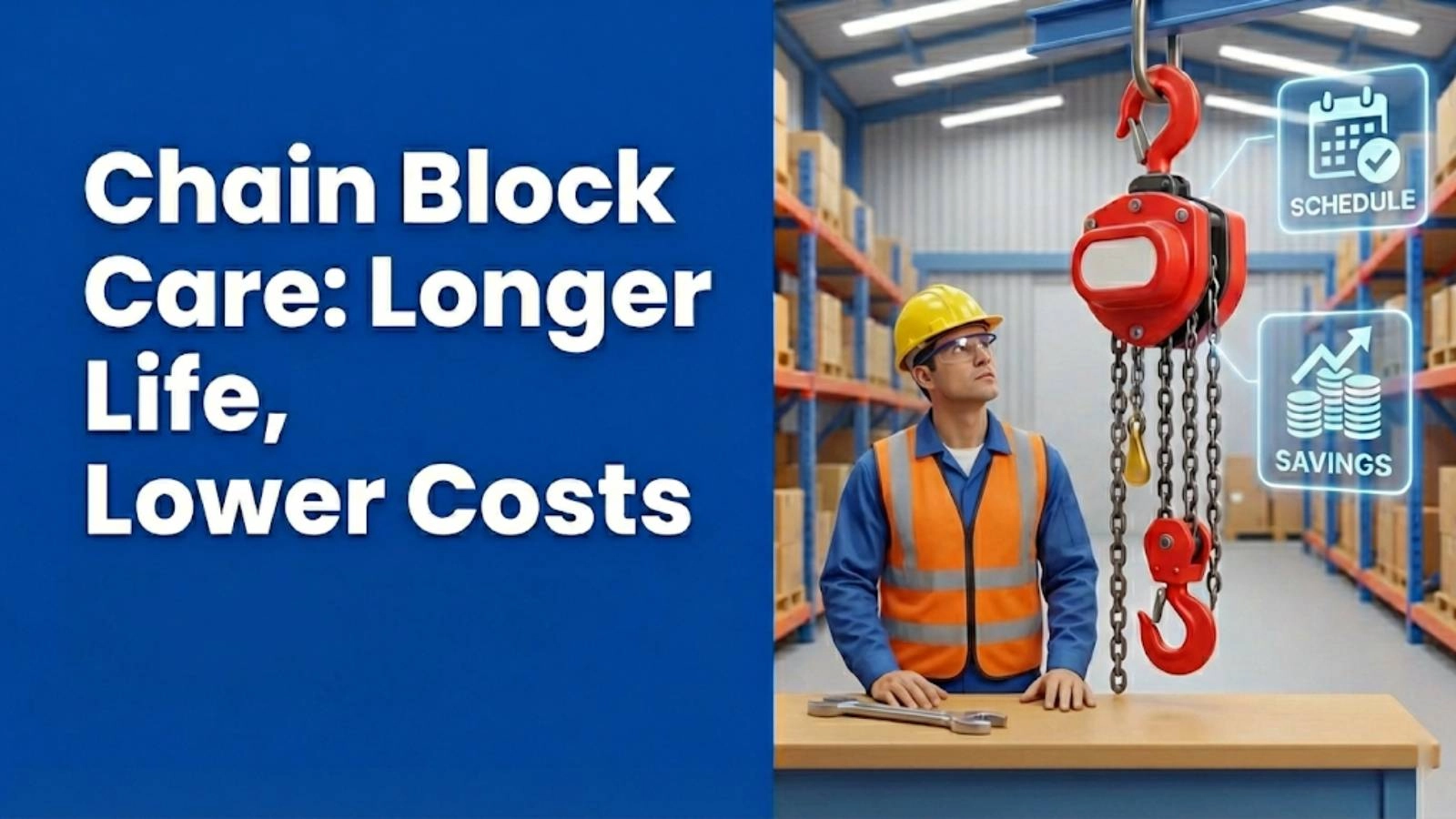
The world of material handling is often unseen, yet it’s the backbone of countless industries. At the heart of this lies a simple, yet ingenious device: the chain block. This guide will walk you through every aspect of chain block operation, transforming you from a novice into a confident and safe user. Our aim at Safe and Secure Trading Company (SSTC) is to ensure you not only understand the mechanics but also prioritize safety in every lift.
The Untold Story of Chain Blocks: From Ancient Origins to Modern Marvels
A Brief History of Lifting: More Than Just Moving Weight
The history of lifting heavy objects is as old as civilization itself. Early humans relied on levers, inclined planes, and sheer manpower to move stones for monuments and build shelters. These primitive methods, while effective to some extent, were incredibly labor-intensive and limited in their capabilities. We’ve seen evidence of these techniques in ancient Egypt, where massive stone blocks were transported and lifted using ramps and levers.
The evolution of chain-based systems marked a significant turning point. The invention of the chain allowed for more complex and efficient lifting mechanisms. Early chain systems were often hand-cranked and used in wells and rudimentary cranes. The strength and flexibility of chains allowed for greater lifting heights and the ability to handle heavier loads compared to earlier rope-based systems.
Chain blocks revolutionized industries by providing a portable and powerful lifting solution. Prior to their widespread adoption, moving heavy machinery or materials on a construction site or in a factory required significant manpower or large, stationary cranes. Chain blocks, with their compact size and mechanical advantage, allowed a single operator to lift and position heavy objects with relative ease, drastically increasing efficiency and reducing the risk of injury. The increased efficiency led to faster construction times, increased production output, and a safer working environment.
Why Chain Blocks Still Matter: The Timeless Appeal
Chain blocks offer a unique combination of simplicity, reliability, and cost-effectiveness that continues to make them relevant in the 2026. Unlike more complex lifting equipment that requires specialized training and maintenance, chain blocks are relatively easy to operate and maintain. Their robust design ensures they can withstand harsh environments and demanding workloads.
Choosing a chain block depends on the specific task. For example, a manual chain hoist is ideal for situations where electricity is unavailable or impractical. A lever block is better suited for horizontal pulling or tensioning applications. Consider the load weight, lifting height, and environmental conditions when selecting the appropriate chain block for your needs. Safe and Secure Trading Company’s team of experts in Dubai are always on hand to advise on your best options.
There are some common misconceptions about chain block operation. One is that they are only suitable for light loads. Modern chain blocks, especially industrial-grade models, can handle several tons with ease. Another misconception is that they require minimal maintenance. While they are relatively low-maintenance, regular inspection and lubrication are crucial for ensuring safe and reliable operation.
Gear Up for Success: Essential Preparations for Chain Block Operation
Unboxing the Potential: Understanding Your Chain Block
Before you begin, take the time to familiarize yourself with the anatomy of your chain block. At a minimum you should have knowledge of the load chain, hand chain, upper hook, lower hook, and housing. The load chain is the chain that supports the weight of the object being lifted. The hand chain is the chain that the operator pulls to raise or lower the load. The upper hook is used to suspend the chain block from a support structure. The lower hook is used to attach to the load being lifted. The housing contains the internal gears and mechanisms that provide the mechanical advantage. [IMAGE: Diagram of a chain block with labeled components]
Decoding the specifications is crucial for safe chain fall operation. The load capacity, typically expressed in tons or kilograms, indicates the maximum weight the chain block can safely lift. The chain length determines the maximum lifting height. Safety ratings, such as the safety factor, indicate the margin of safety built into the design. Always adhere to the manufacturer’s specifications and never exceed the load capacity.
Choosing the right chain block for your task is critical. If you are regularly lifting heavy loads, invest in a high-capacity industrial hoist. If you need to lift objects in tight spaces, a compact lever block may be the best choice. Consider the frequency of use, environmental conditions, and specific lifting requirements when making your selection. We at Safe and Secure Trading Company always recommend erring on the side of caution and choosing a chain block with a higher load capacity than you think you need.
Setting the Stage: Pre-Lift Inspection Checklist
Pre-use inspection is not just a formality; it’s a critical step in preventing accidents and ensuring the safety of everyone involved. We once had a client who skipped this step and nearly dropped a heavy load due to a damaged chain link. Had they followed our inspection checklist, they would have identified the issue and avoided a potentially catastrophic incident.
Checking the chain is paramount. Inspect each link for signs of wear, deformation, cracks, or corrosion. Pay close attention to areas where the chain comes into contact with the sprockets or other components. If you find any damaged links, do not use the chain block until the chain has been replaced by a qualified technician. [IMAGE: Close-up of a chain link showing signs of wear and tear]
Examine the hooks for any signs of damage, such as bent or cracked latches, deformation of the hook body, or restricted swivel action. The latch should close securely and prevent the load from slipping off the hook. The hook should swivel freely to allow for proper alignment and prevent twisting of the chain. Any damaged or malfunctioning hooks should be replaced immediately.
Verifying the load capacity ensures you are operating within safe limits. Never attempt to lift a load that exceeds the rated capacity of the chain block. Doing so can lead to catastrophic failure of the equipment and serious injury or death. Always double-check the load weight and compare it to the chain block’s capacity before commencing the lift.
“Always prioritize safety over speed. A thorough pre-lift inspection can prevent accidents and save lives.” – John Smith, Lead Safety Inspector
The Art of Chain Block Operation: A Step-by-Step Guide
Step 1: Securing the Load: The Foundation of Safety
Choosing the right lifting point is crucial for balance and stability. The lifting point should be located directly above the center of gravity of the load. This will ensure that the load hangs vertically and does not tip or sway during the lift. If the load has multiple lifting points, use a spreader bar to distribute the weight evenly. [IMAGE: Diagram showing the correct lifting point on a load]
Using slings and shackles correctly is essential for safe lifting practices. Slings come in various types, including chain slings, wire rope slings, and synthetic slings. Choose the appropriate sling based on the load weight, shape, and environmental conditions. Shackles are used to connect the sling to the load and the chain block. Ensure that the shackles are properly sized and tightened to prevent slippage.
Ensuring a secure connection prevents slippage and accidents. Double-check that all slings and shackles are properly attached and tightened. Use locking pins or other safety devices to prevent accidental disengagement. Before lifting the load, perform a test lift by raising the load a few inches off the ground and verifying that the connection is secure.
Step 2: Mastering the Pull: Smooth and Controlled Lifting
Positioning yourself for optimal leverage is key to effortless lifting. Stand directly in front of the chain block and pull the hand chain smoothly and steadily. Avoid jerking or yanking the chain, as this can put excessive stress on the equipment and the load. If you find it difficult to pull the chain, check the load weight and ensure that you are not exceeding the chain block’s capacity.
Applying even pressure prevents jerks and sudden movements. Pull the hand chain in a consistent and controlled manner. Avoid stopping and starting abruptly, as this can cause the load to swing or sway. Maintain a steady rhythm to ensure a smooth and controlled lift. We’ve often found that a smooth, consistent motion reduces strain on the operator and minimizes the risk of accidents.
Maintaining constant visual contact allows you to monitor the load and surroundings. Keep your eyes on the load at all times during the lift. Watch for any signs of instability, such as tilting, swaying, or slippage. Be aware of your surroundings and ensure that there are no obstacles or personnel in the path of the load.
Step 3: Gradual Ascent: Achieving the Desired Height
Lifting in controlled increments prevents swaying and instability. Raise the load slowly and steadily, taking frequent pauses to check the stability and alignment. Avoid lifting the load too quickly, as this can cause it to swing or become unstable.
Using a spotter provides an extra set of eyes for enhanced safety. The spotter can monitor the load from a different angle and alert you to any potential hazards. The spotter can also assist with guiding the load and ensuring that it does not come into contact with any obstacles.
Communicating effectively ensures clear instructions and warnings. Use clear and concise hand signals or verbal commands to communicate with the spotter and other personnel in the area. Ensure that everyone understands the lifting plan and their roles in the operation. A simple “lift,” “stop,” or “lower” can prevent misunderstandings and accidents.
Step 4: Controlled Descent: Bringing it Safely Back Down
The importance of a slow and steady release minimizes the risk of accidents. Lower the load slowly and deliberately, using the hand chain to control the descent. Avoid releasing the hand chain suddenly, as this can cause the load to drop or swing.
Avoiding sudden drops prevents damage to the load and equipment. Maintain constant control of the hand chain to ensure a smooth and controlled descent. If you encounter any resistance, stop lowering the load and investigate the cause. Never force the load down, as this can damage the equipment and create a hazardous situation.
Maintaining constant control guides the load to its final destination. As the load approaches the ground, guide it carefully to its intended location. Ensure that the landing area is clear of obstacles and personnel. Once the load is safely on the ground, release the tension on the hand chain and disconnect the slings and shackles.
Troubleshooting and Maintenance: Keeping Your Chain Block in Top Shape
Common Challenges and Solutions: Expert Advice
Chain jamming can be caused by several factors, including dirt, debris, or damaged chain links. To prevent chain jamming, regularly clean and lubricate the chain. If the chain does jam, do not force it. Instead, inspect the chain for any obstructions or damaged links and remove them. If the problem persists, consult a qualified technician.
Hook slippage can occur if the latch is damaged or the hook is not properly engaged. To prevent hook slippage, inspect the hooks regularly for damage and ensure that the latches are functioning correctly. When attaching the load, make sure that the hook is fully engaged and the latch is securely closed. One of our field teams operating in Jakarta encountered this once. They found that replacing worn latches and educating the team on proper hook engagement drastically reduced slippage incidents.
Excessive wear and tear can be minimized with proactive maintenance and timely replacements. Regularly inspect the chain block for signs of wear, such as worn or elongated chain links, deformed hooks, or damaged housings. Replace any worn or damaged components promptly to prevent further damage and ensure safe chain fall operation.
Proactive Maintenance: Extending the Life of Your Chain Block
Regular cleaning and lubrication prevents rust and corrosion. Clean the chain block with a mild detergent and water to remove dirt and debris. Lubricate the chain, hooks, and other moving parts with a high-quality chain lubricant. This will help to prevent rust and corrosion and ensure smooth operation.
Periodic inspections and repairs identify and address potential problems. Conduct regular inspections of the chain block, paying close attention to the chain, hooks, and housing. Look for any signs of wear, damage, or corrosion. If you find any problems, repair or replace the affected components promptly.
Proper storage protects your chain block from the elements. When not in use, store the chain block in a clean, dry place. Protect it from exposure to moisture, sunlight, and extreme temperatures. This will help to prevent rust, corrosion, and other damage.
Safety First: A Culture of Responsibility
Essential Safety Guidelines: Preventing Accidents and Injuries
Wearing appropriate personal protective equipment (PPE) is essential for safety. Always wear a helmet, gloves, and safety shoes when operating a chain block. The helmet will protect your head from falling objects. The gloves will protect your hands from cuts and abrasions. The safety shoes will protect your feet from heavy objects.
Maintaining a safe working environment includes clear pathways and adequate lighting. Ensure that the work area is clear of obstacles and personnel. Provide adequate lighting to allow for clear visibility. Keep the floor clean and dry to prevent slips and falls.
Never exceeding the load capacity is crucial. Understanding the limits and consequences is paramount. Always check the load weight and compare it to the chain block’s rated capacity before lifting. Exceeding the load capacity can lead to catastrophic failure of the equipment and serious injury or death.
Emergency Procedures: Preparing for the Unexpected
In the event of a chain failure, immediate actions and safety protocols are critical. If the chain breaks, immediately evacuate the area and secure the load. Do not attempt to repair the chain yourself. Contact a qualified technician to assess the damage and replace the chain.
Handling dropped loads requires securing the area and assessing the damage. If a load is dropped, immediately cordon off the area to prevent anyone from entering. Assess the damage to the load and the surrounding area. Report the incident to the appropriate authorities.
Reporting incidents and near misses prevents future occurrences. It is the responsibility of everyone involved to report any incidents or near misses, regardless of whether they resulted in injury or damage. This information can be used to identify potential hazards and implement corrective actions to prevent future incidents.
The Future of Chain Block Operation: Innovations and Trends
Advanced Materials and Designs: Enhancing Performance and Durability
Lightweight alloys reduce the overall weight and improve maneuverability. Modern chain blocks are often made from lightweight alloys such as aluminum or titanium. These materials offer high strength-to-weight ratios, making the chain blocks easier to handle and transport.
High-strength chains increase the load capacity and safety factor. Advanced manufacturing processes and materials allow for the production of high-strength chains that can withstand greater loads and provide a higher safety factor. This increases the overall safety and reliability of the chain block.
Ergonomic designs minimize operator fatigue and maximizing comfort. Modern chain blocks are designed with ergonomics in mind. Features such as contoured handles, smooth chain operation, and reduced hand force minimize operator fatigue and improve comfort.
Integrating Technology: Smart Chain Blocks and Digital Monitoring
Load monitoring systems provide real-time feedback on weight and stability. Smart chain blocks can be equipped with load monitoring systems that provide real-time feedback on the weight being lifted and the stability of the load. This information can be used to prevent overloading and ensure safe lifting practices.
Wireless controls enable remote operation and increased safety. Wireless controls allow the operator to control the chain block from a safe distance. This can be particularly useful in hazardous environments or when lifting heavy loads.
Predictive maintenance uses data analytics to anticipate potential problems. Smart chain blocks can be equipped with sensors that monitor various parameters, such as chain wear, motor temperature, and load cycles. This data can be analyzed to predict potential problems and schedule maintenance proactively, reducing downtime and improving safety.
Your Chain Block Journey: From Novice to Pro
Recap of Achievement: Putting Your Knowledge to Work
You’ve now reviewed the key steps in chain block operation, from understanding its history and components to mastering safe lifting techniques and troubleshooting common issues. Ensure a solid understanding by revisiting any sections that need clarification.
Continue to practice safe lifting techniques to build confidence and competence. The more you practice, the more comfortable and proficient you will become in operating a chain block safely and efficiently. We at Safe and Secure Trading Company always recommend starting with lighter loads and gradually increasing the weight as you gain experience.
Embrace a culture of safety by prioritizing the well-being of yourself and others. Safety should always be the top priority when operating a chain block. By following the guidelines and procedures outlined in this guide, you can help to prevent accidents and ensure a safe working environment for yourself and others.
We are confident that you’re now equipped to safely and effectively handle chain block operation. Safe and Secure Trading Company is here to support you on your journey.
Conclusion:
By mastering chain block operation, you’ve enhanced your skills, prioritized safety, and increased workplace efficiency. We’re confident you’ll excel!
FAQ Section
Q: What is the maximum load capacity of a chain block?
A: The maximum load capacity varies depending on the specific chain block model. Always refer to the manufacturer’s specifications and never exceed the rated capacity.
Q: How often should I inspect my chain block?
A: Chain blocks should be inspected before each use and periodically by a qualified technician. Regular inspections help identify potential problems and ensure safe operation.
Q: What type of lubricant should I use on my chain block?
A: Use a high-quality chain lubricant specifically designed for chain blocks. Avoid using lubricants that are too thick or sticky, as these can attract dirt and debris.
Q: How do I prevent chain jamming?
A: Regularly clean and lubricate the chain. Inspect the chain for any obstructions or damaged links and remove them.
Q: What should I do if the chain breaks?
A: Immediately evacuate the area and secure the load. Do not attempt to repair the chain yourself. Contact a qualified technician to assess the damage and replace the chain.
Q: Can I use a chain block for horizontal pulling?
A: While some chain blocks can be used for horizontal pulling, a lever block is generally better suited for this application. Always refer to the manufacturer’s instructions and ensure that the chain block is properly rated for the intended use.
Q: What are the benefits of using a chain block over other lifting equipment?
A: Chain blocks offer a combination of simplicity, reliability, and cost-effectiveness. They are portable, easy to operate, and require minimal maintenance.
Q: What is the difference between a chain block and a lever block?
A: A manual chain hoist (chain block) uses a hand chain to lift and lower loads, while a lever block uses a lever to apply force. Lever blocks are often used for horizontal pulling or tensioning applications.
Q: How do I choose the right chain block for my needs?
A: Consider the load weight, lifting height, environmental conditions, and frequency of use. Choose a chain block with a load capacity that exceeds your requirements.
Q: What are some common mistakes to avoid when operating a chain block?
A: Never exceed the load capacity. Always inspect the chain block before each use. Avoid jerking or yanking the chain. Maintain constant visual contact with the load.
Q: Where can I find more information about chain block operation and safety?
A: Consult the manufacturer’s instructions, industry standards, and safety regulations. Safe and Secure Trading Company also offers training and consultation services to help you ensure safe and efficient chain block operation.
Q: How does chain block maintenance improve hoist safety?
A: Regular maintenance, including cleaning, lubrication, and inspections, helps prevent component failure, ensures smooth operation, and prolongs the lifespan of the equipment, all of which contribute to improved hoist safety.
Q: What role does rigging equipment play in chain block operation?
A: Rigging equipment, such as slings and shackles, is essential for securely attaching the load to the chain block. Proper selection and use of rigging equipment are crucial for preventing accidents and ensuring safe lifting practices.
Q: How do I identify a high-quality industrial hoist?
A: Look for features such as high-strength materials, robust construction, precision engineering, and compliance with industry standards. A reputable manufacturer will also provide clear specifications and safety ratings.
Q: What training is required for safe chain block operation?
A: Training should cover topics such as pre-use inspection, proper lifting techniques, load capacity limits, and emergency procedures. Hands-on training with a qualified instructor is highly recommended.