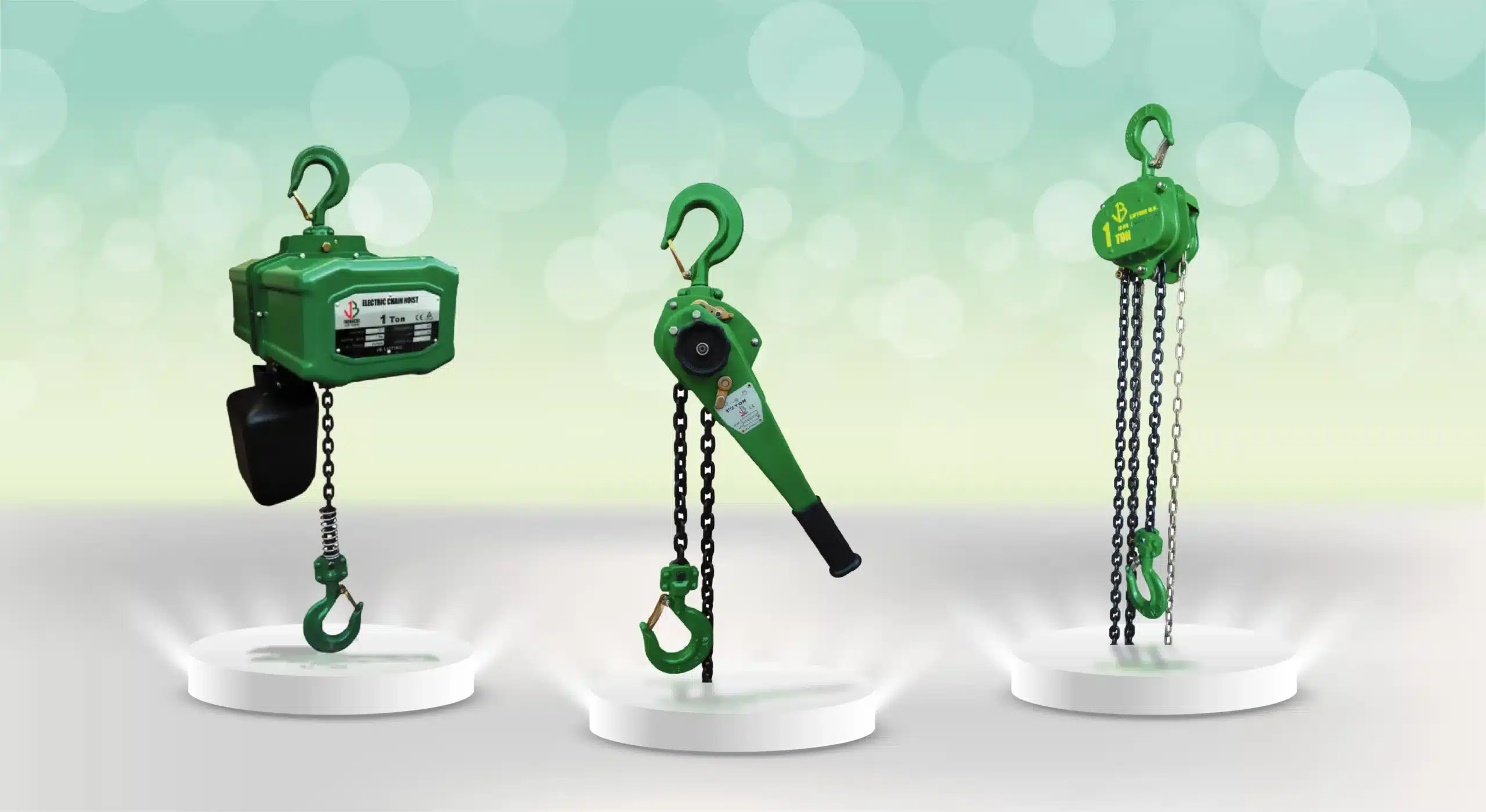
An electric chain hoist is an indispensable piece of lifting equipment for various industries, from manufacturing and construction to warehousing and entertainment. Choosing the right electric chain hoist is crucial for ensuring safety, efficiency, and productivity. This comprehensive hoist buying guide will walk you through the key considerations to help you make an informed decision. At Safe and Secure Trading Company (SSTC), we understand the importance of selecting the appropriate lifting equipment for your specific needs, and this guide is designed to provide the insights you need.
1. Lifting Capacity: Matching the Hoist to the Load
✅ Core Concept: One of the most crucial factors to consider when selecting an electric chain hoist is its lifting capacity. This refers to the maximum weight the hoist can safely lift.
1.1. Problem: Underestimating Load Weight
- Explanation: Using a hoist with insufficient lifting capacity can lead to equipment failure, dropped loads, and serious injuries. Underestimating the weight of the materials you are lifting is a common mistake that can have severe consequences. It is essential to always have an accurate understanding of the weights involved.
1.2. Solution: Accurate Load Assessment & Safety Margin
- Explanation: Determine the maximum weight you’ll be lifting. Always select a hoist with a capacity exceeding your heaviest load by at least 20% to provide a safety margin. This safety margin accounts for variations in load weight and reduces the risk of overloading the hoist. For our clients in the construction sector, we emphasize the importance of this margin, as job sites often involve lifting diverse materials with varying weights.
1.3. Solution: Consult SSTC Experts for Capacity Planning
- Explanation: We can assess your lifting needs and recommend the appropriate hoist capacity for your specific applications. Our team at SSTC has years of experience in material handling and can provide expert advice on selecting the right industrial hoist for your business. We take into account all relevant factors to ensure that the hoist is both safe and efficient for your operations.
2. Lift Height: Ensuring Adequate Vertical Reach
💡 Core Concept: Lift height is another essential consideration when choosing an electric chain hoist. It refers to the maximum vertical distance the hoist can lift a load.
2.1. Problem: Limited Lift Height & Operational Constraints
- Explanation: Choosing a hoist with inadequate lift height restricts its usefulness and can hinder operations. Loads might not reach the desired elevation. This can create bottlenecks in your workflow and limit your ability to handle certain tasks effectively.
2.2. Solution: Measure the Required Lift Height
- Explanation: Accurately measure the distance from the hoist’s mounting point to the highest point the load needs to reach. This measurement should take into account any obstructions or limitations in the workspace. If you need to lift materials to a high shelf or platform, for example, you’ll need a hoist with sufficient lift height to accommodate that distance.
2.3. Solution: Consider Overhead Obstructions and Mounting Height
- Explanation: Factor in any overhead obstructions and the hoist’s mounting height to determine the total required lift height. Low ceilings, pipes, or other obstacles can reduce the available lift height, so it’s important to consider these factors when making your selection. Our team at SSTC often advises clients to conduct a thorough site survey to identify potential obstructions before choosing a hoist. This helps ensure that the selected hoist will be suitable for the intended application. We always recommend a site visit to our clients here in Riyadh, and one of them avoided costly rework by realizing their roof height was lower than expected.
3. Suspension Type: Selecting the Right Mounting Option
➡️ Core Concept: The suspension type of an electric chain hoist refers to how it is mounted or supported. There are several different suspension types available, each with its own advantages and disadvantages.
3.1. Problem: Incompatible Suspension Methods & Stability Issues
- Explanation: Selecting the wrong suspension type can compromise stability and safety. If the suspension is not properly matched to the application, it can lead to instability, vibration, and even failure of the hoist. This can create a dangerous work environment and put operators at risk.
3.2. Solution: Hook Mount for Temporary or Flexible Positioning
- Explanation: Hook-mounted hoists offer flexibility and are ideal for temporary setups. These hoists can be easily moved and repositioned as needed, making them a versatile option for a variety of applications. Hook mounts are particularly useful in situations where the lifting point changes frequently or where a permanent mounting location is not available.
3.3. Solution: Trolley Mount for Horizontal Movement & Precise Placement
- Explanation: Trolley-mounted hoists allow horizontal movement along a beam, providing precise load positioning. Options include manual, geared, and motorized trolleys. Trolley mounts are ideal for applications where the load needs to be moved horizontally as well as vertically, such as in assembly lines or manufacturing plants. Motorized trolleys offer the highest level of precision and control, while manual and geared trolleys provide a more cost-effective solution for less demanding applications.
4. Duty Cycle: Matching the Hoist to the Workload
✅ Core Concept: The duty cycle of an electric chain hoist refers to the amount of time it can operate continuously without overheating or experiencing excessive wear.
4.1. Problem: Overworking the Hoist & Premature Failure
- Explanation: Exceeding the hoist’s duty cycle leads to overheating, accelerated wear, and potential failure. This can result in costly repairs, downtime, and reduced productivity. It is crucial to select a hoist with a duty cycle that is appropriate for the intended application.
4.2. Solution: Light Duty for Intermittent Use & Occasional Lifts
- Explanation: Light-duty hoists are suitable for infrequent lifting tasks with short operating periods. These hoists are typically designed for applications where the lifting frequency is low and the operating time is limited. Light-duty hoists are a cost-effective option for small workshops or facilities with occasional lifting needs.
4.3. Solution: Heavy Duty for Continuous Operation & High-Frequency Lifting
- Explanation: Heavy-duty hoists are designed for continuous operation and frequent lifting cycles in demanding environments. These hoists are built to withstand the rigors of high-volume lifting and are typically used in manufacturing plants, construction sites, and other industrial settings. Heavy-duty hoists are more expensive than light-duty models, but they offer greater reliability and longevity in demanding applications.
4.4. Solution: Calculating Duty Cycle Requirements
- Explanation: Consider the number of lifts per hour and the average lifting time to determine the appropriate duty cycle rating. This calculation will help you select a hoist that can handle the workload without exceeding its limitations. The duty cycle is typically expressed as a percentage, such as 25% or 50%, which indicates the amount of time the hoist can operate continuously within a given period.
5. Power Supply: Ensuring Compatibility & Availability
💡 Core Concept: The power supply of an electric chain hoist refers to the electrical voltage and frequency required to operate the hoist.
5.1. Problem: Electrical Incompatibility & Power Source Limitations
- Explanation: Using an incompatible power supply can damage the hoist and create safety hazards. It is essential to ensure that the hoist’s power requirements match the available power supply in your facility. Failure to do so can result in equipment damage, electrical fires, and other serious problems.
5.2. Solution: Verify Voltage, Phase, and Frequency Requirements
- Explanation: Ensure the hoist’s voltage, phase, and frequency requirements match your facility’s power supply. Common options include 110V, 220V, and 480V. Different regions and industries have different power supply standards, so it’s crucial to verify the requirements before purchasing a hoist. Using a hoist with the wrong power supply can void the warranty and create a safety hazard.
5.3. Solution: Consider Portable Generators for Remote Locations
- Explanation: If you need to use the hoist in remote locations, consider using a portable generator with the appropriate power output and voltage. Portable generators can provide a convenient power source in areas where a standard electrical outlet is not available. However, it’s important to ensure that the generator has sufficient capacity to power the hoist and that it is properly grounded to prevent electrical hazards.
6. Control System: Choosing the Right Level of Precision & Safety
➡️ Core Concept: The control system of an electric chain hoist refers to the method used to operate and control the hoist’s movements.
6.1. Problem: Inadequate Control & Safety Risks
- Explanation: A poor control system can lead to inaccurate load placement and increase the risk of accidents. The control system should be easy to use, responsive, and equipped with safety features to prevent accidents. An inadequate control system can make it difficult to position loads accurately and safely, increasing the risk of dropped loads or collisions.
6.2. Solution: Pendant Control for Basic Operation & Direct Control
- Explanation: Pendant control provides simple, direct control over the hoist’s movements. Pendant controls are typically handheld devices connected to the hoist via a cable. They offer a straightforward and intuitive way to operate the hoist, making them suitable for a wide range of applications.
6.3. Solution: Radio Remote Control for Enhanced Safety & Flexibility
- Explanation: Radio remote control allows the operator to control the hoist from a safe distance, improving visibility and reducing the risk of injury. Radio remote controls offer greater flexibility and freedom of movement compared to pendant controls. They allow the operator to position themselves in the best vantage point to monitor the lift and avoid potential hazards.
6.4. Solution: Advanced Features like Overload Protection & Emergency Stop
- Explanation: Look for control systems with advanced safety features like overload protection, emergency stop buttons, and limit switches. These features can help prevent accidents and protect the hoist from damage. Overload protection prevents the hoist from lifting loads exceeding its rated capacity, while emergency stop buttons allow for immediate shutdown of the hoist in case of an emergency.
7. Safety Features: Prioritizing Operator Safety & Load Security
✅ Core Concept: Safety features are paramount when selecting an electric chain hoist. These features are designed to protect operators, prevent accidents, and ensure the safe handling of loads.
7.1. Problem: Lack of Safety Features & Increased Accident Risk
- Explanation: Hoists lacking essential safety features pose a significant risk to operators and equipment. The absence of safety features can lead to dropped loads, collisions, and other accidents that can cause serious injuries or fatalities. It is essential to prioritize safety when selecting a hoist and to choose a model with a comprehensive set of safety features.
7.2. Solution: Overload Protection to Prevent Lifting Beyond Capacity
- Explanation: Overload protection prevents the hoist from lifting loads exceeding its rated capacity, protecting the equipment and preventing accidents. This feature typically uses a load cell or other sensor to detect when the hoist is approaching its maximum capacity. If an overload is detected, the hoist will automatically stop lifting to prevent damage or accidents.
7.3. Solution: Limit Switches to Prevent Over-Travel
- Explanation: Limit switches prevent the hoist from over-traveling in either direction, preventing damage to the hoist and the load. Limit switches are typically installed at the top and bottom of the hoist’s travel range. When the hoist reaches these limits, the switches will automatically stop the motor to prevent it from traveling any further.
7.4. Solution: Emergency Stop Button for Immediate Shutdown
- Explanation: An easily accessible emergency stop button allows for immediate shutdown of the hoist in case of an emergency. The emergency stop button should be located in a prominent and easily accessible location, allowing operators to quickly shut down the hoist in case of a malfunction or other emergency.
8. Environmental Factors: Adapting to the Operating Environment
💡 Core Concept: The operating environment can significantly impact the performance and lifespan of an electric chain hoist.
8.1. Problem: Environmental Degradation & Premature Wear
- Explanation: Exposure to harsh environments can corrode components and shorten the hoist’s lifespan. Factors such as humidity, dust, chemicals, and extreme temperatures can all contribute to the degradation of the hoist’s components. It is important to consider the operating environment when selecting a hoist and to choose a model that is designed to withstand the specific conditions.
8.2. Solution: Corrosion-Resistant Coatings for Outdoor or Humid Environments
- Explanation: Choose hoists with corrosion-resistant coatings for use in outdoor or humid environments to protect against rust and corrosion. Corrosion-resistant coatings can help to extend the lifespan of the hoist by preventing rust and corrosion from damaging the internal components. These coatings are typically applied to the hoist’s metal surfaces and can provide protection against a variety of corrosive substances.
8.3. Solution: Sealed Enclosures for Dusty or Dirty Environments
- Explanation: Select hoists with sealed enclosures to protect the internal components from dust, dirt, and other contaminants. Sealed enclosures prevent dust and dirt from entering the hoist’s internal components, which can cause wear and tear and reduce its performance. Sealed enclosures are particularly important in environments where there is a high concentration of dust or other airborne particles.
8.4. Solution: Temperature Considerations for Extreme Climates
- Explanation: Consider the operating temperature range and choose a hoist suitable for extreme hot or cold climates. Extreme temperatures can affect the performance and reliability of the hoist. High temperatures can cause overheating and reduced lifting capacity, while low temperatures can cause the lubricant to thicken and reduce the hoist’s efficiency. It is important to choose a hoist that is designed to operate within the expected temperature range.
9. Chain Material and Quality: Ensuring Durability and Reliability
➡️ Core Concept: The chain is a critical component of an electric chain hoist, directly responsible for lifting and supporting the load. The chain’s material and quality are paramount for ensuring durability, reliability, and safety.
9.1 Problem: Chain Failure due to Weak Material
- Explanation: Substandard chain materials lead to chain breaks, causing load drops and potentially fatal injuries. Chains made from low-quality materials are more susceptible to wear, corrosion, and breakage, increasing the risk of accidents.
9.2 Solution: Opt for Alloy Steel Chains
- Explanation: High-quality alloy steel chains offer superior strength, durability, and resistance to wear and tear. Alloy steel chains are specifically designed to withstand the stresses and strains of lifting heavy loads, providing a safer and more reliable lifting solution. When inspecting lifting equipment, we always ensure that alloy steel chains are used.
9.3 Solution: Regular Chain Inspection and Maintenance
- Explanation: Implement a routine inspection program to identify signs of wear, damage, or corrosion, and replace chains as needed. Regular inspections and maintenance are crucial for identifying potential problems before they lead to chain failure. Chains should be inspected for signs of wear, corrosion, cracks, and deformation. Chains with any of these issues should be replaced immediately.
> “Regular inspection and maintenance of chains is critical to ensuring the safe and reliable operation of electric chain hoists.” – John Smith, Lead Safety Inspector
10. Brand Reputation and Warranty: Investing in Long-Term Value
✅ Core Concept: When purchasing an electric chain hoist, it’s essential to consider the brand reputation and the warranty offered. These factors indicate the manufacturer’s commitment to quality, reliability, and customer support.
10.1 Problem: Unreliable Hoists from Unknown Brands
- Explanation: Choosing a lesser-known brand can result in poor performance, frequent breakdowns, and limited support. Unreliable hoists can lead to costly downtime, repairs, and potentially dangerous situations.
10.2 Solution: Research Reputable Manufacturers with Proven Track Records
- Explanation: Select a hoist from a well-established manufacturer known for quality, reliability, and excellent customer service. Reputable manufacturers have a track record of producing durable and dependable hoists and providing excellent support to their customers. We have seen that reputable brands tend to offer better long-term value and reliability.
10.3 Solution: Review the Warranty Terms and Conditions
- Explanation: A comprehensive warranty provides peace of mind and protects your investment in case of defects or malfunctions. A good warranty should cover defects in materials and workmanship and provide for repair or replacement of the hoist.
11. Future Needs and Scalability: Planning for Growth
💡 Core Concept: Consider your future needs and the scalability of the electric chain hoist before making a purchase. As your business grows and your lifting requirements change, you’ll want a hoist that can adapt to your evolving needs.
11.1 Problem: Hoist Inadequacy as Operations Expand
- Explanation: Purchasing a hoist that only meets current needs can limit your ability to handle larger or more frequent lifts in the future. If your business expands, you may need to replace your hoist with a larger or more powerful model, which can be costly and time-consuming.
11.2 Solution: Choose a Modular System with Upgrade Options
- Explanation: Look for hoists that can be easily upgraded with additional features or capacity as your needs evolve. Modular systems allow you to add components or features to the hoist as needed, such as longer chains, more powerful motors, or advanced control systems.
11.3 Solution: Plan for Increased Lifting Demands
- Explanation: Assess your potential future lifting requirements and select a hoist with sufficient capacity and duty cycle to accommodate them. Even if you don’t need the extra capacity or duty cycle right now, it’s better to have it available in the future than to be limited by your hoist.
12. Cost Analysis: Balancing Price and Performance
➡️ Core Concept: While budget is always a consideration, it’s crucial to conduct a thorough cost analysis that considers both the initial purchase price and the long-term costs associated with owning and operating the electric chain hoist.
12.1 Problem: Focusing Solely on Initial Purchase Price
- Explanation: Choosing the cheapest option can lead to higher long-term costs due to frequent repairs, downtime, and reduced lifespan. A cheap hoist may seem like a good deal at first, but it can quickly become a liability if it requires frequent repairs or breaks down frequently.
12.2 Solution: Calculate Total Cost of Ownership
- Explanation: Consider factors such as purchase price, installation costs, maintenance expenses, and energy consumption to determine the true cost of ownership. The total cost of ownership provides a more accurate picture of the overall expense of owning and operating the hoist.
12.3 Solution: Invest in a Quality Hoist for Long-Term Savings
- Explanation: A durable, reliable hoist may have a higher upfront cost but will provide better value over its lifespan due to reduced maintenance and increased productivity. Investing in a quality hoist is a smart long-term investment that can save you money in the long run.
Conclusion
Selecting the right electric chain hoist requires careful consideration of several factors, including lifting capacity, lift height, suspension type, duty cycle, power supply, control system, safety features, environmental factors, chain quality, brand reputation, future needs, and cost analysis. By following this hoist buying guide and carefully evaluating your specific needs, you can choose an industrial hoist that will provide safe, efficient, and reliable material handling for years to come. We at Safe and Secure Trading Company are dedicated to helping you make the best choice for your business.
FAQ Section
Q: What is the most important factor to consider when buying an electric chain hoist?
A: The most important factor is the lifting capacity. Always choose a hoist with a capacity that exceeds your heaviest load by at least 20% to provide a safety margin.
Q: How do I determine the correct lift height for my hoist?
A: Measure the distance from the hoist’s mounting point to the highest point the load needs to reach. Consider any overhead obstructions and the hoist’s mounting height.
Q: What is the difference between a hook mount and a trolley mount?
A: Hook-mounted hoists offer flexibility and are ideal for temporary setups, while trolley-mounted hoists allow horizontal movement along a beam, providing precise load positioning.
Q: How do I calculate the appropriate duty cycle for my hoist?
A: Consider the number of lifts per hour and the average lifting time to determine the appropriate duty cycle rating.
Q: What safety features should I look for in an electric chain hoist?
A: Look for hoists with overload protection, limit switches, and an emergency stop button.
Q: How important is regular hoist maintenance?
A: Hoist maintenance is critical. Regular inspection and maintenance can help identify potential problems early on and prevent accidents or equipment failure. This is especially important for hoist safety.
Q: Can I use an electric chain hoist outdoors?
A: Yes, but you should choose a hoist with corrosion-resistant coatings to protect against rust and corrosion.
Q: What voltage should I choose for my electric chain hoist?
A: Ensure the hoist’s voltage matches your facility’s power supply. Common options include 110V, 220V, and 480V.
Q: How long will an electric chain hoist last?
A: The lifespan of an electric chain hoist depends on several factors, including the quality of the hoist, the duty cycle, the operating environment, and the level of maintenance. With proper care and maintenance, a quality hoist can last for many years.
Q: What is an electric chain fall?
A: An electric chain fall is another name for an electric chain hoist. They are the same type of lifting equipment.