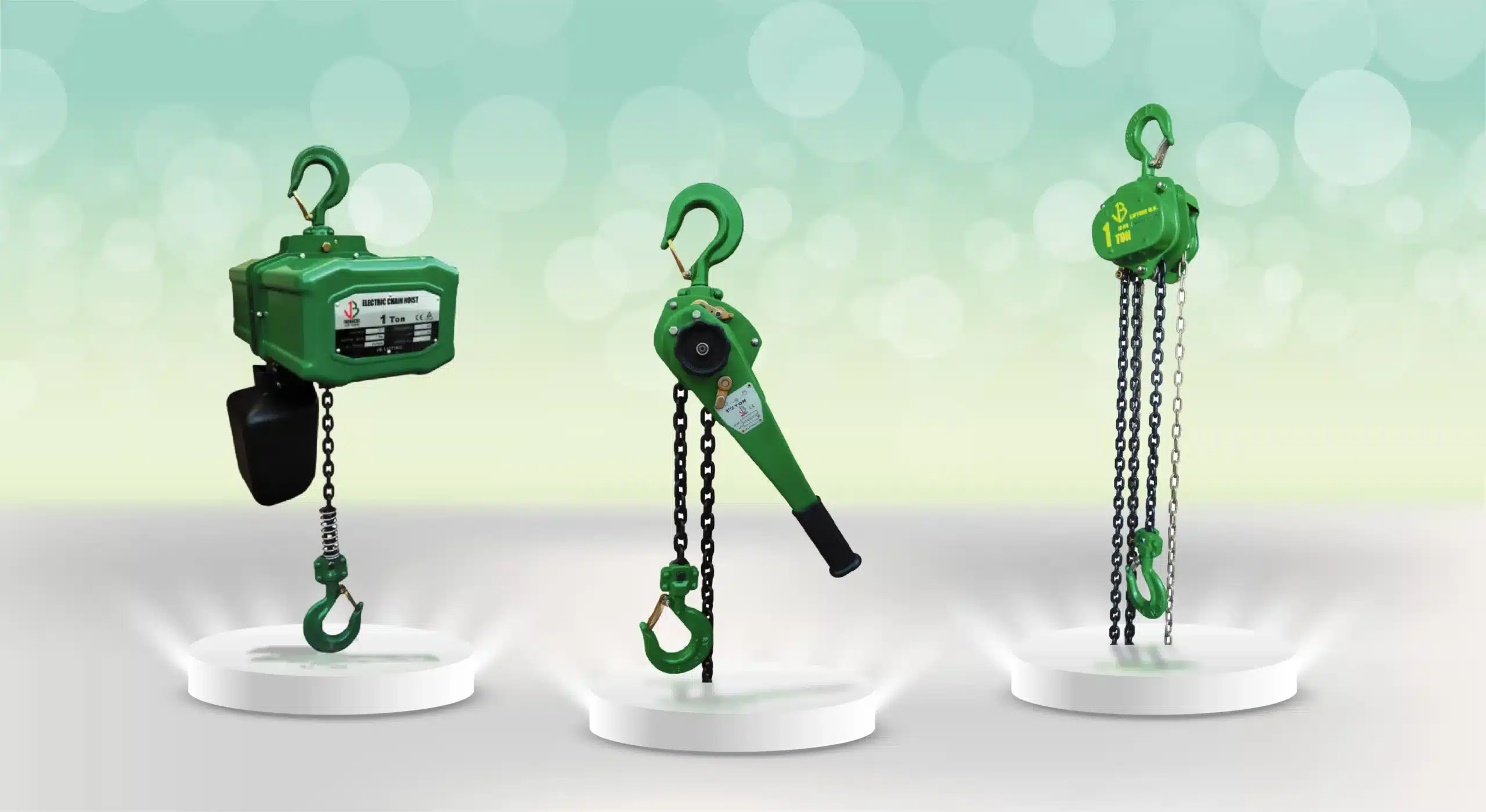
Choosing the right lifting equipment can feel overwhelming. Ever been stuck deciding how to lift that heavy engine block, or which hoist is best for your workshop? At Safe and Secure Trading Company (SSTC), we understand that selecting the appropriate hoist for your specific needs is crucial for both efficiency and safety. This article aims to provide a clear, unbiased comparison between electric and manual chain hoists to help you make an informed decision.
Understanding the Basics: What are Chain Hoists?
A chain hoist is a mechanical device used to lift and lower heavy loads using a chain. These hoists are commonly used in a variety of industrial, construction, and automotive settings. They provide a safe and efficient way to lift objects that would otherwise be too heavy to lift manually.
The core difference between manual and electric hoists lies in their power source. A manual chain hoist relies on human effort to pull the chain and lift the load, while an electric chain hoist uses an electric motor to do the work. This fundamental difference affects everything from lifting speed to operator fatigue.
Electric Chain Hoists: Power and Precision
Electric chain hoists are powered lifting devices designed for efficiency and precision. They use an electric motor to drive a gear system, which in turn lifts or lowers the load. These hoists are equipped with features like push-button controls, allowing for precise and effortless operation.
The advantages of electric chain hoist options are numerous. They offer ease of use, speed, and a high degree of precision, making them ideal for repetitive tasks and heavy lifting. The lifting speed and control afforded by an electric chain hoist are a major advantage in high-volume operations.
Electric hoists find typical applications in assembly lines, manufacturing plants, and busy workshops, where speed and efficiency are paramount. For many of our clients here in Dammam, we’ve seen that the electric chain hoist dramatically improves productivity in their manufacturing processes.
Pros of Electric Chain Hoists
- ✅ Increased efficiency and speed. The electric motor allows for quicker lifting and lowering, saving valuable time in demanding work environments.
- ✅ Reduced operator fatigue. The powered operation minimizes physical strain on the operator, especially during prolonged or repetitive lifting tasks.
- ✅ Precise lifting and lowering control. Electric hoists offer precise control over the load’s movement, ensuring accurate positioning and minimizing the risk of damage.
- ✅ Suitable for repetitive tasks. The ease of use and reduced fatigue make electric hoists ideal for applications involving repetitive lifting operations, boosting productivity and consistency.
Cons of Electric Chain Hoists
- ❌ Higher initial cost. The advanced technology and components of electric hoists result in a higher upfront investment compared to manual hoists.
- ❌ Requires a power source. Electric hoists need access to a reliable power supply, limiting their use in remote or off-grid locations.
- ❌ More complex maintenance. The intricate electrical and mechanical systems require specialized maintenance and repairs, potentially increasing long-term costs.
- ❌ Potential for electrical issues. Electrical components are susceptible to malfunctions, which can lead to downtime and safety concerns if not addressed promptly.
Manual Chain Hoists: Reliability and Simplicity
Manual chain hoists, also known as hand chain hoists, are simple, reliable lifting devices that rely on human power. They consist of gears and pulleys that multiply the pulling force applied to the hand chain, allowing the operator to lift heavy loads with relatively little effort.
The advantages of manual hoists are their lower cost, portability, and reliability in remote areas where electricity is unavailable. Their simple design makes them robust and easy to maintain, ideal for situations where minimal downtime is crucial. We once worked with a client choosing between electric hoist and manual chain hoist. They found the manual chain hoist was better for their specific workflow because their worksite had no reliable power source.
These hoists are commonly used on construction sites, in maintenance workshops, and in smaller workshops where portability and affordability are key considerations. For many of our clients in Riyadh, the manual chain hoist has proven indispensable in situations where access to power is limited.
Pros of Manual Chain Hoists
- ✅ Lower initial cost. Manual hoists are significantly more affordable than electric hoists, making them a budget-friendly option for smaller operations or occasional use.
- ✅ Portable and easy to move. Their compact size and lightweight design make manual hoists easy to transport and set up in various locations.
- ✅ No power source required. Manual hoists operate entirely on human power, eliminating the need for electricity and making them suitable for remote or off-grid environments.
- ✅ Simple maintenance. With fewer moving parts and no electrical components, manual hoists require minimal maintenance and are less prone to breakdowns.
Cons of Manual Chain Hoists
- ❌ Requires significant manual effort. Lifting heavy loads with a manual hoist requires considerable physical exertion, which can be tiring for the operator, especially during prolonged use.
- ❌ Slower lifting speed. The lifting speed of a manual hoist is limited by the operator’s physical strength and endurance, resulting in slower lifting times compared to electric hoists.
- ❌ Limited lifting height. The length of the hand chain restricts the maximum lifting height of a manual hoist, which may not be suitable for all applications.
- ❌ Can be tiring for repetitive tasks. The physical demands of operating a manual hoist can lead to fatigue and reduced efficiency when performing repetitive lifting tasks.
Deep Dive: Electric vs. Manual – A Head-to-Head Comparison
To make the best choice for your specific needs, it’s essential to understand the key differences between electric chain hoist and manual chain hoist. This head-to-head comparison will examine the various factors to aid your decision-making. We are here to help you choose the right lifting equipment for your specific needs.
Comparison Table: Electric Chain Hoist vs. Manual Chain Hoist
| Criteria |
Electric Chain Hoist |
Manual Chain Hoist |
| Cost |
Higher |
Lower |
| Speed |
Faster |
Slower |
| Effort |
Minimal |
Significant |
| Precision |
High |
Moderate |
| Portability |
Lower |
Higher |
| Maintenance |
More Complex |
Simpler |
| Power Source |
Electricity |
Manual |
| Safety |
High (with proper training and maintenance) |
Moderate (requires careful operation) |
| Durability |
High (with proper maintenance) |
High |
Real-World Applications: Matching the Hoist to the Task
Imagine a busy auto repair shop. Mechanics frequently need to lift heavy engine blocks and other components. An electric chain hoist is the ideal choice here, as it provides the speed, precision, and reduced operator fatigue needed for this demanding environment. The electric chain hoist makes lifting and positioning these heavy components far easier and faster, reducing strain on the mechanics and increasing shop efficiency.
Now consider a remote construction site where workers need to lift materials for building a structure, but there’s no readily available power source. A manual chain hoist is the perfect solution in this scenario, providing a reliable and portable lifting solution without the need for electricity. These hoist types are very helpful to the situation.
Safety First: Hoist Operation and Maintenance
Safety is paramount when operating any type of lifting equipment. Both electric chain hoist and manual chain hoist require adherence to strict safety protocols to prevent accidents and injuries. Regular safety inspections, proper load limit adherence, and comprehensive training are essential for safe hoist operation.
It’s crucial to inspect the chain regularly for signs of wear or damage, ensure the load is properly secured, and never exceed the hoist’s rated capacity. Always follow the manufacturer’s instructions and adhere to relevant OSHA or ASME guidelines. Hoist safety is non-negotiable in any work environment.
> “Proper training and regular inspections are critical for safe hoist operation, regardless of whether it’s electric or manual.” – John Smith, Certified Safety Inspector
Cost Analysis: Initial Investment and Long-Term Expenses
The initial cost of an electric chain hoist is typically higher than that of a manual chain hoist. However, it’s important to consider the long-term expenses associated with each type of hoist. While a manual hoist has a lower upfront cost, the labor costs associated with manual operation can add up over time, especially in high-volume applications.
An electric chain hoist, while more expensive initially, can reduce labor costs and increase productivity, potentially offsetting the higher initial investment. Additionally, maintenance and repair costs for an electric chain hoist can be higher due to its more complex components. Regular hoist maintenance is essential to keep costs down.
For instance, let’s say you need to lift 20 heavy items per day. With a manual hoist, it might take 30 minutes per item, totaling 10 hours of labor. With an electric chain hoist, the same task might take only 15 minutes per item, reducing labor to 5 hours. Over time, the savings in labor costs can easily justify the higher initial cost of the electric hoist.
Making the Right Choice: Factors to Consider
Choosing the right hoist depends on several factors that align with your specific requirements and operational environment. We believe that careful consideration of these factors will guide you to the most suitable lifting solution.
- Workload: How often will you use the hoist? For frequent, heavy-duty lifting, an electric hoist is generally the better choice. For occasional use, a manual hoist may suffice.
- Lifting Capacity: What is the maximum weight you need to lift? Ensure the hoist you choose has a sufficient lifting capacity with a safety margin.
- Environment: Indoor vs. outdoor, power availability. Manual hoists are ideal for remote locations without power. Electric hoists require a stable power supply.
- Budget: Initial investment and long-term costs. Balance the upfront cost with potential savings in labor and maintenance. The hoist comparison depends on balancing costs.
The Final Verdict: Choosing the Best Hoist for You
The electric chain hoist and manual chain hoist each offer unique advantages and disadvantages. For high-volume tasks requiring speed and precision, the electric chain hoist is the clear winner. For occasional use in remote locations or budget-conscious operations, the manual chain hoist is the more practical choice. It’s also crucial to consider the various hoist types to ensure you are selecting the optimal equipment.
Ultimately, the best choice depends on your specific needs, workload, and operational environment. We at SSTC hope this hoist comparison has helped you choose the correct industrial hoist for your business.
FAQ Section
Q: What is the main difference between an electric and a manual chain hoist?
A: The primary difference is the power source. An electric chain hoist uses an electric motor, while a manual chain hoist relies on human effort.
Q: Which type of hoist is better for outdoor use?
A: A manual chain hoist is often better for outdoor use, especially in locations without access to a reliable power source.
Q: How important is regular hoist maintenance?
A: Regular hoist maintenance is crucial for both safety and longevity. It helps prevent breakdowns and ensures the hoist operates efficiently.
Q: What safety precautions should I take when using a chain hoist?
A: Always inspect the hoist before use, adhere to load limits, and ensure proper training. Never exceed the hoist’s rated capacity. Hoist safety is the most important thing to consider.
Q: What are the benefits of using a manual chain hoist?
A: Hoist benefits for a manual option include lower cost, portability, and simplicity.
Q: Where can I find OSHA or ASME guidelines for hoist operation?
A: You can find relevant guidelines on the OSHA (Occupational Safety and Health Administration) and ASME (American Society of Mechanical Engineers) websites.
Q: What factors should influence my electric hoist decision?
A: Factors like workload, lifting capacity, and budget should influence your selection of an electric hoist. You need to consider the full scope of the project.
Q: Are there specific recommendations regarding manual chain hoist brands?
A: At Safe and Secure Trading Company, we offer a range of manual chain hoist options and can help you find the best brand to meet your demands.
Q: Can a manual chain hoist also be called a manual chain block?
A: Yes, manual chain hoist and manual chain block are usually interchangeable terms and refer to the same equipment.