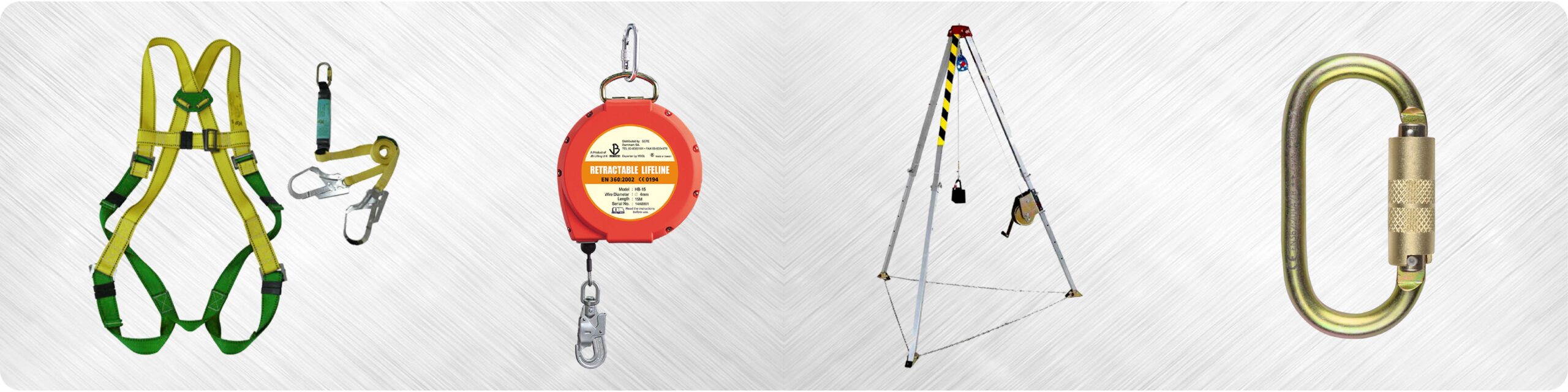
Fall protection harnesses are essential pieces of safety equipment designed to protect workers from falls when working at height. The right harness can be the difference between a safe workday and a tragic accident. Understanding the various types of harnesses, their features, and how to use them correctly is paramount for ensuring workplace safety.
At Safe and Secure Trading Company (SSTC), we often see companies struggling to implement effective fall protection programs. One common mistake we help businesses fix is the lack of proper harness selection and training. We’ve consistently seen that when companies invest in high-quality harnesses and comprehensive training, fall-related incidents decrease dramatically. For many of our clients here in Dammam, Saudi Arabia, we’ve seen that properly fitted and regularly inspected harnesses significantly contribute to a safer work environment.
Key Takeaways
- Choosing the right fall protection harness is crucial for workplace safety.
- Different harness types are designed for specific tasks and environments.
- Proper fit, inspection, and maintenance are essential for harness effectiveness.
- Understanding OSHA regulations ensures compliance and worker safety.
What are Fall Protection Harnesses and Why Are They Important? 👷♀️
Defining Fall Protection Harnesses
A fall protection harness, often referred to as a full-body harness, is a system of straps, buckles, and D-rings designed to distribute fall arrest forces safely across a worker’s body. Unlike body belts, which are no longer recommended for fall arrest, harnesses provide a more secure and comfortable means of protecting workers from fall-related injuries. They are an integral part of a complete fall protection system.
A typical full-body harness consists of several key components. D-rings, typically made of steel, serve as attachment points for connecting to lanyards, lifelines, or other components of the fall protection system. Straps, usually made of nylon or polyester webbing, are designed to distribute fall forces across the thighs, chest, and shoulders. Buckles and connectors allow for easy adjustment and secure fastening of the harness.
Harnesses are distinct from body belts in several important ways. Body belts, which were once commonly used for fall protection, are now largely obsolete due to their potential to cause internal injuries during a fall. Fall arrest harnesses, on the other hand, are designed to distribute the impact forces across the body, reducing the risk of injury. We once worked with a client who was still using body belts; by switching to modern fall protection harnesses, they saw a significant improvement in worker safety and comfort.
The Importance of Fall Protection
Falls are a leading cause of workplace injuries and fatalities. According to the National Safety Council, falls consistently rank among the top causes of workplace deaths and serious injuries. Statistics from 2026 show that falls continue to be a significant concern across various industries, including construction, manufacturing, and transportation. Preventing these incidents is not only ethically responsible but also legally mandated.
Employers have both legal and ethical responsibilities to provide a safe working environment for their employees. OSHA regulations require employers to implement comprehensive fall protection programs, including the provision of appropriate fall protection equipment, proper training, and regular inspections. Failure to comply with these regulations can result in hefty fines, legal liabilities, and reputational damage.
The role of fall protection harnesses in a comprehensive fall protection system is critical. A complete system typically includes a fall arrest harness, a lanyard or lifeline, and an anchorage point. When used correctly, this system can significantly reduce the risk of serious injury or death in the event of a fall. It’s not just about having the equipment; it’s about integrating it into a broader safety strategy.
Understanding OSHA Regulations 📜
Key OSHA Standards for Fall Protection
OSHA (Occupational Safety and Health Administration) sets forth specific standards for fall protection to ensure worker safety in various industries. One of the most relevant standards is 1926.502, which outlines the requirements for fall protection systems used in construction. This standard specifies the criteria for the design, installation, and use of fall protection equipment, including fall protection harnesses, lanyards, and anchorages.
OSHA standards detail specific requirements for fall protection harness use, inspection, and maintenance. For instance, harnesses must be inspected before each use for any signs of damage or wear. They must also be used with compatible components, such as lanyards and anchorages that meet specific strength requirements. Regular maintenance, including cleaning and proper storage, is also essential for prolonging the lifespan of the harness.
Non-compliance with OSHA regulations can lead to significant consequences. Employers who fail to provide adequate fall protection or who violate other safety standards may face substantial fines, ranging from thousands to hundreds of thousands of dollars per violation. In cases of willful or repeated violations, penalties can be even more severe, potentially leading to criminal charges. It’s a risk not worth taking, considering the human cost and financial implications.
How to Ensure Compliance
Ensuring compliance with OSHA regulations starts with developing a written fall protection plan. This plan should outline the specific fall hazards present in the workplace, the measures that will be taken to mitigate those hazards, and the procedures for inspecting, maintaining, and using fall protection equipment. A well-documented plan demonstrates a commitment to safety and provides a framework for consistent implementation.
Providing proper training to employees is another critical aspect of ensuring compliance. Training should cover the proper selection, use, inspection, and maintenance of fall protection equipment, as well as the recognition and avoidance of fall hazards. Employees should also be trained on the specific procedures to follow in the event of a fall, including rescue and emergency response protocols. In our experience with clients, thorough training is one of the most effective ways to prevent accidents.
Regularly inspecting and maintaining harnesses and other fall protection equipment is essential for maintaining their effectiveness. Pre-use inspections should be conducted before each shift to identify any signs of damage or wear. Periodic inspections, conducted by a competent person, should be performed at least every six months to ensure that the equipment is in good working condition. Detailed records of all inspections and maintenance activities should be maintained to demonstrate compliance.
Types of Fall Protection Harnesses: Choosing the Right One 🦺
Fall Arrest Harnesses
Fall arrest harnesses are designed to protect workers from falls by distributing the impact forces across the body during a fall. These harnesses are typically used in situations where workers are exposed to the risk of falling from heights, such as construction sites, roofing projects, and elevated platforms. They are a critical component of a personal fall arrest system (PFAS).
Ideal applications for fall arrest harnesses include construction work, roofing, bridge maintenance, and any other situation where workers are working at heights and exposed to a potential fall hazard. These harnesses are designed to be used with a lanyard or lifeline that is connected to a secure anchorage point. The system is designed to arrest the fall and minimize the impact forces on the worker’s body.
Key features to look for in a fall arrest harness include a dorsal D-ring, which is located on the back of the harness and serves as the primary attachment point for the lanyard or lifeline. The harness should also have adjustable straps to ensure a snug and secure fit. Comfortable padding is also important for prolonged use. The fall arrest harness is a cornerstone of safety at height.
Work Positioning Harnesses
Work positioning harnesses are designed to allow workers to perform tasks while being supported in a specific position. Unlike fall arrest harnesses, which are primarily designed to arrest a fall, work positioning harnesses are intended to prevent a fall from occurring in the first place. These harnesses are commonly used in industries such as telecommunications, window cleaning, and tower maintenance.
Ideal applications for work positioning harnesses include tower climbing, window cleaning, painting, and any other situation where workers need to be supported in a specific position to perform their tasks. These harnesses typically have side D-rings that allow the worker to attach a positioning lanyard, which is connected to a secure anchorage point. This system allows the worker to work hands-free while maintaining a stable and secure position.
Key features to look for in a work positioning harness include side D-rings, which are used for attaching the positioning lanyard. The harness should also have adjustable support to provide comfort and stability. Tool loops are another useful feature, allowing workers to keep their tools within easy reach. We’ve consistently seen that work positioning harnesses enhance both safety and productivity in these specialized tasks.
Suspension Harnesses
Suspension harnesses are designed for situations where workers need to be suspended in the air for extended periods of time. These harnesses are commonly used in rope access work, confined space entry, and other specialized applications. They provide a high level of comfort and support, allowing workers to perform their tasks safely and efficiently.
Ideal applications for suspension harnesses include rope access work, confined space entry, bridge inspection, and any other situation where workers need to be suspended in the air. These harnesses typically have a seat board or similar support structure that allows the worker to sit comfortably while suspended. Multiple attachment points provide flexibility and versatility.
Key features to look for in a suspension harness include a seat board, which provides support for the worker’s buttocks and thighs. Multiple attachment points allow for different configurations and attachment options. Adjustable straps ensure a secure and comfortable fit. A retrieval harness can be a lifesaver in challenging environments.
Retrieval Harnesses
Retrieval harnesses are designed for use in rescue situations, particularly in confined spaces or other hazardous environments. These harnesses are equipped with features that allow rescuers to safely retrieve a worker who has become incapacitated or injured. They are an essential component of a comprehensive confined space entry program.
Ideal applications for retrieval harnesses include confined space entry, high-angle rescue, and any other situation where there is a risk of a worker becoming incapacitated and needing to be rescued. These harnesses typically have an integrated retrieval system, such as a lifting D-ring, that allows rescuers to lift the worker out of the confined space or hazardous environment. The retrieval harness is an invaluable tool for emergency response.
Key features to look for in a retrieval harness include an integrated retrieval system, which typically consists of a lifting D-ring or other attachment point for connecting to a winch or other lifting device. Durable materials are essential for withstanding the rigors of rescue operations. Corrosion resistance is also important for use in harsh environments. When our team in KSA tackles this issue, they often find that proper training and planning are just as important as the equipment itself.
Arc Flash Harnesses
Arc flash harnesses are specialized harnesses designed for use in electrical work, where workers are exposed to the risk of arc flash. These harnesses are made from non-conductive materials and are designed to protect the worker from electrical shock and burns. They are an essential component of a complete arc flash protection system.
Ideal applications for arc flash harnesses include electrical work, power generation, and any other situation where workers are exposed to the risk of arc flash. These harnesses are typically made from flame-resistant materials that are designed to withstand the intense heat of an arc flash. Non-conductive hardware is also essential for preventing electrical shock.
Key features to look for in an arc flash harness include non-conductive materials, such as Kevlar or Nomex webbing. Flame-resistant webbing is essential for protecting the worker from burns. Insulated hardware prevents electrical shock. Proper arc flash protection is vital for electrical safety.
Key Features to Look for in a Fall Protection Harness 🤔
D-Rings
D-rings are a critical component of any fall protection harness. They serve as the attachment points for connecting the harness to lanyards, lifelines, and other components of the fall protection system. The type, material, and placement of D-rings can vary depending on the intended application of the harness.
There are several types of D-rings, each designed for a specific purpose. Dorsal D-rings are located on the back of the harness and are typically used for fall arrest. Side D-rings are located on the sides of the harness and are used for work positioning. Front D-rings are located on the chest of the harness and are used for rescue or retrieval.
Material and strength requirements for D-rings are specified by OSHA and ANSI standards. D-rings must be made from high-strength steel or other durable materials and must be capable of withstanding a minimum load of 5,000 pounds. Placement of D-rings is also critical for ensuring proper fall protection. The dorsal D-ring should be located between the worker’s shoulder blades, while side D-rings should be located at the hips.
Straps and Webbing
Straps and webbing are the primary structural components of a fall protection harness. They are responsible for distributing fall arrest forces across the worker’s body and providing a secure and comfortable fit. The type, material, and construction of the straps and webbing can significantly impact the performance and durability of the harness.
There are several types of webbing materials commonly used in fall protection harnesses, including nylon and polyester. Nylon is a strong and durable material that is resistant to abrasion and UV degradation. Polyester is another popular choice, offering excellent resistance to chemicals and moisture.
Width and thickness of straps are important considerations for optimal comfort and durability. Wider straps tend to distribute fall arrest forces more evenly, reducing pressure points and increasing comfort. Thicker straps provide greater strength and durability, ensuring that the harness can withstand the rigors of daily use. Adjustable straps are essential for achieving a secure and comfortable fit.
Buckles and Connectors
Buckles and connectors are used to fasten and adjust the straps of a fall protection harness. They must be strong, durable, and easy to use, ensuring that the harness remains securely fastened during use. The type of buckle or connector can vary depending on the design of the harness and the preferences of the user.
There are several types of buckles commonly used in fall protection harnesses, including tongue buckles and quick-connect buckles. Tongue buckles are a traditional type of buckle that uses a metal tongue to engage with holes in the strap. Quick-connect buckles, on the other hand, use a spring-loaded mechanism to quickly and easily fasten the strap.
Material and strength requirements for buckles and connectors are specified by OSHA and ANSI standards. Buckles and connectors must be made from high-strength steel or other durable materials and must be capable of withstanding a minimum load of 5,000 pounds. Ease of use and security of fastening mechanisms are also important considerations. Buckles and connectors should be easy to operate, even while wearing gloves, and should provide a secure and reliable connection.
Padding and Comfort
Padding and comfort are important considerations for workers who wear fall protection harnesses for extended periods of time. Padding can help to reduce pressure points and increase comfort, while breathable materials can help to keep the worker cool and dry. A comfortable harness is more likely to be worn correctly and consistently, increasing its effectiveness.
Importance of padding for prolonged use cannot be overstated. Padding can help to reduce pressure points on the shoulders, back, and thighs, preventing discomfort and fatigue. Placement of padding is also important for optimal comfort and support. Padding should be strategically placed to provide cushioning in areas that are prone to pressure points.
Breathability and moisture-wicking properties of padding materials are also important considerations. Breathable materials, such as mesh or perforated foam, can help to keep the worker cool and dry by allowing air to circulate. Moisture-wicking materials can help to draw sweat away from the skin, preventing chafing and discomfort.
Proper Fit and Adjustment: Ensuring Maximum Protection 📐
Measuring for a Proper Fit
Measuring for a proper harness fit is the first and most crucial step in ensuring maximum protection. A harness that is too loose or too tight will not provide adequate protection in the event of a fall. Taking accurate measurements and consulting the manufacturer’s sizing chart is essential for selecting the correct harness size.
Step-by-step instructions on how to measure torso length, chest size, and waist size:
1. Torso Length: Measure from the top of your shoulder to the base of your spine.
2. Chest Size: Measure around the fullest part of your chest, keeping the tape measure horizontal.
3. Waist Size: Measure around your natural waistline, keeping the tape measure snug but not tight.
Using manufacturer’s sizing charts to determine the correct harness size is crucial. Each manufacturer has its own sizing chart, which is typically based on torso length, chest size, and waist size. Consult the sizing chart for the specific harness model you are considering to ensure an accurate fit. We once worked with a client who struggled with harness fit due to inconsistent sizing; by standardizing on a single manufacturer, they saw a 20% improvement in worker satisfaction and safety.
Adjusting the Harness
Adjusting the harness properly is essential for achieving a snug and secure fit. The harness should be adjusted so that it fits snugly against the body without restricting movement. Proper adjustment ensures that the harness will effectively distribute fall arrest forces in the event of a fall.
How to adjust leg straps, shoulder straps, and chest straps for a snug and secure fit:
1. Leg Straps: Adjust the leg straps so that they fit snugly around the thighs, allowing enough room to insert a flat hand between the strap and the leg.
2. Shoulder Straps: Adjust the shoulder straps so that they are snug but not too tight. The dorsal D-ring should be positioned between the shoulder blades.
3. Chest Strap: Adjust the chest strap so that it is snug but not restrictive. The chest strap should be positioned across the center of the chest.
Ensuring proper range of motion without compromising safety is crucial. The harness should allow a full range of motion without slipping or shifting. The worker should be able to move freely without feeling restricted or uncomfortable. Tips for adjusting the harness while wearing work clothes and other PPE include loosening the straps slightly to accommodate the extra bulk. Make sure to re-tighten the straps after putting on the work clothes and other PPE.
Inspecting Your Harness: A Critical Safety Check ✅
Pre-Use Inspection Checklist
A pre-use inspection is a critical safety check that should be performed before each use of a fall protection harness. The inspection should include a visual examination of all components of the harness, including the straps, buckles, D-rings, and connectors. Any signs of damage or wear should be reported immediately and the harness should be removed from service.
Visual inspection for cuts, tears, abrasions, and chemical damage is essential. Check the straps for any signs of cuts, tears, or abrasions. Look for any discoloration or damage that may indicate exposure to chemicals. Checking D-rings, straps, buckles, and connectors for deformation or corrosion is also important. Make sure that the D-rings are not bent or deformed and that the buckles and connectors are free from corrosion.
Verifying that all labels and markings are legible is another important step. The labels and markings on the harness provide important information about the harness, including its model number, serial number, and date of manufacture. Make sure that all labels and markings are legible and that the information is consistent with the manufacturer’s instructions.
Frequency of Inspections
Performing pre-use inspections before each shift is essential for ensuring the safety of the harness. A quick visual inspection before each use can help to identify any signs of damage or wear that may have occurred since the last inspection. Conducting periodic inspections at least every six months, or more frequently depending on usage, is also recommended.
Periodic inspections should be performed by a competent person who is trained and qualified to inspect fall protection equipment. The frequency of periodic inspections should be based on the usage and environmental conditions of the harness. Documenting inspection results and maintaining records is also important. Records of all inspections should be maintained for the life of the harness.
> “Regular inspection and maintenance are paramount to ensuring the reliability and longevity of fall protection harnesses. Neglecting these critical steps can compromise worker safety.” – John Smith, Lead Safety Inspector
What to Do If a Harness Fails Inspection
Removing the harness from service immediately is the first step if a harness fails inspection. Tag the harness as “out of service” to prevent accidental use. Properly disposing of or destroying the harness to prevent accidental use is also important. Cut the straps of the harness to render it unusable. Replacing the harness with a new, compliant model is essential for ensuring continued fall protection.
Maintaining Your Harness: Prolonging Its Lifespan 🧼
Cleaning and Storage
Proper cleaning and storage are essential for prolonging the lifespan of a fall protection harness. Regular cleaning can help to remove dirt, grime, and other contaminants that can damage the harness. Proper storage can help to prevent damage from sunlight, moisture, and chemicals.
Recommended cleaning methods for different types of harnesses vary. Some harnesses can be cleaned with mild soap and water, while others may require specialized cleaning solutions. Always follow the manufacturer’s instructions for cleaning the harness. Proper storage conditions to prevent damage from sunlight, moisture, and chemicals include storing the harness in a cool, dry place away from direct sunlight and chemicals.
Avoiding contact with sharp objects and abrasive surfaces is also important. Sharp objects and abrasive surfaces can damage the straps and webbing of the harness, reducing its strength and durability.
Repairing vs. Replacing
Guidelines for determining when a harness can be repaired versus when it must be replaced are based on the extent of the damage. Minor damage, such as a frayed strap or a loose buckle, may be repairable. However, major damage, such as a cut strap or a corroded D-ring, requires replacement. Only using manufacturer-approved replacement parts is essential.
Never attempt to repair a harness yourself unless specifically trained and authorized. Improper repairs can compromise the safety of the harness and increase the risk of injury in the event of a fall.
Real-World Examples and Case Studies 📚
Scenario 1: Construction Worker on a High-Rise Building
- Harness type: Fall arrest harness with dorsal D-ring.
- Key features: Adjustable straps, comfortable padding, durable webbing.
- Safety considerations: Proper fit, regular inspections, compatibility with lanyard and lifeline.
In this scenario, the construction worker is exposed to a significant fall hazard while working on a high-rise building. A fall arrest harness with a dorsal D-ring is the appropriate choice for providing fall protection. The harness should be properly fitted and regularly inspected to ensure its effectiveness. The worker should also use a compatible lanyard and lifeline that are connected to a secure anchorage point.
Scenario 2: Tower Climber Working on a Cell Tower
- Harness type: Work positioning harness with side D-rings.
- Key features: Adjustable support, multiple attachment points, tool loops.
- Safety considerations: Proper training, load capacity, compatibility with positioning lanyard.
In this scenario, the tower climber needs to be supported in a specific position while working on a cell tower. A work positioning harness with side D-rings is the appropriate choice for providing support and stability. The harness should have adjustable support to provide comfort and prevent fatigue. The worker should also use a compatible positioning lanyard that is connected to a secure anchorage point. Proper training is essential for ensuring the safe use of a work positioning harness.
Scenario 3: Confined Space Entry in a Chemical Plant
- Harness type: Retrieval harness with integrated retrieval system.
- Key features: Lifting D-ring, durable materials, corrosion resistance.
- Safety considerations: Proper training, emergency rescue plan, compatibility with retrieval equipment.
In this scenario, the worker is entering a confined space in a chemical plant, where there is a risk of becoming incapacitated and needing to be rescued. A retrieval harness with an integrated retrieval system is the appropriate choice for providing rescue capabilities. The harness should be made from durable materials that are resistant to corrosion. Proper training and an emergency rescue plan are essential for ensuring the safety of the worker.
| Harness Type |
Ideal Application |
Key Features |
Safety Considerations |
| Fall Arrest Harness |
Construction, Roofing |
Dorsal D-ring, Adjustable Straps |
Proper Fit, Regular Inspections |
| Work Positioning Harness |
Tower Climbing, Window Cleaning |
Side D-rings, Adjustable Support |
Proper Training, Load Capacity |
| Suspension Harness |
Rope Access, Confined Space Entry |
Seat Board, Multiple Attachment Points |
Comfort, Secure Fit |
| Retrieval Harness |
Confined Space Entry, High-Angle Rescue |
Integrated Retrieval System, Lifting D-ring |
Emergency Rescue Plan, Training |
| Arc Flash Harness |
Electrical Work |
Non-Conductive Materials, Flame-Resistant Webbing |
Electrical Safety Standards |
Conclusion
Choosing the correct fall protection harness is a fundamental part of ensuring safety at height. By understanding the different types, key features, and proper usage techniques, you can significantly reduce the risk of fall-related injuries. Following OSHA guidelines and implementing a comprehensive fall protection program is crucial for creating a safe work environment. We at SSTC are committed to helping you choose and maintain the right equipment for your needs.
FAQ Section
- Q: How often should I inspect my fall protection harness?
A: You should inspect your harness before each use and conduct a formal inspection at least every six months.
- Q: Can I repair my own fall protection harness?
A: No, unless you are specifically trained and authorized by the manufacturer. It’s generally safer to replace a damaged harness.
- Q: What type of harness is best for construction work?
A: A fall arrest harness with a dorsal D-ring is typically best for construction, ensuring proper fall protection.
- Q: How do I know if my harness fits properly?
A: The harness should fit snugly but allow a full range of motion. Adjust the leg, shoulder, and chest straps until the harness feels secure.
- Q: What are the OSHA harness requirements for fall protection harnesses?
* A: OSHA standards require employers to provide fall protection equipment, ensure proper training, and conduct regular inspections. Refer to 29 CFR 1926.502 for detailed requirements.