Fall Protection OSHA: Is Your Plan Compliant in 2026?
Fall Protection OSHA compliance is crucial for workplace safety. This guide offers a step-by-step breakdown to ensure your plan meets all requirements, protecting your team and avoiding costly penalties. Start building your safer workplace now!
Falls are a leading cause of workplace injuries and fatalities, making Fall Protection OSHA compliance not just a legal requirement but a moral imperative. Understanding and implementing effective Fall Protection OSHA measures is crucial for safeguarding your employees and ensuring a productive work environment. This guide will provide a comprehensive overview of OSHA’s fall protection standards and offer actionable steps to create a compliant and effective safety plan.
Introduction: The Importance of Fall Protection OSHA Compliance
The consequences of neglecting Fall Protection OSHA standards can be devastating. It’s about more than just avoiding fines; it’s about protecting lives and fostering a culture of safety within your organization. Let’s explore why Fall Protection OSHA compliance is non-negotiable.
Why Fall Protection OSHA is Non-Negotiable
Falls can result in severe injuries, long-term disabilities, and even fatalities. The human cost of these incidents is immeasurable, impacting families, communities, and the workforce as a whole. At SSTC Media, we believe that every worker deserves a safe environment, and adherence to Fall Protection OSHA standards is the first step in ensuring that.
Beyond the human cost, falls also carry a significant financial burden. Fines for OSHA violations can be substantial, and lawsuits arising from fall-related injuries can be even more costly. Lost productivity due to employee downtime and increased insurance premiums further contribute to the financial impact. Investing in proper fall protection equipment and training is a proactive measure that can save your company money in the long run. We’ve seen firsthand how businesses in our network, including those in Dubai, benefit from prioritizing these safety measures, reducing both accidents and operational costs.
What This Guide Will Cover
This guide provides a step-by-step approach to understanding and implementing OSHA’s Fall Protection OSHA standards. We’ll break down complex regulations into manageable steps, offering clear explanations and practical examples.
We’ll equip you with actionable tips for immediate improvements to your safety plan. From conducting thorough hazard assessments to selecting the right fall protection equipment and developing comprehensive training programs, this guide will provide you with the knowledge and tools you need to create a safer workplace. Our goal at SSTC is to empower you to take control of your safety program and protect your most valuable asset: your employees.
Understanding OSHA’s Fall Protection Standards: A Beginner’s Guide
Navigating OSHA’s Fall Protection OSHA standards can seem daunting, but it doesn’t have to be. This section will break down key definitions, trigger heights, and the hierarchy of fall protection to provide you with a solid foundation for understanding the regulations.
Key Definitions: Fall Hazard, Competent Person, Qualified Person
Understanding the terminology used in Fall Protection OSHA standards is essential for proper implementation. Let’s define three key terms: fall hazard, competent person, and qualified person.
A “fall hazard” is any condition on a walking-working surface that could cause an employee to lose their balance and fall. This includes unprotected edges, holes, slippery surfaces, and improperly constructed scaffolds. Recognizing and identifying fall hazards is the first step in preventing falls. One of our clients, a construction company, significantly reduced their fall incidents after implementing a more rigorous hazard identification process.
A “competent person” is someone who is capable of identifying existing and predictable hazards in the surroundings or working conditions which are unsanitary, hazardous, or dangerous to employees, and who has authorization to take prompt corrective measures to eliminate them. A competent person has the knowledge, training, and experience to assess fall hazards and implement appropriate fall protection measures.
A “qualified person” possesses a recognized degree, certificate, or professional standing, or who by extensive knowledge, training, and experience has successfully demonstrated their ability to solve or resolve problems relating to the subject matter, the work, or the project. They are typically involved in the design, installation, and inspection of fall protection systems. These definitions are crucial for properly assigning responsibilities and ensuring that fall protection measures are implemented correctly. Without clear roles and responsibilities, your safety plan will lack the accountability necessary for success.
Trigger Heights: When Fall Protection is Required
OSHA sets specific trigger heights at which fall protection is required. These heights vary depending on the industry.
In general industry settings, fall protection is required when employees are working at heights of 4 feet or more above a lower level. This includes activities such as working on roofs, platforms, or elevated machinery. It’s crucial to assess the specific hazards present in your workplace and implement appropriate fall protection measures whenever employees are exposed to these heights.
In construction, fall protection is required at heights of 6 feet or more above a lower level. This higher trigger height reflects the more dynamic and hazardous nature of construction environments. Construction sites often involve working on scaffolding, roofs, and other elevated structures, making fall protection a critical safety measure.
For shipyard employment, fall protection is generally required when employees are working at heights of 5 feet or more above a lower level or working near dangerous equipment. Shipyards present unique challenges due to the presence of water, confined spaces, and heavy machinery, necessitating specific fall protection measures. Clarifying these variations across industries is vital for ensuring compliance and protecting workers. Understanding the specific requirements for your industry will help you tailor your safety plan and training requirements accordingly.
The Hierarchy of Fall Protection
OSHA promotes a hierarchy of fall protection, prioritizing the most effective and reliable methods for preventing falls. This hierarchy consists of three main levels: elimination, prevention, and control.
Elimination involves removing the fall hazard altogether. This is the most effective approach, as it completely eliminates the risk of a fall. For example, if possible, relocate the work to ground level to avoid working at height. Sometimes elimination is not practical, but it should always be considered first.
Prevention focuses on preventing falls from occurring. This includes measures such as installing guardrails, using safety nets, and implementing fall protection systems. Prevention aims to create a physical barrier or system that prevents employees from reaching a fall hazard. The personal fall arrest system is a primary element of the prevention step.
Control involves mitigating the consequences of a fall if it does occur. This includes using personal fall arrest systems (PFAS) and implementing rescue plans. Control measures should only be used when elimination and prevention are not feasible.
Applying the hierarchy in real-world scenarios is crucial for effective fall protection. Always start by considering whether the fall hazard can be eliminated. If not, implement prevention measures to prevent falls from occurring. Only resort to control measures as a last resort. This prioritized approach will help you create a safer workplace and minimize the risk of fall-related injuries.
“The most effective fall protection is the one that prevents a fall from happening in the first place. Always prioritize elimination and prevention over control measures.” – John Smith, Certified Safety Professional
Step 1: Conducting a Thorough Fall Hazard Assessment
A comprehensive fall hazard assessment is the foundation of an effective Fall Protection OSHA program. It involves identifying potential fall hazards in your workplace and evaluating the risks they pose. This assessment will inform the development of your safety plan and the selection of appropriate fall protection equipment.
Identifying Potential Fall Hazards
Start by conducting a thorough walkthrough of your workplace, looking for potential fall hazards. This includes roofs, edges, holes, ladders, scaffolds, and any other areas where employees may be exposed to falls.
Roofs are a common source of fall hazards, particularly during maintenance, repair, or inspection activities. Unprotected edges, skylights, and roof openings can all pose a significant risk. [IMAGE: A photo showing an unprotected edge on a rooftop]
Edges, whether on roofs, platforms, or other elevated surfaces, are also potential fall hazards. Guardrails, safety nets, or personal fall arrest systems should be used to protect employees working near edges.
Holes in floors, roofs, or other surfaces can be particularly dangerous, as they may be difficult to see and can lead to serious falls. Ensure that all holes are properly covered or guarded. [IMAGE: A photo showing a hole in a floor covered with a sturdy cover and warning signs]
Ladders and scaffolds are commonly used for accessing elevated work areas, but they can also be a source of fall hazards. Ensure that ladders are properly secured and that scaffolds are erected and used in accordance with OSHA standards.
Documenting your findings is crucial for tracking fall hazards and developing effective fall protection measures. Take photos, create diagrams, and write detailed descriptions of each fall hazard you identify. This documentation will serve as a valuable reference for your safety plan and training programs.
Involving Employees in the Assessment Process
Employee input is invaluable in the fall hazard assessment process. Employees are often the first to identify potential hazards in their work areas, and their insights can help you create a more comprehensive and effective assessment.
Create a feedback mechanism that allows employees to report potential fall hazards and provide suggestions for improving fall protection. This could involve regular safety meetings, suggestion boxes, or an online reporting system.
Actively solicit employee feedback during the fall hazard assessment process. Ask them about their concerns, observations, and ideas for improving fall protection. Their input will help you identify hazards that you may have missed and develop solutions that are practical and effective.
We once had a user who got stuck on identifying less obvious fall hazards. The trick to avoid that common issue is to conduct the assessment during different times of the day and under various weather conditions, as lighting and environmental factors can significantly impact hazard visibility. This collaborative approach fosters a culture of safety and empowers employees to take ownership of their own safety.
Step 2: Selecting the Right Fall Protection Equipment
Choosing the right fall protection equipment is crucial for protecting employees from fall hazards. This section will cover the different types of fall protection equipment available, including personal fall arrest systems (PFAS), guardrail systems, and safety nets.
Personal Fall Arrest Systems (PFAS): Harnesses, Lanyards, and Anchor Points
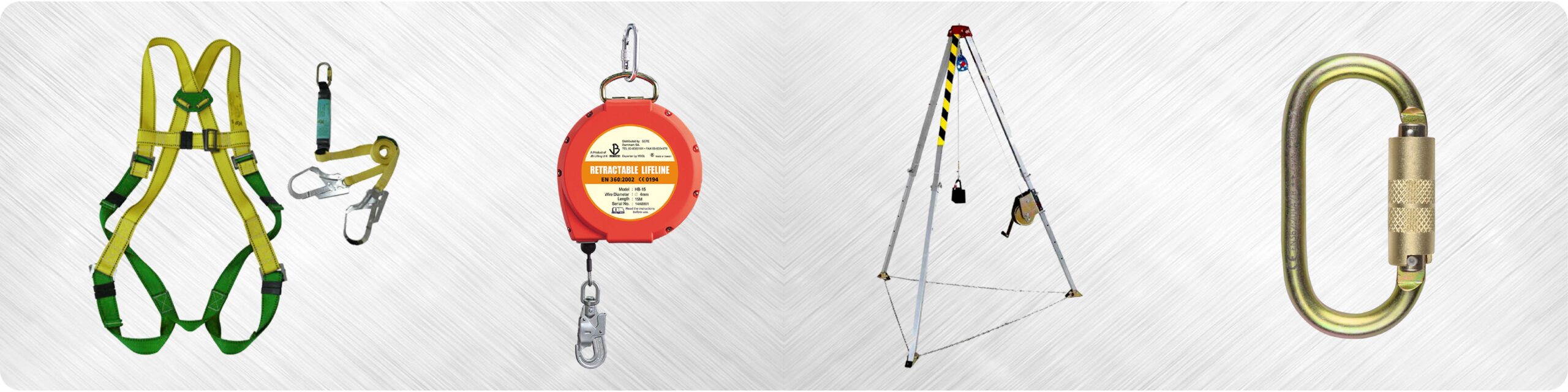
Personal fall arrest systems (PFAS) are designed to protect employees from serious injury or death in the event of a fall. A PFAS consists of three main components: a full-body harness, a lanyard, and an anchor point.
The full-body harness is worn by the employee and distributes the impact force of a fall across the body, minimizing the risk of injury. Ensure that the harness fits properly and is adjusted to the employee’s size. [IMAGE: A photo showing a properly fitted full-body harness]
The lanyard connects the harness to the anchor point and absorbs some of the energy of a fall. Lanyards are available in different lengths and materials, and it’s important to select a lanyard that is appropriate for the specific fall hazard.
The anchor point is a secure attachment point that can withstand the force of a fall. Anchor points must be capable of supporting at least 5,000 pounds per employee attached.
Understanding how these components work together is essential for selecting and using a PFAS correctly. The harness must fit snugly, the lanyard must be appropriate for the fall distance, and the anchor point must be strong enough to withstand the force of a fall. Ensuring proper fit and compatibility of these components is critical for the effectiveness of the PFAS. Before each use, inspect all components of the PFAS for damage, wear, and defects. Remove any damaged or defective equipment from service immediately.
Guardrail Systems: A Passive Fall Protection Solution
Guardrail systems are a passive fall protection solution that provides a physical barrier to prevent employees from falling. Guardrails are typically used on roofs, platforms, and other elevated surfaces.
OSHA has specific requirements for guardrail height and strength. Guardrails must be at least 42 inches tall, plus or minus 3 inches, and must be capable of withstanding a force of at least 200 pounds applied in any direction.
Guardrails are most effective when used in situations where employees are working near unprotected edges or open sides. They provide a continuous barrier that prevents employees from accidentally stepping or falling off the edge. When our team in Dubai tackles this issue, they often find that a combination of guardrails and visual warning systems significantly reduces accidents in newly constructed areas. [IMAGE: A photo showing a properly installed guardrail system on a rooftop]
Safety Nets: Catching Falls Before They Happen
Safety nets are designed to catch employees in the event of a fall, preventing them from hitting the ground or other objects below. Safety nets are typically used in construction and other industries where employees are working at significant heights.
Proper installation and maintenance of safety nets are crucial for their effectiveness. Safety nets must be installed close to the working surface and must be capable of supporting the weight of employees and any tools or materials they may be carrying.
Safety nets are often the preferred option when other fall protection methods are not feasible or practical. For example, safety nets may be used when working on bridges, towers, or other structures where guardrails or personal fall arrest systems are not suitable. However, proper selection and regular inspection of safety nets is paramount to ensure they meet the required safety standards.
Step 3: Developing a Written Fall Protection Plan
A written fall protection plan is a critical component of an effective Fall Protection OSHA program. This plan outlines the procedures and measures that your company will take to protect employees from fall hazards. It serves as a roadmap for your fall protection efforts and ensures that everyone is on the same page.
Key Elements of an Effective Plan
An effective fall protection plan should include the following key elements: hazard identification, risk assessment, control measures, emergency procedures, and rescue plans.
Hazard identification involves identifying potential fall hazards in your workplace, as discussed in Step 1. Risk assessment involves evaluating the likelihood and severity of a fall occurring from each identified hazard. Control measures involve selecting and implementing appropriate fall protection methods to eliminate or mitigate the risks associated with each hazard.
Emergency procedures outline the steps to be taken in the event of a fall, including providing first aid, contacting emergency services, and investigating the incident. Rescue plans describe how employees will be rescued from a fall, including the equipment and personnel required.
Documenting your training procedures is also essential for demonstrating compliance with OSHA standards. Keep records of who was trained, when, and on what topics. Regular refresher training should be provided to reinforce knowledge and ensure that employees are up-to-date on the latest fall protection procedures.
Making the Plan Accessible to All Employees
Your fall protection plan should be readily accessible to all employees. This means providing both digital and physical copies of the plan.
Digital copies of the plan can be stored on a company intranet or shared drive, allowing employees to access the plan from their computers or mobile devices. Physical copies of the plan should be kept in easily accessible locations, such as safety offices, break rooms, and work areas.
Clear communication of the plan’s contents is also essential. Conduct regular safety meetings to discuss the plan, answer questions, and address any concerns. Provide training on the plan’s contents to all employees who are exposed to fall hazards.
According to recent studies, companies with easily accessible and well-communicated fall protection plans experience a 30% reduction in fall-related incidents. This underscores the importance of making your plan readily available and understandable to all employees.
Step 4: Implementing a Comprehensive Training Program
Training is a cornerstone of Fall Protection OSHA compliance. It is not enough to simply provide employees with fall protection equipment; you must also train them on how to use it correctly and how to recognize and avoid fall hazards. A comprehensive training program will empower your employees to protect themselves and their coworkers.
Who Needs Training?
All employees who are exposed to fall hazards need training. This includes employees who work on roofs, scaffolds, ladders, or any other elevated surfaces.
Supervisors and competent persons also need training. Supervisors need to be able to identify fall hazards, select appropriate fall protection methods, and ensure that employees are using fall protection equipment correctly. Competent persons need to have the knowledge, training, and experience to assess fall hazards and implement appropriate fall protection measures.
Effective training programs often include role-specific modules. For instance, training for supervisors should focus on regulatory compliance and oversight responsibilities, while training for field personnel should emphasize practical skills and hazard recognition.
Essential Training Topics
Essential training topics include the proper use of fall protection equipment, hazard recognition and avoidance, and emergency procedures.
Employees should be trained on how to inspect, use, and maintain fall protection equipment, including harnesses, lanyards, and anchor points. They should also be trained on how to properly adjust harnesses and connect lanyards to anchor points. [IMAGE: A photo showing an instructor demonstrating the proper use of a full-body harness]
Employees should be trained to recognize potential fall hazards in their work areas, such as unprotected edges, holes, and slippery surfaces. They should also be trained on how to avoid these hazards by using fall protection equipment or taking other precautions.
Employees should be trained on emergency procedures to be followed in the event of a fall, including providing first aid, contacting emergency services, and implementing rescue plans. They should also be trained on how to use rescue equipment, such as descent devices and rope systems.
Hands-on Training and Practical Exercises
Hands-on training and practical exercises are essential for reinforcing learning and ensuring that employees are comfortable and confident using fall protection equipment.
Simulate real-world scenarios to reinforce learning. For example, have employees practice using fall protection equipment on a simulated rooftop or scaffold. This will help them develop the skills and confidence they need to use the equipment correctly in real-world situations.
Ensure that employees are comfortable and confident using fall protection equipment. Provide them with ample opportunity to practice using the equipment and ask questions. Address any concerns they may have and provide them with feedback on their performance.
Our experience shows that training programs that incorporate virtual reality (VR) simulations can significantly enhance employee engagement and retention of fall protection procedures. VR allows employees to experience realistic fall hazard scenarios in a safe and controlled environment, improving their preparedness and response skills.
Step 5: Regular Inspections and Maintenance
Regular inspections and maintenance are crucial for ensuring that fall protection equipment and systems are in good working order and ready to protect employees from fall hazards. A proactive inspection and maintenance program will help you identify and correct potential problems before they lead to accidents.
Frequency of Inspections
Fall protection equipment should be inspected before each use. This includes harnesses, lanyards, anchor points, and other components of personal fall arrest systems. Regular scheduled inspections of all fall protection systems should also be conducted. The frequency of these inspections will depend on the type of equipment and the frequency of use.
OSHA mandates that a competent person inspect fall protection equipment at least annually. However, more frequent inspections may be necessary depending on the environmental conditions and the intensity of use.
What to Look For During Inspections
During inspections, look for damage, wear, and defects in equipment. Check harnesses for frayed straps, broken buckles, and other signs of damage. Check lanyards for cuts, abrasions, and other signs of wear. Inspect anchor points for corrosion, cracks, and other signs of damage.
Ensure proper installation and functionality of systems. Check that guardrails are securely attached and that safety nets are properly installed and maintained. Verify that personal fall arrest systems are properly installed and that anchor points are strong enough to withstand the force of a fall.
We once encountered a situation where a seemingly minor tear in a lanyard, overlooked during a routine inspection, led to a near-miss incident. This highlights the importance of thorough and meticulous inspections, even for seemingly insignificant defects.
Documenting Inspection Results
Maintaining records of inspections and any corrective actions taken is essential for demonstrating compliance with OSHA standards. Use a checklist to ensure thoroughness. The checklist should include all of the items that need to be inspected, as well as space for recording the inspection results and any corrective actions taken.
Document the date of the inspection, the name of the inspector, and the results of the inspection. If any damage, wear, or defects are found, document the corrective actions taken to address the problem. Keep these records for at least one year.
Using a digital inspection system can streamline the documentation process and improve the accessibility of inspection records. Digital systems can also automate the scheduling of inspections and generate reports on inspection trends, helping you identify and address potential problems more effectively.
Common Fall Protection OSHA Violations (and How to Avoid Them)
Understanding common Fall Protection OSHA violations is crucial for preventing them. This section will highlight some of the most frequent violations and provide guidance on how to avoid them.
Inadequate Fall Protection
Inadequate fall protection is one of the most common Fall Protection OSHA violations. This includes failing to provide sufficient fall protection for all exposed employees and failing to select the appropriate type of fall protection for the hazard.
Providing sufficient fall protection for all exposed employees is essential. Ensure that all employees who are working at heights are protected by fall protection equipment, such as harnesses, lanyards, or guardrails. Do not allow employees to work at heights without proper fall protection.
Selecting the appropriate type of fall protection for the hazard is also important. The type of fall protection that is used will depend on the specific fall hazard. For example, guardrails may be appropriate for protecting employees working near unprotected edges, while personal fall arrest systems may be necessary for protecting employees working on scaffolds.
Lack of Training
Lack of training is another common Fall Protection OSHA violation. This includes failing to ensure that all employees are properly trained in fall protection and failing to document training and refresher courses.
Ensuring that all employees are properly trained in fall protection is essential. Employees need to be trained on how to inspect, use, and maintain fall protection equipment, as well as how to recognize and avoid fall hazards. Training should be provided to all employees who are exposed to fall hazards, including supervisors and competent persons.
Documenting training and refresher courses is also important. Keep records of who was trained, when, and on what topics. This documentation will help you demonstrate compliance with OSHA standards.
Improper Use of Equipment
Improper use of equipment is another common Fall Protection OSHA violation. This includes failing to supervise employees to ensure they use equipment correctly and failing to provide clear instructions and demonstrations.
Supervising employees to ensure they use equipment correctly is essential. Supervisors should observe employees using fall protection equipment to ensure that they are following proper procedures. If employees are not using the equipment correctly, supervisors should provide them with additional training and guidance.
Providing clear instructions and demonstrations is also important. Provide employees with clear instructions on how to use fall protection equipment. Demonstrate the proper use of the equipment and allow employees to practice using it under supervision.
According to OSHA data, over 60% of fall protection violations are directly related to inadequate training or improper equipment use. This highlights the critical need for comprehensive training and vigilant supervision to ensure compliance and prevent accidents.
Expert Tips for Maintaining Fall Protection OSHA Compliance
Maintaining Fall Protection OSHA compliance is an ongoing process. This section will provide expert tips for staying up-to-date with OSHA regulations, conducting regular internal audits, and fostering a culture of safety.
Staying Up-to-Date with OSHA Regulations
OSHA regulations are constantly evolving. It’s important to stay up-to-date with the latest changes to ensure that your fall protection program remains compliant.
Subscribe to OSHA updates and newsletters to receive the latest information on regulatory changes, enforcement activities, and best practices. Participate in industry safety conferences and seminars to learn from experts and network with other safety professionals.
Staying informed about regulatory changes is crucial. OSHA frequently updates its standards and interpretations, and failing to keep up with these changes can lead to violations and penalties. Regularly review OSHA’s website and publications to stay informed about the latest requirements.
Conducting Regular Internal Audits
Conducting regular internal audits can help you identify areas for improvement in your fall protection program. These audits should be conducted by a competent person who is familiar with OSHA regulations and fall protection best practices.
Identify areas for improvement in your fall protection program. Look for gaps in your fall protection plan, deficiencies in your training program, and areas where employees are not using fall protection equipment correctly.
Take corrective action to address any deficiencies. Develop a plan to address any deficiencies that are identified during the audit. Implement the plan and monitor its effectiveness.
Fostering a Culture of Safety
Fostering a culture of safety is essential for maintaining Fall Protection OSHA compliance. This involves promoting a safety-conscious mindset among all employees and encouraging employees to report hazards and concerns.
Promote a safety-conscious mindset among all employees. Make safety a core value in your organization. Communicate the importance of safety to employees and recognize and reward employees who demonstrate a commitment to safety.
Encouraging employees to report hazards and concerns is also important. Create a system that allows employees to report hazards and concerns without fear of reprisal. Investigate all reports of hazards and concerns and take corrective action to address them.
“Safety is not just a set of rules; it’s a mindset. When every employee is empowered to identify and address potential hazards, you create a culture where safety is everyone’s responsibility.” – Sarah Johnson, Safety Director
Resources for Further Learning
Numerous resources are available to help you learn more about Fall Protection OSHA and develop a compliant fall protection program.
OSHA Website: Fall Protection Section: The OSHA website provides comprehensive information on fall protection standards, guidance documents, and enforcement activities.
National Safety Council (NSC): The NSC offers a variety of fall protection training programs, publications, and resources.
American Society of Safety Professionals (ASSP): ASSP is a professional organization for safety professionals that offers a variety of fall protection training programs, publications, and resources.
Free online resources and training materials: Many free online resources and training materials are available on Fall Protection OSHA. These resources can be a valuable supplement to formal training programs.
Resource Type
Organization
Description
Standards & Regulations
OSHA
Comprehensive information on fall protection standards and regulations.
Training Programs
NSC
Variety of fall protection training programs and certifications.
Professional Development
ASSP
Resources and courses for safety professionals.
Online Materials
Various
Free articles, guides, and videos on fall protection best practices.
Conclusion: Your Commitment to a Safer Workplace
You now have a foundational understanding of Fall Protection OSHA requirements. By following the steps outlined in this guide, you can create a safer work environment for your team and ensure compliance with OSHA regulations. Remember that workplace safety is not just about avoiding fines; it’s about protecting the lives and well-being of your employees. A well-implemented safety plan includes comprehensive training requirements, proper fall protection equipment, and adherence to OSHA standards. The use of guardrails, safety nets, and personal fall arrest system components will ensure a safe workplace.
Next Steps: Implement the strategies outlined in this guide to create a safer work environment for your team. Start by conducting a thorough fall hazard assessment and developing a written fall protection plan. Provide comprehensive training to all employees who are exposed to fall hazards, and regularly inspect and maintain your fall protection equipment and systems. By taking these steps, you can significantly reduce the risk of fall-related injuries and fatalities in your workplace.
We, at SSTC are committed to helping you create a safer and more productive workplace. We believe that every worker deserves to go home safe at the end of the day.
Q: What is the most common Fall Protection OSHA violation?
A: The most common violation is inadequate fall protection, often due to a lack of proper equipment or failure to use it correctly.
Q: How often should fall protection equipment be inspected?
A: Fall protection equipment should be inspected before each use by the employee and at least annually by a competent person.
Q: What are the training requirements for Fall Protection OSHA?
A: All employees exposed to fall hazards must receive training on hazard recognition, equipment use, and emergency procedures. Refresher training should be conducted regularly.
Q: What height requires fall protection in general industry?
A: In general industry, fall protection is required when employees are working at heights of 4 feet or more above a lower level.
Q: What should be included in a written fall protection plan?
A: A written fall protection plan should include hazard identification, risk assessment, control measures, emergency procedures, rescue plans, and documentation of training.
Related Tags: Construction Safety, Fall Hazards, Fall Protection, OSHA Compliance, Safety Plan, Workplace Safety
This mode enables people with epilepsy to use the website safely by eliminating the risk of seizures that result from flashing or blinking animations and risky color combinations.
Visually Impaired Mode
Improves website's visuals
This mode adjusts the website for the convenience of users with visual impairments such as Degrading Eyesight, Tunnel Vision, Cataract, Glaucoma, and others.
Cognitive Disability Mode
Helps to focus on specific content
This mode provides different assistive options to help users with cognitive impairments such as Dyslexia, Autism, CVA, and others, to focus on the essential elements of the website more easily.
ADHD Friendly Mode
Reduces distractions and improve focus
This mode helps users with ADHD and Neurodevelopmental disorders to read, browse, and focus on the main website elements more easily while significantly reducing distractions.
Blindness Mode
Allows using the site with your screen-reader
This mode configures the website to be compatible with screen-readers such as JAWS, NVDA, VoiceOver, and TalkBack. A screen-reader is software for blind users that is installed on a computer and smartphone, and websites must be compatible with it.
Online Dictionary
Readable Experience
Content Scaling
Default
Text Magnifier
Readable Font
Dyslexia Friendly
Highlight Titles
Highlight Links
Font Sizing
Default
Line Height
Default
Letter Spacing
Default
Left Aligned
Center Aligned
Right Aligned
Visually Pleasing Experience
Dark Contrast
Light Contrast
Monochrome
High Contrast
High Saturation
Low Saturation
Adjust Text Colors
Adjust Title Colors
Adjust Background Colors
Easy Orientation
Mute Sounds
Hide Images
Hide Emoji
Reading Guide
Stop Animations
Reading Mask
Highlight Hover
Highlight Focus
Big Dark Cursor
Big Light Cursor
Cognitive Reading
Virtual Keyboard
Navigation Keys
Voice Navigation
Accessibility Statement
safeandsecureksa.com
27 March 2026
Compliance status
We firmly believe that the internet should be available and accessible to anyone, and are committed to providing a website that is accessible to the widest possible audience,
regardless of circumstance and ability.
To fulfill this, we aim to adhere as strictly as possible to the World Wide Web Consortium’s (W3C) Web Content Accessibility Guidelines 2.1 (WCAG 2.1) at the AA level.
These guidelines explain how to make web content accessible to people with a wide array of disabilities. Complying with those guidelines helps us ensure that the website is accessible
to all people: blind people, people with motor impairments, visual impairment, cognitive disabilities, and more.
This website utilizes various technologies that are meant to make it as accessible as possible at all times. We utilize an accessibility interface that allows persons with specific
disabilities to adjust the website’s UI (user interface) and design it to their personal needs.
Additionally, the website utilizes an AI-based application that runs in the background and optimizes its accessibility level constantly. This application remediates the website’s HTML,
adapts Its functionality and behavior for screen-readers used by the blind users, and for keyboard functions used by individuals with motor impairments.
If you’ve found a malfunction or have ideas for improvement, we’ll be happy to hear from you. You can reach out to the website’s operators by using the following email
Screen-reader and keyboard navigation
Our website implements the ARIA attributes (Accessible Rich Internet Applications) technique, alongside various different behavioral changes, to ensure blind users visiting with
screen-readers are able to read, comprehend, and enjoy the website’s functions. As soon as a user with a screen-reader enters your site, they immediately receive
a prompt to enter the Screen-Reader Profile so they can browse and operate your site effectively. Here’s how our website covers some of the most important screen-reader requirements,
alongside console screenshots of code examples:
Screen-reader optimization: we run a background process that learns the website’s components from top to bottom, to ensure ongoing compliance even when updating the website.
In this process, we provide screen-readers with meaningful data using the ARIA set of attributes. For example, we provide accurate form labels;
descriptions for actionable icons (social media icons, search icons, cart icons, etc.); validation guidance for form inputs; element roles such as buttons, menus, modal dialogues (popups),
and others. Additionally, the background process scans all the website’s images and provides an accurate and meaningful image-object-recognition-based description as an ALT (alternate text) tag
for images that are not described. It will also extract texts that are embedded within the image, using an OCR (optical character recognition) technology.
To turn on screen-reader adjustments at any time, users need only to press the Alt+1 keyboard combination. Screen-reader users also get automatic announcements to turn the Screen-reader mode on
as soon as they enter the website.
These adjustments are compatible with all popular screen readers, including JAWS and NVDA.
Keyboard navigation optimization: The background process also adjusts the website’s HTML, and adds various behaviors using JavaScript code to make the website operable by the keyboard. This includes the ability to navigate the website using the Tab and Shift+Tab keys, operate dropdowns with the arrow keys, close them with Esc, trigger buttons and links using the Enter key, navigate between radio and checkbox elements using the arrow keys, and fill them in with the Spacebar or Enter key.Additionally, keyboard users will find quick-navigation and content-skip menus, available at any time by clicking Alt+1, or as the first elements of the site while navigating with the keyboard. The background process also handles triggered popups by moving the keyboard focus towards them as soon as they appear, and not allow the focus drift outside it.
Users can also use shortcuts such as “M” (menus), “H” (headings), “F” (forms), “B” (buttons), and “G” (graphics) to jump to specific elements.
Disability profiles supported in our website
Epilepsy Safe Mode: this profile enables people with epilepsy to use the website safely by eliminating the risk of seizures that result from flashing or blinking animations and risky color combinations.
Visually Impaired Mode: this mode adjusts the website for the convenience of users with visual impairments such as Degrading Eyesight, Tunnel Vision, Cataract, Glaucoma, and others.
Cognitive Disability Mode: this mode provides different assistive options to help users with cognitive impairments such as Dyslexia, Autism, CVA, and others, to focus on the essential elements of the website more easily.
ADHD Friendly Mode: this mode helps users with ADHD and Neurodevelopmental disorders to read, browse, and focus on the main website elements more easily while significantly reducing distractions.
Blindness Mode: this mode configures the website to be compatible with screen-readers such as JAWS, NVDA, VoiceOver, and TalkBack. A screen-reader is software for blind users that is installed on a computer and smartphone, and websites must be compatible with it.
Keyboard Navigation Profile (Motor-Impaired): this profile enables motor-impaired persons to operate the website using the keyboard Tab, Shift+Tab, and the Enter keys. Users can also use shortcuts such as “M” (menus), “H” (headings), “F” (forms), “B” (buttons), and “G” (graphics) to jump to specific elements.
Additional UI, design, and readability adjustments
Font adjustments – users, can increase and decrease its size, change its family (type), adjust the spacing, alignment, line height, and more.
Color adjustments – users can select various color contrast profiles such as light, dark, inverted, and monochrome. Additionally, users can swap color schemes of titles, texts, and backgrounds, with over seven different coloring options.
Animations – person with epilepsy can stop all running animations with the click of a button. Animations controlled by the interface include videos, GIFs, and CSS flashing transitions.
Content highlighting – users can choose to emphasize important elements such as links and titles. They can also choose to highlight focused or hovered elements only.
Audio muting – users with hearing devices may experience headaches or other issues due to automatic audio playing. This option lets users mute the entire website instantly.
Cognitive disorders – we utilize a search engine that is linked to Wikipedia and Wiktionary, allowing people with cognitive disorders to decipher meanings of phrases, initials, slang, and others.
Additional functions – we provide users the option to change cursor color and size, use a printing mode, enable a virtual keyboard, and many other functions.
Browser and assistive technology compatibility
We aim to support the widest array of browsers and assistive technologies as possible, so our users can choose the best fitting tools for them, with as few limitations as possible. Therefore, we have worked very hard to be able to support all major systems that comprise over 95% of the user market share including Google Chrome, Mozilla Firefox, Apple Safari, Opera and Microsoft Edge, JAWS and NVDA (screen readers).
Notes, comments, and feedback
Despite our very best efforts to allow anybody to adjust the website to their needs. There may still be pages or sections that are not fully accessible, are in the process of becoming accessible, or are lacking an adequate technological solution to make them accessible. Still, we are continually improving our accessibility, adding, updating and improving its options and features, and developing and adopting new technologies. All this is meant to reach the optimal level of accessibility, following technological advancements. For any assistance, please reach out to