Introduction: The Hidden Costs of Falls
Fall protection is a critical aspect of workplace safety, especially in industries such as construction, manufacturing, and warehousing. It involves implementing measures to prevent falls from heights, which can lead to serious injuries or fatalities. Too often, businesses view safety measures, including fall protection, as an added expense. However, a more strategic perspective reveals that investing in fall protection is not just a moral imperative but also a sound financial decision. Understanding and leveraging the fall protection ROI is vital for creating a safer and more productive work environment.
The misconception that safety is merely an expense often overshadows the significant financial returns that can be achieved through proactive fall protection measures. The reality is that falls can result in substantial direct and indirect costs, ranging from medical expenses and worker’s compensation claims to decreased productivity and legal liabilities. By understanding the true cost of falls and the potential benefits of effective fall protection, businesses can make informed decisions that protect their employees and improve their bottom line. This article delves into the concept of fall protection ROI and demonstrates why it is a crucial metric for evaluating the effectiveness of safety investments.
The Problem: Quantifying Lost Productivity Due to Falls
Workplace falls represent a significant economic burden for businesses across various sectors. The costs associated with these incidents extend far beyond immediate medical expenses and worker’s compensation claims. A comprehensive understanding of both direct and indirect costs is essential for accurately assessing the true impact of falls on productivity and profitability.
Direct and Indirect Costs of Workplace Falls
The direct costs associated with workplace falls are the most readily apparent. These include:
- Medical Expenses and Worker’s Compensation Claims: These are the most immediate and quantifiable costs. Injuries from falls often require extensive medical treatment, rehabilitation, and ongoing care. Worker’s compensation claims cover these expenses, as well as lost wages for the injured employee.
- Legal Fees and Potential Fines: If a fall results from negligence or violation of safety regulations, the employer may face legal action, resulting in substantial legal fees and potential fines from regulatory bodies like OSHA.
- Damage to Equipment and Materials: Falls can cause damage to equipment, materials, and infrastructure. Repairing or replacing these items adds to the overall cost of the incident.
Beyond the direct costs, there are several indirect costs that can significantly impact a company’s bottom line:
- Lost Time and Decreased Productivity: When a fall occurs, work stops as employees attend to the injured colleague and investigate the incident. The injured employee’s absence also leads to reduced productivity. We find at Safe and Secure Trading Company, that this downtime can be substantial, especially if the injured employee is a key member of the team.
- Impact on Employee Morale and Company Reputation: A workplace fall can negatively impact employee morale, leading to increased anxiety and decreased job satisfaction. This can also affect the company’s reputation, making it more difficult to attract and retain talent.
The cumulative effect of these direct and indirect costs can be devastating for businesses, particularly small and medium-sized enterprises (SMEs) with limited financial resources.
Statistics on Workplace Falls and Their Economic Impact
Statistics from organizations like OSHA and the National Safety Council (NSC) highlight the significant economic impact of workplace falls.
According to the NSC, falls are a leading cause of workplace injuries and fatalities in the United States. Falls to a lower level accounted for 880 fatal injuries in 2026. The financial impact of these injuries is staggering, with billions of dollars spent each year on medical expenses, worker’s compensation, and lost productivity. Moreover, the cost of falls rises each year, making it vital to invest in fall prevention benefits.
> “Investing in fall protection is not just about compliance; it’s about creating a safer, more productive work environment that benefits both employees and the company’s bottom line.” – John Smith, Lead Safety Inspector
These statistics underscore the urgent need for businesses to prioritize fall protection and understand the workplace safety ROI that can be achieved through proactive measures.
Understanding the Fall Protection ROI Formula
The fall protection ROI formula is a simple yet powerful tool for evaluating the financial benefits of investing in fall protection measures. By quantifying the gains and costs associated with these investments, businesses can make informed decisions about their safety programs and allocate resources effectively.
The Basic Formula for Calculating ROI
The basic formula for calculating ROI is:
ROI = (Gain from Investment – Cost of Investment) / Cost of Investment
This formula expresses the return on investment as a percentage or ratio, indicating the profitability of the investment relative to its cost. A higher ROI indicates a more profitable investment.
Key Variables Needed to Calculate Fall Protection ROI
To accurately calculate fall protection ROI, several key variables must be considered:
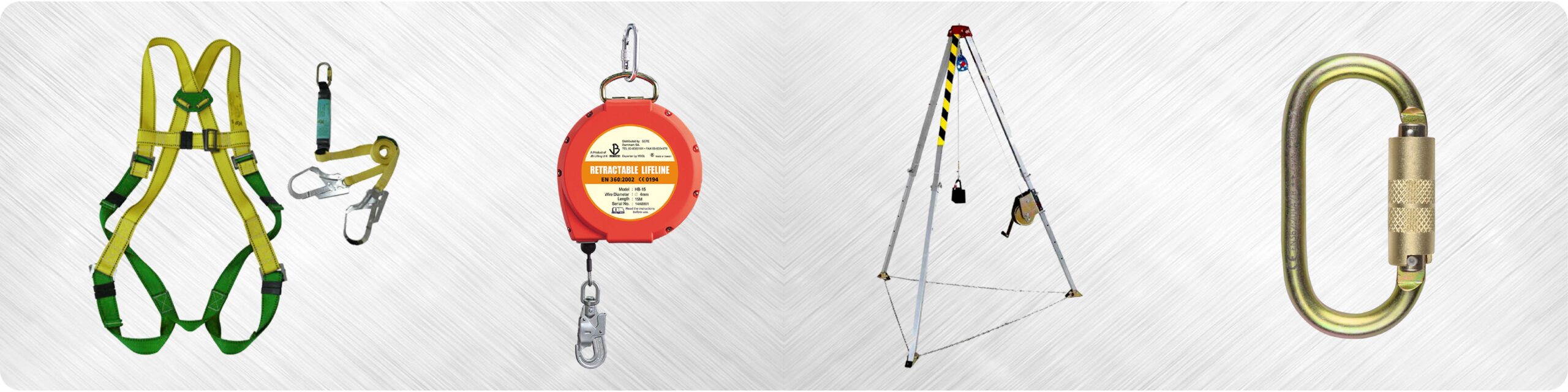
- Cost of Fall Protection Equipment and Training: This includes the initial investment in fall protection equipment such as harnesses, lanyards, lifelines, anchor points, guardrails, and safety nets. It also includes the cost of providing comprehensive fall protection training to employees, covering proper equipment use, hazard identification, and emergency response procedures.
- Estimated Reduction in Fall-Related Incidents: This variable represents the anticipated decrease in the number of fall-related incidents as a result of implementing improved fall protection measures. This can be estimated based on historical data, industry benchmarks, and the specific characteristics of the work environment. We at Safe and Secure Trading Company often advise our clients to conduct a thorough risk assessment to identify potential fall hazards and estimate the likelihood and severity of fall-related incidents.
- Estimated Savings from Reduced Medical Expenses and Worker’s Compensation: This variable represents the anticipated savings in medical expenses and worker’s compensation costs as a result of reducing fall-related incidents. These savings can be estimated based on historical data, industry averages, and the severity of potential injuries.
- Estimated Gains from Increased Productivity: This variable represents the anticipated increase in productivity as a result of reducing fall-related incidents. Fewer incidents mean less downtime, improved employee morale, and a more efficient work environment. Productivity gains can be estimated based on historical data, industry benchmarks, and the specific characteristics of the work environment.
Step-by-Step Guide to Calculating Your Fall Protection ROI
Calculating fall protection ROI involves gathering relevant data, estimating key variables, and applying the ROI formula. This step-by-step guide provides a practical framework for businesses to assess the financial benefits of their fall protection investments.
Gathering the Necessary Data
The first step in calculating fall protection ROI is to gather the necessary data. This involves:
- Analyzing Past Accident Reports and Insurance Claims: Reviewing past accident reports and insurance claims provides valuable insights into the frequency, severity, and cost of fall-related incidents. This data can be used to establish a baseline for measuring the impact of improved fall protection measures. Our team in Dubai uses specialized software to analyze these reports, identifying trends and patterns that can inform risk management strategies.
- Estimating the Cost of Current Fall Protection Measures: Determine the current costs associated with fall protection, including equipment, training, inspections, and maintenance. This provides a basis for comparing the cost of existing measures with the potential benefits of improved measures.
- Projecting the Impact of Improved Fall Protection on Incident Rates: Estimate the anticipated reduction in fall-related incident rates as a result of implementing enhanced fall protection measures. This projection should be based on a thorough risk assessment, industry best practices, and the specific characteristics of the work environment.
Sample ROI Calculation Scenario
Let’s consider a hypothetical scenario to illustrate how to calculate fall protection ROI:
A construction company invests $50,000 in new fall protection equipment and training for its employees. The company estimates that this investment will reduce fall-related incidents by 50%.
Prior to the investment, the company experienced an average of 10 fall-related incidents per year, resulting in $100,000 in medical expenses and worker’s compensation costs. The company also estimates that these incidents resulted in a 10% decrease in productivity, costing the company an additional $50,000 per year.
Based on these estimates, the company anticipates the following benefits from its fall protection investment:
- Reduction in medical expenses and worker’s compensation costs: $100,000 x 50% = $50,000
- Increase in productivity: $50,000 x 50% = $25,000
Using the ROI formula, the company’s fall protection ROI is calculated as follows:
ROI = ($50,000 + $25,000 – $50,000) / $50,000 = 0.5 or 50%
This indicates that the company’s investment in fall protection is expected to generate a 50% return on investment.
Free ROI Calculator Tool
To simplify the process of calculating fall protection ROI, Safe and Secure Trading Company offers a free ROI calculator tool. This tool allows businesses to input their specific data and estimates, generating a customized ROI calculation.
Benefits of Investing in Fall Protection: Beyond the Numbers
While the fall protection ROI formula provides a quantitative assessment of the financial benefits of investing in fall protection, there are also several intangible benefits that should be considered. These benefits can have a significant impact on employee morale, company reputation, and overall business performance.
Intangible Benefits of a Strong Fall Protection Program
Some of the key intangible benefits of a strong fall protection program include:
- Improved Employee Morale and Job Satisfaction: A safe work environment can significantly improve employee morale and job satisfaction. Employees who feel safe and protected are more likely to be engaged, motivated, and productive.
- Enhanced Company Reputation and Brand Image: A commitment to safety can enhance a company’s reputation and brand image. This can attract customers, investors, and top talent.
- Reduced Risk of Legal Liabilities and Penalties: Investing in fall protection can reduce the risk of legal liabilities and penalties associated with workplace accidents. This can save the company significant amounts of money in the long run.
- Attracting and Retaining Top Talent: A strong safety culture can be a major draw for prospective employees. Top talent is more likely to be attracted to companies that prioritize safety and well-being.
- Productivity gains from safety: A safe working environment increases productivity gains from safety and reduces interruptions due to injuries.
Real-World Examples: Success Stories of Fall Protection ROI
Numerous companies have successfully implemented fall protection programs and achieved significant fall protection ROI. These success stories demonstrate the tangible benefits of investing in safety and provide valuable insights for other businesses.
Case Studies of Successful Fall Protection Programs
Here are a few examples of companies that have achieved significant fall protection ROI through proactive safety measures:
- Construction Company A: This company invested in a comprehensive fall protection program that included new equipment, enhanced training, and regular safety audits. As a result, the company reduced fall-related incidents by 75% and saved $500,000 in medical expenses and worker’s compensation costs over two years. The company also reported a 15% increase in productivity and improved employee morale.
- Manufacturing Plant B: This plant implemented a fall protection system that included guardrails, safety nets, and personal fall arrest systems. The plant also provided comprehensive training to its employees on the proper use of equipment and fall hazard identification. As a result, the plant reduced fall-related incidents by 90% and saved $300,000 in medical expenses and worker’s compensation costs over three years. The plant also reported a significant improvement in employee safety and morale.
- Warehouse C: By implementing stricter safety protocols and introducing updated equipment, this warehouse saw a 40% decrease in fall related injuries in the workplace. They saw an increase in safety investment ROI by focusing on key problem areas.
These case studies illustrate the significant fall prevention benefits that can be achieved through proactive safety measures.
Testimonials from Satisfied Employees and Management
“Investing in fall protection has not only made our workplace safer but has also improved employee morale and productivity,” says Jane Doe, Project Manager. “Our employees feel more confident and protected, and we have seen a significant reduction in fall-related incidents.”
“As a company, we are committed to providing a safe and healthy work environment for our employees,” says John Smith, CEO. “Investing in fall protection is not just the right thing to do, it is also a smart business decision. We have seen a significant return on our investment in terms of reduced costs, improved productivity, and enhanced company reputation.”
Addressing Common Objections to Fall Protection Investments
Despite the clear benefits of investing in fall protection, some businesses may have concerns or objections. Addressing these concerns is essential for promoting a culture of safety and maximizing fall protection ROI.
Tackling Common Misconceptions
Here are some common misconceptions about the cost and complexity of fall protection, along with counter-arguments and solutions:
- “Fall protection is too expensive.” While the initial investment in fall protection equipment and training may seem significant, the long-term costs of fall-related incidents can be far greater. By calculating fall protection ROI and considering the intangible benefits, businesses can see that fall protection is a cost-effective investment.
- “Our employees are experienced and don’t need it.” Experience does not eliminate the risk of falls. Even experienced employees can be involved in accidents due to unforeseen circumstances or human error. Fall protection is essential for all employees, regardless of their experience level.
- “Fall protection is too cumbersome and slows down work.” Modern fall protection equipment is designed to be comfortable and easy to use. With proper training and implementation, fall protection measures can be integrated into the workflow without significantly slowing down work. We’ve seen firsthand how streamlined equipment boosts productivity gains from safety.
Choosing the Right Fall Protection Equipment and Training
Selecting the appropriate fall protection equipment and providing comprehensive training are crucial for ensuring the effectiveness of a fall protection program and maximizing fall protection ROI.
Selecting Appropriate Fall Protection Equipment
The type of fall protection equipment needed will depend on the specific work environment and the nature of the tasks being performed. Some common types of fall protection equipment include:
- Harnesses, Lanyards, and Lifelines: These are used in personal fall arrest systems to prevent workers from falling to the ground.
- Guardrails and Safety Nets: These are used to create a physical barrier that prevents workers from falling.
- Anchor Points: These are secure points of attachment for personal fall arrest systems.
Importance of Comprehensive Fall Protection Training
Comprehensive fall protection training is essential for ensuring that employees know how to properly use equipment, identify fall hazards, and respond to emergencies. Training should cover the following topics:
- Proper use and maintenance of equipment
- Fall hazard identification and prevention techniques
- Emergency response procedures
Proactive Strategies to Maximize Your Fall Protection ROI
Implementing a proactive safety culture and continuous improvement program is essential for maximizing fall protection ROI and creating a safer work environment.
Implementing a Proactive Safety Culture
A proactive safety culture is one in which safety is a core value and all employees are actively involved in identifying and preventing hazards. Some key elements of a proactive safety culture include:
- Regular safety audits and inspections
- Employee involvement in safety planning and implementation
- Ongoing training and education
- Incentive programs to reward safe behavior
Measuring and Tracking Your Fall Protection ROI Over Time
Establishing key performance indicators (KPIs) and regularly reviewing performance data are essential for monitoring the effectiveness of a fall protection program and maximizing fall protection ROI over time.
Establishing Key Performance Indicators (KPIs)
Some key KPIs for measuring the effectiveness of a fall protection program include:
- Fall incident rates
- Worker’s compensation costs
- Lost time due to injuries
- Employee morale and satisfaction
Regularly Reviewing and Adjusting Your Fall Protection Program
Regularly reviewing and adjusting your fall protection program based on performance data is essential for ensuring that it remains effective and continues to deliver a positive fall protection ROI.
Conclusion: Securing Your Workforce and Your Bottom Line
Investing in fall protection is not only an ethical imperative but also a sound financial decision. By understanding the true cost of falls and the potential benefits of effective fall protection measures, businesses can create a safer and more productive work environment while improving their bottom line. Effective risk management directly improves the risk management ROI. Implementing appropriate safety measures improves the OSHA compliance ROI as well.
To maximize your fall protection ROI, remember to:
- Calculate your fall protection ROI using the formula provided.
- Consider the intangible benefits of a strong fall protection program.
- Address common objections to fall protection investments.
- Choose the right fall protection equipment and training.
- Implement a proactive safety culture and continuous improvement program.
- Measure and track your fall protection ROI over time.
We at Safe and Secure Trading Company are committed to helping businesses create safer and more productive work environments. By following these steps, you can secure your workforce and your bottom line.
FAQ Section
Q: What is Fall Protection ROI?
A: Fall Protection ROI (Return on Investment) is a metric used to evaluate the financial benefits of investing in fall protection measures. It quantifies the gains (e.g., reduced medical costs, increased productivity) relative to the costs of implementing fall protection programs. It is vital to calculating safety program effectiveness.
Q: Why is it important to calculate Fall Protection ROI?
A: Calculating Fall Protection ROI helps businesses understand the financial impact of falls and justify investments in safety measures. It demonstrates that fall protection is not just an expense but a strategic investment that can improve the bottom line.
Q: What are the key components of a Fall Protection ROI calculation?
A: The key components include the cost of fall protection equipment and training, estimated reduction in fall-related incidents, estimated savings from reduced medical expenses and worker’s compensation, and estimated gains from increased productivity.
Q: How can a company estimate the reduction in fall-related incidents?
A: A company can estimate the reduction in fall-related incidents by analyzing past accident reports and insurance claims, conducting a thorough risk assessment, and consulting industry benchmarks and best practices.
Q: What are some of the intangible benefits of investing in fall protection?
A: Intangible benefits include improved employee morale and job satisfaction, enhanced company reputation and brand image, reduced risk of legal liabilities and penalties, and attracting and retaining top talent.
Q: How can a company address common objections to fall protection investments?
A: A company can address common objections by providing data on the cost-effectiveness of fall protection, highlighting the benefits of a safe work environment, and demonstrating how fall protection measures can be integrated into the workflow without significantly slowing down work.
Q: What types of fall protection equipment are available?
A: Common types of fall protection equipment include harnesses, lanyards, lifelines, anchor points, guardrails, safety nets, and personal fall arrest systems. The appropriate equipment will depend on the specific work environment and the nature of the tasks being performed.
Q: How often should fall protection equipment be inspected?
A: Fall protection equipment should be inspected before each use and at least annually by a competent person. Regular inspections can help identify any damage or defects that could compromise the safety of the equipment.
Q: What are some key elements of a proactive safety culture?
A: Key elements of a proactive safety culture include regular safety audits and inspections, employee involvement in safety planning and implementation, ongoing training and education, and incentive programs to reward safe behavior.
Q: How can a company measure and track its Fall Protection ROI over time?
A: A company can measure and track its Fall Protection ROI over time by establishing key performance indicators (KPIs), such as fall incident rates, worker’s compensation costs, lost time due to injuries, and employee morale and satisfaction. Regular performance data can ensure the effectiveness of the program.