Understanding fall protection systems is crucial in industries where working at heights is a common practice. Falls are a leading cause of workplace injuries and fatalities, making it imperative to implement effective measures to protect workers. Choosing the right system can be a complex decision, but it is a necessary one to ensure a safe working environment.
Active and passive fall protection are two primary categories of fall protection systems, each with its own set of characteristics, advantages, and disadvantages. In essence, the distinction boils down to whether the system requires active participation from the worker to function correctly. Let’s delve into each type to understand their nuances and how they contribute to workplace safety.
What is Active Fall Protection?
Active fall protection refers to systems that require the worker to actively participate in order to provide protection. These systems typically involve the use of personal protective equipment (PPE) and require the worker to be trained in their proper use and maintenance. In our experience, active fall protection is most effective when workers are thoroughly trained and consistently adhere to safety protocols.
The active approach necessitates engagement and can include elements like correctly fitting a safety harness, connecting lanyards, and using appropriate anchorage points. When our team in Dubai tackles this issue, they often find that regular refresher training is key to maintaining the effectiveness of active systems.
Key Components of Active Fall Protection Systems
Active fall protection systems consist of several crucial components that work together to protect workers from falls. These components include safety harnesses, lanyards, and anchorage points.
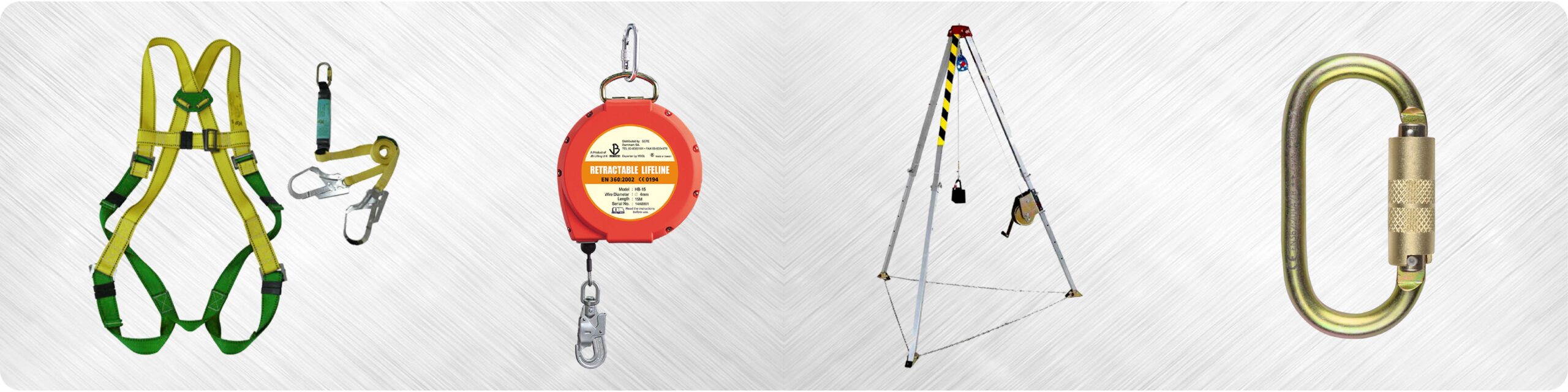
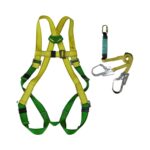
- Safety Harnesses: These are designed to distribute the force of a fall across the worker’s body, minimizing the risk of injury.
- Lanyards: These connect the safety harness to an anchorage point, providing a secure connection.
- Anchorage Points: These are secure points of attachment that can withstand the force of a fall.
Let’s examine each of these in detail.
Safety Harnesses: How They Work and Proper Fit
Safety harnesses are a critical part of any active fall arrest systems. They are designed to be worn by workers and connect to a lanyard, which in turn connects to an anchorage point. The harness distributes the impact forces of a fall across the thighs, pelvis, chest, and shoulders, reducing the risk of serious injury.
A properly fitted safety harness is essential for its effectiveness. Here’s why:
- Correct Size: Harnesses come in various sizes, and it’s crucial to select one that fits the worker correctly.
- Snug Fit: The harness should fit snugly but not too tightly, allowing for freedom of movement while ensuring it stays in place during a fall.
- Proper Adjustments: Leg straps, chest straps, and shoulder straps should be adjusted to ensure a secure and comfortable fit.
In our experience, a common mistake is using a harness that is too loose or improperly adjusted. This can lead to the worker slipping out of the harness during a fall, rendering the system ineffective. We always emphasize the importance of proper fit during our safety training sessions.
Lanyards: Different Types and Their Applications
Lanyards are flexible lines of rope or webbing used to connect a worker’s safety harness to an anchorage point. There are several types of lanyards, each designed for specific applications.
- Fixed-Length Lanyards: These are simple lanyards with a fixed length, suitable for situations where the anchorage point is directly above the worker.
- Adjustable Lanyards: These lanyards can be adjusted to different lengths, providing greater flexibility in positioning.
- Shock-Absorbing Lanyards: These are designed to absorb some of the energy during a fall, reducing the impact force on the worker’s body.
- Self-Retracting Lanyards (SRLs): These lanyards extend and retract automatically, allowing the worker to move freely while maintaining a constant connection to the anchorage point. SRLs are a key component of many fall arrest systems.
The choice of lanyard depends on the specific work environment and the type of tasks being performed. Shock-absorbing lanyards are particularly important when there is a risk of a long fall, as they can significantly reduce the severity of the impact.
Anchorage Points: Ensuring Secure Attachment
Anchorage points are secure points of attachment to which a lanyard is connected. They must be capable of withstanding the force of a fall and are a critical component of any active fall protection system.
Key considerations for anchorage points include:
- Strength: Anchorage points must be able to support at least 5,000 pounds per worker attached, or be designed by a qualified person as part of a complete fall arrest system.
- Location: Anchorage points should be located directly above the worker to minimize swing fall hazards.
- Inspection: Anchorage points should be regularly inspected to ensure they are in good condition and can withstand the force of a fall.
We’ve seen instances where inadequate anchorage points were used, leading to system failure during a fall. It is essential to ensure that anchorage points meet the required strength standards and are properly inspected and maintained. OSHA fall protection standards provide detailed guidelines on acceptable anchorage points.
Examples of Active Fall Protection in Practice
Active fall protection is widely used in various industries where workers are exposed to fall hazards. Here are a couple of examples:
- Construction Workers Using Harnesses on Scaffolding: Construction workers working on scaffolding often use safety harnesses and lanyards connected to secure anchorage points on the scaffolding structure. This allows them to move freely while being protected in the event of a fall.
- Wind Turbine Technicians Utilizing Fall Arrest Systems: Wind turbine technicians working at heights inside wind turbines utilize fall arrest systems that include a safety harness, lanyard, and anchorage point. These systems are essential for protecting technicians as they climb and perform maintenance tasks inside the turbine. These often employ vertical lifelines as well.
What is Passive Fall Protection?
Passive fall protection systems are designed to provide fall protection without requiring any active participation from the worker. These systems are always in place and ready to provide protection, making them a reliable option for many work environments. When our team in Dubai tackles this issue, they often find passive systems are easiest to implement as they remove the risk of human error.
Unlike active systems that depend on worker engagement, passive systems offer a constant protective barrier. A client once asked us about this, wondering which system was “better”. We showed them how applying passive protection reduced their reliance on worker compliance, and led to a measurable lift in their safety KPIs.
Key Features of Passive Fall Protection Systems
Passive fall protection systems rely on physical barriers or structures to prevent falls. Key features include guardrails, safety nets, and warning lines.
- Guardrails: These are physical barriers that prevent workers from falling off edges or platforms.
- Safety Nets: These are nets installed below work areas to catch workers in the event of a fall.
- Warning Lines: These are visual barriers that delineate safe work zones.
Let’s explore each of these in greater detail.
Guardrails: Placement and Height Requirements
Guardrails are a common form of passive fall protection, consisting of a vertical barrier installed along edges or open sides to prevent workers from falling.
Key aspects of guardrails include:
- Height: Guardrails must be at least 42 inches (107 cm) tall, with a midrail positioned approximately halfway between the top rail and the walking/working surface.
- Strength: Guardrails must be able to withstand a force of at least 200 pounds applied in any direction to the top rail.
- Construction: Guardrails can be made of various materials, including metal, wood, or cable, and must be smooth to prevent injuries.
Proper placement and height are crucial for guardrail effectiveness. If guardrails are too low or not strong enough, they may not prevent a fall.
Safety Nets: When and Where They Are Most Effective
Safety nets are another form of passive fall protection, designed to catch workers in the event of a fall. They are commonly used in construction and other industries where there is a high risk of falls from heights.
Key considerations for safety nets include:
- Placement: Safety nets should be installed as close as practicable below the working surface, and never more than 30 feet (9 meters) below.
- Strength: Safety nets must be able to withstand the impact of a falling worker and must be regularly inspected for damage.
- Coverage: Safety nets should extend beyond the edge of the working surface to provide adequate coverage.
Safety nets are particularly effective in situations where other forms of fall protection are not feasible or practical. They provide a reliable safety cushion in the event of a fall, minimizing the risk of serious injury.
Warning Lines: How They Create a Safe Zone
Warning lines are visual barriers used to delineate safe work zones on rooftops and other elevated surfaces. They are typically made of rope, wire, or tape and are placed a certain distance from the edge of the surface.
Key aspects of warning lines include:
- Distance: Warning lines must be placed at least 6 feet (1.8 meters) from the edge of the surface.
- Height: Warning lines must be between 34 and 39 inches (86 and 99 cm) high.
- Visibility: Warning lines must be highly visible and easily identifiable.
Warning lines serve as a visual reminder to workers of the potential fall hazard and help to prevent them from getting too close to the edge. They are often used in conjunction with other forms of fall protection, such as safety monitors or personal fall arrest systems.
Examples of Passive Fall Protection in Different Settings
Passive fall protection is commonly used in a variety of settings to protect workers from falls. Here are a few examples:
- Guardrails on Elevated Walkways in Factories: Elevated walkways in factories often have guardrails installed along the edges to prevent workers from falling. This is a simple and effective way to provide fall protection in areas where workers need to move around.
- Safety Nets Below Bridges During Construction: During bridge construction, safety nets are often installed below the bridge deck to catch workers in the event of a fall. This is particularly important when working at great heights where a fall could be fatal.
Active vs. Passive: Key Differences Summarized
Active and passive fall protection systems differ in several key aspects, including the action required, training needs, maintenance requirements, and cost considerations.
Here is a summary of the key differences:
Active Fall Protection | Passive Fall Protection |
—————————————————- | —————————————————– |
User involvement is essential. | Automatic protection; no user action required. |
Extensive training required for proper use. | Less extensive training needed. |
Regular inspection and upkeep of equipment required. | Inspection and maintenance of barriers or nets needed. |
Initial investment in PPE and training. | Initial investment in barriers or nets. |
Advantages of Active Fall Protection
Active fall protection systems offer several advantages in certain work environments. These advantages include greater mobility, versatility, and customization options.
- Greater Mobility: Active systems allow workers to move freely within a defined area while still being protected from falls.
- Versatility: Active systems can be adapted to various work environments and tasks.
- Customization: Active systems can be tailored to meet the specific needs of individual workers and work tasks.
Advantages of Passive Fall Protection
Passive fall protection systems also offer several advantages, particularly in situations where simplicity and reliability are paramount.
- Simplicity: Passive systems are easy to implement and maintain.
- Reliability: Passive systems provide consistent protection without relying on worker compliance.
- Reduced Training: Less extensive training is needed for passive systems compared to active systems.
“The best fall protection strategy often involves a combination of active and passive measures, tailored to the specific risks and work environment.” – John Smith, Lead Safety Inspector
Disadvantages of Active Fall Protection
Despite their advantages, active fall protection systems also have some drawbacks. These include reliance on user compliance, the need for regular inspection, and the potential for human error.
- Reliance on User Compliance: Active systems depend on workers using the equipment correctly and consistently.
- Need for Regular Inspection: Equipment must be regularly inspected to ensure it is in good condition.
- Potential for Human Error: Mistakes in setup or usage can compromise the effectiveness of the system.
Disadvantages of Passive Fall Protection
Passive fall protection systems also have some limitations. These include limited mobility, space requirements, and the potential for obstruction.
- Limited Mobility: Passive systems can restrict worker movement.
- Space Requirements: Installation may require sufficient space.
- Potential for Obstruction: Barriers or nets can hinder access to work areas.
Choosing the Right System: A Practical Guide
Choosing the right fall protection system involves a careful assessment of the specific hazards, tasks, and environment. Here’s a practical guide to help you make the right choice.
- Assess the Specific Fall Hazards in the Workplace: Identify the potential fall hazards, such as unprotected edges, holes, or elevated surfaces.
- Consider the Tasks Being Performed and Worker Mobility Needs: Determine the tasks that workers will be performing and the degree of mobility they require.
- Evaluate the Available Space and Environmental Conditions: Consider the available space and any environmental factors that may affect the choice of fall protection system.
- Factor in Training Requirements and Maintenance Costs: Take into account the training requirements and ongoing maintenance costs associated with each type of system.
Real-World Examples: Combining Active and Passive Systems
In many cases, the most effective fall protection strategy involves a combination of active and passive systems. Here are a few examples of how these systems can be combined:
- Using Guardrails with Harnesses for Added Protection on Rooftops: Guardrails can be installed along the edges of a rooftop, and workers can also use safety harnesses and lanyards for added protection when working near the edge.
- Implementing Safety Nets Below Scaffolding Where Active Systems Are Also in Use: Safety nets can be installed below scaffolding to catch workers in the event of a fall, even if they are also using safety harnesses and lanyards.
- Combining Warning Lines with Personal Fall Arrest Systems in Hazardous Areas: Warning lines can be used to delineate safe work zones, and workers can use personal fall arrest systems when working in hazardous areas outside of the warning lines.
Common Misconceptions About Fall Protection
There are several common misconceptions about fall protection that can lead to unsafe practices. Let’s debunk a couple of these myths.
- Myth: Passive fall protection is always better than active.
Reality: The best choice depends on the specific situation. Passive systems are often preferred for their simplicity and reliability, but active systems may be necessary when greater mobility is required. The choice depends greatly on the specific tasks being performed, the work environment, and the level of training and supervision available.
- Myth: Fall protection is only necessary for high heights.
Reality: Falls from even a few feet can be dangerous. OSHA requires fall protection at 4 feet in general industry, 5 feet in maritime, and 6 feet in construction. Even falls from lower heights can result in serious injuries, especially if the worker lands on a hard surface or sharp object. Workplace safety should always be a priority.
Conclusion: Prioritizing Safety with Effective Fall Protection
Understanding the key differences between active and passive fall protection systems is essential for creating a safe working environment. Active systems require user participation and offer greater mobility, while passive systems provide automatic protection with minimal user involvement. By carefully assessing the specific hazards, tasks, and environment, you can choose the right system or combination of systems to protect workers from falls. We always emphasize that proper planning, implementation, and training are crucial for the success of any fall protection program. By investing in these measures, you can significantly reduce the risk of falls and create a safer workplace for everyone.
FAQ Section
Q: What is the difference between fall arrest and fall prevention?
A: Fall prevention aims to stop a fall from happening in the first place, often through the use of guardrails or safety nets (passive fall protection). Fall arrest, using systems like safety harnesses and lanyards (active fall protection), kicks in once a fall has already occurred, aiming to minimize the severity of the injury.
Q: What are the OSHA requirements for fall protection?
A: OSHA has specific requirements based on the industry. For example, in construction, fall protection is generally required at 6 feet. These standards detail the types of fall protection required, proper installation, and training necessary. Always refer to the specific OSHA standard applicable to your industry.
Q: How often should fall protection equipment be inspected?
A: Fall protection equipment should be inspected before each use and at least annually by a competent person. Regular inspections ensure that the equipment is in good working condition and safe to use.
Q: What is an anchorage point, and why is it important?
A: An anchorage point is a secure point of attachment for a fall arrest system. It must be capable of supporting at least 5,000 pounds per worker attached or designed by a qualified person as part of a complete fall arrest system. A strong and reliable anchorage point is critical for the effectiveness of a fall arrest system.
Q: Can I use any type of rope as a lanyard?
A: No, only lanyards specifically designed and certified for fall protection should be used. These lanyards are made of materials that can withstand the forces generated during a fall and are equipped with appropriate connectors.
Q: What is the role of a competent person in fall protection?
A: A competent person is someone who is capable of identifying existing and predictable hazards in the surroundings or working conditions which are unsanitary, hazardous, or dangerous to employees, and who has authorization to take prompt corrective measures to eliminate them. This includes inspecting fall protection equipment, overseeing the proper use of systems, and providing training.
Q: How does weather affect fall protection?
A: Weather conditions can significantly impact fall protection. Rain, snow, and ice can make surfaces slippery and increase the risk of falls. High winds can also make it difficult to control tools and materials, increasing the risk of accidents. Always assess the weather conditions before working at heights and take appropriate precautions.
Q: What is the hierarchy of fall protection?
A: The hierarchy of fall protection is a prioritized approach to selecting and implementing fall protection measures. The hierarchy typically includes:
1. Elimination: Removing the fall hazard altogether.
2. Prevention: Preventing falls through the use of guardrails or other passive systems.
3. Fall Arrest: Using personal fall arrest systems to minimize the severity of a fall.
4. Administrative Controls: Implementing work practices and procedures to reduce the risk of falls.
Q: Are there specific fall protection requirements for working on roofs?
A: Yes, OSHA has specific requirements for working on roofs, including the use of guardrails, safety nets, personal fall arrest systems, or a combination of these. The specific requirements depend on the type of roof, the slope of the roof, and the type of work being performed.
Q: How does the selection of fall protection equipment vary based on industry (e.g., construction, oil & gas, manufacturing)?
A: The selection varies greatly. Construction might use more temporary solutions and require higher portability. Oil & Gas may require specialized equipment certified for hazardous environments. Manufacturing may need more integrated systems with fixed guardrails and specialized access solutions.
Q: What type of fall protection is best for working on scaffolding?
A: Both active and passive systems can be used on scaffolding. Guardrails provide passive protection, while personal fall arrest systems (safety harness, lanyard, and anchorage point) offer active protection. Often, a combination of both is used to provide the best level of safety. Scaffolding requires specific OSHA fall protection protocols.
Q: Can you elaborate on the fall protection needs for technicians working on wind turbines, especially in remote locations?
A: Wind turbine technicians face unique challenges due to the height and confined spaces within turbines, often in remote locations. Fall protection includes harnesses, vertical lifelines, and self-retracting lanyards. Rescue plans and specialized training are crucial due to the difficulty of emergency response in these locations.
Q: What fall protection considerations should be in place for working on communication towers?
A: Working on communication towers necessitates 100% fall protection, often using vertical lifelines, safety climb systems, and controlled descent devices. Regular inspections and specialized training for tower climbing are essential due to the extreme heights and potential for severe falls.
Q: How does the proper fit of a safety harness affect its performance?
A: A properly fitted safety harness is critical because it distributes the force of a fall across the worker’s body, minimizing the risk of injury. If the harness is too loose, the worker could slip out during a fall, or the impact force could be concentrated on a smaller area, increasing the risk of serious injury.
Q: What are some best practices for the storage and maintenance of fall protection equipment?
A: Store fall protection equipment in a clean, dry place away from direct sunlight and chemicals. Regularly inspect the equipment for damage, wear, and tear. Follow the manufacturer’s instructions for cleaning and maintenance. Replace any equipment that is damaged or has been subjected to a fall.
Q: How can technology, such as sensors and smart PPE, enhance fall protection?
A: Sensors and smart PPE can enhance fall protection by providing real-time monitoring of worker location and movement, detecting potential fall hazards, and alerting supervisors to unsafe conditions. Smart harnesses can also track impact forces during a fall, providing valuable data for accident investigation and prevention.
Q: How do changes in weather conditions impact the choice of active or passive fall protection?
A: In adverse weather, passive systems like guardrails become more advantageous as they provide consistent protection regardless of worker action. Active systems are still usable, but require extra caution and may be less reliable due to increased risk of slips and reduced dexterity from wearing extra layers.
Q: In what scenarios are safety nets preferable to personal fall arrest systems?
A: Safety nets are preferable in scenarios where mobility is limited, where many workers are exposed to the same hazard simultaneously, or where the risk of a fall is high. Bridges, large construction sites, and areas with frequent overhead work are prime examples.
Q: What are the key differences in fall protection requirements between the United States (OSHA) and the European Union (EN standards)?
A: While both OSHA and EN standards aim to protect workers from falls, they differ in specifics. EN standards often have more detailed requirements for equipment testing and certification. US standards give more performance-based guidance, while European EN standards provide more prescriptive requirements on design and testing, requiring third-party certification. Understanding these differences is crucial for companies operating internationally.