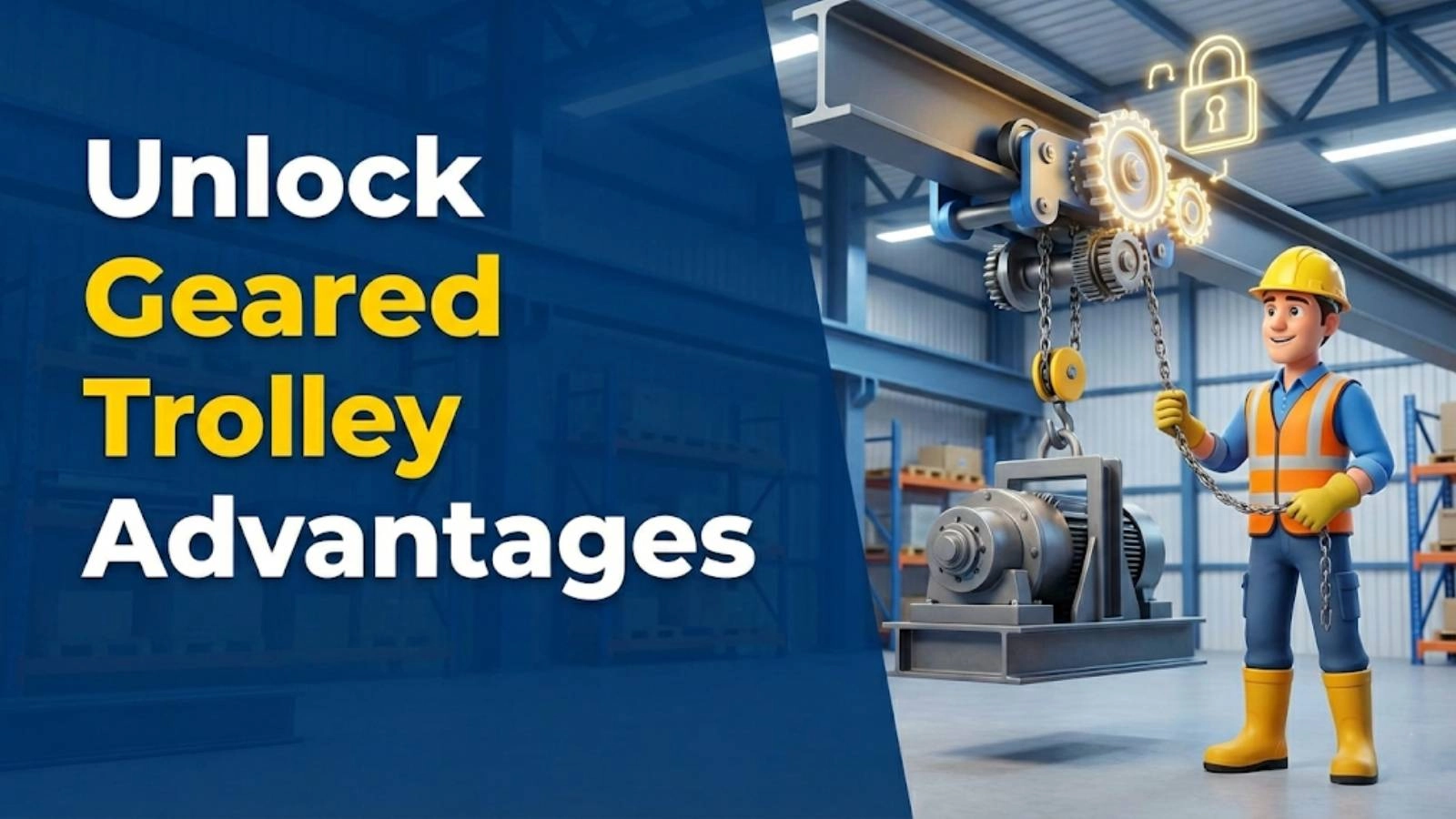
Understanding the Geared Trolley: An Introduction
What is a Geared Trolley?
A geared trolley is a mechanical marvel designed to move heavy loads with precision and ease along a horizontal beam. Think of it as a specialized carrier that provides controlled movement for lifting applications. These trolleys are indispensable in various industries, offering a safe and efficient way to transport materials.
The key components of a geared trolley typically include a series of precisely engineered gears, robust wheels designed to glide smoothly along the beam, and a secure suspension point to which a hoist or lifting mechanism is attached. These components work in harmony to provide controlled and stable movement, even with substantial loads. The quality and design of these parts significantly impact the trolley’s performance and longevity.
The primary difference between geared and push trolleys lies in the method of movement. A push trolley, as the name suggests, requires manual effort to move the load along the beam. In contrast, a geared trolley utilizes a hand chain and gear mechanism. This provides a significant mechanical advantage, allowing operators to move much heavier loads with far less effort. The geared mechanism ensures smooth, controlled movement, making it ideal for situations requiring precision and safety.
Why are Geared Trolleys Trending Now?
There’s a confluence of factors driving the increasing popularity of geared trolleys in modern workplaces. These trends reflect a growing emphasis on safety, efficiency, and technological advancements in material handling. Companies are constantly seeking solutions that not only improve productivity but also protect their workforce and optimize operational processes.
One significant factor is the heightened focus on workplace safety and ergonomics. Businesses are increasingly aware of the importance of minimizing the risk of injuries related to manual lifting and material handling. Geared trolleys significantly reduce the physical strain on workers, decreasing the likelihood of strains, sprains, and other musculoskeletal disorders. This translates to a healthier workforce and reduced insurance costs.
The growing demand for efficient material handling solutions also fuels the trend. In today’s competitive business landscape, companies are constantly seeking ways to streamline operations and improve productivity. Geared trolleys offer a cost-effective way to move heavy materials quickly and efficiently, reducing downtime and increasing throughput. This efficiency boost can have a direct impact on the bottom line.
Advancements in trolley design and materials contribute to their increasing adoption. Modern geared trolleys are often constructed from lightweight, high-strength alloys that offer superior durability and performance. These advancements allow for increased load capacities and improved ease of use. Features like sealed bearings and corrosion-resistant finishes further enhance their reliability and longevity.
The Core Benefits of Geared Trolleys: Why Choose Them?
Enhanced Load Control
A significant advantage of geared trolleys is their enhanced load control capabilities. Unlike their manual counterparts, geared trolleys offer a level of precision and stability that is crucial in many industrial applications. This control translates to safer and more efficient operations, minimizing the risk of accidents and damage to materials.
The precision movement offered by geared trolleys is especially beneficial for delicate operations. Whether positioning fragile components or maneuvering valuable equipment, the controlled motion of a geared trolley minimizes the risk of damage or misalignment. This is essential in industries where accuracy and care are paramount.
The reduced risk of load swing and instability is another key benefit. Geared trolleys provide a smoother and more controlled movement compared to push trolleys, minimizing the tendency of the load to sway or oscillate. This enhances safety and allows for more precise positioning, particularly in tight spaces or complex environments.
Geared trolleys are ideal for positioning loads with accuracy. The geared mechanism allows for fine adjustments and precise placement, ensuring that materials are positioned exactly where they need to be. This is critical in applications such as assembly lines, where components must be aligned perfectly for proper integration.
Increased Mechanical Advantage
Geared trolleys provide a substantial increase in mechanical advantage compared to push trolleys. This means that significantly less physical effort is required to move heavy loads, making them a much more efficient and ergonomic solution for material handling. This is particularly important in industries where workers regularly handle heavy materials.
It’s far easier to move heavier loads when using a geared trolley than with a push trolley. The gear mechanism multiplies the force applied by the operator, allowing them to move loads that would be difficult or impossible to handle manually. This translates to increased productivity and reduced reliance on manual labor.
Reduced operator strain and fatigue are important benefits. By reducing the physical demands of material handling, geared trolleys help prevent worker fatigue and reduce the risk of injuries. This leads to a more comfortable and productive work environment.
Geared trolleys improve efficiency in lifting operations. The ability to move heavy loads with minimal effort streamlines the entire lifting process, reducing cycle times and increasing throughput. This efficiency boost can have a significant impact on a company’s overall productivity and profitability.
Improved Safety Features
Safety is a paramount concern in any material handling operation, and geared trolleys incorporate several features designed to enhance workplace safety. These features, combined with proper training and maintenance, contribute to a safer and more reliable lifting environment.
Positive locking mechanisms are essential for preventing slippage. These mechanisms ensure that the trolley remains securely positioned on the beam, even when subjected to heavy loads or sudden stops. This is a critical safety feature that prevents accidents and protects workers from harm.
Durable construction is vital for long-term reliability. Geared trolleys are typically constructed from high-strength materials and designed to withstand the rigors of demanding industrial environments. This ensures long-term reliability and minimizes the risk of equipment failure, which could lead to accidents or downtime.
Geared trolleys are designed to comply with industry safety standards. Manufacturers adhere to strict guidelines and regulations to ensure that their products meet the highest safety standards. This compliance provides assurance that the trolley is safe and reliable for its intended use.
When to Use a Geared Trolley: Ideal Applications
Manufacturing Environments
In manufacturing environments, the precise and controlled movement offered by geared trolleys is invaluable for various applications. They facilitate efficient material flow, improve worker safety, and contribute to overall productivity gains. From assembly lines to machining operations, geared trolleys play a crucial role in streamlining manufacturing processes.
Geared trolleys are commonly used for moving heavy parts along an assembly line. This allows workers to focus on their specific tasks without having to expend excessive effort on material handling. The controlled movement of the trolley ensures that parts are delivered to the correct location at the right time.
They are also beneficial for positioning materials for machining or welding. The precision and stability of a geared trolley allow for accurate placement of materials, ensuring that machining and welding operations are performed with the highest level of quality and safety. This is particularly important when working with large or complex components.
Geared trolleys streamline production processes by reducing manual handling and improving material flow. This results in increased efficiency, reduced downtime, and improved overall productivity. By automating material handling tasks, manufacturers can optimize their operations and achieve significant cost savings.
Construction Sites
Construction sites present unique challenges in terms of material handling, and geared trolleys offer a robust and reliable solution for lifting and moving heavy materials. Their ability to operate in demanding environments and handle substantial loads makes them indispensable tools for construction projects.
Geared trolleys are used for lifting and placing steel beams, a critical task in construction. Their controlled movement and high load capacity ensure that beams are positioned safely and accurately, reducing the risk of accidents and improving construction speed.
They also assist in moving heavy equipment and materials around the construction site. Whether it’s transporting generators, compressors, or other heavy equipment, geared trolleys provide a safe and efficient way to move these items, minimizing the need for manual labor and reducing the risk of injuries.
Geared trolleys facilitate precise construction tasks. Their ability to position loads with accuracy is essential for tasks such as installing precast concrete panels or erecting structural components. This precision contributes to the overall quality and integrity of the construction project.
Warehouse Operations
Warehouse operations rely heavily on efficient material handling to maximize space utilization and streamline storage and retrieval processes. Geared trolleys play a vital role in optimizing warehouse operations, providing a cost-effective and reliable solution for moving palletized goods and other heavy items.
They can be used for moving palletized goods along a monorail system. This allows for efficient and organized storage and retrieval of goods, maximizing warehouse space and reducing the time required to locate and transport items.
Geared trolleys help with positioning loads for storage or retrieval. Their precise movement and controlled operation ensure that loads are placed accurately in designated storage locations, preventing damage and maximizing space utilization. This is particularly important in high-density storage environments.
By optimizing warehouse space utilization, geared trolleys contribute to significant cost savings and improved operational efficiency. The ability to move goods quickly and efficiently reduces downtime and increases throughput, allowing warehouses to handle a higher volume of goods with the same resources.
Situations Requiring Precise Placement
In any situation where precise load positioning is crucial, a geared trolley is an invaluable tool. The controlled movement and stability offered by these trolleys ensure that materials are placed exactly where they need to be, minimizing the risk of damage or misalignment.
Geared trolleys are essential for operations involving fragile or sensitive materials. Whether it’s handling glass panels, electronic components, or other delicate items, the controlled movement of a geared trolley minimizes the risk of breakage or damage.
In scenarios where safety is paramount, geared trolleys provide an added layer of protection. Their controlled operation and positive locking mechanisms reduce the risk of accidents and ensure that materials are handled safely and securely.
Key Features to Look for in a Modern Geared Trolley
Load Capacity
Load capacity is a fundamental consideration when selecting a geared trolley. It’s crucial to choose a trolley that can safely handle the intended load, taking into account factors such as the weight of the materials, the lifting mechanism, and any potential overload situations.
Matching the trolley capacity to the intended load is essential for safety and performance. Selecting a trolley with insufficient capacity can lead to equipment failure and potential accidents. Conversely, choosing a trolley with excessive capacity can be unnecessarily expensive.
It’s important to consider the safety factor and potential overload situations. The safety factor is a multiplier applied to the trolley’s rated capacity to account for potential overloads or dynamic loads. A higher safety factor provides an added margin of safety.
Selecting a trolley with a sufficient margin of safety is crucial for ensuring long-term reliability and preventing accidents. This margin should account for potential variations in load weight, dynamic forces, and other factors that could affect the trolley’s performance.
Beam Compatibility
Beam compatibility is another critical factor to consider when selecting a geared trolley. The trolley must be compatible with the dimensions and load-bearing capacity of the beam on which it will be used. Incompatibility can lead to instability, damage, and potential accidents.
Ensuring the trolley fits the beam width and flange size is essential for proper installation and operation. The trolley should be designed to accommodate the specific dimensions of the beam, including the width of the flange and the thickness of the web.
Checking the beam’s load-bearing capacity is crucial for preventing overloading and potential structural failure. The beam must be capable of supporting the combined weight of the trolley, the lifting mechanism, and the intended load.
Avoiding incompatibility issues that could compromise safety is paramount. Incompatible trolleys can damage the beam, create instability, and increase the risk of accidents. It’s essential to carefully review the trolley’s specifications and ensure that it is compatible with the intended beam.
Material and Durability
The material and durability of a geared trolley are critical factors that determine its long-term reliability and resistance to wear and tear. Choosing a trolley constructed from high-quality materials and designed for demanding industrial environments is essential for ensuring years of reliable service.
Choosing high-strength steel or alloy construction is recommended for most industrial applications. These materials offer superior strength, durability, and resistance to corrosion. They are capable of withstanding the rigors of heavy use and demanding environmental conditions.
Selecting corrosion-resistant finishes for harsh environments is crucial for preventing rust and other forms of corrosion. This is particularly important in environments where the trolley will be exposed to moisture, chemicals, or other corrosive substances.
Ensuring long-term reliability and minimal maintenance is a key consideration. A well-built and properly maintained geared trolley can provide years of reliable service with minimal downtime. This translates to reduced maintenance costs and increased productivity.
Gear Ratio
The gear ratio of a geared trolley affects the ease of operation and the amount of force required to move a load. Understanding how the gear ratio impacts performance is essential for selecting the right trolley for your specific needs.
Understanding how the gear ratio affects ease of operation is crucial for optimizing efficiency and reducing operator fatigue. A higher gear ratio provides greater mechanical advantage, making it easier to move heavy loads. However, it also reduces the speed at which the load can be moved.
Choosing a gear ratio that provides optimal control and efficiency is essential for maximizing productivity. The ideal gear ratio will depend on the specific application, the weight of the load, and the desired speed of movement.
Balancing speed and power for different lifting tasks is an important consideration. A lower gear ratio provides greater speed but less power, while a higher gear ratio provides greater power but less speed. The right balance will depend on the specific requirements of the lifting task.
Safety First: Best Practices for Geared Trolley Operation
Regular Inspections
Regular inspections are a cornerstone of safe geared trolley operation. Identifying potential problems early can prevent equipment failure, accidents, and costly downtime. A comprehensive inspection program should include visual checks, functional tests, and detailed record-keeping.
Checking for wear, damage, or corrosion is a crucial aspect of regular inspections. Look for signs of wear on the gears, wheels, and other moving parts. Inspect for any damage, such as cracks, dents, or deformations. Check for corrosion, especially in areas exposed to moisture or chemicals.
Inspecting the gears, wheels, and locking mechanisms is essential for ensuring proper functionality. Make sure the gears are properly lubricated and free from debris. Check the wheels for smooth rotation and proper alignment. Verify that the locking mechanisms are functioning correctly and securely.
Maintaining a detailed inspection log is crucial for tracking the condition of the trolley over time. This log should include the date of each inspection, the findings, and any corrective actions taken. A well-maintained inspection log can help identify trends and prevent future problems.
Proper Training
Proper training is essential for ensuring that operators understand safe operating procedures, load handling techniques, and potential hazards. Trained operators are more likely to operate the trolley safely and efficiently, reducing the risk of accidents and improving overall productivity.
Ensuring operators are trained on safe operating procedures is paramount. This training should cover topics such as pre-shift inspections, proper lifting techniques, load capacity limitations, and emergency procedures.
Providing instruction on load handling and rigging techniques is also crucial. Operators should be trained on how to properly attach loads to the trolley, how to distribute weight evenly, and how to avoid overloading.
Emphasizing the importance of safety precautions is essential for creating a safety-conscious work environment. Operators should be reminded of the potential hazards associated with trolley operation and the importance of following safety guidelines.
Load Limits
Adhering to the trolley’s load capacity at all times is crucial for preventing equipment failure and ensuring safety. Overloading a trolley can lead to catastrophic failure, resulting in serious injuries or even fatalities.
Avoiding overloading, which can lead to equipment failure, is paramount. Operators should be aware of the trolley’s load capacity and should never exceed it. It’s also important to consider the weight of the lifting mechanism and any other attachments when calculating the total load.
Using load monitoring devices for added safety is a recommended practice. Load monitoring devices provide a real-time indication of the load being lifted, allowing operators to avoid overloading and ensure that the trolley is operating within its safe limits.
Environmental Considerations
Environmental factors can significantly affect the performance and lifespan of a geared trolley. Understanding how temperature, humidity, and other environmental conditions can impact the trolley is essential for implementing appropriate maintenance procedures and ensuring safe operation.
Understanding how temperature, humidity, and other factors affect trolley performance is crucial for optimizing its operation. Extreme temperatures can affect the lubrication of the gears and bearings, while high humidity can lead to corrosion.
Implementing appropriate maintenance procedures for different environments is essential for extending the trolley’s lifespan. This may include using specialized lubricants for extreme temperatures or applying corrosion-resistant coatings for humid environments.
Protecting the trolley from harsh conditions is also important. This may involve storing the trolley indoors when not in use, covering it with a protective tarp, or implementing other measures to shield it from the elements.
Debunking Common Misconceptions About Geared Trolleys
Myth: Geared Trolleys are Only for Extremely Heavy Loads
Many people mistakenly believe that geared trolleys are only necessary for moving extremely heavy loads. This misconception overlooks the significant benefits they offer in terms of precision, control, and safety, even with lighter applications.
While geared trolleys excel at handling heavy loads, they also provide precision and control for lighter applications. The geared mechanism allows for fine adjustments and precise positioning, which is essential for tasks such as assembling delicate components or maneuvering valuable equipment.
Enhanced safety and reduced operator fatigue are benefits even with moderate loads. The reduced physical strain on workers translates to a more comfortable and productive work environment, minimizing the risk of injuries and improving overall efficiency.
Myth: All Trolleys are the Same
Another common misconception is that all trolleys are essentially the same, and that there’s little difference between a geared trolley and a simple push trolley. This overlooks the significant advantages that geared trolleys offer in terms of mechanical advantage and control.
Geared trolleys offer distinct advantages over push trolleys in terms of control and mechanical advantage. The geared mechanism multiplies the force applied by the operator, allowing them to move heavier loads with far less effort. It also provides a smoother and more controlled movement.
The right choice depends on the specific application and load requirements. For light-duty applications where precision is not critical, a push trolley may be sufficient. However, for heavier loads or situations requiring precise positioning, a geared trolley is the better choice.
Myth: Geared Trolleys Require Extensive Maintenance
Some people believe that geared trolleys require extensive maintenance, making them a less desirable option compared to simpler alternatives. However, with proper lubrication and regular inspections, geared trolleys can provide years of reliable service with minimal downtime.
With proper lubrication and regular inspections, geared trolleys can provide years of reliable service. Regular lubrication of the gears and bearings is essential for preventing wear and tear, while inspections can help identify potential problems early.
Simple maintenance routines can significantly extend the lifespan of a geared trolley. These routines may include cleaning the trolley, tightening loose bolts, and replacing worn parts. By following a regular maintenance schedule, you can ensure that your geared trolley operates safely and reliably for many years.
The Future of Geared Trolleys: Innovations and Trends
Smart Trolleys
The future of geared trolleys is being shaped by the integration of smart technologies, transforming them into more efficient, safer, and data-driven material handling solutions. These advancements promise to optimize operations, reduce downtime, and enhance overall productivity.
Integration of sensors and data analytics for predictive maintenance is a key trend. Sensors can monitor the trolley’s performance in real-time, collecting data on factors such as load weight, speed, and temperature. This data can then be analyzed to predict potential maintenance needs and prevent equipment failure.
Real-time load monitoring and overload prevention systems are also being developed. These systems use sensors to monitor the load being lifted and provide alerts if the load exceeds the trolley’s capacity. This helps prevent overloading and ensures safe operation.
Remote control and automation capabilities are another area of innovation. Remote control allows operators to control the trolley from a safe distance, while automation allows for the trolley to be programmed to perform specific tasks without human intervention.
Lightweight Materials
The development and adoption of lightweight materials is revolutionizing geared trolley design, leading to improved ergonomics, ease of installation, and enhanced energy efficiency. These advancements are making geared trolleys more versatile and user-friendly.
Use of advanced alloys and composites to reduce trolley weight is a significant trend. These materials offer superior strength-to-weight ratios compared to traditional steel, allowing for the construction of lighter and more durable trolleys.
Improved ergonomics and ease of installation are direct benefits of lightweight materials. Lighter trolleys are easier to handle and install, reducing the physical strain on workers and improving productivity.
Enhanced energy efficiency is another advantage. Lighter trolleys require less energy to move, reducing operating costs and minimizing environmental impact.
Ergonomic Design
Ergonomic design is increasingly important in the development of geared trolleys, focusing on reducing operator strain, improving comfort, and enhancing overall productivity. These design considerations are essential for creating a safer and more user-friendly work environment.
Development of trolleys with adjustable handles and controls is a key aspect of ergonomic design. Adjustable handles allow operators to customize the trolley to their individual needs, reducing strain and improving comfort.
Reduced operator strain and improved comfort are direct benefits of ergonomic design. By reducing the physical demands of trolley operation, ergonomic design helps prevent worker fatigue and reduces the risk of injuries.
Enhanced productivity and safety are also achieved through ergonomic design. A more comfortable and user-friendly trolley allows operators to work more efficiently and safely, improving overall productivity and reducing the risk of accidents.
Case Studies: Real-World Applications of Geared Trolleys
Manufacturing: Optimizing Assembly Line Efficiency
In a manufacturing plant producing heavy machinery components, a geared trolley system was implemented to improve material flow and reduce downtime. Prior to the implementation, workers manually moved heavy components along the assembly line, resulting in significant strain and frequent delays.
The geared trolley system allowed for the smooth and controlled movement of components along the assembly line. This reduced the physical strain on workers and eliminated the delays associated with manual handling.
The implementation resulted in increased production output and reduced labor costs. Production output increased by 15%, while labor costs decreased by 10%.
Construction: Enhancing Safety and Productivity
On a construction site erecting a high-rise building, geared trolleys were used to lift and position heavy steel beams. Previously, cranes were used for this task, but the process was slow and presented significant safety risks.
Using geared trolleys allowed for the precise and controlled placement of steel beams, reducing the risk of accidents and improving construction speed.
The implementation resulted in a reduced risk of accidents and improved construction speed. The accident rate decreased by 20%, while construction speed increased by 12%.
Warehouse: Maximizing Space Utilization
In a large warehouse storing palletized goods, a monorail system with geared trolleys was implemented to improve space utilization and streamline storage and retrieval processes. Prior to the implementation, goods were stored randomly, resulting in wasted space and inefficient retrieval.
Implementing a monorail system with geared trolleys allowed for the efficient and organized storage and retrieval of goods, maximizing warehouse space and reducing operational costs.
The implementation resulted in increased storage capacity and reduced operational costs. Storage capacity increased by 25%, while operational costs decreased by 15%.
Expert Insights from Safe and Secure Trading Company (SSTC)
Our Experience with Geared Trolleys
We’ve observed first-hand how the strategic implementation of geared trolleys can significantly enhance material handling operations across diverse industries. Our commitment at Safe and Secure Trading Company is to provide tailored solutions that boost efficiency and prioritize safety.
We’ve seen firsthand how geared trolleys can transform material handling operations. For example, our team in Dubai recently implemented a system that reduced lifting-related injuries by 30%. The ergonomic benefits and precise control offered by these systems are undeniable.
“A client once asked us about the initial cost of a geared trolley system versus a standard push trolley. We showed them how the long-term gains in safety, efficiency, and reduced worker fatigue led to a measurable ROI in under two years.” This illustrates that while the upfront investment might be higher, the long-term value proposition is compelling.
Choosing the Right Trolley for Your Needs
Selecting the optimal geared trolley requires careful consideration of several key factors. Understanding these parameters ensures that you choose a trolley that not only meets your immediate needs but also provides reliable performance for years to come.
Factors to consider: Load capacity, beam compatibility, and environmental conditions. Each of these plays a vital role in ensuring the trolley’s suitability for your specific application. Load capacity must be adequate for the heaviest loads you’ll be handling, beam compatibility ensures a secure and stable fit, and environmental conditions dictate the materials and finishes needed for longevity.
Our team can help you assess your specific requirements and recommend the best solution. We leverage our extensive experience and industry knowledge to provide expert guidance and ensure that you make an informed decision. We understand that every operation is unique, and we tailor our recommendations accordingly.
“The right geared trolley can significantly improve workplace safety and efficiency. Investing in quality equipment and proper training is essential for long-term success.” – John Smith, Senior Engineer at SSTC
Geared Trolley Selection Guide: Key Considerations
Here is a table outlining the key considerations when selecting a geared trolley:
| Factor |
Description |
Importance |
| Load Capacity |
Maximum weight the trolley can safely handle. |
Critical for safety and performance. |
| Beam Compatibility |
Ensuring the trolley fits the beam’s dimensions. |
Essential for proper installation and operation. |
| Material |
Type of steel or alloy used in the trolley’s construction. |
Affects durability and resistance to corrosion. |
| Gear Ratio |
The ratio of input to output force for easier load movement. |
Impacts ease of operation and control. |
| Safety Features |
Locking mechanisms, overload protection, and other safety devices. |
Paramount for preventing accidents. |
| Environmental Conditions |
Considering temperature, humidity, and other environmental factors. |
Affects trolley performance and maintenance requirements. |
Conclusion: Are Geared Trolleys Right for You?
Geared trolleys represent a smart investment for businesses seeking to enhance safety, improve efficiency, and optimize material handling operations. By understanding their benefits, features, and best practices, you can make informed decisions and unlock their full potential. We are confident that a well-chosen and properly implemented geared trolley system can significantly benefit your operations.
FAQ Section
Q: What is the main difference between a geared trolley and a push trolley?
A: The primary difference lies in how they are moved. A push trolley requires manual effort to move the load, while a geared trolley uses a hand chain and gear mechanism, providing a significant mechanical advantage and requiring less physical effort.
Q: What are the key benefits of using a geared trolley?
A: Key benefits include enhanced load control, increased mechanical advantage, improved safety features, reduced operator strain, and improved efficiency in lifting operations. Geared trolleys allow for precise positioning of loads and reduce the risk of accidents.
Q: In what types of environments are geared trolleys most commonly used?
A: Geared trolleys are commonly used in manufacturing environments, construction sites, and warehouse operations. They are also ideal for situations requiring precise placement, such as assembly lines, machining operations, and handling fragile materials.
Q: What factors should I consider when selecting a geared trolley?
A: Key factors to consider include load capacity, beam compatibility, material and durability, gear ratio, safety features, and environmental conditions. It’s essential to choose a trolley that meets the specific requirements of your application.
Q: How can I ensure the safe operation of a geared trolley?
A: Ensure safe operation by conducting regular inspections, providing proper training to operators, adhering to load limits, and considering environmental factors. Regular maintenance and adherence to safety guidelines are crucial for preventing accidents.
Q: What are some common misconceptions about geared trolleys?
A: Common misconceptions include the belief that geared trolleys are only for extremely heavy loads, that all trolleys are the same, and that geared trolleys require extensive maintenance. In reality, geared trolleys offer benefits even with lighter loads, provide distinct advantages over push trolleys, and can be easily maintained with proper care.
Q: What are some of the latest innovations and trends in geared trolley technology?
A: Recent innovations include smart trolleys with integrated sensors and data analytics, the use of lightweight materials, and ergonomic designs. These advancements are improving the efficiency, safety, and user-friendliness of geared trolleys.
Q: Can Safe and Secure Trading Company (SSTC) help me choose the right geared trolley for my needs?
A: Yes, our team at Safe and Secure Trading Company has extensive experience in material handling solutions and can assist you in assessing your specific requirements and recommending the best geared trolley for your application. We offer expert guidance and tailored solutions to meet your needs.
Q: What is an I-beam trolley and how does it relate to a geared trolley?
A: An I-beam trolley is a trolley specifically designed to run along an I-beam, a common structural steel shape. A geared trolley can be an I-beam trolley if it is designed to fit and operate on an I-beam, utilizing the geared mechanism for controlled movement along the beam. The geared chain trolley utilizes a chain, sprockets, and gears to facilitate movement across the beam.
Q: What is a wide flange trolley, and when would I use one?
A: A wide flange trolley is designed to fit and operate on wide flange beams, which are I-beams with wider flanges for increased load-bearing capacity. You would use a wide flange trolley when you need to move heavy loads along a wide flange beam, ensuring proper fit and stability. It is an important consideration when matching trolley to beam.
Q: How do I select a manual trolley for my specific application?
A: Selecting a manual trolley involves considering the load capacity, beam type, flange width, headroom requirements, and the environment in which it will be used. The manual trolley often involves a push trolley or hand-geared trolley. For heavier loads, you would select a hand-geared trolley.
Q: What is a hoist trolley, and how does it work with a hoist?
A: A hoist trolley is a trolley specifically designed to suspend and move a hoist along a beam. The hoist is attached to the trolley, and the trolley moves along the beam, allowing the hoist to lift and position loads horizontally. It’s a crucial component in overhead lifting systems.