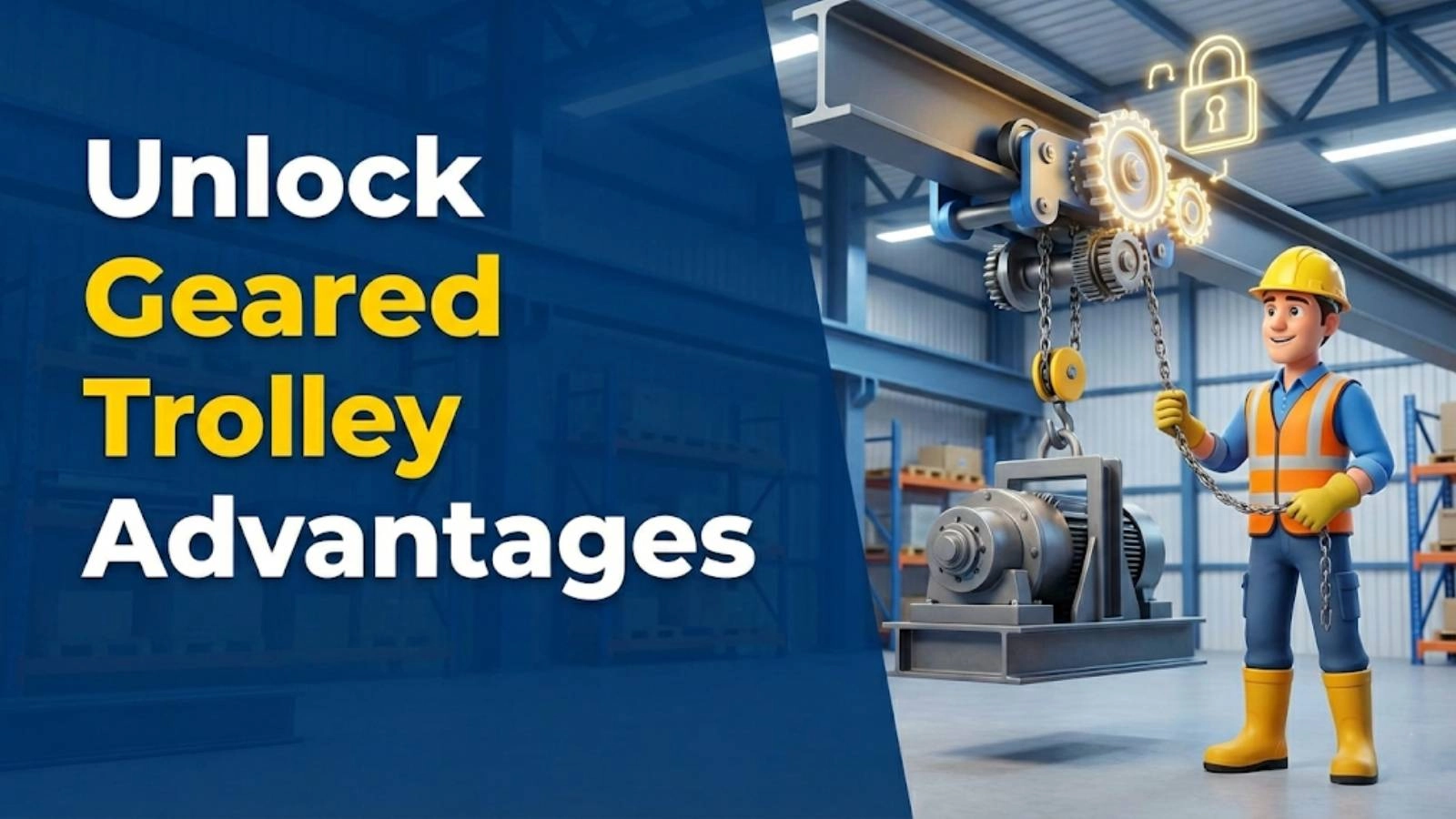
Geared Trolley Installation: Avoiding Common Mistakes
Introduction: Setting the Stage for Success
A geared trolley is a vital piece of equipment used in numerous industrial settings, allowing for the smooth and controlled movement of heavy loads along an I-beam. Its geared mechanism provides increased precision and control compared to simpler push trolleys. This makes them ideal for applications where accurate positioning and smooth movement are paramount. Using a geared trolley significantly enhances efficiency and safety when lifting and moving heavy materials.
Proper geared trolley installation is paramount for ensuring the safety of both personnel and materials, as well as maximizing the efficiency of operations. An incorrectly installed trolley can lead to equipment damage, workplace accidents, and costly downtime. That’s why a meticulous geared trolley installation process is so important.
In this guide, we will focus on the common mistakes made during geared trolley installation and, more importantly, how to prevent them. By understanding these potential pitfalls, you can ensure a safe and efficient installation process, saving time, money, and potential headaches. We at Safe and Secure Trading Company (SSTC) want to make sure every install is safe and secure.
Mistake #1: Neglecting Pre-Installation Inspection
Inspecting both the geared trolley and the I-beam before you start the installation process is a step that’s all too often overlooked. This critical step helps identify any existing damage, wear, or compatibility issues that could compromise the installation’s safety and effectiveness. Ignoring this phase can lead to significant problems down the line.
Common issues to look for include cracks, bends, or corrosion on the I-beam. Check the geared trolley for damaged wheels, worn gears, or missing safety components. Ensure that all parts are in good working order before proceeding with the geared trolley installation.
Measuring the I-beam’s flange width and thickness is crucial to ensure compatibility with the geared trolley. The trolley must fit securely on the beam without being too tight or too loose. Using an incompatible trolley can lead to instability and potential failure. We once had a client whose operations team used a trolley that was too small for the I-Beam and it almost fell off the beam during a test lift! A simple measurement can avoid these catastrophes.
| Inspection Item |
Description |
Action |
| I-Beam Condition |
Check for cracks, bends, corrosion |
Repair or replace if necessary |
| Trolley Wheels |
Inspect for damage, wear, smooth rotation |
Replace worn or damaged wheels |
| Gears |
Check for wear, broken teeth, proper lubrication |
Lubricate or replace as needed |
| I-Beam Measurements |
Measure flange width and thickness |
Ensure compatibility with trolley specifications |
| Safety Components |
Verify all safety features are present and functional |
Replace any missing or damaged parts |
“Always prioritize a thorough pre-installation inspection. Identifying potential issues early can prevent accidents and save time and money in the long run.” – John Davies, Lead Mechanical Engineer
Actionable Tip: Create a detailed checklist for your pre-installation inspection. This checklist should include all the key inspection items mentioned above, as well as any specific requirements for your particular application. This will help ensure that no critical steps are missed.
Mistake #2: Ignoring Load Capacity and Safety Ratings
Understanding and adhering to the load capacity and safety ratings of both the geared trolley and the I-beam is absolutely critical for preventing accidents and ensuring safe operation. Overloading a trolley or I-beam can lead to catastrophic failure, resulting in serious injury or even fatalities. This is arguably the most important step in geared trolley installation.
The load capacity of the trolley and the I-beam are typically clearly marked on the equipment. Always refer to the manufacturer’s specifications and never exceed the rated capacity. It’s also important to consider the combined weight of the load, lifting device (e.g., hoist), and any other attachments.
Calculating the weight of the load being lifted is essential to ensure that it does not exceed the trolley’s or I-beam’s load capacity. Use accurate scales or consult the manufacturer’s specifications for the weight of the materials being lifted. Always err on the side of caution and underestimate rather than overestimate the weight. If our SSTC team in Dubai are unsure, they will always err on the side of caution.
Exceeding the rated capacity of the geared trolley or I-beam can have devastating consequences. It can lead to structural failure, causing the load to drop and potentially injuring anyone in the vicinity. It’s simply not worth the risk.
Mistake #3: Using the Wrong Tools
Using the appropriate tools for geared trolley installation is essential for both safety and efficiency. Attempting to use makeshift tools or tools that are not designed for the task can lead to damage to the equipment, personal injury, and a poorly executed installation. This can lead to issues with the trolley assembly down the line.
Essential tools for geared trolley installation typically include wrenches, sockets, a torque wrench, a level, and safety glasses. The specific tools required will vary depending on the trolley model and the I-beam size. Consult the manufacturer’s instructions for a list of recommended tools.
Using the correct tools ensures that bolts are properly tightened, components are correctly aligned, and the installation is completed safely and efficiently. It also reduces the risk of damaging the equipment or injuring yourself. This is particularly important for a geared trolley setup, where precision is key.
Common tool substitutions, such as using an adjustable wrench instead of a properly sized socket, can lead to stripped bolts, damaged components, and an unsafe installation. Always use the correct tool for the job. Trying to make do with the wrong tools is a false economy.
Pro Tip: Invest in high-quality tools specifically designed for geared trolley installation. These tools will last longer, perform better, and provide a safer and more efficient installation experience. They may cost more upfront, but they will save you time and money in the long run.
Mistake #4: Incorrectly Assembling the Trolley
Following the manufacturer’s instructions meticulously during the trolley assembly process is absolutely crucial. These instructions are designed to guide you through each step of the assembly process, ensuring that all components are correctly installed and aligned. Deviating from these instructions can lead to serious problems.
Common assembly errors include using the wrong bolts, missing parts, or failing to properly tighten connections. These errors can compromise the trolley’s structural integrity and lead to failure during operation. We once had a client who complained that the trolley was not moving smoothly, only to discover that they had left out a critical spacer during assembly.
Ensuring that all components are properly aligned and tightened is essential for smooth and safe operation. Use a torque wrench to tighten bolts to the manufacturer’s specified torque values. This will prevent over-tightening or under-tightening, both of which can lead to problems.
[IMAGE: A detailed diagram showing the correct assembly of a geared trolley, highlighting the proper placement of all components.]
Visual Guide: Many manufacturers provide helpful videos and diagrams demonstrating the correct assembly process. Search online for videos specific to your trolley model. Seeing the process visually can make it easier to understand and prevent errors.
Mistake #5: Improperly Mounting the Trolley on the Beam
Ensuring that the geared trolley is securely and properly attached to the I-beam is a critical step in the installation process. A poorly mounted trolley can be unstable, move erratically, or even fall off the beam, leading to serious accidents. This stage of the trolley installation has to be perfect.
Common mounting mistakes include over-tightening or under-tightening the clamping bolts. Over-tightening can damage the I-beam or the trolley components, while under-tightening can allow the trolley to slip or move out of alignment. Always use a torque wrench to tighten the bolts to the manufacturer’s specified torque values.
Checking for proper alignment and smooth movement is also essential. The trolley should move freely along the I-beam without binding or catching. If you encounter any resistance, stop and re-check the installation.
[IMAGE: A close-up photo showing the correct mounting of a geared trolley on an I-beam, highlighting the proper alignment and tightness of the clamping bolts.]
Safety First: Double-check all connections before putting the trolley into use. Ensure that all bolts are properly tightened and that the trolley is securely attached to the I-beam. It’s always better to be safe than sorry. A small error here during your geared trolley installation can be fatal.
Mistake #6: Skipping the Test Run
Performing a test run before lifting a load is an essential step that should never be skipped. This allows you to identify any potential problems with the installation before putting the trolley into service and risking an accident. It’s important to test the trolley assembly, along with the manual trolley function.
A test run should be performed safely and effectively. Start by lifting a light load and gradually increase the weight, observing the trolley’s performance at each stage. Look for any signs of slippage, binding, instability, or unusual noises.
During the test run, pay close attention to the trolley’s movement along the I-beam. It should move smoothly and evenly without any jerky movements or excessive vibration. If you notice any problems, stop immediately and investigate the cause.
Best Practice: Start with a light load that is significantly less than the trolley’s rated capacity and gradually increase the weight in increments. This will allow you to identify any potential problems early on, before they become more serious.
Mistake #7: Neglecting Regular Maintenance
Regular inspection and maintenance are essential for ensuring the continued safe and efficient operation of the geared trolley. Neglecting maintenance can lead to premature wear, component failure, and potentially dangerous accidents. The overhead trolley needs to be monitored to avoid any injury.
Common maintenance tasks include lubricating moving parts, tightening bolts, and inspecting for wear and damage. Refer to the manufacturer’s instructions for a detailed list of recommended maintenance tasks and schedules. When our team in Dubai tackles this issue, they often find that the gear trains were not lubricated enough!
Creating a maintenance schedule and sticking to it will help ensure that the trolley is properly maintained and that any potential problems are identified and addressed promptly. The schedule should include regular inspections, lubrication, and bolt tightening, as well as any other maintenance tasks recommended by the manufacturer.
| Maintenance Task |
Frequency |
Description |
| Lubrication |
Monthly |
Apply lubricant to moving parts (wheels, gears) |
| Bolt Tightening |
Quarterly |
Check and tighten all bolts to specified torque |
| Wear Inspection |
Semi-Annually |
Inspect for wear, cracks, or damage |
| Load Testing |
Annually |
Perform a load test to verify capacity |
| Safety Device Check |
Monthly |
Verify functionality of safety locks and brakes |
Long-Term Value: Proper maintenance extends the lifespan of the geared trolley and helps prevent costly repairs or replacements. It also ensures that the trolley operates safely and efficiently, reducing the risk of accidents and downtime.
Mistake #8: Ignoring Warning Signs
Recognizing potential problems during operation is crucial for preventing accidents and ensuring the safety of personnel and equipment. Ignoring warning signs can lead to serious consequences. This is particularly important with push trolleys and manual trolleys that require user interaction.
Common warning signs include unusual noises, jerky movement, excessive wear, or any other indication that something is not right. If you notice any of these signs, stop using the trolley immediately and investigate the cause.
If you notice a warning sign, do not attempt to repair the trolley yourself unless you are properly trained and qualified. Contact a qualified technician or the manufacturer for assistance. Continuing to use a faulty trolley can be extremely dangerous. A flawed trolley assembly can cause future problems.
> “Never ignore warning signs. Addressing problems promptly can prevent accidents and save lives.” – Sarah Chen, Lead Safety Inspector
Prevention is Key: Addressing problems promptly can prevent accidents and minimize downtime. Regular inspection and maintenance, combined with a keen awareness of potential warning signs, will help ensure the safe and efficient operation of your geared trolley.
Mistake #9: Lack of Proper Training
Proper training is absolutely essential for safe and efficient geared trolley operation. Untrained operators are more likely to make mistakes, which can lead to accidents, equipment damage, and costly downtime. Without proper training, your geared trolley installation may be doomed.
Resources for geared trolley training include online courses, workshops, and on-site training programs. Contact the manufacturer or a qualified training provider for information on available training options. The trolley installation team needs to be properly trained.
Understanding safety procedures is paramount. Training should cover all aspects of safe trolley operation, including load capacity limits, proper lifting techniques, emergency procedures, and lockout/tagout procedures. Training courses should cover geared trolley safety in detail.
Invest in Your Team: Providing adequate training for all operators is an investment in safety and efficiency. Trained operators are more productive, less likely to have accidents, and better equipped to identify and address potential problems.
Conclusion: Mastering Geared Trolley Installation
Avoiding these common mistakes during geared trolley installation is essential for ensuring a safe, efficient, and reliable lifting operation. By performing thorough pre-installation inspections, respecting load capacity limits, using the correct tools, following assembly instructions carefully, properly mounting the trolley, performing test runs, maintaining the trolley regularly, heeding warning signs, and ensuring proper training, you can significantly reduce the risk of accidents and maximize the lifespan of your equipment.
Remember, safety should always be your top priority. By following the guidelines outlined in this guide, you can confidently and safely install and operate your geared trolley, ensuring a productive and accident-free work environment. We at Safe and Secure Trading Company are committed to providing you with the knowledge and resources you need to succeed.
FAQ Section
Q: What is the most common mistake made during geared trolley installation?
A: Neglecting pre-installation inspection is one of the most frequent errors. Failing to check the I-beam and trolley for damage, wear, or compatibility issues can lead to serious problems later on. Always conduct a thorough inspection before beginning the installation process.
Q: How important is it to follow the manufacturer’s instructions during assembly?
A: Following the manufacturer’s instructions is crucial for correct assembly. These instructions guide you through each step, ensuring all components are correctly installed and aligned. Deviating from these instructions can compromise the trolley’s structural integrity. This part of the trolley assembly should not be skipped.
Q: What should I do if I notice unusual noises or jerky movement during operation?
A: If you observe any unusual noises or jerky movement, stop using the trolley immediately and investigate the cause. These are warning signs that something is not right and could indicate a potential problem. Contact a qualified technician for assistance if you cannot identify the cause.
Q: How often should I lubricate the geared trolley?
A: Lubricate the geared trolley monthly, or as specified by the manufacturer. Regular lubrication ensures smooth operation and prevents premature wear of moving parts.
Q: Can I use any type of lubricant on the geared trolley?
A: No, use only the type of lubricant recommended by the manufacturer. Using the wrong type of lubricant can damage the trolley’s components.
Q: What is the purpose of a test run after installation?
A: A test run helps identify any potential problems with the installation before putting the trolley into service. It allows you to observe the trolley’s performance under load and check for signs of slippage, binding, or instability.
Q: How can I determine the load capacity of my geared trolley?
A: The load capacity of the geared trolley is typically marked on the equipment. Always refer to the manufacturer’s specifications and never exceed the rated capacity.
Q: What type of training is recommended for geared trolley operators?
A: Training should cover all aspects of safe trolley operation, including load capacity limits, proper lifting techniques, emergency procedures, and lockout/tagout procedures. Contact the manufacturer or a qualified training provider for information on available training options.
Q: What are the key benefits of using a geared trolley over a plain trolley?
A: Geared trolleys offer enhanced control and precision in moving heavy loads, making them ideal for applications requiring accurate positioning and smooth movement. They also reduce the physical effort required compared to plain trolleys.
Q: How often should the I-beam be inspected?
A: The I-beam should be inspected at least semi-annually, or more frequently depending on the intensity of use and environmental conditions. Look for signs of corrosion, cracks, or bending.