Understanding Geared Trolley Weight Capacity: An In-Depth Analysis
A geared trolley is a crucial component in material handling, facilitating the smooth and controlled movement of heavy loads along a beam. Understanding the geared trolley weight capacity is paramount for ensuring safe and efficient operations. In this comprehensive guide from Safe and Secure Trading Company (SSTC), we will delve into the critical aspects of geared trolleys, from their basic functions to advanced considerations for upgrading and maintaining them.
What is a Geared Trolley?
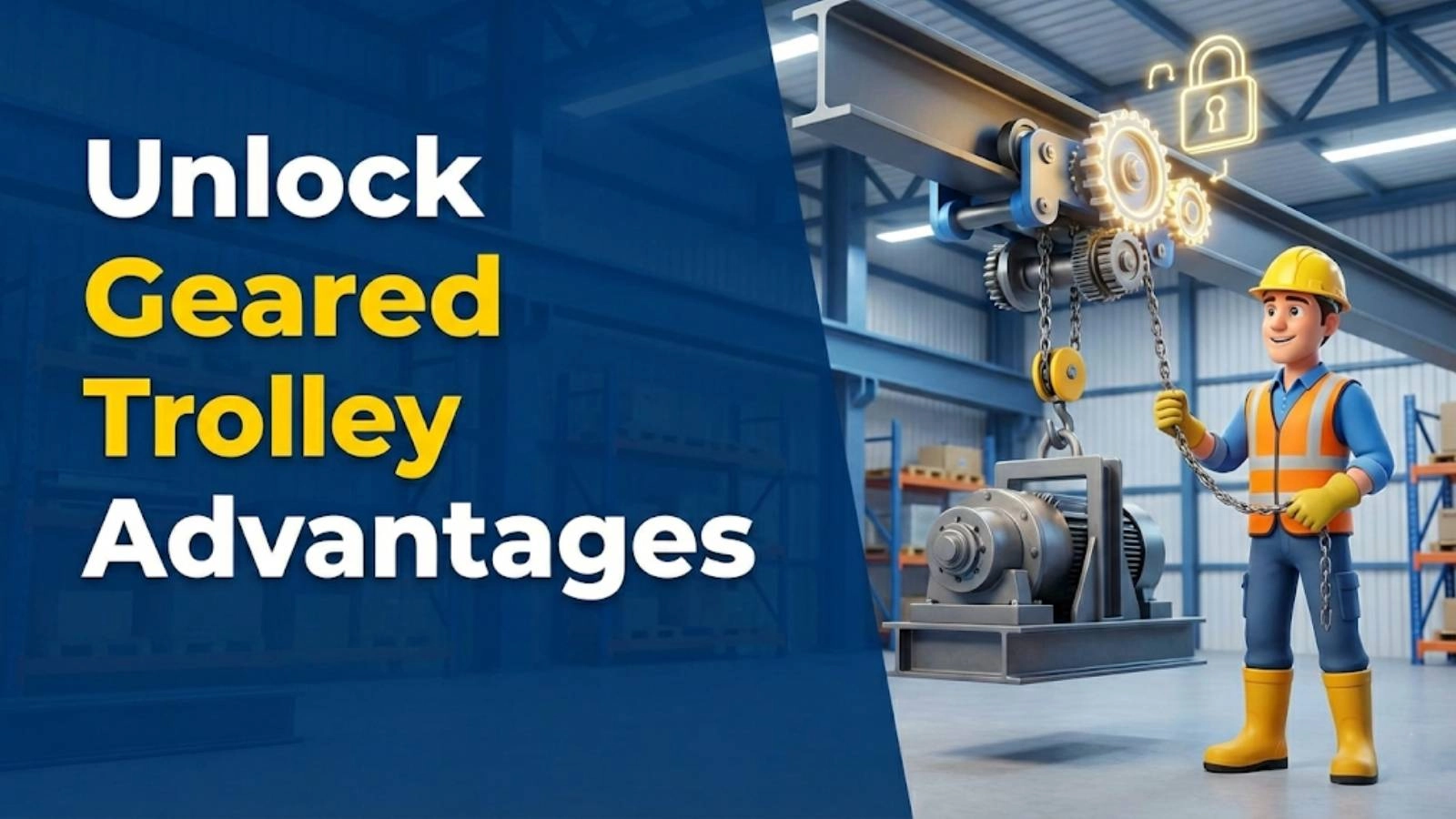
A geared trolley is a mechanical device designed to move loads horizontally along a beam or track. It typically consists of wheels that ride on the beam, a frame to support the load, and a gearing mechanism that allows for controlled movement. The geared trolley weight is often an important factor when considering which trolley is appropriate for your application.
Definition and basic function
At its core, a geared trolley is a load-bearing carriage that hangs from a beam, enabling the precise movement of heavy objects. The “geared” aspect signifies the presence of gears that multiply the applied force, allowing for easier and more controlled movement of substantial weights. This is especially useful in scenarios where manual effort is needed to position heavy items. Geared trolleys allow for much more precise control compared to plain, un-geared trolleys.
Types of geared trolleys (push, hand-geared, motorized)
Geared trolleys come in several types, each suited for different applications:
- Push Trolleys: These require manual pushing or pulling to move the load.
- Hand-Geared Trolleys: Equipped with a hand chain and gears, these trolleys allow the operator to precisely control the movement of the load by pulling the chain.
- Motorized Trolleys: Powered by an electric motor, these trolleys offer automated movement and are ideal for high-frequency operations.
Common applications in material handling
Geared trolleys are ubiquitous in material handling across various industries. In manufacturing plants, they are used to move heavy machinery components along assembly lines. On construction sites, they lift steel beams and building materials into place. Warehouses rely on them for handling palletized goods with overhead cranes. Geared trolleys provide a flexible and efficient solution for moving heavy loads in a controlled manner. The geared trolley weight is a deciding factor in many of these applications.
Defining Weight Capacity: Rated Load vs. Actual Load
Understanding the weight capacity of a geared trolley is essential for safety and operational efficiency. The rated load, actual load, and safety factor are all critical parameters.
Understanding the rated load and its significance
The rated load, also known as the working load limit (WLL), is the maximum weight a geared trolley is designed to safely lift and move. This value is clearly marked on the trolley and should never be exceeded. Exceeding the rated load can lead to catastrophic failure, endangering personnel and damaging equipment. We once had a client who ignored the rated load and overloaded their geared trolley. The trolley failed, causing significant damage to the load and almost injuring a worker. Always adhere to the rated load to prevent accidents.
Differentiating between static and dynamic loads
Static loads are constant and unchanging, such as a suspended object at rest. Dynamic loads, on the other hand, involve movement or acceleration, which increases the stress on the trolley. Lifting a load quickly or moving it abruptly can create dynamic forces that significantly increase the effective load. It’s crucial to account for these dynamic forces when determining the appropriate trolley for a specific application.
The concept of safety factor and its importance
The safety factor is a multiplier applied to the rated load to account for uncertainties, dynamic forces, and material variations. It is the ratio of the minimum breaking strength to the rated load. For example, a safety factor of 5:1 means that the trolley can theoretically withstand five times its rated load before failure. The safety factor ensures that the trolley operates safely under various conditions and provides a margin of error to prevent accidents. Always check the trolley safety factor before use.
Critical Factors Influencing Geared Trolley Weight Capacity
Several factors influence the weight capacity of a geared trolley, including material composition, I-beam specifications, wheel design, gear ratio, and environmental conditions.
Material Composition: How steel grade affects capacity.
The type of steel used in the trolley’s construction plays a significant role in its weight capacity. Higher-grade steels offer greater strength and allow for a higher rated load. For instance, alloy steels like those meeting ASTM A434 standards provide exceptional tensile strength, enabling trolleys to handle heavier loads without deformation or failure. The material composition directly affects the geared trolley weight as well.
I-Beam Specifications: The Relationship between beam size, flange width, and trolley capacity.
The size and specifications of the I-beam on which the trolley operates are crucial. The beam’s flange width must be compatible with the trolley’s wheel spacing. The beam’s load-bearing capacity must also exceed the combined weight of the trolley, the load, and any dynamic forces. Insufficient beam size can lead to beam deflection or even collapse, creating a hazardous situation. Our team in Dubai often encounters scenarios where the existing I-beam is inadequate for the intended load. They typically recommend reinforcement or replacement of the beam to ensure safety.
Wheel Design: Discussing wheel material, diameter, and bearing types.
The design of the trolley’s wheels significantly impacts its performance and weight capacity. Wheel material, diameter, and bearing types all contribute to the trolley’s ability to handle heavy loads smoothly and efficiently.
- Wheel Material: Steel wheels offer high strength and durability, while polyurethane wheels provide better traction and reduce noise.
- Wheel Diameter: Larger diameter wheels distribute the load over a greater area, reducing stress on the beam and allowing for smoother movement.
- Bearing Types: Precision bearings, such as ball bearings or tapered roller bearings, minimize friction and allow for easier movement of heavy loads.
Gear Ratio and Efficiency: How gear ratios impact lifting and moving loads.
The gear ratio of a geared trolley determines the amount of force required to move a load. A higher gear ratio provides greater mechanical advantage, allowing the operator to move heavier loads with less effort. However, a higher gear ratio also reduces the speed of movement. Gear efficiency is also important, as it determines how much of the input force is actually used to move the load, versus lost to friction.
Environmental Conditions: The effects of temperature, humidity, and corrosive elements.
Environmental conditions can significantly affect the performance and lifespan of a geared trolley. Extreme temperatures can alter the material properties of the trolley, reducing its strength. High humidity and corrosive elements can lead to rust and corrosion, weakening the trolley’s structure. Regular inspection and maintenance are crucial to mitigate the effects of environmental factors.
Calculating Geared Trolley Weight Capacity: A Step-by-Step Guide
Calculating the geared trolley weight capacity involves several steps to ensure accuracy and safety. Here’s a step-by-step guide:
Determining the maximum allowable load based on beam strength
First, determine the maximum allowable load that the I-beam can support. This information is typically provided by the beam manufacturer or can be calculated based on the beam’s dimensions and material properties. Ensure that the beam’s capacity exceeds the combined weight of the trolley, the load, and any dynamic forces.
Accounting for impact factors and dynamic loading
Impact factors account for the sudden application of a load, such as when a load is dropped onto the trolley. Dynamic loading considers the forces generated by the movement of the load, such as acceleration and deceleration. Multiply the static load by the appropriate impact factor and dynamic loading factor to determine the effective load.
Calculating the required safety factor
The required safety factor depends on the application and the level of risk involved. A higher safety factor is recommended for critical applications where failure could have catastrophic consequences. Consult relevant industry standards and regulations to determine the appropriate safety factor. The minimum safety factor is often dictated by regulations.
| Factor |
Description |
Example |
| Rated Load (WLL) |
Maximum weight the trolley can safely handle. |
2 Tons |
| Impact Factor |
Accounts for sudden load application. |
1.2 (for moderate impact) |
| Dynamic Loading Factor |
Accounts for forces from movement. |
1.1 (for smooth operation) |
| Safety Factor |
Ensures a margin of safety. |
5:1 |
Industry Standards and Regulations for Geared Trolley Weight
Adhering to industry standards and regulations is crucial for ensuring the safe operation of geared trolleys.
Overview of relevant OSHA standards
The Occupational Safety and Health Administration (OSHA) sets forth numerous standards regarding the safe use of material handling equipment, including geared trolleys. These standards address issues such as inspection, maintenance, training, and safe operating procedures. Compliance with OSHA standards is mandatory for all employers in the United States.
ASME B30.16 standards for overhead hoists (underhung)
ASME B30.16 specifically covers overhead hoists (underhung), which include geared trolleys. This standard provides detailed guidelines for the design, construction, installation, inspection, testing, maintenance, and operation of overhead hoists. Compliance with ASME B30.16 is widely recognized as a best practice for ensuring the safety and reliability of geared trolley systems.
Compliance and certification requirements
Compliance with industry standards and regulations often requires certification by a qualified third party. Certification demonstrates that the geared trolley meets specific performance and safety requirements. Regular inspections and audits are also necessary to maintain compliance.
Geared Trolley Inspection and Maintenance for Optimal Performance
Regular inspection and maintenance are essential for ensuring the optimal performance and longevity of geared trolleys. Neglecting maintenance can lead to premature failure and potentially dangerous situations.
Daily, monthly, and annual inspection checklists
Develop and implement a comprehensive inspection program that includes daily, monthly, and annual inspections.
- Daily Inspections: Check for any visible signs of damage, such as cracks, bends, or excessive wear. Ensure that the wheels are running smoothly and that the gears are properly lubricated.
- Monthly Inspections: Conduct a more thorough inspection, checking for loose bolts, worn bearings, and any signs of corrosion. Verify that the trolley is properly aligned with the beam.
- Annual Inspections: Perform a comprehensive inspection by a qualified technician. This inspection should include a load test to verify the trolley’s weight capacity and a detailed examination of all components.
Lubrication guidelines for gears and bearings
Proper lubrication is crucial for reducing friction and preventing wear in gears and bearings. Follow the manufacturer’s recommendations for lubrication type and frequency. Use high-quality lubricants specifically designed for geared trolleys.
Identifying signs of wear and tear or potential failure
Be vigilant in identifying signs of wear and tear or potential failure. These signs may include:
- Excessive noise or vibration
- Rough or jerky movement
- Cracks or bends in the frame or wheels
- Loose or missing bolts
- Corrosion or rust
- Difficulty moving the load
If any of these signs are present, immediately remove the trolley from service and have it inspected by a qualified technician.
Common Causes of Geared Trolley Failure Due to Overloading
Overloading is a common cause of geared trolley failure, leading to potentially catastrophic consequences.
Exceeding the rated load capacity
Exceeding the rated load capacity is the most direct cause of trolley failure. When the load exceeds the trolley’s design limits, components can yield, deform, or fracture, leading to sudden failure. Always ensure that the load does not exceed the rated load capacity marked on the trolley.
Improper load distribution and unbalanced loads
Improper load distribution can also lead to trolley failure. When the load is not evenly distributed, it creates uneven stresses on the trolley’s components, potentially exceeding their capacity. Ensure that the load is properly centered and balanced before lifting.
Ignoring warning signs and neglecting maintenance
Ignoring warning signs and neglecting maintenance can exacerbate the effects of overloading. If warning signs are present, such as excessive noise or vibration, the trolley should be immediately removed from service and inspected. Neglecting maintenance can weaken the trolley’s components, making them more susceptible to failure under load.
Safe Operating Procedures for Geared Trolleys to Prevent Accidents
Following safe operating procedures is essential for preventing accidents and ensuring the safety of personnel.
Proper lifting techniques and load securement
Use proper lifting techniques to minimize stress on the trolley and ensure load stability. Lift loads vertically to avoid side loading, which can damage the trolley and create instability. Secure the load properly to prevent it from shifting or falling.
Communication and signaling protocols
Establish clear communication and signaling protocols between the operator and other personnel involved in the lifting operation. Use hand signals or radio communication to coordinate movements and ensure that everyone is aware of the load’s position.
Emergency stop procedures
Develop and implement emergency stop procedures in case of a malfunction or hazardous situation. Ensure that all personnel are familiar with the location of emergency stop buttons and how to use them. Regularly practice emergency stop drills to ensure preparedness.
“Always double-check the load and rigging before initiating any lifting operation. A few extra seconds can prevent a serious accident.” – John Smith, Lead Safety Inspector
Real-World Examples and Case Studies of Geared Trolley Applications
Geared trolleys are used in a wide variety of applications across various industries. Here are a few real-world examples:
Manufacturing plant: Moving heavy machinery components
In a manufacturing plant, geared trolleys are used to move heavy machinery components along assembly lines. This allows for efficient and precise positioning of components, reducing manual handling and improving productivity.
Construction site: Lifting steel beams and building materials
On construction sites, geared trolleys are used to lift steel beams and building materials into place. This eliminates the need for manual lifting, reducing the risk of injury and improving construction speed.
Warehouse: Handling palletized goods with overhead cranes
Warehouses rely on geared trolleys for handling palletized goods with overhead cranes. This allows for efficient storage and retrieval of goods, maximizing space utilization and improving inventory management. Manual trolley capacity in this setting is important for occasional tasks.
Advanced Considerations: Upgrading and Modifying Geared Trolleys
Upgrading or modifying a geared trolley system can improve its performance, increase its weight capacity, or adapt it to new applications.
When and why to upgrade a trolley system
Consider upgrading a trolley system when:
- The existing trolley is nearing the end of its lifespan.
- The trolley’s weight capacity is insufficient for current needs.
- The trolley is not compatible with new equipment or processes.
- New technology offers significant performance improvements.
Choosing the right upgrade components (wheels, gears, bearings)
Select upgrade components that are compatible with the existing trolley and meet the specific requirements of the application. Consider factors such as material composition, load capacity, and environmental conditions. Consult with a qualified technician to ensure that the upgrade components are properly installed and integrated.
Ensuring compatibility and safety after modifications
After any modifications, ensure that the trolley system is thoroughly inspected and tested to verify its compatibility and safety. Perform a load test to confirm the trolley’s weight capacity and check for any signs of instability or malfunction.
Troubleshooting Common Geared Trolley Issues
Even with proper maintenance and care, geared trolleys can experience occasional issues. Here are some common problems and their solutions:
Trolley jamming or sticking
If the trolley is jamming or sticking, check for obstructions on the beam or in the trolley’s wheels. Clean the beam and wheels thoroughly. Lubricate the wheels and bearings. If the problem persists, inspect the wheels for damage or wear and replace them if necessary.
Excessive noise or vibration
Excessive noise or vibration can indicate worn bearings, loose bolts, or misaligned components. Inspect the trolley for loose bolts and tighten them. Lubricate the bearings. If the noise or vibration persists, replace the bearings or consult with a qualified technician.
Load slippage or instability
Load slippage or instability can be caused by improper load securement, worn wheels, or a malfunctioning brake. Ensure that the load is properly secured. Inspect the wheels for wear and replace them if necessary. Check the brake for proper function and adjust or repair it as needed.
The Future of Geared Trolley Technology
Geared trolley technology is continually evolving to meet the demands of modern material handling applications.
Advancements in materials and design
Advancements in materials, such as high-strength alloys and composite materials, are enabling the design of lighter and stronger geared trolleys. New designs are incorporating ergonomic features to improve operator comfort and reduce fatigue.
Integration with automation and robotics
Geared trolleys are increasingly being integrated with automation and robotics systems to create more efficient and automated material handling solutions. Automated trolleys can be programmed to follow specific paths and perform repetitive tasks, reducing manual labor and improving productivity.
Smart trolley systems with load monitoring capabilities
Smart trolley systems are equipped with sensors and monitoring devices that provide real-time data on load weight, position, and condition. This data can be used to optimize performance, prevent overloads, and schedule maintenance. Smart trolley systems offer improved safety, efficiency, and reliability.
Conclusion
Throughout this guide, we have explored the critical aspects of geared trolley weight capacity, from basic definitions to advanced considerations for upgrading and maintaining these essential material handling devices. We’ve discussed the importance of understanding rated load, safety factors, and industry standards, as well as the need for regular inspection and maintenance to ensure optimal performance and safety. By following the guidelines and best practices outlined in this guide, you can confidently select, operate, and maintain geared trolleys to enhance efficiency and safety in your operations. At Safe and Secure Trading Company, we are committed to providing you with the knowledge and resources you need to make informed decisions about your material handling equipment.
FAQ Section
Q: What is the most critical factor to consider when selecting a geared trolley?
A: The most critical factor is the rated load capacity. Always ensure that the trolley’s rated load capacity meets or exceeds the weight of the load you intend to lift and move.
Q: How often should I inspect my geared trolley?
A: At a minimum, perform daily visual inspections, monthly thorough inspections, and annual comprehensive inspections by a qualified technician. More frequent inspections may be necessary in harsh or demanding environments. Trolley inspection is a crucial part of maintaining its safety.
Q: What are the signs of an overloaded geared trolley?
A: Signs of an overloaded geared trolley include excessive noise or vibration, difficulty moving the load, cracks or bends in the frame or wheels, and any indication of structural stress.
Q: Can I increase the weight capacity of my geared trolley?
A: It is generally not recommended to increase the weight capacity of a geared trolley beyond its original rated load. Doing so can compromise its structural integrity and create a dangerous situation. Consider upgrading to a trolley with a higher rated load capacity if necessary. The geared trolley capacity is designed for a specific limit.
Q: What type of lubricant should I use for my geared trolley?
A: Use a high-quality lubricant specifically designed for geared trolleys. Follow the manufacturer’s recommendations for lubrication type and frequency.
Q: How does temperature affect the geared trolley load limit?
A: Extreme temperatures can affect the material properties of the geared trolley, potentially reducing its load limit. High temperatures can cause materials to soften, while low temperatures can cause them to become brittle. Consult the manufacturer’s specifications for temperature derating factors.
Q: What is the purpose of a geared trolley safety factor?
A: The safety factor accounts for uncertainties, dynamic forces, and material variations. It ensures that the trolley operates safely under various conditions and provides a margin of error to prevent accidents.