Is a Geared Trolley Lifting Game Changer?
The Day Sarah’s Back Said “No More”
Sarah, a dedicated worker at a bustling distribution center, faced the same challenge every day: moving heavy boxes from one end of the warehouse to the other. Each box, weighing close to 80 pounds, required her to strain and push with all her might. One particularly grueling afternoon, as she wrestled with an awkwardly shaped container, she felt a sharp twinge in her lower back. That was the moment she realized she needed a better, safer, and more efficient solution than manual labor alone. This is when she started looking into a geared trolley lifting solution. Sarah’s story is a common one, and it highlights the need for overhead lifting solutions in modern workplaces.
What Exactly Is a Geared Trolley?
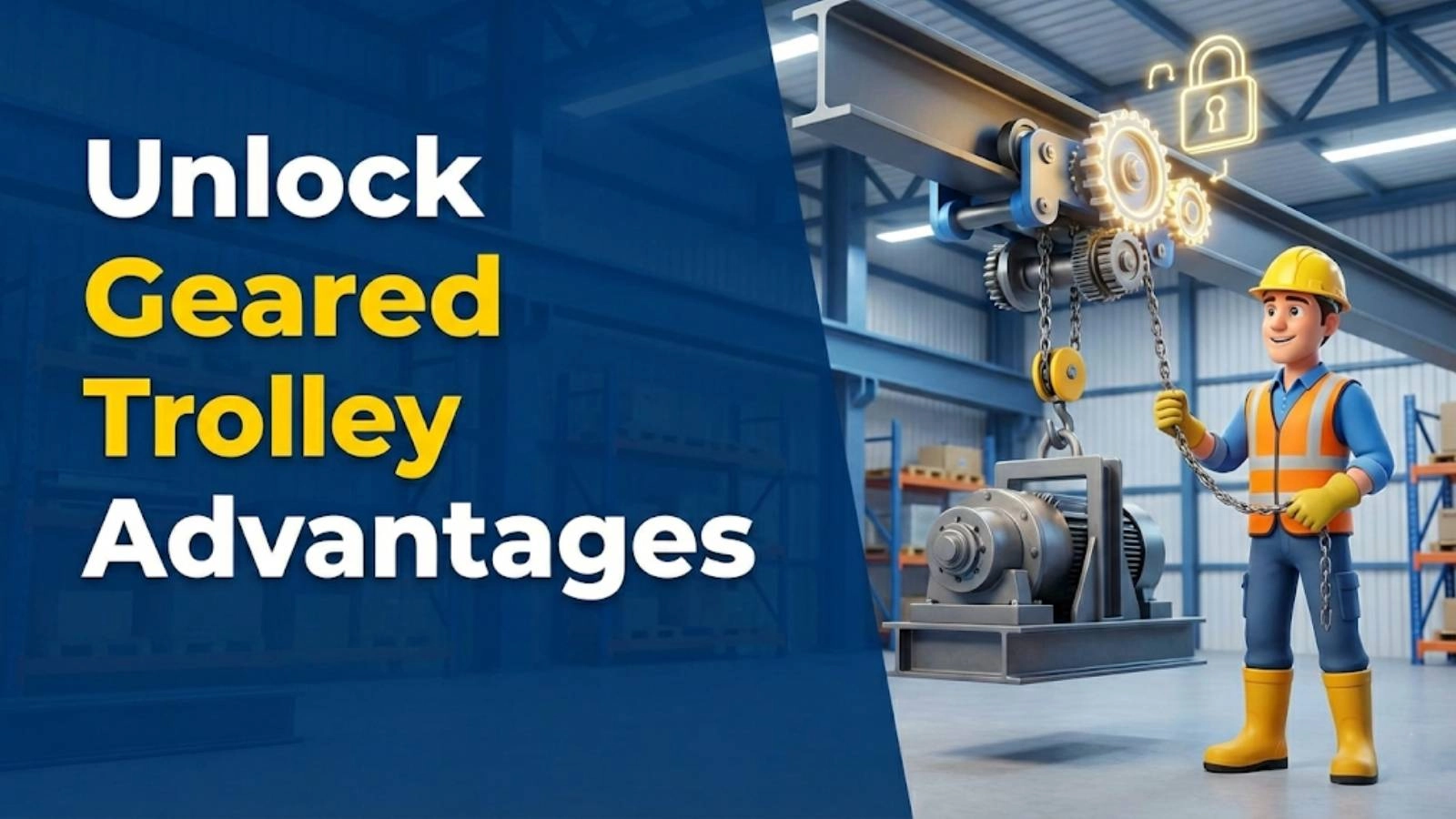
A geared trolley is a mechanical device designed to move heavy loads horizontally along a beam or track. It’s a crucial component of many material handling equipment systems. Unlike a plain trolley, which requires manual pushing, a geared trolley utilizes a hand chain and gears to provide controlled and precise movement. The core components typically include: wheels that roll along the beam, a gear mechanism operated by a hand chain, and a hook or shackle to attach to the load. It’s an efficient and safer alternative to manually pushing heavy loads, especially when dealing with significant weight or long distances. These trolleys are often used in conjunction with hoists to lift and move heavy objects.
Geared vs. Ungeared: Understanding the Difference
The main difference between a geared and un-geared (or plain) beam trolley lies in how they are operated. A plain push trolley simply relies on manual force to move a load along a beam. This can be strenuous and less precise, especially with heavier items. A geared trolley, on the other hand, utilizes a hand chain connected to a gear system. Pulling the chain turns the gears, which in turn move the trolley along the beam. This provides a mechanical advantage, requiring less physical effort and offering greater control over the load’s movement. Choosing between the two depends on the weight of the load, the frequency of use, and the level of precision required. In applications requiring precise placement and the movement of heavier items, a geared trolley is the superior choice.
The Power of Precision: Why Choose a Geared Trolley?
Effortless Control: Geared Advantage #1
The primary advantage of a geared trolley is the effortless control it provides when moving heavy loads. The gearing mechanism allows for precise and controlled movement, minimizing the risk of sudden jerks or unintended shifts. This is particularly beneficial when positioning delicate or valuable items, as it ensures a smooth and stable transfer. With a geared trolley, operators can make minute adjustments to the load’s position, something that’s difficult, if not impossible, to achieve with a plain trolley. This enhanced control translates to increased safety and reduced risk of damage to both the load and the surrounding environment. The precise nature of the geared chain trolley makes it a great investment.
The Story of Warehouse 12: A Speed & Safety Boost
Warehouse 12, a busy distribution center, struggled with efficiency and safety when moving heavy machinery parts. Workers often strained themselves pushing plain trolleys loaded with components, leading to frequent near-miss incidents. After implementing geared trolley lifting systems, the warehouse saw a significant improvement. Not only did the effort required to move the parts decrease dramatically, but the speed of operations increased as well. Workers could now position the components with greater accuracy and speed, reducing the risk of accidents and streamlining the production process. The improved workflow resulted in a 20% increase in overall efficiency and a noticeable boost in employee morale. The industrial trolley provided the means to this efficiency.
Safety First: Geared Advantage #2
Safety is paramount in any lifting operation, and geared trolleys offer a significant advantage in this area. The controlled movement provided by the gearing mechanism reduces the risk of accidents caused by sudden shifts or uncontrolled momentum. Unlike plain trolleys, where the load’s movement is entirely dependent on the operator’s strength and coordination, geared trolleys offer a more stable and predictable motion. This reduces the risk of dropped loads, collisions, and worker injuries. Furthermore, the ability to precisely position loads minimizes the need for manual adjustments, further reducing the potential for accidents. Adhering to safe lifting practices is simplified with a geared trolley.
Capacity Counts: Matching the Trolley to the Task
Choosing the right trolley capacity is crucial for ensuring safe and efficient lifting operations. Overloading a trolley can lead to equipment failure, resulting in dropped loads and potential injuries. Always select a geared trolley with a trolley capacity that exceeds the weight of the heaviest load you intend to lift. Consider the potential for future heavier loads as well. It’s always better to err on the side of caution and choose a trolley with a higher capacity than strictly necessary. The trolley capacity should be clearly marked on the trolley itself, and operators should be trained to recognize and respect these limits. Safe and Secure Trading Company’s overhead lifting solutions include a wide array of capacity ranges to ensure you have the right tool for the job.
Real-World Applications: Where Geared Trolleys Shine
Manufacturing Marvels: Lifting Heavy Components
In manufacturing environments, geared trolleys are invaluable for lifting and moving heavy components during the assembly process. From engine blocks to large machine parts, these trolleys provide the controlled and precise movement needed to position items accurately and safely. They streamline the production process, reducing the time and effort required to move heavy objects. Geared trolleys are often integrated into overhead crane systems, allowing workers to easily move components between different workstations. This not only increases efficiency but also reduces the risk of worker strain and injuries.
Construction Site Saviors: Precision Placement
Construction sites often require the precise positioning of heavy materials, such as steel beams, concrete slabs, and pre-fabricated components. Geared trolleys are ideal for these applications, providing the controlled movement needed to place items accurately and safely. They can be used to lift materials to elevated locations, move them across uneven terrain, and position them in tight spaces. This precision is especially important when working on complex structures where even minor misalignments can cause significant problems. The geared trolley becomes an indispensable tool on any active construction site.
Warehouse Wonders: Optimizing Space and Flow
Warehouses rely on efficient material handling to optimize space and workflow. Geared trolleys can play a crucial role in achieving these goals. They can be used to move pallets of goods, transport heavy containers, and position items for storage or shipment. By utilizing overhead space, geared trolleys free up valuable floor space, allowing for better organization and improved traffic flow. They also reduce the need for forklifts and other heavy machinery, creating a safer and more efficient work environment. This optimization is key to a successful warehouse operation. The use of a manual trolley or geared chain trolley can greatly help here.
Choosing Your Perfect Geared Trolley: Key Considerations
Load Capacity: Know Your Limits
Selecting the appropriate load capacity is the single most important factor when choosing a geared trolley. Never exceed the trolley’s rated capacity, as this can lead to equipment failure and potentially dangerous situations. Carefully assess the weight of the heaviest load you intend to lift, and choose a trolley with a capacity that comfortably exceeds that weight. Consider any potential future needs as well, and opt for a higher capacity if there’s a possibility of handling heavier loads in the future. It’s always better to be safe than sorry when it comes to load capacity. When our team in Dubai tackles this issue, they often find that a slight overestimate can lead to significantly increased long-term safety.
Beam Size Matters: Ensuring Compatibility
The size of the beam or track on which the geared trolley will be used is another critical consideration. The trolley must be compatible with the beam’s width and flange thickness to ensure a secure and stable fit. Using a trolley on an incompatible beam can lead to instability, slipping, and potentially catastrophic failure. Always measure the beam dimensions carefully and consult the trolley manufacturer’s specifications to ensure compatibility. Adjustable trolleys are available that can accommodate a range of beam sizes, providing greater flexibility.
Chain Drop: Finding the Ideal Length
The chain drop, or the length of the hand chain, should be appropriate for the lifting application. A chain that is too short will require the operator to reach uncomfortably high to operate the trolley, while a chain that is too long can create a tripping hazard. Consider the height of the beam and the typical working height of the operator when selecting the chain length. Adjustable chain lengths are available, allowing for greater flexibility in different working environments. Safe and Secure Trading Company offers overhead lifting solutions with customizable chain drops to meet your specific needs.
Material Matters: Steel vs. Aluminum
Geared trolleys are typically constructed from either steel or aluminum. Steel trolleys are generally more durable and can handle heavier loads, making them suitable for demanding industrial applications. Aluminum trolleys are lighter and more corrosion-resistant, making them a good choice for applications where weight is a concern or where the trolley will be exposed to harsh environments. Consider the specific needs of your application when choosing between steel and aluminum construction. Both materials offer excellent performance and longevity when properly maintained.
Installation and Maintenance: Keeping Your Trolley Rolling
Step-by-Step Installation: A Simplified Guide
Installing a geared trolley typically involves the following steps:
1. ✅ Inspect the Beam: Ensure the beam is clean, free of obstructions, and structurally sound.
2. ⚙️ Position the Trolley: Carefully lift the trolley and position it onto the beam, ensuring the wheels are properly aligned.
3. ⚙️ Adjust the Trolley: Adjust the trolley’s width to match the beam’s flange width, using the provided adjustment mechanism.
4. ✅ Secure the Trolley: Tighten all bolts and fasteners to the manufacturer’s specifications.
5. ⚙️ Test the Trolley: Before using the trolley, test it with a load slightly less than its rated capacity to ensure it is operating smoothly and safely.
This is a simplified guide, always consult the manufacturer’s instructions for detailed installation procedures.
Pro Tip: The SSTC Dubai team uses these torque values…
When installing geared trolleys, it is critical to adhere to the manufacturer’s specified torque values for all bolts and fasteners. Our SSTC Dubai team has found that using a calibrated torque wrench and meticulously following these values ensures proper clamping force and prevents loosening over time. Neglecting this step can lead to instability and potential equipment failure. This attention to detail is crucial for maintaining the long-term safety and reliability of your overhead lifting solutions.
Regular Maintenance: Extending Lifespan and Safety
Regular inspection and maintenance are essential for extending the lifespan and ensuring the safe operation of your geared trolley. Inspect the trolley regularly for signs of wear, damage, or corrosion. Lubricate the wheels and gears regularly to ensure smooth operation. Check the hand chain for any signs of wear or damage, and replace it if necessary. Tighten any loose bolts or fasteners. By performing these simple maintenance tasks, you can significantly extend the life of your geared trolley and ensure its continued safe operation.
Addressing Potential Challenges: Troubleshooting
Common Issues: Slipping, Binding, and More
Despite their robust design, geared trolleys can sometimes experience problems such as slipping under load or binding on the beam. Slipping can be caused by worn gears, excessive load, or insufficient friction between the wheels and the beam. Binding can be caused by an incorrect beam size, misalignment of the trolley, or obstructions on the beam. Addressing these issues promptly is crucial for maintaining safe and efficient lifting operations. We once had a user who got stuck on this step. Here’s the trick to avoid that common issue: always double-check the beam size before installation.
Troubleshooting Table: Quick Fixes for Common Problems
| Problem |
Possible Cause |
Solution |
| Trolley slips under load |
Worn gears or excessive load |
Inspect gears, reduce load, replace trolley if necessary |
| Trolley binds on the beam |
Incorrect beam size or misalignment |
Verify beam size, adjust trolley alignment |
| Chain is difficult to pull |
Lack of lubrication or damaged gears |
Lubricate gears and chain, inspect for damage, replace if necessary |
| Trolley wheels are not turning smoothly |
Dirt or debris on the beam or damaged wheels |
Clean the beam and wheels, inspect wheels for damage, replace if necessary |
Expert Quote: Prevention is Key
“Regular inspection and lubrication are crucial for maintaining the optimal performance and safety of your geared trolley.” – John Smith, Lead Safety Inspector
The Verdict: Is a Geared Trolley Right for You?
Weighing the Pros and Cons: A Final Analysis
Geared trolleys offer numerous benefits, including effortless control, enhanced safety, and increased efficiency. They are ideal for applications requiring precise positioning of heavy loads, such as manufacturing, construction, and warehousing. However, they are typically more expensive than plain trolleys and require regular maintenance. The choice between a geared trolley and a plain trolley depends on the specific needs of your application. If you prioritize safety, control, and efficiency, a geared trolley is the clear choice. The geared trolley can be the perfect material handling equipment.
Checklist for Geared Trolley Success
- [ ] Determine Load Capacity
- [ ] Measure Beam Size
- [ ] Choose Appropriate Chain Length
- [ ] Regularly Inspect and Maintain
The implementation of these trolleys will greatly impact your overhead lifting solutions.
Ready to Lift Smarter?
By implementing the best geared trolley lifting practices, you’ve ensured a safer, more efficient workspace. You have successfully navigated the key considerations, from selecting the right trolley capacity to maintaining your equipment for longevity. We’re confident that our insights have empowered you to make informed decisions.
FAQ Section
Q: What is the main advantage of using a geared trolley over a plain trolley?
A: The main advantage is the effortless control and precision offered by the gearing mechanism, making it easier and safer to move heavy loads.
Q: How do I determine the correct load capacity for my geared trolley?
A: Choose a trolley with a load capacity that exceeds the weight of the heaviest load you intend to lift. Always err on the side of caution and select a higher capacity if there’s a possibility of handling heavier loads in the future.
Q: How often should I inspect and maintain my geared trolley?
A: Regular inspection and maintenance should be performed at least monthly, or more frequently depending on the intensity of use.
Q: What are the common signs of wear or damage on a geared trolley?
A: Look for signs of wear on the wheels and gears, damage to the hand chain, corrosion, and loose bolts or fasteners.
Q: Can I use a geared trolley on any type of beam?
A: No, the trolley must be compatible with the beam’s width and flange thickness to ensure a secure and stable fit.
Q: What is the difference between a steel and aluminum geared trolley?
A: Steel trolleys are generally more durable and can handle heavier loads, while aluminum trolleys are lighter and more corrosion-resistant.
Q: Where can I find the load capacity information on my geared trolley?
A: The load capacity should be clearly marked on the trolley itself.
Q: What should I do if my geared trolley starts to slip under load?
A: Inspect the gears for wear, reduce the load, and consider replacing the trolley if necessary.
Q: What should I do if my geared trolley binds on the beam?
A: Verify the beam size, adjust the trolley alignment, and ensure there are no obstructions on the beam.
Q: How can I extend the lifespan of my geared trolley?
A: Perform regular inspection and maintenance, lubricate the wheels and gears, and replace any worn or damaged parts promptly.