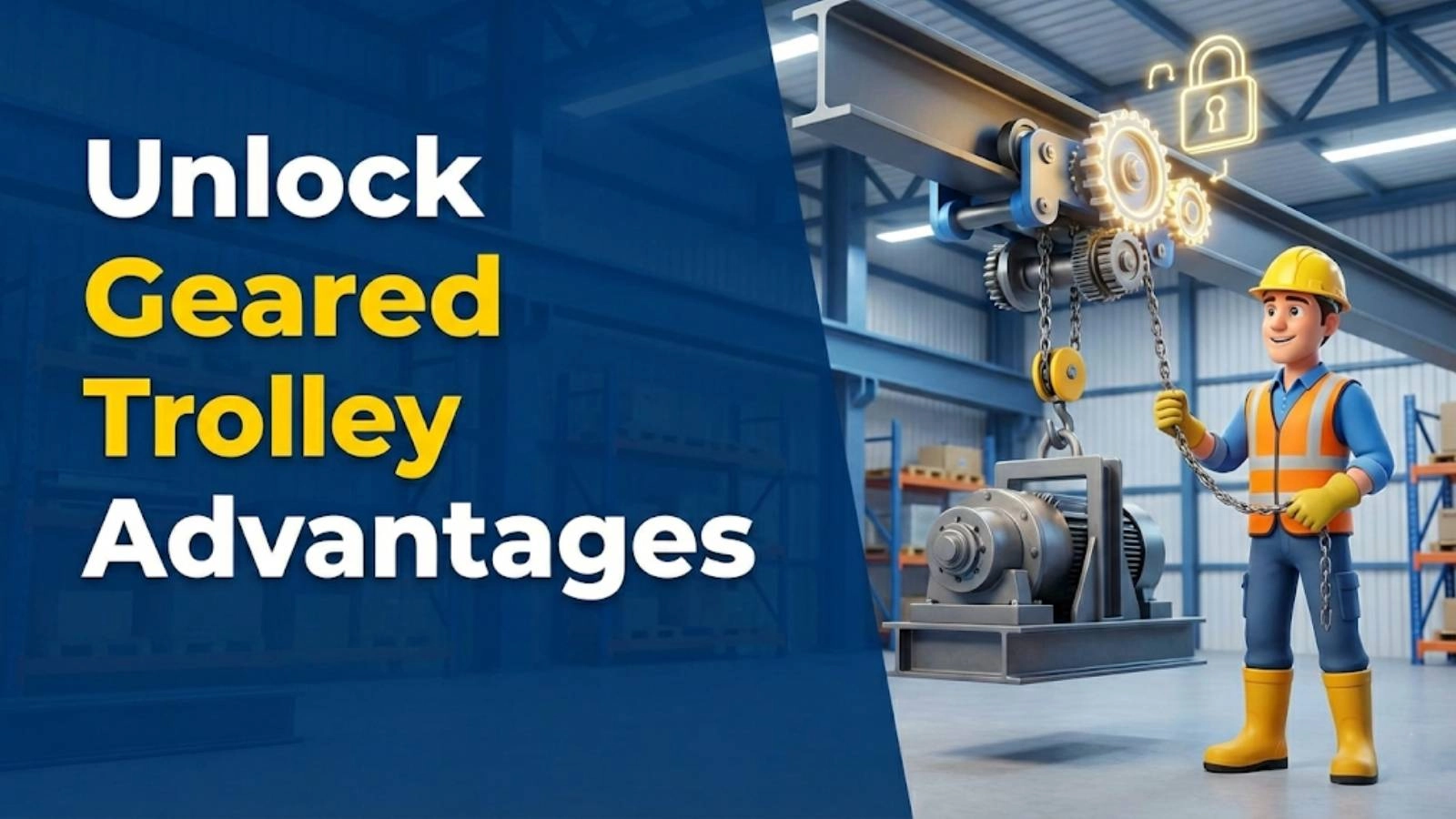
Safe and Secure Trading Company (SSTC) understands the critical role that geared trolleys play in countless industrial operations. These essential pieces of equipment facilitate the smooth and efficient movement of heavy loads, making them indispensable in manufacturing plants, warehouses, and construction sites. However, like any mechanical device, geared trolleys require regular maintenance to ensure their continued reliability and longevity. Neglecting trolley maintenance can lead to a host of problems, including decreased performance, increased downtime, and even dangerous accidents. By implementing a proactive maintenance program, businesses can significantly reduce these risks, saving both time and money in the long run. In this article, we’ll outline simple trolley maintenance tips to extend trolley life.
1. Consistent Lubrication: Preventing Friction and Wear
✅ One of the most crucial aspects of trolley maintenance is consistent lubrication. Without proper lubrication, the moving parts of a geared trolley are subject to increased friction, which can lead to accelerated wear and tear, decreased efficiency, and even premature failure. Friction generates heat, which can further degrade components and cause them to seize or bind. Proper lubrication minimizes friction, allowing the trolley to operate smoothly and efficiently, thereby prolonging its lifespan and reducing the need for costly repairs.
The Problem: Dry, Unlubricated Trolley Components
Lack of lubrication is a common problem that can have serious consequences for geared trolley performance and longevity. When trolley components are not adequately lubricated, the resulting friction can cause significant damage. This friction not only reduces the efficiency of the trolley but also leads to increased wear on critical parts.
Dry, unlubricated trolley components experience increased friction, leading to a multitude of problems. The lack of a lubricating film between moving surfaces causes them to rub directly against each other, generating heat and accelerating wear. This increased friction requires more energy to operate the trolley, reducing its efficiency and increasing power consumption. Over time, the continuous friction can cause significant damage to the trolley’s components, leading to costly repairs and downtime.
The impact of friction on trolley wheel wear and overall performance cannot be overstated. As the wheels roll along the track, they are subjected to constant friction, especially under heavy loads. Without proper lubrication, this friction causes the wheel surfaces to wear down, leading to reduced grip and increased slippage. This not only affects the trolley’s ability to move smoothly and efficiently but also compromises its load-bearing capacity.
Premature failure of trolley components is a significant risk associated with inadequate lubrication. The continuous friction and wear can weaken critical parts, such as bearings, gears, and axles, making them more susceptible to failure under stress. A broken or malfunctioning component can bring operations to a standstill, resulting in lost productivity and potential safety hazards. Therefore, regular and thorough lubrication is essential to prevent premature failure and ensure the continued safe and reliable operation of the trolley.
The Solution: Implementing a Regular Lubrication Schedule
Implementing a regular lubrication schedule is the key to preventing friction and wear in geared trolleys. By consistently applying appropriate lubricants to the critical components, you can minimize friction, reduce wear, and prolong the life of your trolleys. This proactive approach not only ensures smooth and efficient operation but also helps to prevent costly repairs and downtime.
For geared trolleys, we recommend using high-quality lubricants specifically designed for heavy-duty applications. Lithium grease is an excellent choice due to its excellent water resistance, high-temperature performance, and ability to adhere to metal surfaces. Other suitable lubricants include synthetic greases and oils formulated for gear mechanisms. Always consult the trolley manufacturer’s recommendations for specific lubricant types and specifications.
The specific points that require lubrication include the wheels, gears, and axles. The wheels should be lubricated at the points where they contact the track to minimize friction and ensure smooth rolling. Gears should be lubricated to reduce friction between the teeth and ensure efficient power transmission. Axles should be lubricated to prevent wear and ensure smooth rotation. Applying lubricant to these critical points will significantly improve the trolley’s performance and longevity.
A sample lubrication schedule should be based on trolley usage and environmental conditions. For trolleys that are used frequently and exposed to harsh environments, such as dust or moisture, lubrication should be performed more often, perhaps weekly or bi-weekly. For trolleys that are used less frequently or in cleaner environments, a monthly lubrication schedule may be sufficient. Regularly monitoring the condition of the lubricant and the trolley components will help you fine-tune the schedule to meet your specific needs. We recommend logging your trolley lubrication for ease of mind.
Using a grease gun is the best way to ensure precise and efficient application of lubricant. A grease gun allows you to direct the lubricant exactly where it’s needed, minimizing waste and ensuring that all critical points are adequately lubricated. The pressure provided by the grease gun also helps to force the lubricant into tight spaces, such as bearings and gear teeth, ensuring thorough coverage. For many of our clients here in Dammam, we’ve seen the benefits of precise lubrication.
2. Regular Inspections: Identifying and Addressing Potential Issues
✨ Regular inspections are crucial for identifying and addressing potential issues before they escalate into major problems. By conducting routine checks of the trolley’s components, you can detect early signs of wear, damage, or misalignment. Addressing these issues promptly can prevent further damage, extend the life of the trolley, and ensure safe operation.
The Problem: Overlooked Signs of Wear and Damage
Neglecting inspections can have serious consequences for trolley maintenance. Small problems that are overlooked can quickly escalate into major repairs, leading to increased downtime and costs. Furthermore, undetected damage can compromise the safety of the trolley, putting personnel and equipment at risk. Therefore, regular inspections are essential for identifying and addressing potential issues before they become serious problems.
Neglecting inspections can lead to small problems becoming major repairs. A loose bolt, a cracked weld, or a worn wheel may seem insignificant at first, but if left unattended, these issues can quickly worsen. For example, a loose bolt can cause excessive vibration, leading to further loosening of other components and potential structural damage. A cracked weld can propagate, eventually causing a complete failure of the affected part. Addressing these small problems early on can prevent them from escalating into major repairs that require significant time and expense.
Inspections should focus on identifying different types of damage, including cracks, deformation, and corrosion. Cracks can occur in welds, metal surfaces, or other critical areas, indicating potential structural weakness. Deformation, such as bending or warping, can indicate that the trolley has been subjected to excessive stress or overloading. Corrosion, caused by exposure to moisture or chemicals, can weaken metal components and lead to failure. Regularly inspecting for these types of damage will help you identify potential problems early on and take corrective action.
Inspecting welds and connection points is of utmost importance, as these areas are often the most vulnerable to stress and failure. Welds should be inspected for cracks, porosity, and signs of corrosion. Connection points, such as bolts, nuts, and screws, should be checked for looseness, damage, and proper torque. Any signs of weakness or damage in these areas should be addressed immediately to prevent structural failure.
The Solution: Establishing a Comprehensive Inspection Checklist
Establishing a comprehensive inspection checklist is the key to ensuring that all critical components of the trolley are regularly inspected. A well-designed checklist will guide inspectors through the inspection process, ensuring that no important areas are overlooked. This proactive approach helps to identify potential problems early on, allowing for timely repairs and preventing more serious issues from developing.
A sample trolley inspection checklist should cover all critical components, including the wheels, gears, axles, frame, welds, and connection points. For each component, the checklist should specify the types of damage or wear to look for, such as cracks, deformation, corrosion, looseness, and excessive wear. The checklist should also include instructions for documenting the inspection findings and reporting any issues that are identified.
The frequency of inspections should be based on trolley usage and load. Trolleys that are used frequently or subjected to heavy loads should be inspected more often, perhaps weekly or bi-weekly. Trolleys that are used less frequently or in lighter-duty applications may only require monthly or quarterly inspections. Adjusting the inspection frequency based on usage and load will help to ensure that potential problems are detected early on, regardless of how the trolley is used.
Documenting inspection findings and tracking maintenance history is essential for effective trolley maintenance. A written record of each inspection, including the date, the inspector’s name, and any findings or observations, should be maintained. This record can be used to track the condition of the trolley over time, identify trends in wear and damage, and plan future maintenance activities. A well-maintained maintenance history can also be valuable for troubleshooting problems and making informed decisions about trolley repair or replacement.
Training personnel on proper inspection procedures is critical to ensure that inspections are conducted thoroughly and accurately. Inspectors should be trained on how to identify different types of damage, how to use inspection tools, and how to document their findings. They should also be trained on the importance of following the inspection checklist and reporting any issues that are identified. Investing in proper training will ensure that inspections are conducted effectively, leading to improved trolley maintenance and safety.
3. Proper Load Management: Avoiding Overloading and Misuse
➡️ Proper load management is essential for preventing damage to the trolley and ensuring safe operation. Overloading a trolley or using it for unintended purposes can subject it to excessive stress, leading to structural failure, accidents, and costly repairs. By implementing load management and training procedures, businesses can minimize these risks and ensure the safe and reliable operation of their trolleys.
The Problem: Exceeding Load Limits and Incorrect Usage
Exceeding load limits and incorrect usage are common problems that can have serious consequences for trolley maintenance. Overloading a trolley can cause structural failure, leading to accidents and injuries. Using a trolley for unintended purposes can also subject it to stresses that it is not designed to handle, resulting in damage and premature failure. Therefore, it is essential to understand the dangers of overloading and misuse and to implement measures to prevent them.
Overloading a geared trolley poses significant dangers, including structural failure and accidents. When a trolley is overloaded, its components are subjected to stresses that exceed their design limits. This can cause the trolley to bend, crack, or even break, leading to a sudden and catastrophic failure. An overloaded trolley is also more likely to tip over or derail, posing a serious risk to personnel and equipment.
Improper rigging and load distribution can also damage the trolley. If the load is not properly balanced or secured, it can exert uneven forces on the trolley, causing it to twist or strain. Sharp edges or abrasive surfaces can also damage the trolley’s components, leading to wear and tear. Therefore, it is essential to use proper rigging techniques and to ensure that the load is evenly distributed and protected from sharp edges.
Using the trolley for unintended purposes can also be risky. For example, using a trolley to lift or move objects that are too heavy or too large can subject it to excessive stress. Using a trolley in environments that are not suitable, such as corrosive or explosive atmospheres, can also damage its components and compromise its safety. Therefore, it is essential to use the trolley only for its intended purpose and to follow the manufacturer’s recommendations for safe operation.
The Solution: Implementing Load Management and Training Procedures
Implementing load management and training procedures is the key to preventing overloading and misuse of geared trolleys. By clearly marking the trolley’s load capacity, providing training on proper rigging techniques, and establishing procedures to prevent overloading, businesses can minimize the risks associated with improper load management. This proactive approach helps to ensure the safe and reliable operation of trolleys, protecting personnel and equipment from harm.
Clearly marking the trolley’s load capacity and ensuring it is visible is essential for preventing overloading. The load capacity should be prominently displayed on the trolley in a location where it can be easily seen by operators. The marking should be durable and weather-resistant to ensure that it remains legible over time. Reinforcing the load capacity with warning signs and labels can further help to prevent overloading.
Providing training on proper rigging techniques and load distribution is crucial for ensuring that loads are safely and securely attached to the trolley. Training should cover topics such as selecting the appropriate slings, chains, and other rigging equipment, using proper hitching and knotting techniques, and ensuring that the load is evenly distributed. Training should also emphasize the importance of inspecting rigging equipment for damage or wear before each use.
Establishing procedures to prevent overloading and misuse is essential for ensuring that trolleys are used safely and responsibly. These procedures should include guidelines for determining the weight of loads, verifying that the load does not exceed the trolley’s capacity, and using the trolley only for its intended purpose. Procedures should also address the handling of oversized or unusually shaped loads, as well as the use of trolleys in hazardous environments.
Using appropriate lifting equipment and accessories is critical for ensuring safe and efficient trolley operation. This includes using slings, chains, and other rigging equipment that are specifically designed for lifting applications. It also includes using spreaders or lifting beams to distribute the load evenly and prevent damage to the trolley. Always follow the manufacturer’s recommendations for selecting and using lifting equipment and accessories.
The Impact of Environmental Factors on Trolley Maintenance
Environmental factors play a significant role in the lifespan and performance of geared trolleys. Extreme temperatures, dust, debris, and moisture can all negatively impact the trolley’s components, leading to accelerated wear and tear, corrosion, and reduced efficiency. By understanding these environmental factors and implementing protective measures, businesses can extend the life of their trolleys and ensure their continued reliable operation.
Problem: How environmental conditions affect trolley performance
Environmental conditions can significantly affect trolley performance in several ways. Extreme temperatures, dust, and debris, as well as moisture, are the primary culprits that contribute to the degradation of trolley components and overall performance. Addressing these environmental challenges is crucial for maintaining trolley efficiency and extending its lifespan.
Extreme temperatures can degrade lubricants, leading to increased friction and wear. High temperatures can cause lubricants to thin out and lose their viscosity, reducing their ability to provide adequate lubrication. Low temperatures can cause lubricants to thicken and become less fluid, making it difficult for them to reach critical components. Therefore, it is essential to select lubricants that are appropriate for the operating temperature range and to monitor their condition regularly.
Dust and debris can accelerate wear by acting as abrasive agents. When dust and debris enter the trolley’s moving parts, they can grind away at the surfaces, causing premature wear and tear. This is especially problematic for components such as wheels, gears, and bearings. Therefore, it is essential to keep the trolley clean and free from dust and debris.
Moisture causes corrosion, which can weaken metal components and lead to failure. When metal is exposed to moisture, it can react with oxygen to form rust or other corrosive products. This corrosion can weaken the metal, making it more susceptible to cracking or breaking. Therefore, it is essential to protect the trolley from moisture and to apply corrosion-resistant coatings to metal components.
Solution: Protective Measures
To mitigate the impact of environmental factors, several protective measures can be implemented. These include using environmental-resistant lubricants, regularly cleaning trolleys, and storing trolleys in dry areas. These proactive steps can significantly extend the life of trolleys and ensure their reliable operation in various environmental conditions.
Using environmental-resistant lubricants is crucial for protecting trolleys from extreme temperatures and moisture. These lubricants are specifically formulated to maintain their viscosity and lubricating properties over a wide temperature range and to resist water washout and corrosion. Selecting the right environmental-resistant lubricant can significantly extend the life of trolley components and reduce the need for frequent lubrication.
Regularly cleaning trolleys is essential for removing dust, debris, and other contaminants that can accelerate wear and tear. Trolleys should be cleaned with a mild detergent and water, and all moving parts should be thoroughly dried. Compressed air can be used to remove dust and debris from hard-to-reach areas. Regular cleaning will help to keep the trolley operating smoothly and efficiently.
Storing trolleys in dry areas is crucial for preventing corrosion and protecting them from moisture damage. When trolleys are not in use, they should be stored in a covered area that is protected from rain, snow, and humidity. If trolleys must be stored outdoors, they should be covered with a waterproof tarp or cover to prevent moisture from entering the components.
Addressing Specific Trolley Component Issues
Specific components of a geared trolley, such as wheels and gears, are particularly susceptible to wear and damage. Addressing these issues proactively is essential for maintaining the trolley’s performance and extending its lifespan. Regular inspection, maintenance, and timely replacements are key to ensuring the reliable operation of these critical components.
Problem: Wheel Wear and Gear Damage
Wheel wear and gear damage are common issues that can significantly impact the performance and safety of geared trolleys. Wheels wear down from friction and heavy loads, while gears suffer from improper lubrication and stress. Addressing these problems promptly is essential to prevent further damage and ensure the continued reliable operation of the trolley.
Wheels wear down from friction and heavy loads, leading to reduced grip and increased slippage. As the wheels roll along the track, they are subjected to constant friction, especially under heavy loads. This friction causes the wheel surfaces to wear down, reducing their diameter and altering their profile. Worn wheels provide less grip on the track, leading to increased slippage and reduced trolley efficiency.
Gears suffer from improper lubrication and stress, resulting in wear, pitting, and eventual failure. Gears are responsible for transmitting power from the motor to the wheels, and they are subjected to significant stress during operation. Without proper lubrication, the gear teeth can wear down, leading to reduced efficiency and increased noise. Stress from heavy loads or improper operation can also cause gear teeth to pit or break, leading to complete gear failure.
Solution: Maintenance and Replacements
To combat wheel wear and gear damage, proactive maintenance and timely replacements are necessary. Regularly inspecting and replacing worn wheels, ensuring gears are properly lubricated, and considering gear replacement when needed are essential steps in preserving the trolley’s functionality and safety.
Regularly inspect and replace worn wheels to maintain optimal trolley performance. Wheels should be inspected for signs of wear, such as reduced diameter, altered profile, or cracks. Worn wheels should be replaced promptly to prevent slippage, reduce noise, and ensure smooth operation.
Ensure gears are properly lubricated to minimize friction and wear. Gears should be lubricated with a high-quality grease or oil that is specifically designed for gear mechanisms. The lubricant should be applied regularly, following the manufacturer’s recommendations. Proper lubrication will help to reduce friction, prevent wear, and extend the life of the gears.
Consider gear replacement if showing significant wear to avoid catastrophic failures. If the gears show signs of significant wear, such as pitting, cracking, or broken teeth, they should be replaced promptly. Replacing worn gears will prevent further damage to the trolley and ensure its continued reliable operation.
Advanced Maintenance Techniques
While basic maintenance tasks like lubrication and inspection are essential, advanced maintenance techniques may be required to address more complex issues. Knowing when to seek professional help and understanding advanced repair options can save time and money in the long run. These advanced techniques often involve specialized tools and expertise, ensuring that the trolley operates safely and efficiently.
Problem: Complex Issues Requiring Expertise
Complex issues such as internal gear damage and bearing failures require specialized knowledge and tools to diagnose and repair. Attempting to address these issues without proper expertise can lead to further damage and potential safety hazards. Recognizing when to seek professional help is crucial for ensuring the safe and effective repair of geared trolleys.
Internal gear damage can be difficult to diagnose without specialized tools and expertise. Internal gear damage may manifest as unusual noises, vibrations, or reduced trolley performance. Diagnosing the specific cause of the damage often requires disassembling the trolley and inspecting the gears using specialized tools.
Bearing failures can also be challenging to diagnose and repair. Bearing failures may result in excessive play, noise, or heat. Replacing bearings requires specialized tools and knowledge to ensure proper installation and alignment.
Solution: Professional Intervention
When faced with complex issues, professional intervention is often the best course of action. Knowing when to call a qualified technician, scheduling professional inspections, and understanding advanced repair options can ensure that the trolley is repaired safely and effectively. Professional technicians have the expertise, tools, and experience necessary to diagnose and repair complex trolley issues.
Knowing when to call a qualified technician is crucial for ensuring the safe and effective repair of geared trolleys. If you encounter any complex issues that you are not comfortable addressing yourself, it is best to call a qualified technician. A qualified technician will have the expertise, tools, and experience necessary to diagnose and repair the problem safely and effectively.
Scheduling professional inspections can help to identify potential problems before they become major issues. A professional inspection will involve a thorough examination of all trolley components, including the gears, bearings, wheels, and frame. The inspector will look for signs of wear, damage, or misalignment. Professional inspections can help to identify potential problems early on, allowing for timely repairs and preventing more serious issues from developing.
Understanding advanced repair options can help you make informed decisions about trolley maintenance. Advanced repair options may include gear replacement, bearing replacement, or frame repair. A qualified technician can explain the different repair options available and help you choose the best option for your specific needs.
Creating a Trolley Maintenance Log
Maintaining a detailed trolley maintenance log is essential for tracking maintenance activities and predicting future needs. A comprehensive log helps prevent forgotten tasks and provides a valuable record of the trolley’s condition over time. This proactive approach ensures that maintenance is performed consistently and that potential issues are addressed promptly.
Problem: Lack of Record Keeping
Without a proper maintenance log, important tasks can be easily forgotten, leading to neglected maintenance and potential problems. The inability to track the trolley’s condition also makes it difficult to predict future maintenance needs and plan accordingly. This reactive approach can result in unexpected downtime and costly repairs.
Forgetting maintenance tasks is a common problem when there is no organized system for tracking activities. Lubrication, inspections, and repairs can be easily overlooked if they are not documented and scheduled. This neglect can lead to accelerated wear and tear, reduced trolley performance, and increased risk of failure.
The inability to track trolley condition makes it difficult to identify trends and predict future maintenance needs. Without a record of past inspections and repairs, it is challenging to assess the overall health of the trolley and anticipate when specific components may need to be replaced. This lack of foresight can result in unexpected breakdowns and costly downtime.
Solution: Comprehensive Logging
Implementing a comprehensive logging system ensures that all maintenance activities are recorded and tracked effectively. This includes creating a detailed maintenance log, recording dates of lubrication, inspections, and repairs, and using the log to predict future maintenance needs. A well-maintained log provides valuable insights into the trolley’s condition and helps to optimize maintenance schedules.
Creating a detailed maintenance log is the first step in establishing a comprehensive logging system. The log should include information such as the trolley’s identification number, date of purchase, and maintenance history. It should also have sections for recording lubrication, inspections, repairs, and other relevant maintenance activities.
Recording dates of lubrication, inspections, and repairs ensures that all maintenance activities are documented. The log should include the date of the activity, the type of maintenance performed, and any observations or findings. This information provides a valuable record of the trolley’s maintenance history and helps to track its condition over time.
Using the log to predict future maintenance needs allows for proactive maintenance planning. By analyzing the maintenance history, it is possible to identify trends in wear and tear and predict when specific components may need to be replaced. This proactive approach helps to prevent unexpected breakdowns and minimize downtime.
The Role of Preventative Maintenance
Preventative maintenance plays a crucial role in extending trolley life and minimizing disruptions. By shifting from a reactive approach to a proactive strategy, businesses can reduce downtime, lower repair costs, and ensure the continued reliable operation of their trolleys. Preventative maintenance involves scheduling regular maintenance tasks, anticipating wear and tear, and addressing potential issues before they escalate.
Problem: Reactive vs. Proactive Maintenance
Reactive maintenance leads to downtime and costly repairs. When maintenance is only performed after a problem occurs, it often results in unexpected downtime and costly repairs. This reactive approach can disrupt operations and significantly impact productivity.
Preventative maintenance minimizes disruptions. By scheduling regular maintenance tasks and addressing potential issues before they escalate, preventative maintenance helps to minimize disruptions and ensure the continued reliable operation of trolleys. This proactive approach can significantly reduce downtime and lower repair costs.
Solution: Embrace Preventative Strategies
Embracing preventative strategies is the key to maximizing trolley lifespan and minimizing disruptions. This involves scheduling regular maintenance, anticipating wear and tear, and addressing potential issues before they escalate. A proactive approach ensures that trolleys operate safely and efficiently, reducing the risk of unexpected breakdowns and costly repairs.
Scheduling regular maintenance tasks ensures that all critical components are inspected and maintained on a consistent basis. This includes lubrication, inspection, and replacement of worn parts. Regular maintenance helps to prevent problems before they occur and extends the life of the trolley.
Anticipating wear and tear allows for proactive planning and resource allocation. By tracking maintenance history and analyzing trends, it is possible to predict when specific components may need to be replaced. This allows for timely procurement of parts and scheduling of maintenance activities, minimizing downtime and disruptions.
Saving time and money is a significant benefit of preventative maintenance. By preventing unexpected breakdowns and extending the life of the trolley, preventative maintenance can save significant time and money. This proactive approach ensures that trolleys operate efficiently and reliably, reducing the risk of costly repairs and downtime.
> “Implementing a robust preventative maintenance program for your geared trolleys is not just about saving money on repairs; it’s about ensuring the safety of your workforce and the continuity of your operations.” – John Smith, Lead Safety Inspector
Top 3 Trolley Maintenance Tips Recap
To ensure the long-term reliability and safety of your geared trolleys, remember these top 3 maintenance tips:
- Consistent Lubrication: Regularly lubricate all moving parts to minimize friction and wear.
- Regular Inspections: Conduct routine inspections to identify and address potential issues early on.
- Proper Load Management: Avoid overloading the trolley and ensure proper load distribution.
Following these simple trolley maintenance tips will significantly extend the lifespan of your geared trolleys and ensure their safe and efficient operation for years to come.
Conclusion: Ensuring Long-Term Trolley Reliability and Safety
Proactive trolley maintenance is essential for ensuring the long-term reliability and safety of your lifting equipment. By implementing the recommended trolley maintenance tips outlined in this article, you can significantly reduce the risk of breakdowns, extend the life of your trolleys, and create a safer working environment. We encourage you to prioritize trolley maintenance and make it a routine part of your operational procedures.
FAQ Section
Q: How often should I lubricate my geared trolley?
A: The frequency of lubrication depends on the trolley’s usage and environmental conditions. For trolleys that are used frequently or exposed to harsh environments, lubrication should be performed weekly or bi-weekly. For trolleys that are used less frequently or in cleaner environments, a monthly lubrication schedule may be sufficient.
Q: What type of lubricant should I use for my geared trolley?
A: We recommend using high-quality lubricants specifically designed for heavy-duty applications. Lithium grease is an excellent choice due to its excellent water resistance, high-temperature performance, and ability to adhere to metal surfaces. Other suitable lubricants include synthetic greases and oils formulated for gear mechanisms. Always consult the trolley manufacturer’s recommendations for specific lubricant types and specifications.
Q: What should I look for during a trolley inspection?
A: During a trolley inspection, you should look for signs of wear, damage, or misalignment. This includes checking the wheels, gears, axles, frame, welds, and connection points for cracks, deformation, corrosion, looseness, and excessive wear.
Q: How can I prevent overloading my geared trolley?
A: To prevent overloading, clearly mark the trolley’s load capacity and ensure it is visible. Provide training on proper rigging techniques and load distribution. Establish procedures to prevent overloading and misuse. Use appropriate lifting equipment and accessories.
Q: What should I do if I find damage during a trolley inspection?
A: If you find damage during a trolley inspection, you should immediately take the trolley out of service and tag it for repair. The damage should be assessed by a qualified technician, who can determine the best course of action. Do not attempt to repair the trolley yourself unless you are properly trained and equipped.
Q: How can environmental factors affect my trolley’s maintenance?
A: Extreme temperatures can degrade lubricants, dust and debris accelerate wear, and moisture causes corrosion. Use environmental-resistant lubricants, regularly clean trolleys, and store them in dry areas.
Q: What are some signs that my trolley wheels need replacement?
A: Look for reduced diameter, altered profile, cracks, increased slippage, and unusual noises.
Q: How often should professional inspections be scheduled?
A: Professional inspections should be scheduled at least annually, or more frequently depending on the intensity of the trolley’s use and the severity of its operating environment.
Q: Why is a maintenance log important for trolley care?
A: A maintenance log prevents forgotten tasks, provides a history of trolley maintenance, and helps predict future maintenance needs, ensuring proactive care and preventing unexpected breakdowns.
Q: What is the most important thing to remember about trolley maintenance?
A: The most important thing to remember is that preventative maintenance is key to ensuring the long-term reliability, safety, and efficiency of your geared trolleys. By implementing a proactive maintenance program, you can minimize downtime, lower repair costs, and create a safer working environment.