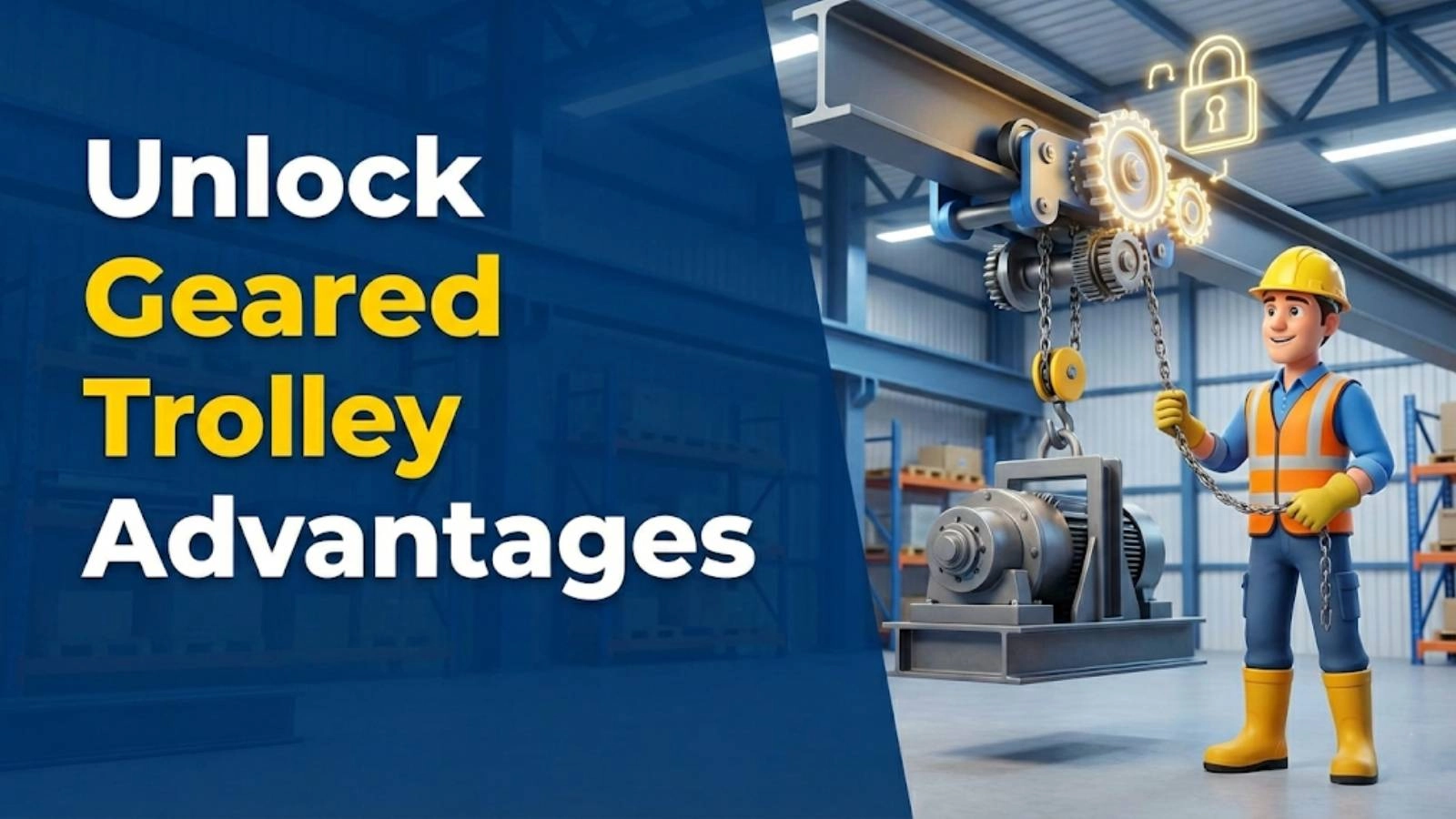
Navigating the world of material handling often involves the use of geared trolleys, essential components for overhead lifting and movement of heavy loads. However, even with the best equipment, mistakes can happen. These geared trolley mistakes can lead to accidents, damage, and costly downtime. At Safe and Secure Trading Company (SSTC), we’ve seen firsthand the consequences of neglecting proper procedures and maintenance. In this article, we’ll outline some of the most common geared trolley mistakes and how to avoid them, ensuring safer and more efficient operations for your business.
1. Neglecting Pre-Operation Inspections
✅ The importance of pre-operation inspections cannot be overstated. Failing to conduct these checks is a frequent cause of accidents. These inspections are your first line of defense against potential problems, helping you identify issues before they escalate into major incidents.
1.1. Mistake: Skipping Daily Checks
Many operators assume the trolley is in working order without performing even a cursory inspection. This assumption can be dangerous. By skipping daily checks, you’re essentially gambling with safety, increasing the risk of equipment failure and potential injury.
- Solution: Implement a mandatory daily checklist that focuses on identifying obvious damage, loose components, or any signs of wear and tear. For our clients in Jubail, we’ve seen that a simple checklist significantly reduces incidents related to trolley maintenance. A quick walkaround before each shift can make all the difference.
1.2. Mistake: Ignoring the Load Capacity Label
Overloading the trolley is a common and incredibly dangerous oversight. When operators disregard the load capacity, they’re pushing the equipment beyond its design limits, risking catastrophic failure. This not only endangers personnel but also damages the trolley and the load being lifted.
- Solution: Clearly display the load capacity near the trolley and train operators to verify it before each lift. We advise implementing a system where the load weight is double-checked against the trolley’s capacity before any lifting operation begins. A clear and visible label serves as a constant reminder of the trolley’s limitations. This is an easy way to improve lifting equipment safety.
1.3. Mistake: Not Checking for Rail Obstructions
Debris or misalignment on the rail can cause the trolley to derail or jam, leading to dangerous situations. Failing to ensure a clear and unobstructed pathway can result in the trolley becoming unstable, potentially dropping its load. It can also cause damage to the rail system and the trolley itself.
- Solution: Regularly inspect and clear the trolley rail of any obstructions. As part of your daily checklist, include a visual inspection of the rails to ensure they are free of any debris, tools, or other items that could impede the trolley’s movement. Proper trolley rail alignment is also crucial. This simple preventive measure can greatly reduce the risk of accidents.
2. Improper Installation and Setup
✅ Even the best geared trolley will perform poorly if it’s not installed and set up correctly. Improper installation can lead to instability, premature wear, and an increased risk of accidents. Taking the time to ensure proper setup is an investment in safety and efficiency.
2.1. Mistake: Incorrect Rail Gauge
Using a trolley on rails that are either too wide or too narrow can cause significant instability. When the rail gauge doesn’t match the trolley’s specifications, the trolley may wobble, bind, or even derail, posing a serious safety hazard. This can also lead to accelerated wear on the trolley’s wheels and rail.
- Solution: Ensure the trolley rail gauge matches the manufacturer’s specifications. Before installation, double-check the rail gauge and trolley compatibility. We often advise our clients to use precision measuring tools to verify the dimensions. This simple step can prevent a host of problems down the line. Accurate measurement also is important in trolley maintenance.
2.2. Mistake: Failing to Properly Secure End Stops
End stops prevent the trolley from running off the end of the rail, a situation that can lead to serious accidents. If end stops are not securely fastened or correctly positioned, they won’t be able to perform their function, putting personnel and equipment at risk. This is one of the most crucial aspects of overhead crane safety.
- Solution: Verify that end stops are securely fastened and correctly positioned. As part of your installation process, conduct a thorough inspection of the end stops, ensuring they are properly attached to the rail and can withstand the impact of the trolley. We also recommend regular checks to ensure they haven’t become loose or damaged over time.
2.3. Mistake: Neglecting Rail Alignment
Misaligned rails cause uneven wear and increase the risk of derailment. When rails are not properly aligned, the trolley experiences increased stress and friction, leading to premature wear on its wheels and other components. Misalignment also makes the trolley harder to move, reducing efficiency.
- Solution: Regularly check rail alignment and make necessary adjustments. Use a level and straight edge to identify any areas where the rails are out of alignment. We recommend performing this check at least quarterly, or more frequently in high-use environments. Proper rail alignment not only improves safety but also extends the life of the trolley.
3. Poor Maintenance Practices
✅ Consistent and thorough maintenance is essential for keeping your geared trolley in optimal condition. Neglecting maintenance leads to increased wear and tear, reduced performance, and a higher risk of equipment failure. A proactive maintenance program is an investment in the long-term reliability of your equipment.
3.1. Mistake: Not Lubricating Moving Parts
Lack of lubrication leads to increased friction and wear on the trolley’s moving parts. Without proper lubrication, components can overheat, bind, and eventually fail. This not only reduces the trolley’s efficiency but also increases the risk of accidents. It is a major factor that affects geared trolley safety.
- Solution: Implement a regular lubrication schedule using the recommended lubricants. Consult the manufacturer’s manual for specific lubrication recommendations. We suggest creating a lubrication log to track when each part was lubricated and with what type of lubricant. Regular lubrication keeps the trolley running smoothly and extends its lifespan.
3.2. Mistake: Ignoring Worn or Damaged Wheels
Worn wheels compromise stability and load-bearing capacity. Wheels that are excessively worn, cracked, or damaged can cause the trolley to wobble, bind, or even derail. This increases the risk of dropping the load and potentially injuring personnel. One of the most important facets of trolley wheel maintenance.
- Solution: Regularly inspect wheels for wear and replace them as needed. Use a visual inspection to check for signs of wear, such as flat spots, cracks, or excessive play. We recommend using a wheel gauge to measure the diameter of the wheels and compare it to the manufacturer’s specifications. Replacing worn wheels promptly is crucial for maintaining safety.
3.3. Mistake: Overlooking Gear Wear
Worn gears can slip or fail under load, leading to potentially catastrophic consequences. Gears are a critical component of the geared trolley, and their condition directly impacts the trolley’s ability to safely lift and move loads. Worn gears can slip, causing the load to drop unexpectedly.
- Solution: Inspect gears for signs of wear and replace them proactively. Look for signs of wear, such as rounded teeth, pitting, or excessive play. We advise listening for unusual noises during operation, which could indicate gear problems. Replacing worn gears before they fail is essential for preventing accidents.
4. Insufficient Operator Training
✅ Even with well-maintained equipment, insufficient operator training can negate all the safety benefits. Operators who are not properly trained are more likely to make mistakes that can lead to accidents, damage, and injuries. Comprehensive training is an essential investment in a safe working environment.
4.1. Mistake: Allowing Untrained Personnel to Operate the Trolley
Lack of proper training increases the risk of accidents and damage. When untrained personnel operate the trolley, they may not be aware of the proper operating procedures, load limits, or potential hazards. This can lead to mistakes that result in accidents and injuries.
- Solution: Provide comprehensive training to all operators on safe operating procedures. The training should cover topics such as pre-operation inspections, load balancing, communication protocols, and emergency procedures. We also recommend providing refresher training periodically to ensure operators stay up-to-date on best practices. This is a critical step in crane operator training.
4.2. Mistake: Not Educating Operators on Load Balancing
Unevenly distributed loads can cause the trolley to tip or derail. When the load is not properly balanced, it can create excessive stress on one side of the trolley, causing it to become unstable. This increases the risk of the load shifting or falling, potentially injuring personnel.
- Solution: Train operators on proper load balancing techniques. Operators should be taught how to assess the load’s center of gravity and how to position the load correctly on the trolley. We also recommend using load charts to determine the safe lifting capacity for different load configurations. This will help in avoiding hoist trolley errors.
4.3. Mistake: Failing to Emphasize Communication During Lifts
Clear communication is essential for safe and coordinated lifting operations. Without clear communication, operators may not be aware of potential hazards or changes in the lift plan. This can lead to miscommunication and accidents, especially when multiple personnel are involved in the lifting operation.
- Solution: Establish clear communication protocols between the operator and other personnel. This may involve using hand signals, radios, or other communication devices. We emphasize the importance of a designated signal person who can communicate with the operator and other workers on the ground. Regular communication drills can help ensure everyone understands the protocols.
5. Ignoring Environmental Factors
✅ Environmental factors can significantly impact the performance and lifespan of your geared trolley. Ignoring these factors can lead to accelerated wear, corrosion, and a higher risk of equipment failure. Taking environmental conditions into account is essential for maintaining the trolley’s safety and reliability.
5.1. Mistake: Exposing the Trolley to Corrosive Environments
Exposure to harsh chemicals or saltwater can accelerate corrosion. Corrosion can weaken the trolley’s components, reducing its load-bearing capacity and increasing the risk of failure. In corrosive environments, standard trolleys may not be able to withstand the conditions, leading to premature wear and tear.
- Solution: Use corrosion-resistant trolleys or protective coatings in corrosive environments. We offer a range of trolleys specifically designed for use in harsh environments, featuring corrosion-resistant materials and coatings. For existing trolleys, we recommend applying protective coatings to help prevent corrosion. This is extremely important for maintaining lifting equipment safety.
5.2. Mistake: Neglecting Temperature Considerations
Extreme temperatures can affect the performance of the trolley and its components. High temperatures can cause lubricants to break down, reducing their effectiveness. Low temperatures can make materials brittle, increasing the risk of cracking or failure. Ignoring temperature considerations can lead to reduced performance and a higher risk of accidents.
- Solution: Select trolleys designed for the operating temperature range. We provide trolleys that are rated for a wide range of temperatures. Consult the manufacturer’s specifications to ensure the trolley is suitable for your operating environment. In extreme temperature conditions, we recommend using specialized lubricants designed to withstand the temperature extremes.
5.3. Mistake: Failing to Protect the Trolley from Debris
Accumulation of dust, dirt, or other debris can interfere with the trolley’s operation. Debris can clog moving parts, increase friction, and accelerate wear. This can lead to reduced performance and a higher risk of equipment failure. Regular cleaning and protection are essential for maintaining the trolley’s reliability.
- Solution: Regularly clean the trolley and its surrounding area. We recommend implementing a cleaning schedule as part of your overall maintenance program. Use compressed air or a brush to remove debris from the trolley’s moving parts. In dusty environments, consider using protective covers to prevent debris from accumulating on the trolley.
6. Neglecting Load Weight Calculation
✅ Accurate load weight calculation is paramount for safe lifting operations. Guessing or underestimating the weight of a load can lead to overloads, equipment failure, and potentially catastrophic accidents. Precise load weight calculation is a non-negotiable aspect of material handling safety.
6.1. Mistake: Guessing the Weight of the Load
Estimation often leads to underestimation, causing overloads. Human estimation of weight is notoriously inaccurate, particularly with heavy or irregularly shaped objects. Relying on guesswork can easily result in exceeding the trolley’s load capacity, placing undue stress on the equipment and creating a dangerous situation.
- Solution: Use calibrated weighing equipment to accurately determine load weight. We advise using calibrated scales or load cells to precisely measure the weight of the load before lifting. Ensure the weighing equipment is regularly calibrated to maintain accuracy. This simple step can prevent many overload-related accidents.
6.2. Mistake: Forgetting to Account for Rigging Weight
The weight of slings, chains, and other rigging hardware contributes to the total load. Failing to account for rigging weight can lead to underestimating the total load, potentially causing an overload situation. Even seemingly light rigging can add a significant amount of weight to the overall load.
- Solution: Always include rigging weight in load calculations. We provide charts and calculators to help you accurately determine the weight of various rigging components. Train operators to always factor in the weight of the rigging when calculating the total load. Accurate assessment is crucial for safety.
6.3. Mistake: Exceeding the Trolley’s Rated Capacity
This is a critical oversight that leads to immediate danger. Exceeding the trolley’s rated capacity is a fundamental safety violation that can result in immediate and catastrophic equipment failure. This puts personnel at severe risk of injury or even death, and can cause significant damage to property.
- Solution: Double check the trolley’s rated capacity before each lift, and NEVER exceed it. It is of the utmost importance that workers check the rated capacity and the load’s weight before they proceed with the task. Overloading is a non-negotiable violation.
“Safety in lifting operations starts with understanding the limitations of your equipment and adhering strictly to those limits.” – John Smith, Lead Safety Inspector
7. Using Damaged or Unapproved Attachments
✅ Attachments play a vital role in connecting the load to the trolley. Using damaged or unapproved attachments can compromise the entire lifting operation, leading to accidents and injuries. Only certified and well-maintained attachments should be used to ensure safe and reliable lifting.
7.1. Mistake: Attaching Non-Certified Hooks
Using uncertified hooks can cause failures. Non-certified hooks may not meet the required strength and safety standards. This increases the risk of the hook breaking or failing under load, causing the load to drop unexpectedly. Only use hooks that have been tested and certified for the intended application.
- Solution: Only use hooks and attachments that are certified for the trolley’s capacity. We supply hooks and attachments that meet or exceed industry safety standards. Before each lift, inspect the hook for any signs of damage, such as cracks, bending, or wear. Regular inspection is part of geared trolley inspection.
7.2. Mistake: Using Makeshift or Modified Attachments
Makeshift attachments are not engineered to withstand the intended loads. Using makeshift or modified attachments can be extremely dangerous. These attachments may not have the required strength or safety features, increasing the risk of failure. Never use attachments that have not been specifically designed and approved for the intended lifting application.
- Solution: Never use makeshift or modified attachments; only use approved accessories. We offer a wide range of approved accessories that are designed to work safely and reliably with our trolleys. Using approved accessories ensures that all components are compatible and meet the necessary safety standards.
7.3. Mistake: Ignoring Attachment Inspection Schedules
Overlooking the importance of attachments results in accidents and damage. Attachments, like any other piece of lifting equipment, require regular inspection to ensure they are in good working condition. Ignoring inspection schedules can lead to undetected damage or wear, increasing the risk of failure during a lift.
- Solution: Regularly inspect all attachments for damage and replace them as needed. Implement a regular inspection schedule for all attachments, following the manufacturer’s recommendations. Use a checklist to document the inspection process and ensure that all critical components are checked.
Here is a summary of the top 3 items on our list:
1. Conduct pre-operation inspections of trolleys and rails every day
2. Train personnel with hands-on, comprehensive practice
3. Calibrate the trolley’s weighing equipment on a regular basis
8. Forgetting to Lock the Trolley in Place
✅ Securing the trolley when it’s not in use is crucial for preventing accidents, especially on inclined surfaces. Forgetting to lock the trolley can lead to unexpected movement, potentially causing damage or injury. A functional locking mechanism is a key safety feature.
8.1. Mistake: Leaving the Trolley Unsecured on an Incline
Leaving the trolley unsecured on an incline can cause it to roll away unexpectedly. On an incline, gravity can cause the trolley to move even with a relatively light load. This can lead to a runaway trolley, potentially colliding with other equipment or personnel.
- Solution: Engage the trolley’s locking mechanism whenever it is parked on an incline. We design our trolleys with robust locking mechanisms that are easy to engage and disengage. Always verify that the locking mechanism is securely engaged before leaving the trolley unattended. This is a critical step for preventing accidents.
8.2. Mistake: Not Using a Trolley Lock During Maintenance
A free-rolling trolley can pose a hazard during maintenance activities. During maintenance, the trolley may be disassembled or have parts removed, making it more unstable. If the trolley is not locked in place, it could move unexpectedly, potentially injuring personnel working on it.
- Solution: Always use a trolley lock to prevent movement during maintenance. We offer trolley locks that can be easily installed to prevent the trolley from moving during maintenance. These locks provide an extra layer of safety, ensuring that the trolley remains stationary while work is being performed.
8.3. Mistake: Disregarding Lock Mechanism Inspection
Neglecting the lock mechanism will result in a faulty lock. A faulty locking mechanism can fail to engage properly, leaving the trolley unsecured. Regular inspection and maintenance are essential for ensuring that the locking mechanism functions correctly and provides the necessary level of safety.
- Solution: Inspect the locking mechanism regularly to ensure it is functioning correctly. As part of your regular maintenance schedule, inspect the locking mechanism for any signs of damage, wear, or corrosion. Test the locking mechanism to ensure it engages and disengages smoothly. If any problems are found, repair or replace the locking mechanism immediately.
9. Poor Communication Between Workers
✅ Effective communication is the backbone of any safe lifting operation. Poor communication can lead to misunderstandings, errors, and potentially dangerous situations. Establishing clear communication protocols is essential for ensuring that all workers are on the same page and aware of potential hazards.
9.1. Mistake: Using Unclear Hand Signals
Ambiguous hand signals cause confusion during lifts. When hand signals are not clear or standardized, workers may misinterpret the signals, leading to incorrect actions. This can result in accidents, damage, and injuries. Standardized hand signals are essential for clear and effective communication.
- Solution: Standardize hand signals and ensure all workers are familiar with them. We provide training materials and resources on standardized hand signals for lifting operations. Regularly review the hand signals with your team to ensure everyone understands them. Use clear and concise hand signals during all lifting operations.
9.2. Mistake: Not Having a Designated Signal Person
Lack of a designated signal person leads to miscommunication and accidents. A designated signal person serves as the primary point of communication between the operator and other workers on the ground. Without a designated signal person, communication can become fragmented and unclear, increasing the risk of errors.
- Solution: Assign a qualified signal person for each lift. The signal person should be properly trained on hand signals, communication protocols, and potential hazards. The signal person should have a clear view of the lift and be able to communicate effectively with the operator. Proper crane operator training includes signal person responsibilities.
9.3. Mistake: Failing to Communicate Changes in the Lift Plan
Changes in the lift plan without communication can create hazardous situations. If the lift plan changes without notifying all involved personnel, workers may be unaware of the changes and take actions that are no longer appropriate. This can lead to confusion, errors, and potentially dangerous situations.
- Solution: Communicate any changes in the lift plan to all involved personnel immediately. Establish a clear process for communicating changes in the lift plan, such as using radios or other communication devices. Ensure that all workers understand the changes and are aware of any potential hazards. Open communication is critical for maintaining safety.
Conclusion
Avoiding these geared trolley mistakes is paramount for ensuring safe and efficient material handling operations. By implementing robust pre-operation inspections, proper installation procedures, consistent maintenance practices, comprehensive operator training, and clear communication protocols, you can significantly reduce the risk of accidents and improve the overall performance of your lifting equipment. At Safe and Secure Trading Company, we are dedicated to providing you with the highest quality equipment and expert guidance to help you create a safe and productive work environment. We stand by the safety and quality of our tools and support.
FAQ Section
Q: How often should I inspect my geared trolley?
A: We recommend performing a daily pre-operation inspection, as well as regular quarterly inspections, as detailed in the trolley’s maintenance manual.
Q: What type of lubricant should I use on my geared trolley?
A: We advise consulting the manufacturer’s manual for specific lubrication recommendations. Using the correct lubricant is crucial for ensuring proper performance and preventing wear.
Q: How do I know if my geared trolley is overloaded?
A: We suggest using calibrated weighing equipment to accurately determine the load weight. Never exceed the trolley’s rated capacity.
Q: What should I do if I find damage during a pre-operation inspection?
A: We recommend immediately removing the trolley from service and tagging it for repair. Never operate a damaged trolley.
Q: Where can I find training materials on safe trolley operation?
A: We offer comprehensive training materials and resources on safe trolley operation. Contact us for more information.