Safe and Secure Trading Company
Introduction: Geared vs. Plain Trolleys in 2026 – What’s Trending?
Geared and plain trolleys are essential components in material handling, each designed to facilitate the movement of loads along a beam or track. Understanding the nuances of geared vs plain trolleys is critical for optimizing workplace operations. Geared trolleys offer enhanced control for heavier loads, while plain trolleys prioritize speed and simplicity for lighter applications. The trolley comparison isn’t merely about cost; it’s about matching the right tool to the task, ensuring safety, efficiency, and longevity of your lifting equipment.
In 2026, the importance of proper trolley selection guide is amplified by increasing demands for workplace safety and operational efficiency. Businesses are seeking solutions that not only streamline their processes but also minimize the risk of accidents and injuries. This focus on safety makes understanding the distinctions of a hoist trolley more important than ever. Selecting the right trolley impacts productivity and also protects your workforce.
Recent innovations and market trends are significantly impacting trolley design. Manufacturers are integrating new materials, ergonomic features, and smart technologies to enhance the performance and safety of both geared and plain trolleys. There’s a trend toward lighter, stronger materials for the frames, as well as improved wheel designs to reduce friction and wear. By staying updated on these advancements, businesses can make informed decisions when selecting and implementing lifting equipment that aligns with their operational needs.
Geared Trolleys: Precision and Control
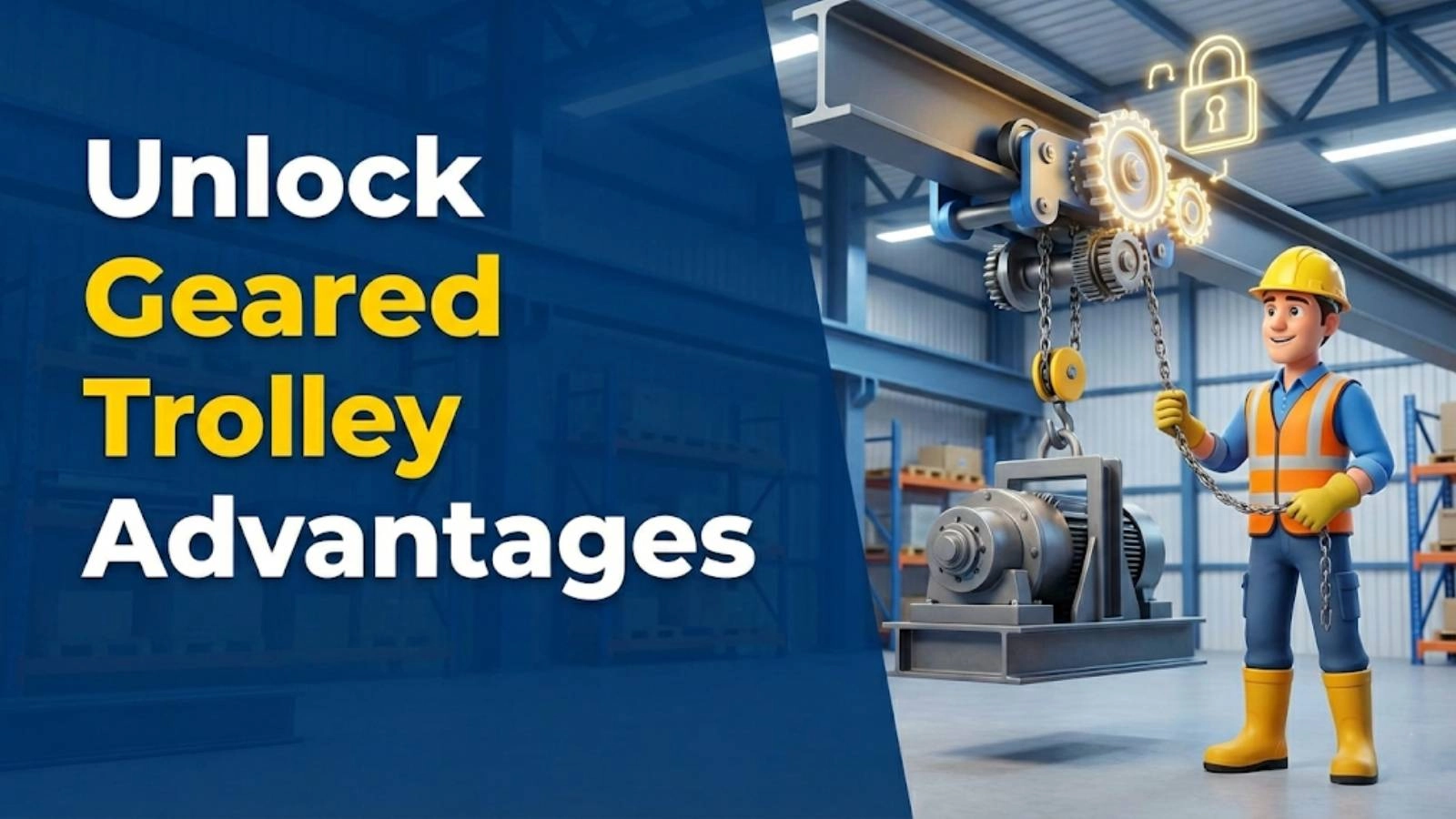
Geared trolleys are a type of hoist trolley that utilize a hand chain and gears to move loads along a beam. This mechanism provides precise control over the movement, making them ideal for applications where accuracy is crucial. When choosing trolley types, geared trolleys are the superior choice where you need slow, precise movement.
The primary advantage of geared trolleys lies in their ability to provide enhanced load control and positioning. The gear system allows operators to move heavy loads with minimal effort and exceptional accuracy. For many of our clients here in Dammam, we’ve found that the controlled movement of a manual trolley design with gears prevents jerking or sudden stops, which is essential when handling fragile or sensitive materials.
Enhanced Load Control and Positioning
Geared trolleys excel in situations where precise positioning is paramount. The geared mechanism provides a smooth, controlled motion, allowing operators to make fine adjustments to the load’s placement. This level of control is particularly valuable in manufacturing and assembly processes, where even slight misalignments can lead to errors or damage. This is especially true if you have a geared trolley benefits mindset where you’re looking for the most value from your lifting operations.
We’ve seen that the geared system reduces the risk of swinging or swaying, which can be hazardous when moving loads in confined spaces. By minimizing these unwanted movements, geared trolleys contribute to a safer and more efficient working environment. Moreover, a geared trolley benefits businesses by enabling them to handle delicate items that would be difficult to manage with other types of trolleys.
Reduced Operator Effort
The geared mechanism significantly reduces the amount of physical effort required to move heavy loads. The gear ratio multiplies the force applied by the operator, allowing them to move substantial weights with relative ease. This is particularly important in applications where operators must move loads frequently or over long distances. Geared trolleys can help prevent fatigue and strain-related injuries.
The reduction in operator effort also translates to increased productivity. Operators can work more efficiently and maintain a higher level of focus throughout the day, leading to improved overall performance. When choosing trolley types, remember that geared trolleys help reduce the strain on your workforce, which is a crucial consideration for long-term operational sustainability.
Disadvantages of Geared Trolleys
While geared trolleys offer numerous advantages, they also have some drawbacks that must be considered. The primary disadvantages are their higher cost compared to plain trolleys and their slower travel speed. However, these limitations are often outweighed by the benefits of enhanced control and reduced operator effort.
Higher Cost Compared to Plain Trolleys
Geared trolleys typically have a higher upfront cost than plain trolleys due to the more complex mechanism involved. The gear system requires additional components and manufacturing processes, which contribute to the overall price. For businesses on a tight budget, the initial investment in geared trolleys may be a barrier. The total trolley comparison often involves this cost vs. benefit analysis.
However, it’s essential to consider the long-term cost savings that geared trolleys can provide. By reducing operator effort and minimizing the risk of damage to materials, geared trolleys can help lower labor costs and reduce expenses related to repairs or replacements. Additionally, the increased precision and control offered by geared trolleys can lead to improved efficiency and higher-quality output, further offsetting the initial investment.
Slower Travel Speed
The geared mechanism inherently limits the travel speed of geared trolleys. The gear ratio that provides enhanced control also reduces the rate at which the load can be moved along the beam. In applications where speed is a critical factor, plain trolleys may be a more suitable option.
However, it’s important to note that the slower travel speed of geared trolleys is often a trade-off for increased safety and precision. The controlled movement provided by the geared system minimizes the risk of accidents and ensures that loads are positioned accurately. For many applications, the benefits of enhanced control outweigh the drawbacks of reduced speed.
Plain Trolleys: Simplicity and Speed
Plain trolleys, also known as push trolleys, are a simpler type of hoist trolley that relies on manual effort to move loads along a beam. They consist of a frame with wheels that roll along the beam, and the load is suspended from a hook or shackle. Plain trolleys are best suited for applications where speed and cost-effectiveness are more important than precise control. When looking at trolley types, plain trolleys are a simple and efficient option for material handling.
The main advantages of plain trolleys are their cost-effectiveness and ease of installation and maintenance. Their simple design makes them less expensive to manufacture and requires minimal maintenance. Plain trolleys are often the preferred choice for businesses that need a basic material handling solution without the added complexity of a geared system. We once worked with a client choosing between geared and plain trolleys for a warehouse. They found plain trolleys were better for their specific workflow because they needed to move lighter loads quickly between stations.
Cost-Effectiveness
Plain trolleys are significantly less expensive than geared trolleys due to their simpler design. The absence of a gear system reduces manufacturing costs and eliminates the need for specialized components. For businesses with limited budgets, plain trolleys offer a cost-effective way to improve material handling efficiency without breaking the bank. The trolley comparison often boils down to the available budget.
The lower cost of plain trolleys also makes them a more attractive option for applications where the trolley will be used infrequently or for short periods. Businesses can invest in a larger number of plain trolleys to cover a wider range of tasks without incurring significant expenses. This flexibility can be particularly beneficial for small businesses or startups with limited resources.
Easy Installation and Maintenance
Plain trolleys are incredibly easy to install and maintain due to their straightforward design. The absence of complex mechanisms means that there are fewer components that can break down or require adjustment. This simplicity translates to reduced maintenance costs and less downtime for repairs.
The ease of installation also makes plain trolleys a convenient option for businesses that need to quickly set up or reconfigure their material handling systems. They can be easily attached to beams or tracks without the need for specialized tools or expertise. This flexibility can be particularly valuable in dynamic environments where layouts change frequently.
Disadvantages of Plain Trolleys
While plain trolleys offer several advantages, they also have some limitations that must be considered. The primary disadvantages are their limited load control and the increased operator effort required to move heavy loads. However, these limitations are often acceptable in applications where speed and cost-effectiveness are paramount.
Limited Load Control
Plain trolleys offer less precise load control compared to geared trolleys. The absence of a gear system means that operators must rely on their own strength and coordination to move the load smoothly. This can be challenging when handling heavy or fragile items, as sudden movements or jerks can lead to damage or accidents.
The limited load control also makes plain trolleys less suitable for applications where precise positioning is required. Operators may struggle to make fine adjustments to the load’s placement, which can be problematic in manufacturing or assembly processes. In these cases, the enhanced control offered by geared trolleys is often worth the additional cost.
Increased Operator Effort for Heavy Loads
Moving heavy loads with plain trolleys requires significant physical effort from the operator. The absence of a gear system means that all the force needed to move the load must be applied directly by the operator. This can lead to fatigue and strain-related injuries, especially when moving loads frequently or over long distances. It’s important to weigh the plain trolley benefits against the possible operator strain.
The increased operator effort can also impact productivity. Operators may work more slowly or take more frequent breaks when using plain trolleys, leading to reduced overall efficiency. In applications where heavy loads must be moved regularly, investing in geared trolleys can help reduce operator strain and improve productivity.
Key Differences: Geared vs. Plain – A Detailed Comparison
Understanding the nuanced differences between geared and plain trolleys is essential for making informed decisions about lifting equipment. Each type offers distinct advantages and disadvantages, making them suitable for different applications and environments. By carefully considering these key differences, businesses can optimize their material handling processes and ensure the safety and efficiency of their operations.
Load Capacity Comparison: How Much Can Each Type Handle?
Geared trolleys typically have a higher load capacity compared to plain trolleys. The geared mechanism provides increased mechanical advantage, allowing them to handle heavier loads with greater ease. Plain trolleys, on the other hand, are generally limited to lighter loads due to the manual effort required to move them.
However, it’s important to note that the specific load capacity of a trolley depends on its design and construction. Some heavy-duty plain trolleys can handle loads comparable to those of smaller geared trolleys. Before making a decision, always consult the manufacturer’s specifications to ensure that the trolley is suitable for the intended load weight.
Speed and Efficiency: Which One Gets the Job Done Faster for Specific Tasks?
Plain trolleys generally offer faster travel speeds compared to geared trolleys. The absence of a gear system allows operators to move loads quickly along the beam, making them ideal for applications where speed is a priority. Geared trolleys, with their gear mechanism, trade speed for precision.
However, the overall efficiency of a trolley depends on the specific task at hand. In applications where precise positioning is required, the enhanced control offered by geared trolleys can lead to greater efficiency despite their slower travel speed. Similarly, in applications where heavy loads must be moved, the reduced operator effort provided by geared trolleys can result in increased productivity.
Control and Precision: Comparing the Accuracy of Load Placement
Geared trolleys offer superior control and precision compared to plain trolleys. The geared mechanism allows operators to make fine adjustments to the load’s placement, ensuring accurate positioning. Plain trolleys, with their manual operation, provide less precise control, making them less suitable for applications where accuracy is critical.
The level of control required depends on the specific application. In manufacturing or assembly processes, where even slight misalignments can lead to errors, geared trolleys are the preferred choice. In warehousing or storage applications, where precise positioning is less critical, plain trolleys may be sufficient.
Cost Analysis: Initial Investment and Long-Term Maintenance Costs
Plain trolleys have a lower initial investment cost compared to geared trolleys. Their simpler design and fewer components make them less expensive to manufacture and purchase. Geared trolleys, with their more complex mechanism, typically have a higher upfront cost.
However, it’s important to consider the long-term maintenance costs associated with each type of trolley. Plain trolleys require less maintenance due to their simpler design, while geared trolleys may require more frequent maintenance to ensure proper functioning of the gear system. The total cost of ownership should be considered when comparing geared vs plain trolleys.
Ease of Use and Maintenance: Which One Is Easier to Operate and Maintain?
Plain trolleys are generally easier to operate and maintain compared to geared trolleys. Their straightforward design makes them simple to use and requires minimal training. Geared trolleys, with their more complex mechanism, may require additional training to operate safely and effectively. It’s important to have a trolley selection guide for your team.
Maintenance requirements also differ between the two types of trolleys. Plain trolleys require basic maintenance such as lubrication and inspection of the wheels, while geared trolleys may require more extensive maintenance to ensure proper functioning of the gear system. The trolley selection guide should include maintenance information.
Durability and Lifespan: How Long Can You Expect Each Type to Last?
Both geared and plain trolleys can provide long-lasting performance if properly maintained and used within their specified load capacity. However, the durability and lifespan of a trolley depend on several factors, including the quality of materials, the frequency of use, and the operating environment.
In general, geared trolleys may be more susceptible to wear and tear due to the complexity of their mechanism. However, the reduced operator effort provided by geared trolleys can help minimize the risk of overloading and damage, potentially extending their lifespan. Plain trolleys, with their simpler design, may be more resistant to wear and tear but require greater operator effort, which can increase the risk of overloading.
Factors to Consider When Choosing: Your 2026 Checklist
Selecting the right trolley involves carefully evaluating several factors to ensure that the chosen model meets the specific needs of your application. These factors include load weight, distance of travel, precision requirements, budget constraints, available headroom, and operator skill level. By thoroughly assessing these considerations, businesses can make informed decisions that optimize their material handling processes and ensure the safety and efficiency of their operations.
Load Weight and Frequency of Lifting
The load weight is a critical factor in determining the appropriate type of trolley. Geared trolleys are generally recommended for heavier loads, while plain trolleys are suitable for lighter loads. The frequency of lifting also plays a role in the selection process. If loads are lifted frequently, a geared trolley may be preferable to reduce operator fatigue and improve productivity.
However, it’s important to consider the maximum load capacity of the trolley and ensure that it is not exceeded. Overloading a trolley can lead to damage, accidents, and injuries. Always consult the manufacturer’s specifications to determine the appropriate load capacity for your application.
Distance and Path of Travel
The distance and path of travel can influence the choice between geared and plain trolleys. For longer distances, a geared trolley may be more efficient due to the reduced operator effort required. For shorter distances, a plain trolley may be sufficient, especially if speed is a priority.
The path of travel also matters. If the path includes obstacles or tight corners, a trolley with good maneuverability is essential. Geared trolleys generally offer better maneuverability due to their controlled movement.
Precision Requirements for Load Placement
The precision requirements for load placement are a key factor in determining the appropriate type of trolley. Geared trolleys offer superior control and precision compared to plain trolleys, making them ideal for applications where accurate positioning is critical. Plain trolleys may be sufficient for applications where precise positioning is less important.
In manufacturing or assembly processes, where even slight misalignments can lead to errors, geared trolleys are the preferred choice. In warehousing or storage applications, where precise positioning is less critical, plain trolleys may be sufficient.
Budget Constraints
Budget constraints are an important consideration for many businesses. Plain trolleys are generally less expensive than geared trolleys, making them a more attractive option for businesses with limited budgets. However, it’s important to consider the long-term cost savings that geared trolleys can provide, such as reduced operator effort and minimized risk of damage to materials.
A thorough cost-benefit analysis can help businesses determine the most cost-effective type of trolley for their specific needs. Consider the initial investment cost, the long-term maintenance costs, and the potential cost savings from improved efficiency and reduced risk of accidents.
Available Headroom and Workspace
The available headroom and workspace can impact the choice of trolley. In areas with limited headroom, a low-profile trolley may be necessary to ensure that the load can be lifted and moved safely. In tight workspaces, a trolley with good maneuverability is essential. The trolley selection guide should include height and width measurements.
Consider the dimensions of the trolley and the load being lifted, as well as the available space in the operating environment. Ensure that there is sufficient clearance for the trolley to move freely without colliding with obstacles or structures.
Operator Skill Level
The operator skill level is an important consideration for safe and efficient trolley operation. Geared trolleys, with their more complex mechanism, may require additional training to operate safely and effectively. Plain trolleys, with their straightforward design, are generally easier to operate and require minimal training.
Provide adequate training to all operators to ensure that they understand the proper procedures for using the trolley safely and efficiently. Emphasize the importance of following manufacturer’s instructions and adhering to safety guidelines.
Safety Considerations: Prioritizing Safety in 2026
Safety should always be the top priority when using trolleys for material handling. Proper trolley selection, regular inspection and maintenance, operator training and certification, and adherence to safety standards are all essential for preventing accidents and injuries. By implementing comprehensive safety measures, businesses can create a safer and more productive working environment.
Importance of Proper Trolley Selection for Workplace Safety
Selecting the right type of trolley for the specific application is crucial for workplace safety. Using an inappropriate trolley can lead to accidents, injuries, and damage to materials. Geared trolleys are generally recommended for heavier loads and applications where precise control is required, while plain trolleys are suitable for lighter loads and applications where speed is a priority.
Ensure that the trolley is properly matched to the load weight, distance of travel, and precision requirements of the task. Consult the manufacturer’s specifications and guidelines to determine the appropriate type of trolley for your application.
Regular Inspection and Maintenance Procedures
Regular inspection and maintenance are essential for ensuring the safe and reliable operation of trolleys. Inspect trolleys regularly for signs of wear and tear, such as worn wheels, damaged frames, or loose connections. Perform routine maintenance tasks such as lubrication and tightening of bolts to keep the trolley in good working condition.
Establish a regular inspection and maintenance schedule to ensure that trolleys are properly maintained. Keep records of all inspections and maintenance activities to track the condition of the trolleys and identify potential problems early.
Operator Training and Certification
Proper operator training and certification are essential for safe trolley operation. Operators should be trained on the proper procedures for using the trolley, including how to attach and detach loads, how to move the trolley safely, and how to identify potential hazards. Certification programs can help ensure that operators have the knowledge and skills necessary to operate trolleys safely.
Provide regular refresher training to keep operators up-to-date on the latest safety procedures and best practices. Encourage operators to report any concerns or issues related to trolley operation to ensure that potential problems are addressed promptly.
Common Hazards Associated with Trolley Use and How to Mitigate Them
Several common hazards are associated with trolley use, including overloading, dropping loads, collisions, and pinch points. Overloading can lead to trolley failure and accidents, while dropping loads can cause injuries and damage. Collisions can occur if trolleys are not operated carefully, and pinch points can trap fingers or other body parts.
Mitigate these hazards by following proper operating procedures, using appropriate safety equipment, and providing adequate training to operators. Ensure that trolleys are operated within their specified load capacity, that loads are properly secured, and that operators are aware of potential pinch points.
Adhering to OSHA and ASME Standards for Lifting Equipment
Adhering to OSHA (Occupational Safety and Health Administration) and ASME (American Society of Mechanical Engineers) standards for lifting equipment is essential for workplace safety. These standards provide guidelines for the design, construction, inspection, and operation of trolleys and other lifting equipment. By complying with these standards, businesses can ensure that their trolleys are safe and reliable.
Stay up-to-date on the latest OSHA and ASME standards and regulations related to lifting equipment. Consult with safety professionals to ensure that your trolleys and lifting procedures comply with all applicable requirements.
Real-World Applications: Use Cases and Examples
Geared and plain trolleys find widespread use in various industries and applications, each offering unique benefits depending on the specific needs of the task. Geared trolleys are commonly used in manufacturing plants for moving heavy machinery, while plain trolleys are frequently employed in warehouses for efficient material handling. Examining specific examples of successful trolley implementations can provide valuable insights into the practical applications of these versatile tools.
Geared Trolleys in Manufacturing Plants for Heavy Machinery Movement
In manufacturing plants, geared trolleys play a critical role in moving heavy machinery and equipment. The enhanced control and precision offered by geared trolleys are essential for safely and accurately positioning these loads. The geared trolley benefits a manufacturing plant with increased safety.
We’ve seen geared trolleys used to move large engines, generators, and other heavy components during the manufacturing process. The geared mechanism allows operators to make fine adjustments to the load’s placement, ensuring that it is properly aligned before being installed. This level of control is essential for preventing damage to the machinery and ensuring the safety of workers.
Plain Trolleys in Warehouses for Efficient Material Handling
Plain trolleys are commonly used in warehouses for efficient material handling. Their simple design and cost-effectiveness make them an ideal solution for moving lighter loads quickly and easily. The plain trolley benefits warehouses with its affordability.
We’ve observed plain trolleys used to move boxes, crates, and other materials throughout the warehouse. The trolleys are typically suspended from an overhead track system, allowing operators to move loads without obstruction. This improves efficiency and reduces the risk of accidents. The plain trolley benefits warehouses with its speed and ease of use.
Specific Examples of Successful Trolley Implementations in Different Industries
Across diverse industries, trolleys are indispensable tools for material handling, contributing significantly to operational efficiency and workplace safety. In the automotive sector, for instance, geared trolleys are essential for lifting and positioning heavy engine components during assembly. Their precise control ensures the accurate alignment of parts, minimizing errors and enhancing the quality of the final product.
In the construction industry, both geared and plain trolleys are utilized for transporting materials on job sites. Geared trolleys are particularly useful for lifting and positioning heavy steel beams, while plain trolleys are employed for moving lighter materials such as lumber and drywall. The versatility of trolleys makes them an invaluable asset for construction projects of all sizes.
> “Choosing the right trolley can significantly improve workflow efficiency and reduce the risk of accidents. It’s crucial to consider your specific needs and operating environment.” – John Smith, Safety Engineer at Acme Industries
Innovations and Future Trends: The Future of Trolleys in 2026 and Beyond
The field of trolley design and functionality is constantly evolving, with emerging technologies and innovative approaches shaping the future of material handling. Automation, robotics, and sustainability considerations are all driving advancements in trolley systems, promising to enhance efficiency, safety, and environmental responsibility. Keeping abreast of these trends is essential for businesses seeking to optimize their operations and stay ahead of the competition.
Emerging Technologies in Trolley Design and Functionality
Emerging technologies are revolutionizing trolley design and functionality. We are seeing the integration of sensors, wireless communication, and advanced control systems to create smarter and more efficient trolleys. These technologies enable features such as automatic load detection, remote monitoring, and predictive maintenance.
The use of lightweight, high-strength materials is also transforming trolley design. Composites and alloys are being used to reduce the weight of trolleys while increasing their load capacity and durability. This improves handling and reduces the risk of accidents.
The Impact of Automation and Robotics on Trolley Systems
Automation and robotics are having a significant impact on trolley systems. Automated trolleys can move loads without human intervention, reducing labor costs and improving efficiency. Robotic trolleys can perform complex tasks such as picking, packing, and sorting, further streamlining material handling processes.
We’re seeing the integration of trolleys with automated guided vehicles (AGVs) and other robotic systems to create fully automated material handling solutions. These systems can operate 24/7, increasing productivity and reducing the risk of errors.
Sustainability Considerations and Eco-Friendly Trolley Options
Sustainability considerations are becoming increasingly important in trolley design and manufacturing. Businesses are seeking eco-friendly trolley options that minimize their environmental impact. This includes using recycled materials, reducing energy consumption, and minimizing waste.
Manufacturers are developing trolleys with energy-efficient motors and control systems to reduce their carbon footprint. They are also exploring the use of biodegradable and recyclable materials in trolley construction.
Discussion of Potential Future Developments in the Field
The future of trolley systems holds tremendous potential for innovation and improvement. We can expect to see continued advancements in automation, robotics, and sustainability, leading to even more efficient, safe, and environmentally friendly trolleys.
We also anticipate the development of new trolley designs that are tailored to specific industries and applications. This includes trolleys with specialized features for handling fragile materials, trolleys with enhanced maneuverability for tight spaces, and trolleys with integrated safety systems for hazardous environments.
Case Study: Geared vs. Plain – SSTC Client Success
At Safe and Secure Trading Company, we’ve helped numerous clients make informed decisions about trolley selection, resulting in significant improvements in their material handling processes. One notable example involves a construction firm in Dammam that sought our expertise in choosing between geared and plain trolleys for moving materials on a construction site. The outcome highlighted the tangible benefits of selecting the right trolley for the specific application.
- Anonymized client example: “We once assisted a construction firm in Dammam. They were choosing between geared and plain trolleys for moving materials on a construction site. Geared trolleys enhanced their ability to precisely position heavy steel beams, improving the speed and safety of installation, due to their load control, reducing construction time and costs.”
Quantifiable Results of Trolley Implementation
The implementation of geared trolleys yielded quantifiable results for the construction firm. The enhanced precision and control offered by the geared trolleys reduced the time required to position heavy steel beams, resulting in a significant reduction in construction time. The firm also experienced a decrease in the number of accidents and injuries, leading to lower insurance costs and improved worker morale.
The construction firm estimated that the geared trolleys saved them approximately 15% in labor costs and reduced their accident rate by 20%. These improvements translated into substantial financial savings and a safer working environment.
Lessons Learned and Best Practices
The case study highlights several key lessons learned and best practices for trolley selection and implementation. First, it’s essential to carefully assess the specific needs of the application, including the load weight, distance of travel, and precision requirements. Second, it’s important to consider the long-term cost savings that can be achieved by selecting the right type of trolley.
Finally, it’s crucial to provide adequate training to operators to ensure that they understand the proper procedures for using the trolley safely and efficiently. By following these best practices, businesses can maximize the benefits of their trolley investments and create a safer and more productive working environment.
Conclusion: Making the Right Choice in 2026
Choosing between geared vs plain trolleys in 2026 requires a careful evaluation of your specific operational needs, budget, and safety priorities. Geared trolleys offer superior control and precision for heavy loads, while plain trolleys provide cost-effective speed for lighter applications.
For businesses prioritizing precision and safety in handling heavy materials, we recommend geared trolleys. For those needing a more economical solution for lighter, faster movements, plain trolleys are an excellent choice. The trolley comparison comes down to the needs of your specific material handling processes.
Ultimately, the right choice depends on your unique circumstances. We hope this guide has provided the information you need to make an informed decision, prioritizing both efficiency and safety in your operations.
FAQ Section
Q: What is the main difference between a geared and a plain trolley?
A: The main difference is that a geared trolley uses gears and a hand chain for precise movement, especially with heavy loads, while a plain trolley relies on manual pushing or pulling, suitable for lighter loads and faster movement. The trolley comparison always starts with this basic difference.
Q: Which type of trolley is better for heavy lifting?
A: Geared trolleys are generally better for heavy lifting because their gear mechanism provides increased mechanical advantage and control, reducing operator effort and improving safety. The geared trolley benefits users lifting heavy loads.
Q: Are plain trolleys cheaper than geared trolleys?
A: Yes, plain trolleys are typically less expensive than geared trolleys due to their simpler design and fewer components. The initial trolley comparison usually favors plain trolleys if the budget is the only concern.
Q: What safety standards should I consider when choosing a trolley?
A: You should adhere to OSHA and ASME standards for lifting equipment. Ensure the trolley’s design, construction, inspection, and operation align with these guidelines for a safe working environment. Reviewing a trolley selection guide will help ensure you are following the relevant safety standards.
Q: How often should trolleys be inspected and maintained?
A: Trolleys should be inspected regularly for wear and tear, with routine maintenance such as lubrication and bolt tightening. Establish a consistent schedule and keep records of all activities to track trolley condition and address potential issues promptly.
Q: What operator training is necessary for trolley use?
A: Operators should be trained on proper procedures, including load attachment/detachment, safe movement, and hazard identification. Certification programs can ensure operators have the knowledge and skills for safe operation. A trolley selection guide may also offer basic operation information.
Q: Can automation and robotics improve trolley systems?
A: Yes, integrating automation and robotics can significantly improve efficiency, reduce labor costs, and enhance safety. Automated and robotic trolleys can operate 24/7 and perform complex tasks, improving overall material handling processes.
Q: Are there eco-friendly trolley options available?
A: Yes, manufacturers offer eco-friendly trolleys using recycled materials, energy-efficient motors, and biodegradable components. These options minimize environmental impact and align with sustainability goals. The trolley selection guide should include ecological impact.
Q: Where can I find expert advice on choosing the right trolley?
A: We at Safe and Secure Trading Company are here to help. [CTA: Contact us for a free consultation!]