Don't let a faulty lever block compromise safety! Learn to identify critical lever block signs, avoid common mistakes, and ensure safe lifting operations. Protect your team and equipment.
Lever blocks are indispensable tools in numerous industries, providing a reliable means for lifting and positioning heavy loads. However, the very nature of their use involves significant risk. A damaged or poorly maintained lever block can lead to catastrophic accidents, resulting in property damage, serious injuries, or even fatalities. Recognizing and addressing potential issues early is critical for accident prevention and maintaining a safe working environment. This article will explore five common mistakes and key lever block signs that users should be aware of to ensure their equipment operates safely and efficiently. It’s important to be aware of lever block signs before using these devices.
1. ✅ Ignoring Regular Inspections
1.1 The Mistake: Skipping Scheduled Inspections
One of the most critical mistakes is skipping scheduled inspections. Many users underestimate the wear and tear that occurs over time, leading to unexpected failures. Even with seemingly light use, internal components can degrade, and subtle damage can accumulate, weakening the lever block signs without being immediately apparent. Regular inspections are essential to identify these hidden problems before they escalate into major safety hazards.
1.2 The Solution: Implementing a Strict Inspection Schedule
To mitigate this risk, implementing a strict inspection schedule is paramount. This involves creating and maintaining a detailed inspection log, documenting the dates, findings, and corrective actions taken. We recommend performing visual checks before each use, looking for obvious damage such as bent hooks or frayed chains. More in-depth inspections should be conducted by qualified personnel at regular intervals (e.g., monthly, quarterly, or annually) depending on the frequency and intensity of use.
Here’s an example of an inspection checklist we provide to our clients in Dammam:
Inspection Item
Check For
Action if Defect Found
Chain
Kinks, bends, rust, excessive wear
Replace chain immediately
Hooks
Bends, cracks, worn latches
Replace hook immediately
Housing
Cracks, dents, corrosion
Remove from service, consult technician
Operation
Unusual noises, jerky movements
Remove from service, consult technician
Load Limit
Legible WLL marking
Replace lever block if illegible
[IMAGE: Example inspection checklist for a lever block, showing various components and check points.]
1.3 Real-World Example
We once had a client who operated a small fabrication shop. They skipped their annual lever block inspections for two years, thinking they were saving time and money. One day, while lifting a heavy steel beam, the lever block chain snapped, causing the beam to fall. Luckily, no one was seriously injured, but the incident resulted in significant property damage and a costly work stoppage. This near-miss served as a stark reminder of the importance of regular inspections. Ignoring lever block signs is a big mistake.
2. ✅ Overlooking Chain Damage
2.1 The Mistake: Using Lever Blocks with Damaged Chains
Another common and dangerous mistake is using lever blocks with damaged chains. Common chain damage includes kinks, bends, rust, and excessive wear. These types of damage significantly weaken the chain, increasing the risk of it snapping under load. A chain failure can cause the load to drop suddenly, leading to severe accidents.
2.2 The Solution: Performing Thorough Chain Inspections and Replacements
To prevent chain failures, performing thorough chain inspections is crucial. Carefully examine the chain for any signs of damage before each use. Use a chain gauge to measure wear and elongation. If the chain exceeds the manufacturer’s wear limits, it must be replaced immediately. Always replace chains with manufacturer-approved replacements that meet or exceed the original specifications. Adhering to safety standards, such as those outlined by OSHA and ASME, is essential. If you see obvious lever block signs like chain damage, do not use the device.
2.3 How chain damage impacts performance
Corrosion, wear, and physical damage weaken the chain, affecting the overall lifting capacity and safety margin. A corroded chain link, for example, might have a significantly reduced breaking strength compared to a new link. Even minor damage can create stress concentrations, making the chain more susceptible to failure under load. These are all lever block signs that must be addressed.
3. ✅ Neglecting Hook Deformities
3.1 The Mistake: Ignoring Hook Bends, Cracks, or Worn Latches
The hook is another critical component of a lever block, and its integrity is paramount for safe operation. Ignoring hook bends, cracks, or worn latches is a significant mistake. Hooks are designed to withstand specific loads within defined parameters. Deformities compromise their structural integrity and increase the risk of load slippage or hook failure.
3.2 The Solution: Implementing Hook Inspection Protocols and Proper Replacement
To address this, implement strict hook inspection protocols. Visually inspect hooks for any signs of bending, cracking, or wear before each use. Pay close attention to the latch, ensuring it functions properly and securely engages. If any damage is detected, replace the hook immediately with a manufacturer-approved replacement part. Do not attempt to repair damaged hooks; always replace them.
3.3 Advanced Testing Methods
For critical applications, consider using NDT (Non-Destructive Testing) methods like dye penetrant testing to detect surface cracks that may not be visible to the naked eye. These methods can provide an extra layer of safety by identifying hidden flaws before they lead to failure. This will help identify potentially catastrophic lever block signs.
> “Regular inspection of lever block hooks is crucial. Cracks, bends, and latch issues can lead to sudden load failures, endangering personnel and equipment.” – John Smith, Certified Safety Inspector
4. ✅ Disregarding Load Limit Overages
4.1 The Mistake: Exceeding the Lever Block’s Rated Capacity
Exceeding the lever block’s rated capacity is a dangerous and potentially fatal mistake. The Working Load Limit (WLL) is the maximum weight a lever block is designed to safely lift. Overloading can lead to catastrophic failure, causing the load to drop suddenly and resulting in serious injury or death. It’s critical to identify lever block signs that indicate you’re near the WLL.
4.2 The Solution: Understanding and Adhering to WLL Ratings
To avoid overloading, always understand the WLL of the lever block being used. This information is typically marked clearly on the device. Before lifting any load, accurately calculate its weight and ensure it does not exceed the WLL. When in doubt, use a load cell or other monitoring device to verify the weight. Choosing the appropriate lever block for the job is essential for safe lifting practices.
4.3 Case Study: WLL Miscalculations
Consider a scenario where a construction crew needed to lift a precast concrete panel weighing approximately 2,300 kg. They used a lever block with a WLL of 2,000 kg, mistakenly believing it would be sufficient. As they began to lift the panel, the lever block showed obvious lever block signs of distress, and the chain started to stretch. Realizing their mistake, they immediately lowered the panel and replaced the lever block with one rated for a higher WLL. This quick thinking averted a potential disaster.
5. ✅ Improper Storage and Environmental Exposure
5.1 The Mistake: Leaving Lever Blocks Exposed to Harsh Conditions
Leaving lever blocks exposed to harsh conditions is another common mistake that can significantly reduce their lifespan and reliability. Exposure to moisture, chemicals, and extreme temperatures can damage the components, leading to corrosion, weakened parts, and premature failure. Failing to properly store and protect lever blocks can have serious consequences.
5.2 The Solution: Implementing Proper Storage and Maintenance Practices
Implement proper storage and maintenance practices to protect lever blocks from environmental damage. After each use, clean the lever block to remove dirt, debris, and contaminants. Lubricate moving parts regularly to prevent corrosion and ensure smooth operation. Store lever blocks in a dry, protected environment away from direct sunlight, extreme temperatures, and corrosive chemicals. Regular maintenance, including lubrication and cleaning, is crucial for preserving the lever block‘s integrity.
5.3 Material Degradation
Specifically, UV exposure can degrade synthetic components, such as ropes or slings, causing them to weaken and become brittle over time. Similarly, exposure to certain chemicals can corrode metal parts, reducing their strength and increasing the risk of failure. Always check lever block signs of damage before use.
6. 💡 Ignoring Unusual Noises or Jerky Movements
6.1 The Mistake: Dismissing Unusual Sounds or Operation
Many operators ignore warning signs during operation, such as grinding, clicking, or jerky motion. These unusual sounds or movements can indicate internal damage or wear, such as a damaged gear or lack of lubrication. Dismissing these lever block signs can lead to more significant problems and potential failure.
6.2 The Solution: Investigating and Addressing Operational Anomalies
Emphasize the importance of immediately stopping use and investigating any unusual noises or movements. If a lever block exhibits grinding, clicking, or jerky motion, it should be taken out of service immediately and inspected by a qualified technician. Continuing to use a lever block with these symptoms can exacerbate the damage and increase the risk of an accident.
6.3 Potential causes of unusual behaviour
Lack of lubrication, damaged gears, worn bearings, or a misaligned chain can cause these issues. Proper diagnosis and repair are essential to restore the lever block to safe operating condition. Ignoring these lever block signs is a sign of improper usage.
7. ➡️ Lack of Proper Training
7.1 The Mistake: Allowing Untrained Personnel to Operate Lever Blocks
Allowing untrained individuals to use lever blocks is a significant safety hazard. Untrained operators may not understand safe operating procedures, load limits, or proper inspection techniques. This can lead to misuse of the equipment and an increased risk of accidents. It’s imperative that only trained personnel operate lever blocks.
7.2 The Solution: Providing Comprehensive Training Programs
Provide comprehensive training programs for all lever block operators. The training should cover proper lifting techniques, inspection procedures, hazard identification, and emergency response protocols. Certification and refresher courses are also important to ensure that operators maintain their knowledge and skills.
7.3 The Costs of Neglecting Training
The potential legal and financial repercussions of accidents caused by untrained personnel can be substantial. Companies can face fines, lawsuits, and increased insurance premiums. More importantly, accidents can result in serious injuries or fatalities, causing immeasurable human suffering.
8. ➡️ Modifications or Unauthorized Repairs
8.1 The Mistake: Modifying Lever Blocks or Using Non-OEM Parts
Modifying lever blocks or using non-OEM (Original Equipment Manufacturer) parts is a dangerous practice that can compromise the integrity of the equipment and void warranties. Modifications can alter the lever block‘s design and functionality, potentially exceeding its designed load capacity or introducing new failure points.
8.2 The Solution: Using Only Manufacturer-Approved Parts and Services
Emphasize the importance of using only OEM parts and qualified technicians for repairs. OEM parts are designed and tested to meet the lever block‘s original specifications, ensuring compatibility and reliability. Qualified technicians have the expertise and training to properly diagnose and repair lever blocks according to manufacturer’s guidelines.
8.3 Dangers of Using Unapproved Parts
Generic, unapproved replacement parts may not meet the same quality standards as OEM parts, potentially leading to premature failure or reduced performance. Attempting DIY repairs without proper training and tools can also damage the lever block and create safety hazards.
9. Chain slippage signs
9.1 The Mistake: Ignoring chain slippage.
Ignoring chain slippage is dangerous. A chain that is slipping can cause the item being lifted to fall which can cause damage or injury. If you’re operating the lever block and notice chain slippage, you need to address it immediately.
9.2 The Solution: Check chain and ensure it fits correctly.
If the chain is slipping, you must ensure that the chain fits the mechanism and that the load doesn’t exceed limits. If this continues to occur, you need to stop using it and get it checked. All lever block signs must be adhered to.
9.3 Safe Load Protocol
Correctly load testing chains is important for ultimate safety. Regularly inspect chains for signs of wear, damage, or corrosion. Ensure that the chain’s working load limit (WLL) is clearly marked and never exceeded. Implement a system for tracking chain usage, inspections, and maintenance. Replace chains that show signs of damage or have reached their wear limits. Provide training to personnel on proper chain handling, inspection, and load testing procedures. Keep records of all chain inspections and load tests.
10. Rust
10.1 The Mistake: Ignoring rust
Ignoring rust can lead to complete failure of the device. Rust can make a chain weaker and make the mechanism seize up. Rust is one of the most dangerous lever block signs.
10.2 The Solution: Check for rust and address it.
Rust is an obvious problem, ensure that you check for rust regularly and replace or treat the affected component.
10.3 Addressing rust related issues
To ensure that there are no rust related issues on the device, you should take steps such as regularly applying WD40 or similar to the device.
Conclusion
In conclusion, avoiding these ten common mistakes and recognizing the warning lever block signs are essential for ensuring the safe and efficient operation of lever blocks. Regular inspections, proper maintenance, and adherence to safety guidelines are paramount for preventing accidents and protecting personnel. By prioritizing safety and seeking professional assistance when needed, you can minimize the risks associated with lever block use and maintain a safe working environment. Here at SSTClifting equipment inspection is our specialty, and we work hard to ensure our clients are protected.
Q: How often should lever blocks be inspected?
A: Lever blocks should be visually inspected before each use for any obvious damage. In addition, a comprehensive inspection by a qualified technician should be conducted at least annually, or more frequently depending on the intensity of use.
Q: What are the most common signs of chain damage?
A: Common signs of chain damage include kinks, bends, rust, excessive wear, and elongation beyond the manufacturer’s specified limits.
Q: Can I repair a damaged lever block hook myself?
A: No, damaged lever block hooks should never be repaired. They should be replaced immediately with manufacturer-approved replacement parts.
Q: What is the Working Load Limit (WLL)?
A: The Working Load Limit (WLL) is the maximum weight a lever block is designed to safely lift. This information is typically marked clearly on the device.
Q: What should I do if I hear unusual noises during lever block operation?
A: If you hear unusual noises, such as grinding or clicking, stop using the lever block immediately and have it inspected by a qualified technician.
Related Tags: Chain Blocks, Equipment inspection, Hoists, Lever blocks, lifting safety, Workplace Safety
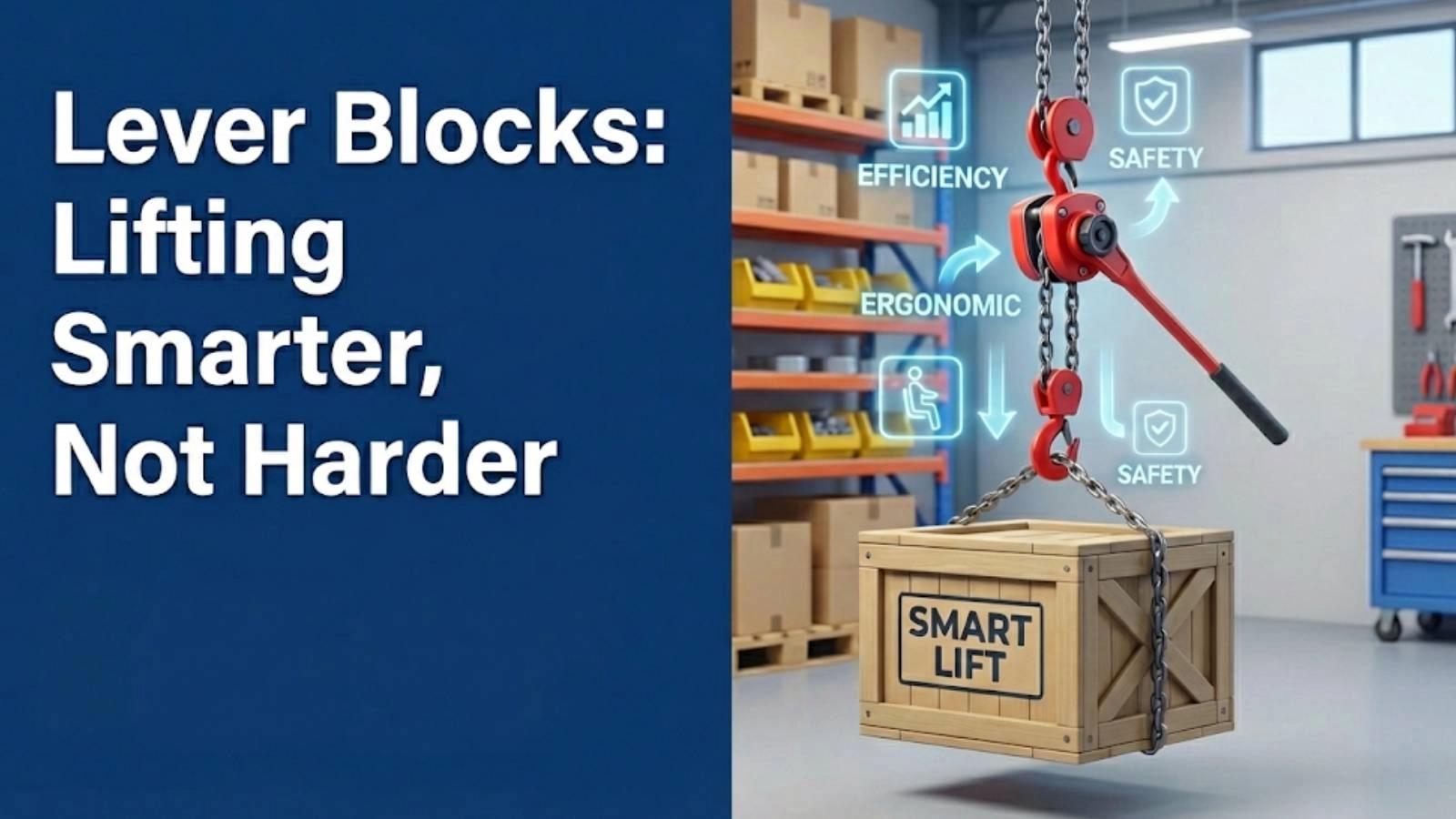
Unlock the power of lever blocks for heavy lifting! Learn about common mistakes to avoid, safety tips, and how to maximize efficiency. Lift smarter, not harder, with our expert guide from Safe and Secure Trading Company (SSTC).
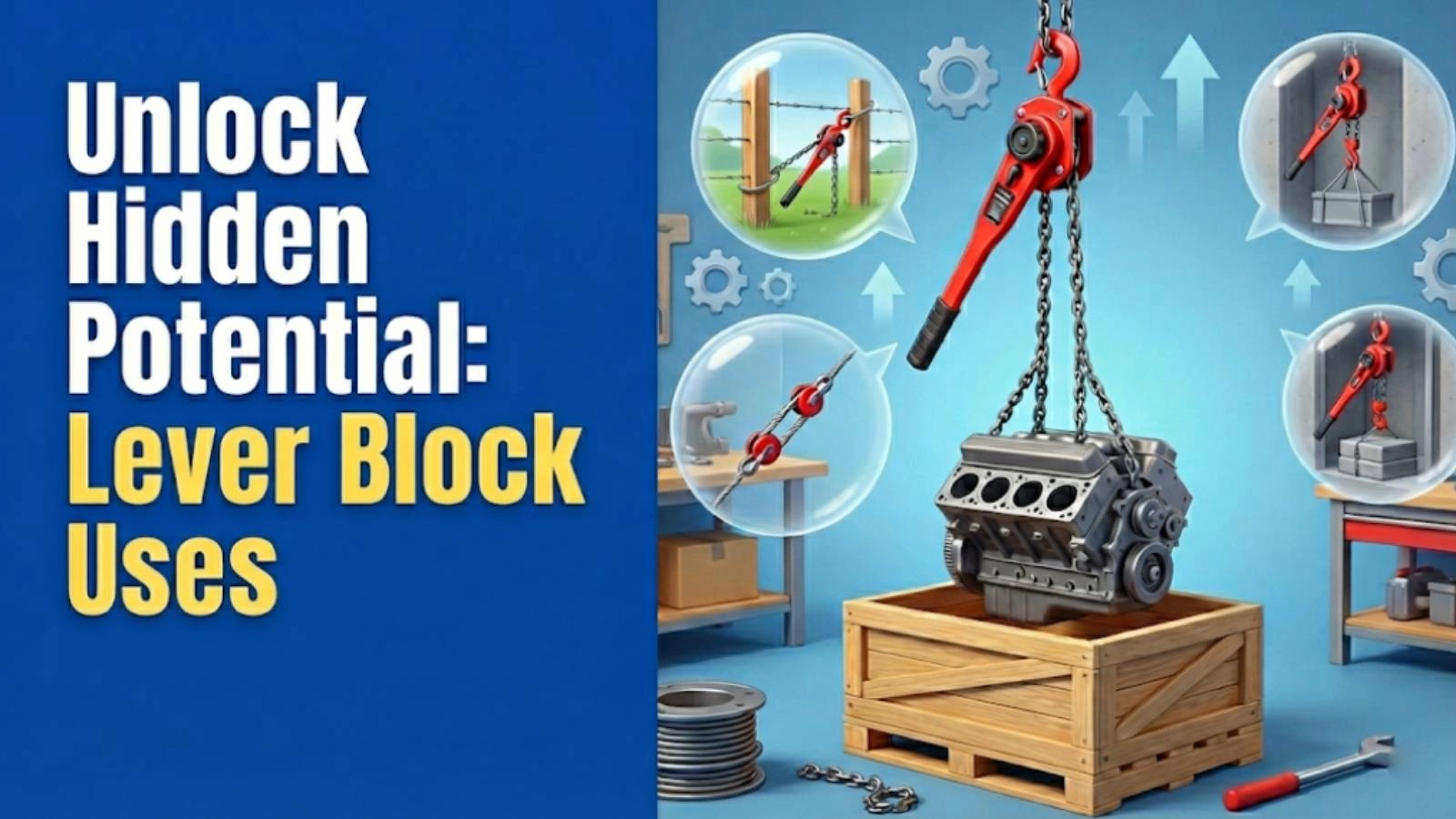
Discover innovative lever block uses beyond traditional lifting. Enhance efficiency and safety in your operations with these clever applications. Learn how to leverage this versatile tool for optimal performance.
Confused about lever blocks and come alongs? This guide breaks down the differences, benefits, and ideal uses of each tool. Learn which is right for your lifting or pulling needs.
Unlock the full potential of lever blocks with our guide. Learn crucial lever block techniques, avoid common errors, and ensure safe and efficient lifting operations. Perfect your skills today!
This mode enables people with epilepsy to use the website safely by eliminating the risk of seizures that result from flashing or blinking animations and risky color combinations.
Visually Impaired Mode
Improves website's visuals
This mode adjusts the website for the convenience of users with visual impairments such as Degrading Eyesight, Tunnel Vision, Cataract, Glaucoma, and others.
Cognitive Disability Mode
Helps to focus on specific content
This mode provides different assistive options to help users with cognitive impairments such as Dyslexia, Autism, CVA, and others, to focus on the essential elements of the website more easily.
ADHD Friendly Mode
Reduces distractions and improve focus
This mode helps users with ADHD and Neurodevelopmental disorders to read, browse, and focus on the main website elements more easily while significantly reducing distractions.
Blindness Mode
Allows using the site with your screen-reader
This mode configures the website to be compatible with screen-readers such as JAWS, NVDA, VoiceOver, and TalkBack. A screen-reader is software for blind users that is installed on a computer and smartphone, and websites must be compatible with it.
Online Dictionary
Readable Experience
Content Scaling
Default
Text Magnifier
Readable Font
Dyslexia Friendly
Highlight Titles
Highlight Links
Font Sizing
Default
Line Height
Default
Letter Spacing
Default
Left Aligned
Center Aligned
Right Aligned
Visually Pleasing Experience
Dark Contrast
Light Contrast
Monochrome
High Contrast
High Saturation
Low Saturation
Adjust Text Colors
Adjust Title Colors
Adjust Background Colors
Easy Orientation
Mute Sounds
Hide Images
Hide Emoji
Reading Guide
Stop Animations
Reading Mask
Highlight Hover
Highlight Focus
Big Dark Cursor
Big Light Cursor
Cognitive Reading
Virtual Keyboard
Navigation Keys
Voice Navigation
Accessibility Statement
safeandsecureksa.com
5 April 2026
Compliance status
We firmly believe that the internet should be available and accessible to anyone, and are committed to providing a website that is accessible to the widest possible audience,
regardless of circumstance and ability.
To fulfill this, we aim to adhere as strictly as possible to the World Wide Web Consortium’s (W3C) Web Content Accessibility Guidelines 2.1 (WCAG 2.1) at the AA level.
These guidelines explain how to make web content accessible to people with a wide array of disabilities. Complying with those guidelines helps us ensure that the website is accessible
to all people: blind people, people with motor impairments, visual impairment, cognitive disabilities, and more.
This website utilizes various technologies that are meant to make it as accessible as possible at all times. We utilize an accessibility interface that allows persons with specific
disabilities to adjust the website’s UI (user interface) and design it to their personal needs.
Additionally, the website utilizes an AI-based application that runs in the background and optimizes its accessibility level constantly. This application remediates the website’s HTML,
adapts Its functionality and behavior for screen-readers used by the blind users, and for keyboard functions used by individuals with motor impairments.
If you’ve found a malfunction or have ideas for improvement, we’ll be happy to hear from you. You can reach out to the website’s operators by using the following email
Screen-reader and keyboard navigation
Our website implements the ARIA attributes (Accessible Rich Internet Applications) technique, alongside various different behavioral changes, to ensure blind users visiting with
screen-readers are able to read, comprehend, and enjoy the website’s functions. As soon as a user with a screen-reader enters your site, they immediately receive
a prompt to enter the Screen-Reader Profile so they can browse and operate your site effectively. Here’s how our website covers some of the most important screen-reader requirements,
alongside console screenshots of code examples:
Screen-reader optimization: we run a background process that learns the website’s components from top to bottom, to ensure ongoing compliance even when updating the website.
In this process, we provide screen-readers with meaningful data using the ARIA set of attributes. For example, we provide accurate form labels;
descriptions for actionable icons (social media icons, search icons, cart icons, etc.); validation guidance for form inputs; element roles such as buttons, menus, modal dialogues (popups),
and others. Additionally, the background process scans all the website’s images and provides an accurate and meaningful image-object-recognition-based description as an ALT (alternate text) tag
for images that are not described. It will also extract texts that are embedded within the image, using an OCR (optical character recognition) technology.
To turn on screen-reader adjustments at any time, users need only to press the Alt+1 keyboard combination. Screen-reader users also get automatic announcements to turn the Screen-reader mode on
as soon as they enter the website.
These adjustments are compatible with all popular screen readers, including JAWS and NVDA.
Keyboard navigation optimization: The background process also adjusts the website’s HTML, and adds various behaviors using JavaScript code to make the website operable by the keyboard. This includes the ability to navigate the website using the Tab and Shift+Tab keys, operate dropdowns with the arrow keys, close them with Esc, trigger buttons and links using the Enter key, navigate between radio and checkbox elements using the arrow keys, and fill them in with the Spacebar or Enter key.Additionally, keyboard users will find quick-navigation and content-skip menus, available at any time by clicking Alt+1, or as the first elements of the site while navigating with the keyboard. The background process also handles triggered popups by moving the keyboard focus towards them as soon as they appear, and not allow the focus drift outside it.
Users can also use shortcuts such as “M” (menus), “H” (headings), “F” (forms), “B” (buttons), and “G” (graphics) to jump to specific elements.
Disability profiles supported in our website
Epilepsy Safe Mode: this profile enables people with epilepsy to use the website safely by eliminating the risk of seizures that result from flashing or blinking animations and risky color combinations.
Visually Impaired Mode: this mode adjusts the website for the convenience of users with visual impairments such as Degrading Eyesight, Tunnel Vision, Cataract, Glaucoma, and others.
Cognitive Disability Mode: this mode provides different assistive options to help users with cognitive impairments such as Dyslexia, Autism, CVA, and others, to focus on the essential elements of the website more easily.
ADHD Friendly Mode: this mode helps users with ADHD and Neurodevelopmental disorders to read, browse, and focus on the main website elements more easily while significantly reducing distractions.
Blindness Mode: this mode configures the website to be compatible with screen-readers such as JAWS, NVDA, VoiceOver, and TalkBack. A screen-reader is software for blind users that is installed on a computer and smartphone, and websites must be compatible with it.
Keyboard Navigation Profile (Motor-Impaired): this profile enables motor-impaired persons to operate the website using the keyboard Tab, Shift+Tab, and the Enter keys. Users can also use shortcuts such as “M” (menus), “H” (headings), “F” (forms), “B” (buttons), and “G” (graphics) to jump to specific elements.
Additional UI, design, and readability adjustments
Font adjustments – users, can increase and decrease its size, change its family (type), adjust the spacing, alignment, line height, and more.
Color adjustments – users can select various color contrast profiles such as light, dark, inverted, and monochrome. Additionally, users can swap color schemes of titles, texts, and backgrounds, with over seven different coloring options.
Animations – person with epilepsy can stop all running animations with the click of a button. Animations controlled by the interface include videos, GIFs, and CSS flashing transitions.
Content highlighting – users can choose to emphasize important elements such as links and titles. They can also choose to highlight focused or hovered elements only.
Audio muting – users with hearing devices may experience headaches or other issues due to automatic audio playing. This option lets users mute the entire website instantly.
Cognitive disorders – we utilize a search engine that is linked to Wikipedia and Wiktionary, allowing people with cognitive disorders to decipher meanings of phrases, initials, slang, and others.
Additional functions – we provide users the option to change cursor color and size, use a printing mode, enable a virtual keyboard, and many other functions.
Browser and assistive technology compatibility
We aim to support the widest array of browsers and assistive technologies as possible, so our users can choose the best fitting tools for them, with as few limitations as possible. Therefore, we have worked very hard to be able to support all major systems that comprise over 95% of the user market share including Google Chrome, Mozilla Firefox, Apple Safari, Opera and Microsoft Edge, JAWS and NVDA (screen readers).
Notes, comments, and feedback
Despite our very best efforts to allow anybody to adjust the website to their needs. There may still be pages or sections that are not fully accessible, are in the process of becoming accessible, or are lacking an adequate technological solution to make them accessible. Still, we are continually improving our accessibility, adding, updating and improving its options and features, and developing and adopting new technologies. All this is meant to reach the optimal level of accessibility, following technological advancements. For any assistance, please reach out to