Lever blocks, often underestimated, are indispensable tools across various industries. Their compact size belies their robust capabilities, offering solutions to numerous lifting and pulling challenges. Safe and Secure Trading Company (SSTC) has been providing reliable lifting solutions for years, and we’ve seen firsthand how lever blocks can transform efficiency and safety on the job site.
1. Introduction: The Underestimated Power of Lever Blocks
Lever blocks are more than just simple tools; they represent a fusion of mechanical advantage and portability. Their versatility extends from construction sites to automotive garages, making them a staple in any toolkit requiring controlled force application. At SSTC, we emphasize the importance of understanding the full potential of these devices to maximize their benefits.
1.1 Defining the Lever Block
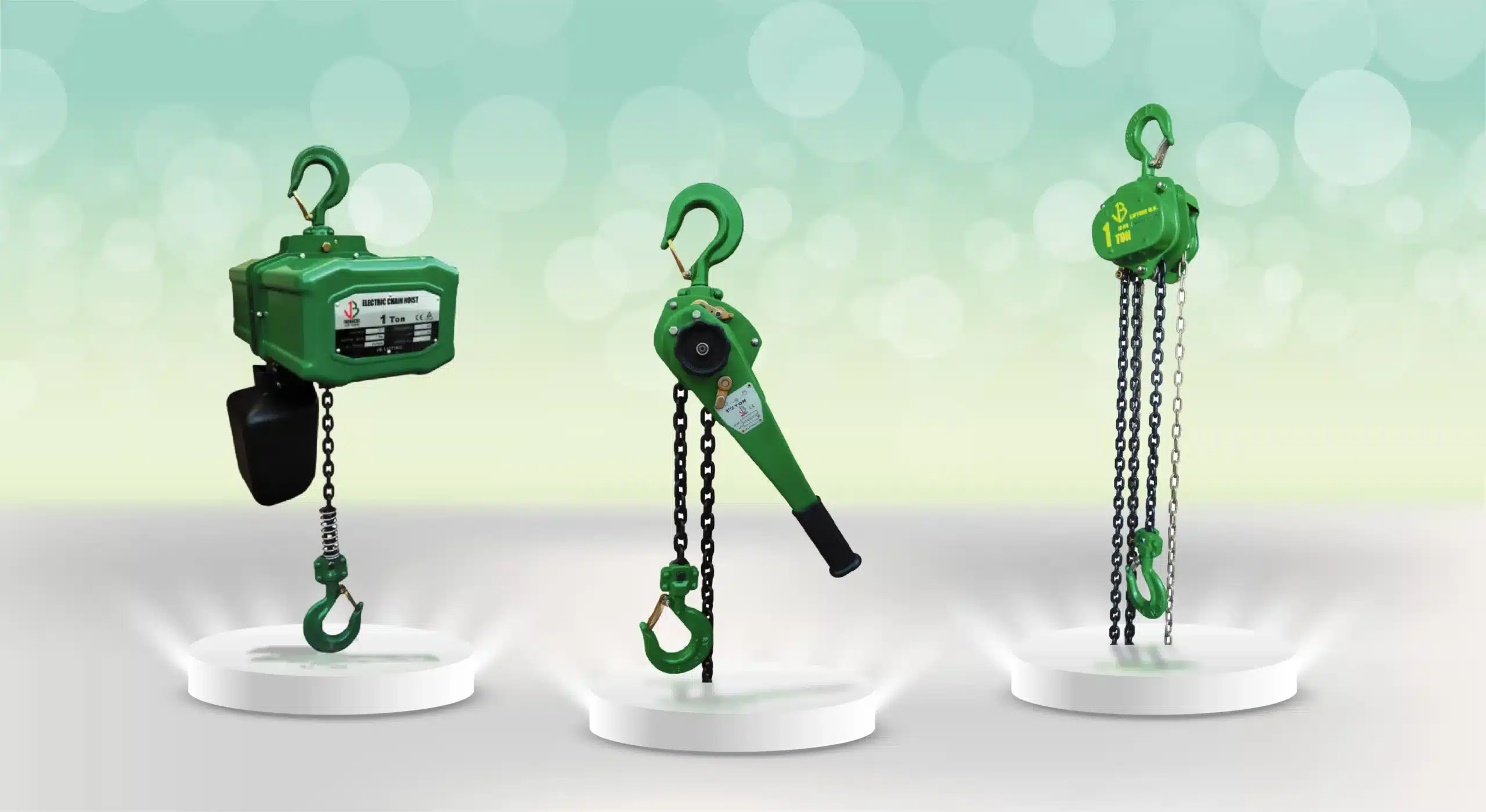
A lever block, also known as a come along or chain hoist, is a manual lifting device that uses a lever and ratchet system to provide mechanical advantage. This system allows operators to lift, pull, or position heavy loads with minimal effort. Lever blocks are typically constructed with a chain, hooks, and a lever mechanism, providing a robust and reliable means of manipulating heavy objects.
1.2 The Core Problem: Inefficient Lifting and Pulling
Without lever blocks, tasks involving lifting and pulling heavy objects become significantly more challenging and inefficient. Manual lifting can lead to worker fatigue and injuries, while using larger, mechanized equipment may not always be feasible in confined spaces. This inefficiency translates to increased labor costs and potential project delays.
1.3 Solution Overview: How Lever Blocks Provide Mechanical Advantage
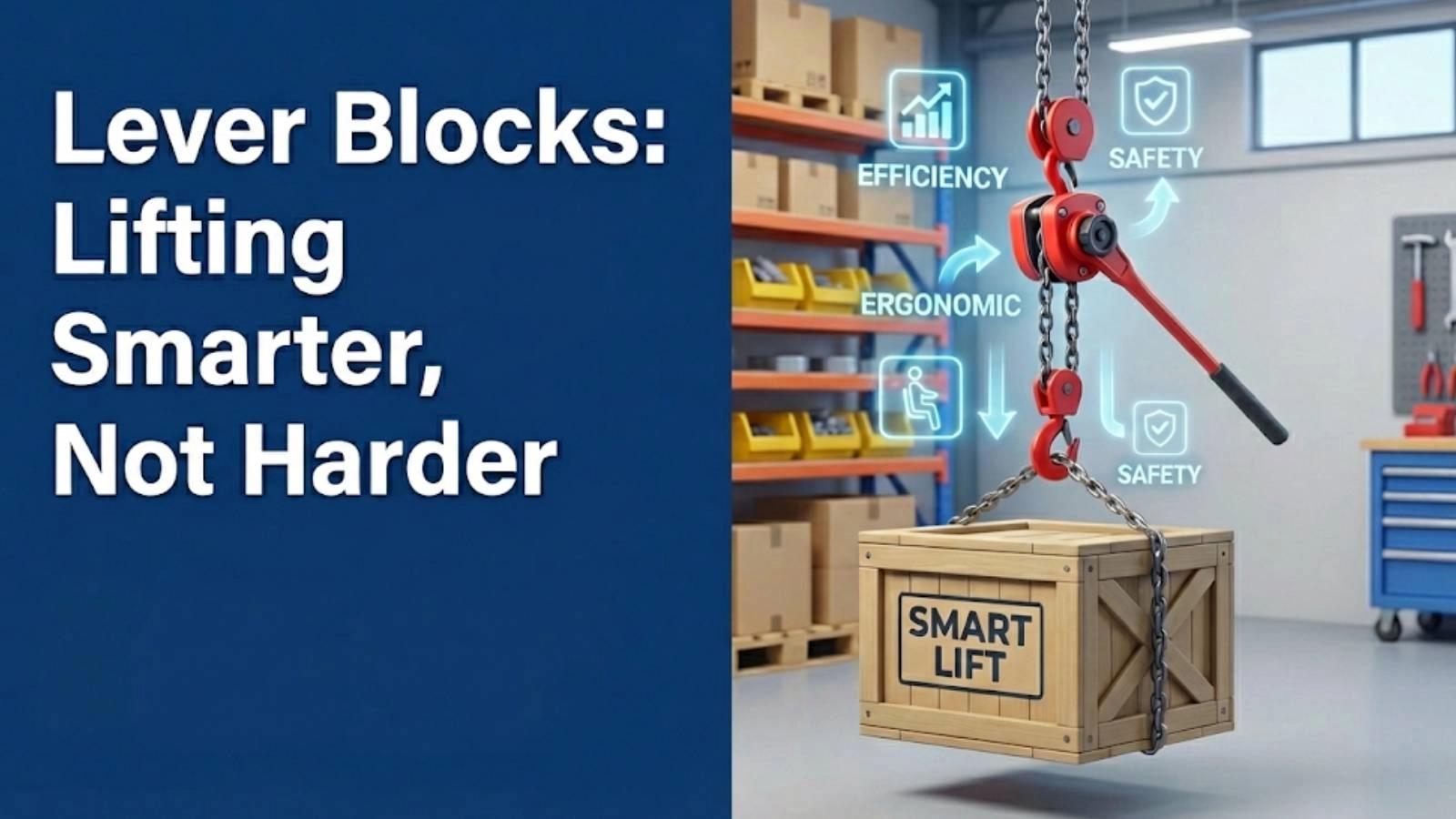
Lever blocks solve these problems by offering a compact and portable solution that multiplies the user’s force. This mechanical advantage allows for precise control and reduces the physical strain required to move heavy objects. For many of our clients here in Dammam, we’ve seen that the introduction of lever blocks has led to substantial improvements in both safety and productivity.
2. Problem: Manual Labor Strain and Fatigue
Manual lifting and pulling can lead to significant physical strain and fatigue for workers. Overexertion is a leading cause of workplace injuries, resulting in lost productivity and increased healthcare costs. This is a prevalent issue in industries such as construction, manufacturing, and forestry.
2.1 The Pain Point: Physical Exertion in Lifting
The physical exertion required to lift heavy objects manually places immense stress on the body, particularly the back, shoulders, and arms. Workers often compensate with improper lifting techniques, exacerbating the risk of injury. Long hours of repetitive lifting can lead to chronic pain and long-term health issues.
2.2 The Solution: Lever Blocks as Force Multipliers
Lever blocks address this issue by acting as force multipliers, significantly reducing the amount of physical effort needed to lift or pull heavy loads. The mechanical advantage provided by the lever and ratchet system allows workers to move objects with far less strain, minimizing the risk of overexertion and injury. We at SSTC advocate for the adoption of lever blocks to create safer working environments.
2.3 Real-World Example: Reducing Back Injuries
Consider a construction site where workers need to lift heavy concrete blocks. Without a lever block, this task would require multiple workers exerting considerable physical effort, increasing the risk of back injuries. By using a lever block, a single worker can lift and position the blocks with minimal strain, reducing the likelihood of injury and improving overall safety.
3. Problem: Inaccessible or Confined Spaces
Many industrial tasks require lifting or pulling in areas where larger machinery cannot operate. Confined spaces, such as underground tunnels, narrow corridors, or crowded construction sites, present significant challenges for traditional lifting equipment. This limits the options for material handling and can lead to delays and increased costs.
3.1 The Challenge: Difficulty Maneuvering in Tight Areas
The primary challenge in confined spaces is the limited room to maneuver. Large cranes, forklifts, and other heavy equipment are often impractical or impossible to use in these environments. This necessitates the use of smaller, more adaptable tools that can be easily positioned and operated.
3.2 The Solution: Compact and Portable Lever Blocks
Lever blocks excel in these situations due to their compact size and portability. They can be easily carried and set up in tight spaces, providing a reliable lifting or pulling solution where larger equipment cannot reach. Their lightweight design allows for easy transport and positioning, making them ideal for use in restrictive environments.
3.3 Application: Underground Utility Work
Underground utility work, such as repairing pipelines or installing cables, often takes place in confined tunnels and trenches. Lever blocks are invaluable in these scenarios, allowing workers to lift and position heavy pipes, cables, and equipment with precision. The come along enables workers to maneuver materials safely and efficiently in these challenging environments.
4. Problem: Lack of Precision and Control
Achieving precise load placement is crucial in many industrial applications. Inaccurate positioning can lead to damaged equipment, compromised safety, and project delays. Traditional lifting methods often lack the fine-tuned control required for delicate operations.
4.1 The Issue: Inability to Fine-Tune Load Placement
Traditional lifting equipment, such as cranes or forklifts, may not provide the incremental movement needed for precise positioning. This can result in difficulty aligning components, adjusting loads, and ensuring accurate placement. The lack of fine control increases the risk of errors and potential accidents.
4.2 The Solution: Incremental Movement with Lever Blocks
Lever blocks offer a distinct advantage in precision due to their incremental movement capabilities. The ratchet mechanism allows for small, controlled adjustments, enabling operators to fine-tune load placement with accuracy. This precise control is essential for tasks that require careful alignment and positioning.
4.3 Example: Aligning Machinery Components
In manufacturing or machinery repair, aligning heavy components is often a critical step. Using a lever block, technicians can slowly and precisely adjust the position of a component until it is perfectly aligned. This level of control ensures that the machinery operates smoothly and efficiently, reducing the risk of damage or malfunction.
> “Precision is paramount in any lifting operation. Lever blocks provide the incremental control necessary to achieve accurate placement and alignment, minimizing the risk of errors and ensuring safety.” – John Smith, Lead Safety Inspector
5. Leveraging Lever Blocks in Construction: Lifting and Positioning Materials
Construction sites present numerous lifting and positioning challenges. From hoisting materials to elevated positions to aligning structural components, precision and safety are paramount. Lever blocks, combined with appropriate rigging techniques, offer a versatile solution for these tasks.
5.1 Problem: Safely Lifting Materials to Elevated Positions
Hoisting heavy construction materials, such as steel beams, concrete panels, and roofing materials, to elevated positions requires careful planning and execution. Traditional methods may involve cranes or forklifts, but these are not always feasible in tight or complex construction sites. Ensuring the safety of workers and the integrity of materials during lifting is a critical concern.
5.2 Solution: Utilizing Lever Blocks with Rigging Techniques
Lever blocks, when used in conjunction with rigging gear such as slings, shackles, and wire ropes, provide a safe and efficient means of lifting materials to elevated positions. By attaching the lever block to a secure anchor point and using appropriate rigging techniques, workers can hoist materials with controlled force and precision. This approach minimizes the risk of accidents and ensures the safe delivery of materials.
5.3 Case Study: Bridge Construction
In bridge construction, lever blocks play a vital role in lifting and positioning heavy structural components. For example, during the installation of bridge deck segments, lever blocks are used to align and secure the segments before they are permanently fastened. This precise positioning ensures the structural integrity of the bridge and the safety of construction workers. Our load securement solutions have been essential in similar projects across the region.
6. Utilizing Lever Blocks in Automotive Repair: Engine and Component Removal
Automotive repair often involves removing and replacing heavy components, such as engines, transmissions, and axles. These tasks require precise positioning and support to prevent damage to the components or injury to the mechanic. Lever blocks offer a valuable solution for these challenging operations.
6.1 Problem: Safely Removing and Replacing Heavy Vehicle Components
Removing and replacing heavy vehicle components can be difficult and dangerous without the proper equipment. The weight and awkward shape of these components make them challenging to maneuver, and improper handling can lead to damage or injury. Mechanics need a reliable and precise method of supporting and positioning these components.
6.2 Solution: Precise Positioning and Support with Lever Blocks
Lever blocks provide the precise positioning and support needed to safely remove and replace heavy automotive components. By attaching the lever block to a secure anchor point and using appropriate slings or chains, mechanics can lift and position components with controlled force. This allows for accurate alignment and minimizes the risk of dropping or damaging the parts.
6.3 Benefit: Reducing the Risk of Damage
By using lever blocks for automotive repair, mechanics can significantly reduce the risk of damage to expensive components. The precise control offered by the lever block allows for gentle and accurate positioning, preventing impacts or misalignments that could lead to damage. This not only saves time and money but also ensures the quality of the repair.
7. Utilizing Lever Blocks in Forestry: Tree Felling and Log Skidding
Forestry operations often involve challenging tasks such as tree felling and log skidding. These activities require careful planning and execution to ensure the safety of workers and minimize environmental impact. Lever blocks provide a versatile solution for controlled tree felling and the extraction of heavy logs.
7.1 Problem: Controlled Tree Felling in Dense Areas
Felling trees in dense wooded areas requires careful control to prevent damage to surrounding trees or structures. Traditional methods may involve simply cutting down the tree, but this can lead to unpredictable falling patterns and potential hazards. A controlled and precise method of directional felling is essential.
7.2 Solution: Using Lever Blocks for Precise Directional Felling
Lever blocks can be used to guide the direction of a falling tree by applying tension to a rope or cable attached to the tree. By carefully pulling on the lever block, workers can influence the direction of the fall, ensuring that the tree falls in a safe and controlled manner. This technique is particularly useful in areas where space is limited or where surrounding trees need to be protected.
7.3 Application: Log Skidding and Extraction
After trees have been felled, lever blocks can be used to skid or extract heavy logs from the forest. By attaching the lever block to the log and a secure anchor point, workers can pull the log along the ground with minimal effort. This technique is particularly useful in areas where heavy machinery cannot access or where environmental impact needs to be minimized.
8. Enhancing Safety with Proper Lever Block Inspection and Maintenance
Regular inspection and maintenance are crucial for ensuring the safe and reliable operation of lever blocks. Neglecting these procedures can lead to equipment failure, accidents, and injuries. Implementing a consistent inspection protocol and following proper maintenance practices is essential for extending the lifespan of lever blocks and preventing accidents.
8.1 Problem: Neglecting Lever Block Maintenance
One of the most common problems is neglecting lever block maintenance. Without regular inspection and lubrication, lever blocks can become corroded, worn, or damaged. This can compromise their strength and reliability, increasing the risk of failure during operation.
8.2 Solution: Implementing a Regular Inspection Protocol
A regular inspection protocol should include checking the chain for wear or damage, inspecting the hooks for cracks or deformation, and ensuring that the lever and ratchet mechanism operates smoothly. Any signs of damage or wear should be addressed immediately to prevent potential accidents. We at SSTC provide comprehensive maintenance guidelines to our clients.
8.3 Benefit: Preventing Accidents and Extending Lifespan
Regular inspection and maintenance can significantly reduce the risk of accidents and extend the lifespan of lever blocks. By identifying and addressing potential problems early on, you can prevent equipment failure and ensure the safe operation of your lever blocks. This not only protects workers from injury but also saves money in the long run by reducing the need for costly repairs or replacements.
9. Problem: Load Securement Challenges
Securing loads on trucks or trailers is essential for preventing shifting, damage, or loss during transport. Improperly secured loads can pose a significant safety risk to drivers and other motorists. Ensuring that loads are tightly secured and cannot move during transit is crucial for preventing accidents and protecting valuable cargo.
9.1 The Issue: Difficulty Securing Loads on Trucks or Trailers
Securing heavy or irregularly shaped loads on trucks or trailers can be challenging. Traditional methods, such as ropes or straps, may not provide sufficient tension or hold to prevent shifting during transit. This can lead to damaged cargo, accidents, and potential liability issues.
9.2 Solution: Lever Blocks for Tensioning and Tightening
Lever blocks offer a secure and adjustable hold for securing loads on trucks or trailers. By attaching the lever block to the load and a secure anchor point on the truck or trailer, workers can apply tension to the load, ensuring that it is tightly secured and cannot move during transit. This provides a reliable and adjustable method of load securement.
9.3 Application: Securing Heavy Equipment for Transport
When transporting heavy equipment, such as construction machinery or industrial components, lever blocks are often used to secure the equipment to the trailer. By attaching the lever block to multiple points on the equipment and the trailer, workers can ensure that the equipment is tightly secured and cannot shift during transit. Our expertise in rigging gear ensures the correct application in these scenarios.
10. Problem: Corrosion and Environmental Wear
Lever blocks used in harsh environments are susceptible to corrosion and environmental wear. Exposure to rust, salt, extreme weather, and chemicals can damage the components of the lever block, reducing its strength and reliability. Protecting lever blocks from these environmental factors is essential for extending their lifespan and ensuring safe operation.
10.1 The Challenge: Exposure to Harsh Environments
Exposure to harsh environments, such as coastal areas or industrial sites, can accelerate the corrosion and wear of lever blocks. Saltwater, chemicals, and extreme temperatures can damage the metal components, leading to rust, cracks, and weakening. This compromises the structural integrity of the lever block and increases the risk of failure.
10.2 The Solution: Selecting Corrosion-Resistant Lever Blocks
Selecting lever blocks made from corrosion-resistant materials, such as stainless steel or those with specialized coatings, can significantly extend their lifespan in harsh environments. These materials are designed to withstand exposure to salt, chemicals, and extreme temperatures, reducing the risk of corrosion and wear. We recommend that our clients consider these factors when selecting lever blocks for specific applications.
10.3 Preventive Measures: Cleaning and Lubrication
Regular cleaning and lubrication can also help protect lever blocks from corrosion and environmental wear. Cleaning removes dirt, salt, and other contaminants that can accelerate corrosion, while lubrication helps to prevent rust and ensure smooth operation. Implementing a consistent cleaning and lubrication schedule is essential for maintaining the condition of lever blocks.
11. Advanced Techniques: Combining Lever Blocks for Increased Capacity
In some situations, a single lever block may not have sufficient capacity to lift or pull a heavy load. In these cases, multiple lever blocks can be used in tandem to increase the overall lifting capacity. However, this requires careful planning and execution to ensure even load distribution and maintain safety.
11.1 Problem: Exceeding the Capacity of a Single Lever Block
When the weight of the load exceeds the rated capacity of a single lever block, it is essential to use alternative methods to prevent equipment failure or accidents. Attempting to lift or pull a load that exceeds the capacity of the lever block can lead to catastrophic failure and serious injuries.
11.2 Solution: Using Multiple Lever Blocks in Tandem
Using multiple lever blocks in tandem allows for the safe distribution of the load across multiple devices, increasing the overall lifting capacity. By connecting the lever blocks to a common lifting point and ensuring that the load is evenly distributed, workers can safely lift or pull loads that would otherwise exceed the capacity of a single block.
11.3 Important Considerations: Load Balancing and Safety Factors
When using multiple lever blocks in tandem, it is crucial to ensure even load distribution and maintain adequate safety factors. Uneven load distribution can overload one or more of the lever blocks, increasing the risk of failure. It is also essential to consider the safety factors for each lever block and ensure that the combined capacity is sufficient to handle the load with an adequate margin of safety.
| Lever Block Application |
Benefits |
Industry |
| Construction Material Hoisting |
Safe lifting to elevated positions, reduced manual labor |
Construction |
| Automotive Component Removal |
Precise positioning, reduced risk of damage |
Automotive Repair |
| Forestry Tree Felling |
Controlled directional felling, enhanced safety |
Forestry |
| Load Securement |
Secure and adjustable hold, prevents shifting |
Transportation |
| Underground Utility Work |
Compact and portable solution for confined spaces |
Utilities |
12. Conclusion: Maximizing Lever Block Uses for Efficiency and Safety
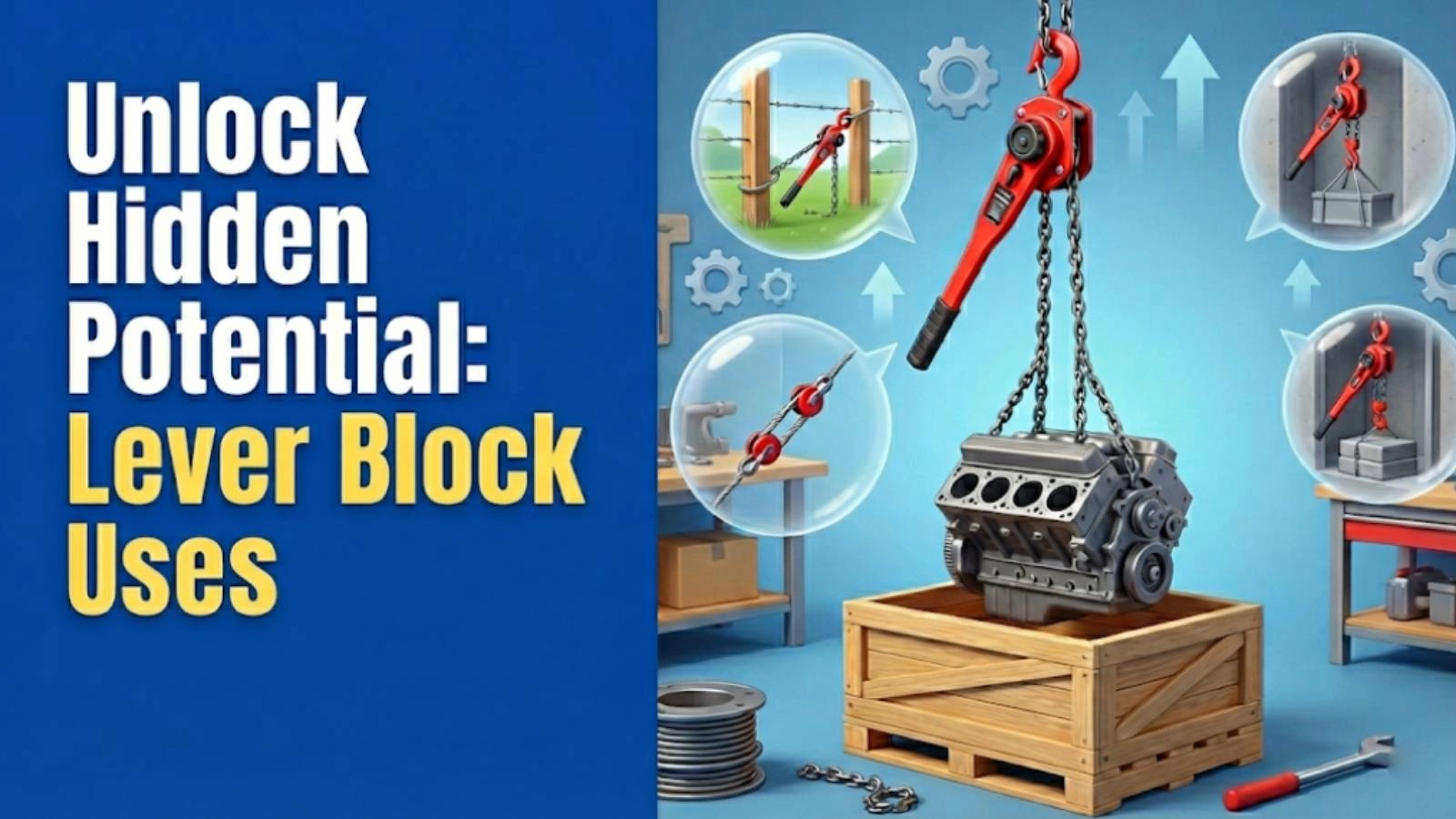
Lever blocks are versatile tools that offer numerous benefits across a wide range of industries. From construction to automotive repair to forestry, lever blocks provide a safe, efficient, and precise solution for lifting, pulling, and positioning heavy loads. Understanding the various lever block uses can significantly enhance productivity and safety on the job site.
12.1 Summarizing Key Applications and Benefits
Lever block uses extend across multiple industries, addressing problems from manual labor strain to precision alignment. The key benefits include enhanced safety, increased efficiency, and reduced physical exertion. Their compact design and portability make them ideal for confined spaces, while their precise control ensures accurate load placement.
12.2 Emphasizing the Importance of Proper Training and Safety
Proper training and safety procedures are essential for maximizing the benefits of lever blocks and preventing accidents. Workers should be trained on the correct operation of lever blocks, including inspection, maintenance, and load securement techniques. Following established safety guidelines and using appropriate rigging gear are crucial for ensuring safe and reliable operation.
12.3 Future Trends: Innovations in Lever Block Technology
The future of lever block technology may include advancements in materials, designs, and features. We can expect to see lighter, stronger, and more corrosion-resistant lever blocks, as well as innovations in lever mechanisms and safety features. These advancements will further enhance the efficiency, safety, and versatility of lever blocks, making them an even more valuable tool in various industries. At Safe and Secure Trading Company, we remain committed to providing our clients with the latest and most reliable lifting solutions. We are confident that by following the guidelines outlined in this article, you can maximize the lever block potential for efficiency and safety in your operations.
FAQ Section
Q: What is a lever block used for?
A: Lever blocks are used for lifting, pulling, and positioning heavy loads with precision. They provide mechanical advantage, reducing the amount of force required to move heavy objects. Common lever block uses include construction, automotive repair, forestry, and load securement.
Q: How does a lever block work?
A: A lever block works by using a lever and ratchet system to multiply the user’s force. The operator pulls on a lever, which engages a ratchet mechanism that moves a chain. This allows for controlled and incremental movement of the load.
Q: What are the safety precautions when using a lever block?
A: Safety precautions include inspecting the lever block before each use, ensuring that the load does not exceed the rated capacity, using appropriate rigging gear, and following established safety guidelines. Workers should be trained on the correct operation of lever blocks and the importance of load securement.
Q: How do I maintain a lever block?
A: Regular maintenance includes cleaning and lubricating the lever block to prevent corrosion and ensure smooth operation. The chain and hooks should be inspected for wear or damage, and any issues should be addressed immediately. Following the manufacturer’s maintenance guidelines is essential for extending the lifespan of the lever block.
Q: Can I use multiple lever blocks to lift a heavier load?
A: Yes, multiple lever blocks can be used in tandem to increase the overall lifting capacity. However, it is crucial to ensure even load distribution and maintain adequate safety factors. The lever blocks should be connected to a common lifting point, and the combined capacity should be sufficient to handle the load with an adequate margin of safety.
Q: What is the difference between a lever block and a chain block?
A: While both lever blocks and chain blocks are used for lifting, they operate differently. A lever block uses a lever and ratchet system, while a chain block uses a geared system operated by pulling on a hand chain. Lever blocks are typically used for shorter lifts and precise positioning, while chain blocks are used for longer lifts.
Q: Where can I purchase lever blocks?
A: Lever blocks can be purchased from reputable suppliers of lifting equipment and rigging gear, such as Safe and Secure Trading Company (SSTC). It is essential to choose a supplier that offers high-quality lever blocks and provides comprehensive maintenance guidelines and support.