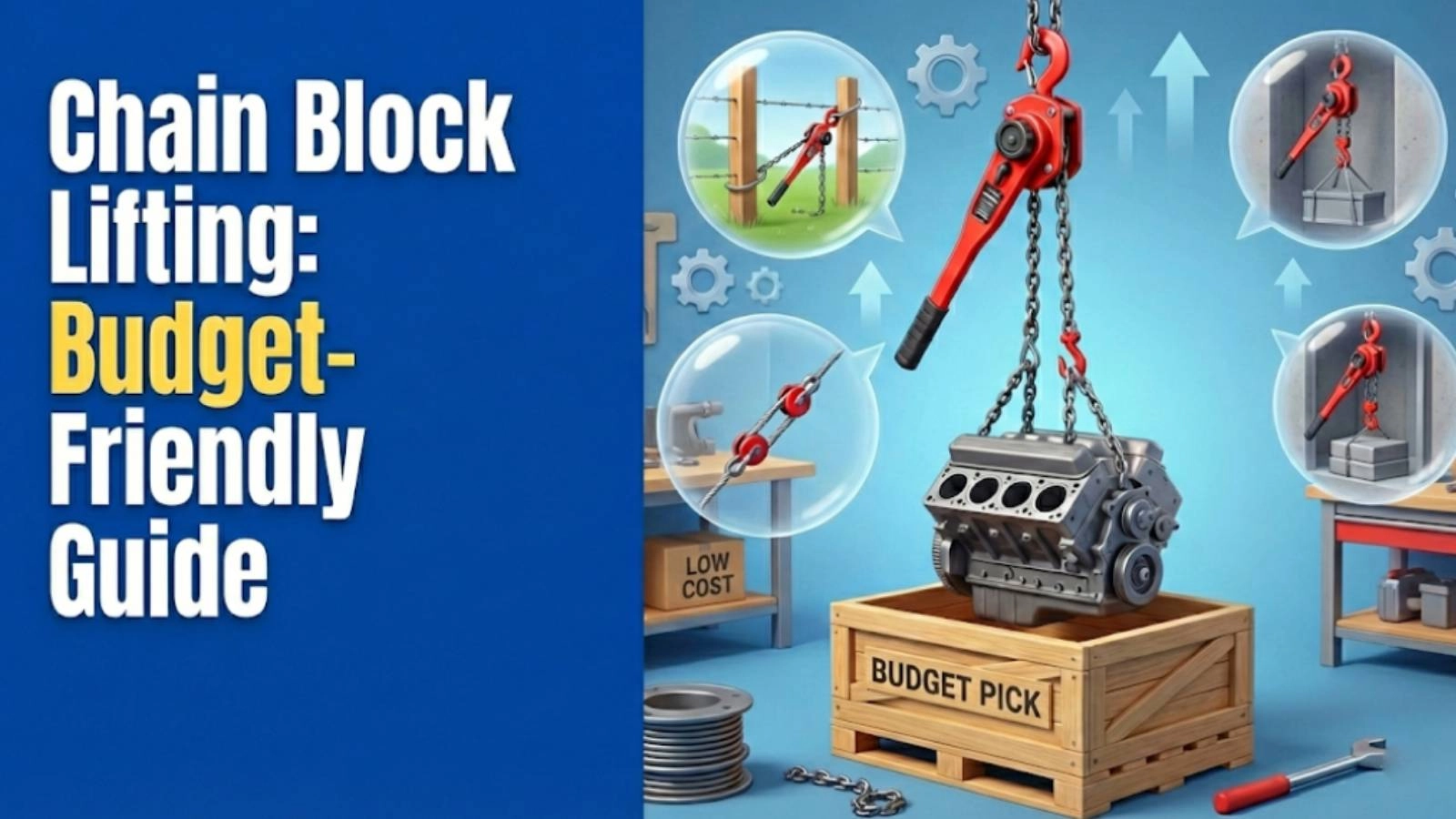
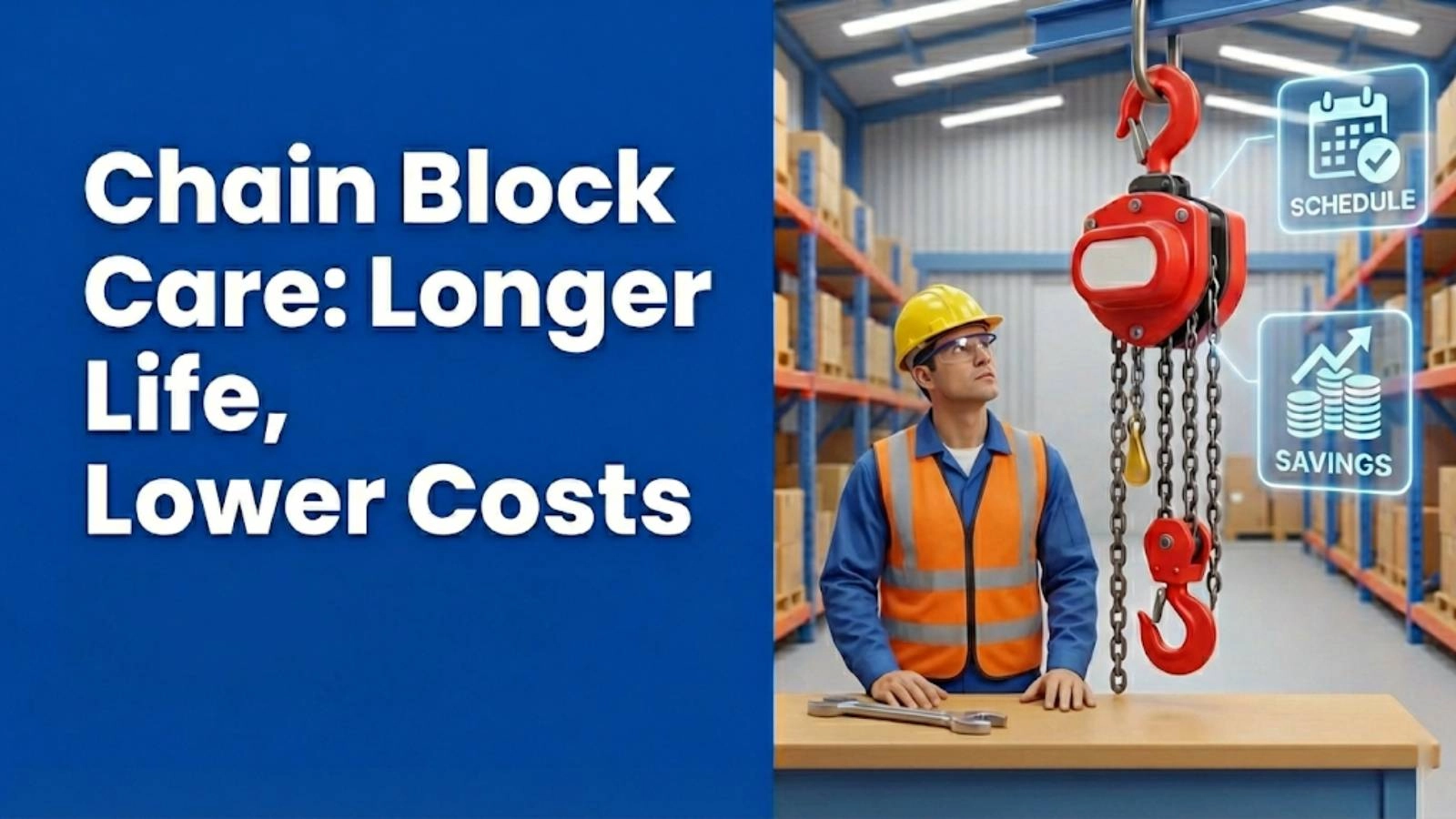
Discover the cost-effective advantages of manual chain blocks for your lifting needs. This guide explores their simplicity, reliability, and suitability for various applications, offering practical insights for beginners.
Manual chain blocks offer a budget-friendly yet reliable solution for various lifting applications. They are essential tools across industries, providing a cost-effective alternative to more complex lifting equipment. In this comprehensive guide, we at SkySol Media will delve into the world of manual chain blocks, exploring their features, benefits, and practical applications.
Introduction to Manual Chain Blocks
What is a Manual Chain Block?
A manual chain block, also known as a chain hoist, is a simple yet powerful tool used for lifting heavy objects using hand-operated chains. It provides a mechanical advantage that allows a single person to lift loads far exceeding their own strength. These devices are commonly found in workshops, construction sites, and various industrial settings.
The basic components of a manual chain block include:
Load Chain: The chain that supports the weight being lifted.
Hand Chain: The chain pulled by the operator to activate the lifting mechanism.
Hooks: Used to securely attach the chain block to a support structure and the load being lifted.
Gear System: A series of gears that provide the mechanical advantage, reducing the force required to lift the load.
Manual chain blocks work on the principle of mechanical advantage. By using a series of gears, the force applied to the hand chain is multiplied, allowing the operator to lift heavy loads with relatively little effort. This mechanical advantage is crucial for manual lifting in situations where powered lifting equipment is not available or practical.
Why Choose a Manual Chain Block?
There are several compelling reasons to choose a manual chain block for your lifting needs. These include affordability, portability, and simplicity, making them an excellent choice for a wide range of applications.
Affordability: Manual chain blocks are generally more affordable than electric hoists or other powered lifting equipment. This makes them an attractive option for businesses or individuals with budget constraints.
Portability: Their compact and lightweight design makes manual chain blocks easy to transport and use in various locations. They can be quickly set up and dismantled, making them ideal for temporary lifting tasks.
Simplicity: Operating a manual chain block requires minimal training. The intuitive design allows users to quickly learn and perform lifting tasks safely and efficiently.
The benefits of a manual chain block extend beyond mere cost savings. They offer flexibility and reliability, especially in environments where electricity is not readily available or where the lifting tasks are infrequent. A client once asked us whether a manual chain block could handle loads comparable to an electric hoist. We demonstrated how selecting the right chain block and understanding its mechanical advantage allowed them to achieve the same lifting capacity with greater flexibility.
Key Advantages for Budget-Conscious Lifting
Cost-Effectiveness Breakdown
The cost-effectiveness of manual chain blocks stems from several factors, making them a smart choice for budget-conscious lifting. Their lower initial investment, reduced maintenance costs, and elimination of energy expenses contribute to significant overall savings.
Compared to electric hoists, the initial investment for a manual chain block is considerably lower. Electric hoists require electrical connections, specialized installation, and potentially higher upfront costs. Manual chain blocks, on the other hand, are ready to use straight out of the box with minimal setup.
Due to their simple design, manual chain blocks require less maintenance than their electric counterparts. There are fewer moving parts, reducing the likelihood of breakdowns and the need for frequent repairs. Basic maintenance typically involves cleaning and lubrication, which can be performed by in-house staff.
One of the most significant cost savings comes from the elimination of energy expenses. Electric hoists consume electricity every time they are used, adding to your operational costs. Manual chain blocks rely solely on human power, making them an energy-efficient and environmentally friendly lifting solution.
In our experience, businesses that switch from electric hoists to manual chain blocks for certain applications often see a noticeable reduction in their operating expenses. The cumulative savings over time can be substantial, making manual chain blocks a financially sound investment. For instance, our team in Dubai has helped several clients optimize their lifting processes by strategically incorporating manual chain blocks for tasks where electric power is not essential.
Portability and Versatility On-Site
The portability and versatility of manual chain blocks make them indispensable tools for a wide range of on-site applications. Their ability to operate without electricity, ease of setup, and suitability for various industries contribute to their adaptability.
Manual chain blocks are ideal for remote locations where power access is limited or non-existent. They can be easily transported to construction sites, agricultural fields, or other remote areas where lifting tasks are required. This makes them a valuable asset for projects in challenging environments.
Setting up and dismantling a manual chain block is a straightforward process. They can be quickly installed on a support structure, such as a beam or tripod, and just as easily removed when the lifting task is complete. This makes them perfect for temporary lifting applications.
Manual chain blocks are used across a diverse range of industries, including construction, workshops, manufacturing, and warehousing. In construction, they are used to lift materials and equipment. In workshops, they assist with repairs and maintenance. In manufacturing, they facilitate the movement of heavy items during production. And in warehousing, they aid in loading and unloading goods.
The versatility of manual chain blocks also extends to different types of loads. They can be used to lift a variety of objects, from heavy machinery to delicate components, provided the appropriate lifting capacity is selected. This adaptability makes them a valuable addition to any toolkit.
Simplicity of Operation and Maintenance
The simplicity of operation and maintenance of manual chain blocks translates to ease of use, reduced training requirements, and long-term reliability. Their intuitive design, basic maintenance needs, and durable construction contribute to their user-friendliness.
Operating a manual chain block is easy to learn, requiring minimal training for personnel. The process involves simply attaching the chain block to a secure support, connecting the load, and pulling the hand chain to lift the object. The simplicity of the operation minimizes the learning curve and reduces the risk of errors.
Maintenance primarily involves cleaning and lubrication. Regular cleaning helps remove dirt and debris that can impede the smooth operation of the chain block. Lubricating the chain and gears reduces friction, extending the lifespan of the equipment. These basic maintenance tasks can be performed by in-house staff with minimal specialized training.
Manual chain blocks are known for their durable construction, ensuring long-term reliability. They are typically made from high-strength steel, capable of withstanding heavy loads and harsh environments. This robust construction minimizes the need for frequent replacements and reduces downtime.
We often emphasize the importance of regular, simple maintenance to our clients. A well-maintained manual chain block can last for many years, providing a reliable and cost-effective lifting solution. Ignoring maintenance, however, can lead to premature wear and tear, reducing the lifespan of the equipment.
Understanding the Mechanics and Safety
The Principle of Mechanical Advantage
The principle of mechanical advantage is fundamental to understanding how a manual chain block multiplies lifting force, enabling users to lift heavy loads with minimal effort. It involves the use of gears to reduce the amount of force required to lift an object.
A manual chain block uses a series of gears to provide mechanical advantage. The operator pulls on the hand chain, which turns a small gear. This gear then turns a larger gear, and so on, until the force is multiplied sufficiently to lift the load. The more gears in the system, the greater the mechanical advantage.
The lifting capacity of a manual chain block is directly related to its gear ratio. The gear ratio is the ratio of the number of teeth on the driving gear to the number of teeth on the driven gear. A higher gear ratio means a greater mechanical advantage and a higher lifting capacity.
For example, consider a manual chain block with a gear ratio of 10:1. This means that for every 10 pounds of force applied to the hand chain, the chain block can lift 100 pounds. In practical terms, this allows a single person to lift a 1000 lb object with only 100 lbs of effort.
The mechanical advantage of a manual chain block is crucial for lifting heavy loads in situations where powered lifting equipment is not available or practical. It allows workers to perform lifting tasks safely and efficiently, reducing the risk of injury and increasing productivity.
Essential Safety Precautions
Adhering to essential safety precautions is paramount when using manual chain blocks to prevent accidents and ensure the well-being of personnel. These precautions include inspecting the chain block before each use, properly securing the load, and avoiding overloading.
Before each use, thoroughly inspect the chain block for any signs of damage, wear, or corrosion. Check the chain for kinks, twists, or broken links. Inspect the hooks for cracks or deformation. Ensure that the gear mechanism operates smoothly. If any issues are detected, do not use the chain block until it has been properly repaired or replaced.
Properly securing the load is essential to prevent slippage and ensure stability during lifting. Use appropriate slings, chains, or other lifting accessories to securely attach the load to the chain block. Ensure that the load is balanced and that the lifting point is directly above the center of gravity.
Avoiding overloading the chain block beyond its rated capacity is critical to prevent equipment failure and potential injuries. Always refer to the manufacturer’s specifications to determine the maximum load capacity of the chain block. Never attempt to lift a load that exceeds this limit.
“Safety should always be the top priority when using any type of lifting equipment. Taking the time to inspect the equipment and properly secure the load can prevent accidents and save lives.” – John Smith, Certified Safety Inspector
We at SSTC prioritize safety in all our lifting solutions. We provide comprehensive training and resources to help our clients use manual chain blocks safely and effectively. Remember, a safe lifting operation is always a productive lifting operation.
Choosing the Right Chain Block for Your Needs
Lifting Capacity Considerations
Choosing the right manual chain block for your needs requires careful consideration of several factors, with lifting capacity being a primary concern. Determining the maximum weight you need to lift, selecting a chain block with an appropriate safety margin, and understanding load limits and duty cycles are essential steps.
Start by determining the maximum weight you will need to lift with the chain block. This will help you narrow down your options and ensure that you select a chain block with sufficient capacity. It is always better to overestimate the weight than to underestimate it.
Select a chain block with a safety margin beyond the maximum weight you need to lift. A safety margin provides an extra layer of protection and ensures that the chain block is not operating at its maximum capacity. A common safety margin is 25% above the maximum anticipated load.
Understand the load limits and duty cycles of the chain block. The load limit is the maximum weight that the chain block can safely lift. The duty cycle is the amount of time that the chain block can operate continuously before needing to cool down. Exceeding these limits can lead to premature wear and tear or even equipment failure.
When our team consults with clients, we always emphasize the importance of selecting a chain block with adequate lifting capacity and a suitable safety margin. Failing to do so can not only damage the equipment but also create a hazardous work environment.
Chain Length and Lift Height
In addition to lifting capacity, chain length and lift height are crucial considerations when selecting a manual chain block. Measuring the required lifting height, choosing a chain block with sufficient chain length, and avoiding excessively long chains are important factors.
Measure the required lifting height for your application. This is the distance from the ground to the highest point you need to lift the load. Ensure that the chain block you select has a chain length that is sufficient to reach this height.
Choose a chain block with a chain length that is long enough to accommodate your lifting height requirements. It is always better to have a slightly longer chain than a chain that is too short. A chain that is too short can limit your ability to lift the load to the desired height.
Avoid chain blocks with excessively long chains, as they can be difficult to manage and may pose a safety hazard. A long chain can become tangled or caught on objects, increasing the risk of accidents. Choose a chain length that is appropriate for your specific application.
Our operational experience has shown that selecting the right chain length can significantly improve the efficiency and safety of lifting operations. A chain that is too short can be frustrating and limit your capabilities, while a chain that is too long can be cumbersome and potentially dangerous.
Applications in Various Industries
Construction Sites
Manual chain blocks find numerous applications on construction sites, providing versatile and reliable lifting solutions for various tasks. They are commonly used for lifting materials, equipment, and components, positioning heavy objects during assembly, and providing temporary lifting solutions for on-site projects.
On construction sites, manual chain blocks are used to lift heavy materials such as steel beams, concrete blocks, and wooden planks. They are also used to lift equipment such as generators, compressors, and welding machines. The portability and versatility of manual chain blocks make them ideal for these applications.
During assembly, manual chain blocks are used to position heavy objects precisely. This is particularly important when assembling structural components, such as steel frames or concrete panels. The ability to fine-tune the position of these objects ensures that they are properly aligned and secured.
Manual chain blocks provide temporary lifting solutions for on-site projects. They can be quickly set up and dismantled, making them ideal for tasks that require temporary lifting assistance. This flexibility makes them a valuable asset on construction sites.
Workshops and Garages
In workshops and garages, manual chain blocks are indispensable tools for lifting engines, machinery, and vehicle parts, assisting with repairs and maintenance tasks, and creating a more efficient and safer work environment.
Manual chain blocks are used to lift heavy engines, machinery, and vehicle parts, making it easier to perform repairs and maintenance. They allow mechanics to lift these objects safely and efficiently, reducing the risk of injury and increasing productivity.
Manual chain blocks assist with repairs and maintenance tasks by providing a stable and controlled lifting solution. They allow mechanics to access hard-to-reach areas and perform repairs with greater precision. This improves the quality of the work and reduces the risk of errors.
By providing a safe and efficient lifting solution, manual chain blocks contribute to a more organized and safer work environment. They help prevent accidents and injuries, and they make it easier to keep the workshop or garage clean and tidy.
Manufacturing and Warehousing
Manual chain blocks play a crucial role in manufacturing and warehousing operations, facilitating the movement of heavy items during production, loading and unloading goods from trucks, and optimizing material handling processes.
During production, manual chain blocks are used to move heavy items from one workstation to another. This ensures a smooth and efficient production flow, reducing downtime and increasing output. The precise control offered by manual chain blocks is essential for handling delicate or valuable items.
Manual chain blocks are used to load and unload goods from trucks, making the process faster and more efficient. They allow workers to lift heavy items safely and easily, reducing the risk of injury and improving productivity.
By streamlining the movement of materials and goods, manual chain blocks optimize material handling processes. This reduces waste, improves efficiency, and lowers costs. The flexibility of manual chain blocks allows them to be adapted to a wide range of material handling tasks.
Common Misconceptions about Manual Chain Blocks
Myth: Manual Chain Blocks Are Only for Light Loads
One common misconception is that manual chain blocks are only suitable for lifting light loads. This is not entirely true, as high-capacity manual chain blocks can lift several tons. The key is to select the right capacity for your specific needs.
While it is true that some manual chain blocks are designed for light loads, others are specifically engineered for heavy-duty lifting. These high-capacity chain blocks can lift several tons, making them suitable for a wide range of industrial applications.
For example, our team in Dubai uses heavy-duty chain blocks for lifting containers. These chain blocks are designed to withstand the rigors of heavy lifting and provide a safe and reliable lifting solution.
The importance of selecting the right capacity for your specific needs cannot be overstated. Using a chain block that is not rated for the weight you are lifting can be dangerous and can lead to equipment failure. Always consult the manufacturer’s specifications before using a manual chain block.
Myth: They Are Unsafe Compared to Electric Hoists
Another common misconception is that manual chain blocks are inherently unsafe compared to electric hoists. While electric hoists offer certain advantages, manual chain blocks can be just as safe when used correctly. Proper training and regular inspections are key to safety.
When used correctly and maintained regularly, manual chain blocks are a safe and reliable lifting solution. Proper training on the safe operation of manual chain blocks is essential for preventing accidents and injuries.
Regular inspections are also crucial for ensuring the safety of manual chain blocks. These inspections should include checking the chain for wear, damage, or corrosion, inspecting the hooks for cracks or deformation, and ensuring smooth operation of the gear mechanism.
We at SSTC prioritize safety in all our lifting solutions. We provide comprehensive training and resources to help our clients use manual chain blocks safely and effectively. Remember, a safe lifting operation is always a productive lifting operation.
Maintenance and Troubleshooting Tips
Regular Inspection Checklist
A regular inspection checklist is essential for maintaining the safety and reliability of manual chain blocks. This checklist should include checking the chain for wear, damage, or corrosion, inspecting the hooks for cracks or deformation, and ensuring smooth operation of the gear mechanism.
Check the chain for wear, damage, or corrosion. Look for any signs of broken links, kinks, or twists. Replace the chain if any of these issues are present.
Inspect the hooks for cracks or deformation. Ensure that the hooks are properly aligned and that the safety latches are functioning correctly. Replace the hooks if any damage is detected.
Ensure smooth operation of the gear mechanism. The hand chain should move freely and without binding. The load chain should also move smoothly and without jerking. If any issues are detected, lubricate the gear mechanism or consult a qualified technician.
Lubrication and Cleaning Procedures
Proper lubrication and cleaning procedures are crucial for maintaining the performance and longevity of manual chain blocks. This involves applying lubricant to the chain and gears to reduce friction, cleaning the chain block to remove dirt and debris, and using appropriate cleaning agents and lubricants.
Apply lubricant to the chain and gears to reduce friction. This will help ensure smooth operation and prevent premature wear and tear. Use a high-quality lubricant that is specifically designed for use with manual chain blocks.
Clean the chain block to remove dirt and debris. This will help prevent corrosion and ensure that the chain and gears are functioning properly. Use a mild detergent and water to clean the chain block.
Use appropriate cleaning agents and lubricants. Avoid using harsh chemicals or abrasive cleaners, as these can damage the chain block. Always follow the manufacturer’s recommendations for cleaning and lubrication.
Troubleshooting Common Issues
Troubleshooting common issues is an important part of maintaining manual chain blocks. This involves addressing chain slippage or binding, resolving issues with the gear mechanism, and replacing worn or damaged parts promptly.
Address chain slippage or binding. This can be caused by a worn chain, a dirty gear mechanism, or improper lubrication. Clean and lubricate the chain and gear mechanism to resolve this issue. If the chain is worn, replace it promptly.
Resolve issues with the gear mechanism. This can be caused by dirt, debris, or worn parts. Clean and lubricate the gear mechanism to resolve this issue. If any parts are worn, replace them promptly.
Replace worn or damaged parts promptly. This will help prevent further damage to the chain block and ensure its safe operation. Use only genuine replacement parts from a reputable supplier.
Manual chain blocks offer a compelling combination of affordability, portability, simplicity, and reliability, making them an excellent choice for budget-conscious lifting. Their versatility and ease of use make them suitable for various industries and applications.
They provide a cost-effective alternative to electric hoists and other powered lifting equipment. Their portability allows them to be used in remote locations and temporary lifting tasks. Their simple design makes them easy to learn and operate with minimal training. And their durable construction ensures long-term reliability.
Suitable for various industries and applications, including construction, workshops, manufacturing, and warehousing, they are an excellent choice for budget-conscious lifting needs.
Final Thoughts and Recommendations
When selecting a manual chain block, carefully consider your specific lifting requirements. Prioritize safety and proper maintenance for optimal performance. Manual chain blocks can be a valuable asset for businesses and individuals looking for a reliable and cost-effective lifting solution.
We believe that manual chain blocks offer a practical and economical solution for many lifting needs. By understanding their capabilities and limitations, you can make an informed decision and choose the right chain block for your specific application.
Q: What is the maximum weight a manual chain block can lift?
A: The maximum weight a manual chain block can lift depends on its lifting capacity rating. Some can lift a few hundred pounds, while heavy-duty models can lift several tons. Always check the manufacturer’s specifications before use.
Q: How often should I inspect my manual chain block?
A: You should inspect your manual chain block before each use. Regular inspections help identify potential problems before they lead to accidents or equipment failure.
Q: What type of lubricant should I use on my manual chain block?
A: Use a high-quality lubricant specifically designed for use with manual chain blocks. This will help ensure smooth operation and prevent premature wear and tear.
Q: Can I use a manual chain block to lift people?
A: No, manual chain blocks are not designed for lifting people. They are intended for lifting materials and equipment only. Use specialized lifting equipment designed for lifting personnel.
Q: How do I store my manual chain block when not in use?
A: Store your manual chain block in a clean, dry place. This will help prevent corrosion and ensure that it is ready for use when needed.
Ensure safety and prevent accidents with our essential chain block inspection checklist. Learn the 5 critical points for a thorough examination, extending equipment life and protecting your workforce.
Discover proven strategies for chain block maintenance. Extend lifespan, reduce costs, and ensure safety with our expert guide. Learn how proper care can save you money in the long run.
This mode enables people with epilepsy to use the website safely by eliminating the risk of seizures that result from flashing or blinking animations and risky color combinations.
Visually Impaired Mode
Improves website's visuals
This mode adjusts the website for the convenience of users with visual impairments such as Degrading Eyesight, Tunnel Vision, Cataract, Glaucoma, and others.
Cognitive Disability Mode
Helps to focus on specific content
This mode provides different assistive options to help users with cognitive impairments such as Dyslexia, Autism, CVA, and others, to focus on the essential elements of the website more easily.
ADHD Friendly Mode
Reduces distractions and improve focus
This mode helps users with ADHD and Neurodevelopmental disorders to read, browse, and focus on the main website elements more easily while significantly reducing distractions.
Blindness Mode
Allows using the site with your screen-reader
This mode configures the website to be compatible with screen-readers such as JAWS, NVDA, VoiceOver, and TalkBack. A screen-reader is software for blind users that is installed on a computer and smartphone, and websites must be compatible with it.
Online Dictionary
Readable Experience
Content Scaling
Default
Text Magnifier
Readable Font
Dyslexia Friendly
Highlight Titles
Highlight Links
Font Sizing
Default
Line Height
Default
Letter Spacing
Default
Left Aligned
Center Aligned
Right Aligned
Visually Pleasing Experience
Dark Contrast
Light Contrast
Monochrome
High Contrast
High Saturation
Low Saturation
Adjust Text Colors
Adjust Title Colors
Adjust Background Colors
Easy Orientation
Mute Sounds
Hide Images
Hide Emoji
Reading Guide
Stop Animations
Reading Mask
Highlight Hover
Highlight Focus
Big Dark Cursor
Big Light Cursor
Cognitive Reading
Virtual Keyboard
Navigation Keys
Voice Navigation
Accessibility Statement
safeandsecureksa.com
14 March 2026
Compliance status
We firmly believe that the internet should be available and accessible to anyone, and are committed to providing a website that is accessible to the widest possible audience,
regardless of circumstance and ability.
To fulfill this, we aim to adhere as strictly as possible to the World Wide Web Consortium’s (W3C) Web Content Accessibility Guidelines 2.1 (WCAG 2.1) at the AA level.
These guidelines explain how to make web content accessible to people with a wide array of disabilities. Complying with those guidelines helps us ensure that the website is accessible
to all people: blind people, people with motor impairments, visual impairment, cognitive disabilities, and more.
This website utilizes various technologies that are meant to make it as accessible as possible at all times. We utilize an accessibility interface that allows persons with specific
disabilities to adjust the website’s UI (user interface) and design it to their personal needs.
Additionally, the website utilizes an AI-based application that runs in the background and optimizes its accessibility level constantly. This application remediates the website’s HTML,
adapts Its functionality and behavior for screen-readers used by the blind users, and for keyboard functions used by individuals with motor impairments.
If you’ve found a malfunction or have ideas for improvement, we’ll be happy to hear from you. You can reach out to the website’s operators by using the following email
Screen-reader and keyboard navigation
Our website implements the ARIA attributes (Accessible Rich Internet Applications) technique, alongside various different behavioral changes, to ensure blind users visiting with
screen-readers are able to read, comprehend, and enjoy the website’s functions. As soon as a user with a screen-reader enters your site, they immediately receive
a prompt to enter the Screen-Reader Profile so they can browse and operate your site effectively. Here’s how our website covers some of the most important screen-reader requirements,
alongside console screenshots of code examples:
Screen-reader optimization: we run a background process that learns the website’s components from top to bottom, to ensure ongoing compliance even when updating the website.
In this process, we provide screen-readers with meaningful data using the ARIA set of attributes. For example, we provide accurate form labels;
descriptions for actionable icons (social media icons, search icons, cart icons, etc.); validation guidance for form inputs; element roles such as buttons, menus, modal dialogues (popups),
and others. Additionally, the background process scans all the website’s images and provides an accurate and meaningful image-object-recognition-based description as an ALT (alternate text) tag
for images that are not described. It will also extract texts that are embedded within the image, using an OCR (optical character recognition) technology.
To turn on screen-reader adjustments at any time, users need only to press the Alt+1 keyboard combination. Screen-reader users also get automatic announcements to turn the Screen-reader mode on
as soon as they enter the website.
These adjustments are compatible with all popular screen readers, including JAWS and NVDA.
Keyboard navigation optimization: The background process also adjusts the website’s HTML, and adds various behaviors using JavaScript code to make the website operable by the keyboard. This includes the ability to navigate the website using the Tab and Shift+Tab keys, operate dropdowns with the arrow keys, close them with Esc, trigger buttons and links using the Enter key, navigate between radio and checkbox elements using the arrow keys, and fill them in with the Spacebar or Enter key.Additionally, keyboard users will find quick-navigation and content-skip menus, available at any time by clicking Alt+1, or as the first elements of the site while navigating with the keyboard. The background process also handles triggered popups by moving the keyboard focus towards them as soon as they appear, and not allow the focus drift outside it.
Users can also use shortcuts such as “M” (menus), “H” (headings), “F” (forms), “B” (buttons), and “G” (graphics) to jump to specific elements.
Disability profiles supported in our website
Epilepsy Safe Mode: this profile enables people with epilepsy to use the website safely by eliminating the risk of seizures that result from flashing or blinking animations and risky color combinations.
Visually Impaired Mode: this mode adjusts the website for the convenience of users with visual impairments such as Degrading Eyesight, Tunnel Vision, Cataract, Glaucoma, and others.
Cognitive Disability Mode: this mode provides different assistive options to help users with cognitive impairments such as Dyslexia, Autism, CVA, and others, to focus on the essential elements of the website more easily.
ADHD Friendly Mode: this mode helps users with ADHD and Neurodevelopmental disorders to read, browse, and focus on the main website elements more easily while significantly reducing distractions.
Blindness Mode: this mode configures the website to be compatible with screen-readers such as JAWS, NVDA, VoiceOver, and TalkBack. A screen-reader is software for blind users that is installed on a computer and smartphone, and websites must be compatible with it.
Keyboard Navigation Profile (Motor-Impaired): this profile enables motor-impaired persons to operate the website using the keyboard Tab, Shift+Tab, and the Enter keys. Users can also use shortcuts such as “M” (menus), “H” (headings), “F” (forms), “B” (buttons), and “G” (graphics) to jump to specific elements.
Additional UI, design, and readability adjustments
Font adjustments – users, can increase and decrease its size, change its family (type), adjust the spacing, alignment, line height, and more.
Color adjustments – users can select various color contrast profiles such as light, dark, inverted, and monochrome. Additionally, users can swap color schemes of titles, texts, and backgrounds, with over seven different coloring options.
Animations – person with epilepsy can stop all running animations with the click of a button. Animations controlled by the interface include videos, GIFs, and CSS flashing transitions.
Content highlighting – users can choose to emphasize important elements such as links and titles. They can also choose to highlight focused or hovered elements only.
Audio muting – users with hearing devices may experience headaches or other issues due to automatic audio playing. This option lets users mute the entire website instantly.
Cognitive disorders – we utilize a search engine that is linked to Wikipedia and Wiktionary, allowing people with cognitive disorders to decipher meanings of phrases, initials, slang, and others.
Additional functions – we provide users the option to change cursor color and size, use a printing mode, enable a virtual keyboard, and many other functions.
Browser and assistive technology compatibility
We aim to support the widest array of browsers and assistive technologies as possible, so our users can choose the best fitting tools for them, with as few limitations as possible. Therefore, we have worked very hard to be able to support all major systems that comprise over 95% of the user market share including Google Chrome, Mozilla Firefox, Apple Safari, Opera and Microsoft Edge, JAWS and NVDA (screen readers).
Notes, comments, and feedback
Despite our very best efforts to allow anybody to adjust the website to their needs. There may still be pages or sections that are not fully accessible, are in the process of becoming accessible, or are lacking an adequate technological solution to make them accessible. Still, we are continually improving our accessibility, adding, updating and improving its options and features, and developing and adopting new technologies. All this is meant to reach the optimal level of accessibility, following technological advancements. For any assistance, please reach out to